
Perimeter Curtain Wall Fire Protection Saving Lives and
- Slides: 63
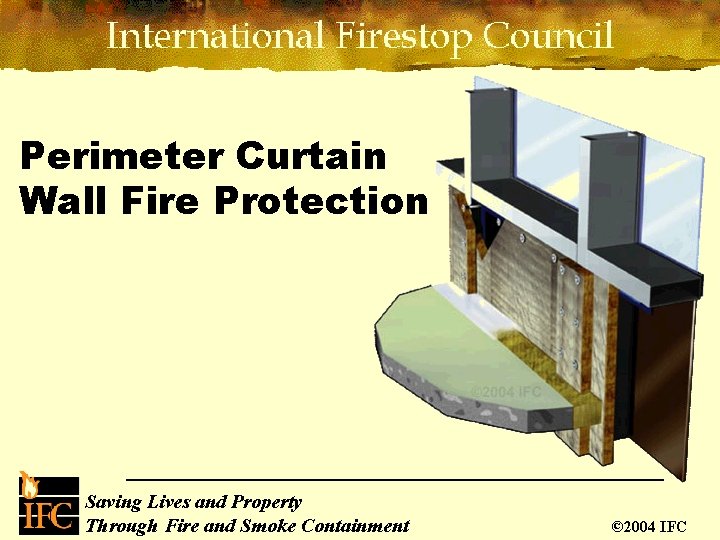
Perimeter Curtain Wall Fire Protection Saving Lives and Property Through Fire and Smoke Containment © 2004 IFC
Topics for Discussion • Brief history • Dynamics of fire • What do the codes say? • How are they tested? • How testing is affecting design Saving Lives and Property Through Fire and Smoke Containment © 2004 IFC
Curtain Walls & the Perimeter Joint Saving Lives and Property Through Fire and Smoke Containment © 2004 IFC
A Brief History of Fires Where Curtain Wall or Safing Issues Have Been Cited… Saving Lives and Property Through Fire and Smoke Containment © 2004 IFC
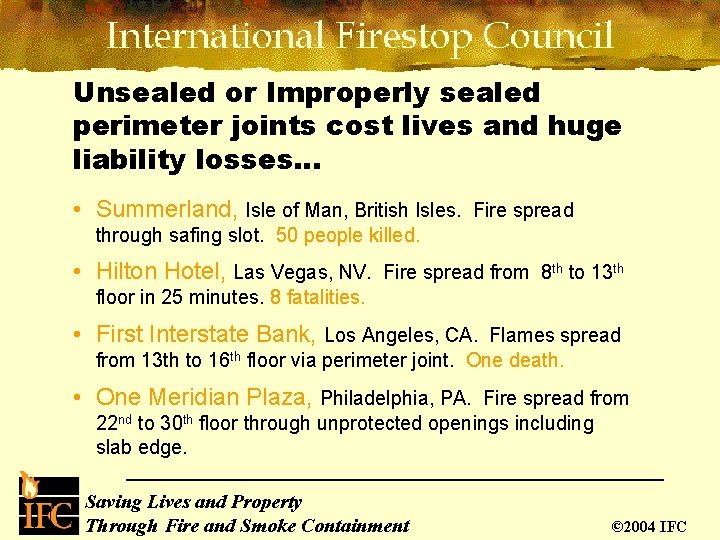
Unsealed or Improperly sealed perimeter joints cost lives and huge liability losses… • Summerland, Isle of Man, British Isles. Fire spread through safing slot. 50 people killed. • Hilton Hotel, Las Vegas, NV. Fire spread from 8 th to 13 th floor in 25 minutes. 8 fatalities. • First Interstate Bank, Los Angeles, CA. Flames spread from 13 th to 16 th floor via perimeter joint. One death. • One Meridian Plaza, Philadelphia, PA. Fire spread from 22 nd to 30 th floor through unprotected openings including slab edge. Saving Lives and Property Through Fire and Smoke Containment © 2004 IFC
What are the dynamics of vertical spread in a high-rise building? Saving Lives and Property Through Fire and Smoke Containment © 2004 IFC
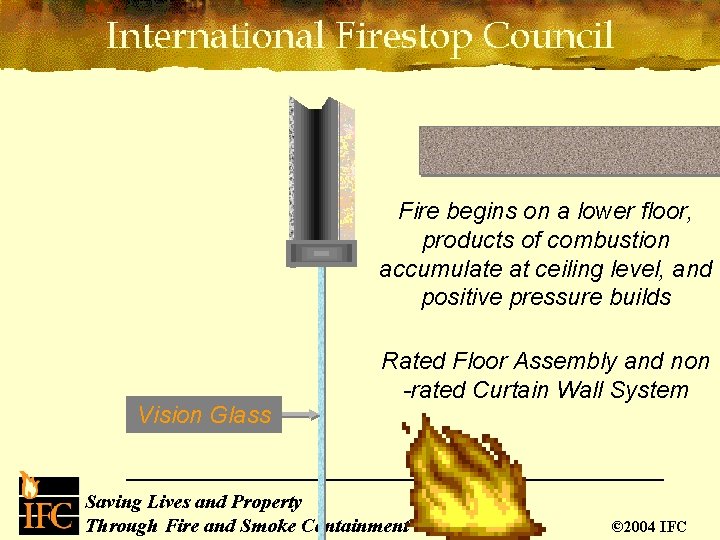
Fire begins on a lower floor, products of combustion accumulate at ceiling level, and positive pressure builds Vision Glass Rated Floor Assembly and non -rated Curtain Wall System Saving Lives and Property Through Fire and Smoke Containment © 2004 IFC
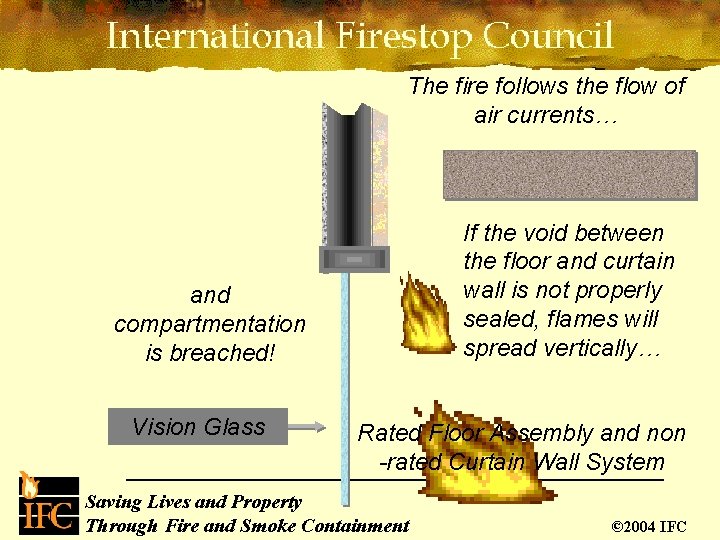
The fire follows the flow of air currents… If the void between the floor and curtain wall is not properly sealed, flames will spread vertically… and compartmentation is breached! Vision Glass Rated Floor Assembly and non -rated Curtain Wall System Saving Lives and Property Through Fire and Smoke Containment © 2004 IFC
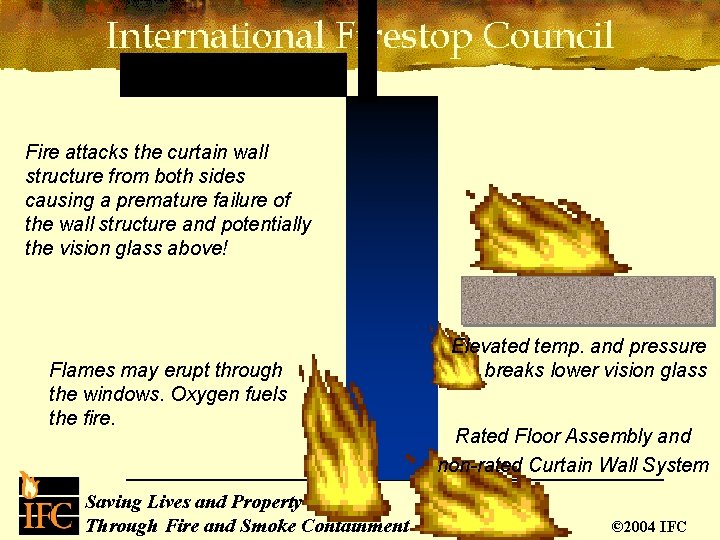
Vision Glass Fire attacks the curtain wall structure from both sides causing a premature failure of the wall structure and potentially the vision glass above! Flames may erupt through the windows. Oxygen fuels the fire. Saving Lives and Property Through Fire and Smoke Containment Elevated temp. and pressure breaks lower vision glass Rated Floor Assembly and non-rated Curtain Wall System © 2004 IFC
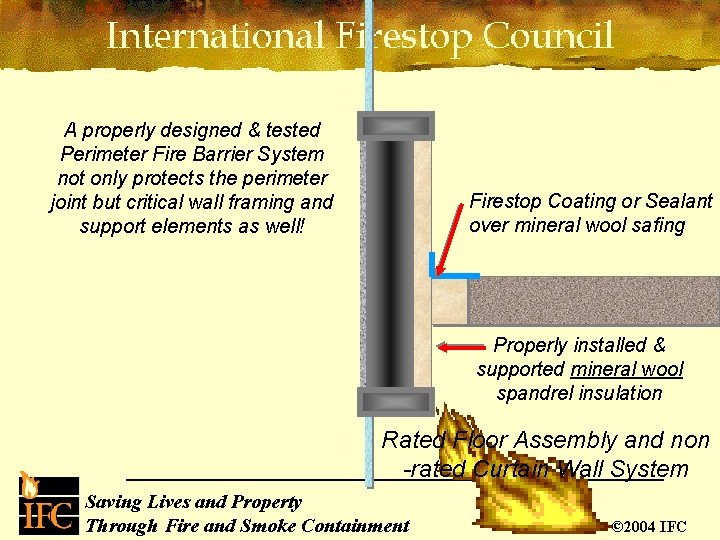
A properly designed & tested Perimeter Fire Barrier System not only protects the perimeter joint but critical wall framing and support elements as well! Firestop Coating or Sealant over mineral wool safing Properly installed & supported mineral wool spandrel insulation Rated Floor Assembly and non -rated Curtain Wall System Saving Lives and Property Through Fire and Smoke Containment © 2004 IFC
How do the codes address the protection at the perimeter? Saving Lives and Property Through Fire and Smoke Containment © 2004 IFC
What do the codes say? • All Model Codes call for the rating of the floor to extend to the exterior wall • All Model Codes require minimum spandrel height • All Model Codes allow spandrel height exceptions in certain sprinklered conditions Saving Lives and Property Through Fire and Smoke Containment © 2004 IFC
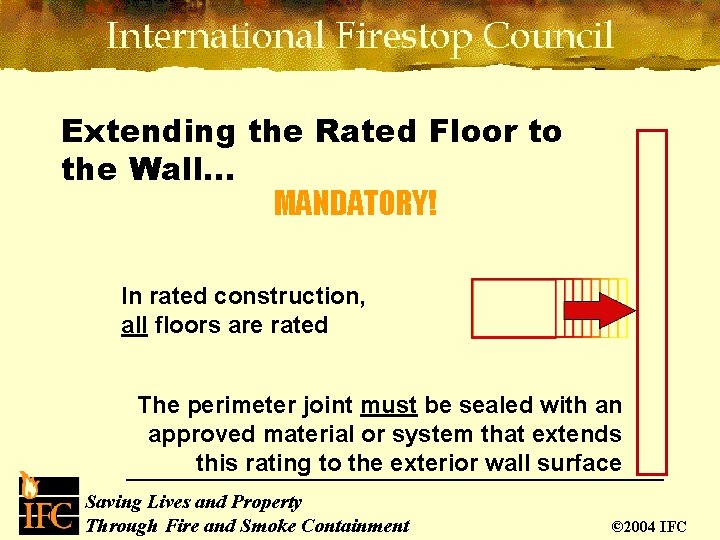
Extending the Rated Floor to the Wall. . . MANDATORY! In rated construction, all floors are rated The perimeter joint must be sealed with an approved material or system that extends this rating to the exterior wall surface Saving Lives and Property Through Fire and Smoke Containment © 2004 IFC
Code Compliance Meeting the Letter of the Law. . . PROTECTING THE PERIMETER JOINT: 1. Designing the wall to keep the firestop system in place for the rated period of the floor is an obvious necessity. 2. Designing and installing the firestop correctly is the final step! Firestopping the perimeter joint is mandatory. Saving Lives and Property Through Fire and Smoke Containment © 2004 IFC
The Leap Frog Effect… Saving Lives and Property Through Fire and Smoke Containment © 2004 IFC
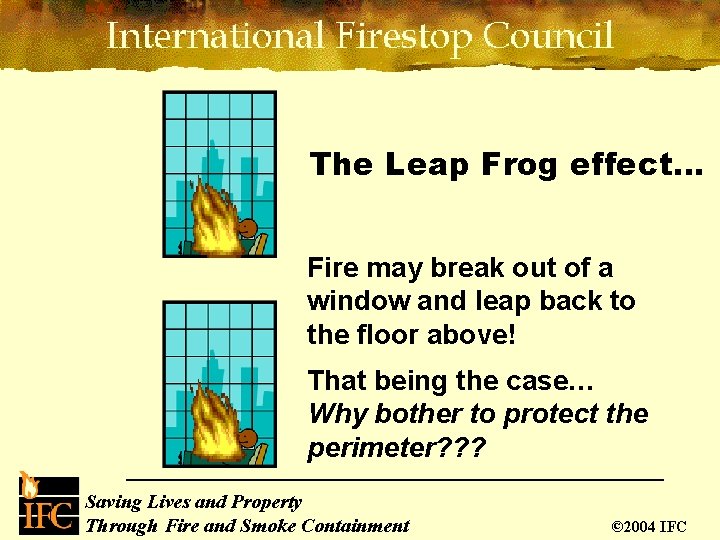
The Leap Frog effect… Fire may break out of a window and leap back to the floor above! That being the case… Why bother to protect the perimeter? ? ? Saving Lives and Property Through Fire and Smoke Containment © 2004 IFC
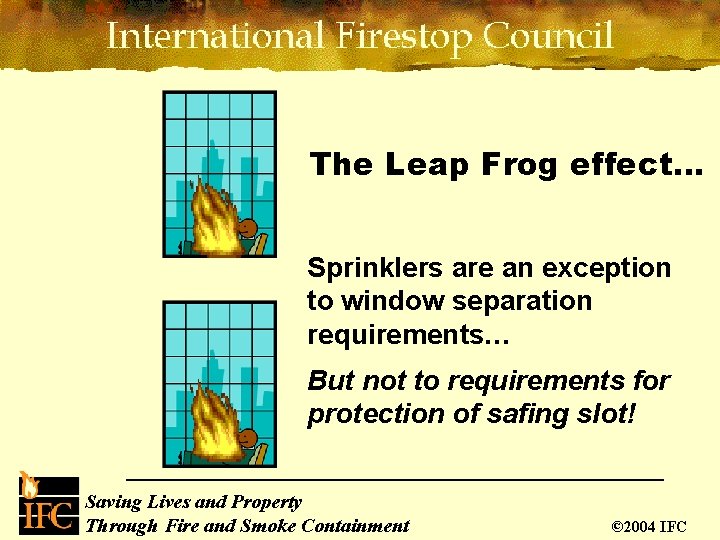
The Leap Frog effect… Sprinklers are an exception to window separation requirements… But not to requirements for protection of safing slot! Saving Lives and Property Through Fire and Smoke Containment © 2004 IFC
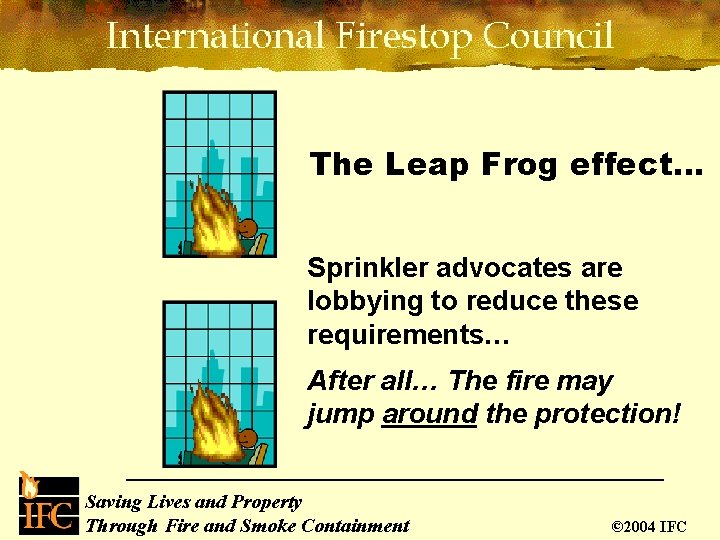
The Leap Frog effect… Sprinkler advocates are lobbying to reduce these requirements… After all… The fire may jump around the protection! Saving Lives and Property Through Fire and Smoke Containment © 2004 IFC
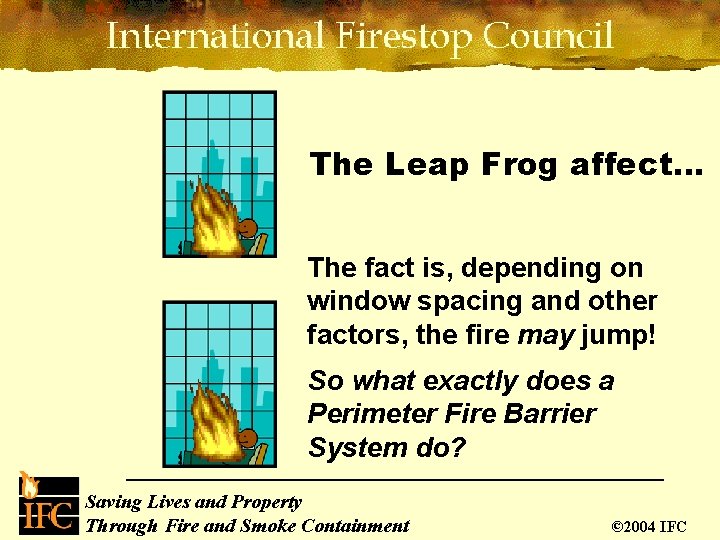
The Leap Frog affect… The fact is, depending on window spacing and other factors, the fire may jump! So what exactly does a Perimeter Fire Barrier System do? Saving Lives and Property Through Fire and Smoke Containment © 2004 IFC
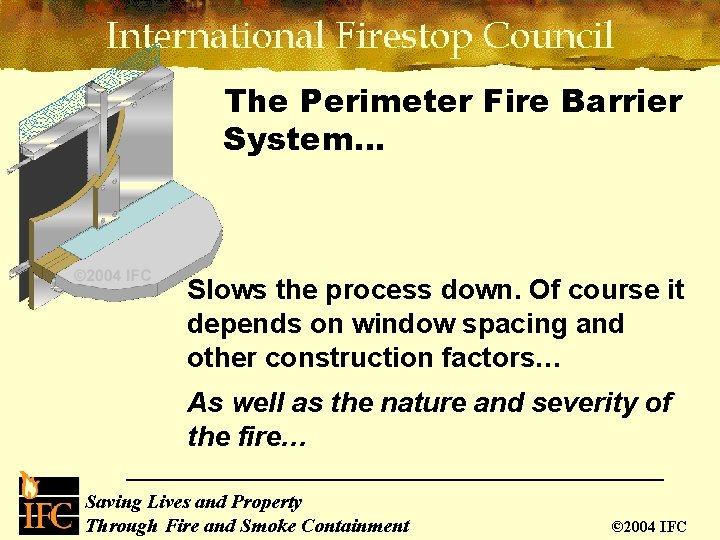
The Perimeter Fire Barrier System… Slows the process down. Of course it depends on window spacing and other construction factors… As well as the nature and severity of the fire… Saving Lives and Property Through Fire and Smoke Containment © 2004 IFC
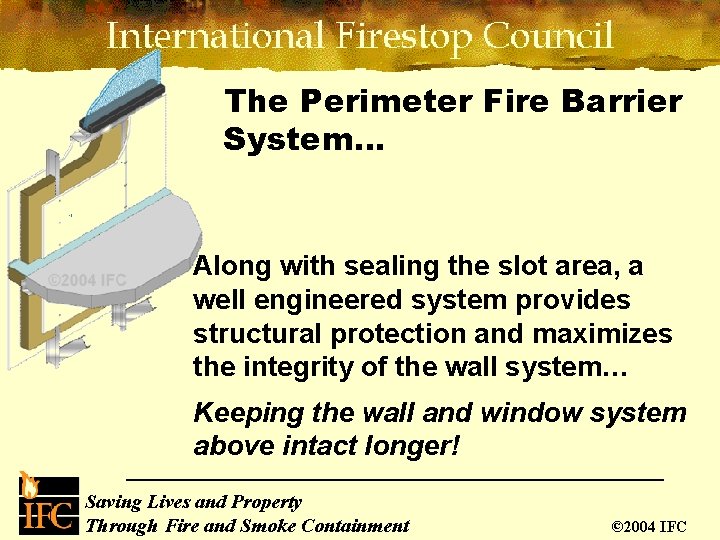
The Perimeter Fire Barrier System… Along with sealing the slot area, a well engineered system provides structural protection and maximizes the integrity of the wall system… Keeping the wall and window system above intact longer! Saving Lives and Property Through Fire and Smoke Containment © 2004 IFC
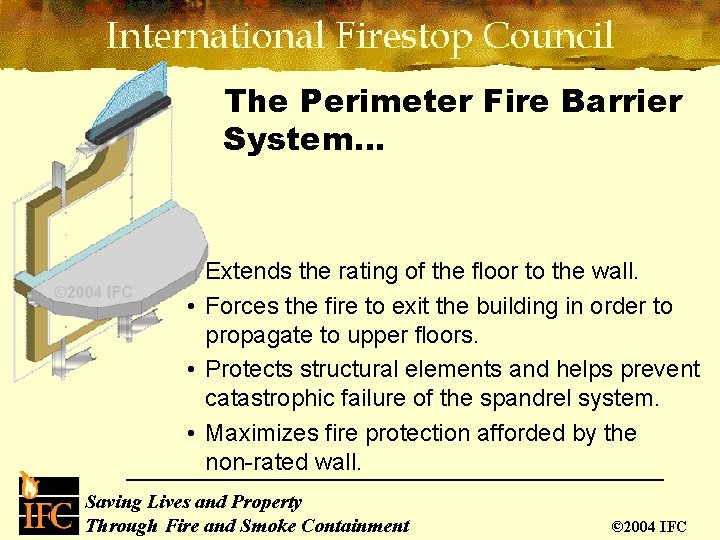
The Perimeter Fire Barrier System… • Extends the rating of the floor to the wall. • Forces the fire to exit the building in order to propagate to upper floors. • Protects structural elements and helps prevent catastrophic failure of the spandrel system. • Maximizes fire protection afforded by the non-rated wall. Saving Lives and Property Through Fire and Smoke Containment © 2004 IFC
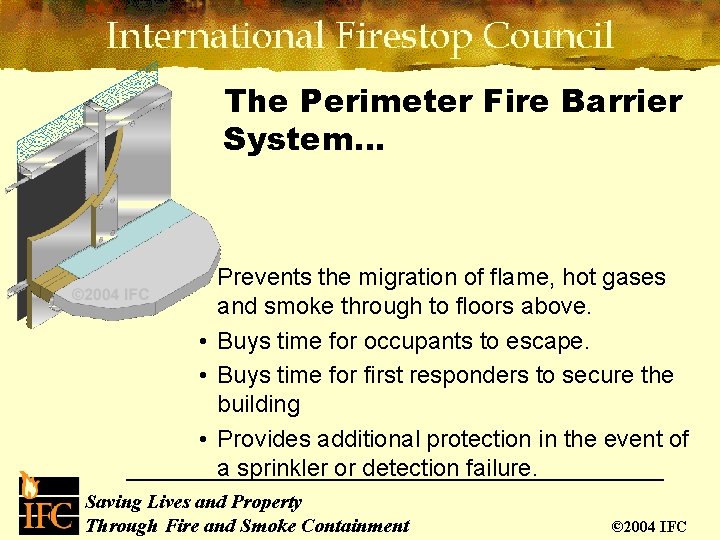
The Perimeter Fire Barrier System… • Prevents the migration of flame, hot gases and smoke through to floors above. • Buys time for occupants to escape. • Buys time for first responders to secure the building • Provides additional protection in the event of a sprinkler or detection failure. Saving Lives and Property Through Fire and Smoke Containment © 2004 IFC
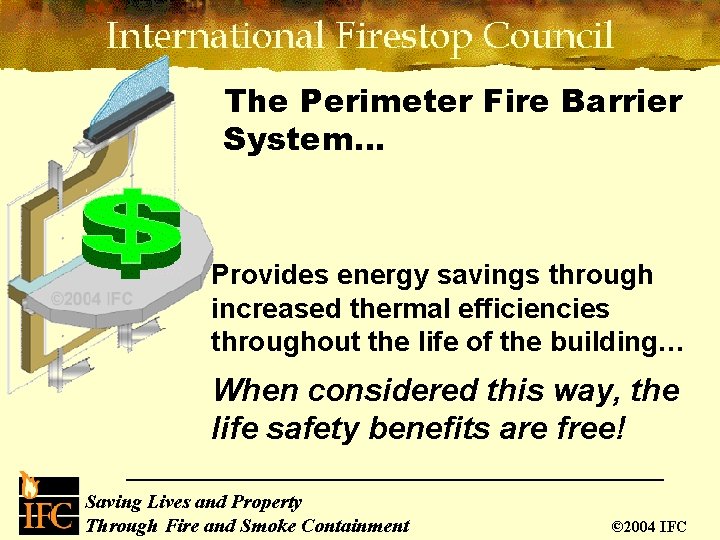
The Perimeter Fire Barrier System… Provides energy savings through increased thermal efficiencies throughout the life of the building… When considered this way, the life safety benefits are free! Saving Lives and Property Through Fire and Smoke Containment © 2004 IFC
How Are Perimeter Fire Barrier Systems Tested? Saving Lives and Property Through Fire and Smoke Containment © 2004 IFC
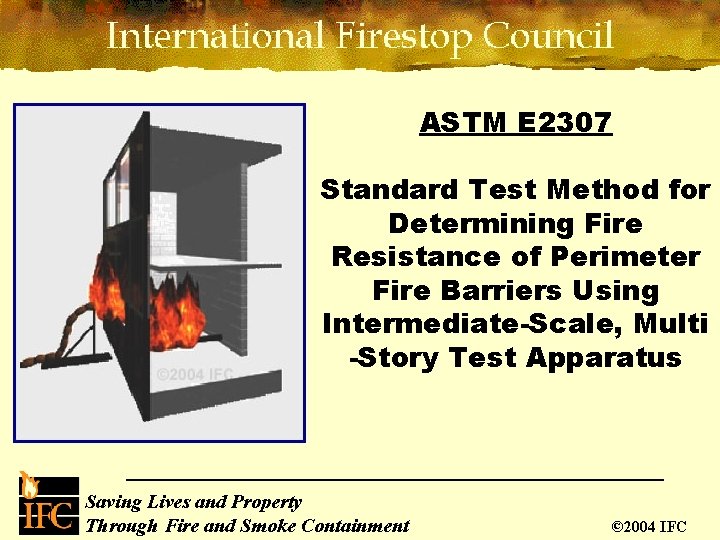
ASTM E 2307 Standard Test Method for Determining Fire Resistance of Perimeter Fire Barriers Using Intermediate-Scale, Multi -Story Test Apparatus Saving Lives and Property Through Fire and Smoke Containment © 2004 IFC
How Are Perimeter Fire Barrier Systems Tested? Only two labs presently perform testing in accordance with newly developed test methods: • Underwriters Laboratories Inc. – Northbrook, IL • Omega Point Laboratories – Elmendorf, Texas Saving Lives and Property Through Fire and Smoke Containment © 2004 IFC
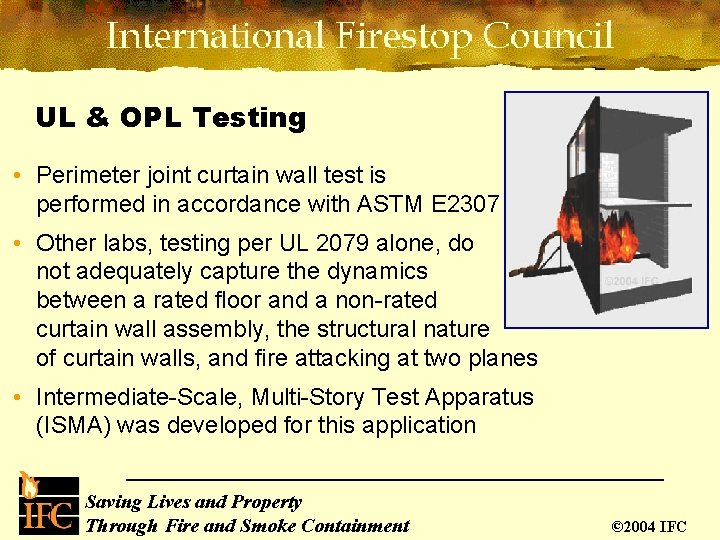
UL & OPL Testing • Perimeter joint curtain wall test is performed in accordance with ASTM E 2307 • Other labs, testing per UL 2079 alone, do not adequately capture the dynamics between a rated floor and a non-rated curtain wall assembly, the structural nature of curtain walls, and fire attacking at two planes • Intermediate-Scale, Multi-Story Test Apparatus (ISMA) was developed for this application Saving Lives and Property Through Fire and Smoke Containment © 2004 IFC
Testing Questions… Question: What Test is used to Evaluate Perimeter Fire Barrier Systems? Answer: ASTM E 2307 using the Intermediate. Scale, Multi-Story Test Apparatus (ISMA) is used to determine… • Two ratings are provided per the ASTM E 2307 test: - “F”-rating, in hours (resistance to fire spread) - “T”-rating, in hours (temperature on non-fire side) • UL provide two additional ratings using same test apparatus - “integrity rating” & “insulation rating” Saving Lives and Property Through Fire and Smoke Containment © 2004 IFC
Testing Questions… Question: How can this be representative of real life? Answer: It can’t! The test method indicates whether… 1. The safing method can last as long as the floor. 2. The protection scheme can adequately protect wall framing and attachments. Saving Lives and Property Through Fire and Smoke Containment © 2004 IFC
Testing Questions… Question: Then how representative is this test? Answer: It should be considered broadly representative. Spandrel width, height, and window spacing are limited because the test is not full scale. Story height is approximately 7 feet. Wall framing methods, support, and the safing slot itself are well represented and provide excellent engineering data. Saving Lives and Property Through Fire and Smoke Containment © 2004 IFC
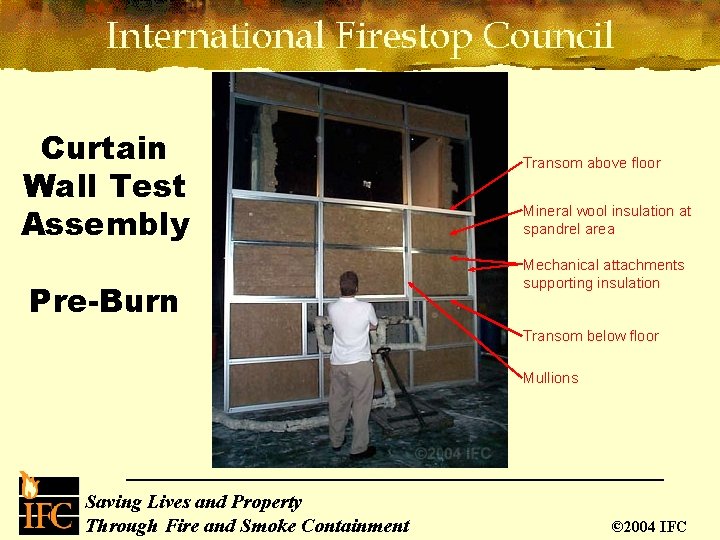
Curtain Wall Test Assembly Pre-Burn Transom above floor Mineral wool insulation at spandrel area Mechanical attachments supporting insulation Transom below floor Mullions Saving Lives and Property Through Fire and Smoke Containment © 2004 IFC
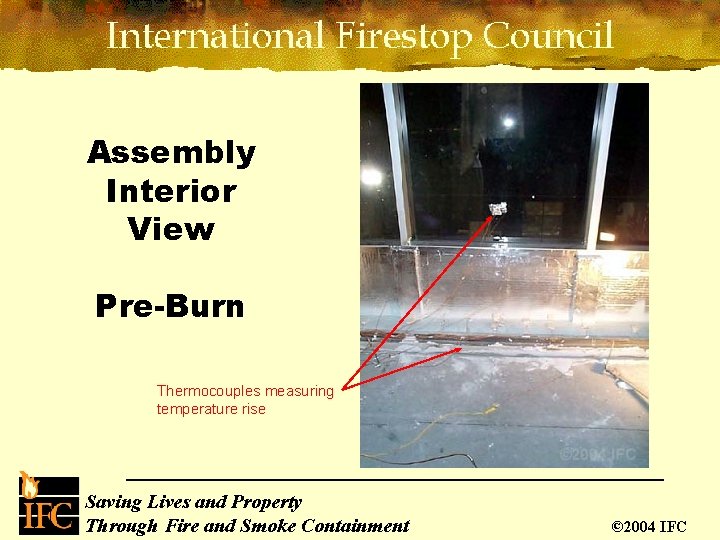
Assembly Interior View Pre-Burn Thermocouples measuring temperature rise Saving Lives and Property Through Fire and Smoke Containment © 2004 IFC
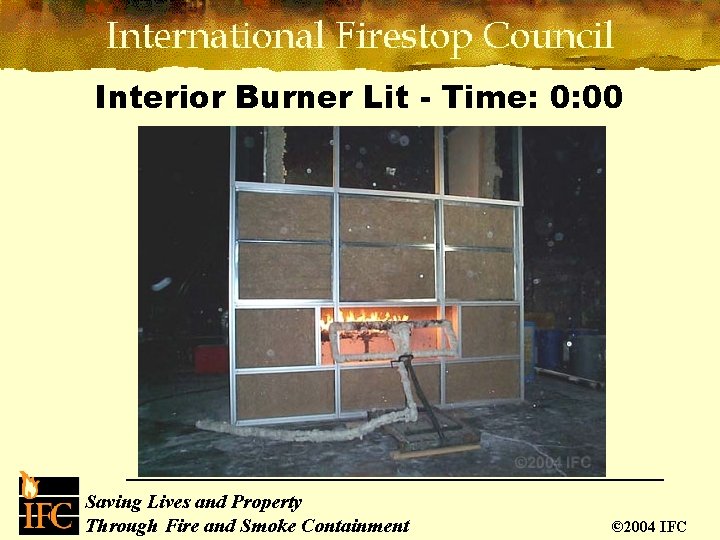
Interior Burner Lit - Time: 0: 00 Saving Lives and Property Through Fire and Smoke Containment © 2004 IFC
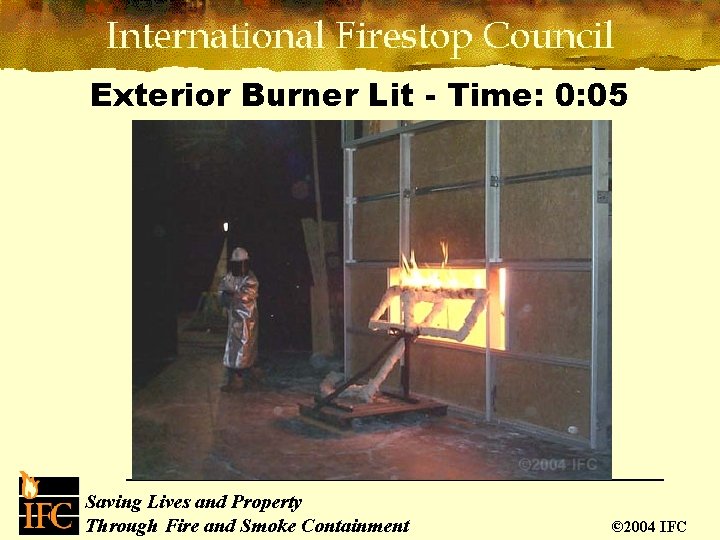
Exterior Burner Lit - Time: 0: 05 Saving Lives and Property Through Fire and Smoke Containment © 2004 IFC
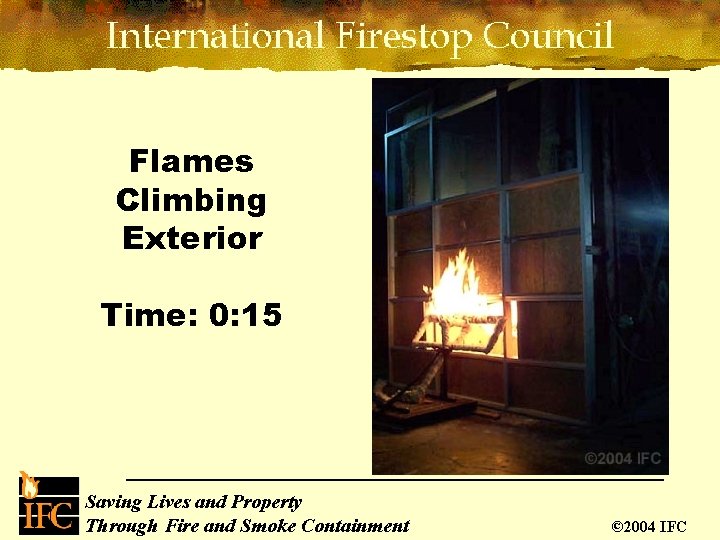
Flames Climbing Exterior Time: 0: 15 Saving Lives and Property Through Fire and Smoke Containment © 2004 IFC
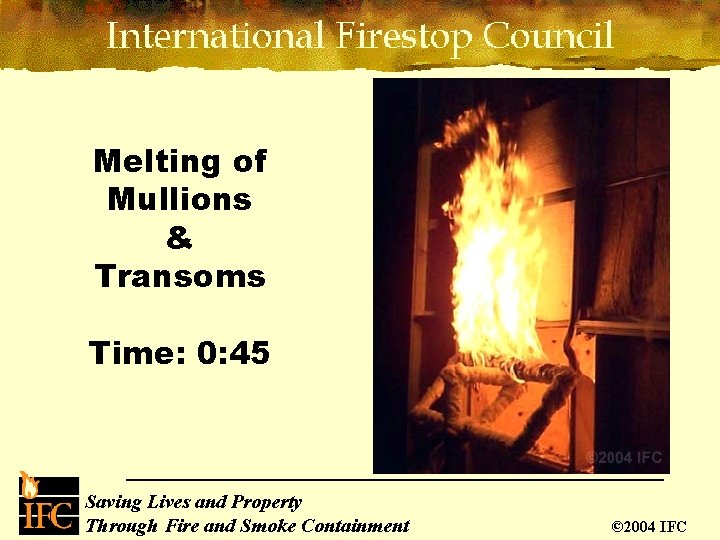
Melting of Mullions & Transoms Time: 0: 45 Saving Lives and Property Through Fire and Smoke Containment © 2004 IFC
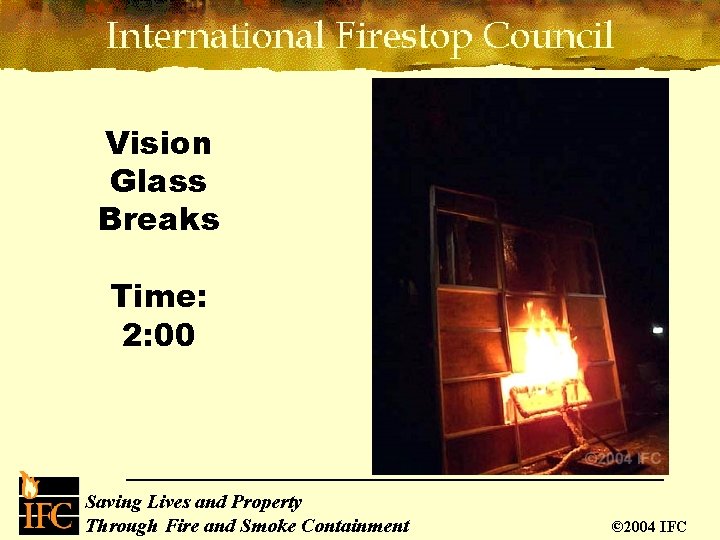
Vision Glass Breaks Time: 2: 00 Saving Lives and Property Through Fire and Smoke Containment © 2004 IFC
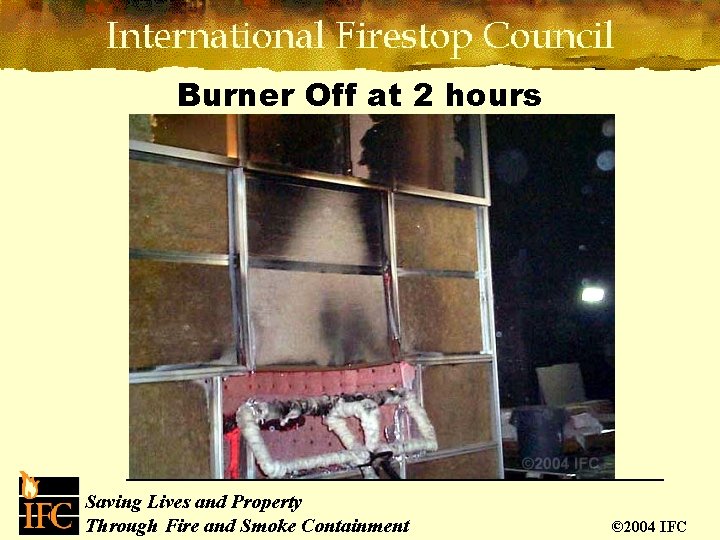
Burner Off at 2 hours Saving Lives and Property Through Fire and Smoke Containment © 2004 IFC
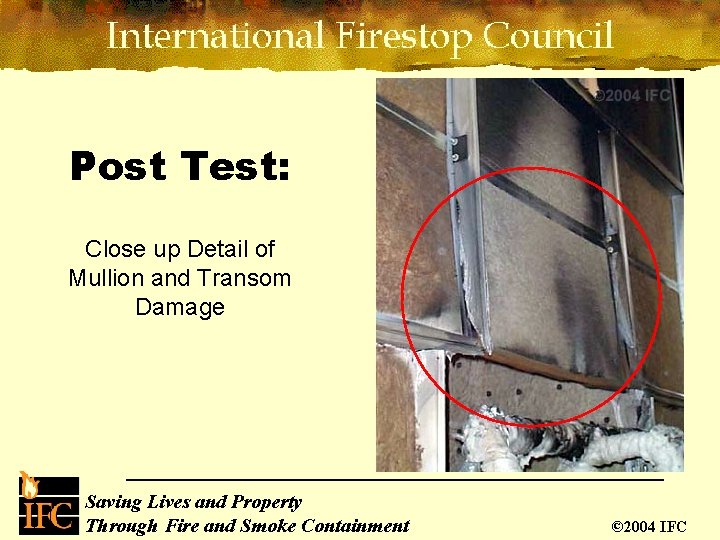
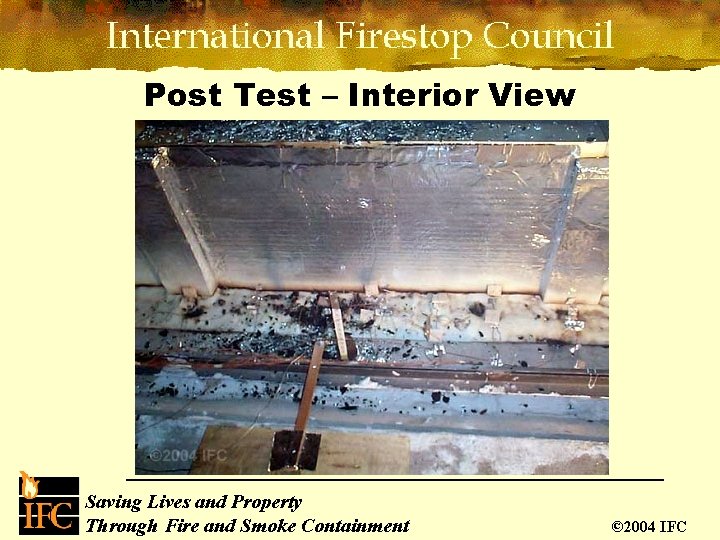
Post Test: Close up Detail of Mullion and Transom Damage Saving Lives and Property Through Fire and Smoke Containment © 2004 IFC
Post Test – Interior View Saving Lives and Property Through Fire and Smoke Containment © 2004 IFC
ASTM E 2307 Testing has Improved Perimeter Joint Evaluation… Saving Lives and Property Through Fire and Smoke Containment © 2004 IFC
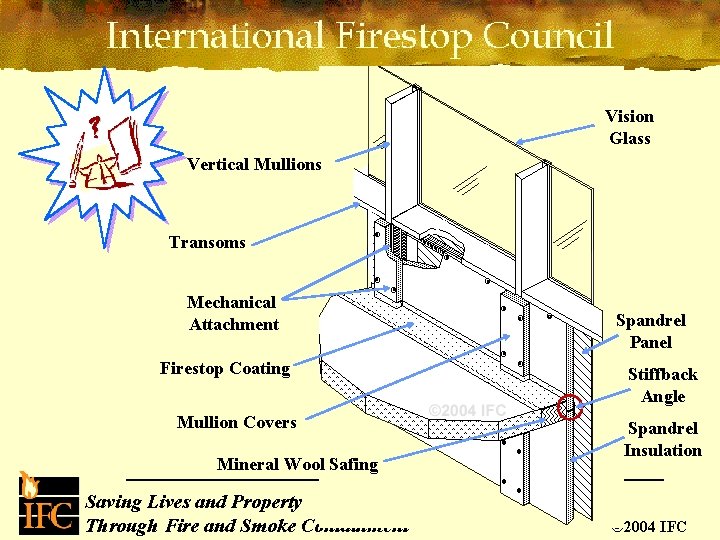
Vision Glass Vertical Mullions Transoms Mechanical Attachment Firestop Coating Mullion Covers Mineral Wool Safing Saving Lives and Property Through Fire and Smoke Containment Spandrel Panel Stiffback Angle Spandrel Insulation © 2004 IFC
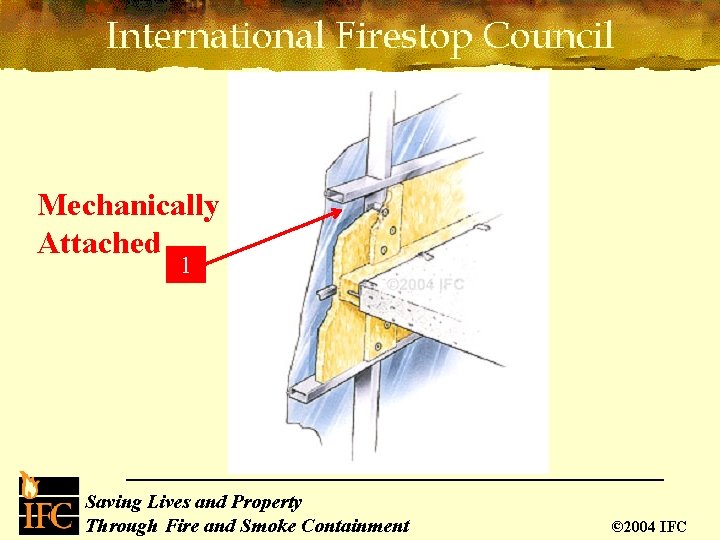
Perimeter Fire Containment - Basic Design Criteria 1. Mechanically Attached Curtain Wall Insulation Saving Lives and Property Through Fire and Smoke Containment © 2004 IFC
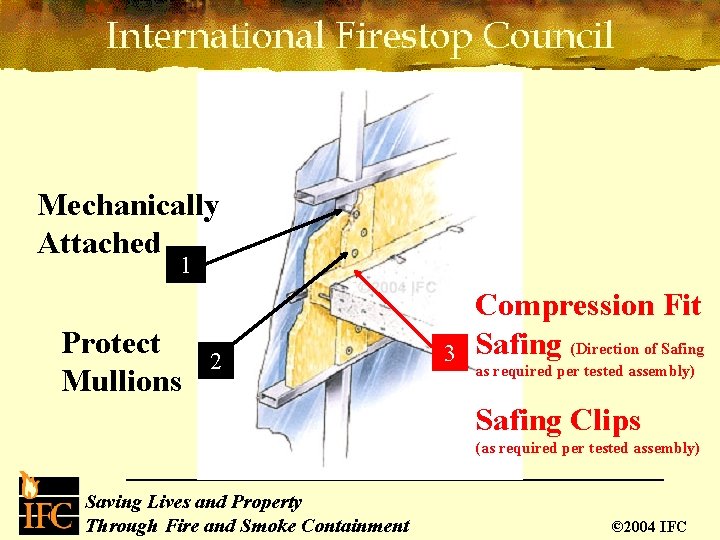
Mechanically Attached 1 Saving Lives and Property Through Fire and Smoke Containment © 2004 IFC
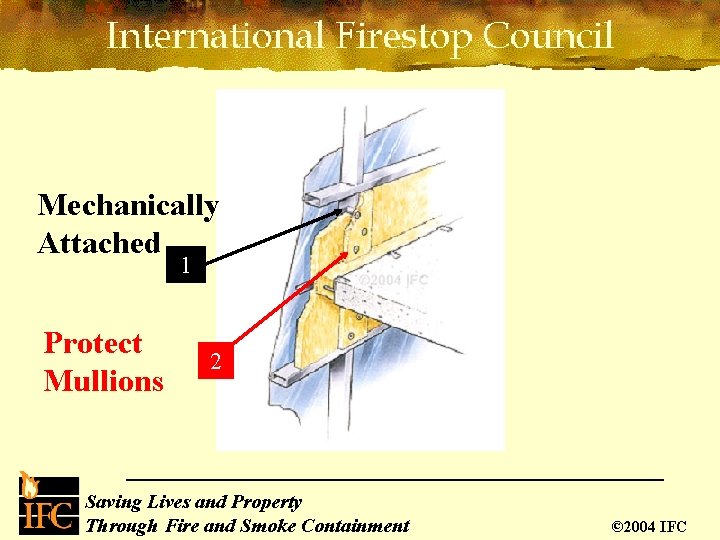
Perimeter Fire Containment - Basic Design Criteria 1. Mechanically Attached Curtain Wall Insulation 2. Protect Aluminum Mullions Saving Lives and Property Through Fire and Smoke Containment © 2004 IFC
Mechanically Attached 1 Protect Mullions 2 Saving Lives and Property Through Fire and Smoke Containment © 2004 IFC
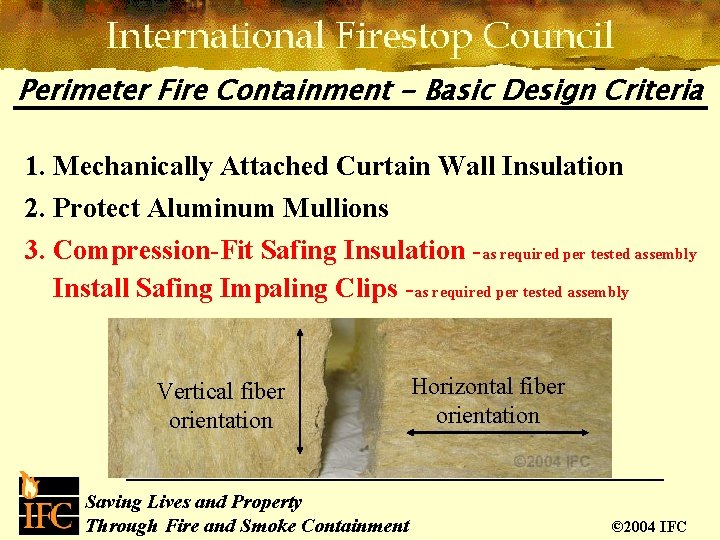
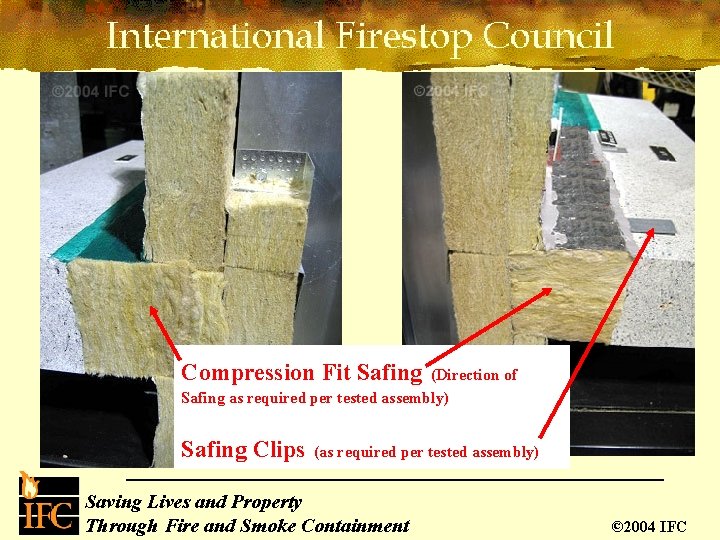
Perimeter Fire Containment - Basic Design Criteria 1. Mechanically Attached Curtain Wall Insulation 2. Protect Aluminum Mullions 3. Compression-Fit Safing Insulation -as required per tested assembly Install Safing Impaling Clips -as required per tested assembly Vertical fiber orientation Saving Lives and Property Through Fire and Smoke Containment Horizontal fiber orientation © 2004 IFC
Mechanically Attached 1 Protect Mullions 2 3 Compression Fit Safing (Direction of Safing as required per tested assembly) Safing Clips (as required per tested assembly) Saving Lives and Property Through Fire and Smoke Containment © 2004 IFC
Compression Fit Safing (Direction of Safing as required per tested assembly) Safing Clips (as required per tested assembly) Saving Lives and Property Through Fire and Smoke Containment © 2004 IFC
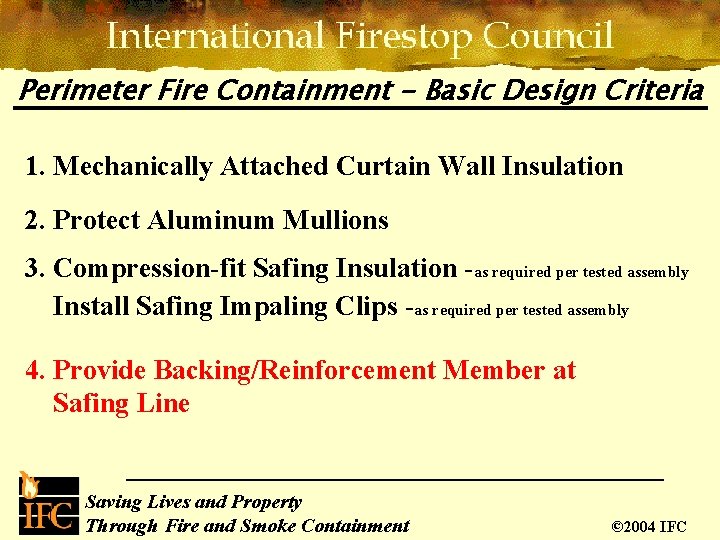
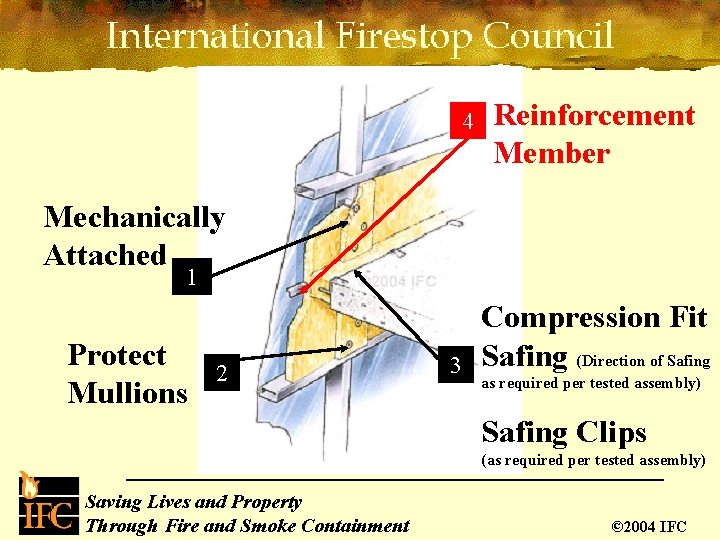
Perimeter Fire Containment - Basic Design Criteria 1. Mechanically Attached Curtain Wall Insulation 2. Protect Aluminum Mullions 3. Compression-fit Safing Insulation -as required per tested assembly Install Safing Impaling Clips -as required per tested assembly 4. Provide Backing/Reinforcement Member at Safing Line Saving Lives and Property Through Fire and Smoke Containment © 2004 IFC
4 Reinforcement Member Mechanically Attached 1 Protect Mullions 2 3 Compression Fit Safing (Direction of Safing as required per tested assembly) Safing Clips (as required per tested assembly) Saving Lives and Property Through Fire and Smoke Containment © 2004 IFC
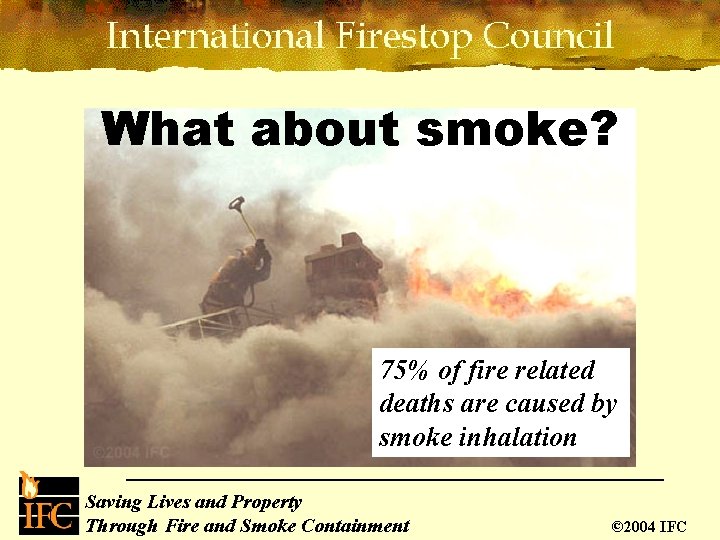
What about smoke? 75% of fire related deaths are caused by smoke inhalation Saving Lives and Property Through Fire and Smoke Containment © 2004 IFC
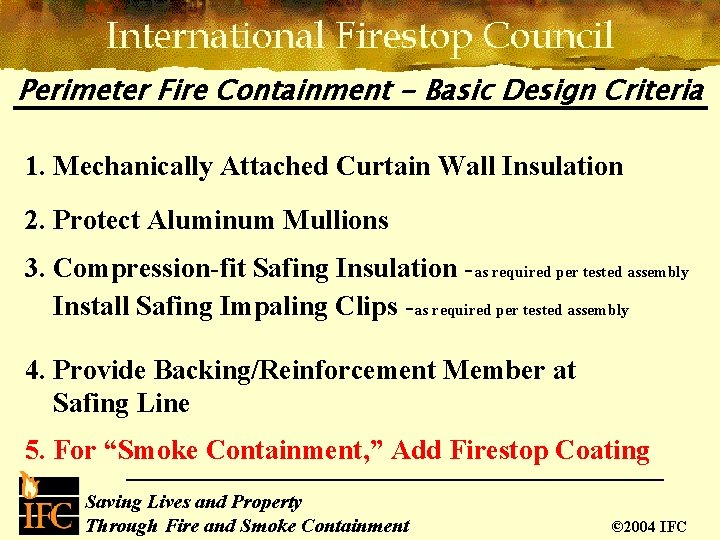
Perimeter Fire Containment - Basic Design Criteria 1. Mechanically Attached Curtain Wall Insulation 2. Protect Aluminum Mullions 3. Compression-fit Safing Insulation -as required per tested assembly Install Safing Impaling Clips -as required per tested assembly 4. Provide Backing/Reinforcement Member at Safing Line 5. For “Smoke Containment, ” Add Firestop Coating Saving Lives and Property Through Fire and Smoke Containment © 2004 IFC
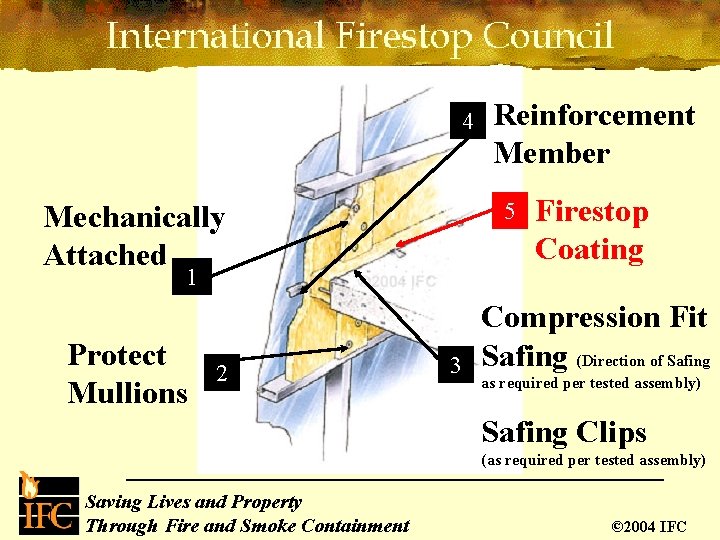
4 5 Mechanically Attached 1 Protect Mullions 2 Reinforcement Member 3 Firestop Coating Compression Fit Safing (Direction of Safing as required per tested assembly) Safing Clips (as required per tested assembly) Saving Lives and Property Through Fire and Smoke Containment © 2004 IFC
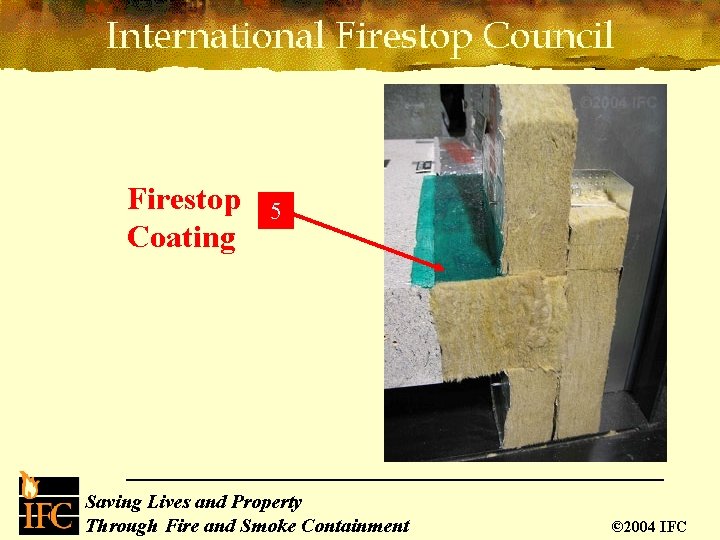
Firestop Coating 5 Saving Lives and Property Through Fire and Smoke Containment © 2004 IFC
Additional Design Questions… Question: Why aren’t floor-to-wall (FW) systems acceptable for curtain walls? Answer: Floor-to-wall systems test fire resistance between a rated floor and rated wall tested per ASTM E 1966. CW systems are specific perimeter tests between a rated floor and non-rated curtain wall using the Intermediate Scale Multi-story Apparatus (ISMA) per ASTM Saving Lives and Property E 2307. Through Fire and Smoke Containment © 2004 IFC
Additional Design Questions… Question: Why are windows spaced so far apart? My windows are closer together… Answer: ASTM E 2307 evaluates the interior passage of fire and hot gases through the perimeter joint only. Increasing the spandrel height reduces the likelihood of the leap frog effect. Saving Lives and Property Through Fire and Smoke Containment © 2004 IFC
Additional Design Questions… Question: What is the function of the firestop coating in these systems? Answer: The firestop coating performs several important functions. Saving Lives and Property Through Fire and Smoke Containment © 2004 IFC
Additional Design Questions… The Role of the Firestop Coating: 1. The most obvious role is as a smoke seal. 2. Seals off the path of hot gasses. Makes the safing more effective. 3. “Glues” everything together. Saving Lives and Property Through Fire and Smoke Containment © 2004 IFC
Additional Design Questions… Question: Are curtain wall joints static or dynamic? Answer: This area is referred to as a slot. The word joint suggests movement. Experts tend to agree that a small amount of movement occurs within the slot area. It is up to the design professional to determine the level of movement required for the project. Some wall designs are subject to a small amount of vertical shear or horizontal sway and some systems incorporate these values. Saving Lives and Property Through Fire and Smoke Containment © 2004 IFC
Additional Design Questions… Question: What if our design isn’t a perfect match for a system? Answer: We strongly suggest specifying tested systems. However, real world designs are seldom a perfect match! Find a listing that is reasonably close and contact the manufacturer for an Engineering Judgment to match the design. Saving Lives and Property Through Fire and Smoke Containment © 2004 IFC
Benefits of Specifying A Listed Perimeter Joint System • Completes the curtain wall package • Applies pedigreed testing and competent engineering • Assists the local AHJ • Standardizes design and cost • Limits liability • Provides energy conservation from insulation value Saving Lives and Property Through Fire and Smoke Containment © 2004 IFC