
Pericardium and External Features Of Heart By Dr
Pericardium and External Features Of Heart By Dr. Khan Sana
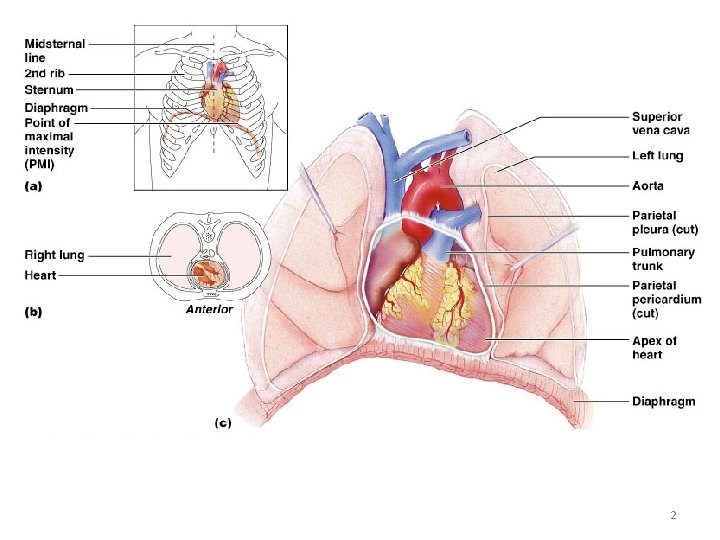
Heart Anatomy 2
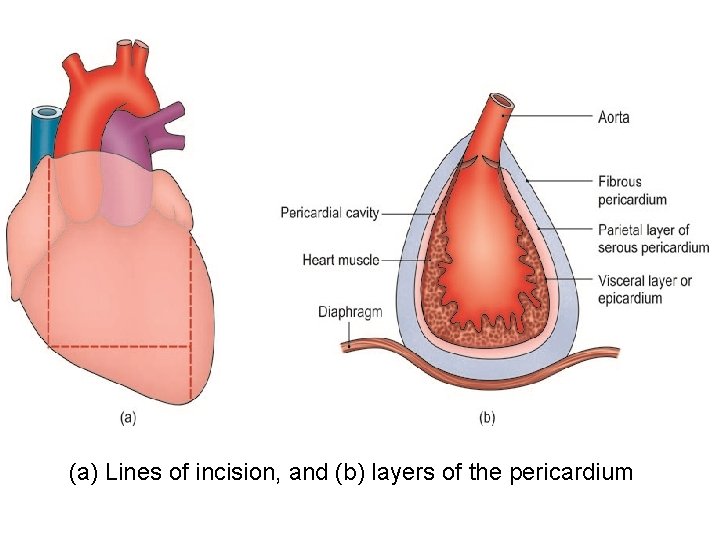
(a) Lines of incision, and (b) layers of the pericardium
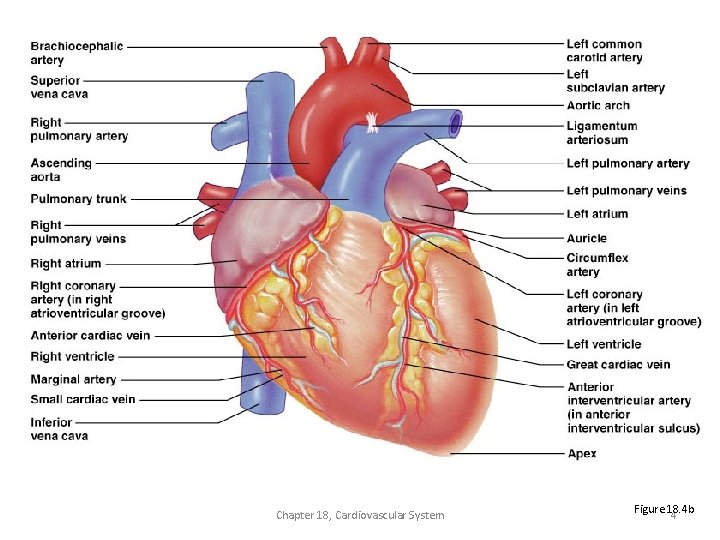
External Heart: Anterior View Chapter 18, Cardiovascular System Figure 18. 4 b 4
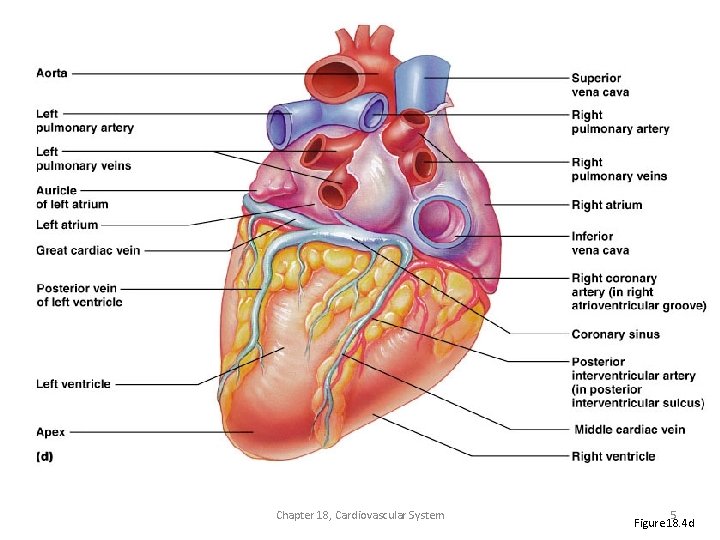
External Heart: Posterior View Chapter 18, Cardiovascular System 5 Figure 18. 4 d
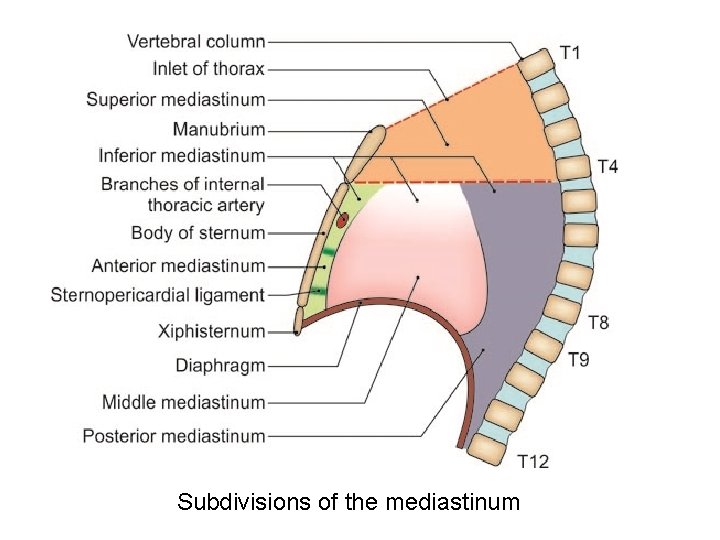
Subdivisions of the mediastinum
PERICARDIUM The pericardium is a Fibroserous Sac which encloses the heart and roots of the great vessels. It is situated in Middle Mediastinum. FIBROUS PERICARDIUM Fibrous pericardium is conical sac made up of fibrous tissue. • The apex is blunt and lies at the level of the sternal angle. • The base is broad and inseparably blended with the central tendon of the diaphragm.
• Posteriorly, it is related to the principal bronchi, the oesophagus with the nerve plexus around it and the descending thoracic aorta. • On each side, it is related to the mediastinal pleura • It protects the heart against sudden overfilling and prevents over expansion of the heart.
• Serous Pericardium is a serous membrane lined by Mesothelium. • It is doubled layered having outer parietal layer and inner visceral layer. • In between the 2 layers there is cavity called Pericardial cavity.
• Pericardial Cavity It is a potential space between visceral and parietal layers of SEROUS PERICARDIUM. The space contains serous fluid i. e. pericardial fluid which is 50 ml and it acts as a Lubricant and prevents Friction during movements of Heart.
Contents of Pericardium • • • Heart with its vessels and nerves Ascending Aorta Pulmonary Trunk SVC IVC Pulmonary Veins.
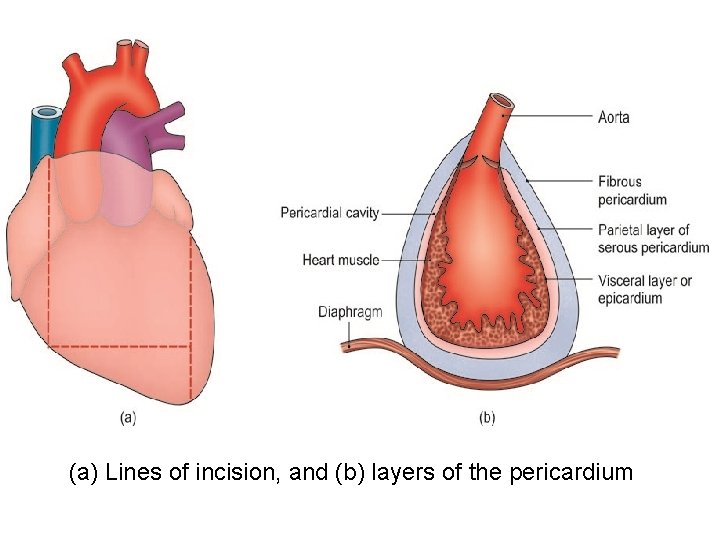
(a) Lines of incision, and (b) layers of the pericardium
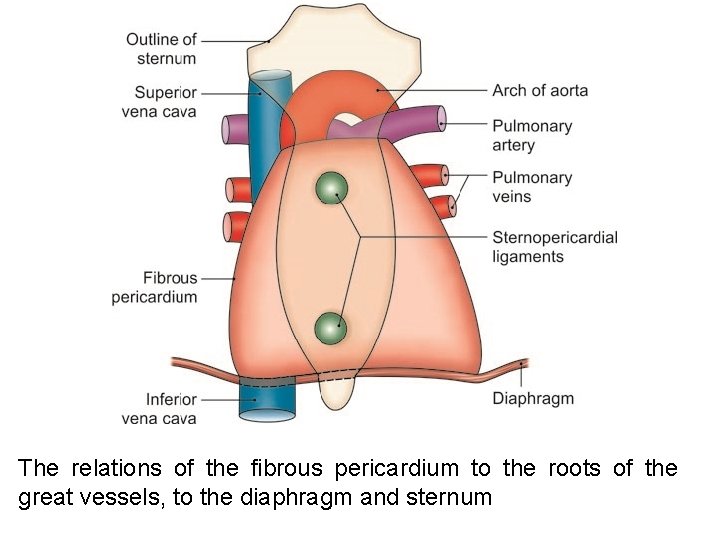
The relations of the fibrous pericardium to the roots of the great vessels, to the diaphragm and sternum
Blood Supply The fibrous and parietal pericardia are supplied by branches from: 1. Internal thoracic 2. Musculophrenic arteries 3. The descending thoracic aorta 4. Veins drain into corresponding veins. Nerve Supply • The fibrous and parietal pericardia are supplied by the phrenic nerves. • They are sensitive to pain. • The epicardium is supplied by autonomic nerves of the heart and is not sensitive to pain.
CLINICAL ANATOMY Collection of fluid in the pericardial cavity is referred to as pericardial effusion. Pericardial effusion can be drained by puncturing the left fifth or sixth intercostal space just lateral to the sternum.
HEART • The heart is a conical hollow muscular organ situated in the middle mediastinum. • The heart is placed obliquely so that one-third of it lies to the right and two-thirds to the left of the median plane. • The heart measures about 12 × 9 cm and weighs about 300 g in males and 250 g in females. • The human heart has four chambers. These are the right and left atria and the right and left ventricles.
• The ventricles are separated from each other by an interventricular groove, which is subdivided into anterior and posterior parts. The heart has: – An apex directed downwards, forwards and to the left. – A base (posterior surface) directed backwards – Three surfaces—anterior/sternocostal, inferior and left lateral – Borders: The surfaces are demarcated by upper, inferior, right and left borders. • The atria are separated from the ventricles by a circular atrioventricular or coronary sulcus, which is divided into anterior and posterior parts.
• The anterior interventricular groove lies close to the left margin of the heart. • The posterior interventricular groove is situated on the diaphragmatic or inferior surface of the heart. • The two interventricular grooves meet at the inferior border near the apex. • Apex of the heart is formed entirely by the left ventricle. • It is situated in the left fifth intercostal space 9 cm lateral to the midsternal line just medial to the midclavicular line.
Base of the Heart It is formed mainly by the left atrium and by a small part of the right atrium. In relation to the base one can see the openings of four pulmonary veins which open into the left atrium; and of the superior and inferior venae cavae (Latin, empty vein) which open into the right atrium. Borders of the Heart 1. The upper border 2. The right vertical border 3. The inferior horizontal border 4. The left convex border
Base of the Heart It is formed mainly by the left atrium and by a small part of the right atrium. In relation to the base one can see the openings of four pulmonary veins which open into the left atrium; and of the superior and inferior venae cavae (Latin, empty vein) which open into the right atrium. Borders of the Heart 1. The upper border formed by 2 atria 2. The right vertical border formed by right atrium 3. The inferior horizontal border formed by 2 ventricles 4. The left convex border by lt. ventricle and lt. auricle.
Surfaces of the Heart • The anterior or sternocostal surface is formed ® the right atrium and right ventricle, left ventricle. • The inferior or diaphragmatic surface rests on the central tendon of the diaphragm. It is formed in its left two-thirds by the left ventricle, and in its right onethird by the right ventricle. • The left surface is formed mostly by the left ventricle, left auricle. • Crux of the heart is the meeting point of interatrial, atrioventricular and posterior interventricular grooves.
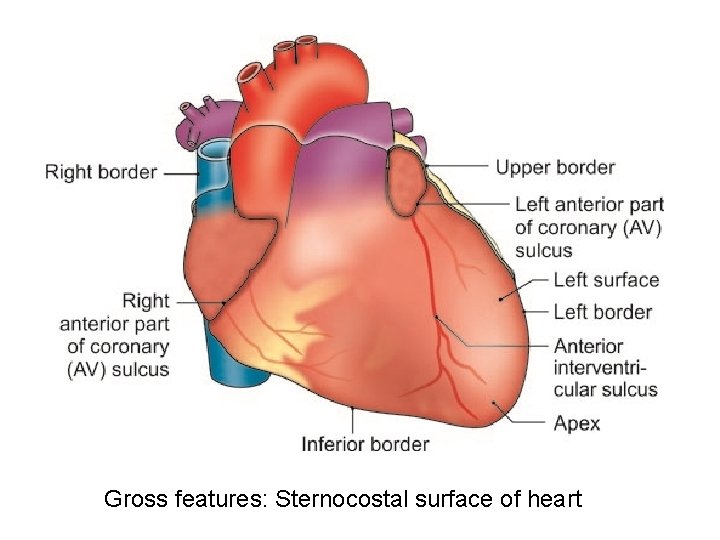
Gross features: Sternocostal surface of heart
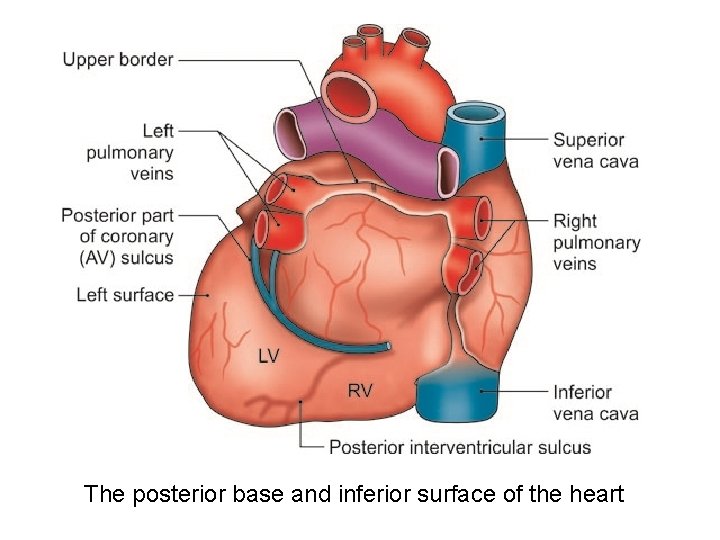
The posterior base and inferior surface of the heart
FACTS TO REMEMBER • Heart is a pump for pushing blood to the lungs and for rest of the organs of the body. Due to sympathetic stimulation, it is felt thumping against the chest wall Heart is having 4 Borders 3 Surface. 1 Apex. 1 Base. Crux of heart is meeting point of all septums of heart.

Thank You
- Slides: 25