
PERFORMING ARTS DANCE Dance refers to the rhythmic
- Slides: 9
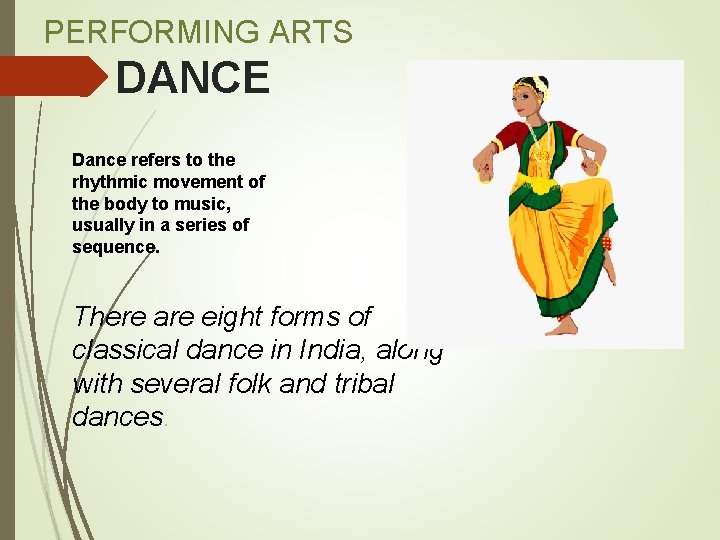
PERFORMING ARTS DANCE Dance refers to the rhythmic movement of the body to music, usually in a series of sequence. There are eight forms of classical dance in India, along with several folk and tribal dances.
OBJECTIVES Ø Viewing dance as a medium of expression Ø Exploring its benefits in terms of mental and physical well-being Ø Understanding themes like mythology, history, rhythm, philosophy Ø Analysing the changes in dance through various stages in history
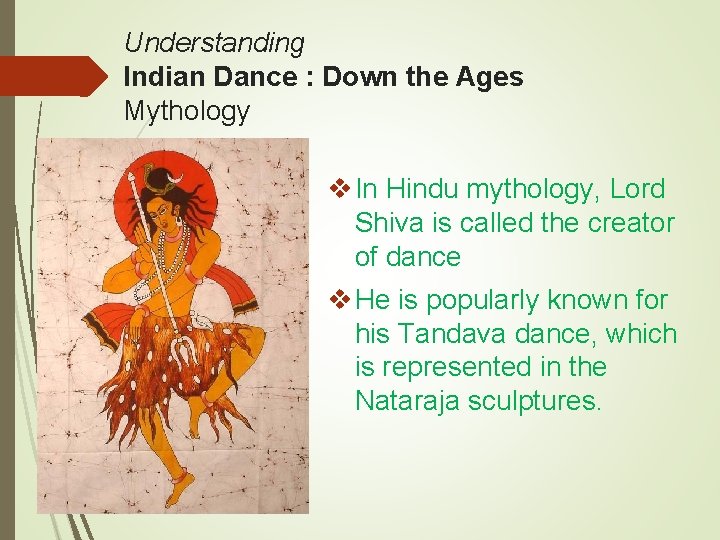
Understanding Indian Dance : Down the Ages Mythology v In Hindu mythology, Lord Shiva is called the creator of dance v He is popularly known for his Tandava dance, which is represented in the Nataraja sculptures.
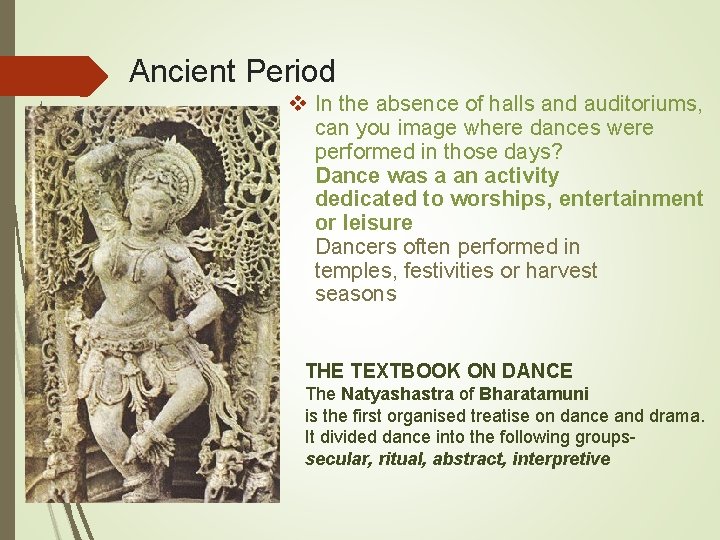
Ancient Period v In the absence of halls and auditoriums, can you image where dances were performed in those days? Dance was a an activity dedicated to worships, entertainment or leisure Dancers often performed in temples, festivities or harvest seasons THE TEXTBOOK ON DANCE The Natyashastra of Bharatamuni is the first organised treatise on dance and drama. It divided dance into the following groupssecular, ritual, abstract, interpretive
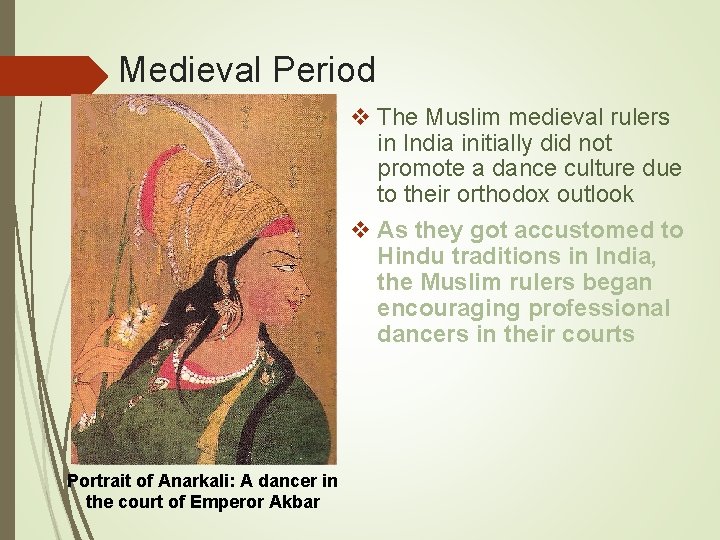
Medieval Period v The Muslim medieval rulers in India initially did not promote a dance culture due to their orthodox outlook v As they got accustomed to Hindu traditions in India, the Muslim rulers began encouraging professional dancers in their courts Portrait of Anarkali: A dancer in the court of Emperor Akbar
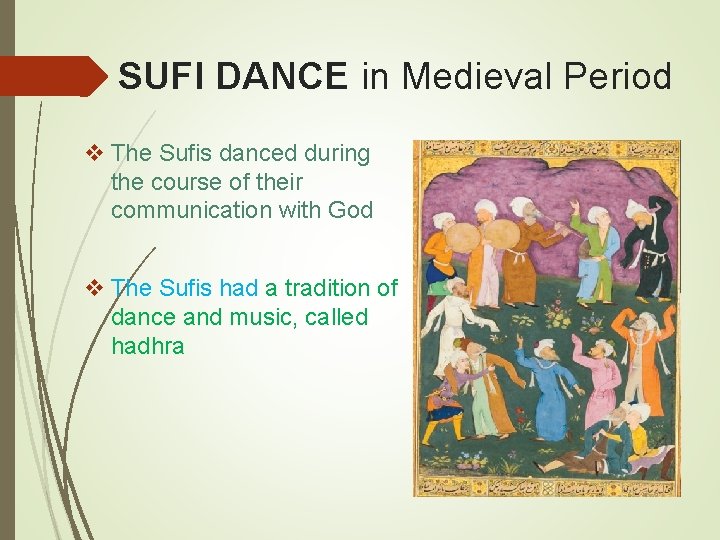
SUFI DANCE in Medieval Period v The Sufis danced during the course of their communication with God v The Sufis had a tradition of dance and music, called hadhra
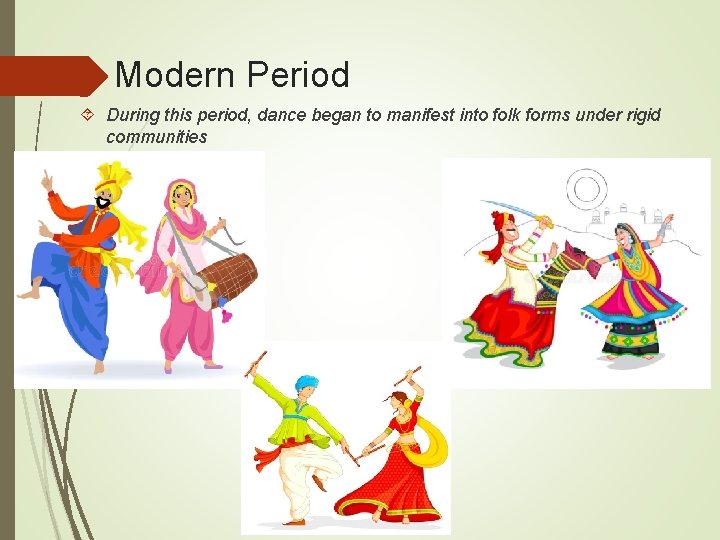
Modern Period During this period, dance began to manifest into folk forms under rigid communities
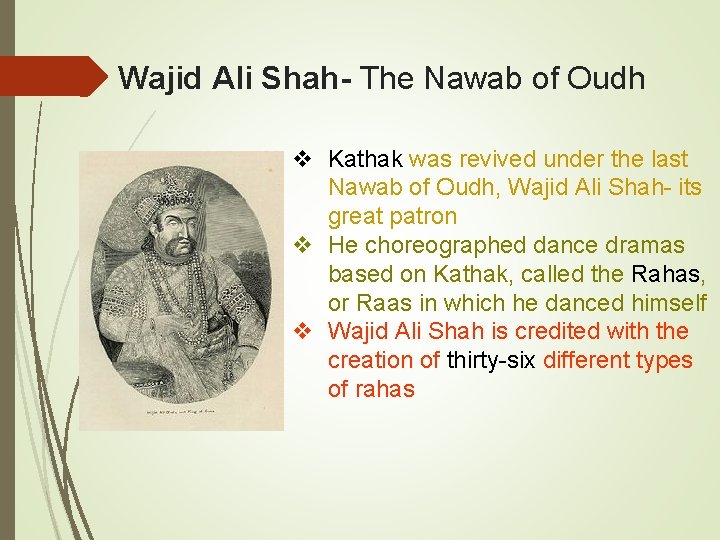
Wajid Ali Shah- The Nawab of Oudh v Kathak was revived under the last Nawab of Oudh, Wajid Ali Shah- its great patron v He choreographed dance dramas based on Kathak, called the Rahas, or Raas in which he danced himself v Wajid Ali Shah is credited with the creation of thirty-six different types of rahas
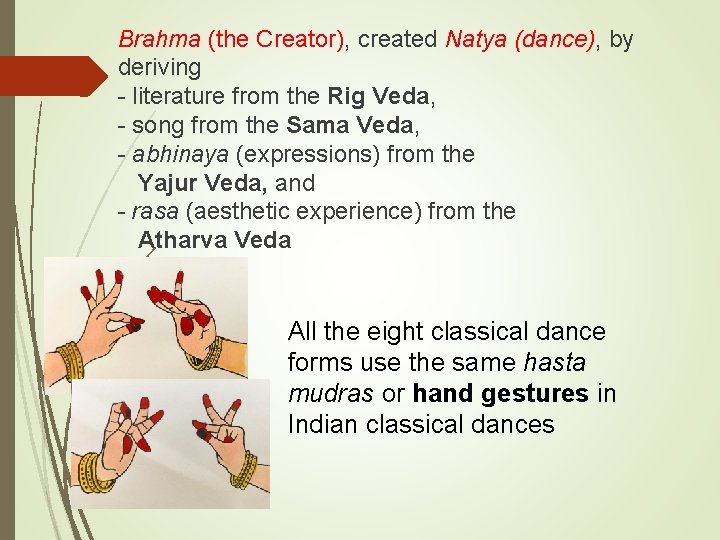
Brahma (the Creator), created Natya (dance), by deriving - literature from the Rig Veda, - song from the Sama Veda, - abhinaya (expressions) from the Yajur Veda, and - rasa (aesthetic experience) from the Atharva Veda All the eight classical dance forms use the same hasta mudras or hand gestures in Indian classical dances