
Performance Reporting IAS 1 Presentation of Financial Statements





- Slides: 23
Performance Reporting
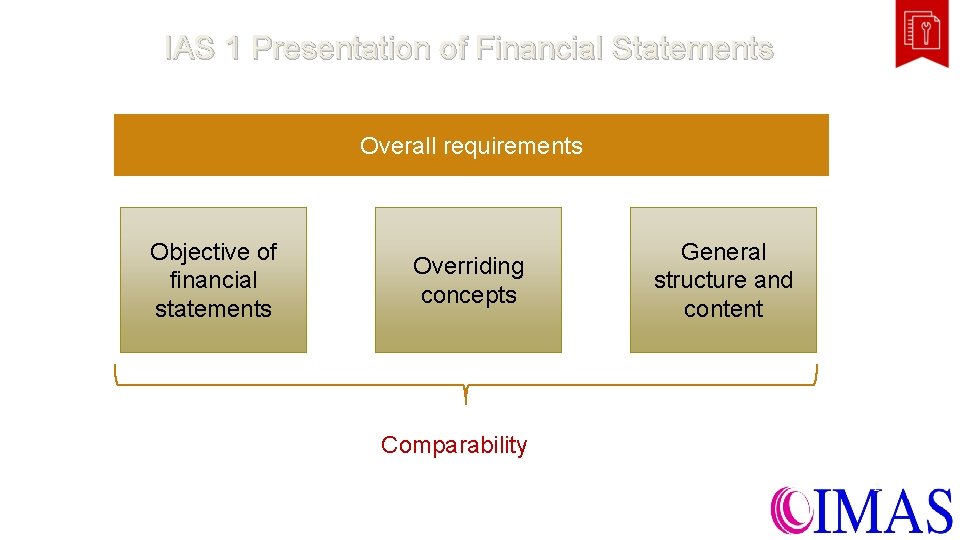
IAS 1 Presentation of Financial Statements Overall requirements Objective of financial statements Overriding concepts General structure and content Comparability 2
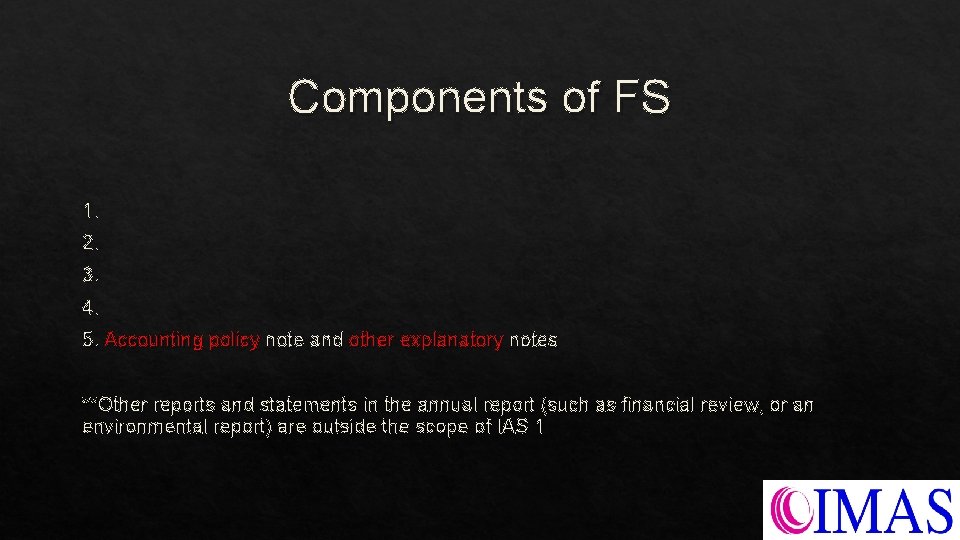
Components of FS 1. 2. 3. 4. 5. Accounting policy note and other explanatory notes **Other reports and statements in the annual report (such as financial review, or an environmental report) are outside the scope of IAS 1
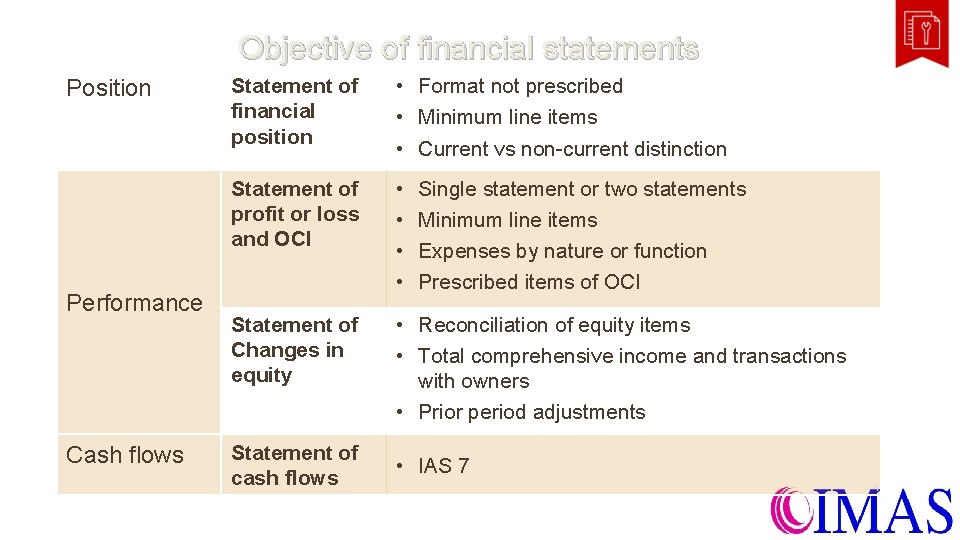
Objective of financial statements Position Performance Cash flows Statement of financial position • Format not prescribed • Minimum line items • Current vs non-current distinction Statement of profit or loss and OCI • • Statement of Changes in equity • Reconciliation of equity items • Total comprehensive income and transactions with owners • Prior period adjustments Statement of cash flows Single statement or two statements Minimum line items Expenses by nature or function Prescribed items of OCI • IAS 7 4
Current Asset and Liabilities
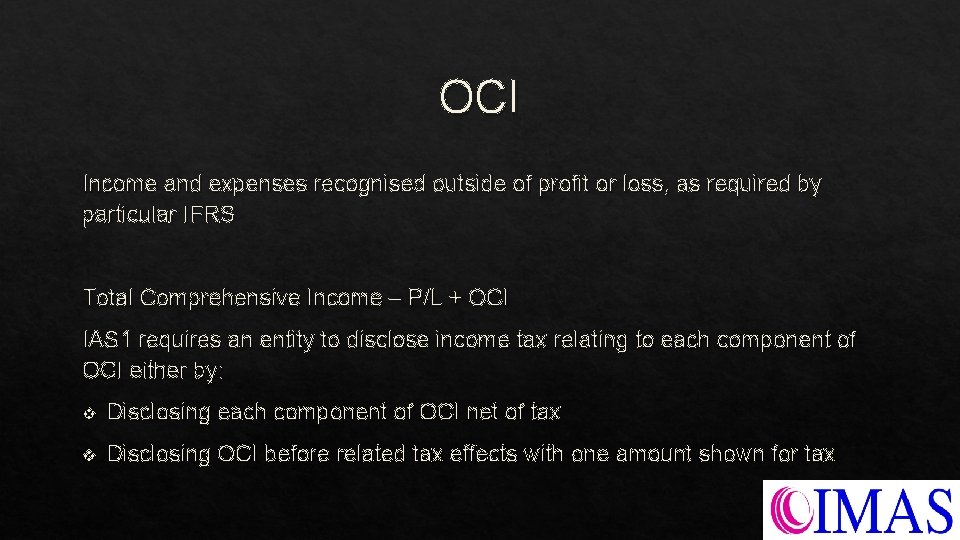
OCI Income and expenses recognised outside of profit or loss, as required by particular IFRS Total Comprehensive Income – P/L + OCI IAS 1 requires an entity to disclose income tax relating to each component of OCI either by: v Disclosing each component of OCI net of tax v Disclosing OCI before related tax effects with one amount shown for tax
Reclassification to P/l v Only necessary if reclassification will provide more relevant information Items that might be reclassified v . Items that will not be reclassified v .
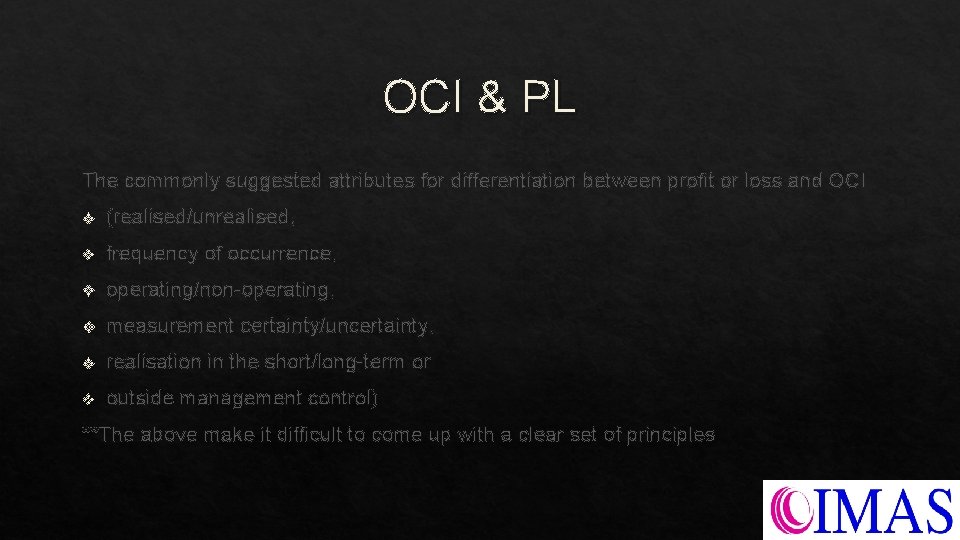
OCI & PL The commonly suggested attributes for differentiation between profit or loss and OCI v (realised/unrealised, v frequency of occurrence, v operating/non-operating, v measurement certainty/uncertainty, v realisation in the short/long-term or v outside management control) **The above make it difficult to come up with a clear set of principles
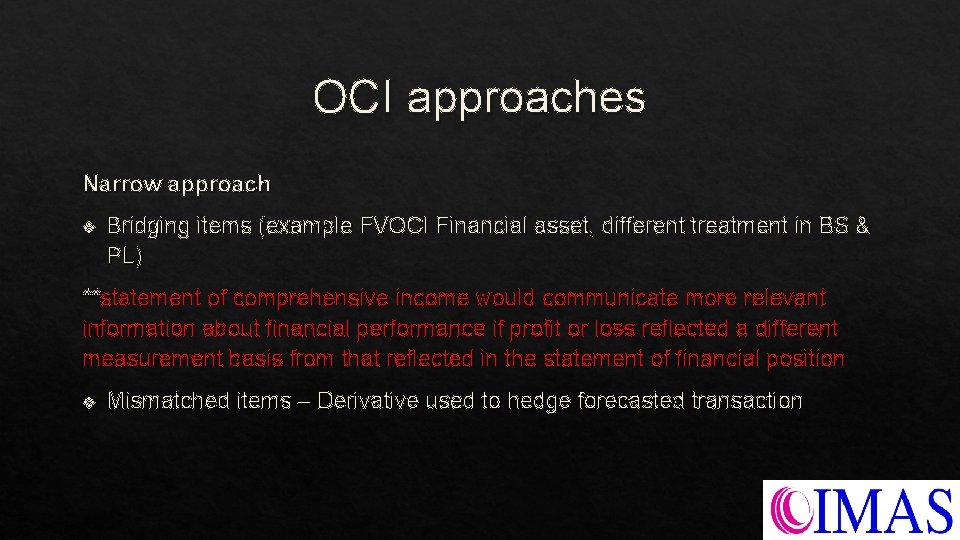
OCI approaches Narrow approach v Bridging items (example FVOCI Financial asset, different treatment in BS & PL) **statement of comprehensive income would communicate more relevant ** information about financial performance if profit or loss reflected a different measurement basis from that reflected in the statement of financial position v Mismatched items – Derivative used to hedge forecasted transaction
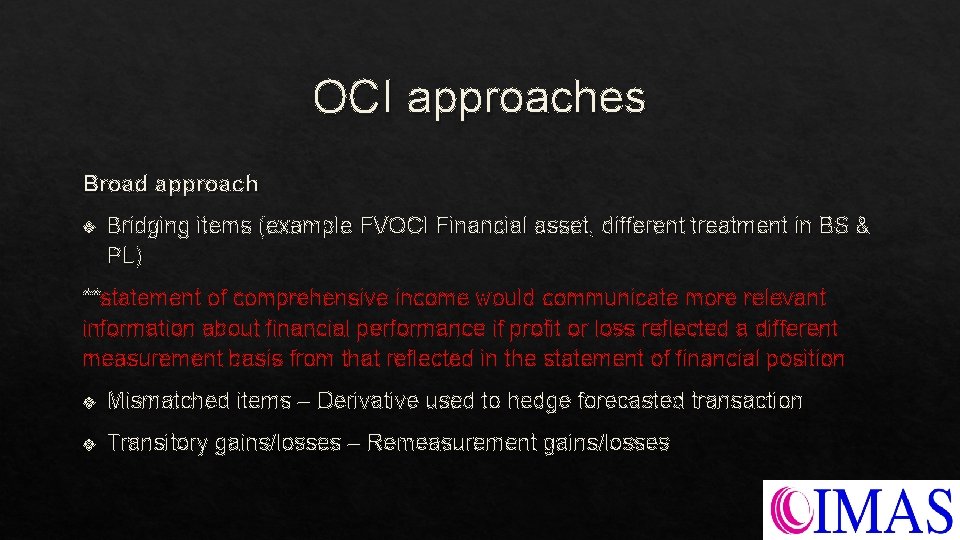
OCI approaches Broad approach v Bridging items (example FVOCI Financial asset, different treatment in BS & PL) **statement of comprehensive income would communicate more relevant ** information about financial performance if profit or loss reflected a different measurement basis from that reflected in the statement of financial position v Mismatched items – Derivative used to hedge forecasted transaction v Transitory gains/losses – Remeasurement gains/losses
Conceptual Framework The Board is suggesting two broad principles, namely: (a) Profit or loss provides the primary source of information about the return an entity has made on its economic resources in a period. (b) To support profit or loss, OCI should only be used if it makes profit or loss more relevant.
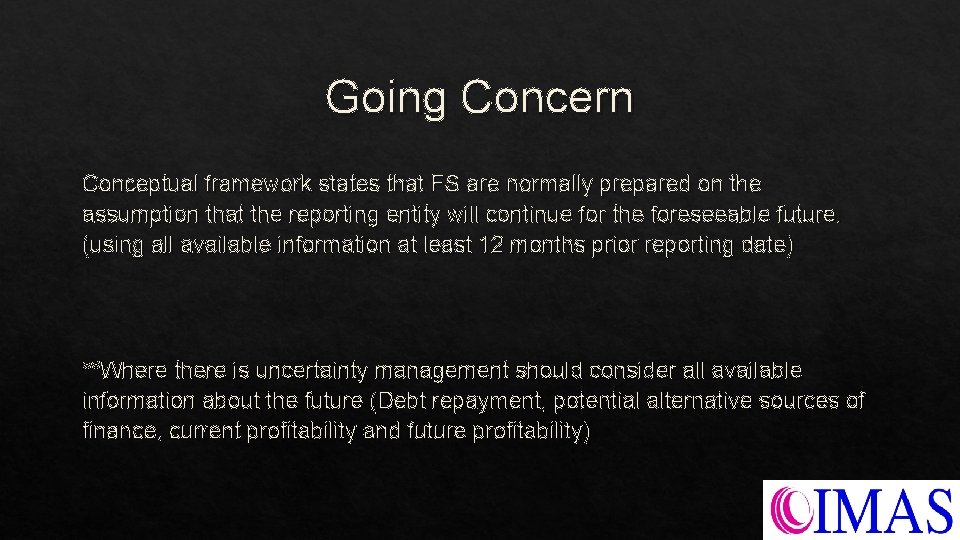
Going Concern Conceptual framework states that FS are normally prepared on the assumption that the reporting entity will continue for the foreseeable future. (using all available information at least 12 months prior reporting date) **Where there is uncertainty management should consider all available information about the future (Debt repayment, potential alternative sources of finance, current profitability and future profitability)
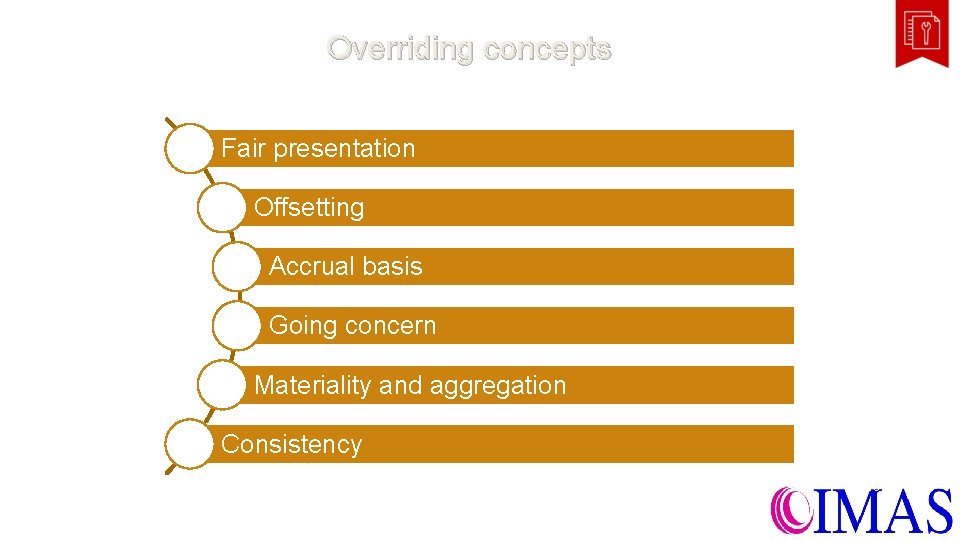
Overriding concepts Fair presentation Offsetting Accrual basis Going concern Materiality and aggregation Consistency 13
Disclosures v Explanation notes v Policy notes **Entities must make an explicit and unreserved statement that their financial statements comply with IFRS standards
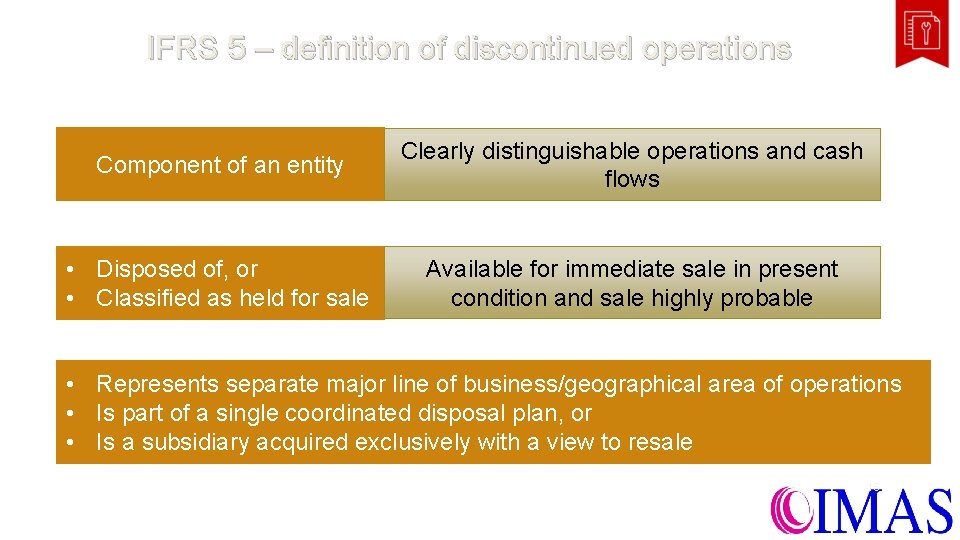
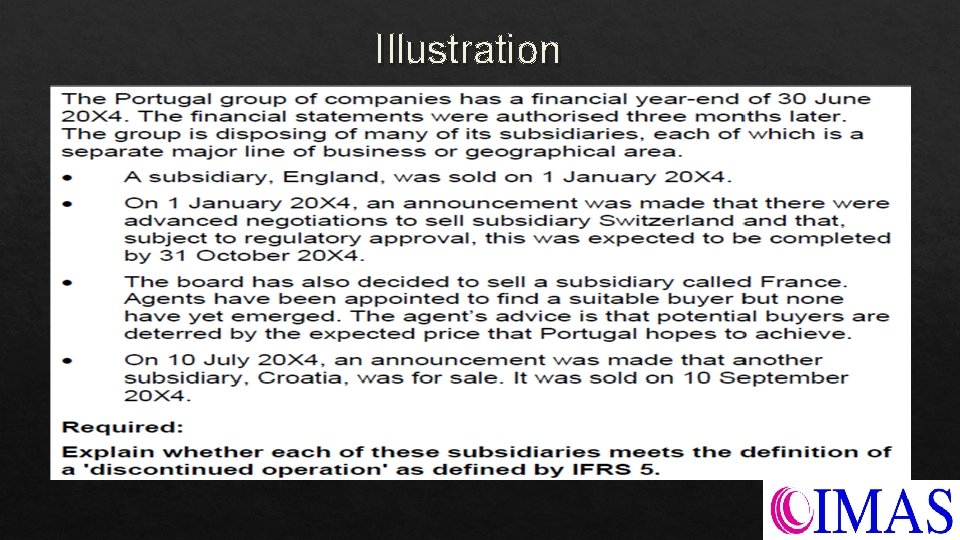
IFRS 5 – definition of discontinued operations Component of an entity Clearly distinguishable operations and cash flows that has been • Disposed of, or • Classified as held for sale Available for immediate sale in present condition and sale highly probable and • Represents separate major line of business/geographical area of operations • Is part of a single coordinated disposal plan, or • Is a subsidiary acquired exclusively with a view to resale 15
Classification criteria for held for sale? 1. 2. 3. 4. 5. 6.
Presentation of discontinued operations Profit or loss Cash flows Financial position • Single line entry • Post tax profit/loss plus gain/loss on sale or transfer to held for sale • Analysis in notes • Operating, investing and financing • Held for sale 17
Illustration
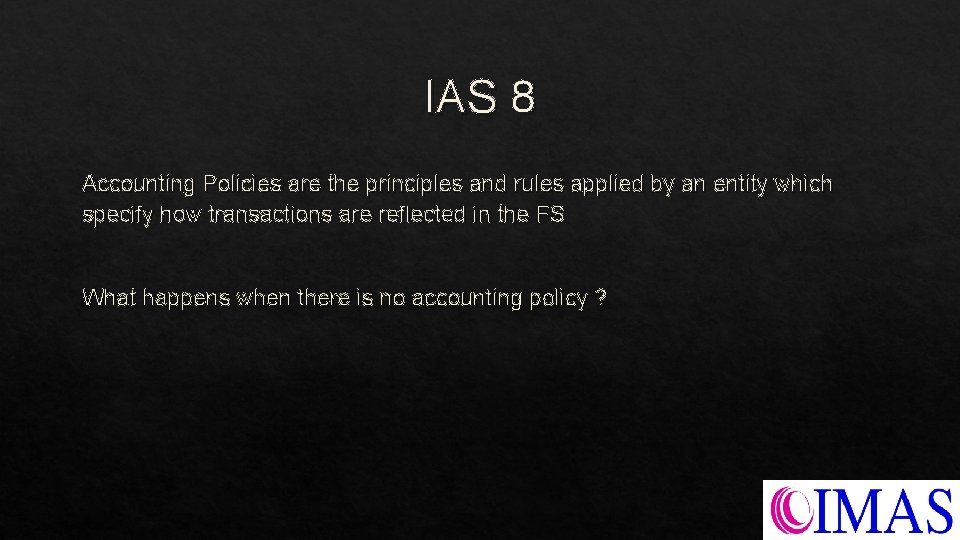
IAS 8 Accounting Policies are the principles and rules applied by an entity which specify how transactions are reflected in the FS What happens when there is no accounting policy ?
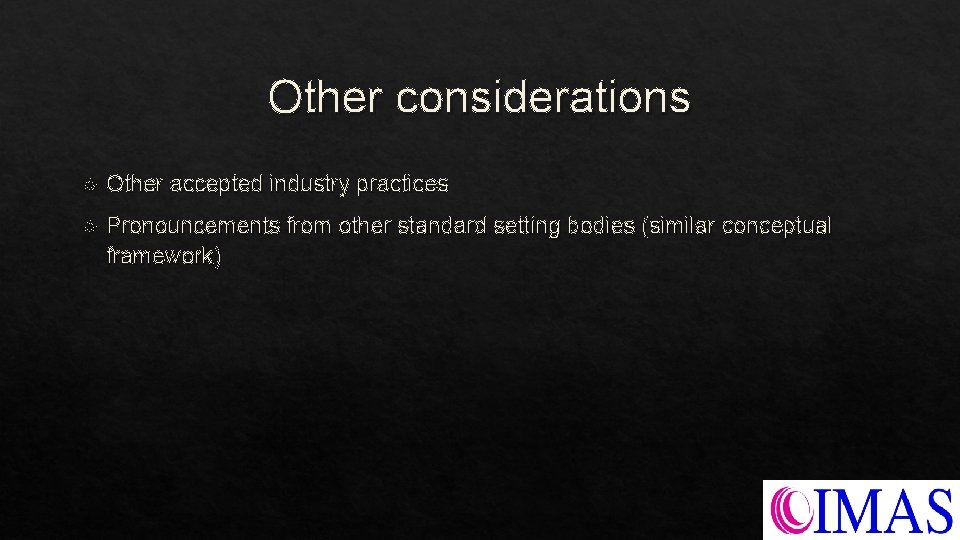
Other considerations Other accepted industry practices Pronouncements from other standard setting bodies (similar conceptual framework)
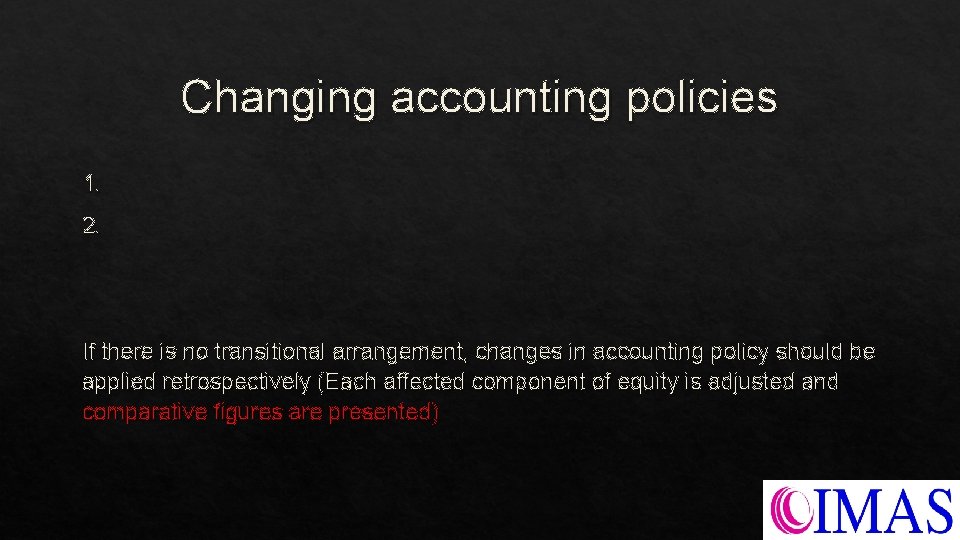
Changing accounting policies 1. 2. If there is no transitional arrangement, changes in accounting policy should be applied retrospectively (Each affected component of equity is adjusted and comparative figures are presented)
Prior period errors & Estimates v Misstatement or omissions in the FS (Including undetected fraud) ** Retrospective adjustments Estimates **Prospective adjustment
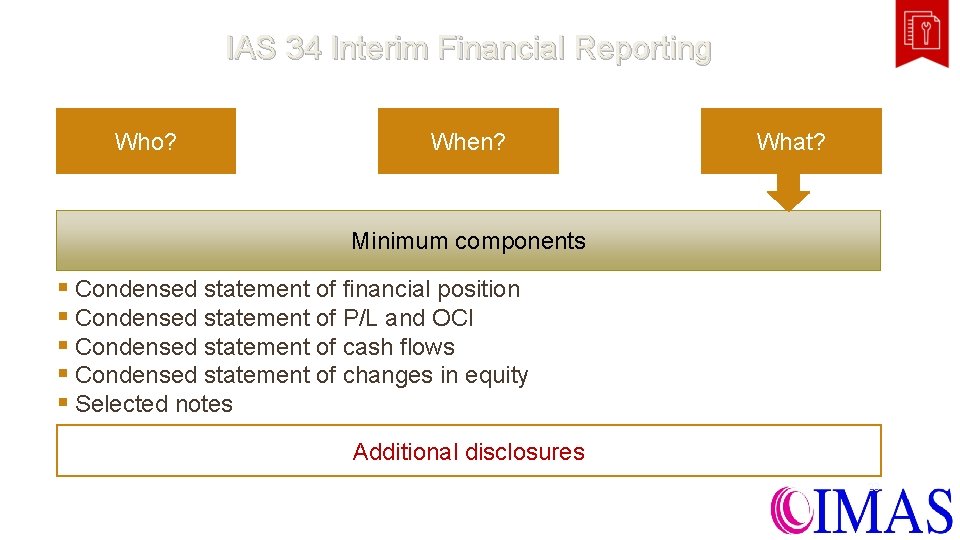
IAS 34 Interim Financial Reporting Who? When? What? Minimum components § Condensed statement of financial position § Condensed statement of P/L and OCI § Condensed statement of cash flows § Condensed statement of changes in equity § Selected notes Additional disclosures 23