
Performance Improvement Learning Improvement of Performance Reduced Production

- Slides: 11
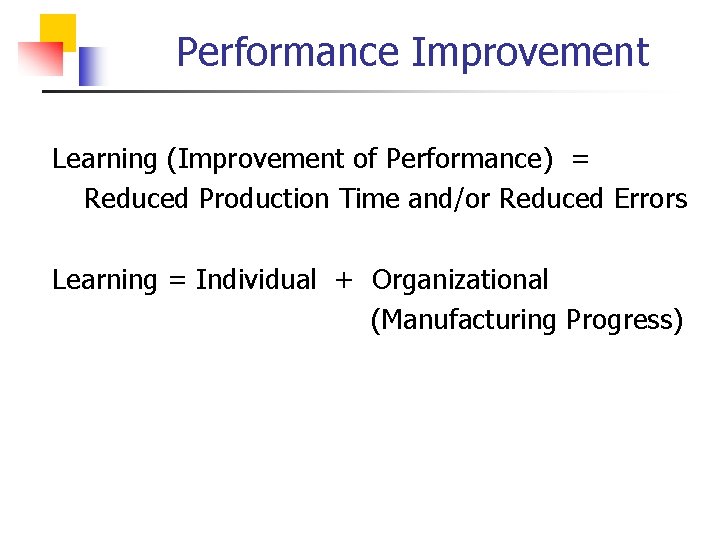
Performance Improvement Learning (Improvement of Performance) = Reduced Production Time and/or Reduced Errors Learning = Individual + Organizational (Manufacturing Progress)
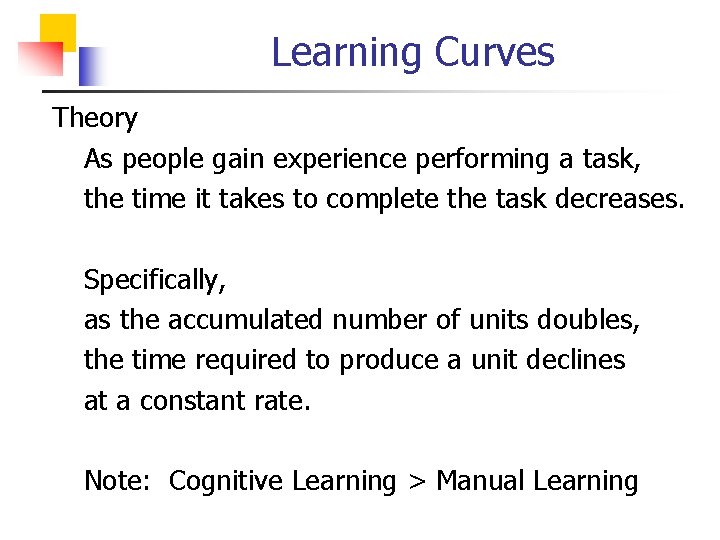
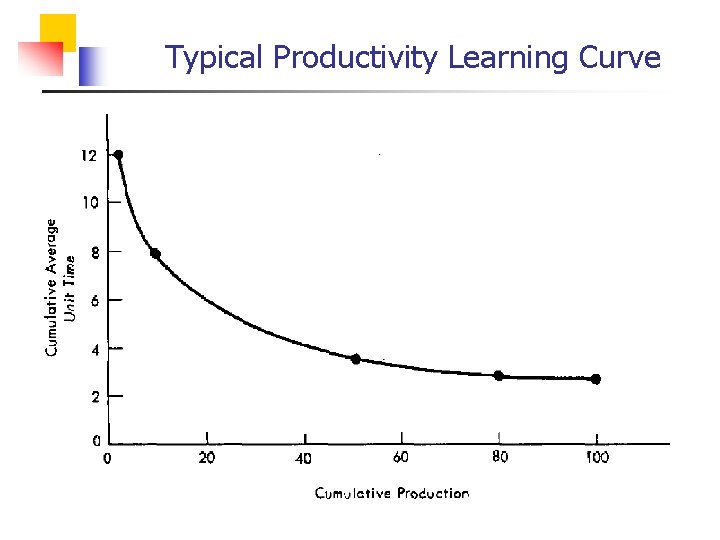
Learning Curves Theory As people gain experience performing a task, the time it takes to complete the task decreases. Specifically, as the accumulated number of units doubles, the time required to produce a unit declines at a constant rate. Note: Cognitive Learning > Manual Learning
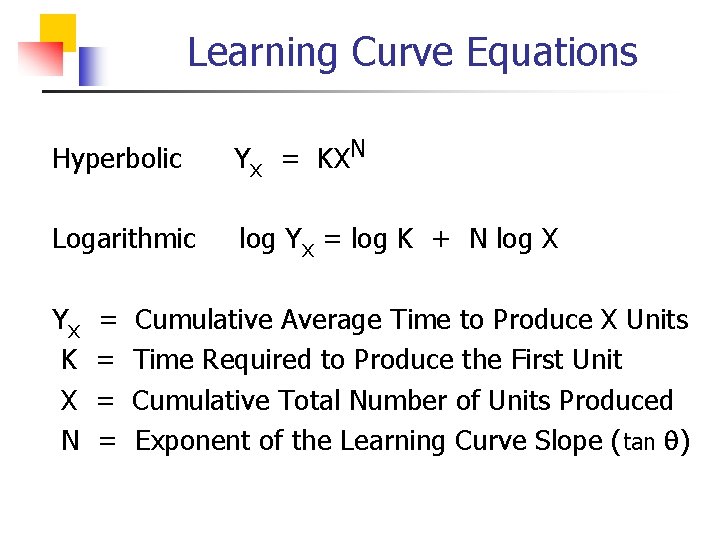
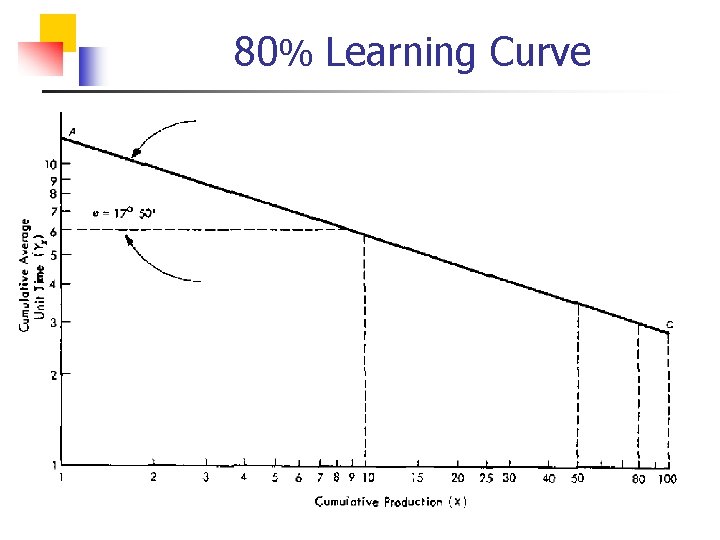
Learning Curve Equations Hyperbolic Yx = KXN Logarithmic log Yx = log K + N log X Yx K X N = = Cumulative Average Time to Produce X Units Time Required to Produce the First Unit Cumulative Total Number of Units Produced Exponent of the Learning Curve Slope (tan q)
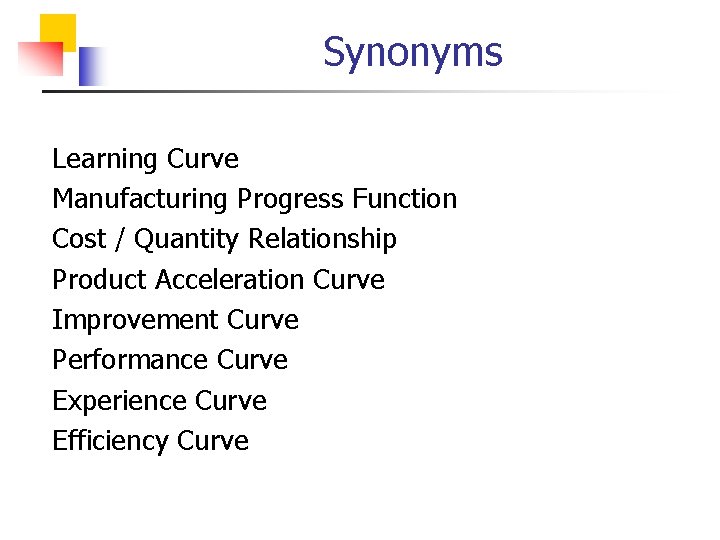
Synonyms Learning Curve Manufacturing Progress Function Cost / Quantity Relationship Product Acceleration Curve Improvement Curve Performance Curve Experience Curve Efficiency Curve
Typical Productivity Learning Curve
80% Learning Curve
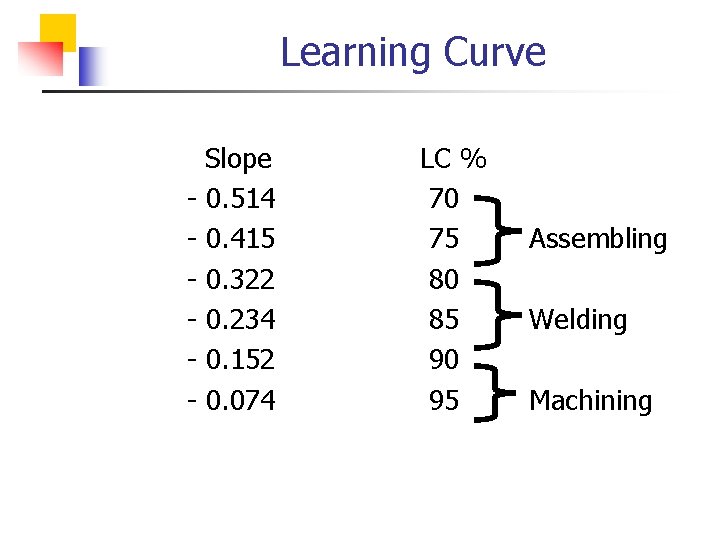
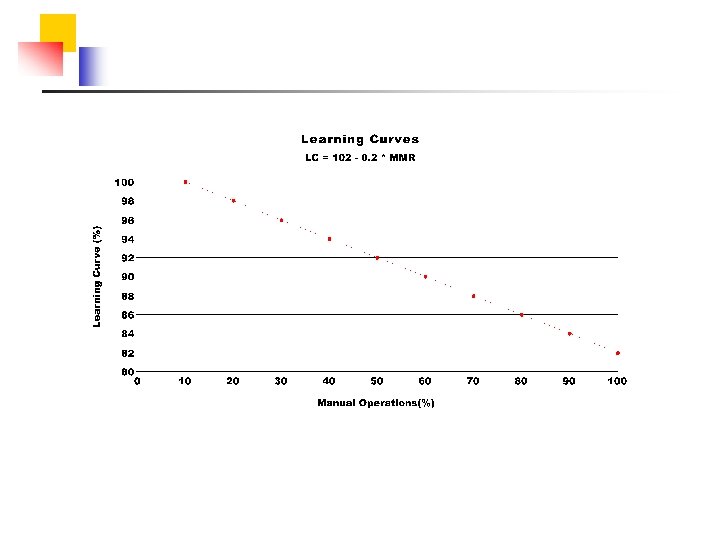
Learning Curve Slope - 0. 514 - 0. 415 - 0. 322 - 0. 234 - 0. 152 - 0. 074 LC % 70 75 80 85 90 95 Assembling Welding Machining
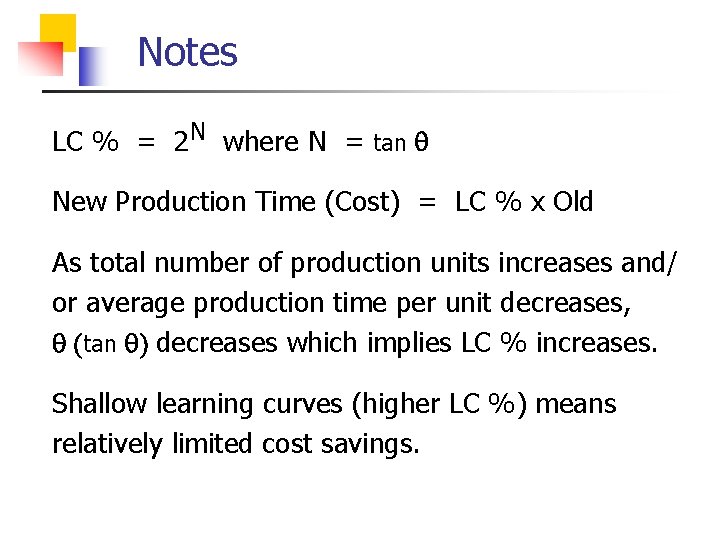
Notes LC % = 2 N where N = tan q New Production Time (Cost) = LC % x Old As total number of production units increases and/ or average production time per unit decreases, q (tan q) decreases which implies LC % increases. Shallow learning curves (higher LC %) means relatively limited cost savings.
Learning Curve Solutions Click for Solutions Generator
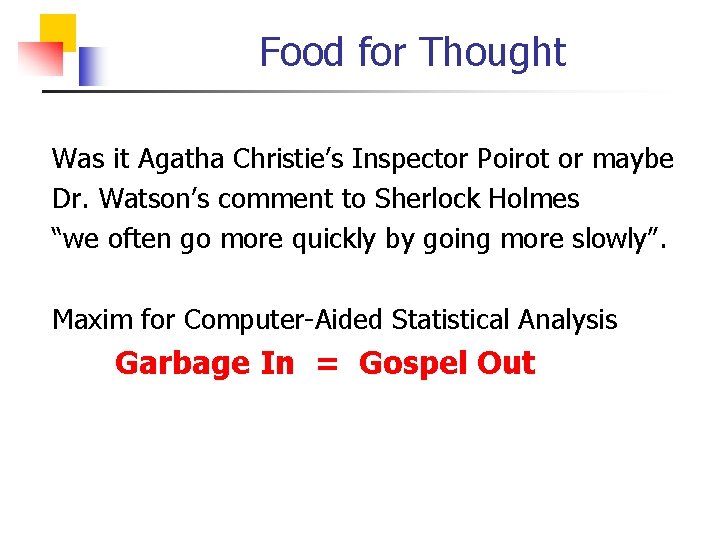
Food for Thought Was it Agatha Christie’s Inspector Poirot or maybe Dr. Watson’s comment to Sherlock Holmes “we often go more quickly by going more slowly”. Maxim for Computer-Aided Statistical Analysis Garbage In = Gospel Out