
Performance Goals How Goals Help Supervisors Manage Employees

- Slides: 20
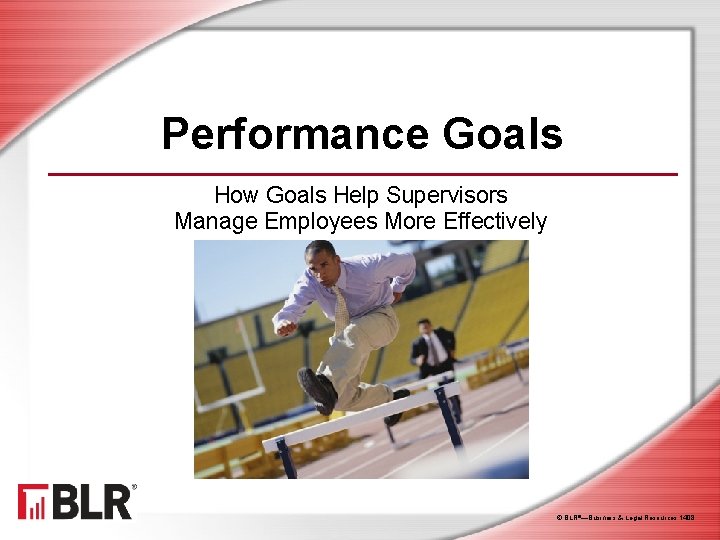
Performance Goals How Goals Help Supervisors Manage Employees More Effectively © BLR®—Business & Legal Resources 1408
Session Objectives Understand the benefits of setting performance goals Tailor goals to the needs of each employee Set goals to motivate superior performance Incorporate goals successfully in the appraisal process © BLR®—Business & Legal Resources 1408
What You Need to Know • Purpose of performance goals • Criteria for setting effective goals • Steps in the goal-setting process • How to individualize performance goals and develop action plans • Goal-setting review and evaluation • Setting new goals © BLR®—Business & Legal Resources 1408 © Business & Legal Reports, Inc. 1010
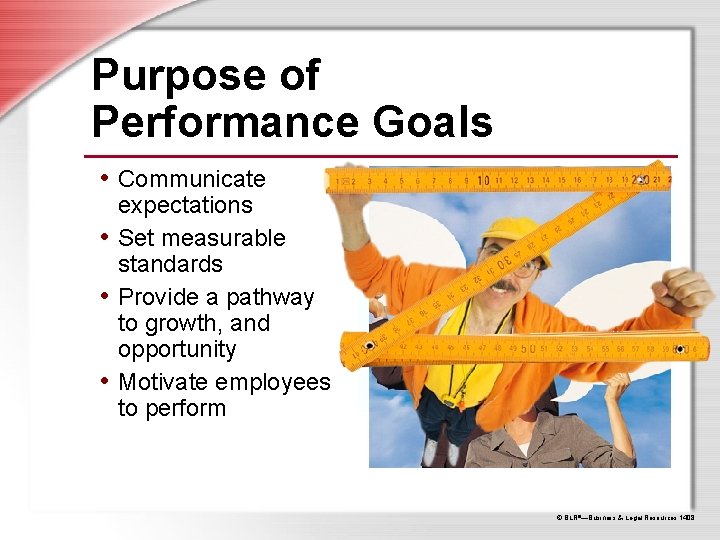
Purpose of Performance Goals • Communicate expectations • Set measurable standards • Provide a pathway to growth, and opportunity • Motivate employees to perform © BLR®—Business & Legal Resources 1408
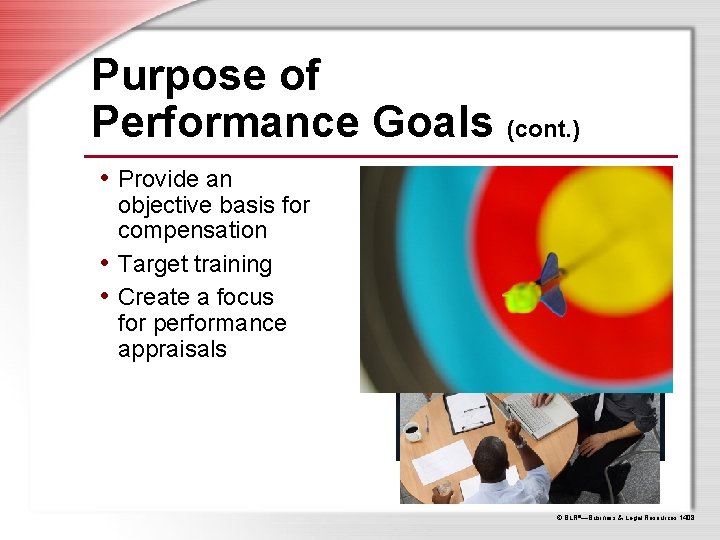
Purpose of Performance Goals (cont. ) • Provide an objective basis for compensation • Target training • Create a focus for performance appraisals © BLR®—Business & Legal Resources 1408
Performance Goals And the Law • Equal opportunity laws • Labor laws © BLR®—Business & Legal Resources 1408
Criteria for Effective Performance Goals JOB MEASURABLE OBSERVABLE RELEVANT RELATED © BLR®—Business & Legal Resources 1408
Criteria for Effective Performance Goals (cont. ) • • • Attainable Reasonable Specific Challenging Prioritized © Business & Legal Reports, Inc. 1010 © BLR®®—Business & Legal Resources 1408 © BLR —Business & Legal Resources 1408
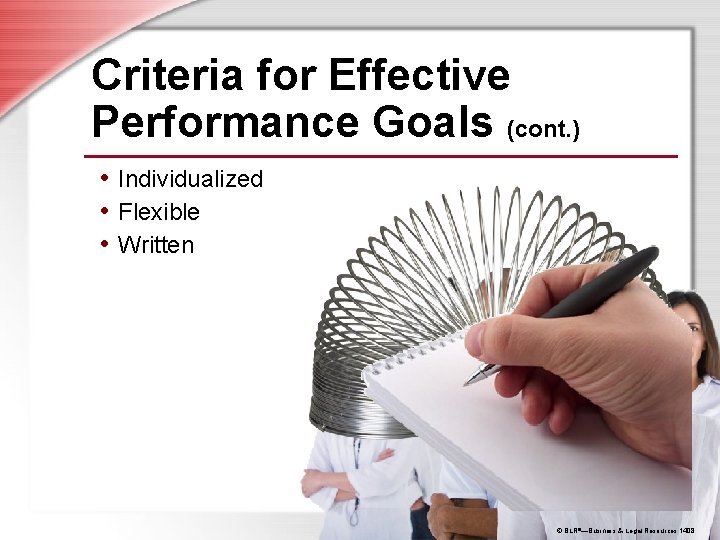
Criteria for Effective Performance Goals (cont. ) • Individualized • Flexible • Written © BLR®—Business & Legal Resources 1408
Performance Goals and Employee Success • Do you understand the information presented in the previous slides? © BLR®—Business & Legal Resources 1408
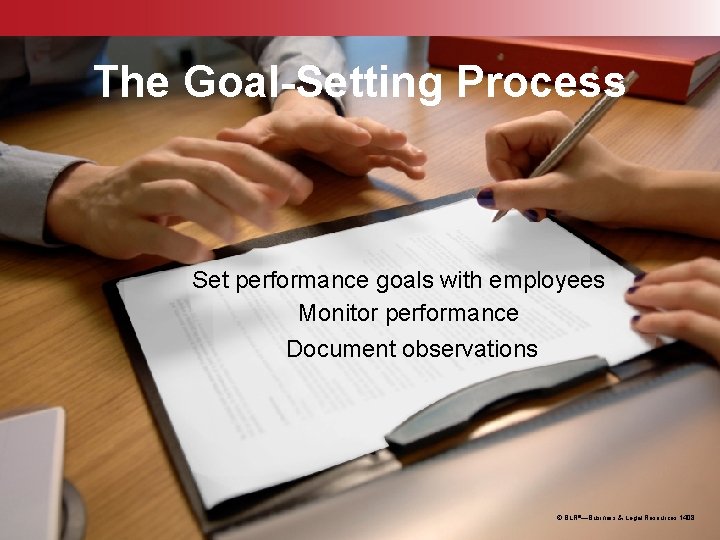
The Goal-Setting Process Set performance goals with employees Monitor performance Document observations © BLR®—Business & Legal Resources 1408 © Business & Legal Reports, Inc. 1010
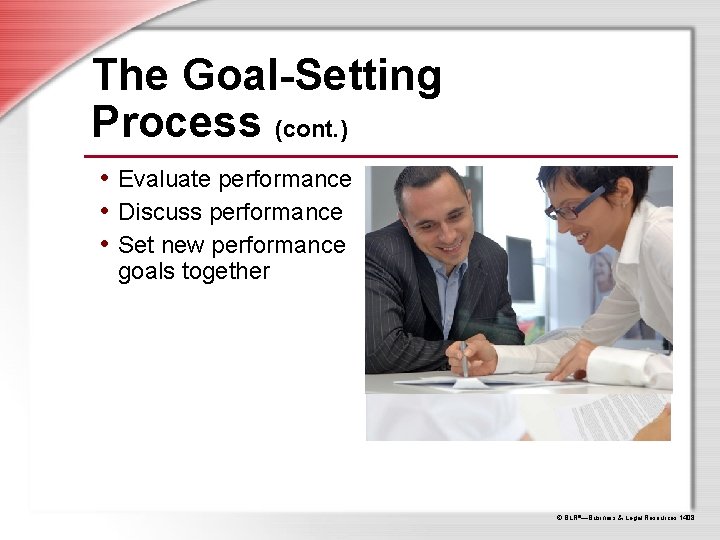
The Goal-Setting Process (cont. ) • Evaluate performance • Discuss performance • Set new performance goals together © BLR®—Business & Legal Resources 1408
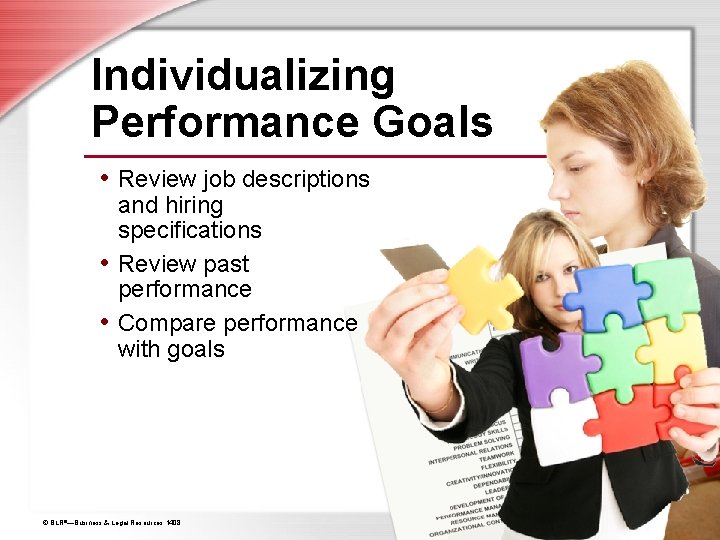
Individualizing Performance Goals • Review job descriptions and hiring specifications • Review past performance • Compare performance with goals © BLR®—Business & Legal Resources 1408
Individualizing Performance Goals (cont. ) • Physical or environmental limitations • Team goals • Employee’s career growth • Manager’s goals and your own goals © BLR®—Business & Legal Resources 1408 © Business & Legal Reports, Inc. 1010
Developing an Action Plan For Each Performance Goal • One goal for each job • Guidelines for achievement • Time frame • Measurement standard © BLR®—Business & Legal Resources 1408
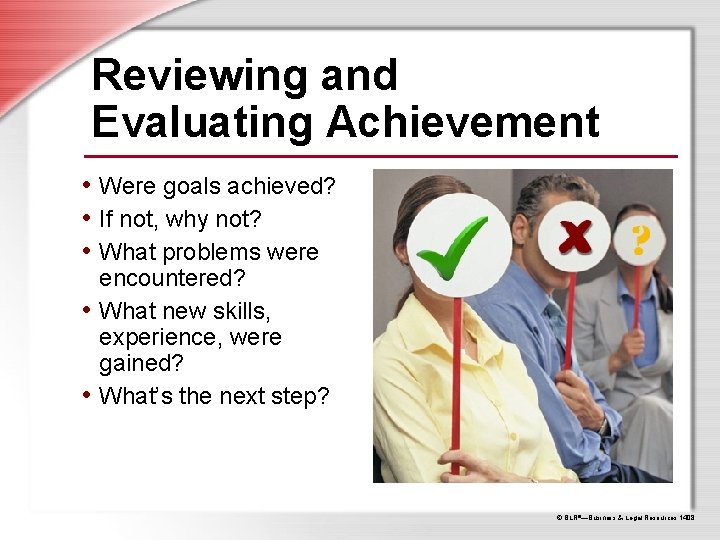
Reviewing and Evaluating Achievement • Were goals achieved? • If not, why not? • What problems were encountered? • What new skills, experience, were gained? • What’s the next step? © BLR®—Business & Legal Resources 1408
Setting New Goals • Goals not yet achieved • Career development goals • Changing company needs • Additional training or coaching • Next level of achievement © BLR®—Business & Legal Resources 1408
Setting Effective Performance Goals • Do you understand the information presented in the previous slides? © BLR®—Business & Legal Resources 1408
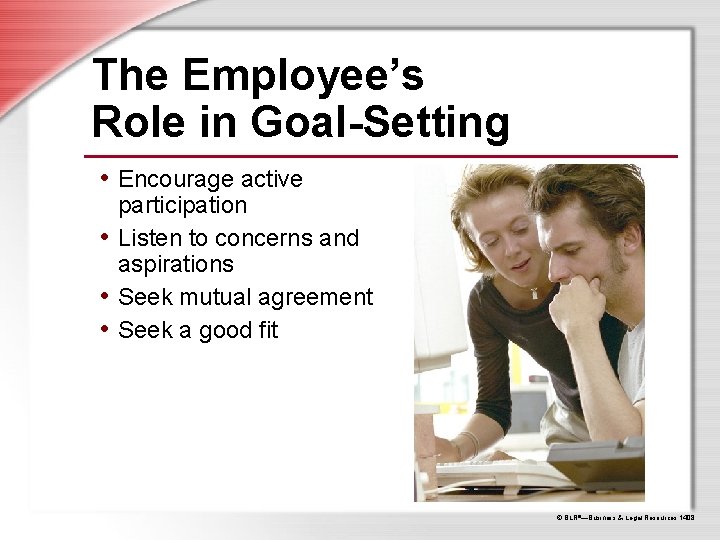
The Employee’s Role in Goal-Setting • Encourage active participation • Listen to concerns and aspirations • Seek mutual agreement • Seek a good fit © BLR®—Business & Legal Resources 1408
Key Points To Remember Performance goals motivate and direct employee achievement They are essential to the success of employees, your department, and the organization Work together with employees to develop meaningful and useful goals Link each goal to an action plan © BLR®—Business & Legal Resources 1408