
Performance Assessment Early Childhood Education Overview 1 2
- Slides: 20
Performance Assessment Early Childhood Education
Overview 1. 2. 3. 4. Policy context Aspects of program readiness Using results Discussion
Highly effective educators POLICY CONTEXT
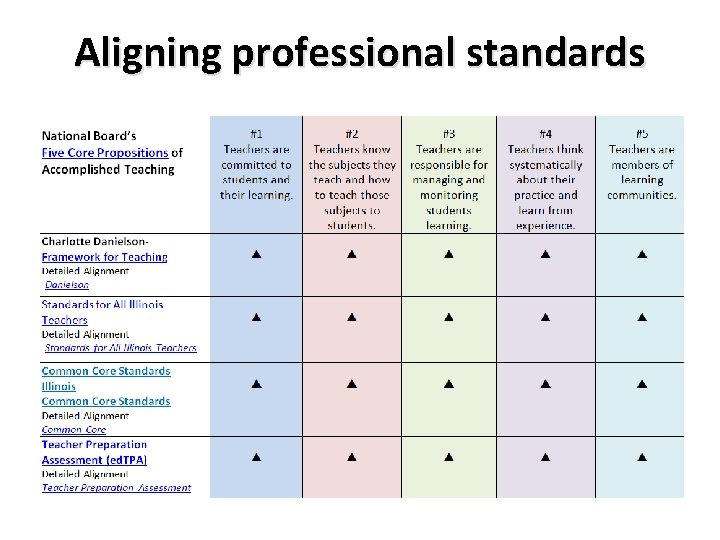
Aligning professional standards
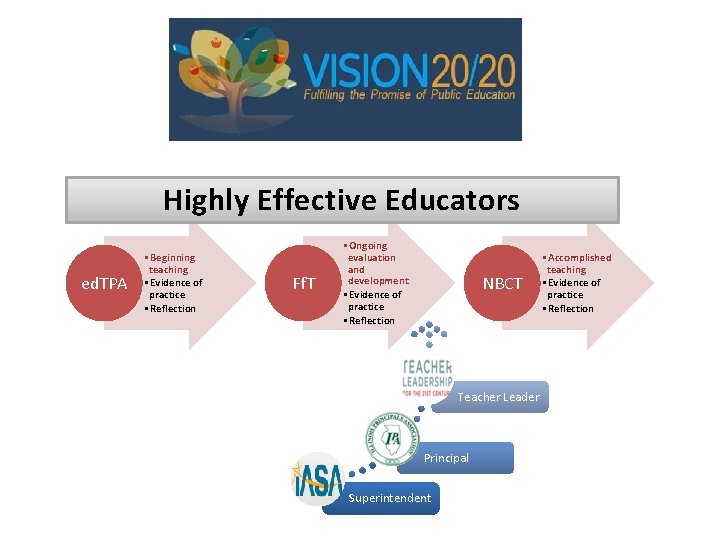
Highly Effective Educators ed. TPA • Beginning teaching • Evidence of practice • Reflection Ff. T • Ongoing evaluation and development • Evidence of practice • Reflection NBCT Teacher Leader Principal Superintendent • Accomplished teaching • Evidence of practice • Reflection
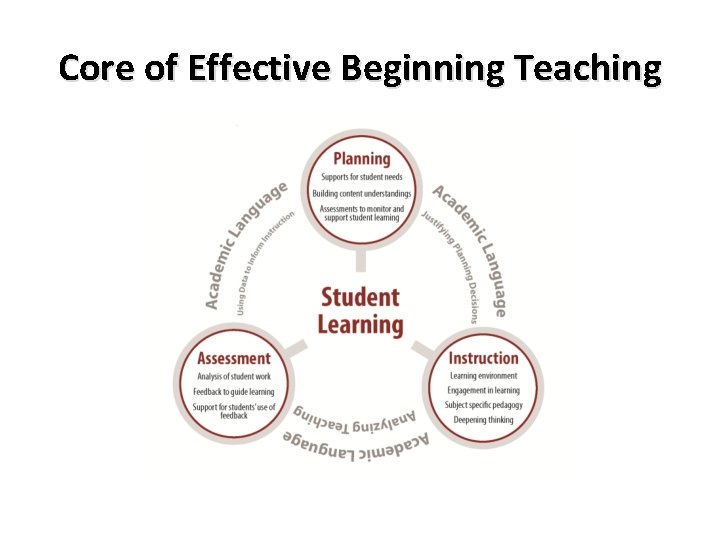
Core of Effective Beginning Teaching
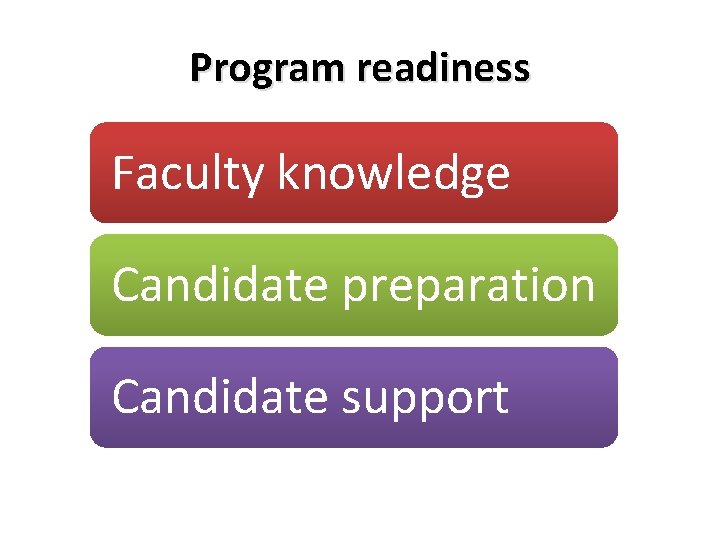
Program readiness Faculty knowledge Candidate preparation Candidate support
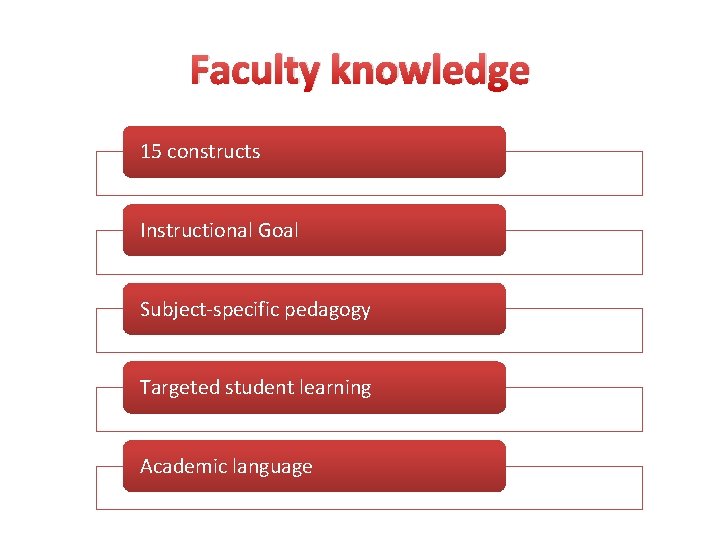
Faculty knowledge 15 constructs Instructional Goal Subject-specific pedagogy Targeted student learning Academic language
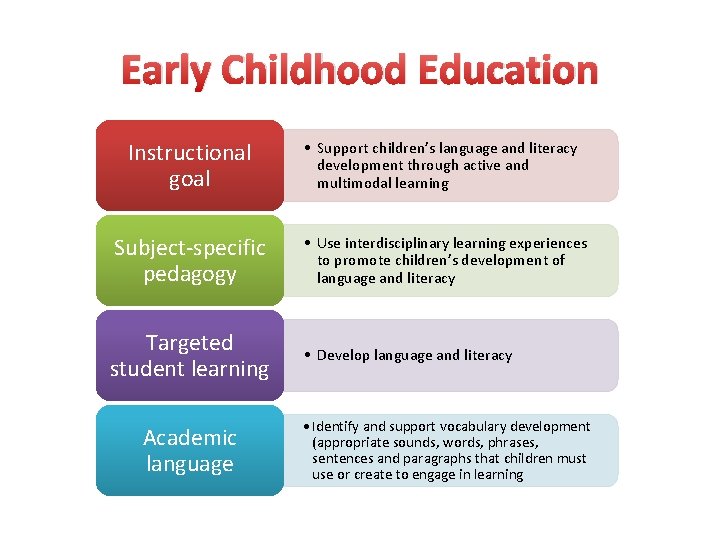
Early Childhood Education Instructional goal • Support children’s language and literacy development through active and multimodal learning Subject-specific pedagogy • Use interdisciplinary learning experiences to promote children’s development of language and literacy Targeted student learning • Develop language and literacy Academic language • Identify and support vocabulary development (appropriate sounds, words, phrases, sentences and paragraphs that children must use or create to engage in learning
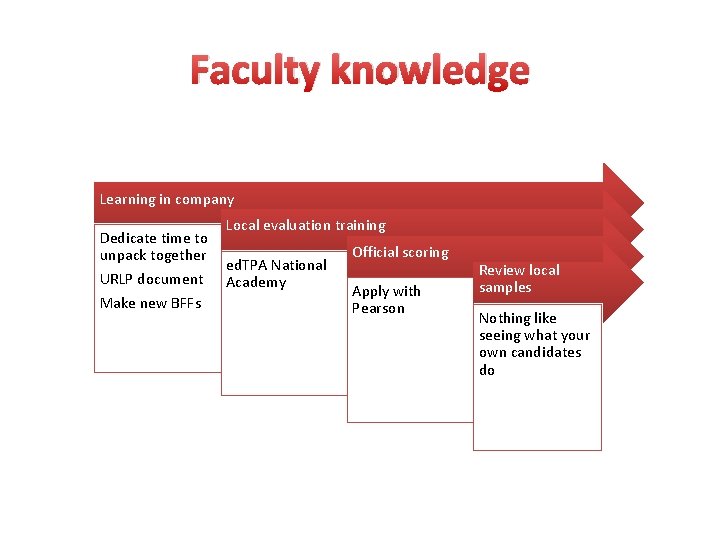
Faculty knowledge Learning in company Dedicate time to unpack together URLP document Make new BFFs Local evaluation training ed. TPA National Academy Official scoring Apply with Pearson Review local samples Nothing like seeing what your own candidates do
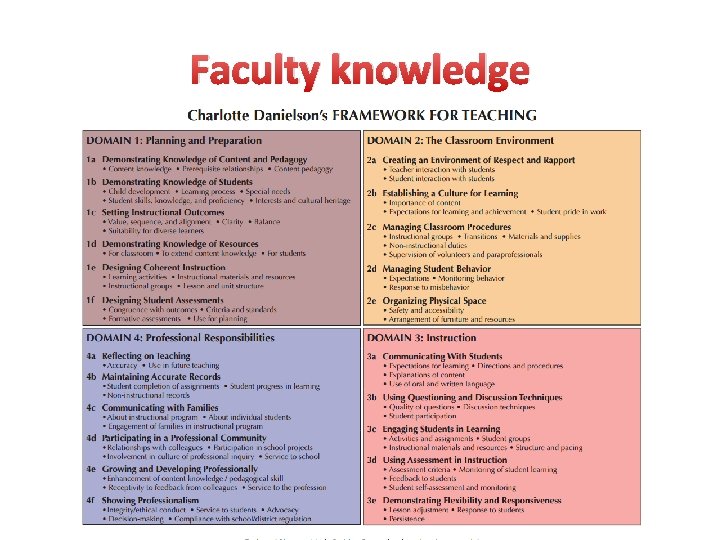
Faculty knowledge
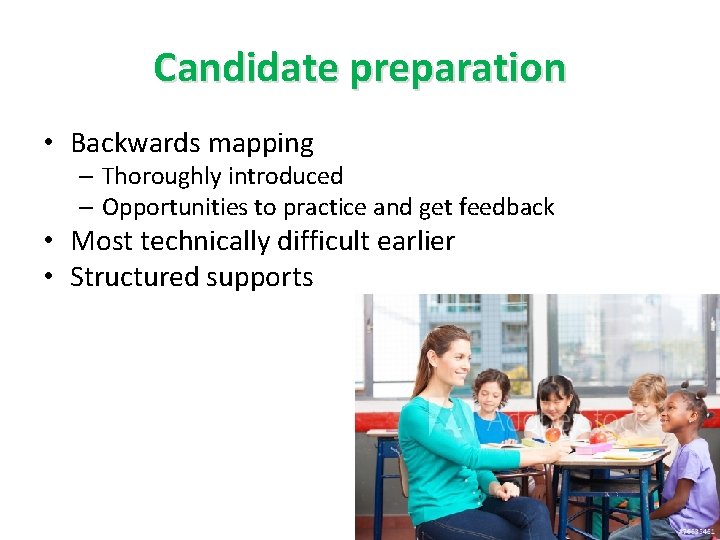
Candidate preparation • Backwards mapping – Thoroughly introduced – Opportunities to practice and get feedback • Most technically difficult earlier • Structured supports
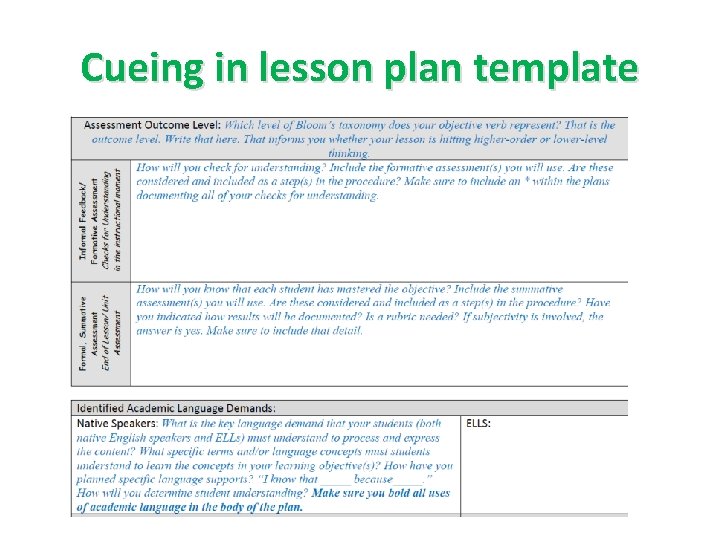
Cueing in lesson plan template
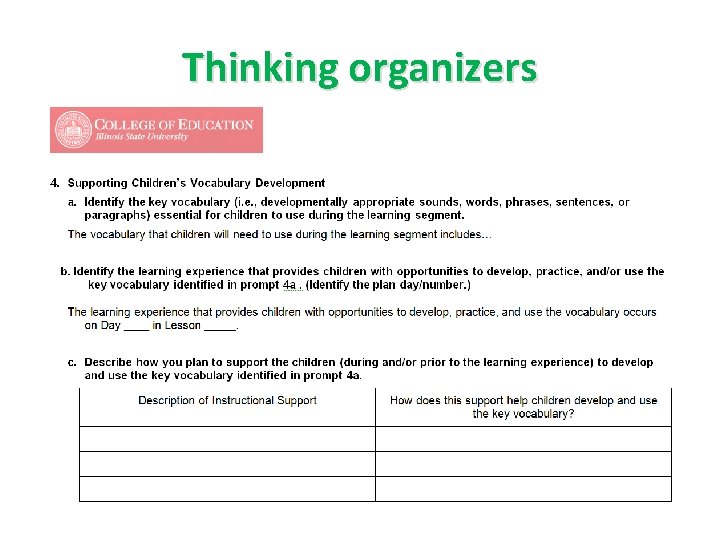
Thinking organizers
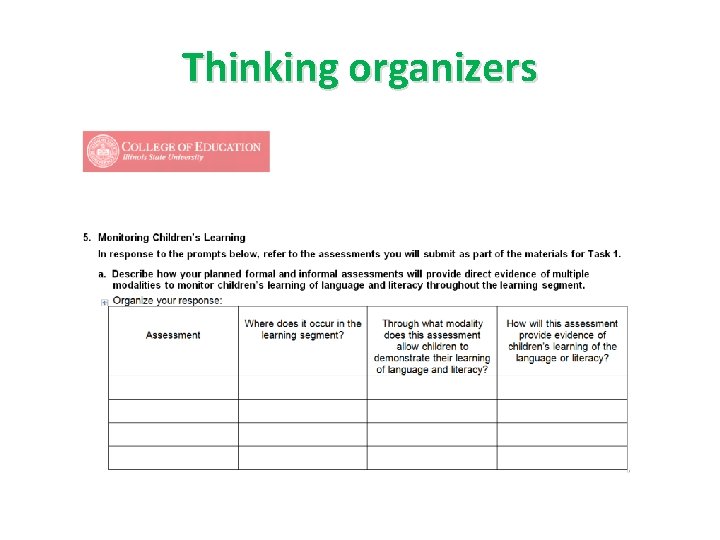
Thinking organizers
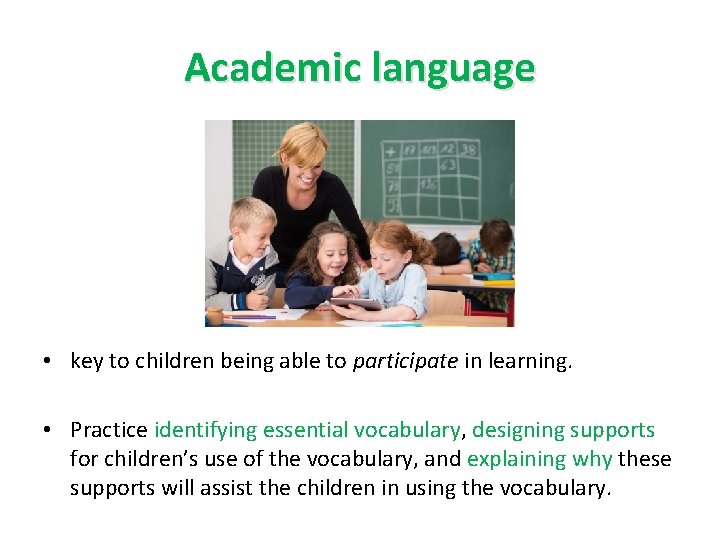
Academic language • key to children being able to participate in learning. • Practice identifying essential vocabulary, designing supports for children’s use of the vocabulary, and explaining why these supports will assist the children in using the vocabulary.
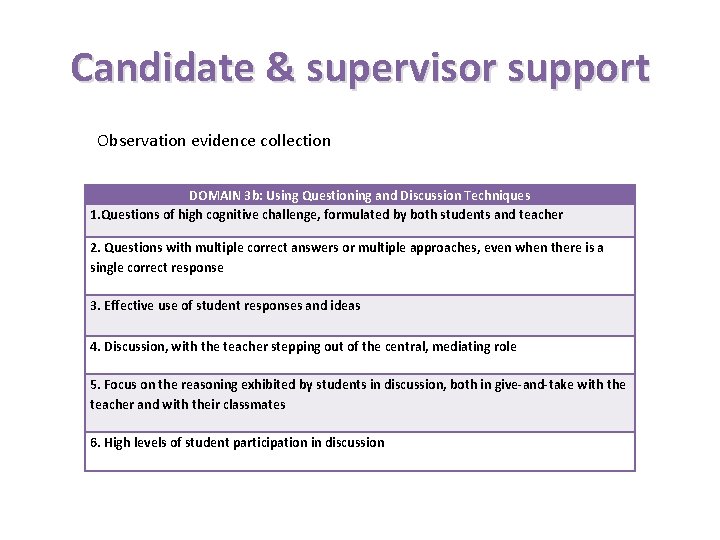
Candidate & supervisor support Observation evidence collection DOMAIN 3 b: Using Questioning and Discussion Techniques 1. Questions of high cognitive challenge, formulated by both students and teacher 2. Questions with multiple correct answers or multiple approaches, even when there is a single correct response 3. Effective use of student responses and ideas 4. Discussion, with the teacher stepping out of the central, mediating role 5. Focus on the reasoning exhibited by students in discussion, both in give-and-take with the teacher and with their classmates 6. High levels of student participation in discussion
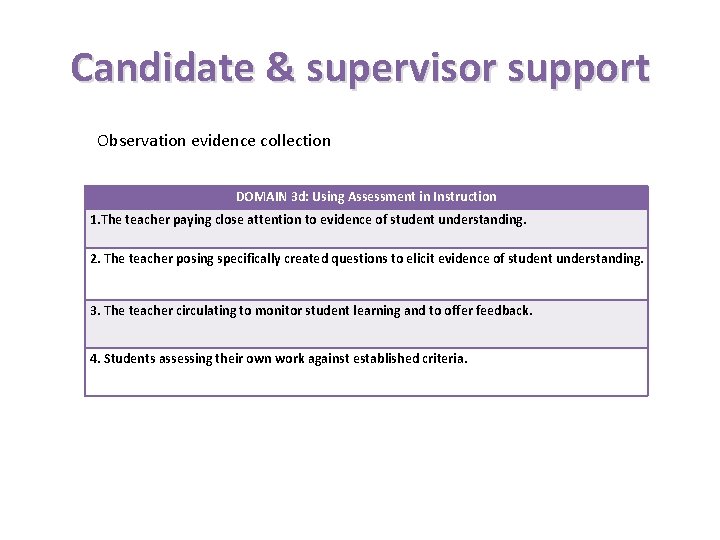
Candidate & supervisor support Observation evidence collection DOMAIN 3 d: Using Assessment in Instruction 1. The teacher paying close attention to evidence of student understanding. 2. The teacher posing specifically created questions to elicit evidence of student understanding. 3. The teacher circulating to monitor student learning and to offer feedback. 4. Students assessing their own work against established criteria.
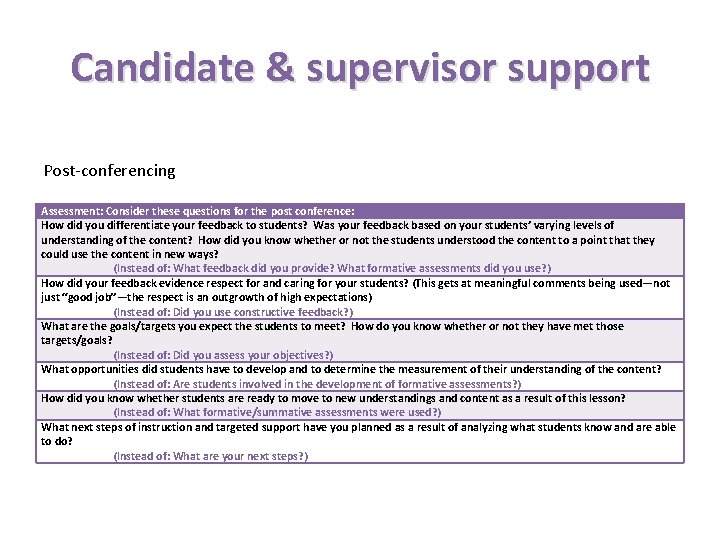
Candidate & supervisor support Post-conferencing Assessment: Consider these questions for the post conference: How did you differentiate your feedback to students? Was your feedback based on your students’ varying levels of understanding of the content? How did you know whether or not the students understood the content to a point that they could use the content in new ways? (Instead of: What feedback did you provide? What formative assessments did you use? ) How did your feedback evidence respect for and caring for your students? (This gets at meaningful comments being used—not just “good job”—the respect is an outgrowth of high expectations) (Instead of: Did you use constructive feedback? ) What are the goals/targets you expect the students to meet? How do you know whether or not they have met those targets/goals? (Instead of: Did you assess your objectives? ) What opportunities did students have to develop and to determine the measurement of their understanding of the content? (Instead of: Are students involved in the development of formative assessments? ) How did you know whether students are ready to move to new understandings and content as a result of this lesson? (Instead of: What formative/summative assessments were used? ) What next steps of instruction and targeted support have you planned as a result of analyzing what students know and are able to do? (Instead of: What are your next steps? )
Thank you! DISCUSSION