
Perfect Poetry Planning S Subject and theme I
Perfect Poetry Planning!
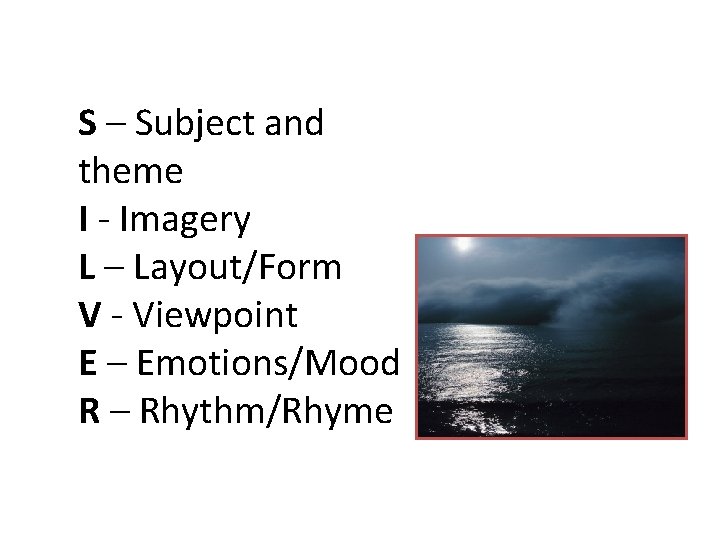
S – Subject and theme I - Imagery L – Layout/Form V - Viewpoint E – Emotions/Mood R – Rhythm/Rhyme
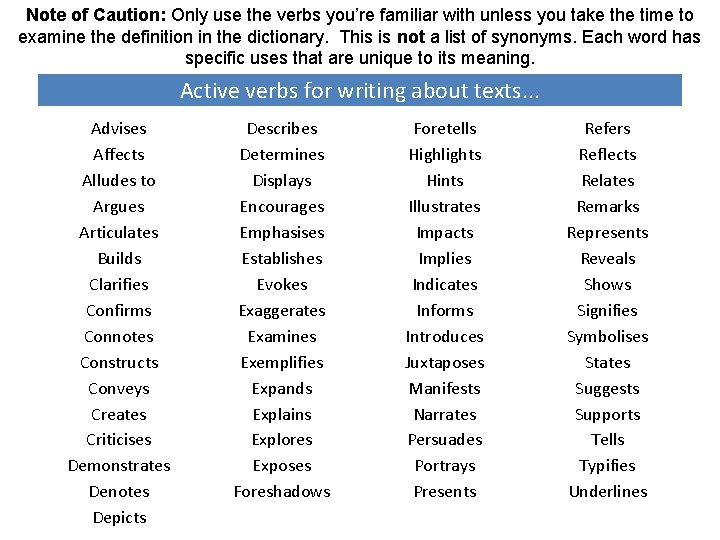
Note of Caution: Only use the verbs you’re familiar with unless you take the time to examine the definition in the dictionary. This is not a list of synonyms. Each word has specific uses that are unique to its meaning. Active verbs for writing about texts. . . Advises Affects Alludes to Argues Articulates Builds Clarifies Confirms Connotes Constructs Conveys Creates Criticises Demonstrates Denotes Depicts Describes Determines Displays Encourages Emphasises Establishes Evokes Exaggerates Examines Exemplifies Expands Explains Explores Exposes Foreshadows Foretells Highlights Hints Illustrates Impacts Implies Indicates Informs Introduces Juxtaposes Manifests Narrates Persuades Portrays Presents Refers Reflects Relates Remarks Represents Reveals Shows Signifies Symbolises States Suggests Supports Tells Typifies Underlines
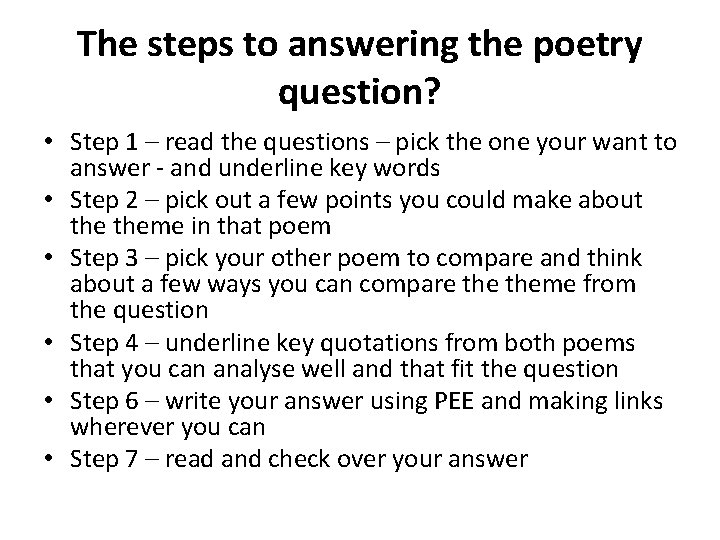
The steps to answering the poetry question? • Step 1 – read the questions – pick the one your want to answer - and underline key words • Step 2 – pick out a few points you could make about theme in that poem • Step 3 – pick your other poem to compare and think about a few ways you can compare theme from the question • Step 4 – underline key quotations from both poems that you can analyse well and that fit the question • Step 6 – write your answer using PEE and making links wherever you can • Step 7 – read and check over your answer
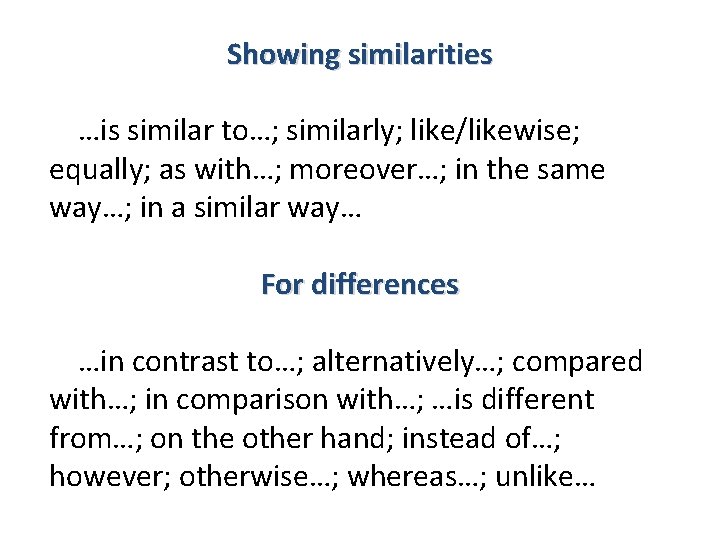
Showing similarities …is similar to…; similarly; like/likewise; equally; as with…; moreover…; in the same way…; in a similar way… For differences …in contrast to…; alternatively…; compared with…; in comparison with…; …is different from…; on the other hand; instead of…; however; otherwise…; whereas…; unlike…
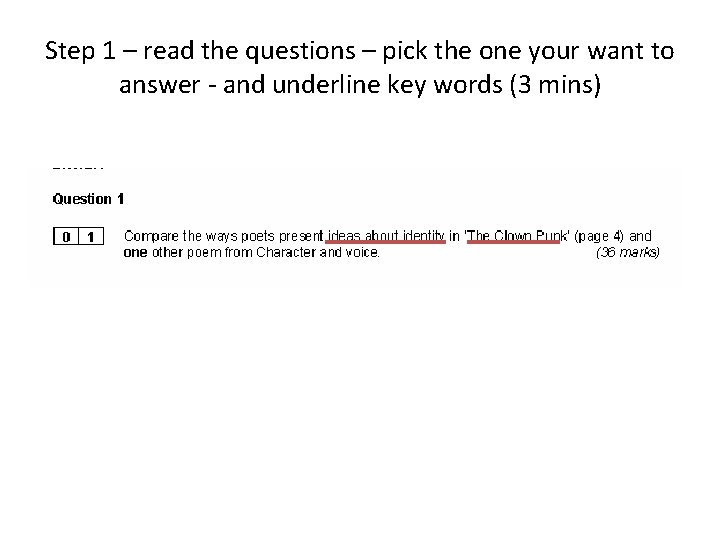
Step 1 – read the questions – pick the one your want to answer - and underline key words (3 mins)
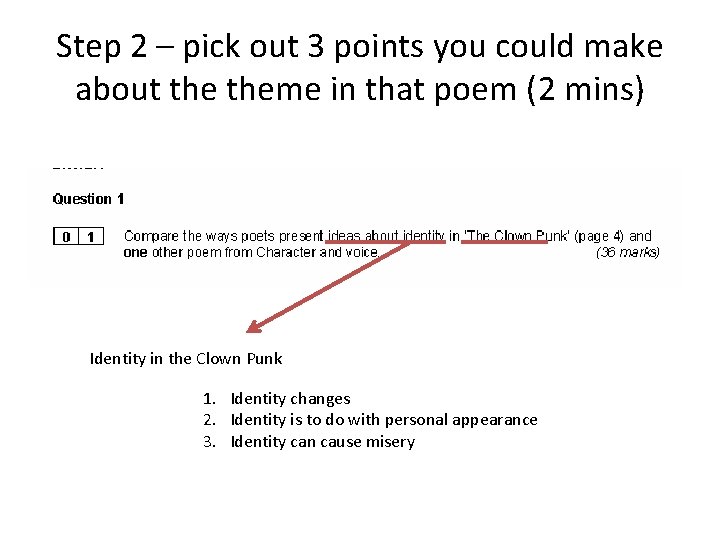
Step 2 – pick out 3 points you could make about theme in that poem (2 mins) Identity in the Clown Punk 1. Identity changes 2. Identity is to do with personal appearance 3. Identity can cause misery
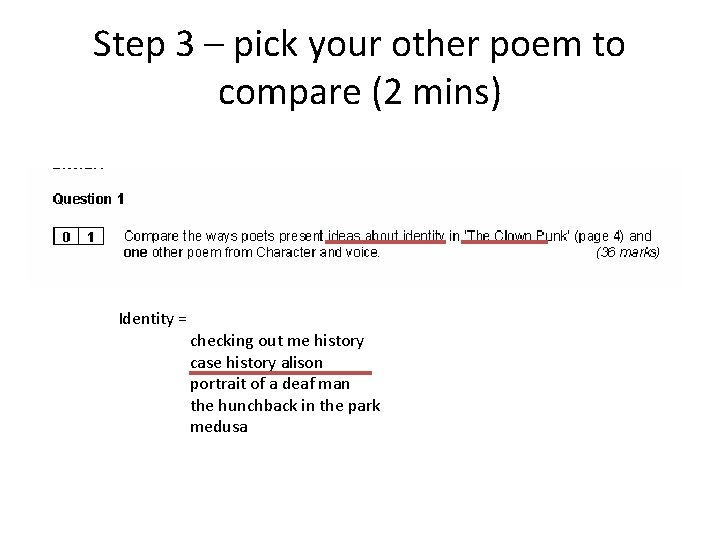
Step 3 – pick your other poem to compare (2 mins) Identity = checking out me history case history alison portrait of a deaf man the hunchback in the park medusa
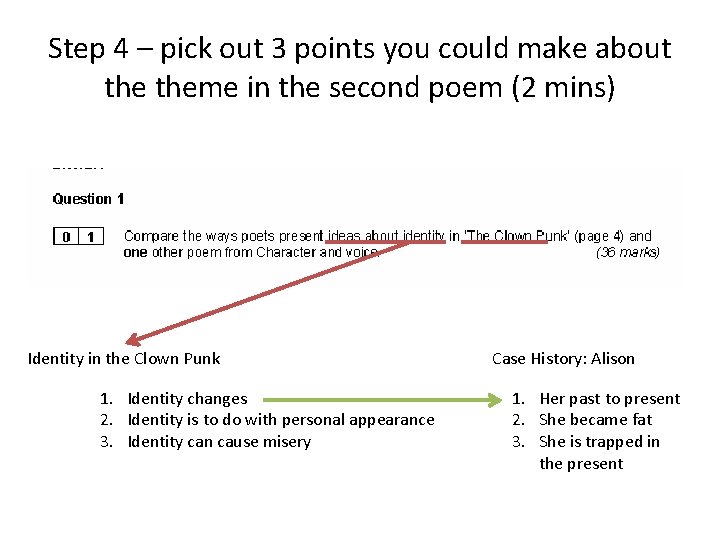
Step 4 – pick out 3 points you could make about theme in the second poem (2 mins) Identity in the Clown Punk 1. Identity changes 2. Identity is to do with personal appearance 3. Identity can cause misery Case History: Alison 1. Her past to present 2. She became fat 3. She is trapped in the present
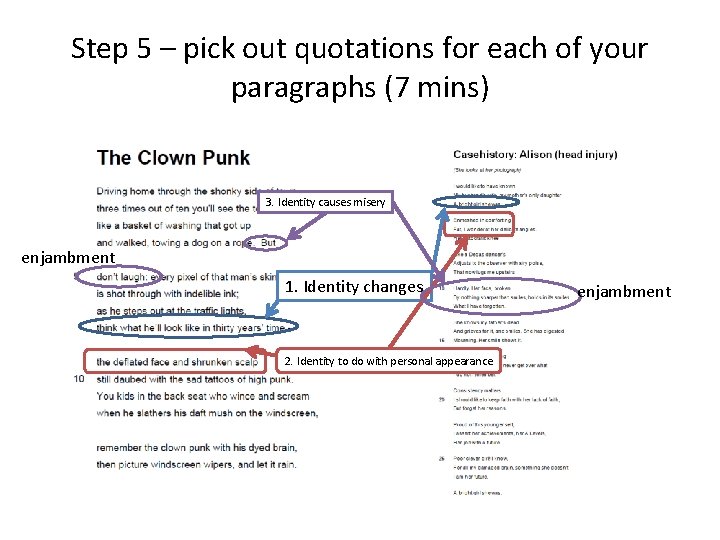
Step 5 – pick out quotations for each of your paragraphs (7 mins) 3. Identity causes misery enjambment 1. Identity changes 2. Identity to do with personal appearance enjambment
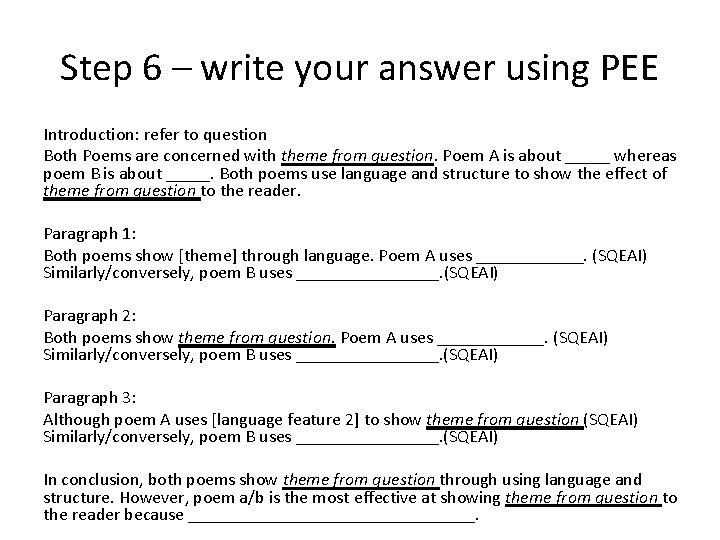
Step 6 – write your answer using PEE Introduction: refer to question Both Poems are concerned with theme from question. Poem A is about _____ whereas poem B is about _____. Both poems use language and structure to show the effect of theme from question to the reader. Paragraph 1: Both poems show [theme] through language. Poem A uses ______. (SQEAI) Similarly/conversely, poem B uses ________. (SQEAI) Paragraph 2: Both poems show theme from question. Poem A uses ______. (SQEAI) Similarly/conversely, poem B uses ________. (SQEAI) Paragraph 3: Although poem A uses [language feature 2] to show theme from question (SQEAI) Similarly/conversely, poem B uses ________. (SQEAI) In conclusion, both poems show theme from question through using language and structure. However, poem a/b is the most effective at showing theme from question to the reader because ________________.
Now you try! • You’re going to plan in your pairs. • You will have 10 minutes to plan one essay – then we will swap and you will plan a second one.
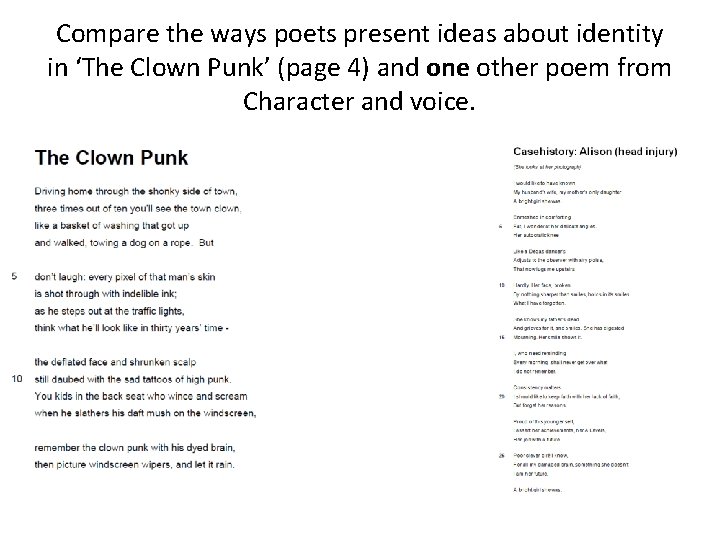
Compare the ways poets present ideas about identity in ‘The Clown Punk’ (page 4) and one other poem from Character and voice.
Compare the ways poets present isolated characters in ‘The Hunchback in the Park’ (page 18) and one other poem from Character and voice.
Compare the ways poets present romantic love in ‘Singh Song’ (page 9) and one other poem from Character and voice.
Compare the ways poets present change in ‘Les Grands Seigneurs’ (page 13) and one other poem from Character and voice.
Compare the ways poets present memory in ‘Casehistory: Alison (head injury)’ and one other poem from Character and voice.
Compare how poets use language to explore ideas and feelings in ‘Checking Out Me History’ (page 5) and in one other poem from Character and voice.
Compare the ways poets present ideas about power in ‘Ozymandias’ (page 14) and in one other poem from Character and voice.
Compare the ways poets present powerful characters in ‘My Last Duchess’ (page 15) and one other poem from Character and voice.
Compare the ways poets present strong emotions in ‘Medusa’ (page 8) and one other poem from Character and voice.
Compare the ways poets present male characters in ‘The River God’ and one other poem from Character and voice.
- Slides: 25