
Perfect Competition 1 FOUR MARKET MODELS Characteristics of


- Slides: 35
Perfect Competition 1
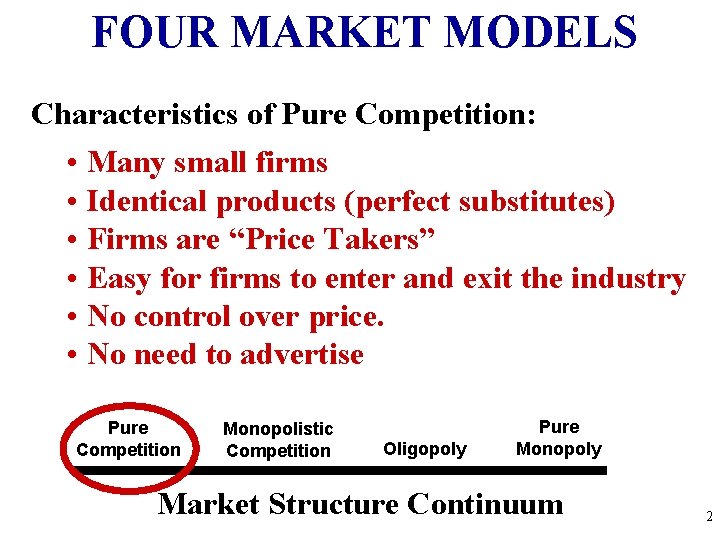
FOUR MARKET MODELS Characteristics of Pure Competition: • Many small firms • Identical products (perfect substitutes) • Firms are “Price Takers” • Easy for firms to enter and exit the industry • No control over price. • No need to advertise Pure Competition Monopolistic Competition Oligopoly Pure Monopoly Market Structure Continuum 2
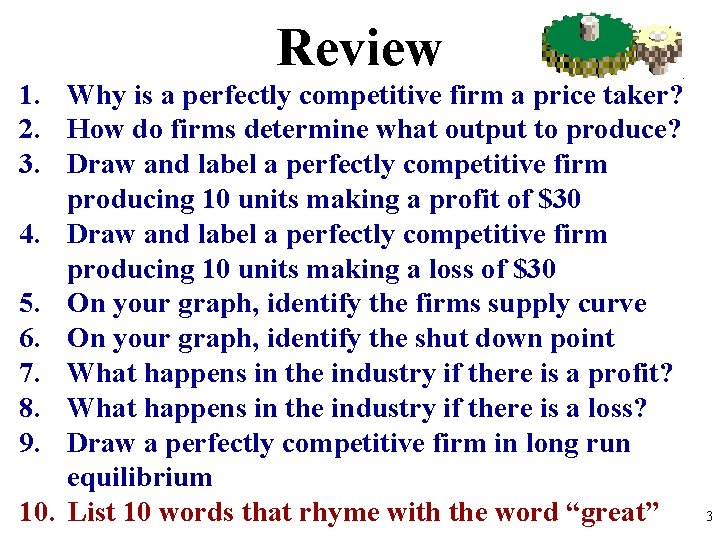
Review 1. Why is a perfectly competitive firm a price taker? 2. How do firms determine what output to produce? 3. Draw and label a perfectly competitive firm producing 10 units making a profit of $30 4. Draw and label a perfectly competitive firm producing 10 units making a loss of $30 5. On your graph, identify the firms supply curve 6. On your graph, identify the shut down point 7. What happens in the industry if there is a profit? 8. What happens in the industry if there is a loss? 9. Draw a perfectly competitive firm in long run equilibrium 10. List 10 words that rhyme with the word “great” 3
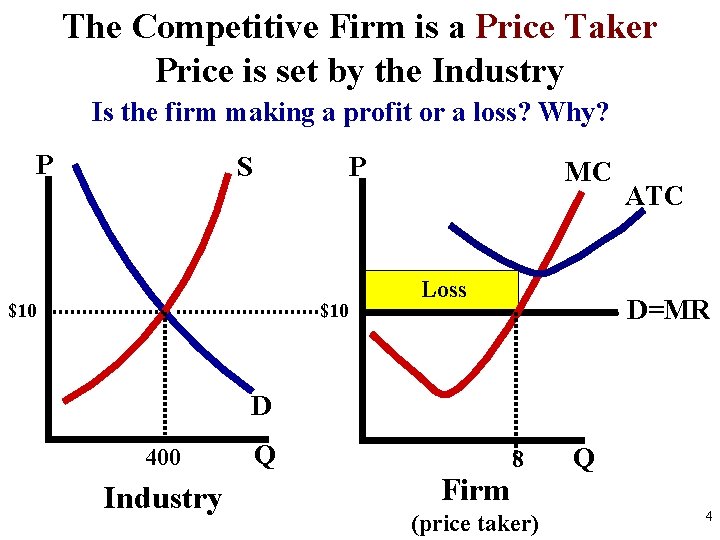
The Competitive Firm is a Price Taker Price is set by the Industry Is the firm making a profit or a loss? Why? P S P $10 MC Loss ATC D=MR D 400 Industry Q Firm 8 (price taker) Q 4
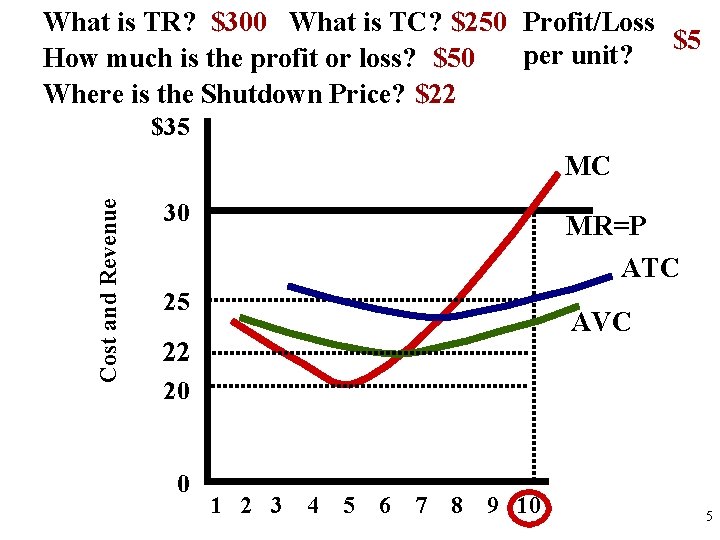
What is TR? $300 What is TC? $250 Profit/Loss $5 per unit? How much is the profit or loss? $50 Where is the Shutdown Price? $22 $35 Cost and Revenue MC 30 MR=P ATC 25 AVC 22 20 0 1 2 3 4 5 6 7 8 9 10 5
Perfect Competition in the Long-Run You are a wheat farmer. You learn that there is a more profit in making corn. What do you do in the long run? 6
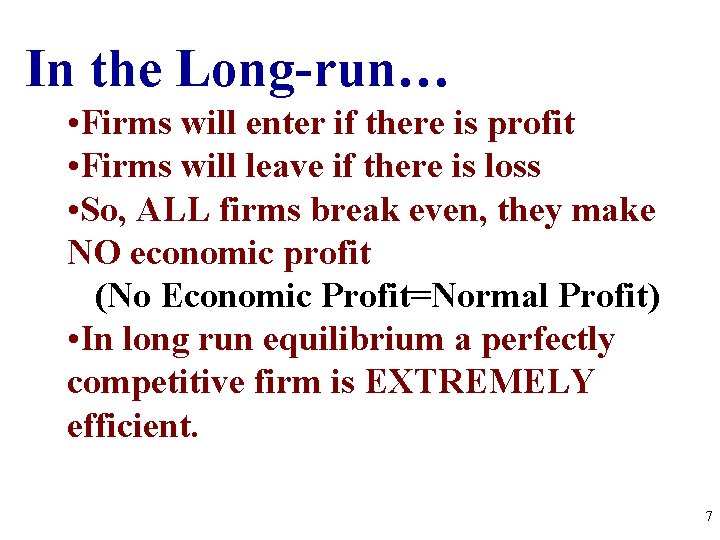
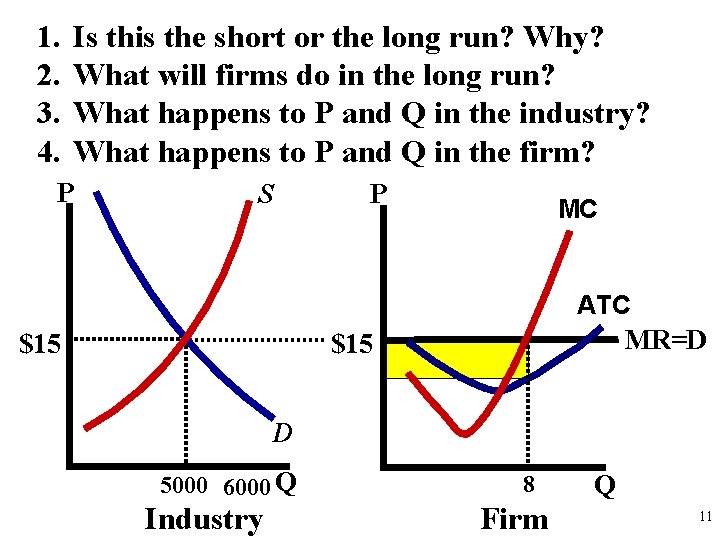
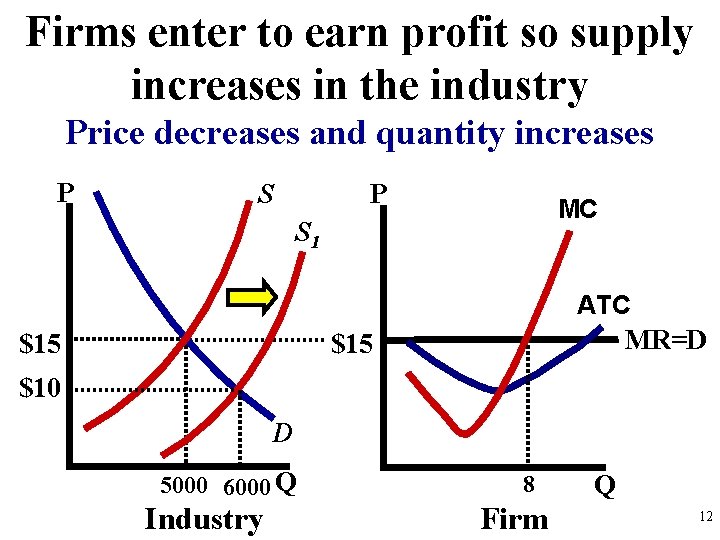
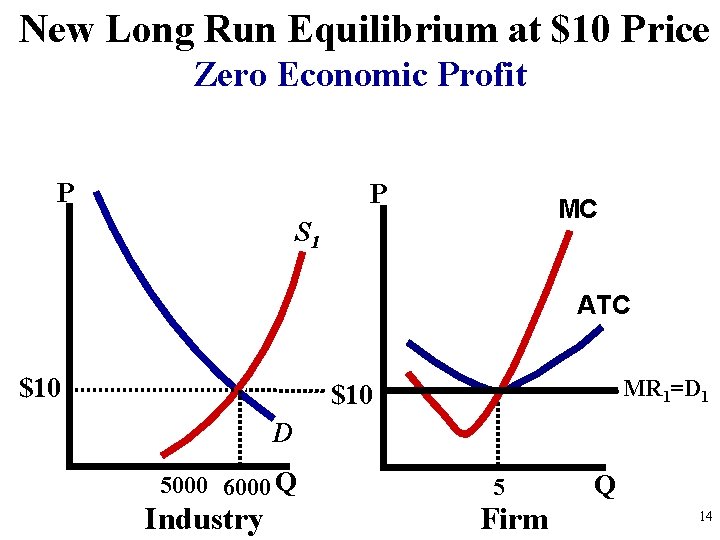
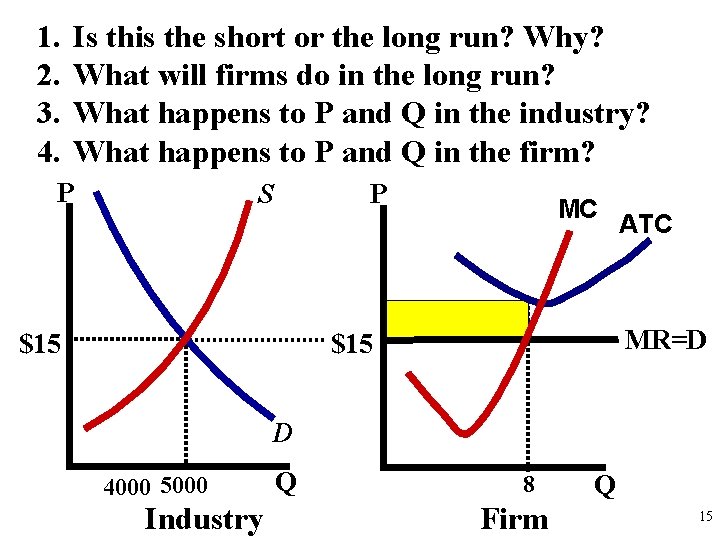
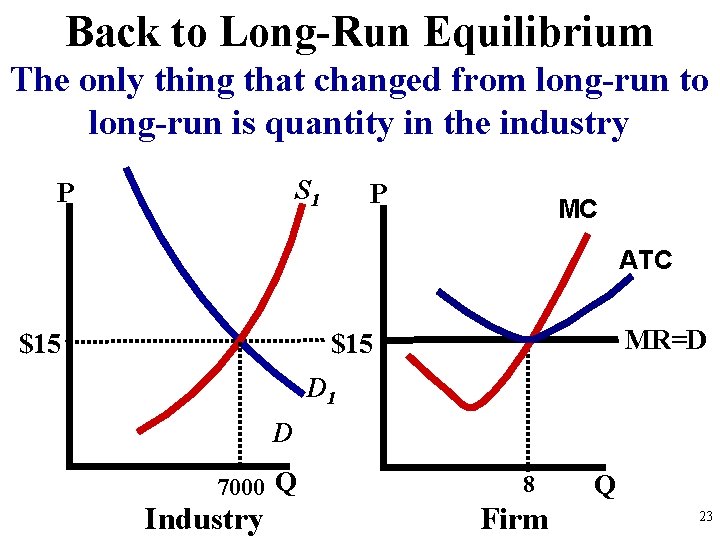
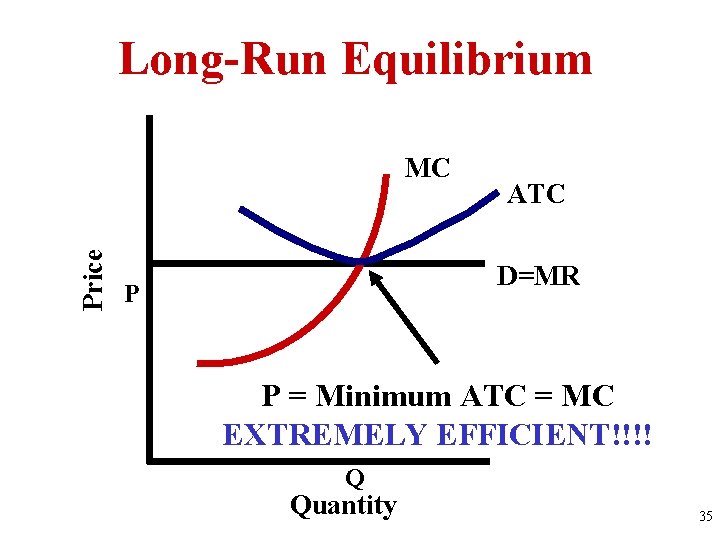
In the Long-run… • Firms will enter if there is profit • Firms will leave if there is loss • So, ALL firms break even, they make NO economic profit (No Economic Profit=Normal Profit) • In long run equilibrium a perfectly competitive firm is EXTREMELY efficient. 7
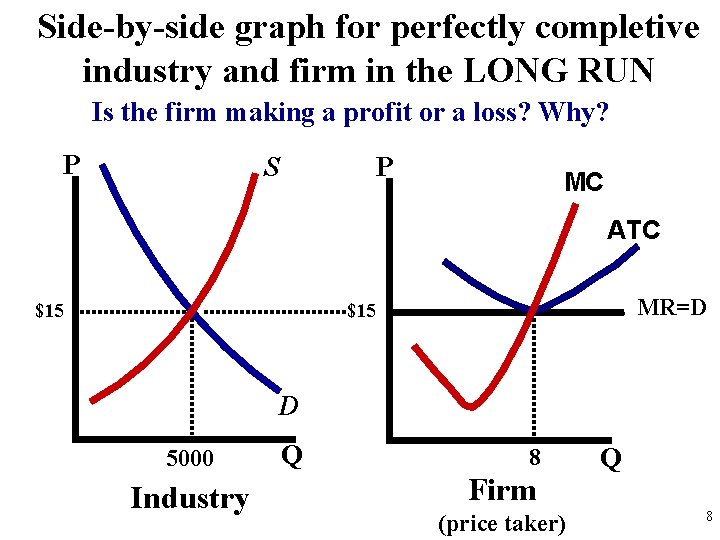
Side-by-side graph for perfectly completive industry and firm in the LONG RUN Is the firm making a profit or a loss? Why? P S P MC ATC $15 MR=D $15 D 5000 Industry Q 8 Firm (price taker) Q 8
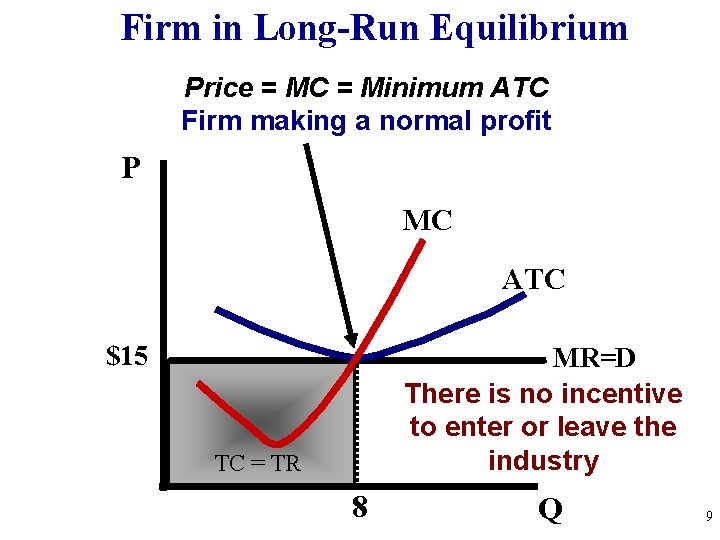
Firm in Long-Run Equilibrium Price = MC = Minimum ATC Firm making a normal profit P MC ATC $15 MR=D There is no incentive to enter or leave the industry TC = TR 8 Q 9
Going from Long-Run to Short-Run 10
1. 2. 3. 4. Is this the short or the long run? Why? What will firms do in the long run? What happens to P and Q in the industry? What happens to P and Q in the firm? P S P MC ATC $15 MR=D $15 D 5000 6000 Q Industry 8 Firm Q 11
Firms enter to earn profit so supply increases in the industry Price decreases and quantity increases P S P MC S 1 ATC $15 MR=D $15 $10 D 5000 6000 Q Industry 8 Firm Q 12
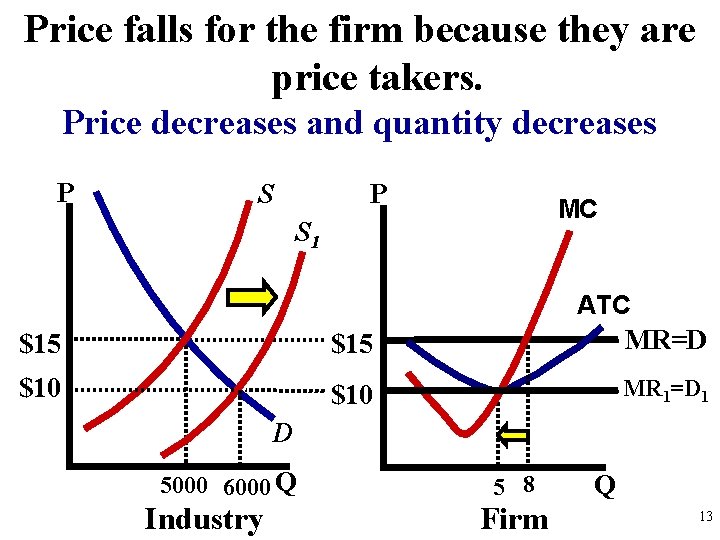
Price falls for the firm because they are price takers. Price decreases and quantity decreases P S P MC S 1 ATC $15 MR=D $10 MR 1=D 1 D 5000 6000 Q Industry 5 8 Firm Q 13
New Long Run Equilibrium at $10 Price Zero Economic Profit P P MC S 1 ATC $10 MR 1=D 1 $10 D 5000 6000 Q Industry 5 Firm Q 14
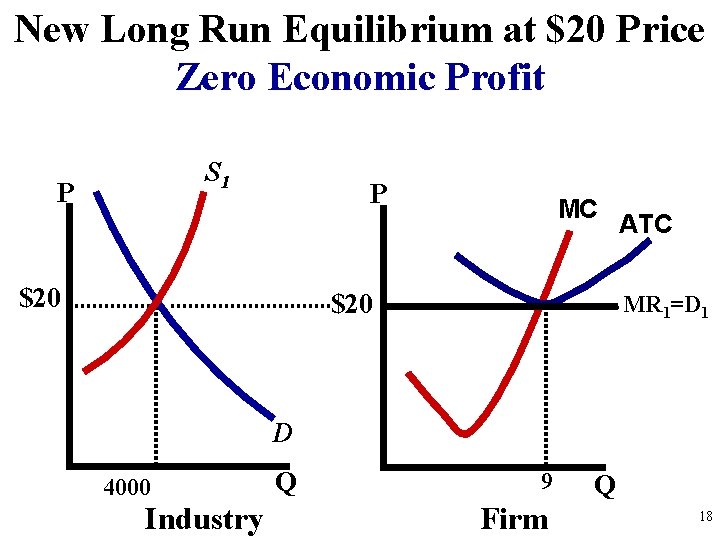
1. 2. 3. 4. Is this the short or the long run? Why? What will firms do in the long run? What happens to P and Q in the industry? What happens to P and Q in the firm? P S P $15 MC ATC MR=D $15 D 4000 5000 Industry Q 8 Firm Q 15
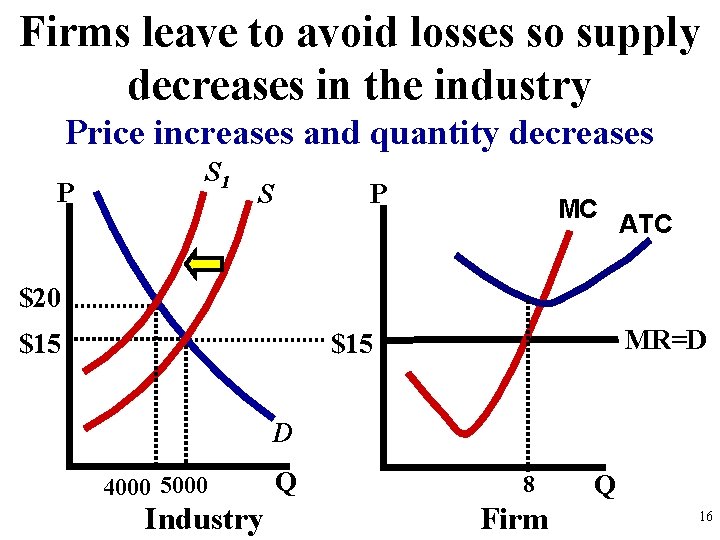
Firms leave to avoid losses so supply decreases in the industry Price increases and quantity decreases P S 1 S P MC ATC $20 $15 MR=D $15 D 4000 5000 Industry Q 8 Firm Q 16
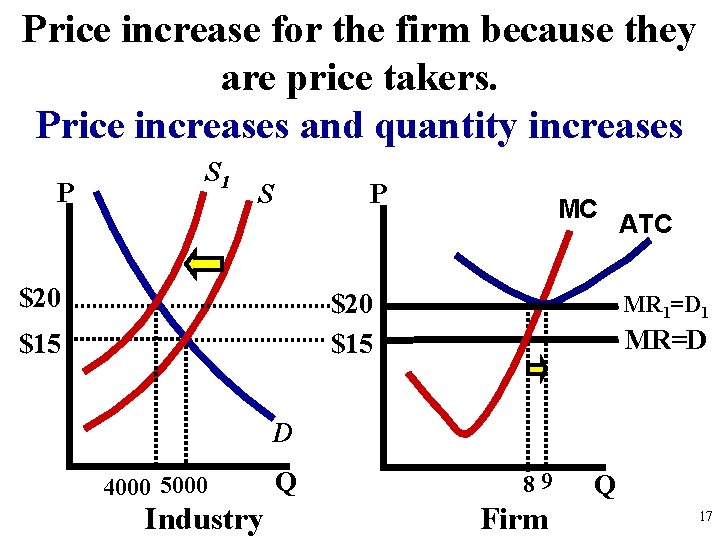
Price increase for the firm because they are price takers. Price increases and quantity increases P S 1 S P $20 MC $20 $15 ATC MR 1=D 1 MR=D D 4000 5000 Industry Q 89 Firm Q 17
New Long Run Equilibrium at $20 Price Zero Economic Profit S 1 P P $20 MC $20 ATC MR 1=D 1 D 4000 Industry Q 9 Firm Q 18
Going from Long-Run to Long-Run 19
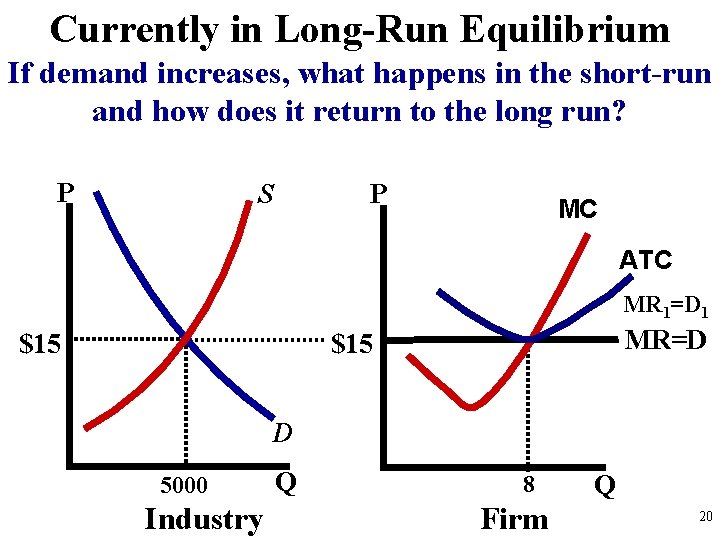
Currently in Long-Run Equilibrium If demand increases, what happens in the short-run and how does it return to the long run? P S P MC ATC MR 1=D 1 $15 MR=D $15 D 5000 Industry Q 8 Firm Q 20
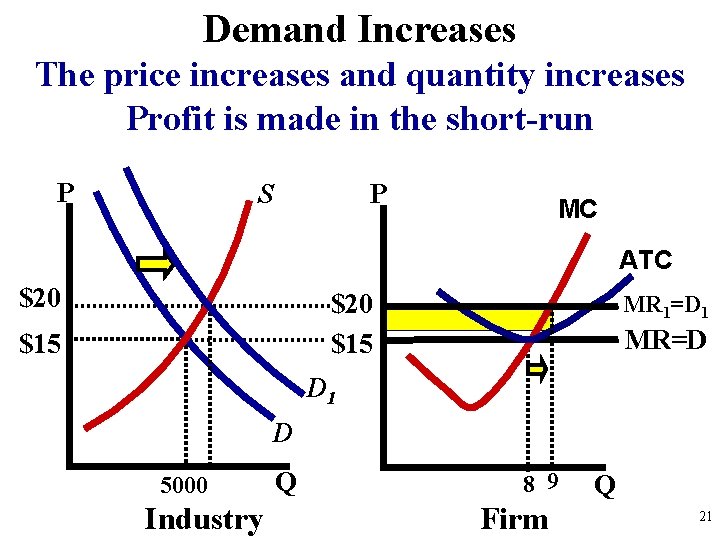
Demand Increases The price increases and quantity increases Profit is made in the short-run P S P MC ATC $20 $15 MR 1=D 1 MR=D D 1 D 5000 Industry Q 8 9 Firm Q 21
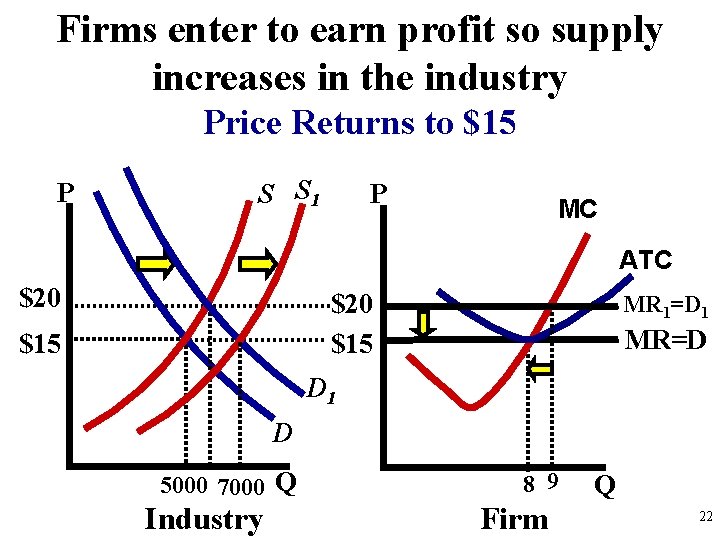
Firms enter to earn profit so supply increases in the industry Price Returns to $15 P S S 1 P MC ATC $20 $15 MR 1=D 1 MR=D D 1 D 5000 7000 Q Industry 8 9 Firm Q 22
Back to Long-Run Equilibrium The only thing that changed from long-run to long-run is quantity in the industry S 1 P P MC ATC $15 MR=D $15 D 1 D 7000 Q Industry 8 Firm Q 23
Efficiency 24
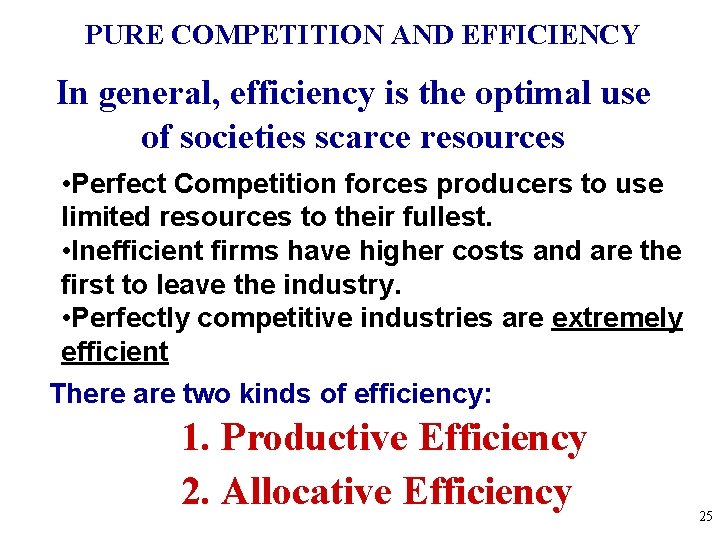
PURE COMPETITION AND EFFICIENCY In general, efficiency is the optimal use of societies scarce resources • Perfect Competition forces producers to use limited resources to their fullest. • Inefficient firms have higher costs and are the first to leave the industry. • Perfectly competitive industries are extremely efficient There are two kinds of efficiency: 1. Productive Efficiency 2. Allocative Efficiency 25
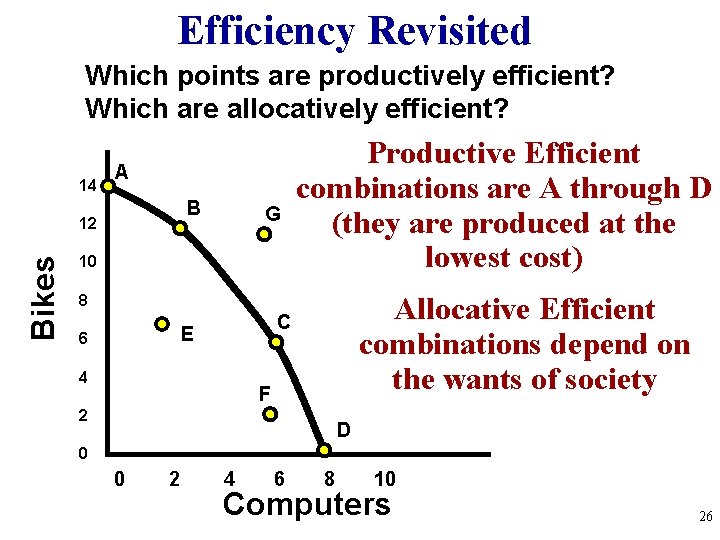
Efficiency Revisited Which points are productively efficient? Which are allocatively efficient? 14 A B Bikes 12 G 10 Productive Efficient combinations are A through D (they are produced at the lowest cost) Allocative Efficient combinations depend on the wants of society 8 C E 6 4 F 2 D 0 0 2 4 6 8 10 Computers 26
Productive Efficiency The production of a good in a least costly way. (Minimum amount of resources are being used) Graphically it is where… Price = Minimum ATC 27
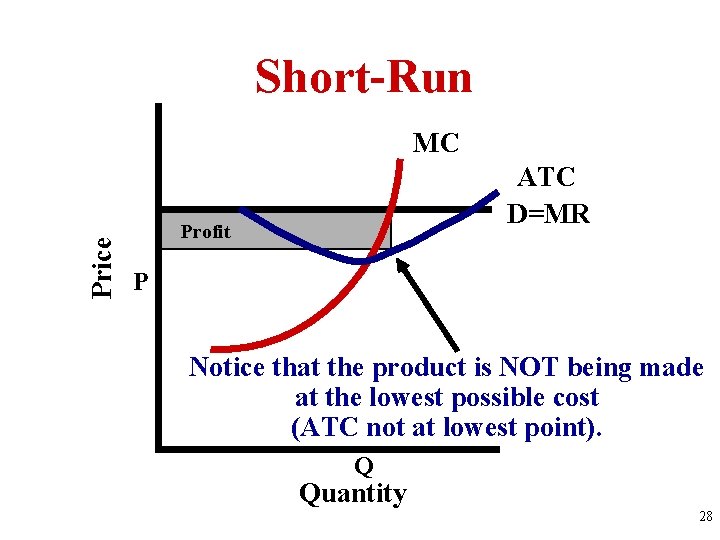
Short-Run Price MC ATC D=MR Profit P Notice that the product is NOT being made at the lowest possible cost (ATC not at lowest point). Q Quantity 28
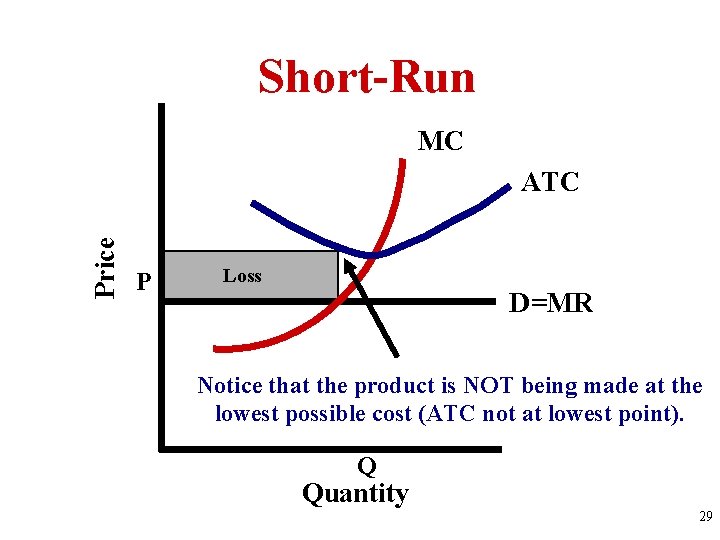
Short-Run MC Price ATC P Loss D=MR Notice that the product is NOT being made at the lowest possible cost (ATC not at lowest point). Q Quantity 29
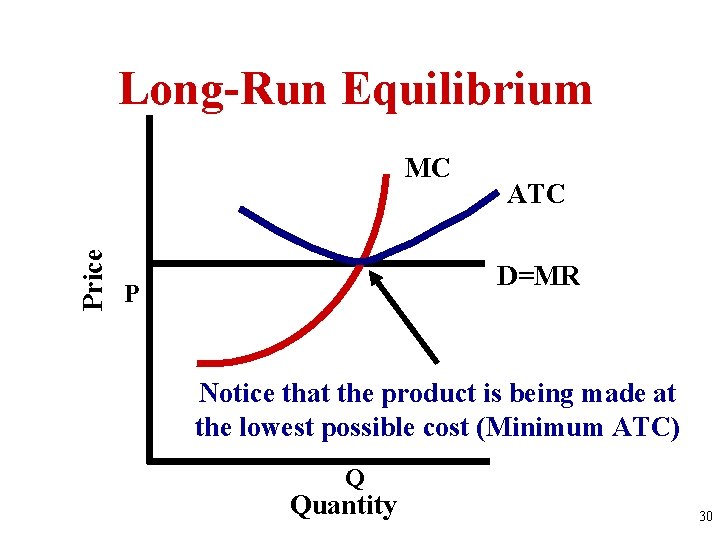
Long-Run Equilibrium Price MC ATC D=MR P Notice that the product is being made at the lowest possible cost (Minimum ATC) Q Quantity 30
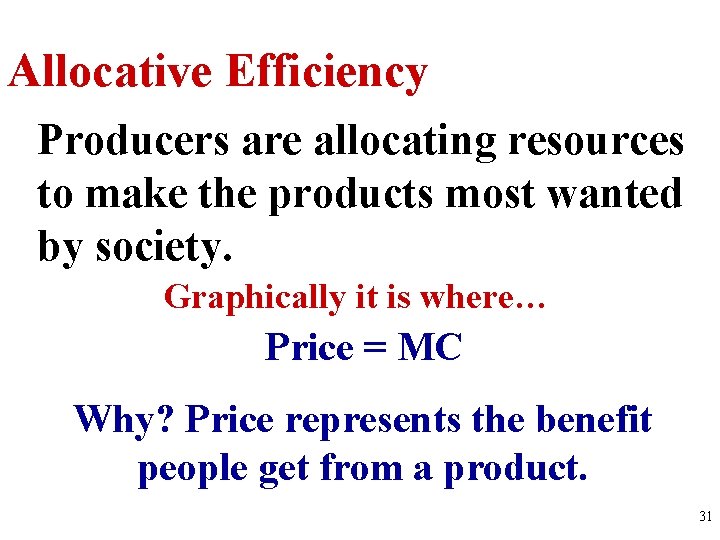
Allocative Efficiency Producers are allocating resources to make the products most wanted by society. Graphically it is where… Price = MC Why? Price represents the benefit people get from a product. 31
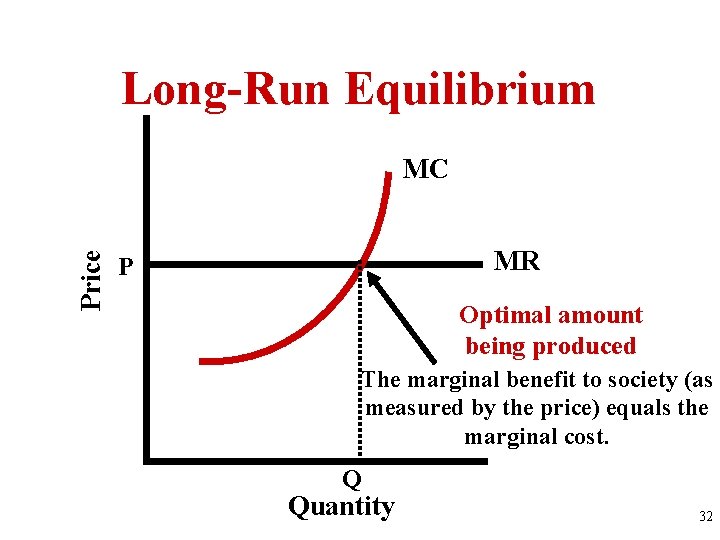
Long-Run Equilibrium Price MC MR P Optimal amount being produced The marginal benefit to society (as measured by the price) equals the marginal cost. Q Quantity 32
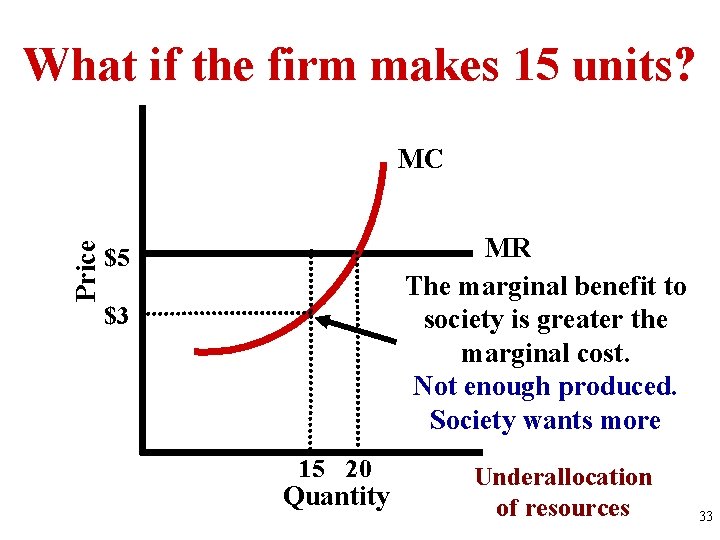
What if the firm makes 15 units? Price MC MR The marginal benefit to society is greater the marginal cost. Not enough produced. Society wants more $5 $3 15 20 Quantity Underallocation of resources 33
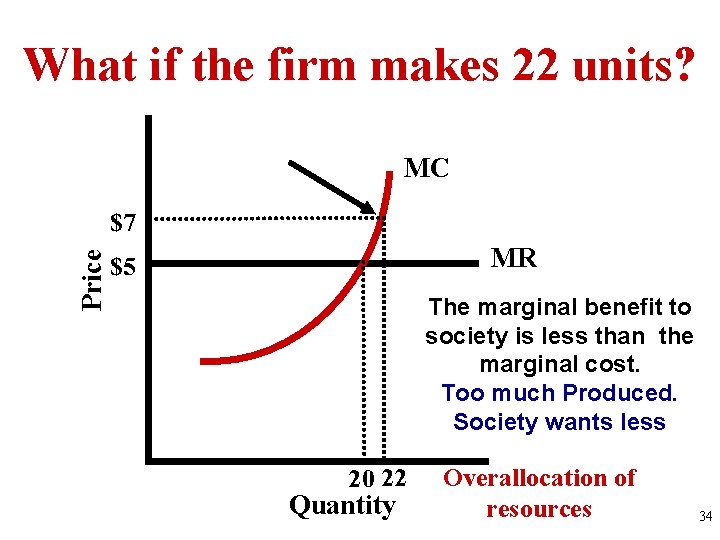
What if the firm makes 22 units? MC Price $7 MR $5 The marginal benefit to society is less than the marginal cost. Too much Produced. Society wants less 20 22 Quantity Overallocation of resources 34
Long-Run Equilibrium Price MC ATC D=MR P P = Minimum ATC = MC EXTREMELY EFFICIENT!!!! Q Quantity 35