
Percutaneous Mitral Repair with the Mitra Clip Device
- Slides: 21
Percutaneous Mitral Repair with the Mitra. Clip® Device for Functional Mitral Regurgitation: Acute Success, One year Durability and Reverse Remodeling in the Initial EVEREST Cohort James Hermiller, MD, FACC, FSCAI The Care Group, LLC St Vincent Heart Center of Indianapolis, IN
Contributing Authors Saibal Kar, MD Peter Fail, MD Michael Rinaldi, MD Tanvir Bajwa Richard Smalling John Lasala Scott Lim Robert Kipperman Howard Herrmann, MD Patrick L Whitlow, MD Elyse Foster, MD Donald D Glower, MD Ted Feldman, MD Cedars Sinai Medical Center, Los Angeles, CA Cardiovascular Institute of the South, Houma, LA Sanger Clinic, Charlotte, NC St. Luke’s Medical Center, Milwaukee, WI Memorial Herrmann Hospital, Houston, TX Washington University Medical Center, St Louis, MO University of Virginia Medical Center, Charlottesville Oklahoma Heart Hospital, Oklahoma City, OK University of Pennsylvania, Philadelphia, PA The Cleveland Clinic, Cleveland, OH Univ. of California at San Francisco, CA Duke University, Durham, NC Evanston Northwestern Hospital, Evanston, IL On behalf of the EVEREST Investigators
Disclosures § Consultant Abbott, BSC, and St Jude § Fellowship support Cordis § Investigational Device: • Limited by Federal (or United States) Law to Investigational Use
Background & Purpose § Of the 50, 000 patients in the United States developing significant mitral regurgitation (MR) each year, up to 60% have functional MR § Isolated leaflet repair for functional mitral regurgitation (FMR) has not been well characterized § The purpose of this study is to evaluate the safety and efficacy of isolated leaflet repair using the Mitra. Clip device in patients with FMR.
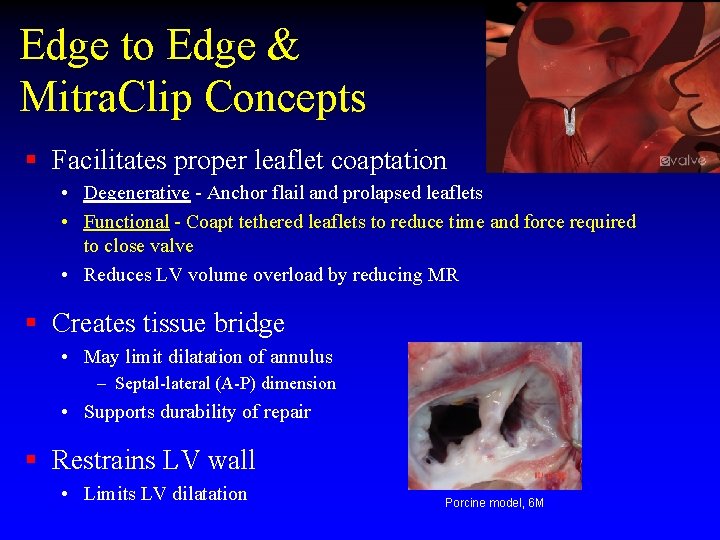
Edge to Edge & Mitra. Clip Concepts § Facilitates proper leaflet coaptation • Degenerative - Anchor flail and prolapsed leaflets • Functional - Coapt tethered leaflets to reduce time and force required to close valve • Reduces LV volume overload by reducing MR § Creates tissue bridge • May limit dilatation of annulus – Septal-lateral (A-P) dimension • Supports durability of repair § Restrains LV wall • Limits LV dilatation Porcine model, 6 M
Methods § Surgical candidates with FMR were treated with the Mitra. Clip device as part of the EVEREST protocols. § FMR was defined as the presence of MR without demonstrated echocardiographic structural valve defects as assessed by TEE. § TTE performed to assess MR severity and LV function and dimensions at baseline and at 12 months. § American Society of Echocardiography criteria were used for systematic Core Laboratory assessment of MR severity and LV function.
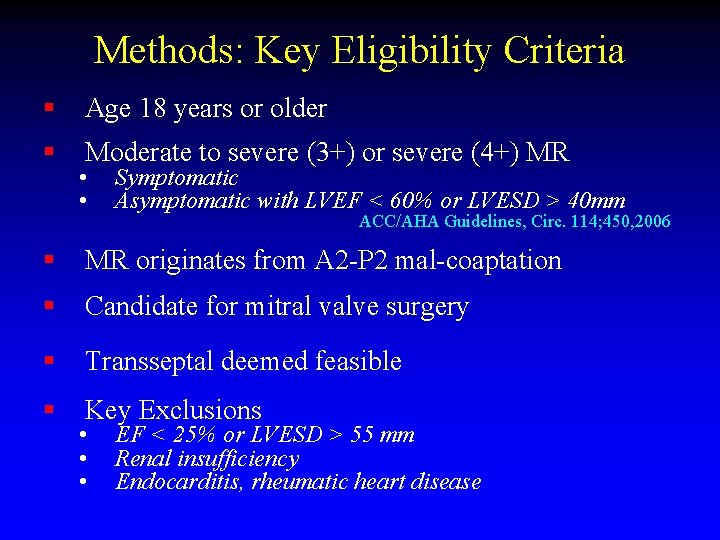
Methods: Key Eligibility Criteria § Age 18 years or older § Moderate to severe (3+) or severe (4+) MR • • Symptomatic Asymptomatic with LVEF < 60% or LVESD > 40 mm ACC/AHA Guidelines, Circ. 114; 450, 2006 § MR originates from A 2 -P 2 mal-coaptation § Candidate for mitral valve surgery § Transseptal deemed feasible § Key Exclusions • • • EF < 25% or LVESD > 55 mm Renal insufficiency Endocarditis, rheumatic heart disease
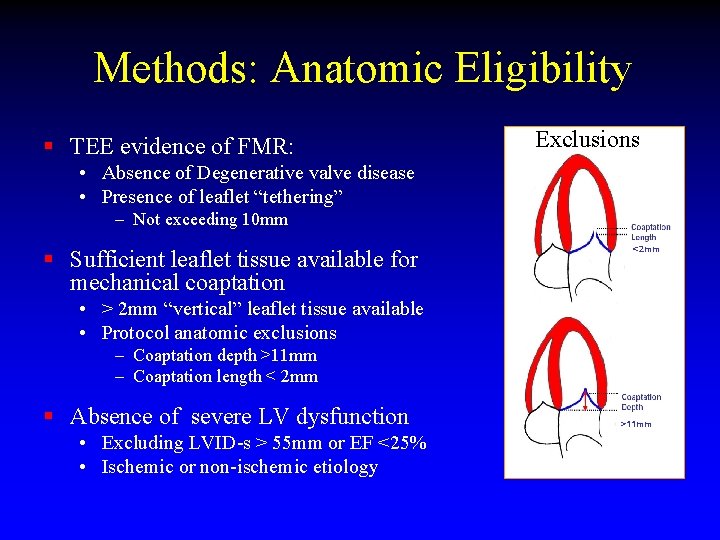
Methods: Anatomic Eligibility § TEE evidence of FMR: Exclusions • Absence of Degenerative valve disease • Presence of leaflet “tethering” – Not exceeding 10 mm § Sufficient leaflet tissue available for mechanical coaptation <2 mm • > 2 mm “vertical” leaflet tissue available • Protocol anatomic exclusions – Coaptation depth >11 mm – Coaptation length < 2 mm § Absence of severe LV dysfunction • Excluding LVID-s > 55 mm or EF <25% • Ischemic or non-ischemic etiology >11 mm
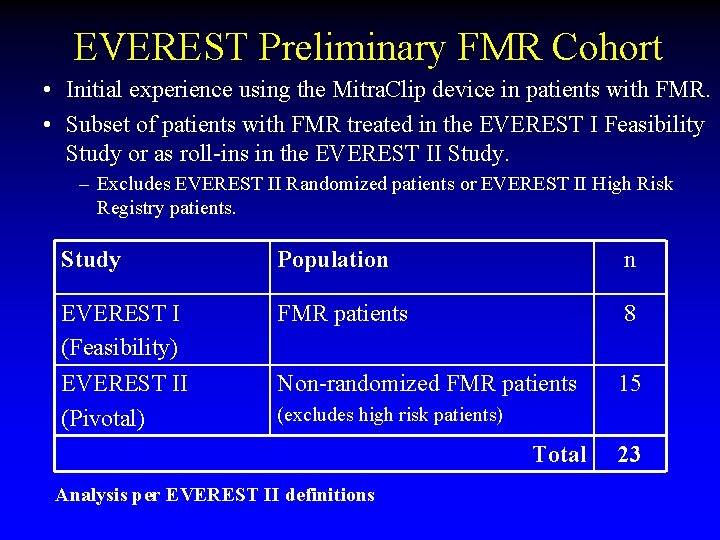
EVEREST Preliminary FMR Cohort • Initial experience using the Mitra. Clip device in patients with FMR. • Subset of patients with FMR treated in the EVEREST I Feasibility Study or as roll-ins in the EVEREST II Study. – Excludes EVEREST II Randomized patients or EVEREST II High Risk Registry patients. Study Population n EVEREST I (Feasibility) FMR patients 8 EVEREST II (Pivotal) Non-randomized FMR patients 15 (excludes high risk patients) Total Analysis per EVEREST II definitions 23
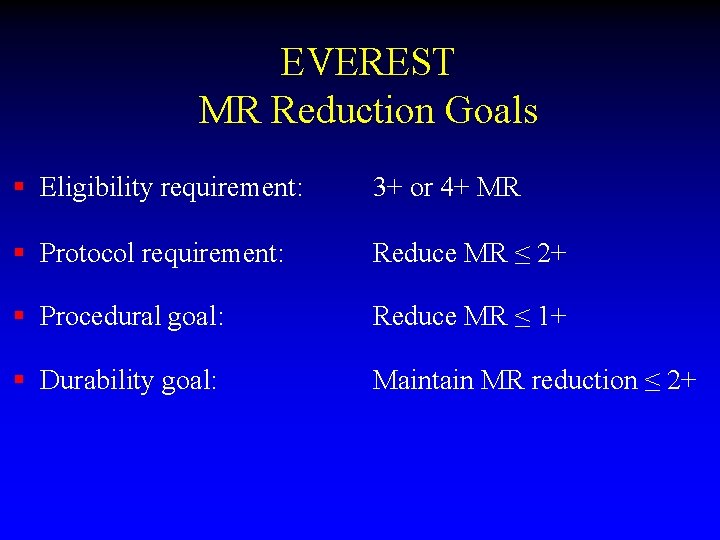
EVEREST MR Reduction Goals § Eligibility requirement: 3+ or 4+ MR § Protocol requirement: Reduce MR ≤ 2+ § Procedural goal: Reduce MR ≤ 1+ § Durability goal: Maintain MR reduction ≤ 2+
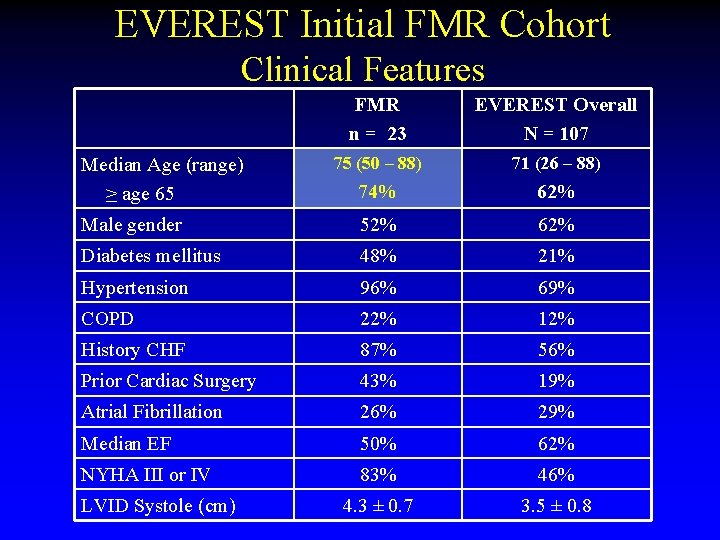
EVEREST Initial FMR Cohort Clinical Features FMR n = 23 EVEREST Overall N = 107 75 (50 – 88) 71 (26 – 88) 74% 62% Male gender 52% 62% Diabetes mellitus 48% 21% Hypertension 96% 69% COPD 22% 12% History CHF 87% 56% Prior Cardiac Surgery 43% 19% Atrial Fibrillation 26% 29% Median EF 50% 62% NYHA III or IV 83% 46% 4. 3 ± 0. 7 3. 5 ± 0. 8 Median Age (range) ≥ age 65 LVID Systole (cm)
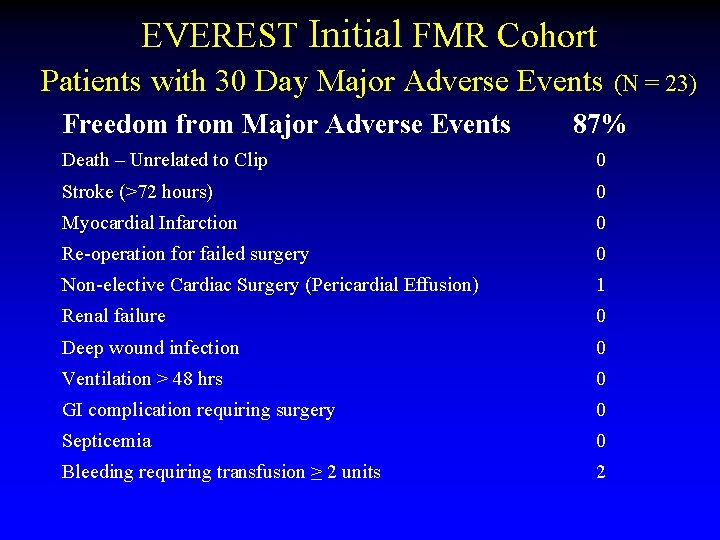
EVEREST Initial FMR Cohort Patients with 30 Day Major Adverse Events (N = 23) Freedom from Major Adverse Events 87% Death – Unrelated to Clip 0 Stroke (>72 hours) 0 Myocardial Infarction 0 Re-operation for failed surgery 0 Non-elective Cardiac Surgery (Pericardial Effusion) 1 Renal failure 0 Deep wound infection 0 Ventilation > 48 hrs 0 GI complication requiring surgery 0 Septicemia 0 Bleeding requiring transfusion ≥ 2 units 2
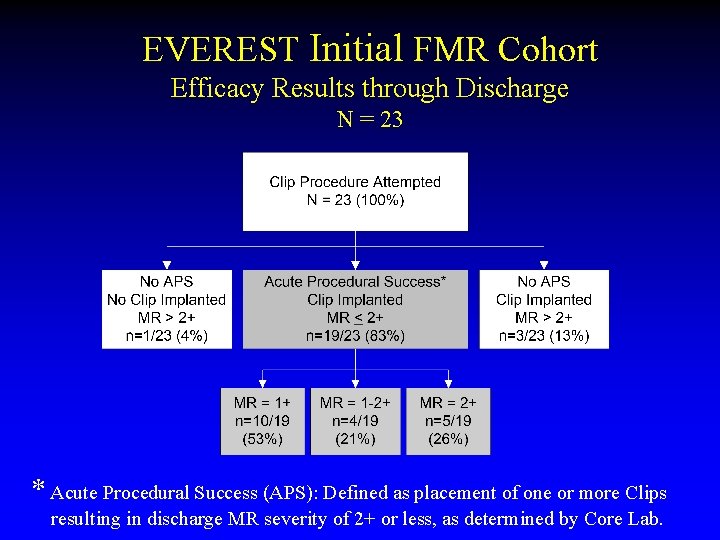
EVEREST Initial FMR Cohort Efficacy Results through Discharge N = 23 * Acute Procedural Success (APS): Defined as placement of one or more Clips resulting in discharge MR severity of 2+ or less, as determined by Core Lab.
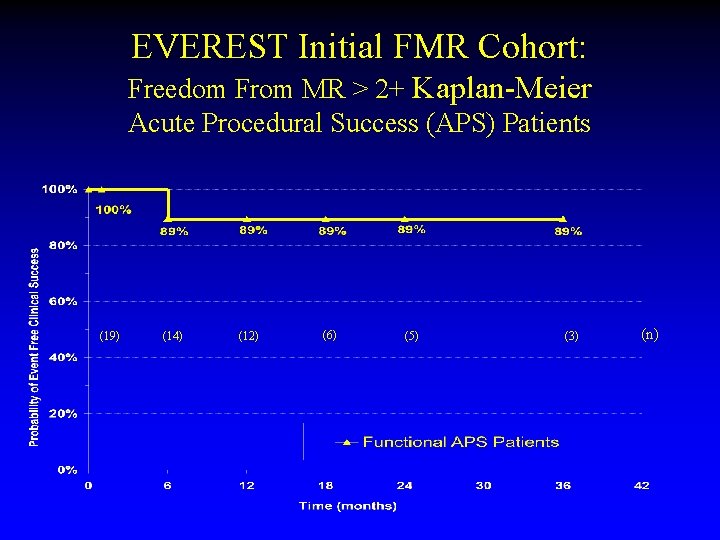
EVEREST Initial FMR Cohort: Freedom From MR > 2+ Kaplan-Meier Acute Procedural Success (APS) Patients (19) (14) (12) (6) (5) (3) (n)
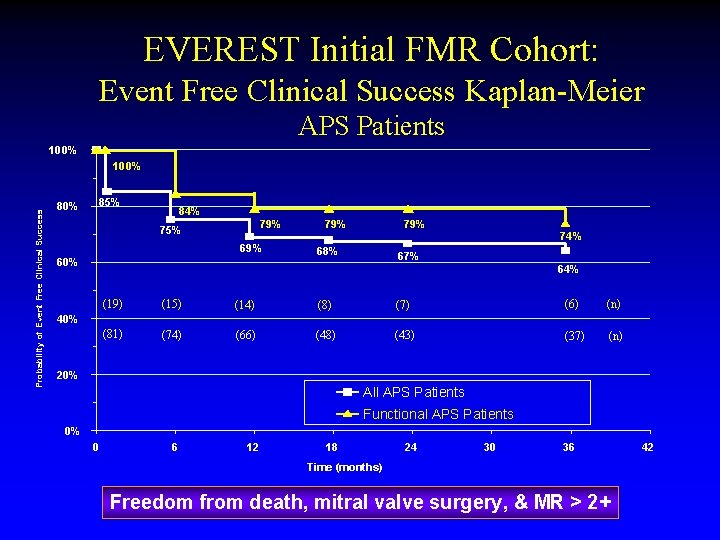
EVEREST Initial FMR Cohort: Event Free Clinical Success Kaplan-Meier APS Patients 100% Probability of Event Free Clinical Success 100% 85% 80% 84% 79% 75% 69% 60% 79% 74% 68% 67% 64% (19) (15) (14) (8) (7) (6) (n) (81) (74) (66) (48) (43) (37) (n) 40% 20% All APS Patients Functional APS Patients 0% 0 6 12 18 24 30 36 Time (months) Freedom from death, mitral valve surgery, & MR > 2+ 42
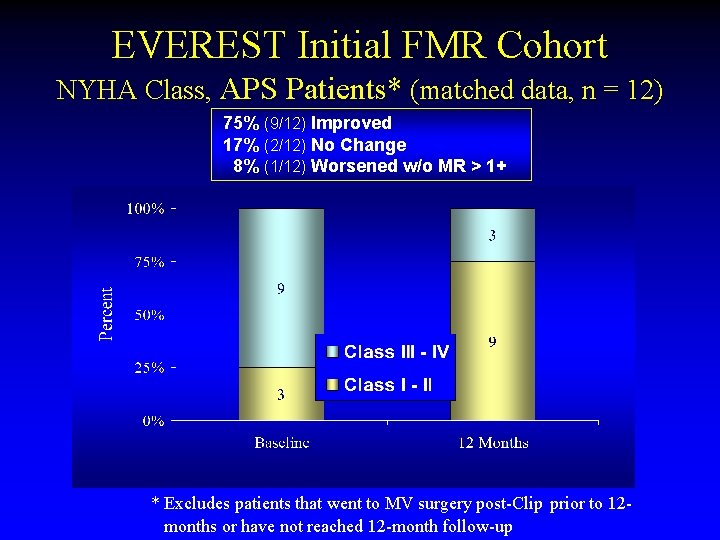
EVEREST Initial FMR Cohort NYHA Class, APS Patients* (matched data, n = 12) 75% (9/12) Improved 17% (2/12) No Change 8% (1/12) Worsened w/o MR > 1+ * Excludes patients that went to MV surgery post-Clip prior to 12 months or have not reached 12 -month follow-up
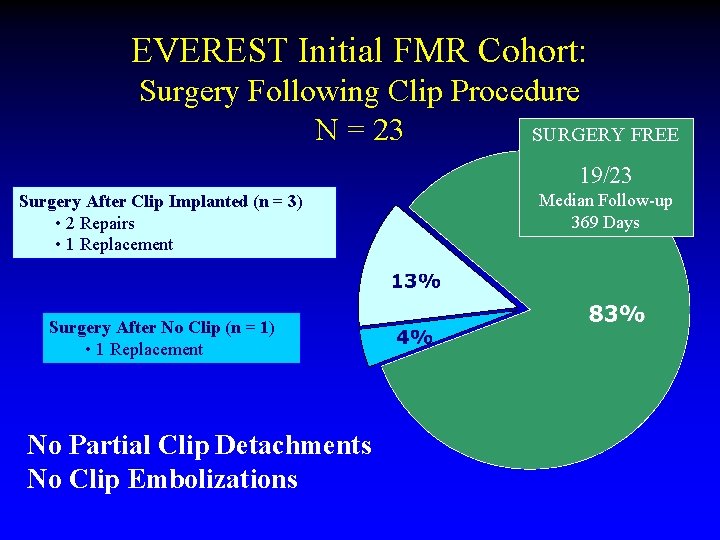
EVEREST Initial FMR Cohort: Surgery Following Clip Procedure N = 23 SURGERY FREE 19/23 Surgery After Clip Implanted (n = 3) • 2 Repairs • 1 Replacement Surgery After No Clip (n = 1) • 1 Replacement No Partial Clip Detachments No Clip Embolizations Median Follow-up 369 Days
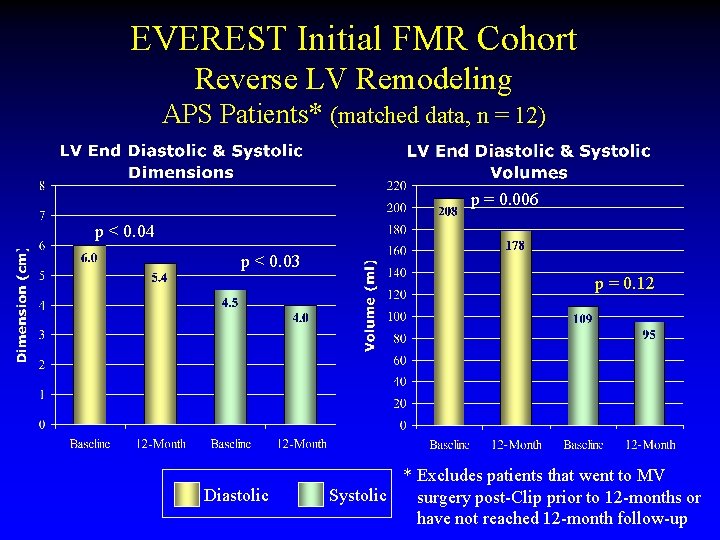
EVEREST Initial FMR Cohort Reverse LV Remodeling APS Patients* (matched data, n = 12) p = 0. 006 p < 0. 04 p < 0. 03 p = 0. 12 Diastolic * Excludes patients that went to MV Systolic surgery post-Clip prior to 12 -months or have not reached 12 -month follow-up
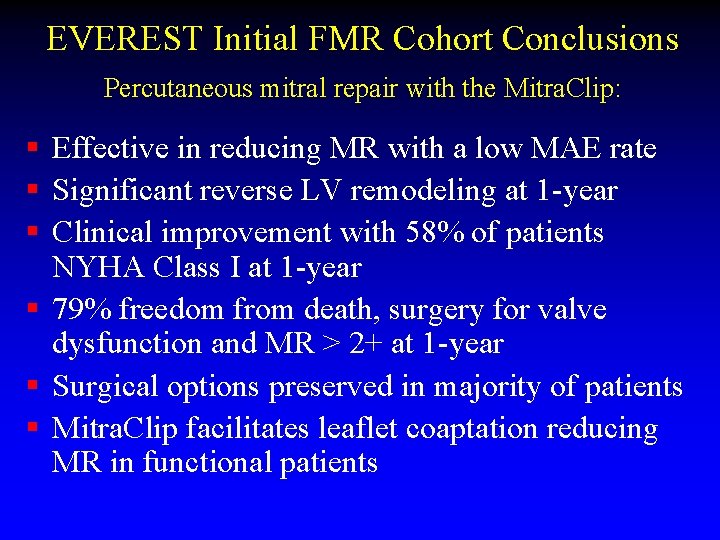
EVEREST Initial FMR Cohort Conclusions Percutaneous mitral repair with the Mitra. Clip: § Effective in reducing MR with a low MAE rate § Significant reverse LV remodeling at 1 -year § Clinical improvement with 58% of patients NYHA Class I at 1 -year § 79% freedom from death, surgery for valve dysfunction and MR > 2+ at 1 -year § Surgical options preserved in majority of patients § Mitra. Clip facilitates leaflet coaptation reducing MR in functional patients
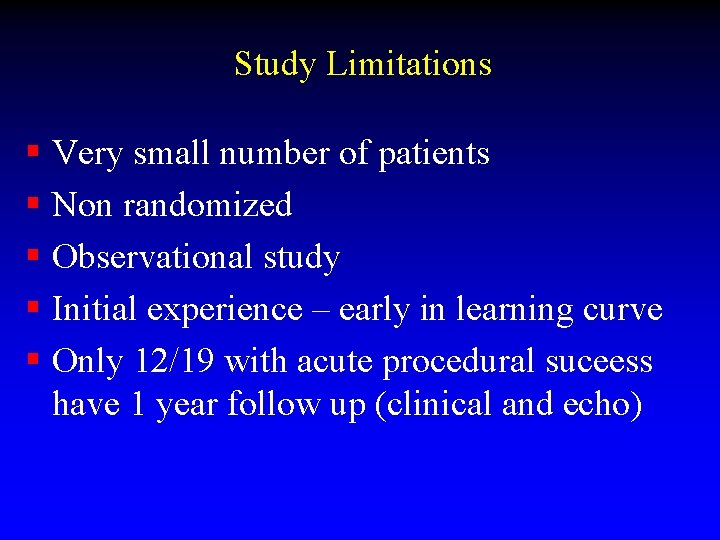
Study Limitations § Very small number of patients § Non randomized § Observational study § Initial experience – early in learning curve § Only 12/19 with acute procedural suceess have 1 year follow up (clinical and echo)
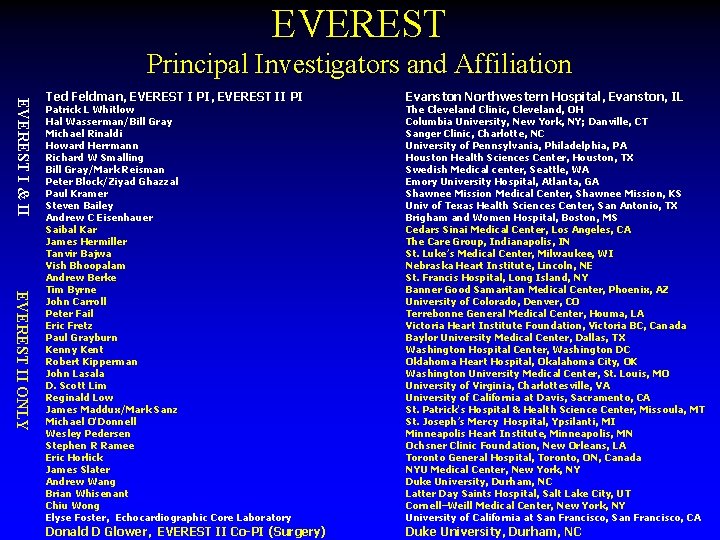
EVEREST Principal Investigators and Affiliation EVEREST I & II EVEREST II ONLY Ted Feldman, EVEREST I PI, EVEREST II PI Evanston Northwestern Hospital, Evanston, IL Donald D Glower, EVEREST II Co-PI (Surgery) Duke University, Durham, NC Patrick L Whitlow Hal Wasserman/Bill Gray Michael Rinaldi Howard Herrmann Richard W Smalling Bill Gray/Mark Reisman Peter Block/Ziyad Ghazzal Paul Kramer Steven Bailey Andrew C Eisenhauer Saibal Kar James Hermiller Tanvir Bajwa Vish Bhoopalam Andrew Berke Tim Byrne John Carroll Peter Fail Eric Fretz Paul Grayburn Kenny Kent Robert Kipperman John Lasala D. Scott Lim Reginald Low James Maddux/Mark Sanz Michael O'Donnell Wesley Pedersen Stephen R Ramee Eric Horlick James Slater Andrew Wang Brian Whisenant Chiu Wong Elyse Foster, Echocardiographic Core Laboratory The Cleveland Clinic, Cleveland, OH Columbia University, New York, NY; Danville, CT Sanger Clinic, Charlotte, NC University of Pennsylvania, Philadelphia, PA Houston Health Sciences Center, Houston, TX Swedish Medical center, Seattle, WA Emory University Hospital, Atlanta, GA Shawnee Mission Medical Center, Shawnee Mission, KS Univ of Texas Health Sciences Center, San Antonio, TX Brigham and Women Hospital, Boston, MS Cedars Sinai Medical Center, Los Angeles, CA The Care Group, Indianapolis, IN St. Luke’s Medical Center, Milwaukee, WI Nebraska Heart Institute, Lincoln, NE St. Francis Hospital, Long Island, NY Banner Good Samaritan Medical Center, Phoenix, AZ University of Colorado, Denver, CO Terrebonne General Medical Center, Houma, LA Victoria Heart Institute Foundation, Victoria BC, Canada Baylor University Medical Center, Dallas, TX Washington Hospital Center, Washington DC Oklahoma Heart Hospital, Okalahoma City, OK Washington University Medical Center, St. Louis, MO University of Virginia, Charlottesville, VA University of California at Davis, Sacramento, CA St. Patrick's Hospital & Health Science Center, Missoula, MT St. Joseph’s Mercy Hospital, Ypsilanti, MI Minneapolis Heart Institute, Minneapolis, MN Ochsner Clinic Foundation, New Orleans, LA Toronto General Hospital, Toronto, ON, Canada NYU Medical Center, New York, NY Duke University, Durham, NC Latter Day Saints Hospital, Salt Lake City, UT Cornell–Weill Medical Center, New York, NY University of California at San Francisco, CA