
Perceptual Control Theory PCT And the OnGoing Evolution

- Slides: 45
Perceptual Control Theory (PCT) And the On-Going Evolution of Culture Release 1. 0 ©April 2008 F. T. Cloak, Jr. tcloak@unm. edu 1
• Biological Evolution Works by Natural Selection • Natural Selection Works Through Genetic Transmission • Cultural Evolution Works by Natural Selection • Natural Selection of Culture Works through (? Memetic? ) Transmission • Perceptual Control Theory (PCT) may have the answer 2
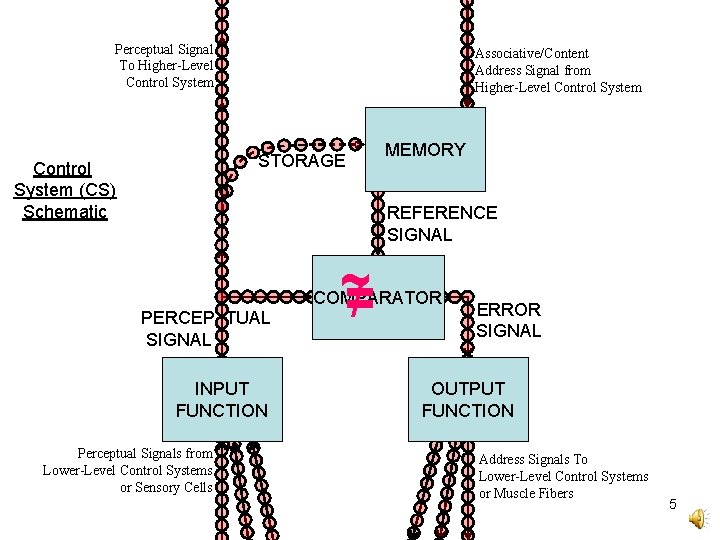
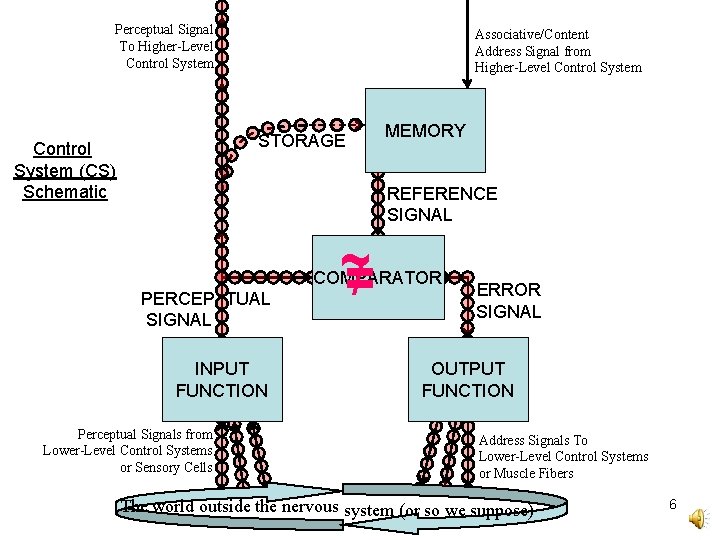
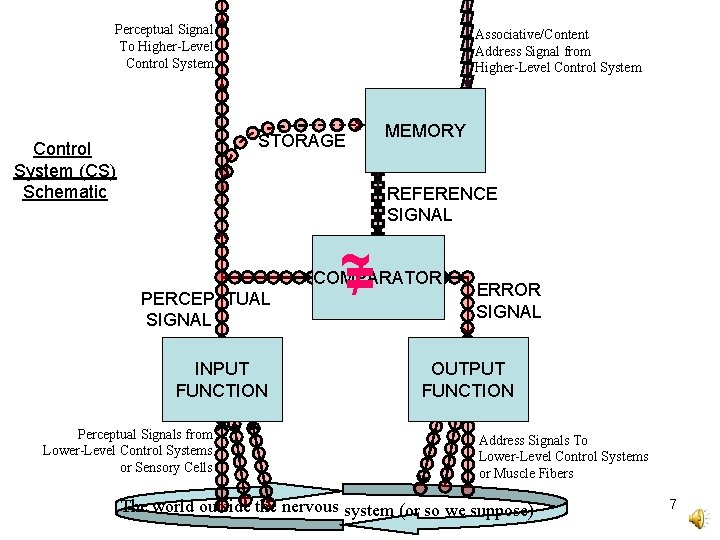
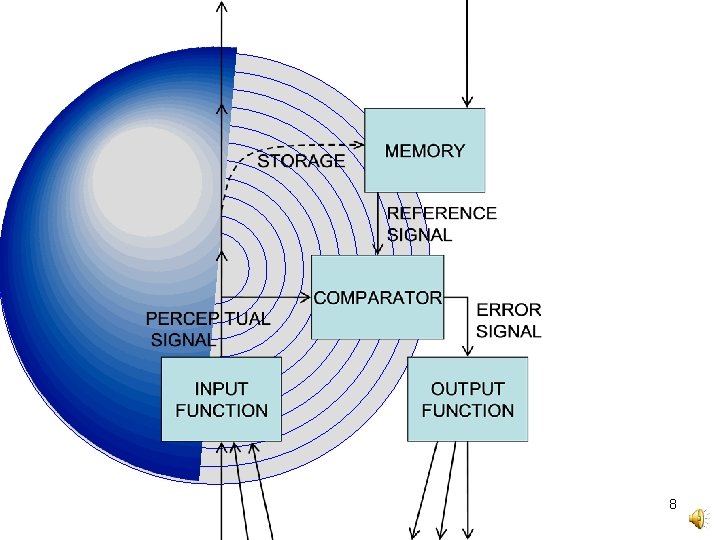
Part One Perceptual Control Theory (PCT) Basics • Behavior is the Control of Perception to Internal Reference Standards • Apparatus and Standards are adapted to Past Environments 3
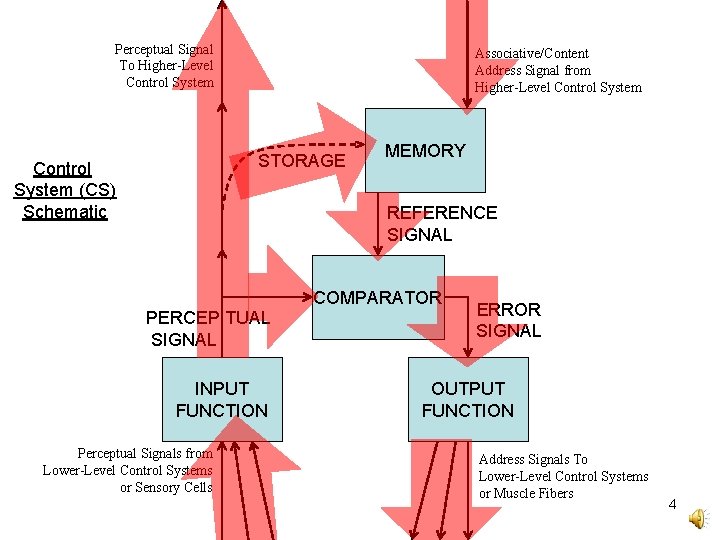
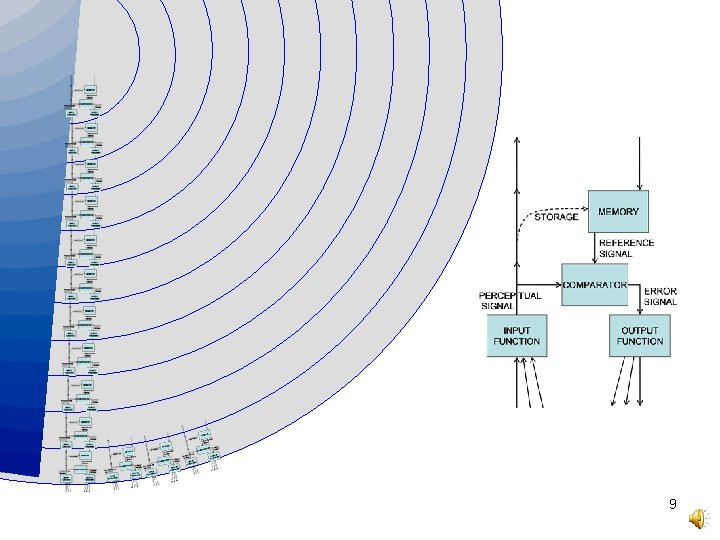
Perceptual Signal To Higher-Level Control System Associative/Content Address Signal from Higher-Level Control System STORAGE Control System (CS) Schematic MEMORY REFERENCE SIGNAL COMPARATOR PERCEP TUAL SIGNAL INPUT FUNCTION Perceptual Signals from Lower-Level Control Systems or Sensory Cells ERROR SIGNAL OUTPUT FUNCTION Address Signals To Lower-Level Control Systems or Muscle Fibers 4
Perceptual Signal To Higher-Level Control System Associative/Content Address Signal from Higher-Level Control System STORAGE Control System (CS) Schematic MEMORY REFERENCE SIGNAL ~ = / COMPARATOR PERCEP TUAL SIGNAL INPUT FUNCTION Perceptual Signals from Lower-Level Control Systems or Sensory Cells ERROR SIGNAL OUTPUT FUNCTION Address Signals To Lower-Level Control Systems or Muscle Fibers 5
Perceptual Signal To Higher-Level Control System Associative/Content Address Signal from Higher-Level Control System STORAGE Control System (CS) Schematic MEMORY REFERENCE SIGNAL ~ =/ COMPARATOR PERCEP TUAL SIGNAL INPUT FUNCTION Perceptual Signals from Lower-Level Control Systems or Sensory Cells ERROR SIGNAL OUTPUT FUNCTION Address Signals To Lower-Level Control Systems or Muscle Fibers The world outside the nervous system (or so we suppose) 6
Perceptual Signal To Higher-Level Control System Associative/Content Address Signal from Higher-Level Control System STORAGE Control System (CS) Schematic MEMORY REFERENCE SIGNAL ~ =/ COMPARATOR PERCEP TUAL SIGNAL INPUT FUNCTION Perceptual Signals from Lower-Level Control Systems or Sensory Cells ERROR SIGNAL OUTPUT FUNCTION Address Signals To Lower-Level Control Systems or Muscle Fibers The world outside the nervous system (or so we suppose) 7
8
9
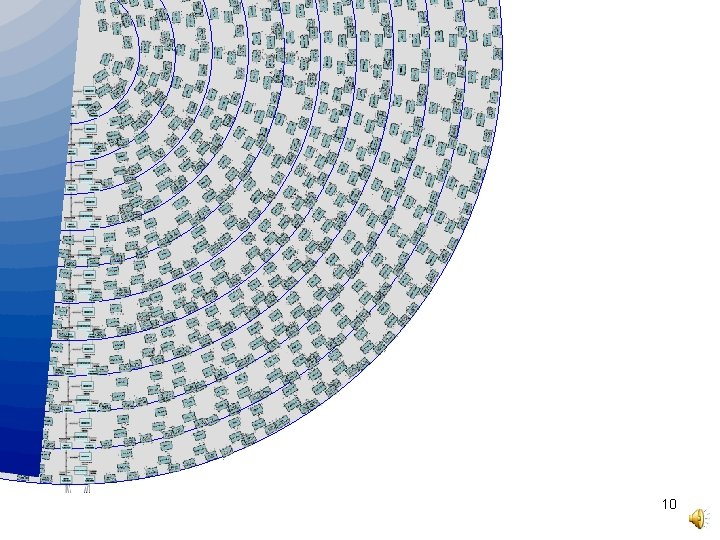
10
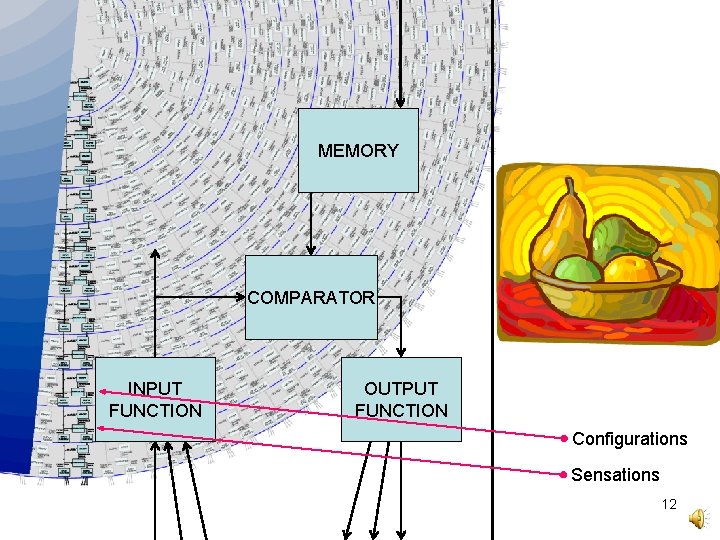
MEMORY COMPARATOR INPUT FUNCTION OUTPUT FUNCTION Configurations Sensations 12
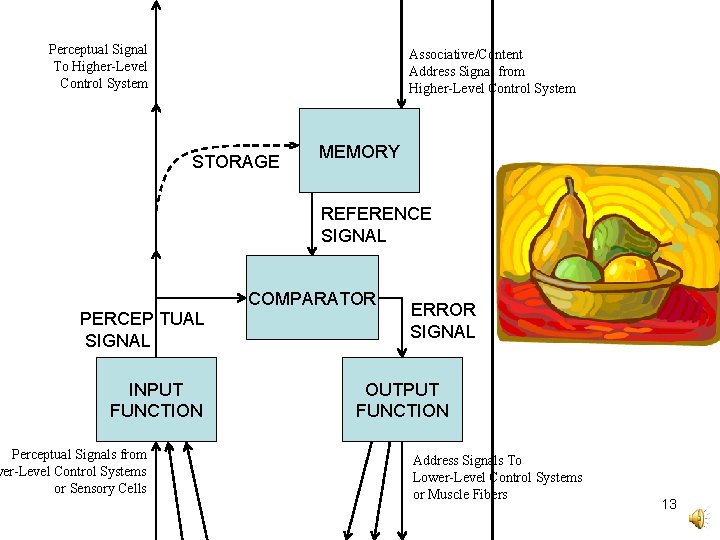
Perceptual Signal To Higher-Level Control System Associative/Content Address Signal from Higher-Level Control System STORAGE MEMORY REFERENCE SIGNAL COMPARATOR PERCEP TUAL SIGNAL INPUT FUNCTION Perceptual Signals from wer-Level Control Systems or Sensory Cells ERROR SIGNAL OUTPUT FUNCTION Address Signals To Lower-Level Control Systems or Muscle Fibers 13
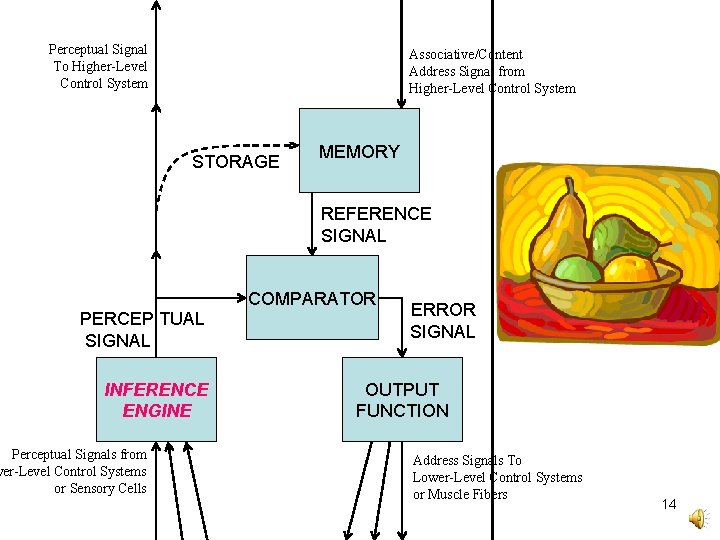
Perceptual Signal To Higher-Level Control System Associative/Content Address Signal from Higher-Level Control System STORAGE MEMORY REFERENCE SIGNAL COMPARATOR PERCEP TUAL SIGNAL INFERENCE ENGINE Perceptual Signals from wer-Level Control Systems or Sensory Cells ERROR SIGNAL OUTPUT FUNCTION Address Signals To Lower-Level Control Systems or Muscle Fibers 14
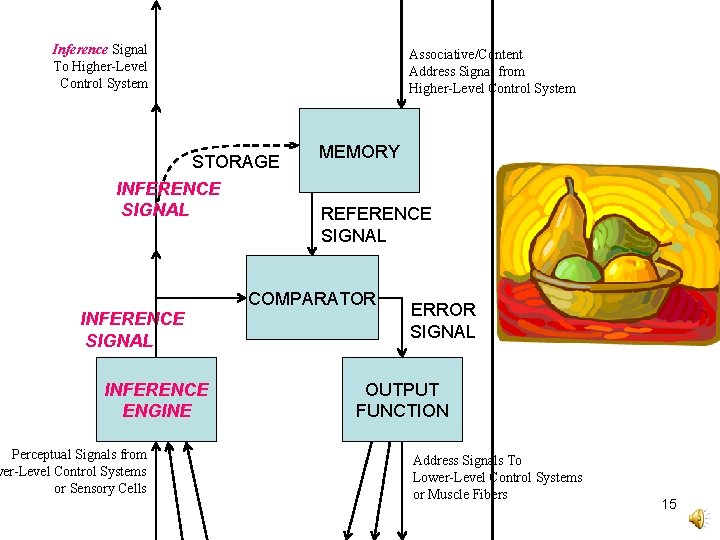
Inference Signal To Higher-Level Control System Associative/Content Address Signal from Higher-Level Control System STORAGE INFERENCE SIGNAL MEMORY REFERENCE SIGNAL COMPARATOR INFERENCE SIGNAL INFERENCE ENGINE Perceptual Signals from wer-Level Control Systems or Sensory Cells ERROR SIGNAL OUTPUT FUNCTION Address Signals To Lower-Level Control Systems or Muscle Fibers 15
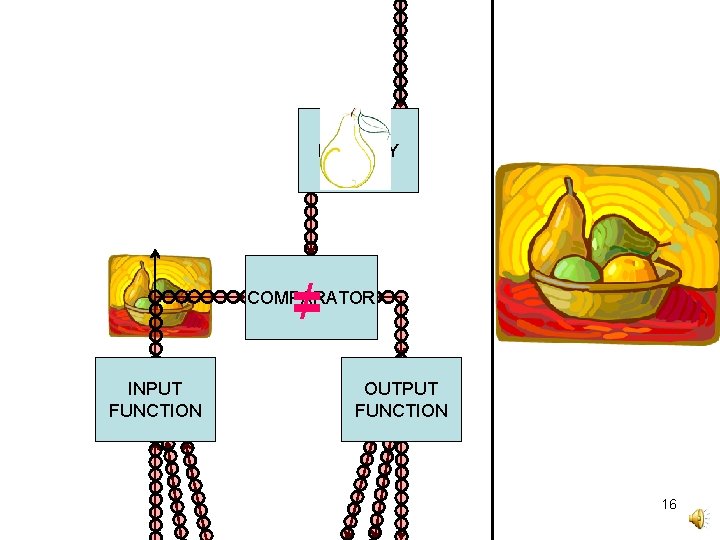
MEMORY =/ COMPARATOR INPUT FUNCTION OUTPUT FUNCTION 16
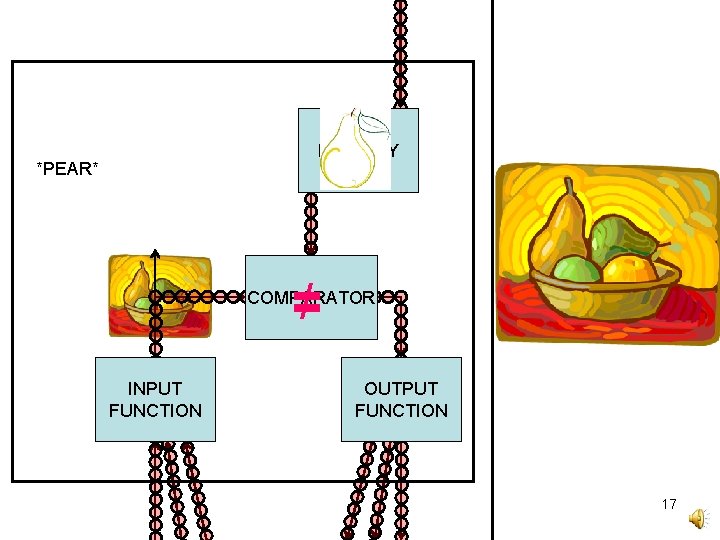
MEMORY *PEAR* =/ COMPARATOR INPUT FUNCTION OUTPUT FUNCTION 17
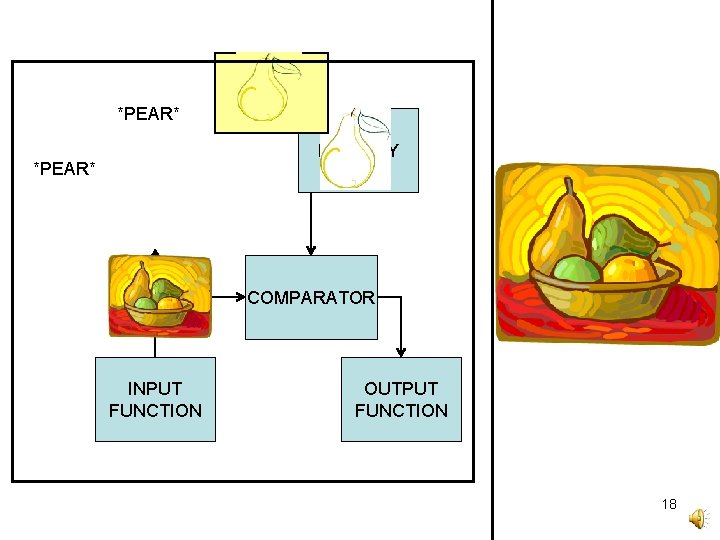
*PEAR* MEMORY *PEAR* COMPARATOR INPUT FUNCTION OUTPUT FUNCTION 18
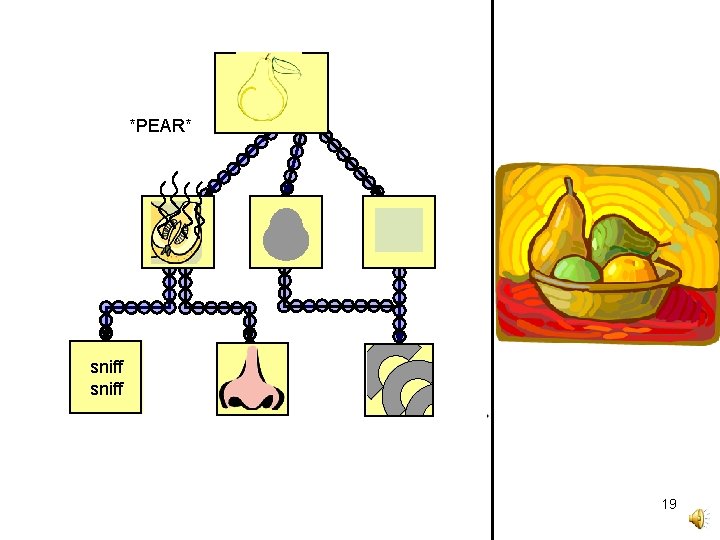
*PEAR* sniff 19
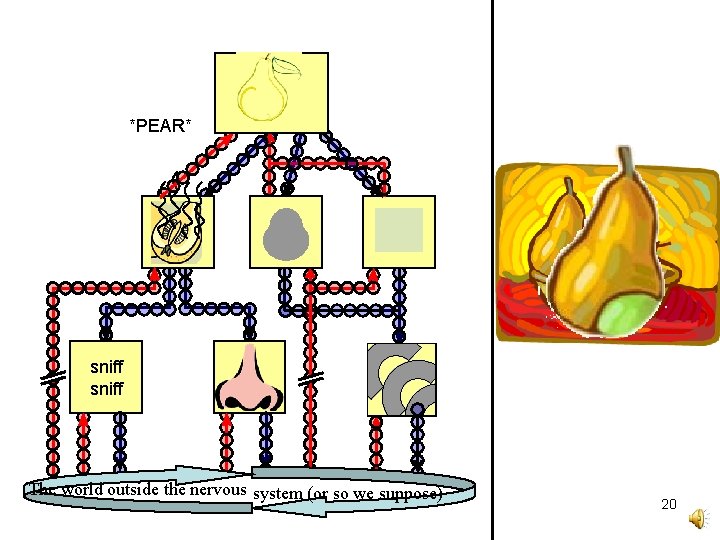
*PEAR* sniff The world outside the nervous system (or so we suppose) 20
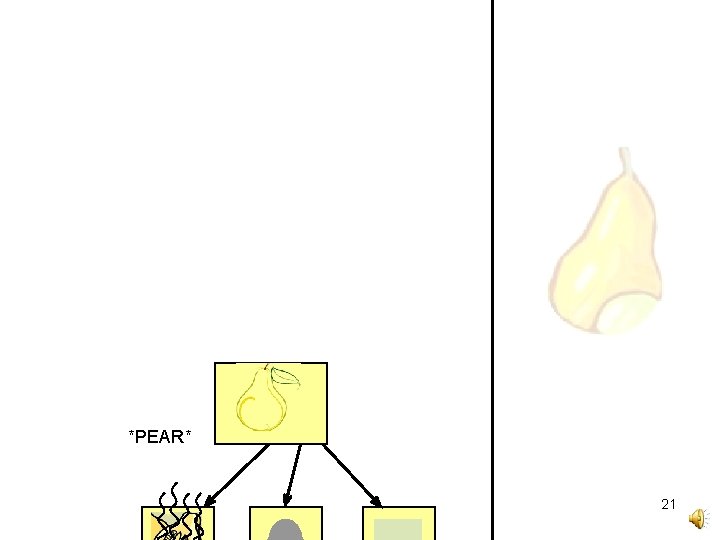
*PEAR* 21
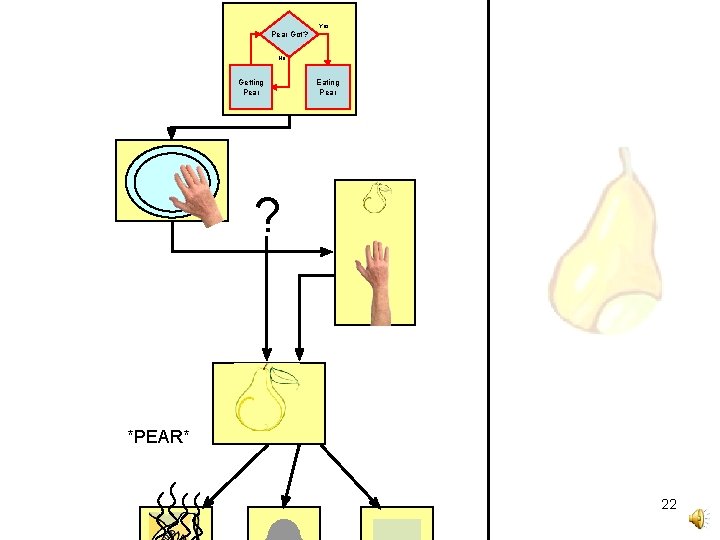
Yes Pear Got? No Getting Pear Eating Pear ? *PEAR* 22
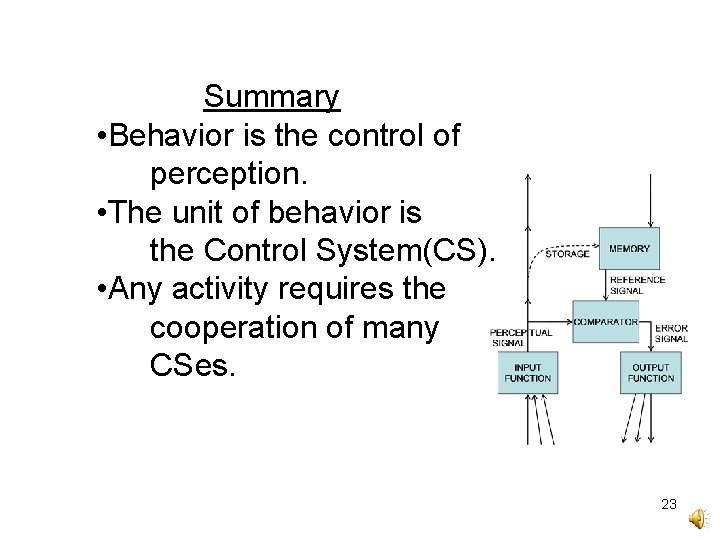
Summary • Behavior is the control of perception. • The unit of behavior is the Control System(CS). • Any activity requires the cooperation of many CSes. 23
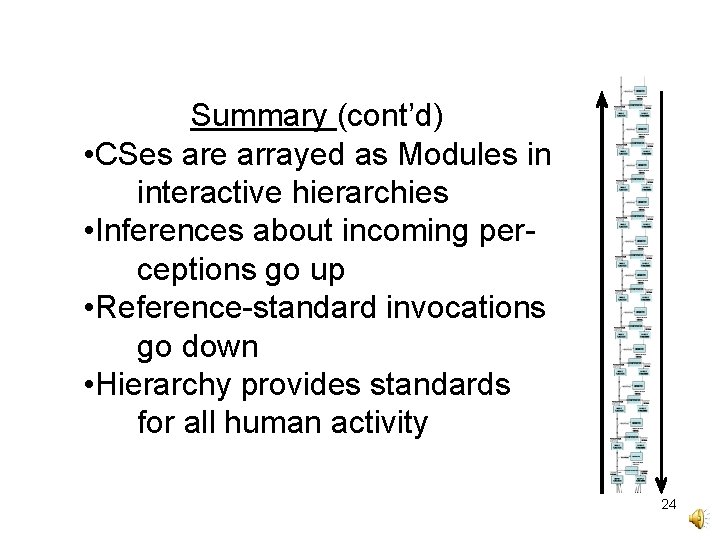
Summary (cont’d) • CSes are arrayed as Modules in interactive hierarchies • Inferences about incoming perceptions go up • Reference-standard invocations go down • Hierarchy provides standards for all human activity 24
Part Two Evolution of the Input Function and Culture Acquisition Input Functions are Inference Engines q. Empirical Inference Engines q. Trans-Empirical Inference Engines 26
q. Trans-Empirical Inference Engines §Inferring Other’s Perception §Inferring Other’s Reference Standard • Predator-Prey Interactions • Social Interactions • Imitation 27
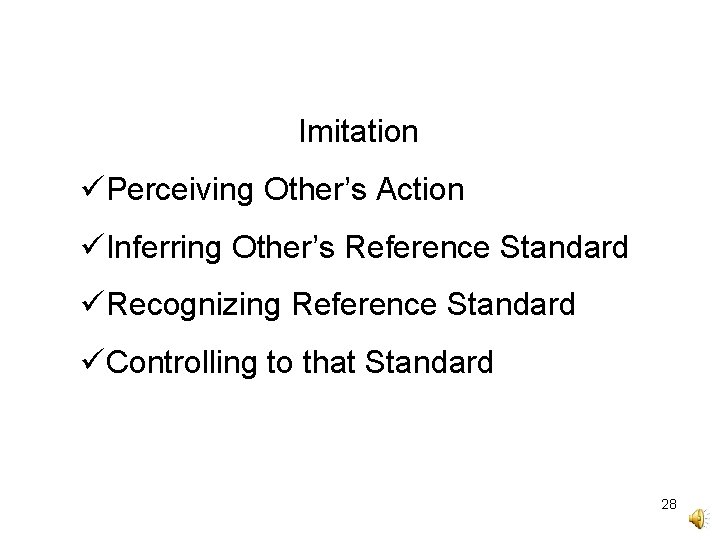
Imitation üPerceiving Other’s Action üInferring Other’s Reference Standard üRecognizing Reference Standard üControlling to that Standard 28
q. Trans-Empirical Inference Engines §Inferring Other’s Perception §Inferring Other’s Reference Standard • Predator-Prey Interactions • Social Interactions • Imitation • Culture Acquisition • (Language Acquisition) 29
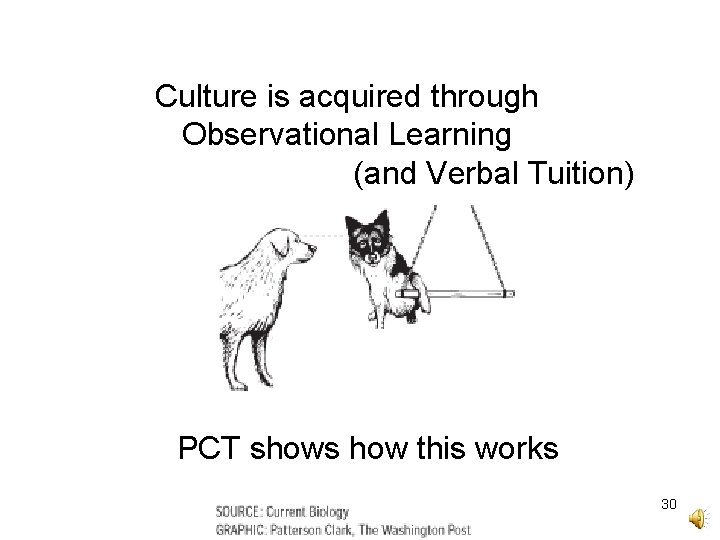
Culture is acquired through Observational Learning (and Verbal Tuition) PCT shows how this works 30
Culture-Acquisition per PCT: §An animal, O, observes behavior of another animal, D §O infers D’s Reference Standards and stores them in the Memory of one or more new CS Modules §Those Modules use lower-level Modules to control their input perceptions to those Reference Standards 31
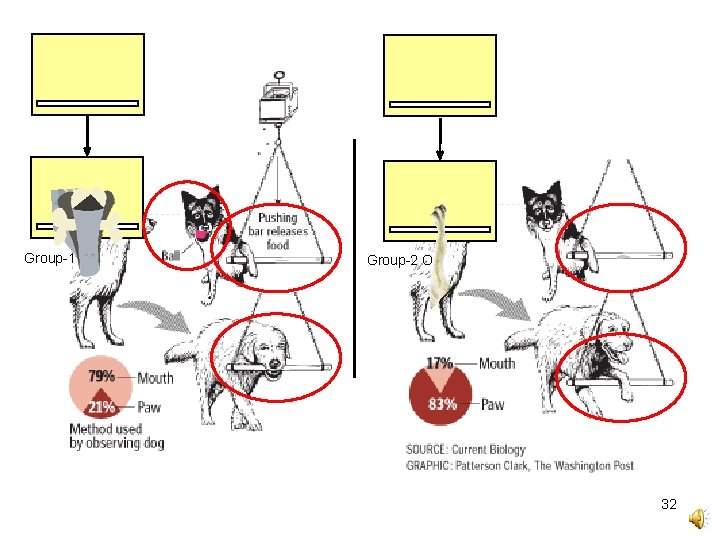
Group-1 O Group-2 O 32
Culture-Acquisition per PCT: §An animal, O, observes behavior of another animal, D §O infers D’s Reference Standards and stores them in the Memory of one or more new CS Modules §Those Modules use lower-level Modules to control their input perceptions to those Reference Standards §Modules/Reference Standards so acquired are Cultural Instructions, or Memes 33
Part Three A Task Analysis Using PCT And Introducing Another Vital Feature of PCT 35
36
37
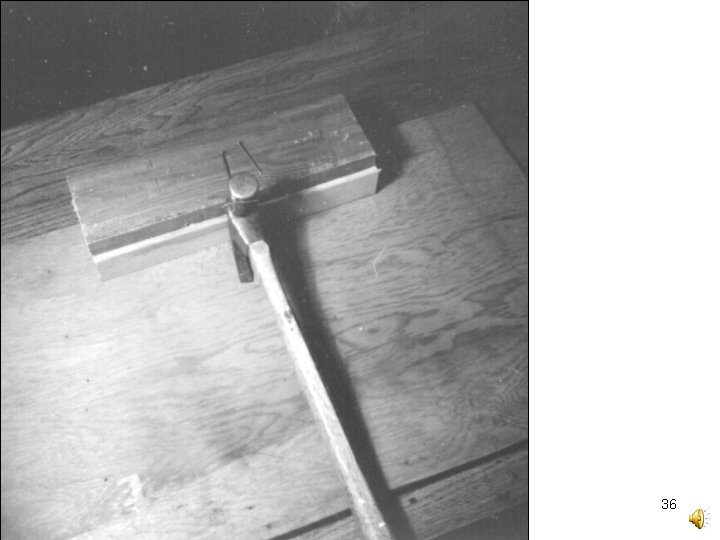
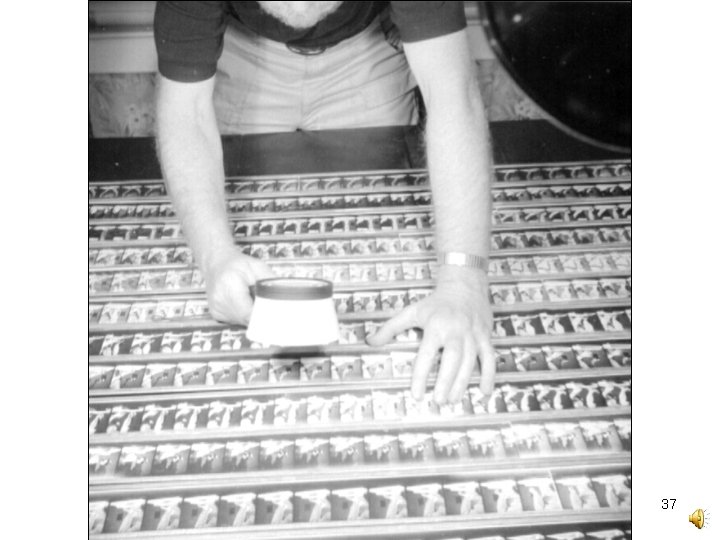
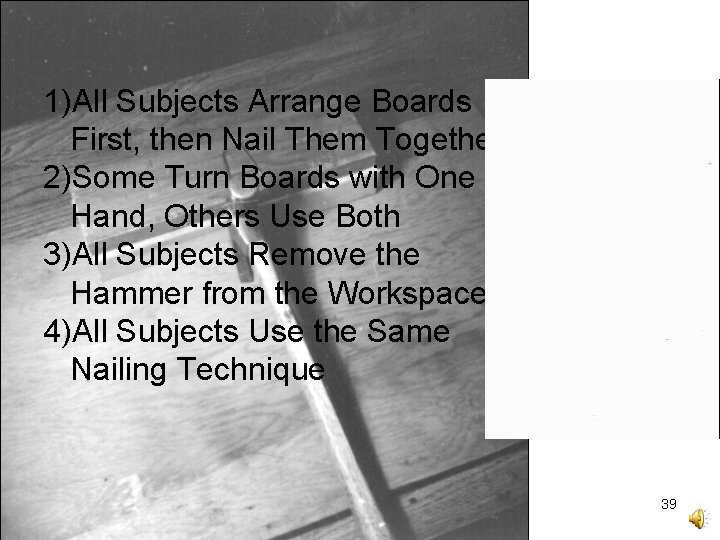
1)All Subjects Arrange Boards First, then Nail Them Together 2)Some Turn Boards with One Hand, Others Use Both 3)All Subjects Remove the Hammer from the Workspace 4)All Subjects Use the Same Nailing Technique 38
1)All Subjects Arrange Boards First, then Nail Them Together 2)Some Turn Boards with One Hand, Others Use Both 3)All Subjects Remove the Hammer from the Workspace 4)All Subjects Use the Same Nailing Technique 39
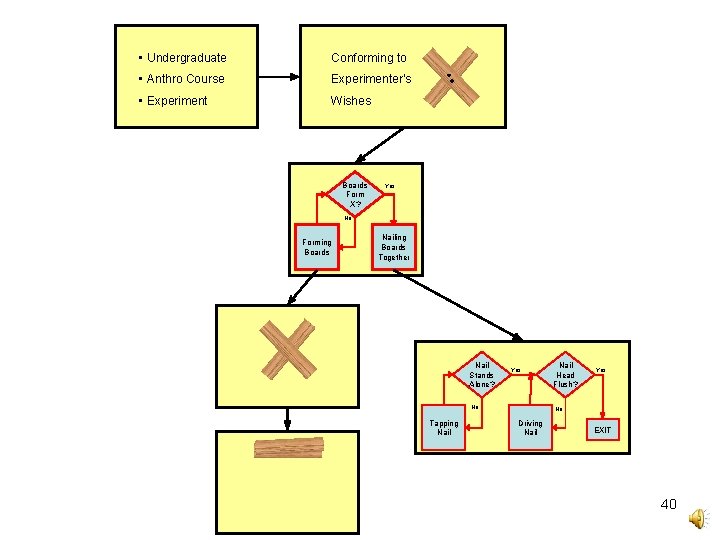
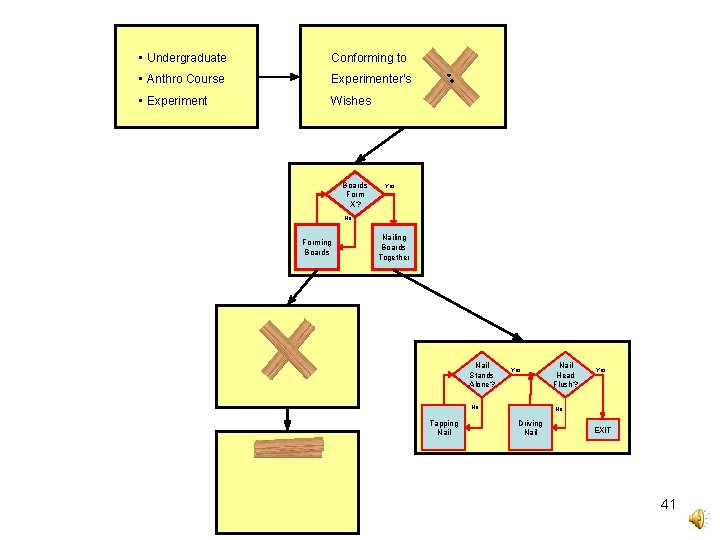
• Undergraduate Conforming to • Anthro Course Experimenter’s • Experiment Wishes Boards Form X? Yes No Forming Boards Nailing Boards Together Nail Stands Alone? Yes No Tapping Nail Head Flush? Yes No Driving Nail EXIT 40
• Undergraduate Conforming to • Anthro Course Experimenter’s • Experiment Wishes Boards Form X? Yes No Forming Boards Nailing Boards Together Nail Stands Alone? Yes No Tapping Nail Head Flush? Yes No Driving Nail EXIT 41
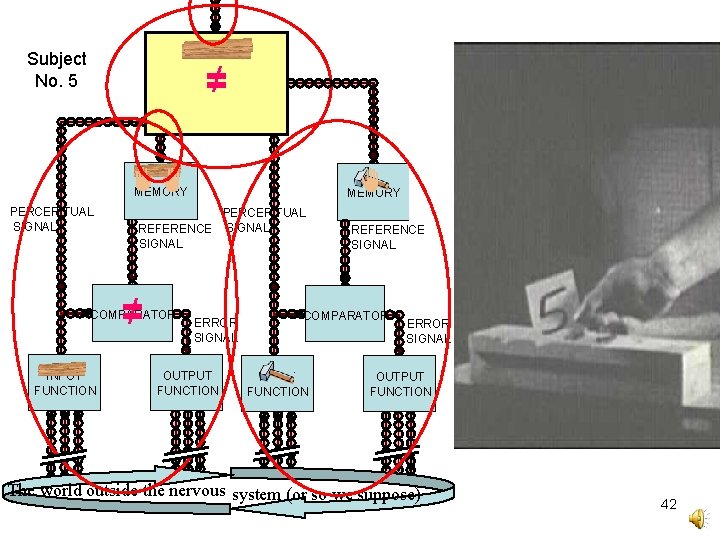
Subject No. 5 =/ MEMORY PERCEP TUAL SIGNAL PERCEP TUAL REFERENCE SIGNAL =/ COMPARATOR INPUT FUNCTION MEMORY ERROR SIGNAL OUTPUT FUNCTION REFERENCE SIGNAL COMPARATOR INPUT FUNCTION ERROR SIGNAL OUTPUT FUNCTION The world outside the nervous system (or so we suppose) 42
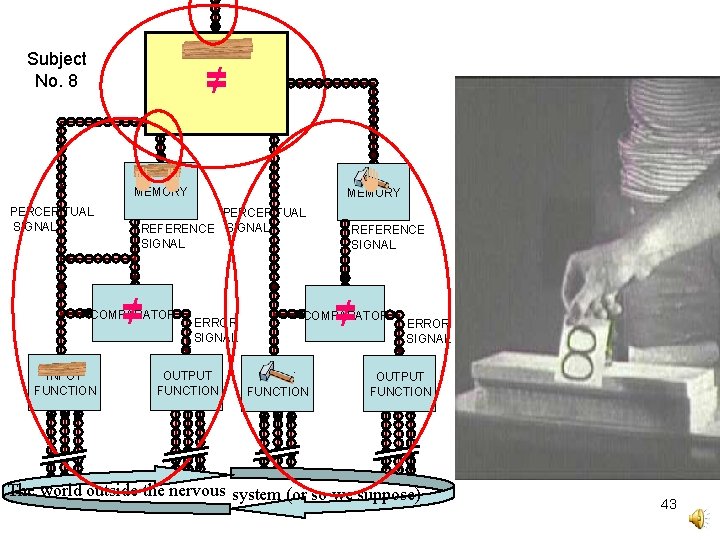
Subject No. 8 =/ MEMORY PERCEP TUAL SIGNAL PERCEP TUAL REFERENCE SIGNAL =/ COMPARATOR INPUT FUNCTION MEMORY ERROR SIGNAL OUTPUT FUNCTION REFERENCE SIGNAL =/ COMPARATOR INPUT FUNCTION ERROR SIGNAL OUTPUT FUNCTION The world outside the nervous system (or so we suppose) 43
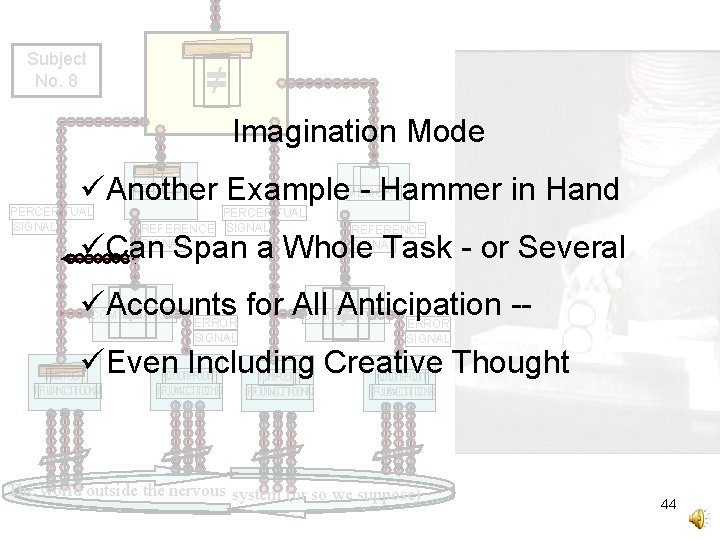
Subject No. 8 =/ Imagination Mode üAnother Example - Hammer in Hand MEMORY PERCEP TUAL SIGNAL MEMORY PERCEP TUAL REFERENCE SIGNAL üCan Span a Whole Task - or Several üAccounts for All = Anticipation -=/ / COMPARATOR ERROR SIGNAL üEven Including Creative Thought INPUT FUNCTION OUTPUT FUNCTION The world outside the nervous system (or so we suppose) 44
Part Four The Evolution of Cultural Features by means of Natural Selection 46
üEvolution of Inference Engine - Review üRefining of Culture Acquisition -üLeading to Natural Selection of Memes üWhich Succeed by their Works Thank you for viewing “Perceptual Control Theory (PCT) and the On-Going Evolution of Culture” 47
48