
Perception Perception The process of organizing and interpreting



- Slides: 42
Perception
Perception • The process of organizing and interpreting sensory information
Depth Perception
Depth Perception • The ability to see in three dimensions and judge distance
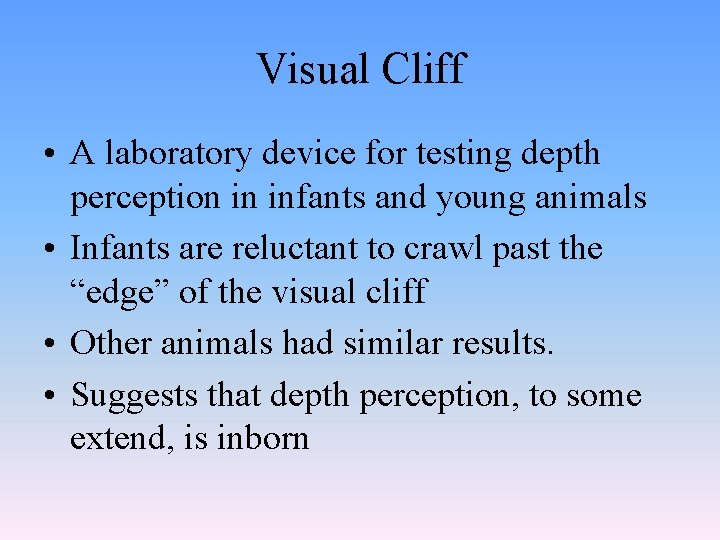
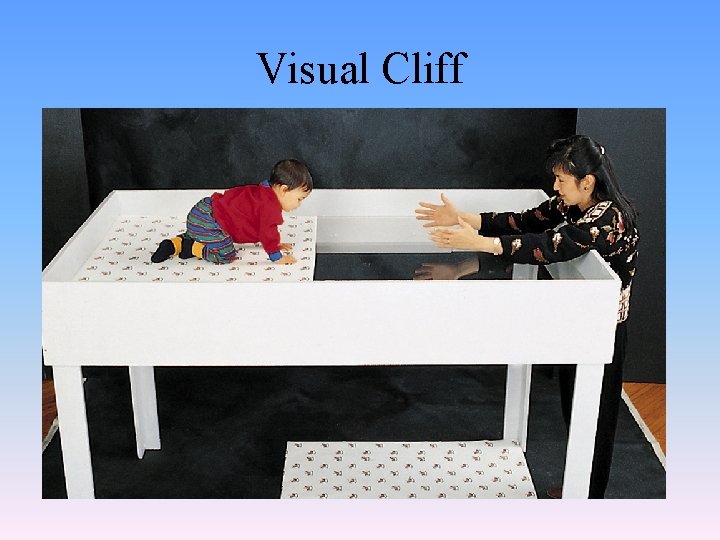
Visual Cliff • A laboratory device for testing depth perception in infants and young animals • Infants are reluctant to crawl past the “edge” of the visual cliff • Other animals had similar results. • Suggests that depth perception, to some extend, is inborn
Visual Cliff
Depth Perception: Binocular Depth Cues
Binocular Cues • Depth cues that require the use of both eyes
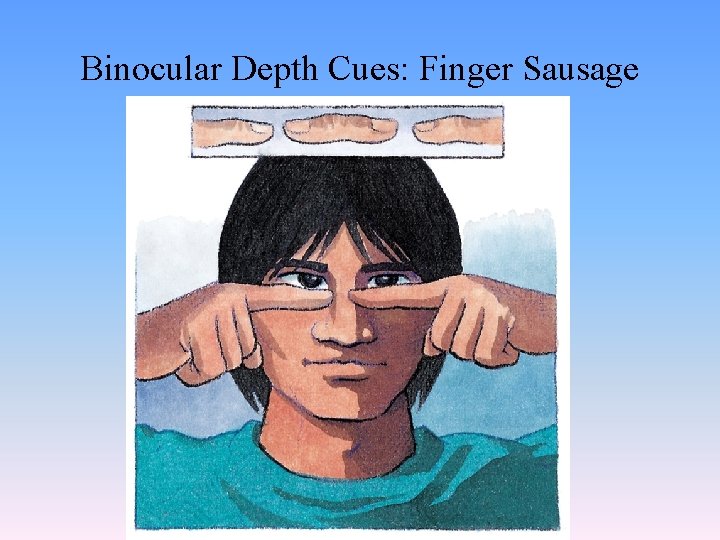
Retinal Disparity • A binocular depth cue resulting from slightly different images produced by the retina of the left and the retina of the right eye • Is most effective when the item is quite close to the person
Binocular Depth Cues: Finger Sausage
Convergence • A binocular depth cue related to the tension in the eye muscles when the eyes track inward to focus on objects close to the viewer • The more tension in the eye muscle, the closer the object is • Works best at close distances
Depth Perception: Monocular Depth Cues
Monocular Cues • Depth cues that require the use of only one eye • Monocular depth cues include: relative size, relative motion, interposition, relative height, texture gradient, relative clarity, and linear perspective.
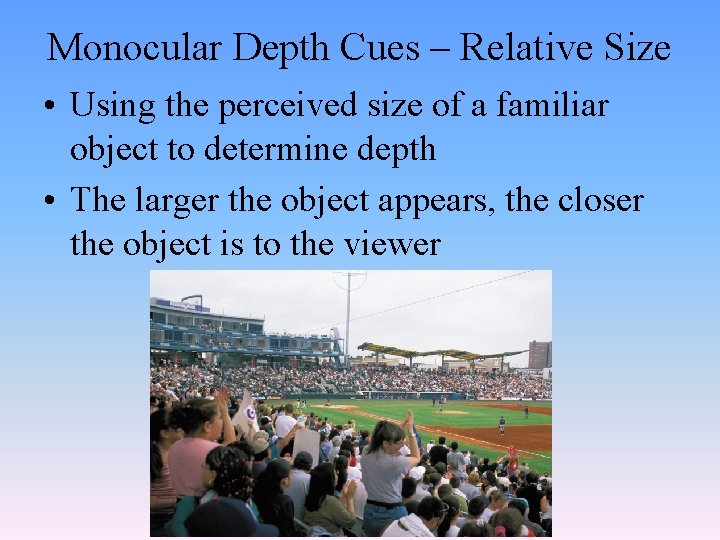
Monocular Depth Cues – Relative Size • Using the perceived size of a familiar object to determine depth • The larger the object appears, the closer the object is to the viewer
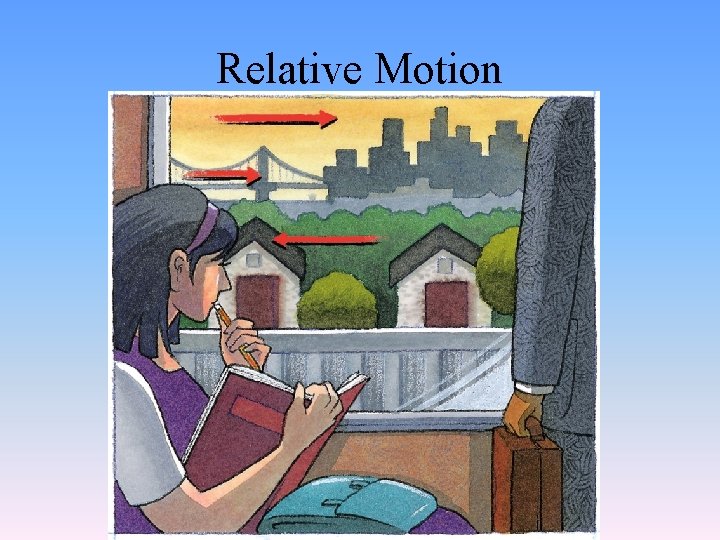
Monocular Depth Cues – Relative Motion • A person who is moving can determine depth by focusing on a distant object. • Objects further away than the object of focus will appear to move in the same direction as the subject is moving. • Objects closer than the object of focus will appear to move in the opposite direction.
Relative Motion
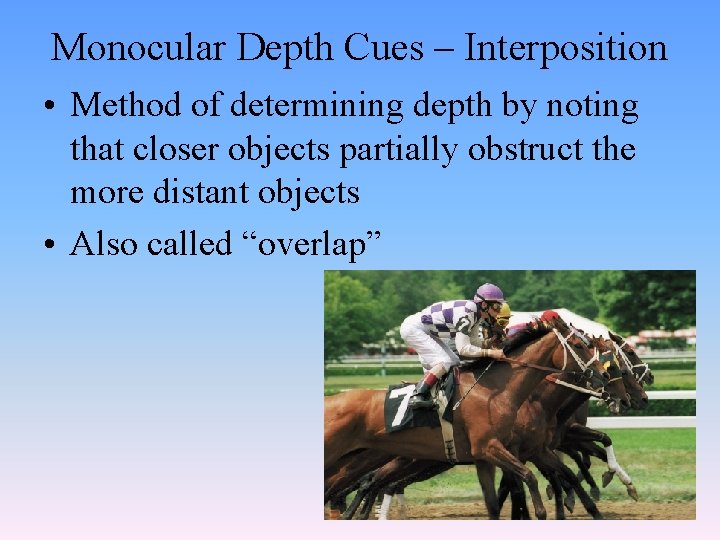
Monocular Depth Cues – Interposition • Method of determining depth by noting that closer objects partially obstruct the more distant objects • Also called “overlap”
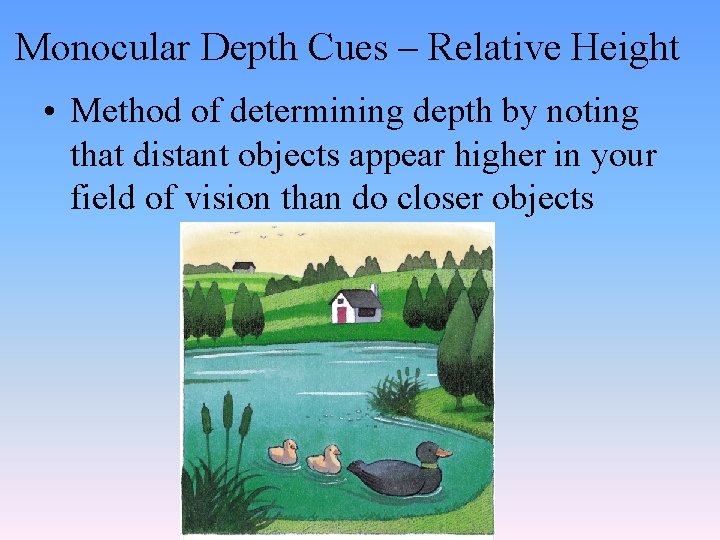
Monocular Depth Cues – Relative Height • Method of determining depth by noting that distant objects appear higher in your field of vision than do closer objects
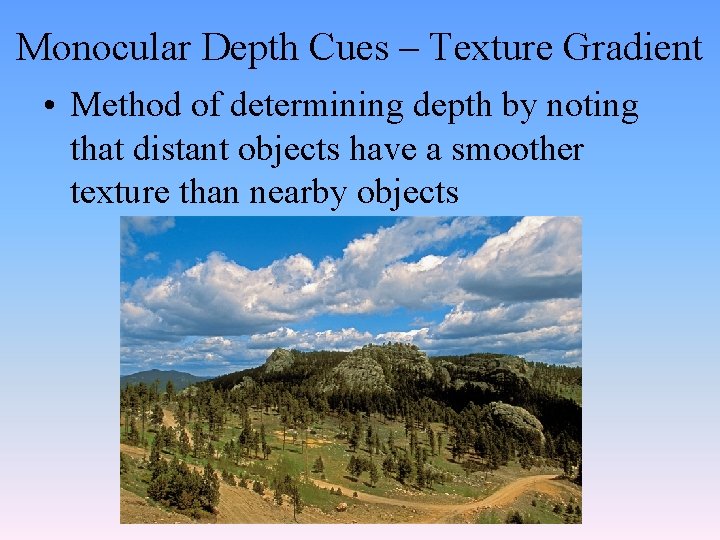
Monocular Depth Cues – Texture Gradient • Method of determining depth by noting that distant objects have a smoother texture than nearby objects
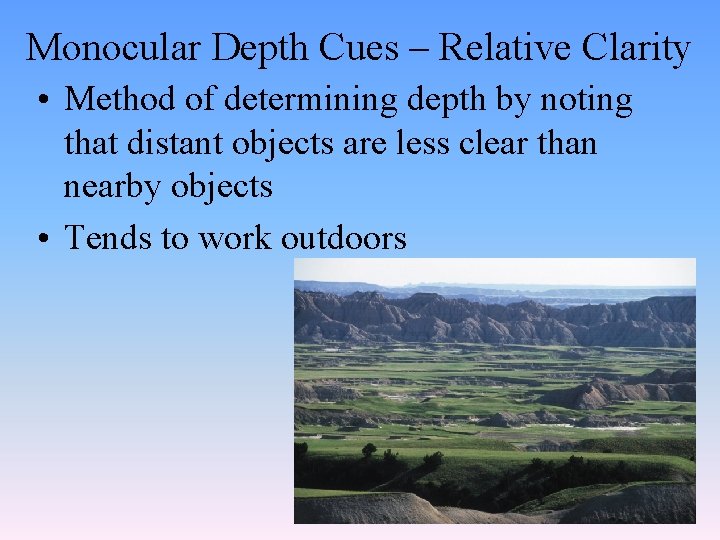
Monocular Depth Cues – Relative Clarity • Method of determining depth by noting that distant objects are less clear than nearby objects • Tends to work outdoors
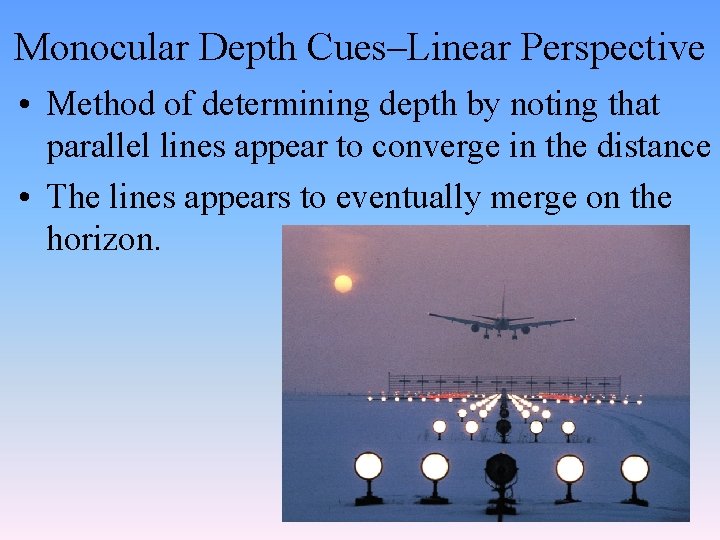
Monocular Depth Cues–Linear Perspective • Method of determining depth by noting that parallel lines appear to converge in the distance • The lines appears to eventually merge on the horizon.
Illusions
Illusions • Misinterpreting sensory stimuli • Help researchers understand how sensation and perception normally works
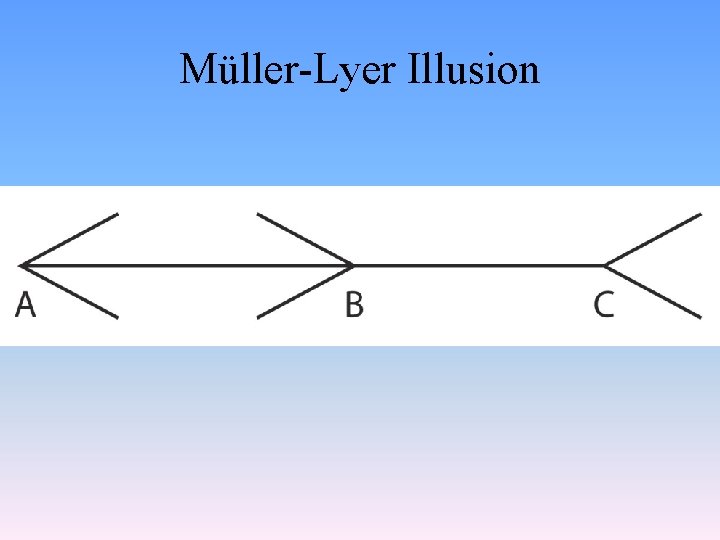
Müller-Lyer Illusion
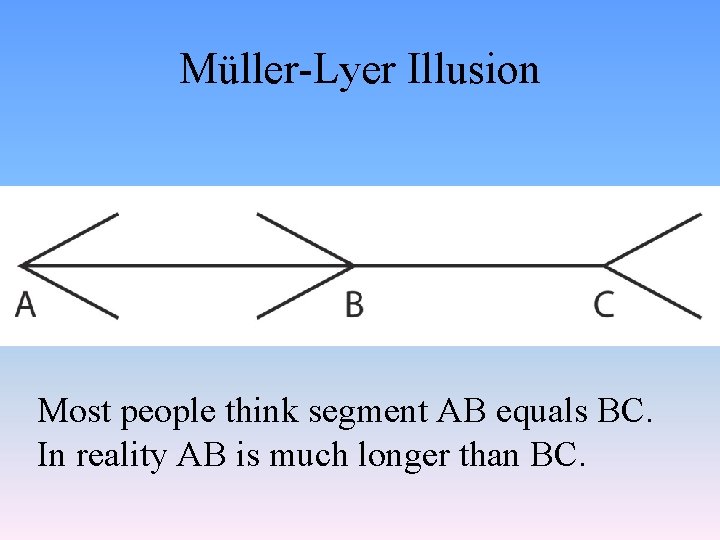
Müller-Lyer Illusion Most people think segment AB equals BC. In reality AB is much longer than BC.
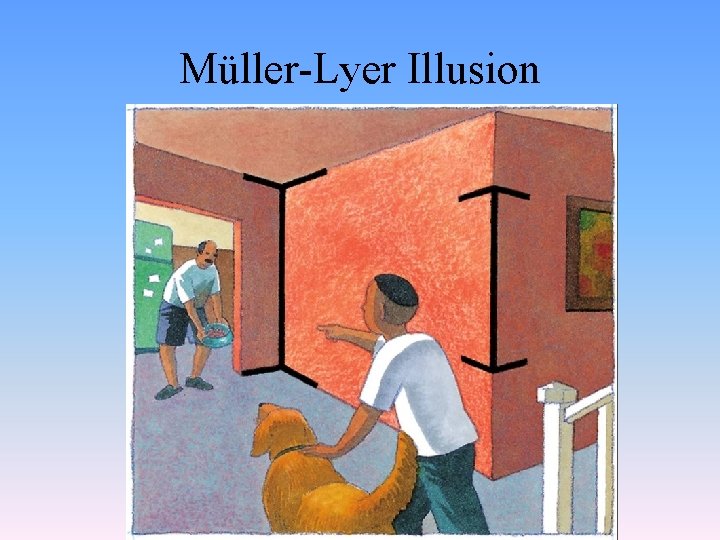
Müller-Lyer Illusion
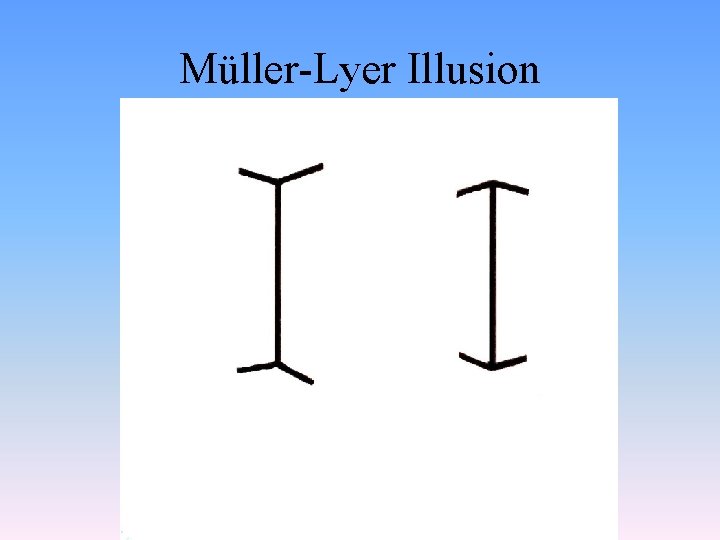
Müller-Lyer Illusion
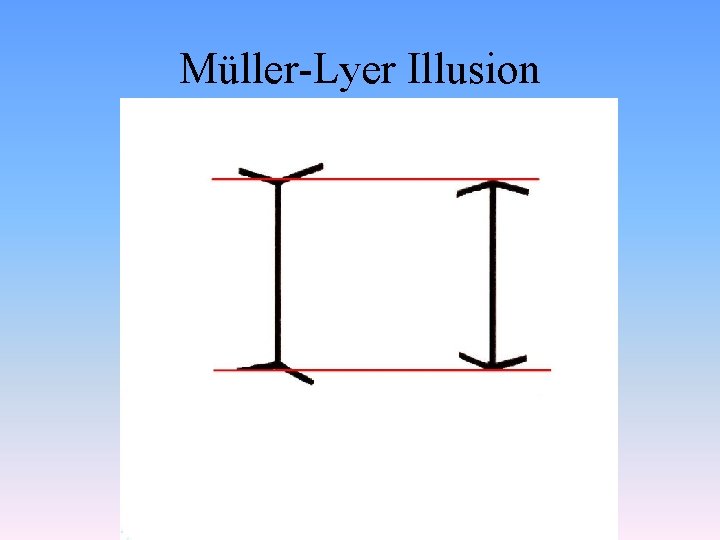
Müller-Lyer Illusion
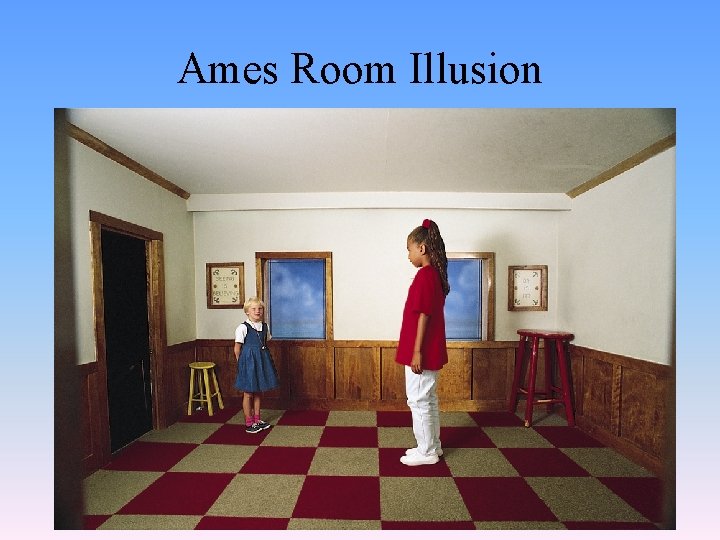
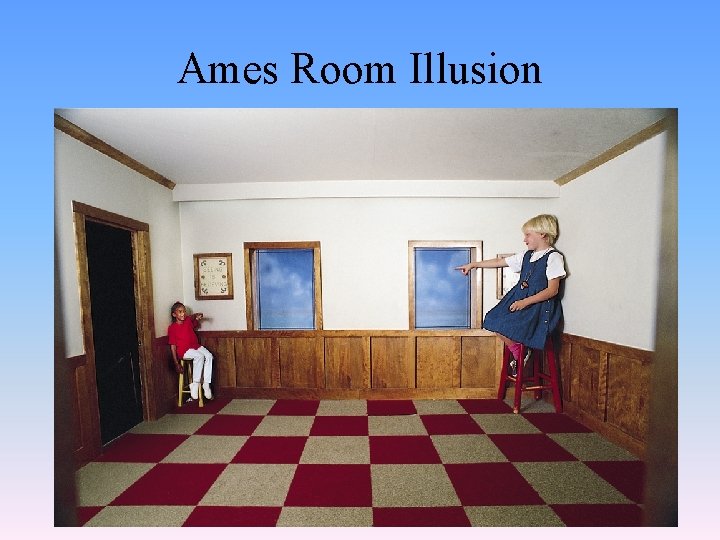
Ames Room Illusion
Ames Room Illusion
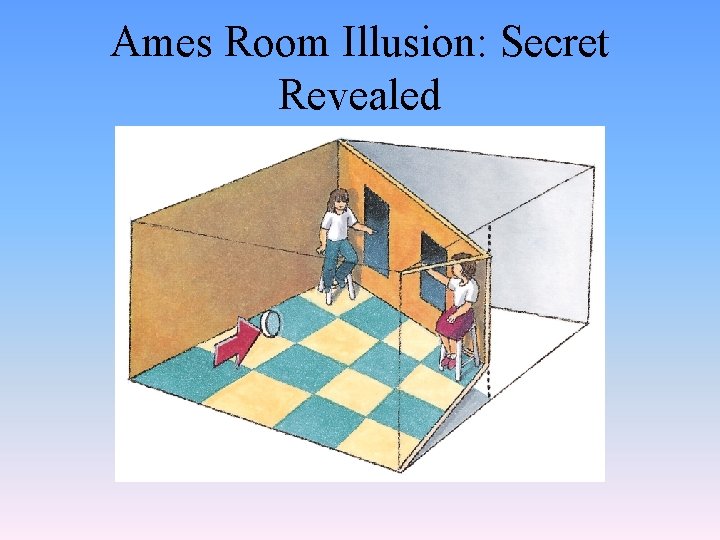
Ames Room Illusion: Secret Revealed
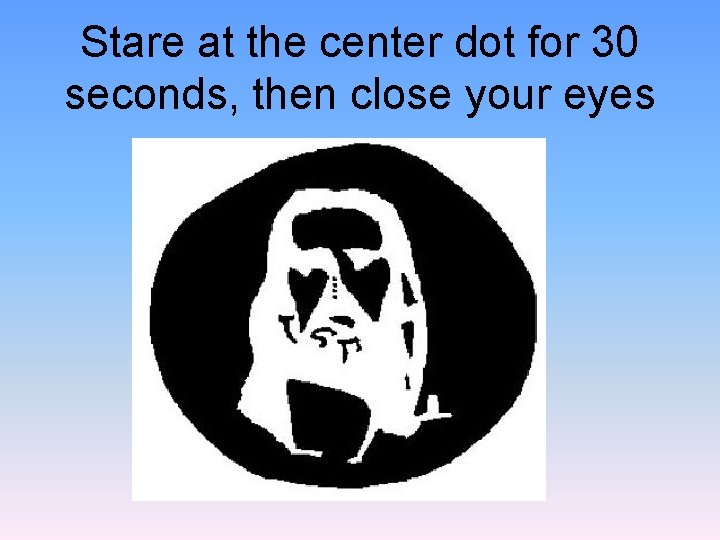
Stare at the center dot for 30 seconds, then close your eyes
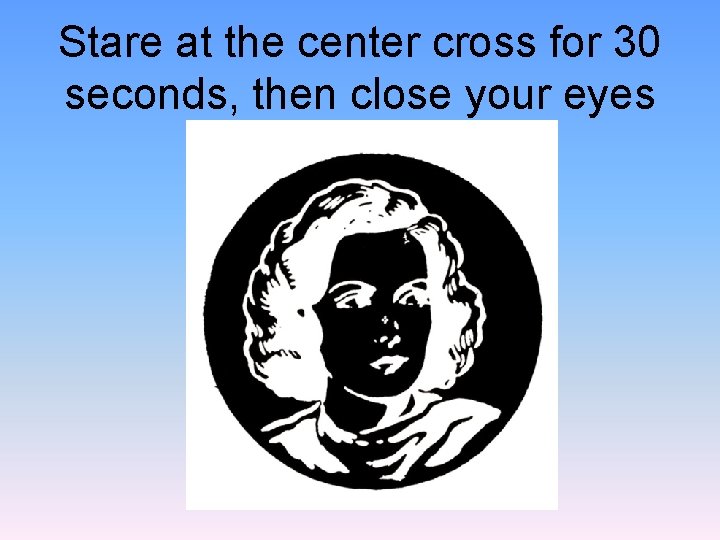
Stare at the center cross for 30 seconds, then close your eyes
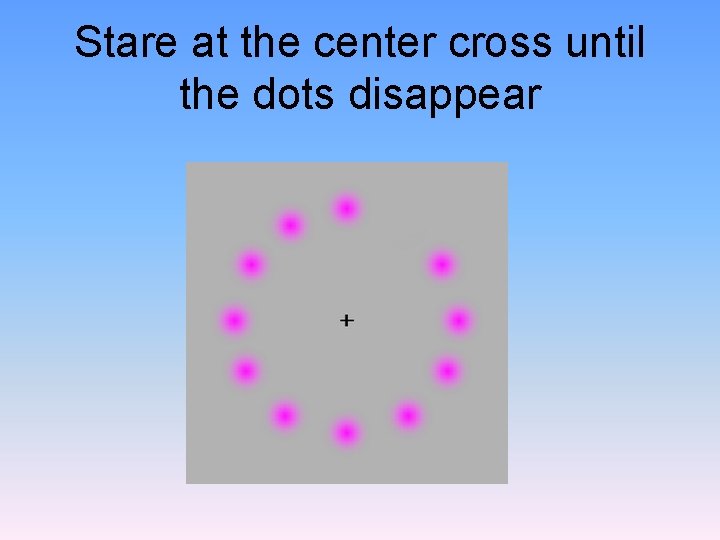
Stare at the center cross until the dots disappear
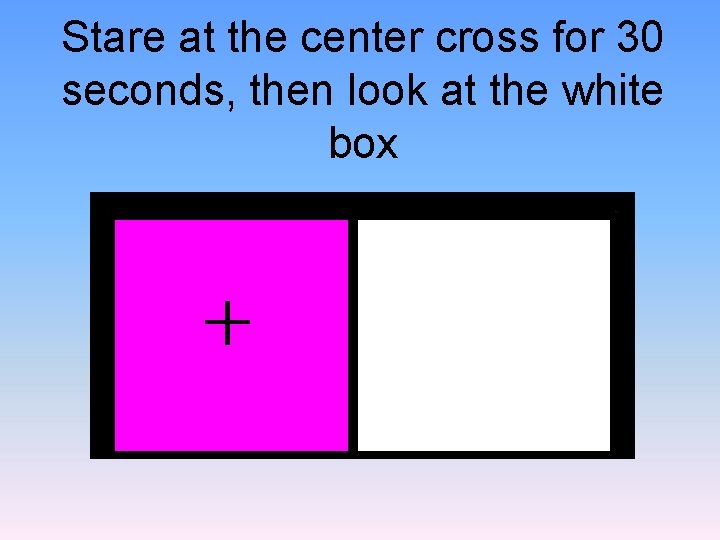
Stare at the center cross for 30 seconds, then look at the white box
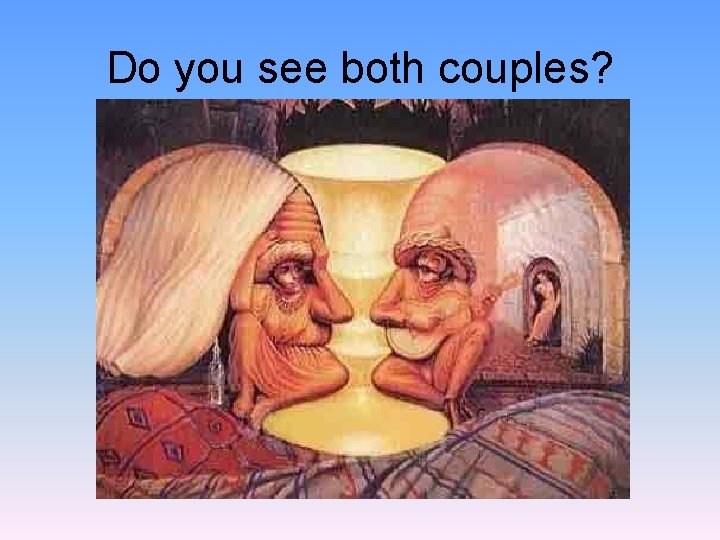
Do you see both couples?
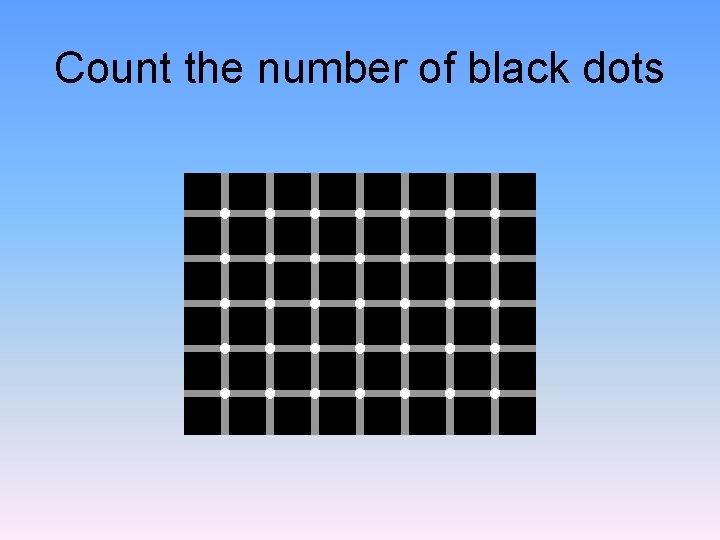
Count the number of black dots
Dragon Illusion • https: //www. youtube. com/watch? v=2 K 39 Q 9 zv. Qo. E