
Percentage Increase and Decrease Solve problems involving percentage
Percentage Increase and Decrease Solve problems involving percentage increase and decrease. If you have any questions regarding these resources or come across any errors, please contact helpful-report@pixl. org. uk
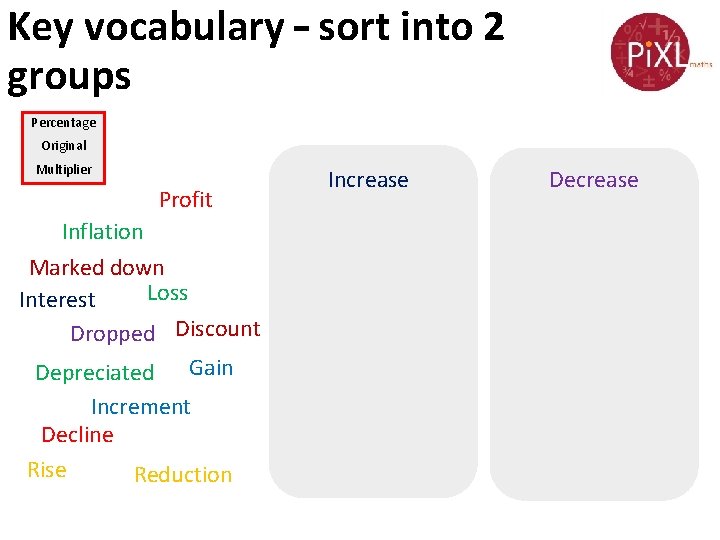
Key vocabulary – sort into 2 groups Percentage Original Multiplier Profit Inflation Marked down Loss Interest Dropped Discount Depreciated Gain Increment Decline Rise Reduction Increase Decrease
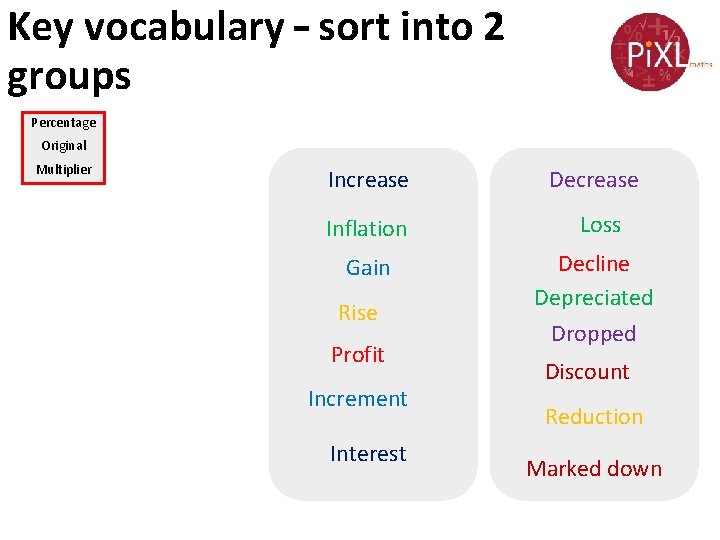
Key vocabulary – sort into 2 groups Percentage Original Multiplier Increase Decrease Inflation Loss Gain Decline Depreciated Rise Profit Increment Interest Dropped Discount Reduction Marked down
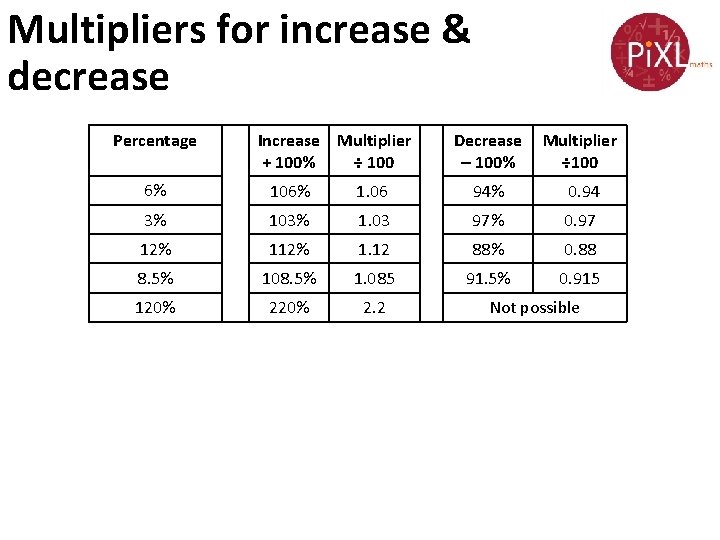
Multipliers for increase & decrease Percentage Increase Multiplier + 100% ÷ 100 Decrease – 100% Multiplier ÷ 100 6% 106% 1. 06 94% 0. 94 3% 103% 1. 03 97% 0. 97 12% 1. 12 88% 0. 88 8. 5% 108. 5% 1. 085 91. 5% 0. 915 120% 2. 2 Not possible
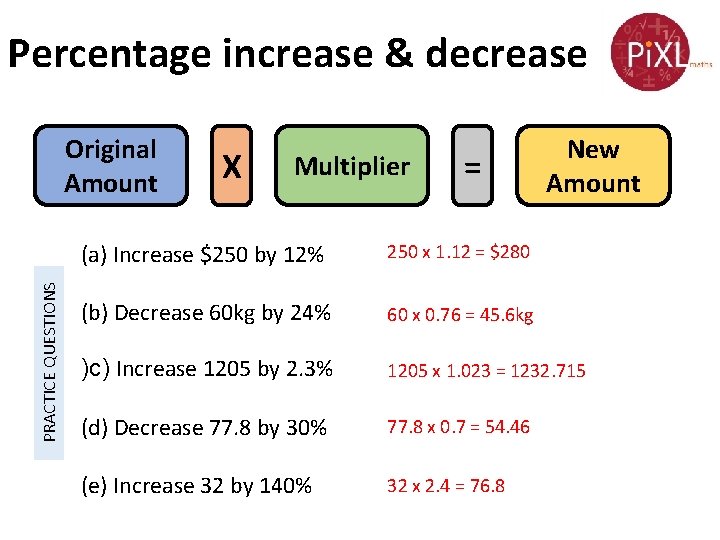
Percentage increase & decrease PRACTICE QUESTIONS Original Amount X Multiplier = New Amount (a) Increase $250 by 12% 250 x 1. 12 = $280 (b) Decrease 60 kg by 24% 60 x 0. 76 = 45. 6 kg )c) Increase 1205 by 2. 3% 1205 x 1. 023 = 1232. 715 (d) Decrease 77. 8 by 30% 77. 8 x 0. 7 = 54. 46 (e) Increase 32 by 140% 32 x 2. 4 = 76. 8
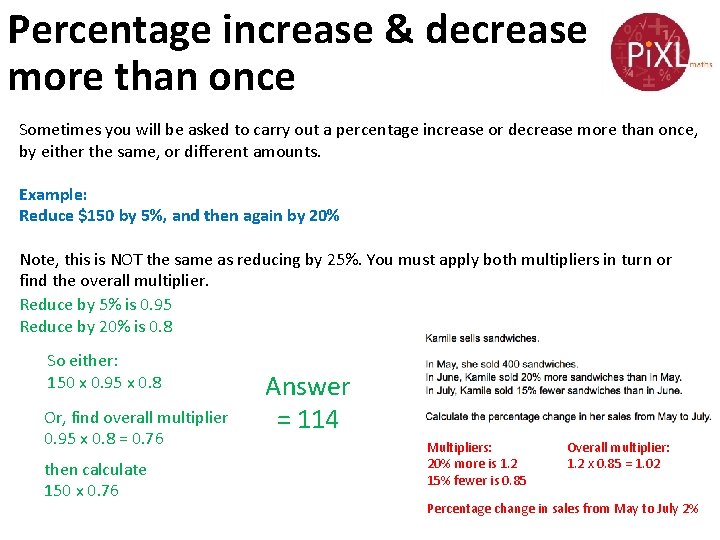
Percentage increase & decrease more than once Sometimes you will be asked to carry out a percentage increase or decrease more than once, by either the same, or different amounts. Example: Reduce $150 by 5%, and then again by 20% Note, this is NOT the same as reducing by 25%. You must apply both multipliers in turn or find the overall multiplier. Reduce by 5% is 0. 95 Reduce by 20% is 0. 8 So either: 150 x 0. 95 x 0. 8 Or, find overall multiplier 0. 95 x 0. 8 = 0. 76 then calculate 150 x 0. 76 Answer = 114 Multipliers: 20% more is 1. 2 15% fewer is 0. 85 Overall multiplier: 1. 2 x 0. 85 = 1. 02 Percentage change in sales from May to July 2%
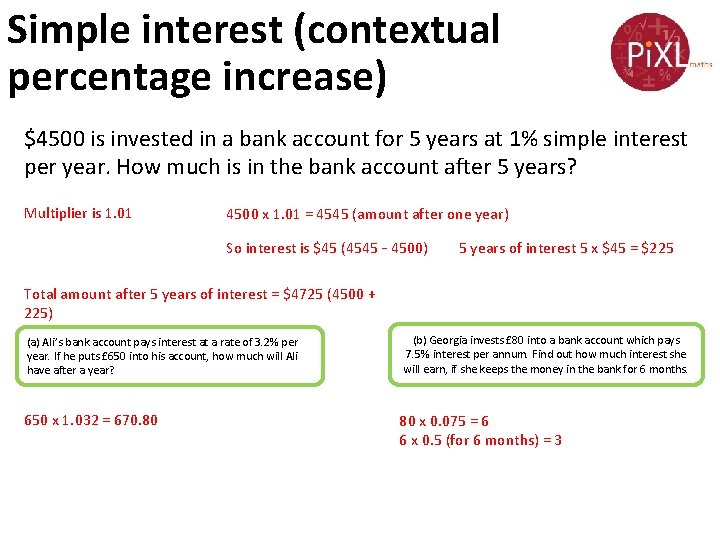
Simple interest (contextual percentage increase) $4500 is invested in a bank account for 5 years at 1% simple interest per year. How much is in the bank account after 5 years? Multiplier is 1. 01 4500 x 1. 01 = 4545 (amount after one year) So interest is $45 (4545 – 4500) 5 years of interest 5 x $45 = $225 Total amount after 5 years of interest = $4725 (4500 + 225) (a) Ali’s bank account pays interest at a rate of 3. 2% per year. If he puts £ 650 into his account, how much will Ali have after a year? 650 x 1. 032 = 670. 80 (b) Georgia invests £ 80 into a bank account which pays 7. 5% interest per annum. Find out how much interest she will earn, if she keeps the money in the bank for 6 months. 80 x 0. 075 = 6 6 x 0. 5 (for 6 months) = 3
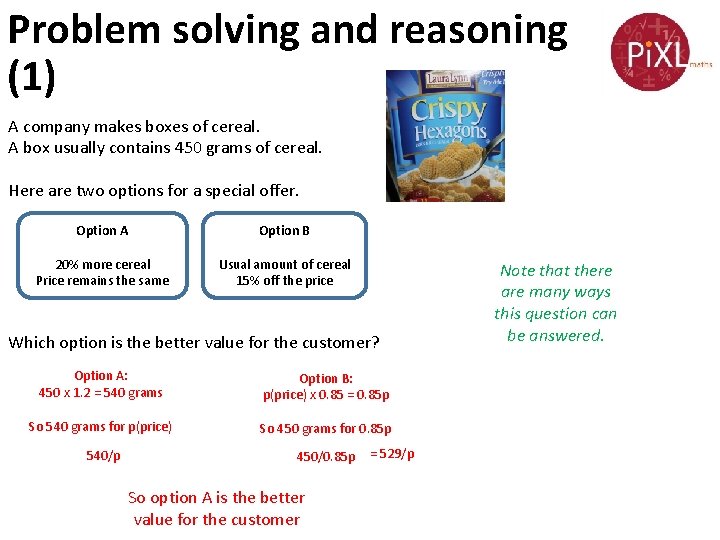
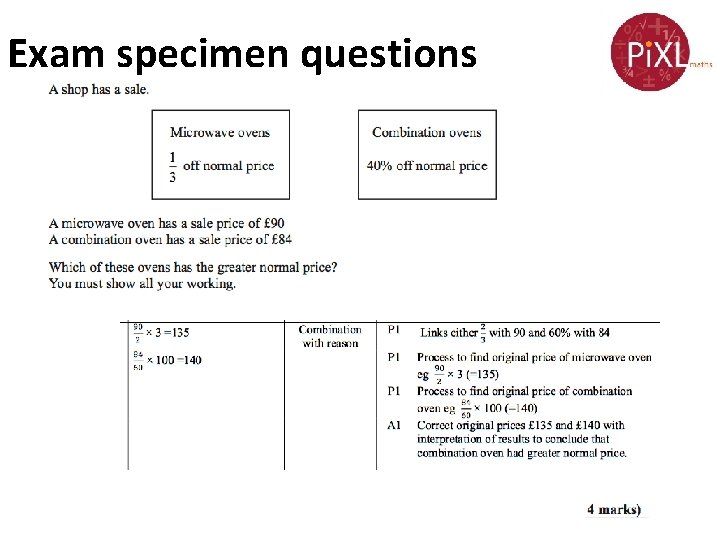
Problem solving and reasoning (1) A company makes boxes of cereal. A box usually contains 450 grams of cereal. Here are two options for a special offer. Option A Option B 20% more cereal Price remains the same Usual amount of cereal 15% off the price Which option is the better value for the customer? Option A: 450 x 1. 2 = 540 grams Option B: p(price) x 0. 85 = 0. 85 p So 540 grams for p(price) So 450 grams for 0. 85 p 540/p 450/0. 85 p So option A is the better value for the customer = 529/p Note that there are many ways this question can be answered.
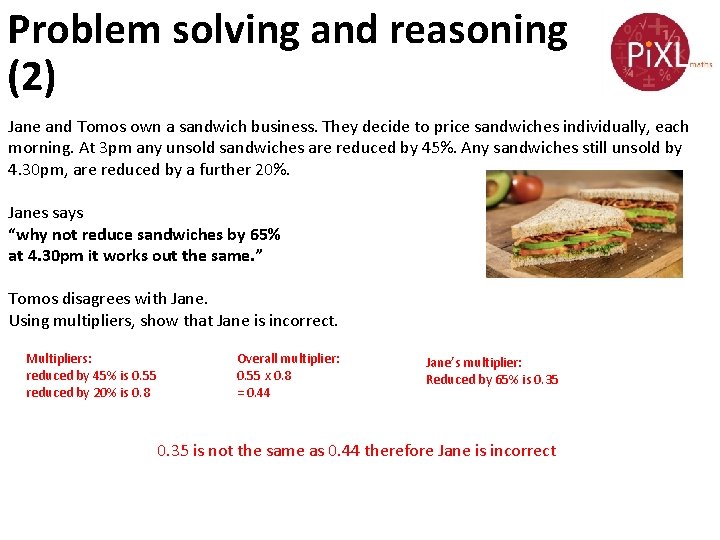
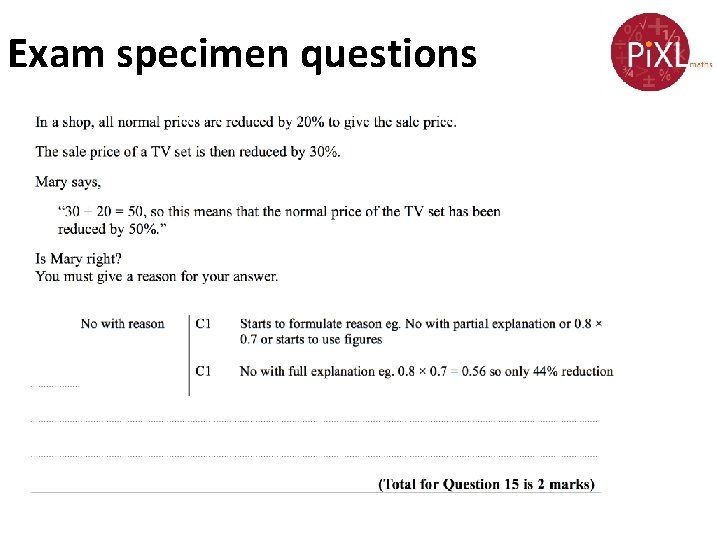
Problem solving and reasoning (2) Jane and Tomos own a sandwich business. They decide to price sandwiches individually, each morning. At 3 pm any unsold sandwiches are reduced by 45%. Any sandwiches still unsold by 4. 30 pm, are reduced by a further 20%. Janes says “why not reduce sandwiches by 65% at 4. 30 pm it works out the same. ” Tomos disagrees with Jane. Using multipliers, show that Jane is incorrect. Multipliers: reduced by 45% is 0. 55 reduced by 20% is 0. 8 Overall multiplier: 0. 55 x 0. 8 = 0. 44 Jane’s multiplier: Reduced by 65% is 0. 35 is not the same as 0. 44 therefore Jane is incorrect
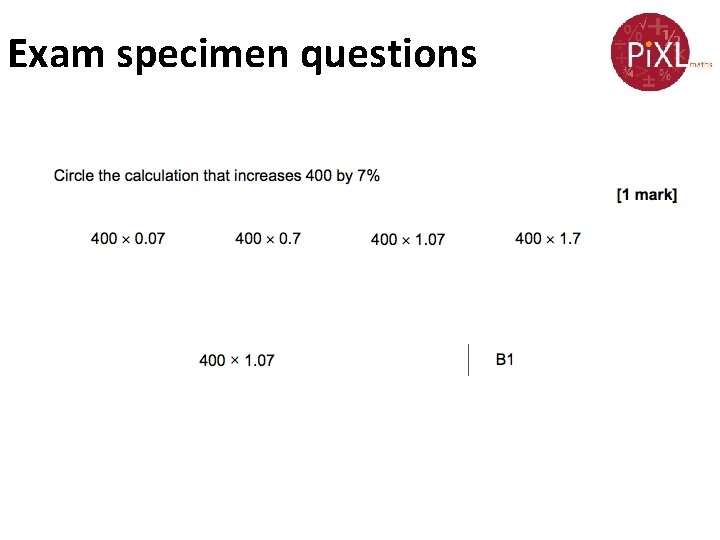
Exam specimen questions
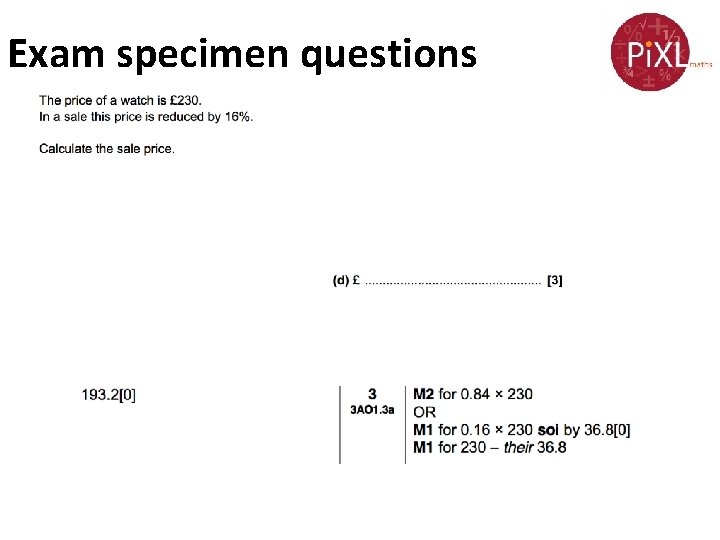
Exam specimen questions
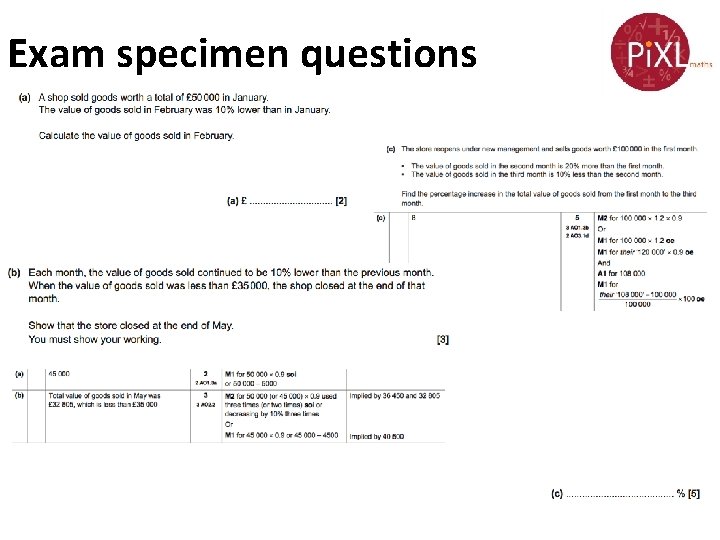
Exam specimen questions
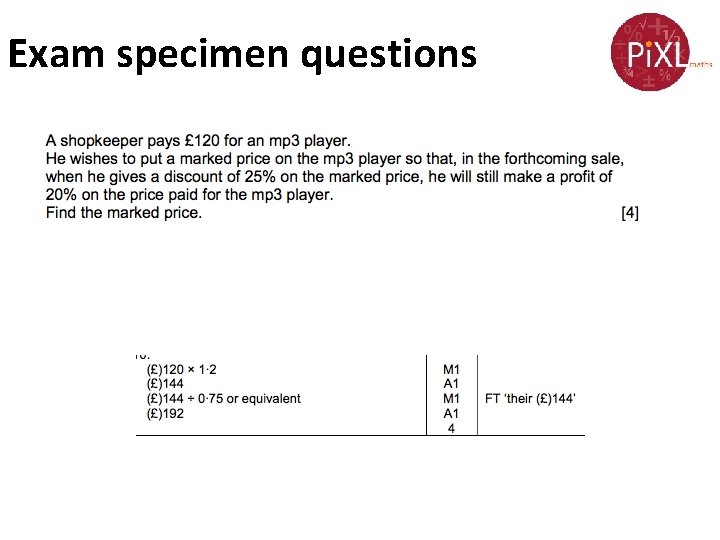
Exam specimen questions
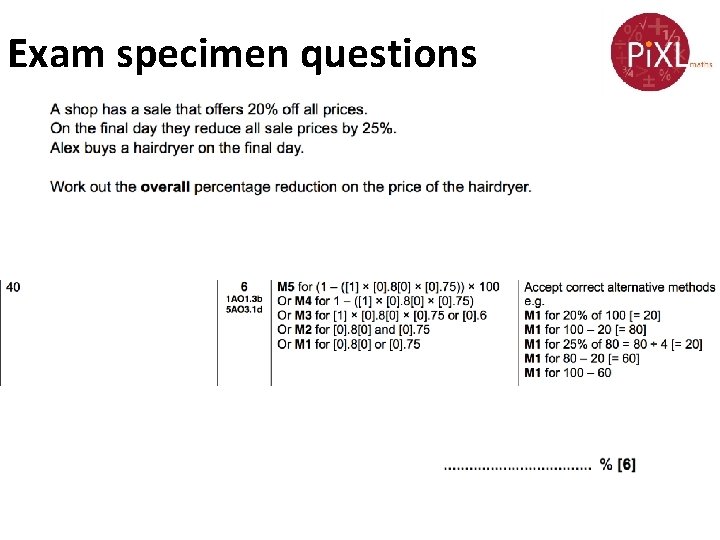
Exam specimen questions
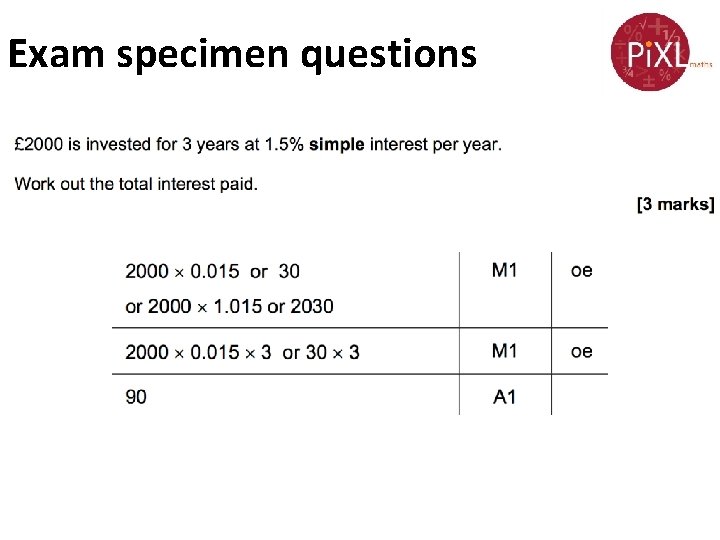
Exam specimen questions
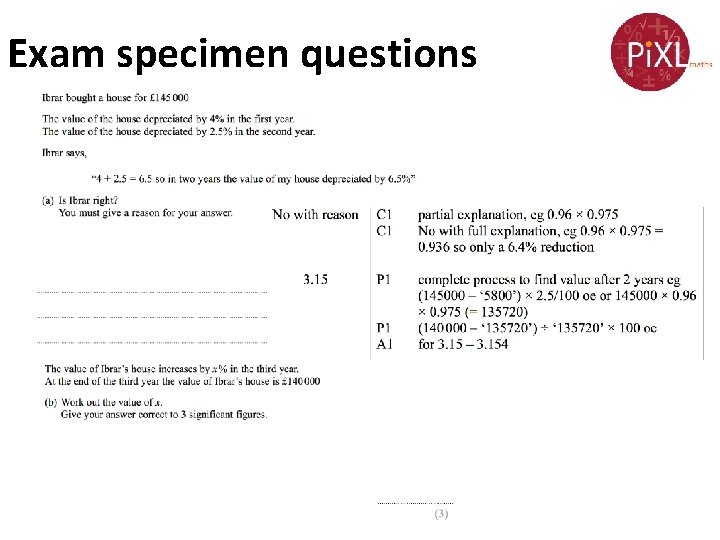
Exam specimen questions
Exam specimen questions
Exam specimen questions
- Slides: 18