
Peppered moths images and instructions for game Part
- Slides: 9
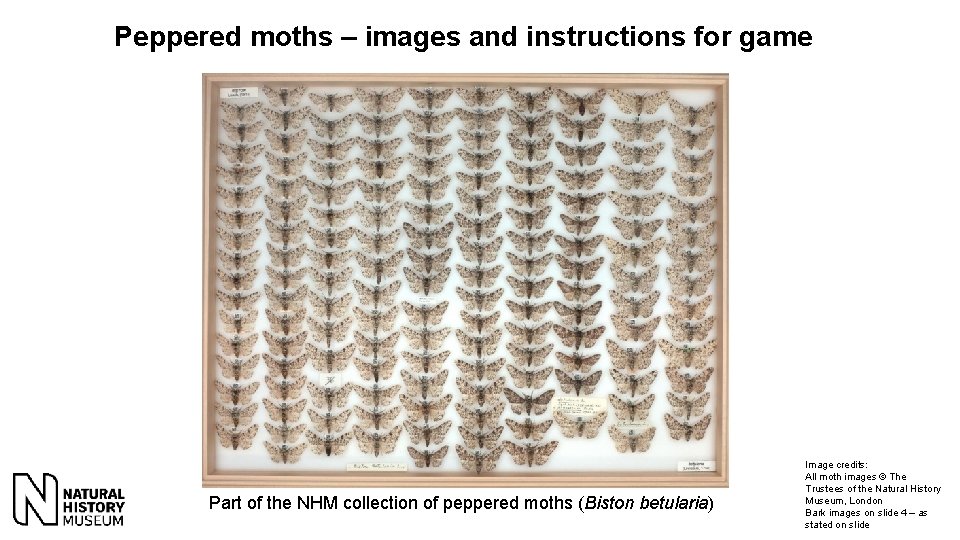
Peppered moths – images and instructions for game Part of the NHM collection of peppered moths (Biston betularia) Image credits: All moth images © The Trustees of the Natural History Museum, London Bark images on slide 4 – as stated on slide
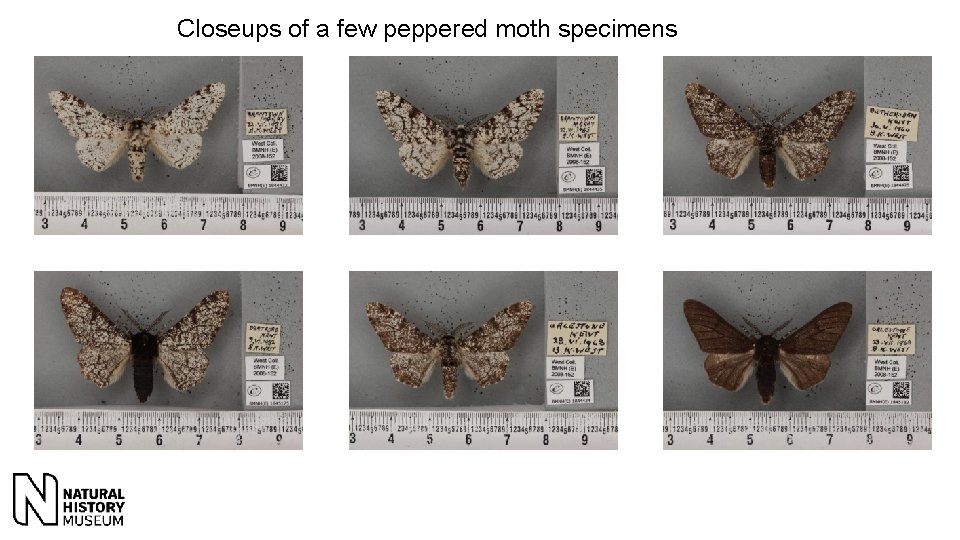
Closeups of a few peppered moth specimens
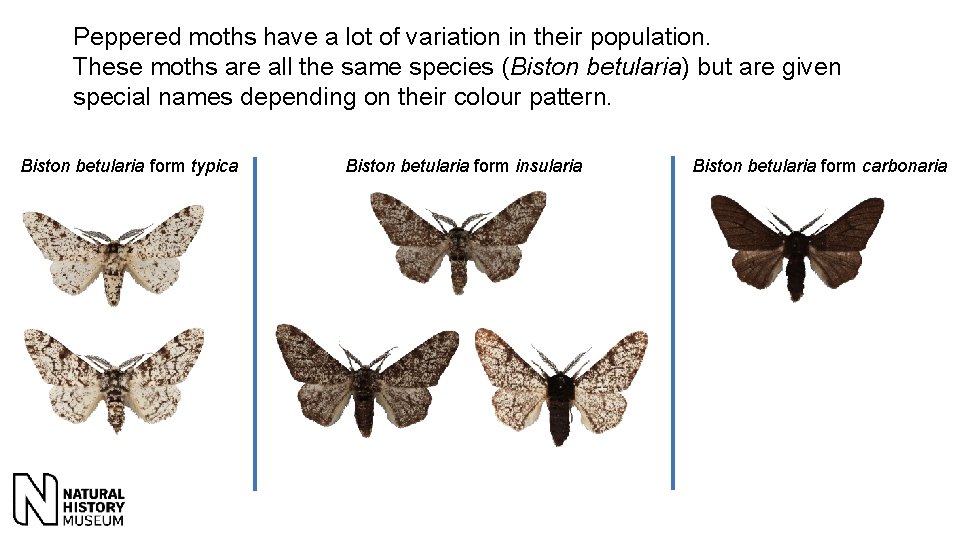
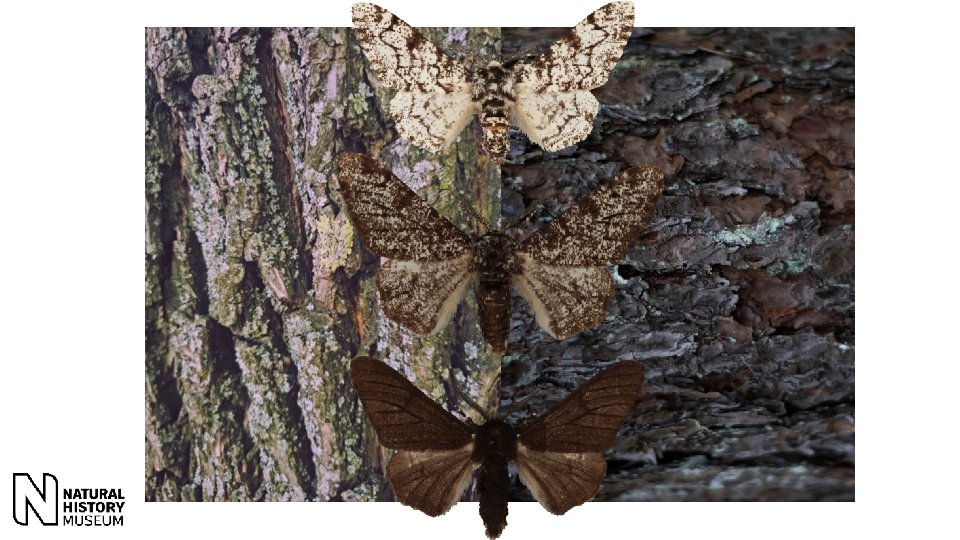
Peppered moths have a lot of variation in their population. These moths are all the same species (Biston betularia) but are given special names depending on their colour pattern. Biston betularia form typica Biston betularia form insularia Biston betularia form carbonaria
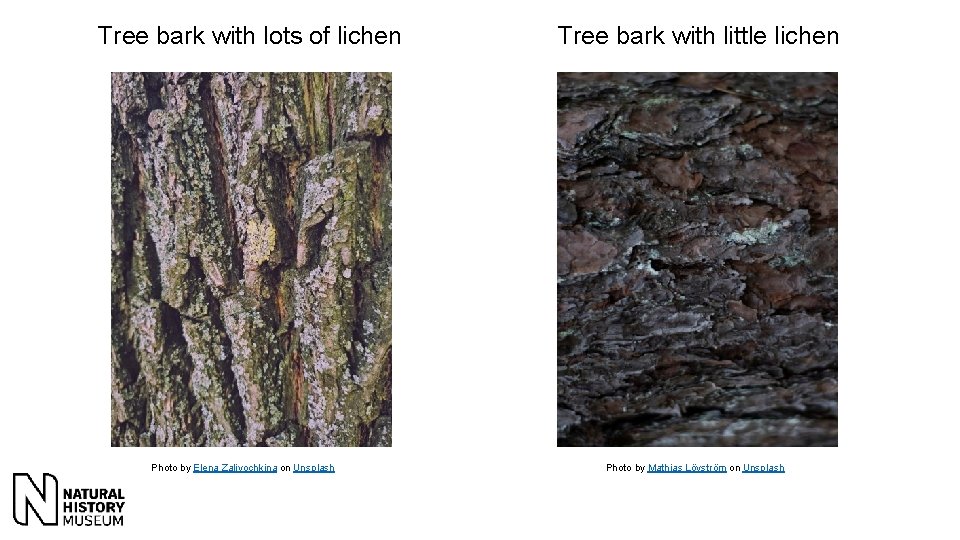
Tree bark with lots of lichen Photo by Elena Zalivochkina on Unsplash Tree bark with little lichen Photo by Mathias Lövström on Unsplash
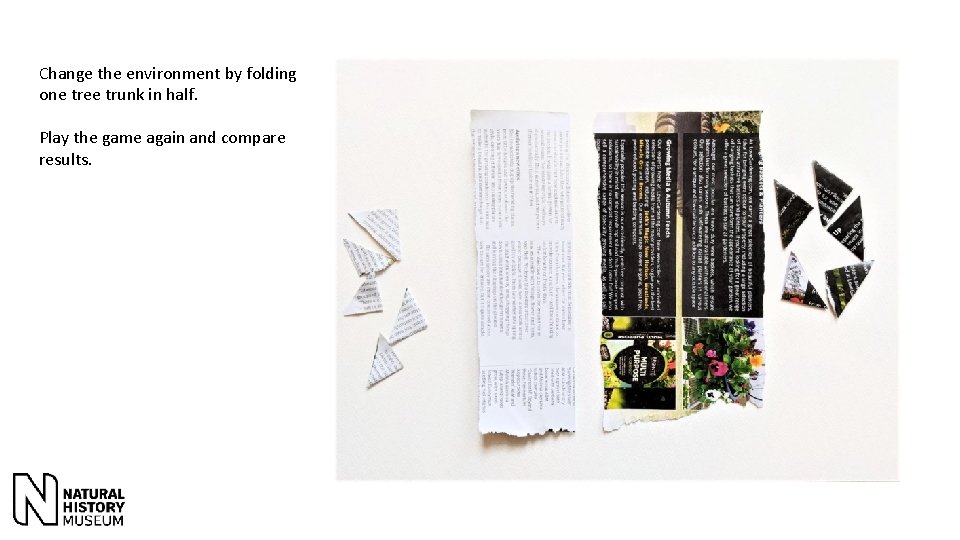
Peppered moth lucky landing game – how to run 1) Cut out similar sized triangles (moths) from newspaper and darker paper. These will be different colours of moth. 2) Place an A 5 piece of newspaper next to an A 5 piece of dark paper. These will be your tree trunks. 3) Put 5 light coloured and 5 dark coloured moths in a container. Cover and shake to mix. Gently sprinkle on your tree trunks. 4) If a light-coloured moth lands on the dark tree trunk set it aside. It’s been eaten by a bird! The same goes for dark moths which land on the light tree trunk. If they didn’t land on a tree, the moth hasn’t found shelter and also gets eaten! 5) The surviving moths now get to lay eggs and have offspring. For each surviving moth add 2 new moths of the same colour. Cut out more moths if needed. Note down how many moths of each colour you have in the population. 6) Repeat steps 3 -5 a few times, keeping track of how many light and dark moths are in the population at the end of each round. After a few rounds, fold in half either the light or dark tree trunk paper to represent more trees becoming darker or lighter with changes in air pollution. Repeat the game. What happens to the moth population when there is more of one type of bark?
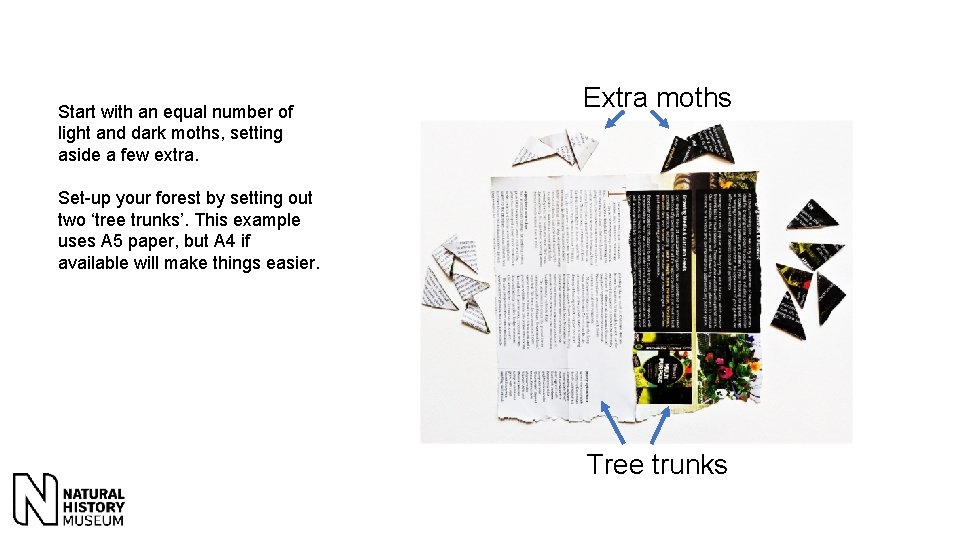
Start with an equal number of light and dark moths, setting aside a few extra. Extra moths Set-up your forest by setting out two ‘tree trunks’. This example uses A 5 paper, but A 4 if available will make things easier. Tree trunks
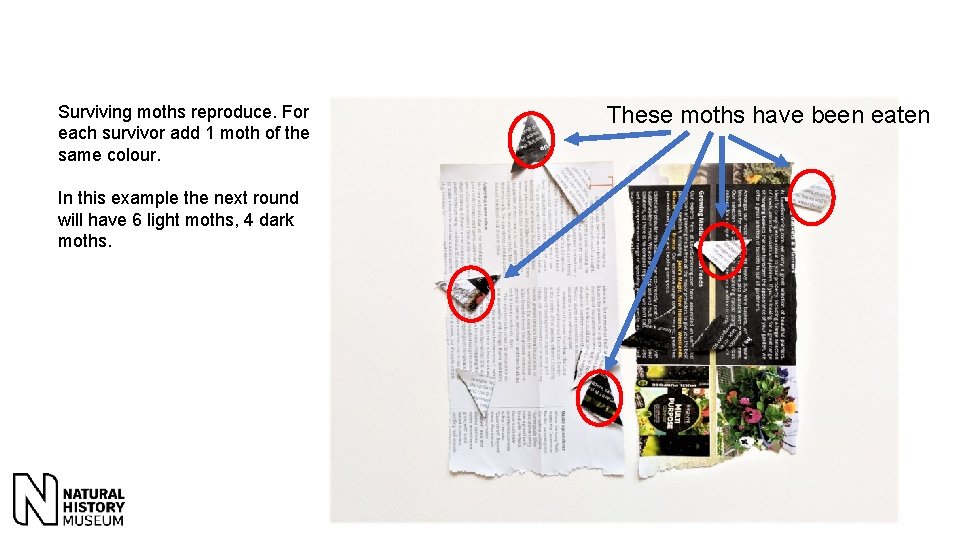
Surviving moths reproduce. For each survivor add 1 moth of the same colour. In this example the next round will have 6 light moths, 4 dark moths. These moths have been eaten
Change the environment by folding one tree trunk in half. Play the game again and compare results.