
Peppered Moth and Galapagos Islands Directions Take out
- Slides: 22
Peppered Moth and Galapagos Islands Directions • • • Take out a piece of lined paper. Complete Peppered Moths activity on the front side. Complete Galapagos Island paragraphs on the back side. If you run out of space, attach a second piece of paper. Classwork becomes homework. Turn completed work into the period basket.
Peppered Moths Natural Color Adaptation Read through the slides and answer on a loose leaf paper in complete sentences: 1. What is industrial melanism? 2. What happened to the peppered moth populations near industrial cities in England? 3. Which variation (mutation) of moth would best survive on a dark tree trunk? Explain. 4. Which variation (mutation) of moth would best survive on a light tree trunk? Explain. 5. If the moths travelled to an area miles away from the industrial cities, what variation of the moth population would best survive? Explain.
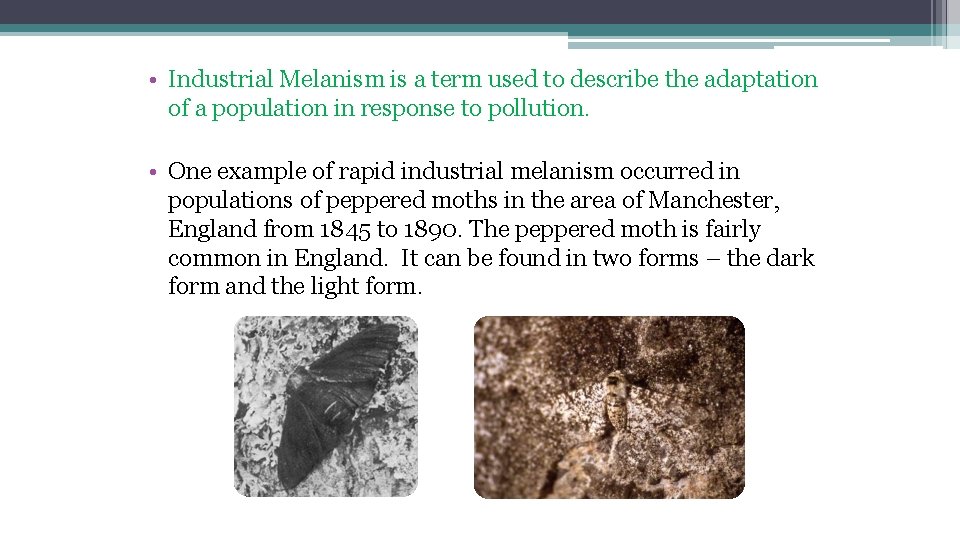
• Industrial Melanism is a term used to describe the adaptation of a population in response to pollution. • One example of rapid industrial melanism occurred in populations of peppered moths in the area of Manchester, England from 1845 to 1890. The peppered moth is fairly common in England. It can be found in two forms – the dark form and the light form.
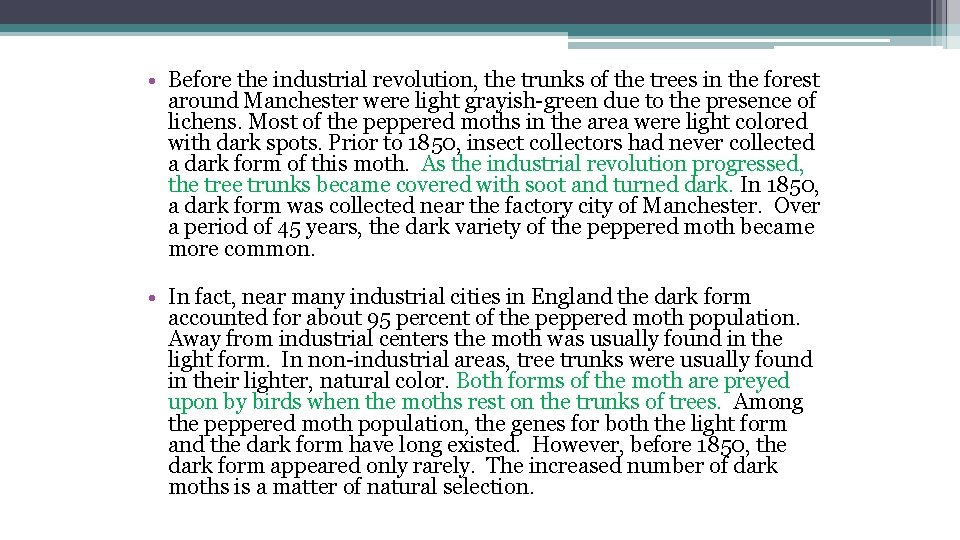
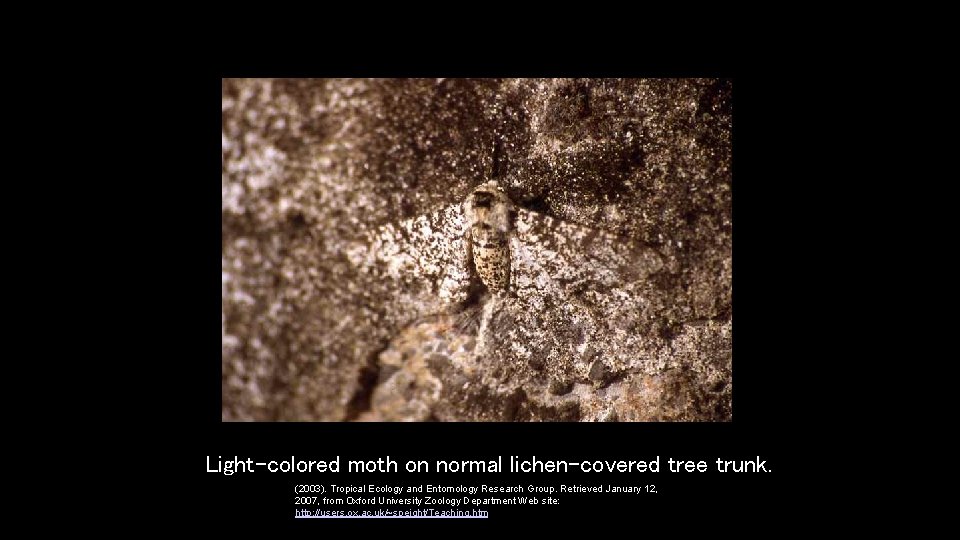
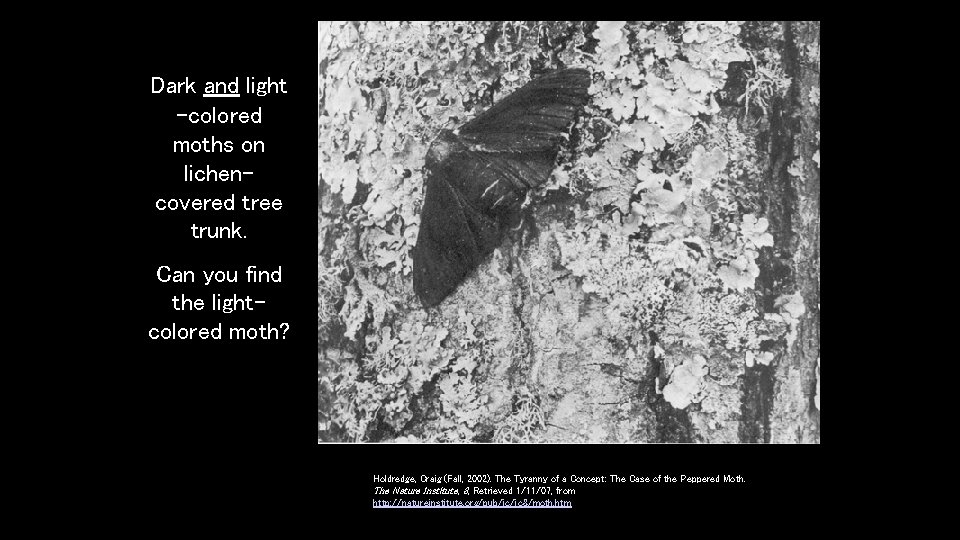
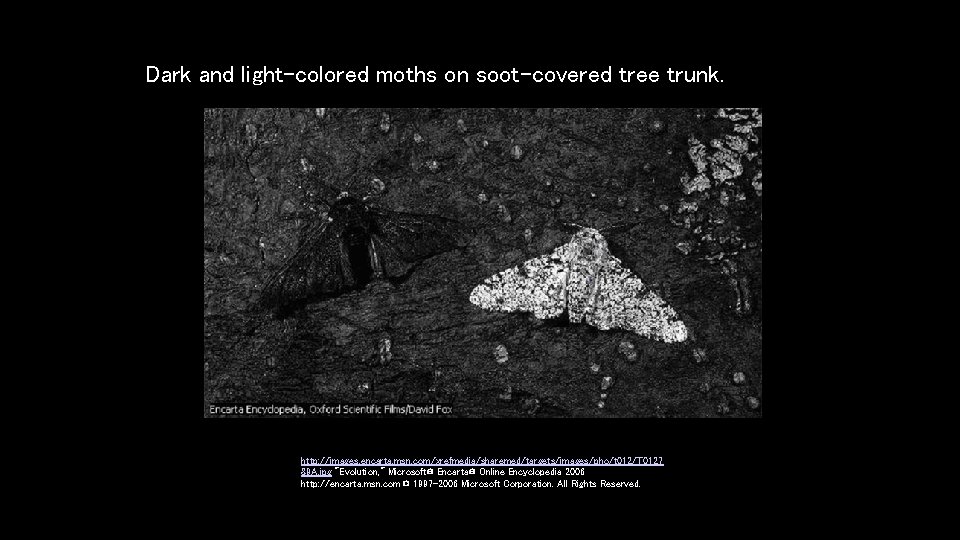
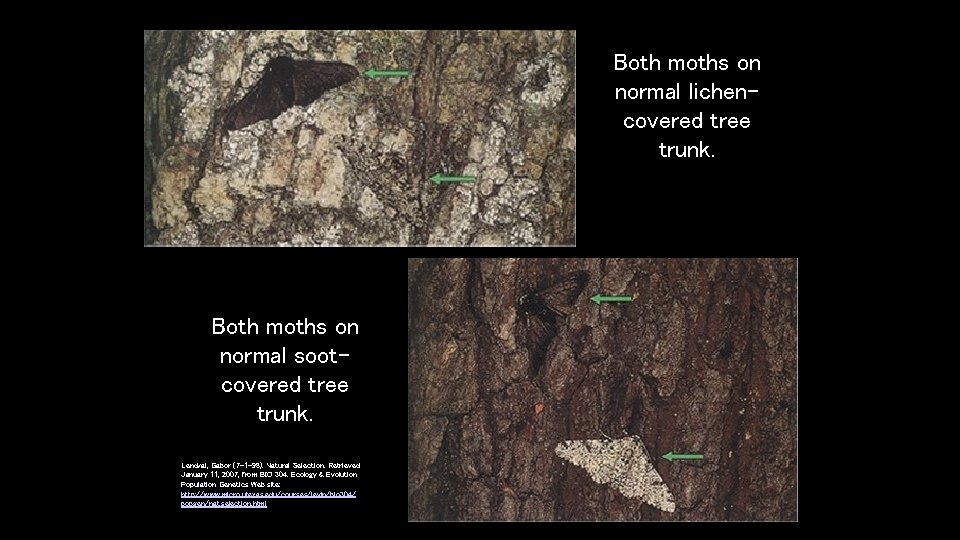
• Before the industrial revolution, the trunks of the trees in the forest around Manchester were light grayish-green due to the presence of lichens. Most of the peppered moths in the area were light colored with dark spots. Prior to 1850, insect collectors had never collected a dark form of this moth. As the industrial revolution progressed, the tree trunks became covered with soot and turned dark. In 1850, a dark form was collected near the factory city of Manchester. Over a period of 45 years, the dark variety of the peppered moth became more common. • In fact, near many industrial cities in England the dark form accounted for about 95 percent of the peppered moth population. Away from industrial centers the moth was usually found in the light form. In non-industrial areas, tree trunks were usually found in their lighter, natural color. Both forms of the moth are preyed upon by birds when the moths rest on the trunks of trees. Among the peppered moth population, the genes for both the light form and the dark form have long existed. However, before 1850, the dark form appeared only rarely. The increased number of dark moths is a matter of natural selection.
Light-colored moth on normal lichen-covered tree trunk. (2003). Tropical Ecology and Entomology Research Group. Retrieved January 12, 2007, from Oxford University Zoology Department Web site: http: //users. ox. ac. uk/~speight/Teaching. htm
Dark and light -colored moths on lichencovered tree trunk. Can you find the lightcolored moth? Holdredge, Craig (Fall, 2002). The Tyranny of a Concept: The Case of the Peppered Moth. The Nature Institute, 8, Retrieved 1/11/07, from http: //natureinstitute. org/pub/ic/ic 8/moth. htm
Dark and light-colored moths on soot-covered tree trunk. http: //images. encarta. msn. com/xrefmedia/sharemed/targets/images/pho/t 012/T 0127 89 A. jpg "Evolution, " Microsoft® Encarta® Online Encyclopedia 2006 http: //encarta. msn. com © 1997 -2006 Microsoft Corporation. All Rights Reserved.
Both moths on normal lichencovered tree trunk. Both moths on normal sootcovered tree trunk. Lendvai, Gabor (7 -1 -98). Natural Selection. Retrieved January 11, 2007, from BIO 304. Ecology & Evolution Population Genetics Web site: http: //www. micro. utexas. edu/courses/levin/bio 304/ popgen/nat. selection. html
Peppered Moths Natural Color Adaptation Now that you have looked through the slides, answer the following questions on a loose leaf paper in complete sentences: 1. What is industrial melanism? 2. What happened to the peppered moth populations near industrial cities in England? 3. Which variation (mutation) of moth would best survive on a dark tree trunk? Explain. 4. Which variation (mutation) of moth would best survive on a light tree trunk? Explain. 5. If the moths travelled to an area miles away from the industrial cities, what variation of the moth population would best survive? Explain.
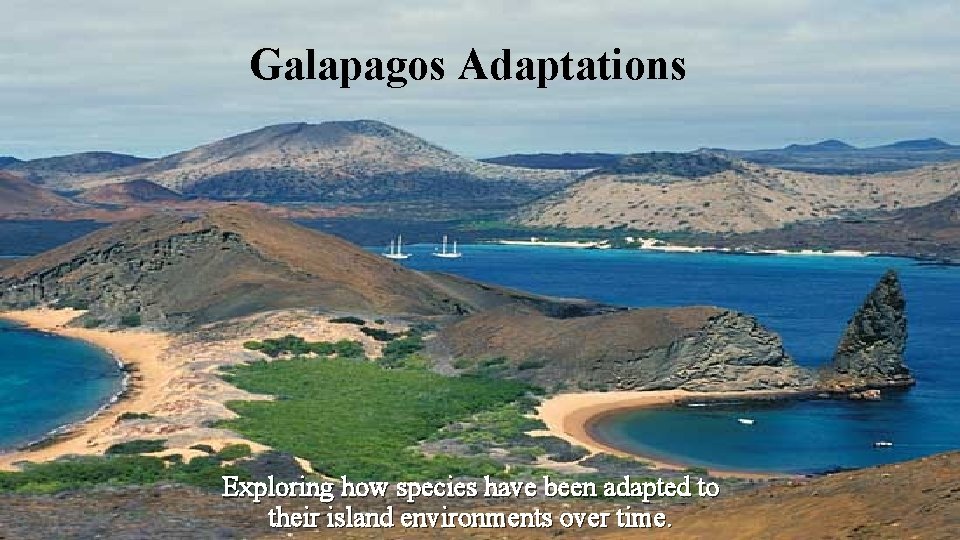
Galapagos Adaptations Exploring how species have been adapted to their island environments over time.
• • Take a look at each of the Galapagos species. Look through each of the slides and compare and contrast the species. You will look at 2 species of iguana & tortoise. Iguana Paragraph On a loose leaf paper, write 2 informative paragraphs. 4 sentences – Explain diet, habit, and adaptations. – Minimum 4 sentences per paragraph. • Iguanas paragraph • Tortoises paragraph Research further online if needed Tortoise Paragraph 4 sentences
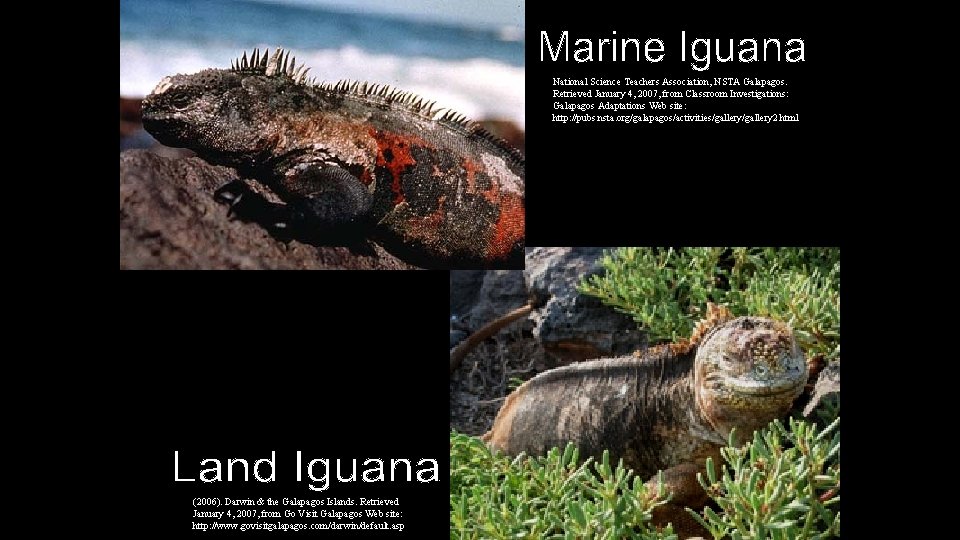
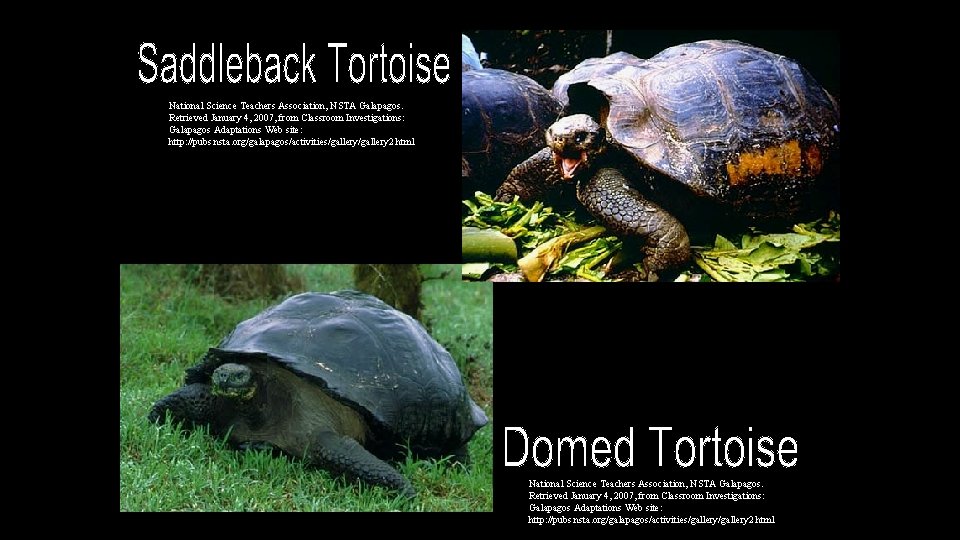
National Science Teachers Association, NSTA Galapagos. Retrieved January 4, 2007, from Classroom Investigations: Galapagos Adaptations Web site: http: //pubs. nsta. org/galapagos/activities/gallery 2. html (2006). Darwin & the Galapagos Islands. Retrieved January 4, 2007, from Go Visit Galapagos Web site: http: //www. govisitgalapagos. com/darwin/default. asp
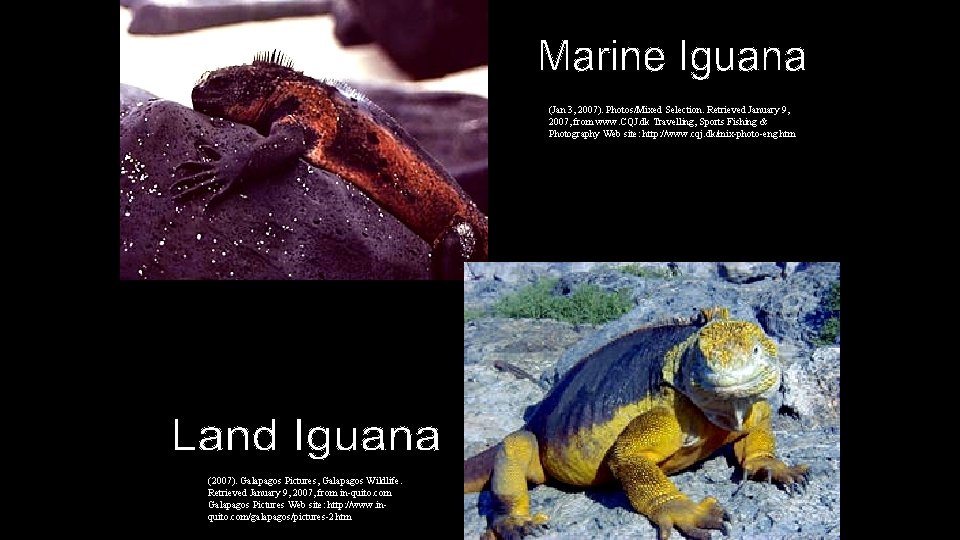
(Jan 3, 2007). Photos/Mixed Selection. Retrieved January 9, 2007, from www. CQJ. dk Travelling, Sports Fishing & Photography Web site: http: //www. cqj. dk/mix-photo-eng. htm (2007). Galapagos Pictures, Galapagos Wildlife. Retrieved January 9, 2007, from in-quito. com Galapagos Pictures Web site: http: //www. inquito. com/galapagos/pictures-2. htm
Is the only sea-going iguana in the world Flat tail Square nose Dark coloration Partially webbed feet Coloration camouflages them in the dark lava on which they live Enables iguanas of all ages to absorb more heat from the sun
A large relative of the South American and Caribbean terrestrial (land) iguana Round tail Pointed nose Brownish-red in color on top Yellow-orange underneath Eats grass and other ground plants, especially the large prickly-pear cactus.
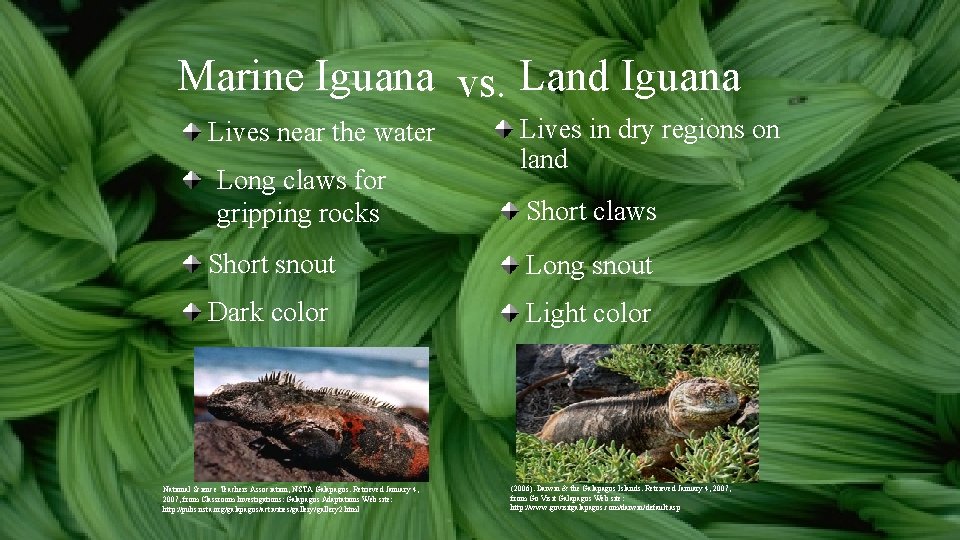
Marine Iguana vs. Land Iguana Lives near the water Long claws for gripping rocks Lives in dry regions on land Short claws Short snout Long snout Dark color Light color National Science Teachers Association, NSTA Galapagos. Retrieved January 4, 2007, from Classroom Investigations: Galapagos Adaptations Web site: http: //pubs. nsta. org/galapagos/activities/gallery 2. html (2006). Darwin & the Galapagos Islands. Retrieved January 4, 2007, from Go Visit Galapagos Web site: http: //www. govisitgalapagos. com/darwin/default. asp
National Science Teachers Association, NSTA Galapagos. Retrieved January 4, 2007, from Classroom Investigations: Galapagos Adaptations Web site: http: //pubs. nsta. org/galapagos/activities/gallery/gallery 2. html
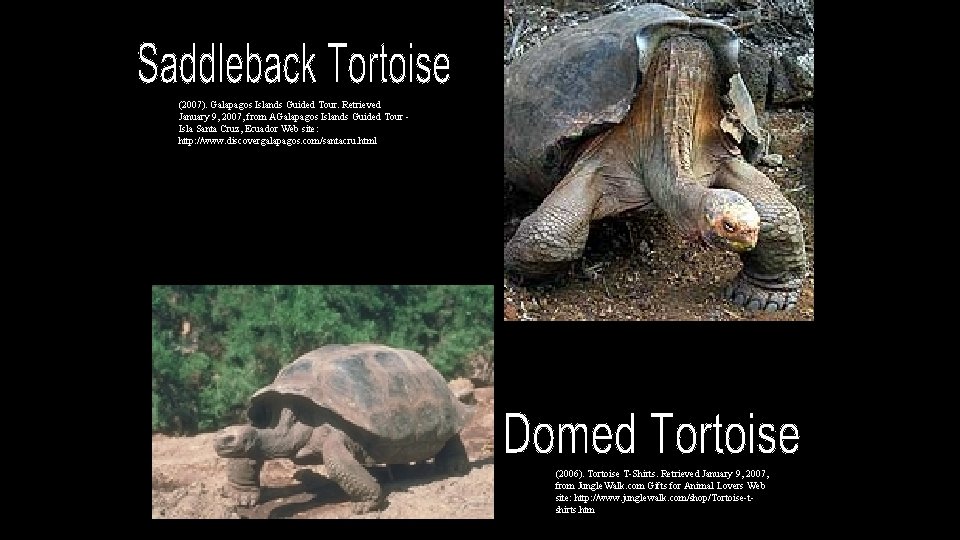
(2007). Galapagos Islands Guided Tour. Retrieved January 9, 2007, from AGalapagos Islands Guided Tour Isla Santa Cruz, Ecuador Web site: http: //www. discovergalapagos. com/santacru. html (2006). Tortoise T-Shirts. Retrieved January 9, 2007, from Jungle. Walk. com Gifts for Animal Lovers Web site: http: //www. junglewalk. com/shop/Tortoise-tshirts. htm
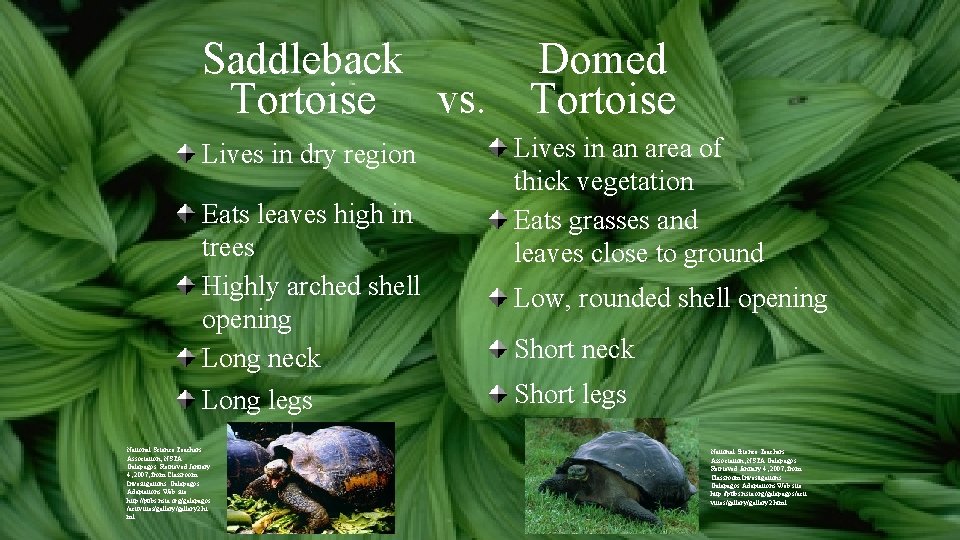
One of the major groups of giant tortoises in the Galapagos Islands Arched carapace (shell) in the front Long legs Long snout Long neck that allows it to reach for its food high above the ground Found in the dry areas of Espanola, Pinzon, Pinta, and Fernandina Islands
One of the major groups of giant tortoises in the Galapagos Islands Rounded shell Blunt snout Shorter neck Found on islands with rich vegetation (like Santa Cruz and Isabela) Larger and heavier Rounded shell allows it to move through the thick vegetation more easily than the saddleback tortoise
Saddleback Domed Tortoise vs. Tortoise Lives in dry region Eats leaves high in trees Highly arched shell opening Long neck Long legs National Science Teachers Association, NSTA Galapagos. Retrieved January 4, 2007, from Classroom Investigations: Galapagos Adaptations Web site: http: //pubs. nsta. org/galapagos /activities/gallery 2. ht ml Lives in an area of thick vegetation Eats grasses and leaves close to ground Low, rounded shell opening Short neck Short legs National Science Teachers Association, NSTA Galapagos. Retrieved January 4, 2007, from Classroom Investigations: Galapagos Adaptations Web site: http: //pubs. nsta. org/galapagos/acti vities/gallery 2. html
Peppered Moth and Galapagos Islands Directions • • • Take out a piece of lined paper. Complete Peppered Moths activity on the front side. Complete Galapagos Island paragraphs on the back side. If you run out of space, attach a second piece of paper. Classwork becomes homework. Turn completed work into the basket.