
PEP 201 Lab Pendulum PEP 201 Lab Pendulum
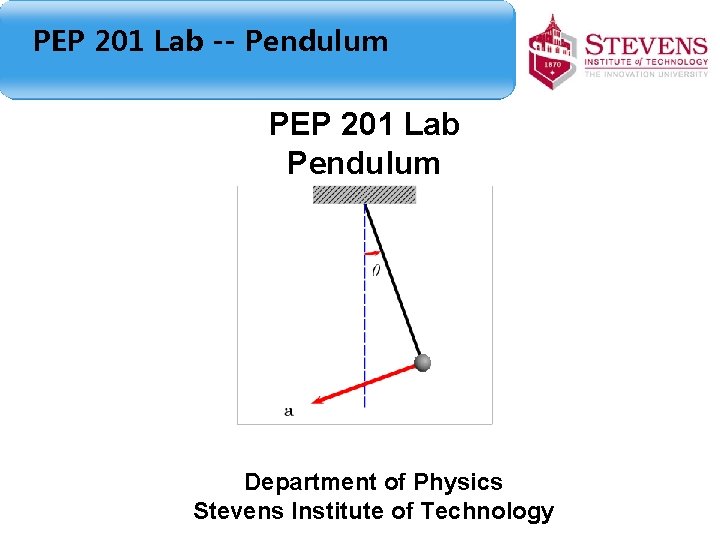
PEP 201 Lab -- Pendulum PEP 201 Lab Pendulum Department of Physics Stevens Institute of Technology
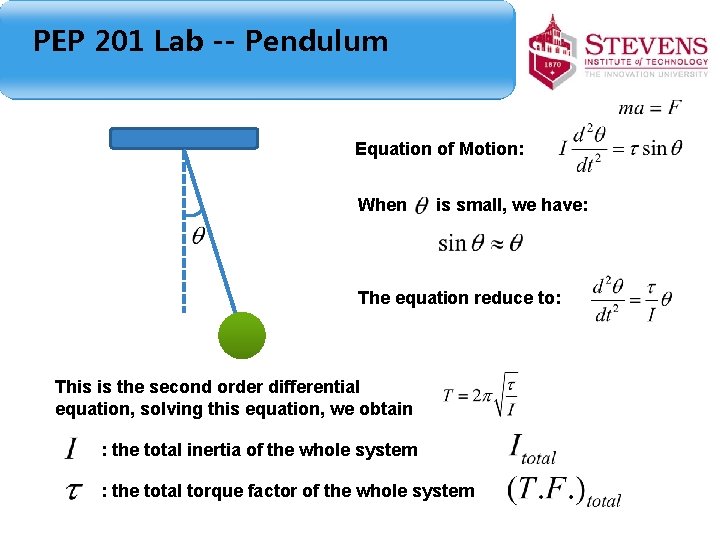
PEP 201 Lab -- Pendulum Equation of Motion: When is small, we have: The equation reduce to: This is the second order differential equation, solving this equation, we obtain : the total inertia of the whole system : the total torque factor of the whole system
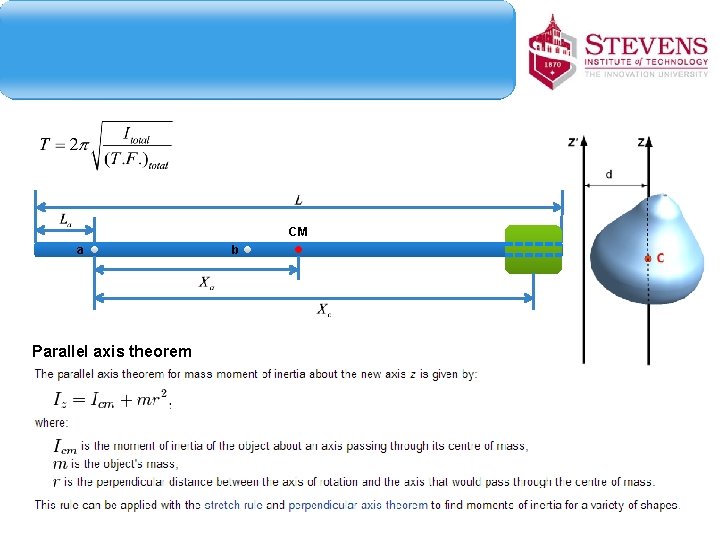
CM a Parallel axis theorem b
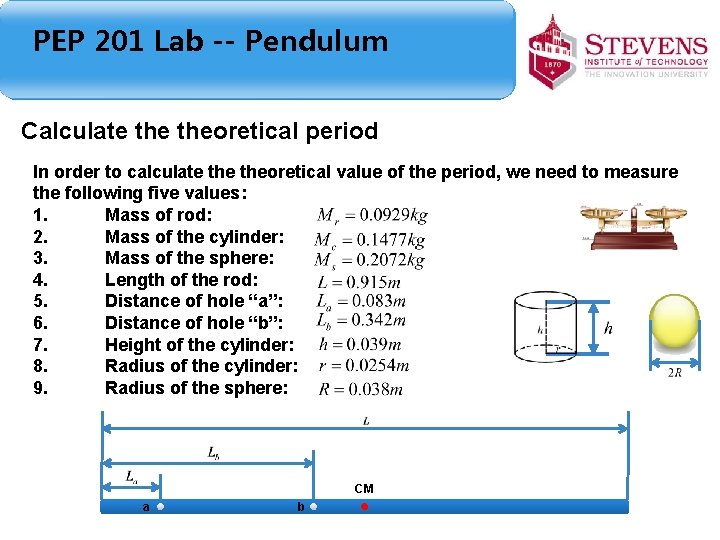
PEP 201 Lab -- Pendulum Calculate theoretical period In order to calculate theoretical value of the period, we need to measure the following five values: 1. Mass of rod: 2. Mass of the cylinder: 3. Mass of the sphere: 4. Length of the rod: 5. Distance of hole “a”: 6. Distance of hole “b”: 7. Height of the cylinder: 8. Radius of the cylinder: 9. Radius of the sphere: CM a b
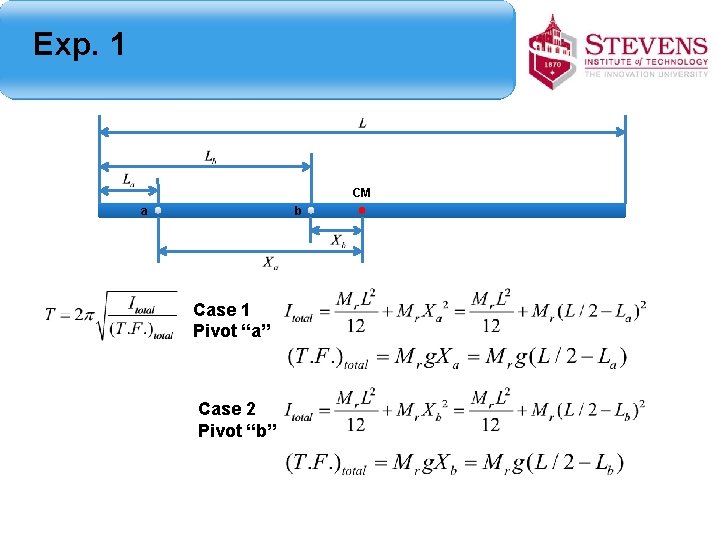
Exp. 1 CM a b Case 1 Pivot “a” Case 2 Pivot “b”
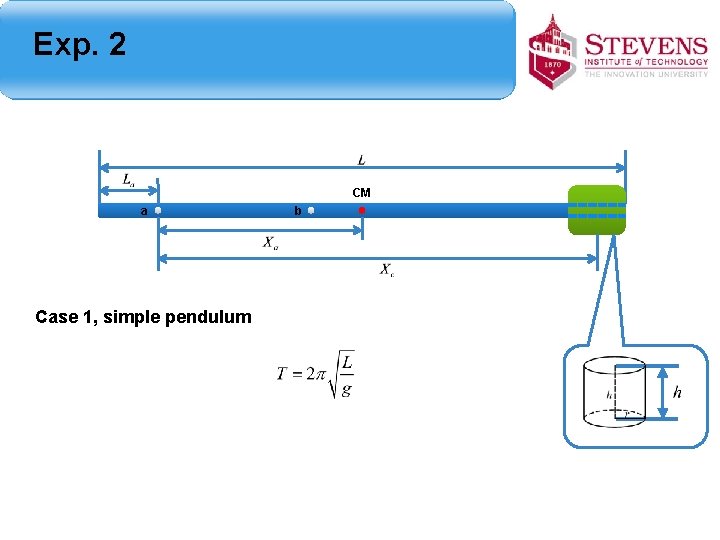
Exp. 2 CM a Case 1, simple pendulum b
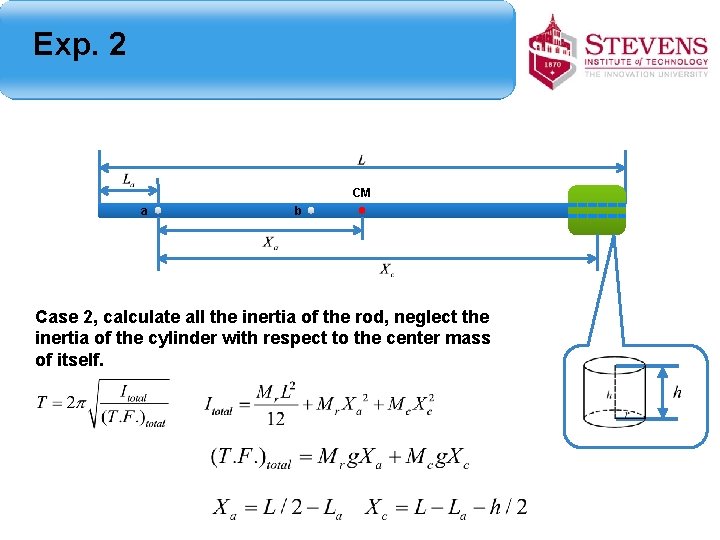
Exp. 2 CM a b Case 2, calculate all the inertia of the rod, neglect the inertia of the cylinder with respect to the center mass of itself.
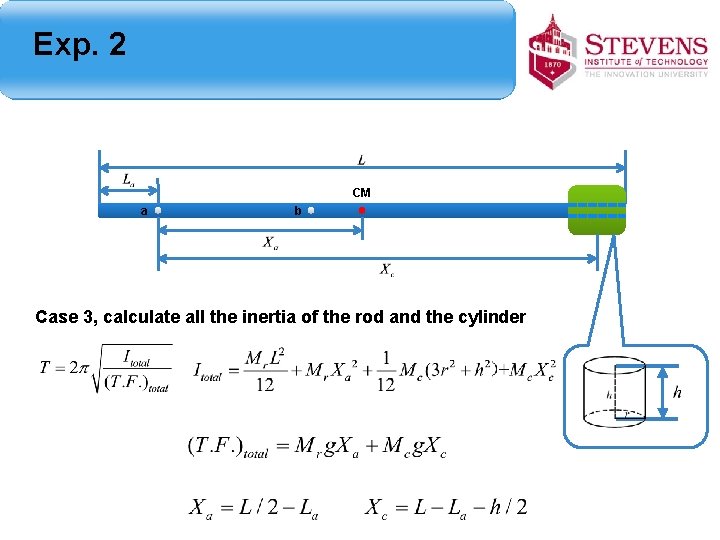
Exp. 2 CM a b Case 3, calculate all the inertia of the rod and the cylinder
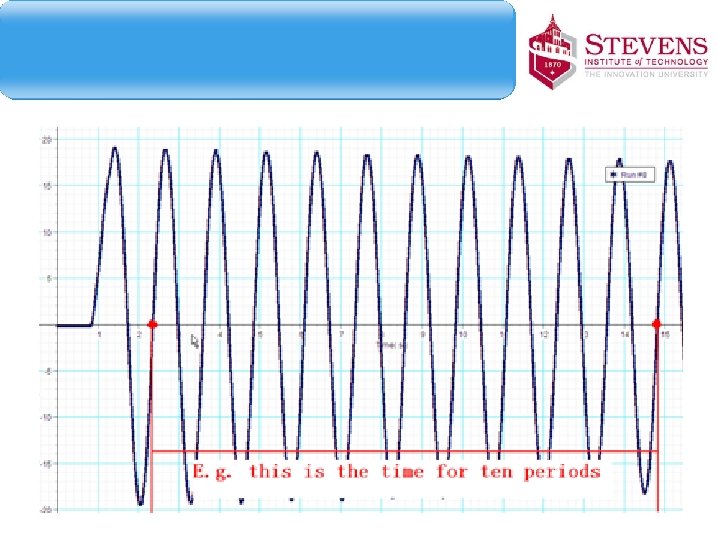
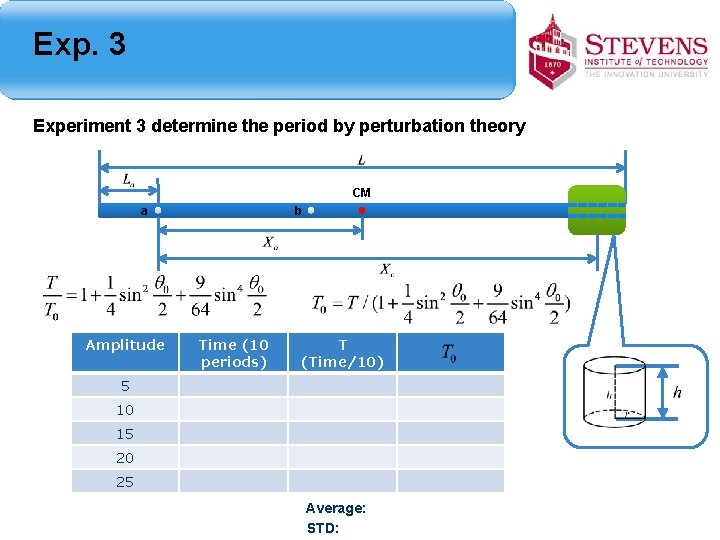
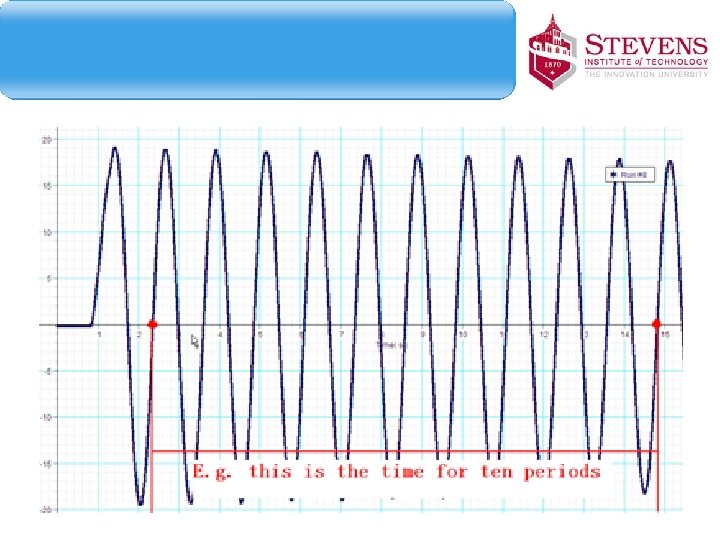
Exp. 3 Experiment 3 determine the period by perturbation theory CM a Amplitude b Time (10 periods) T (Time/10) 5 10 15 20 25 Average: STD:
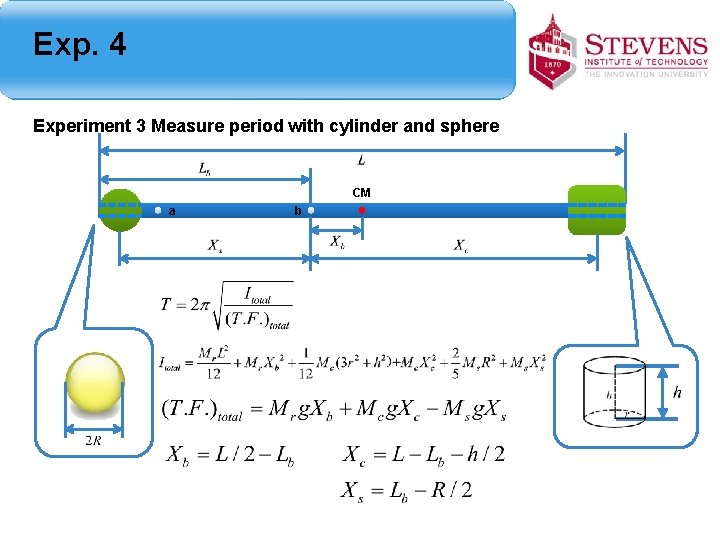
Exp. 4 Experiment 3 Measure period with cylinder and sphere CM a b
- Slides: 12