
Peopling of the World Prehistory 2500 B C
Peopling of the World: Prehistory – 2500 B. C. Cha pter 1, Secti ons 1, 2 & 3
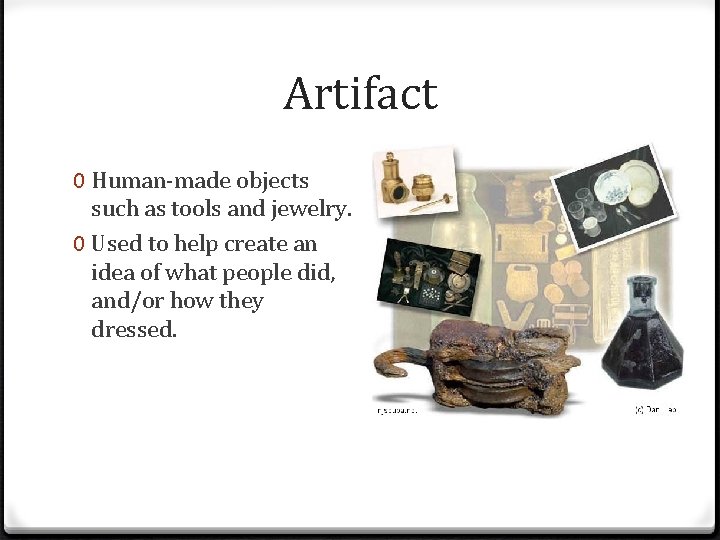
Artifact 0 Human-made objects such as tools and jewelry. 0 Used to help create an idea of what people did, and/or how they dressed.
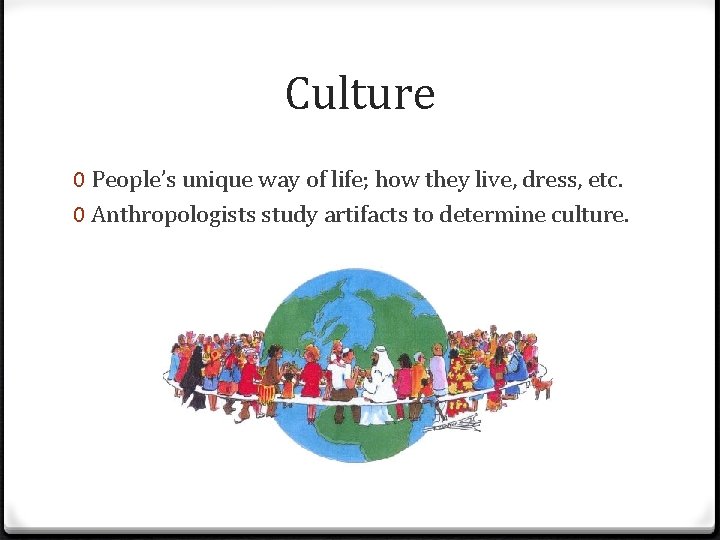
Culture 0 People’s unique way of life; how they live, dress, etc. 0 Anthropologists study artifacts to determine culture.
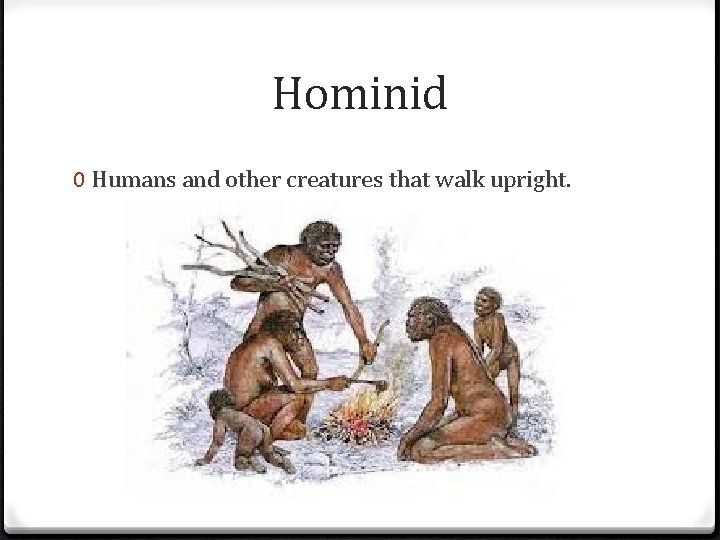
Hominid 0 Humans and other creatures that walk upright.
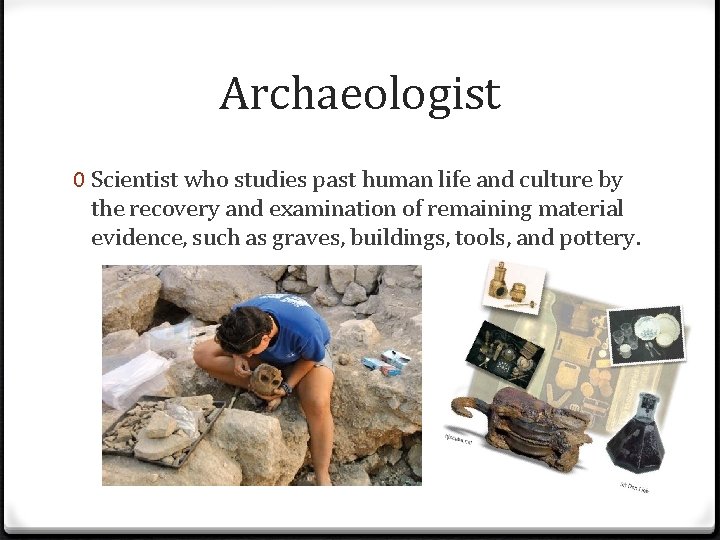
Archaeologist 0 Scientist who studies past human life and culture by the recovery and examination of remaining material evidence, such as graves, buildings, tools, and pottery.
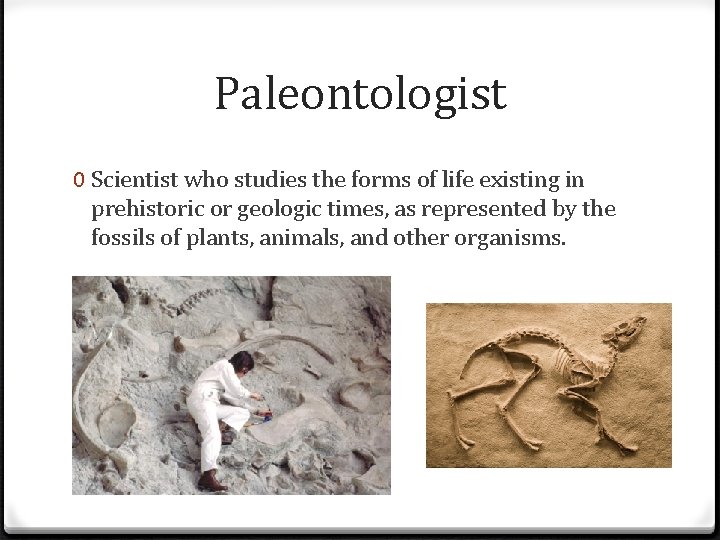
Paleontologist 0 Scientist who studies the forms of life existing in prehistoric or geologic times, as represented by the fossils of plants, animals, and other organisms.
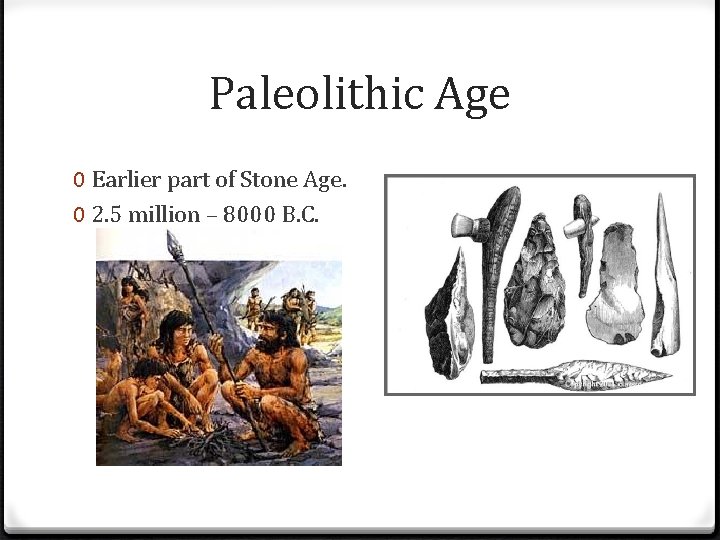
Paleolithic Age 0 Earlier part of Stone Age. 0 2. 5 million – 8000 B. C.
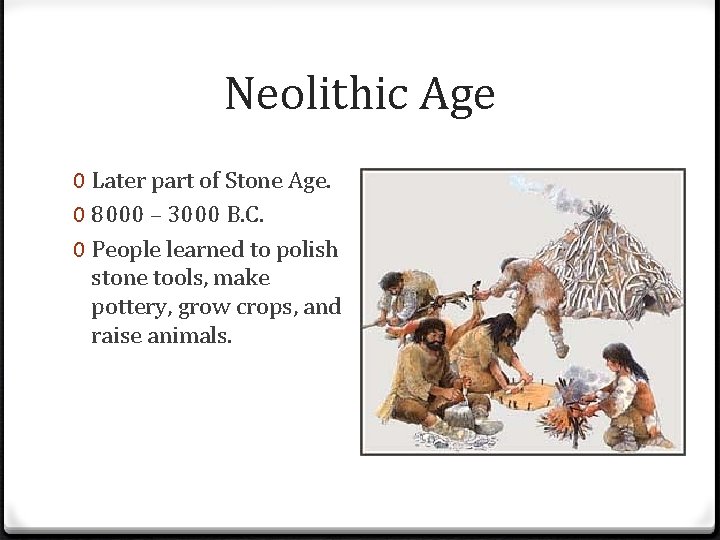
Neolithic Age 0 Later part of Stone Age. 0 8000 – 3000 B. C. 0 People learned to polish stone tools, make pottery, grow crops, and raise animals.
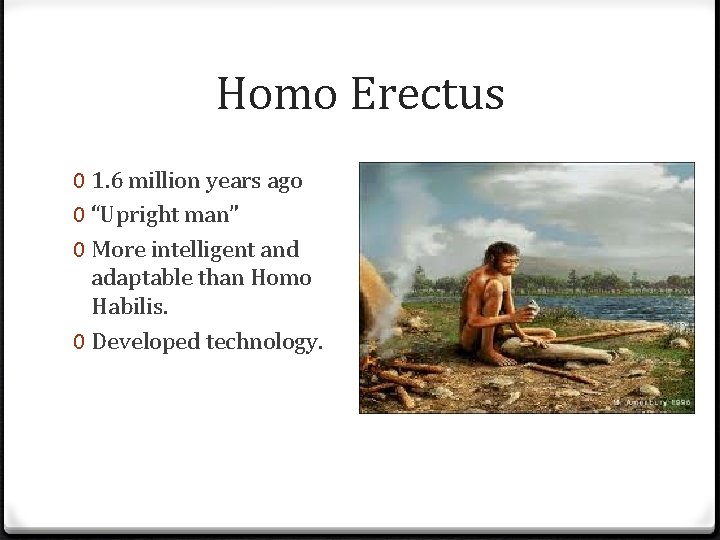
Homo Erectus 0 1. 6 million years ago 0 “Upright man” 0 More intelligent and adaptable than Homo Habilis. 0 Developed technology.
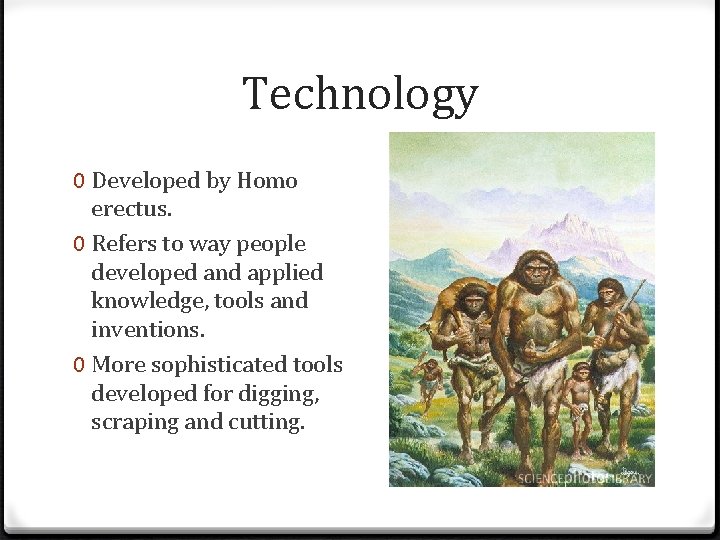
Technology 0 Developed by Homo erectus. 0 Refers to way people developed and applied knowledge, tools and inventions. 0 More sophisticated tools developed for digging, scraping and cutting.
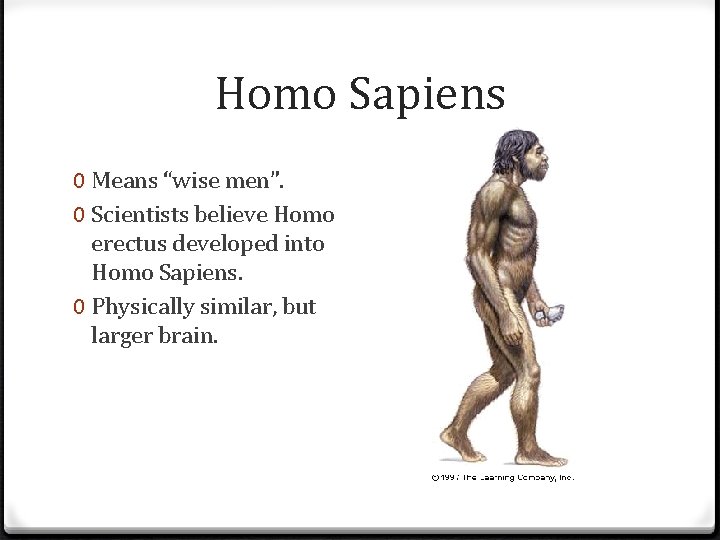
Homo Sapiens 0 Means “wise men”. 0 Scientists believe Homo erectus developed into Homo Sapiens. 0 Physically similar, but larger brain.
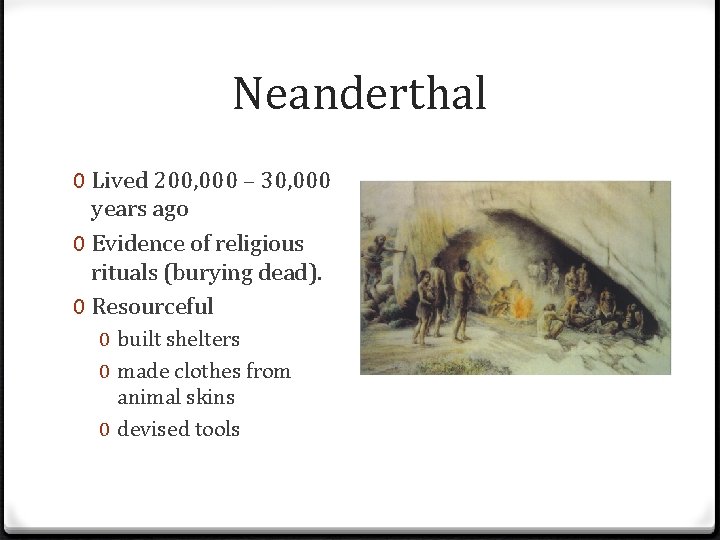
Neanderthal 0 Lived 200, 000 – 30, 000 years ago 0 Evidence of religious rituals (burying dead). 0 Resourceful 0 built shelters 0 made clothes from animal skins 0 devised tools
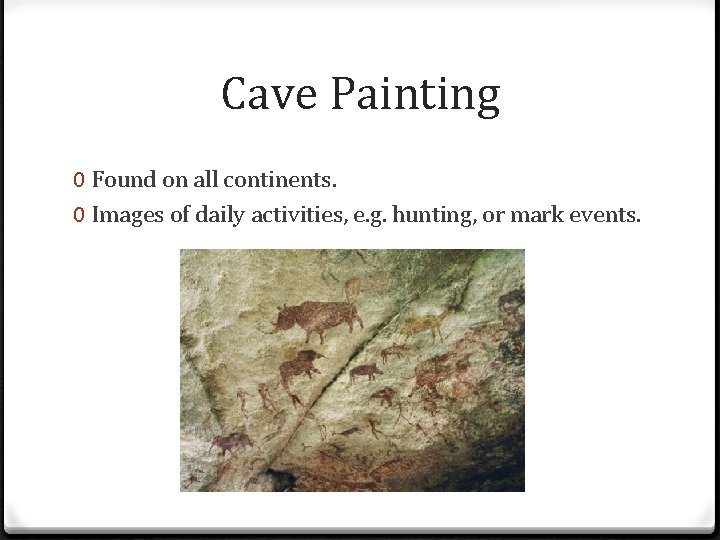
Cave Painting 0 Found on all continents. 0 Images of daily activities, e. g. hunting, or mark events.
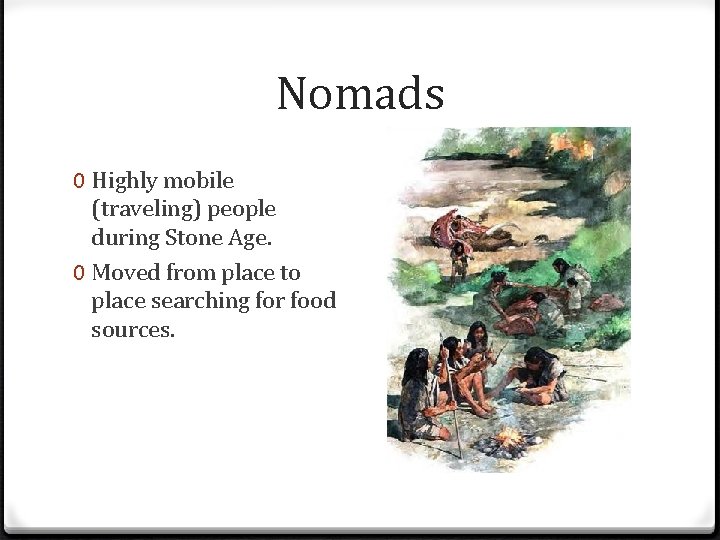
Nomads 0 Highly mobile (traveling) people during Stone Age. 0 Moved from place to place searching for food sources.
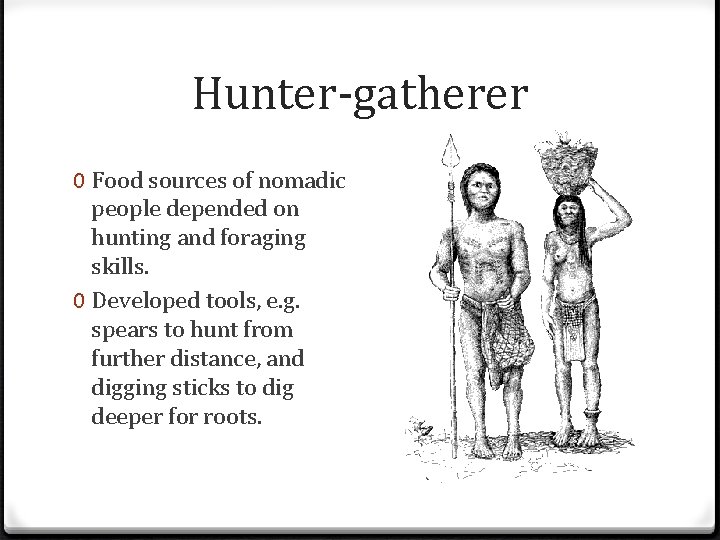
Hunter-gatherer 0 Food sources of nomadic people depended on hunting and foraging skills. 0 Developed tools, e. g. spears to hunt from further distance, and digging sticks to dig deeper for roots.
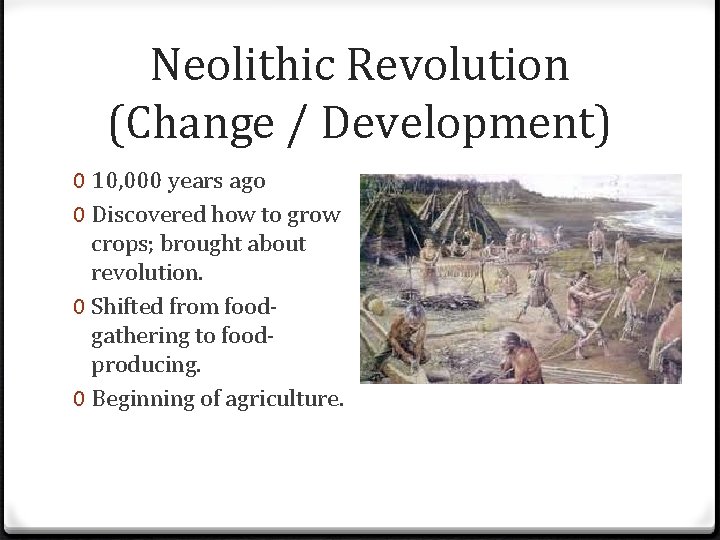
Neolithic Revolution (Change / Development) 0 10, 000 years ago 0 Discovered how to grow crops; brought about revolution. 0 Shifted from foodgathering to foodproducing. 0 Beginning of agriculture.
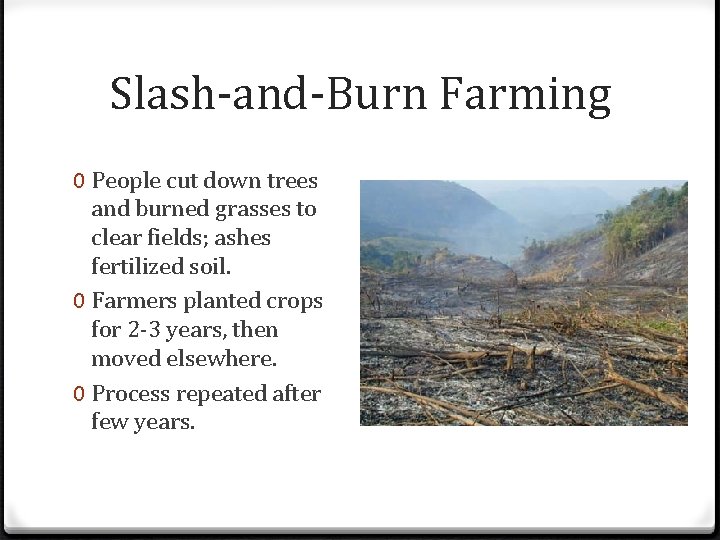
Slash-and-Burn Farming 0 People cut down trees and burned grasses to clear fields; ashes fertilized soil. 0 Farmers planted crops for 2 -3 years, then moved elsewhere. 0 Process repeated after few years.
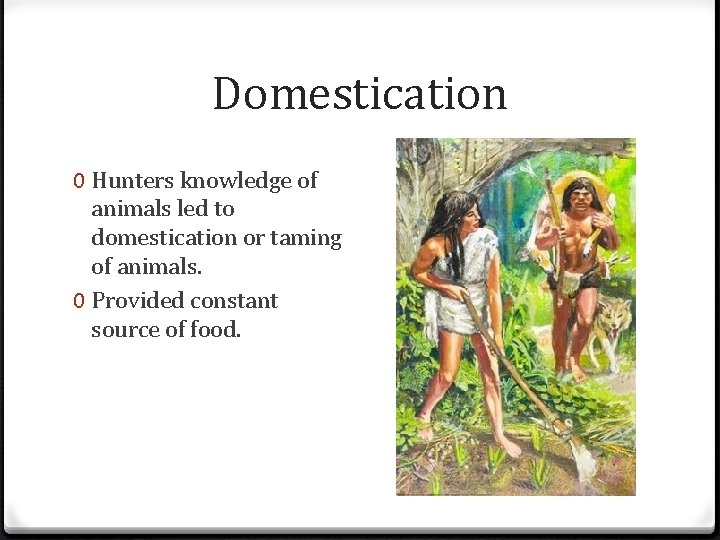
Domestication 0 Hunters knowledge of animals led to domestication or taming of animals. 0 Provided constant source of food.
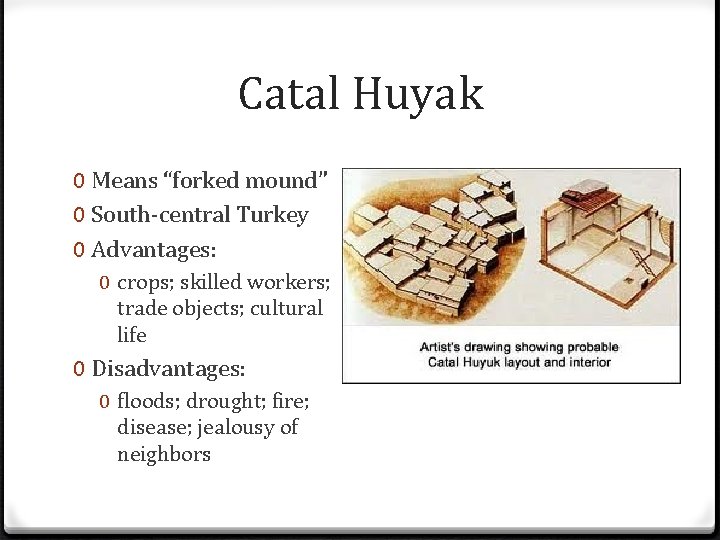
Catal Huyak 0 Means “forked mound” 0 South-central Turkey 0 Advantages: 0 crops; skilled workers; trade objects; cultural life 0 Disadvantages: 0 floods; drought; fire; disease; jealousy of neighbors
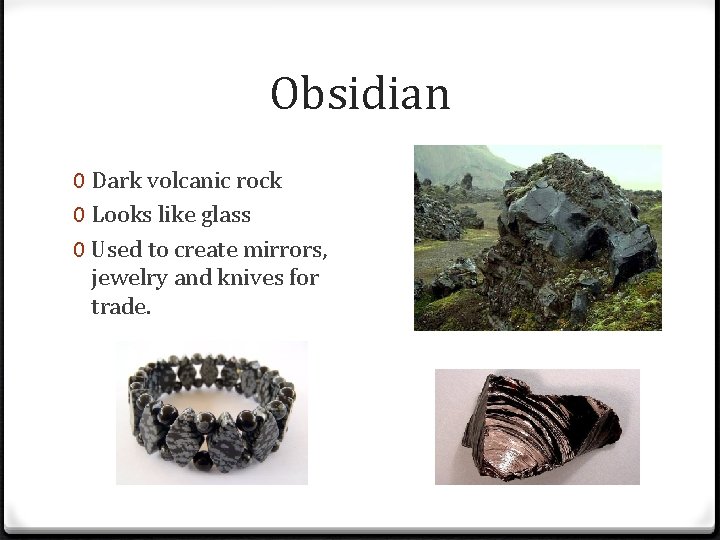
Obsidian 0 Dark volcanic rock 0 Looks like glass 0 Used to create mirrors, jewelry and knives for trade.
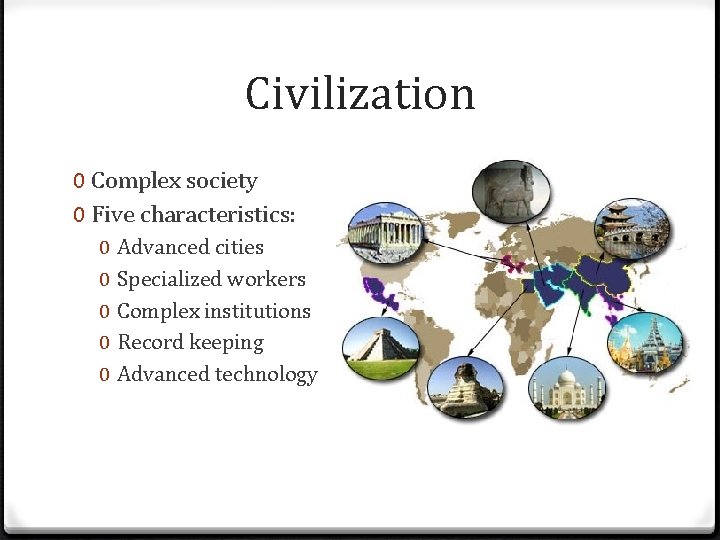
Civilization 0 Complex society 0 Five characteristics: 0 0 0 Advanced cities Specialized workers Complex institutions Record keeping Advanced technology
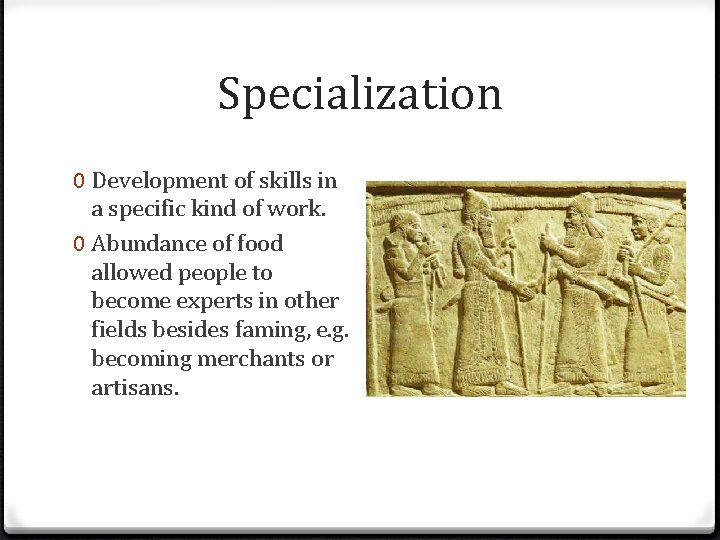
Specialization 0 Development of skills in a specific kind of work. 0 Abundance of food allowed people to become experts in other fields besides faming, e. g. becoming merchants or artisans.
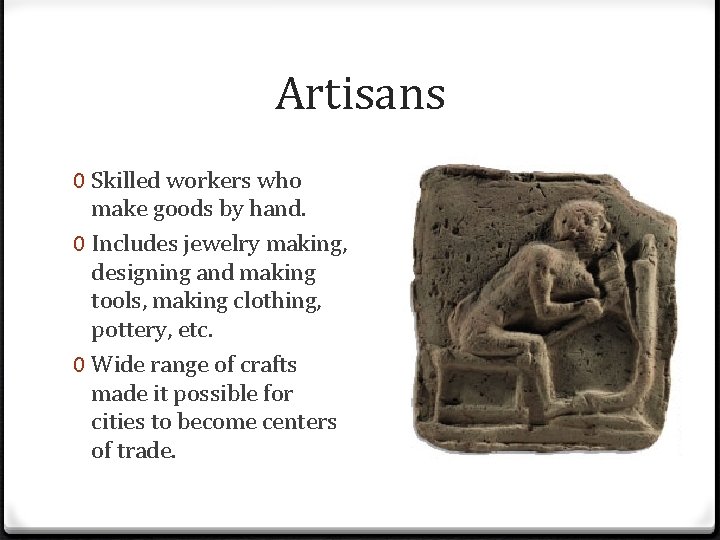
Artisans 0 Skilled workers who make goods by hand. 0 Includes jewelry making, designing and making tools, making clothing, pottery, etc. 0 Wide range of crafts made it possible for cities to become centers of trade.
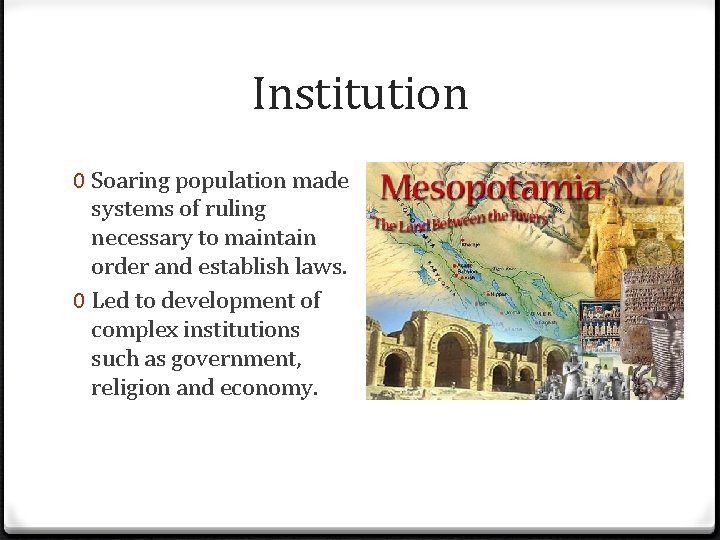
Institution 0 Soaring population made systems of ruling necessary to maintain order and establish laws. 0 Led to development of complex institutions such as government, religion and economy.
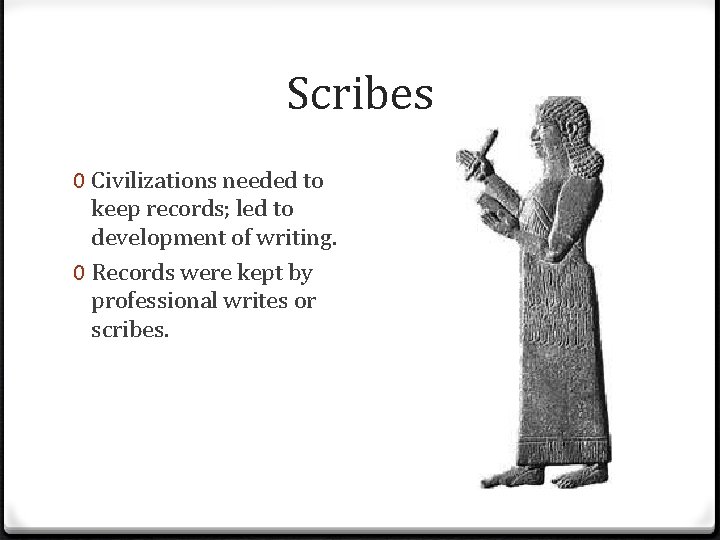
Scribes 0 Civilizations needed to keep records; led to development of writing. 0 Records were kept by professional writes or scribes.
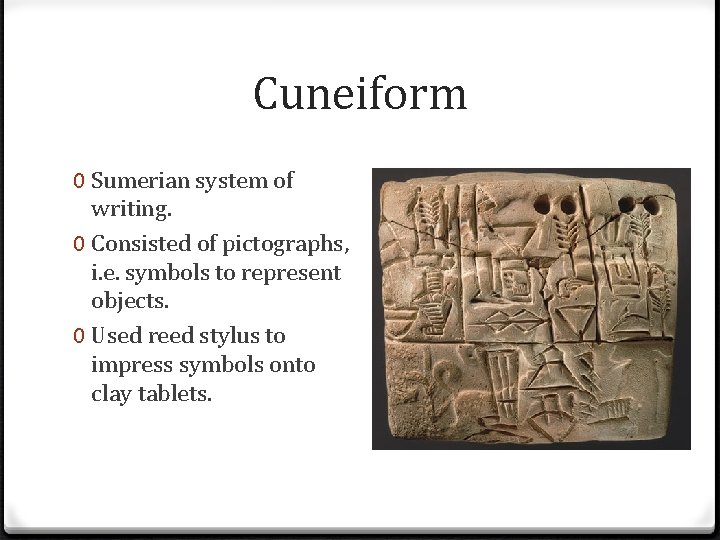
Cuneiform 0 Sumerian system of writing. 0 Consisted of pictographs, i. e. symbols to represent objects. 0 Used reed stylus to impress symbols onto clay tablets.
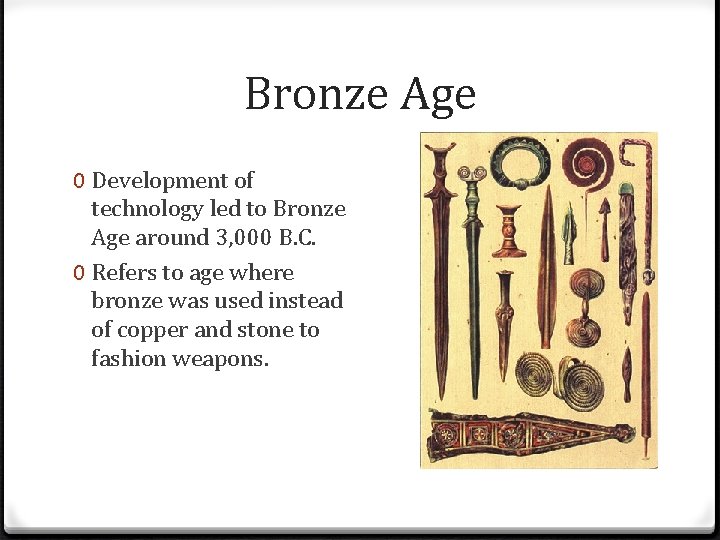
Bronze Age 0 Development of technology led to Bronze Age around 3, 000 B. C. 0 Refers to age where bronze was used instead of copper and stone to fashion weapons.
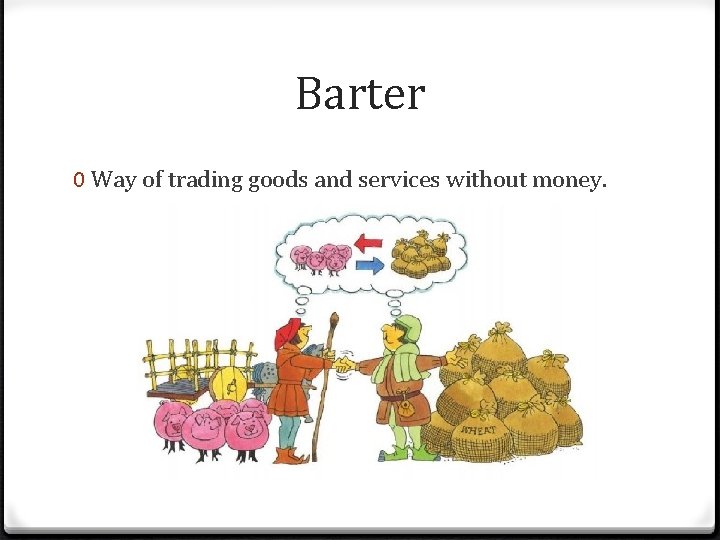
Barter 0 Way of trading goods and services without money.
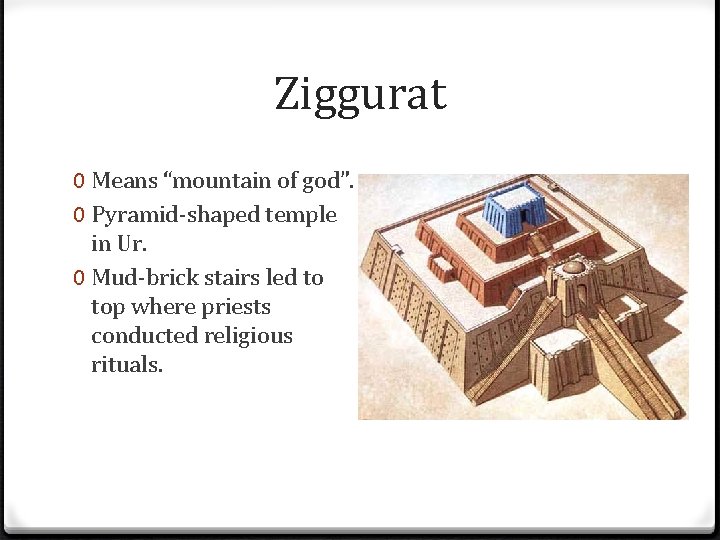
Ziggurat 0 Means “mountain of god”. 0 Pyramid-shaped temple in Ur. 0 Mud-brick stairs led to top where priests conducted religious rituals.
- Slides: 29