
People The Original Continuing Resource Crossgenerational Management in

- Slides: 20
People – The Original Continuing Resource: Cross-generational Management in Libraries Adam Murray – Interim Dean of University Libraries, Murray State University 17 th Annual NC Serials Conference: What’s in a name? From “Serials” to “Continuing Resources”
The Changing Workforce • March 2002 American Libraries: “Reaching 65: Lots of Librarians Will Be There Soon” • Actual peak of retirement now not expected until 2015 -2019 • Wave of recruitment for new librarians • Generation Y (Millennials) currently in the workforce: 32 million • Unique work environment, with four distinct generations working alongside each other
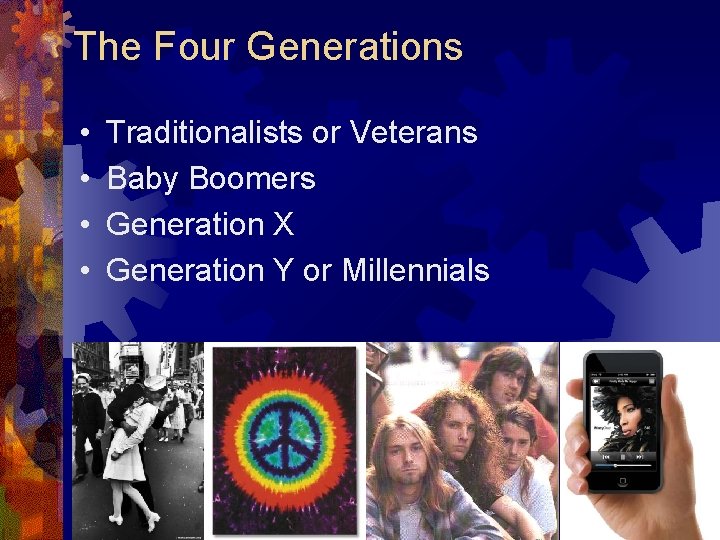
The Four Generations • • Traditionalists or Veterans Baby Boomers Generation X Generation Y or Millennials
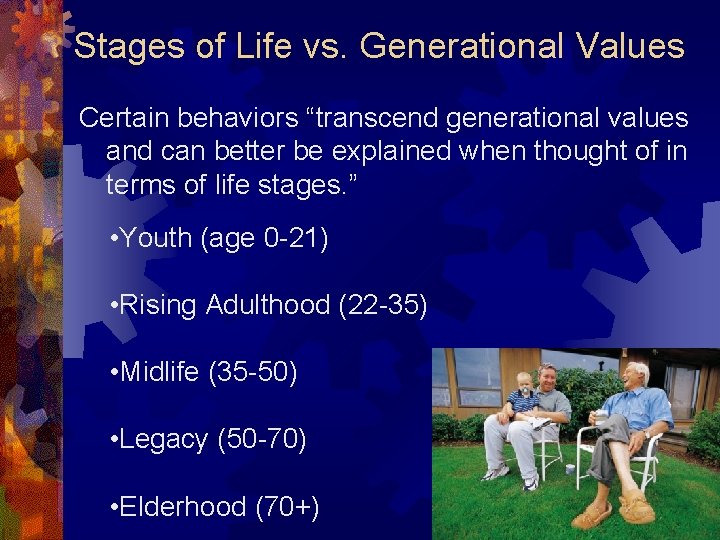
Stages of Life vs. Generational Values Certain behaviors “transcend generational values and can better be explained when thought of in terms of life stages. ” • Youth (age 0 -21) • Rising Adulthood (22 -35) • Midlife (35 -50) • Legacy (50 -70) • Elderhood (70+)
Managing the individual
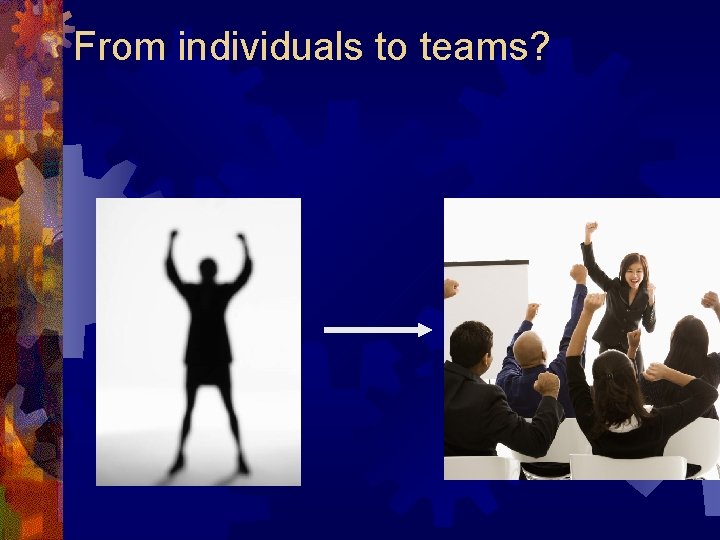
From individuals to teams?
Like Clockwork
Tip 1 Facilitate the perception of individuals, not members of other generations
Tip 2 Develop a vision & sell it. • Demonstrating value of change to the workaday lives of library staff will increase their buy-in • Shared projects can foster or improve sense of unity or teamwork
Tip 3 Identify natural leaders (as opposed to official managers) and utilize them to your benefit. • Ability to inspire their fellow co-workers • Accomplished by persistent respect Tip 3. 5: back up the authority of the official managers
Tip 4 Know when to back down. • Admit ignorance and mistakes • Make a visible effort to learn from your employees
Tip 5 Know when NOT to back down. • No magical formula for walking the line between the two • Situational humor to ease tensions
Tip 6 Participate in their work with them. • Never ask your employees to do something you wouldn’t do yourself • Show appreciation for employees’ work by giving your limited time to them • Actively engaging in their duties with them helps you learn more about your library’s operations and issues
Tip 7 Foster discussion (but balance with progress). • Opportunities to discuss the intricacies of their duties or potential changes demonstrates your reliance on their knowledge • On-going effort to create an atmosphere of comfort with discussion At some point, discussions must end and
Tip 8 Get out of your comfort zone.
Tip 9 Implement institutional memory projects. • Long-term employees = long-term memory of past successes and failures • Implement technology + person-to-person mentoring • Document, document
Tip 10 Feedback. Give it. Constantly.
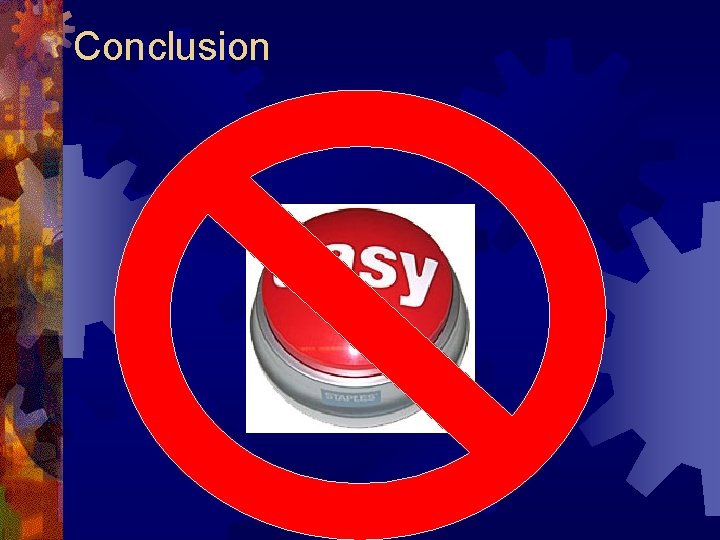
Conclusion
Works Cited Arns, J. W. & Price, C. (2007, Winter). To market, to market: the supervisory skills and managerial competencies most valued by new library supervisors. Library Administration & Management 21 (1), 13 -19. Bridgeford, L. C. (2007, July). The young & not so restless: helping employers understand, retain Generation Y workers. Employee Benefit News 21 (9), 23 -24. Houlihan, A. (2007, September). Bridge the generation gaps: how to get people of different ages to work together. Ward’s Dealer Business 41 (9), 24 -25. Lynch, M. J. , Tordella, S. , & Godfrey, T. (DATE). Retirement and Recruitment: A Deeper Look. Available at http: //www. ala. org/ala/ors/reports/recruitretireadeeperlook. pdf Polach, J. (2006). Veterans, boomers, xers, ys: it isn’t that simple. Leadership Solutions Inc. Available at http: //www. lsi-mn. com/assorted/generations. pdf Ryan, L. (2007, December). Liz Ryan career insight: leave Gen Y alone. Business Week. Available at http: //www. businessweek. com/managing/content/dec 2007/ca 20071218
Thank you!! Questions? adam. murray@murraystate. edu