
People place and identity Paul Longley and colleagues
![Geodemographics • “Analysis of people by where they live [places]” (Sleight, 1993: 3) •](https://slidetodoc.com/presentation_image_h/09e9174924d23919f7795f3db088acc2/image-2.jpg "Geodemographics • “Analysis of people by where they live [places]” (Sleight, 1993: 3) •")
- Slides: 15
People, place and identity Paul Longley and colleagues, UCL
Geodemographics • “Analysis of people by where they live [places]” (Sleight, 1993: 3) • Social similarity, not locational proximity • Surnames are integral indicators to place profiles Person Home Address Area
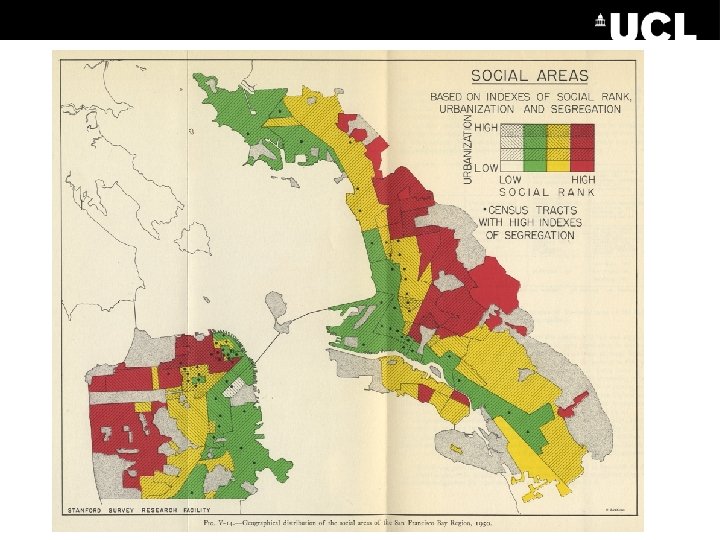
The achievements of neighbourhood profiling • The specification of social similarity • Collective consumption and locational proximity • Open geodemographics • Spatial and temporal transferability
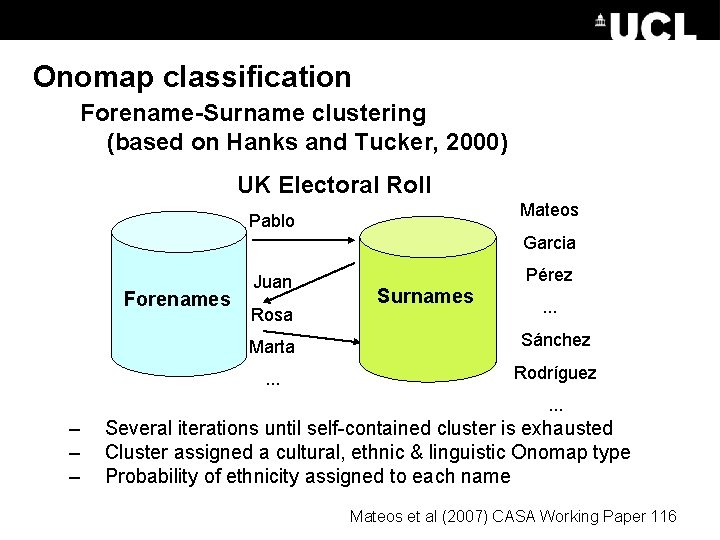
Onomap classification Forename-Surname clustering (based on Hanks and Tucker, 2000) UK Electoral Roll Mateos Pablo Garcia Forenames Juan Rosa Pérez Surnames . . . Marta Sánchez . . . Rodríguez. . . – – – Several iterations until self-contained cluster is exhausted Cluster assigned a cultural, ethnic & linguistic Onomap type Probability of ethnicity assigned to each name Mateos et al (2007) CASA Working Paper 116
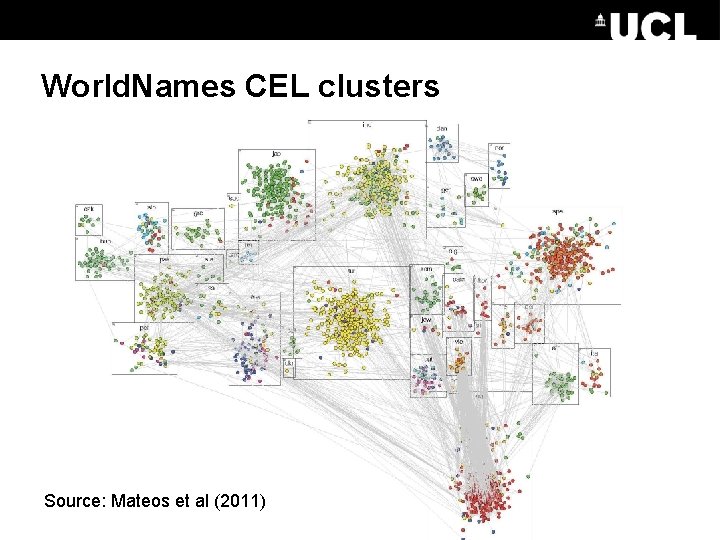
World. Names CEL clusters Source: Mateos et al (2011)
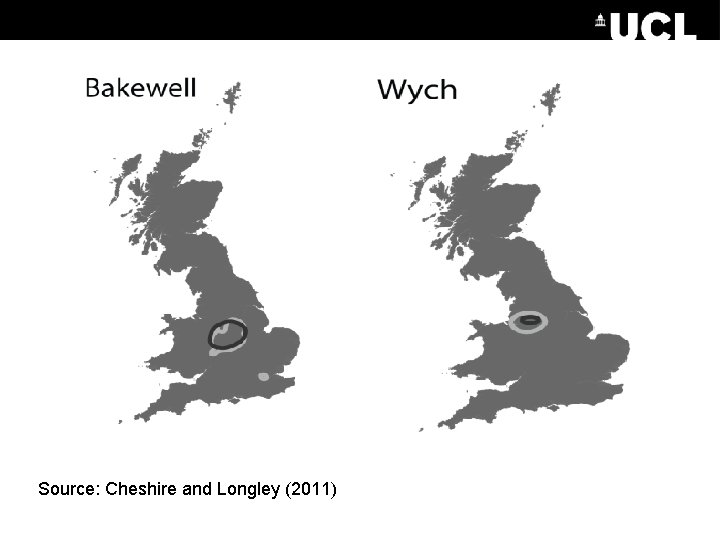
Source: Cheshire and Longley (2011)
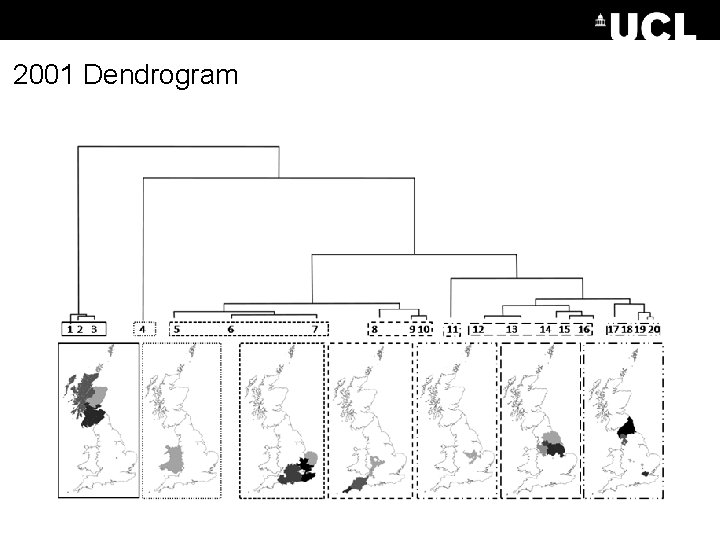
2001 Dendrogram
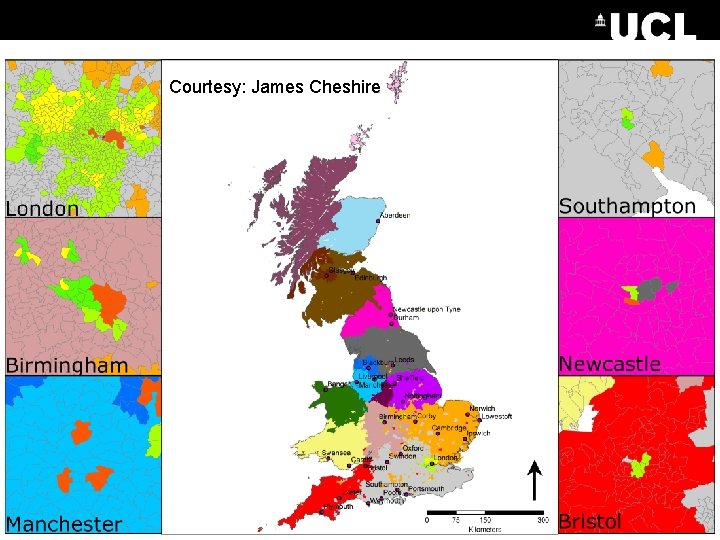
Courtesy: James Cheshire 12
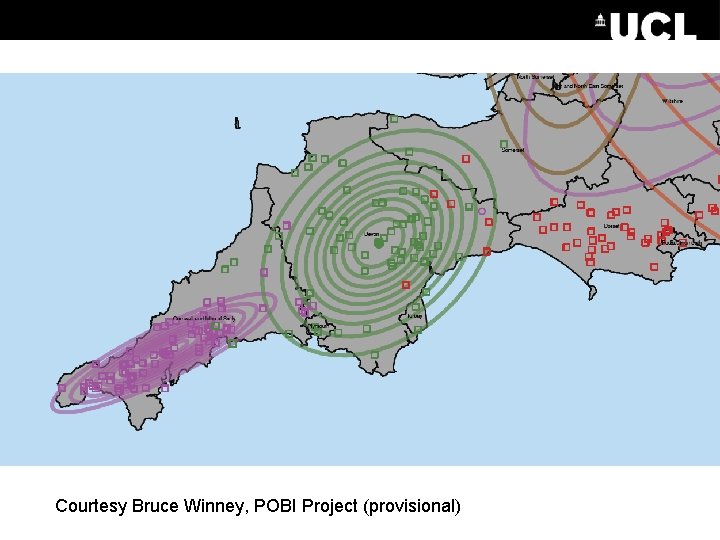
Courtesy Bruce Winney, POBI Project (provisional)
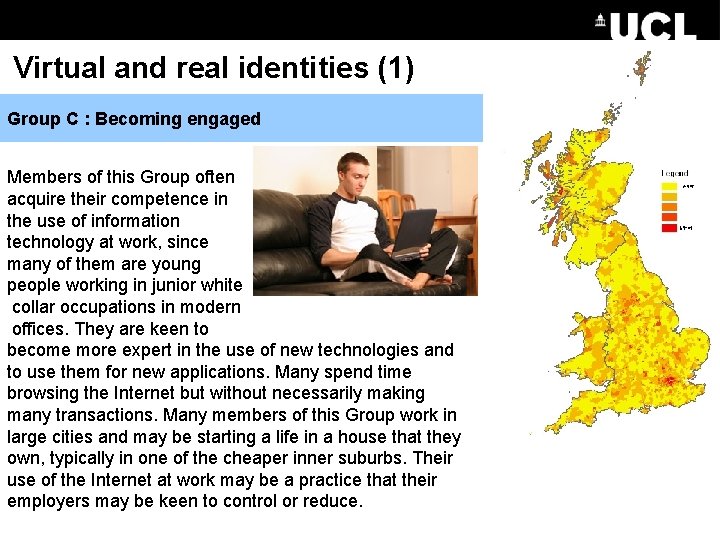
Virtual and real identities (1) Group C : Becoming engaged Members of this Group often acquire their competence in the use of information technology at work, since many of them are young people working in junior white collar occupations in modern offices. They are keen to become more expert in the use of new technologies and to use them for new applications. Many spend time browsing the Internet but without necessarily making many transactions. Many members of this Group work in large cities and may be starting a life in a house that they own, typically in one of the cheaper inner suburbs. Their use of the Internet at work may be a practice that their employers may be keen to control or reduce.
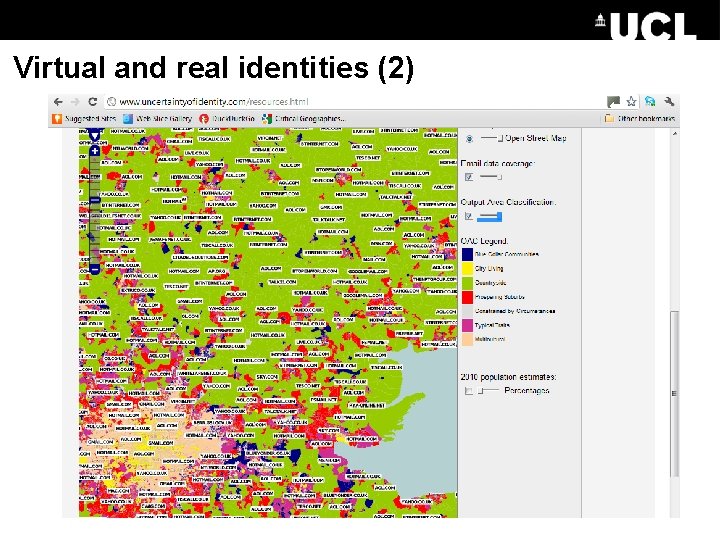
Virtual and real identities (2)