
PenicillinsPharmacokinetics Clinical Uses Administration and dosage of Penicillins

- Slides: 11
Penicillins(Pharmacokinetics, Clinical Uses, Administration and dosage of Penicillins) And beta lactamase inhibitors Dr. Rashmi Rekha Kumari Asstt. Prof. cum Jr. Scientist Deptt. Of Vety. Pharmacology and Toxicology B. V. C, BASU, Patna
Pharmacokinetics • Penicillin G, its salts and methicillin are destroyed by gastric acid and are orally ineffective. üOnly the acid resistant penicilins like ampicillin, penicillin V, cloxacillin, amoxicillin can be given orally and their peak plasma concentration is reached within about two hours. • Most of the penicillins including repository penicillins are administered parenterally (usually IM). • Penicillins are widely distributed in the body fluids and tissues. They can cross the blood brain barrier in sub therapeutic concentration in the presence of inflammation of meninges only. • Inflammation also permits effective levels of certain penicillins in abscess and in pleural, peritoneal and synovial fluids. Their protein binding ranges from 20% (ampicillin) to 80 % (cloxacillin)
• Penicillins are chiefly excreted through kidney (90%) unchanged in urine. • Out of which 20% is by glomerular filtration and 80% by proximal tubular secretion • Proximal tubular secretion of penicillin is inhibited by probenecid prolonging the effective blood level of penicillins. • Some broad spectrum semisynthetic penicillins are also excreted through the bile.
Clinical uses of penicillins The penicillins are used in the treatment of local and systemic infections caused by sensitive bacteria Penicillin G is of value in the treatment of vbovine mastitis (primarily in streptococcal mastitis ), v. Anthrax, v. Erysipelothrix infection in sheep, pigs and birds v Strangles in horse, vclostridial infections (tetanus and black quarter), v pyelonephritis and lumpy jaw in cattle, v beta-haemolytic streptococcal infection in puppies , v. Meningococcal meningitis and v leptospirosis.
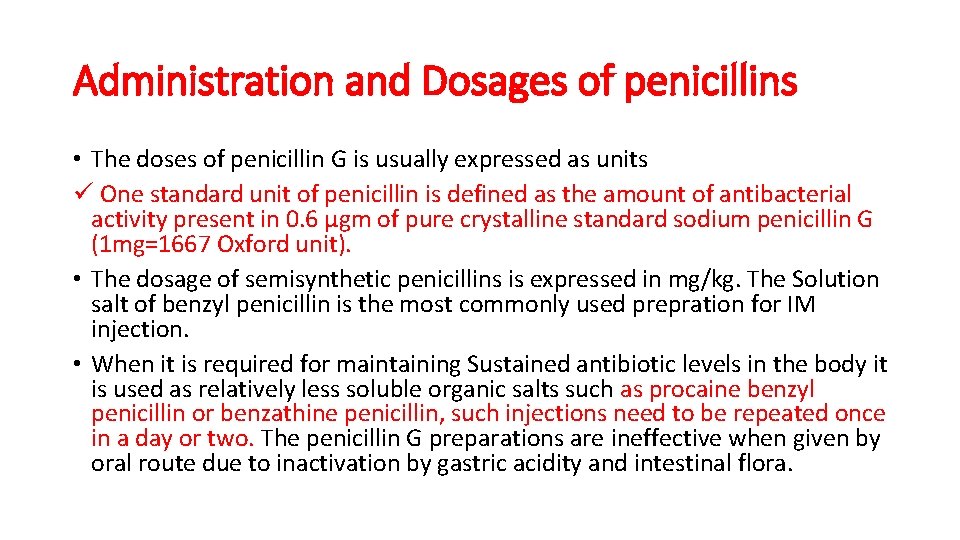
Administration and Dosages of penicillins • The doses of penicillin G is usually expressed as units ü One standard unit of penicillin is defined as the amount of antibacterial activity present in 0. 6 µgm of pure crystalline standard sodium penicillin G (1 mg=1667 Oxford unit). • The dosage of semisynthetic penicillins is expressed in mg/kg. The Solution salt of benzyl penicillin is the most commonly used prepration for IM injection. • When it is required for maintaining Sustained antibiotic levels in the body it is used as relatively less soluble organic salts such as procaine benzyl penicillin or benzathine penicillin, such injections need to be repeated once in a day or two. The penicillin G preparations are ineffective when given by oral route due to inactivation by gastric acidity and intestinal flora.
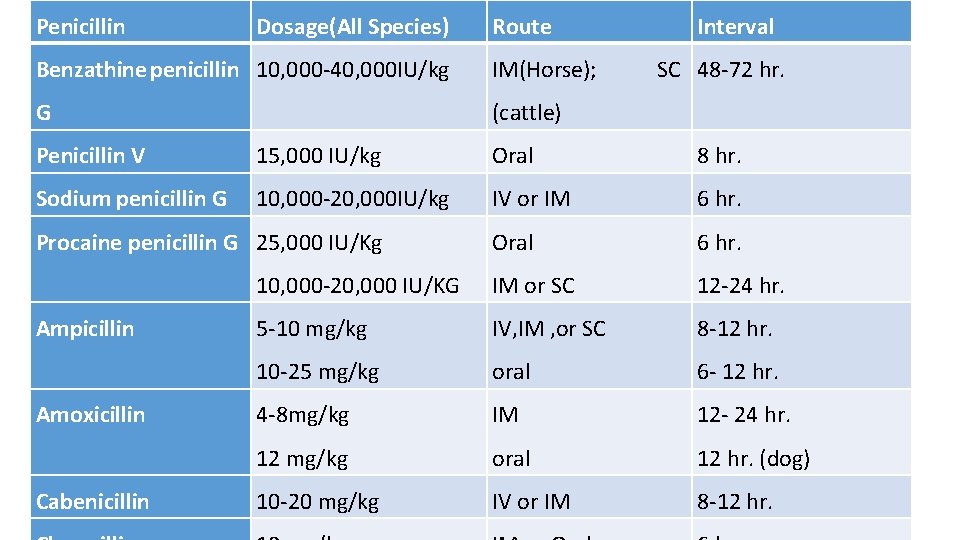
Penicillin Dosage(All Species) Route Benzathine penicillin 10, 000 -40, 000 IU/kg IM(Horse); G (cattle) Interval SC 48 -72 hr. Penicillin V 15, 000 IU/kg Oral 8 hr. Sodium penicillin G 10, 000 -20, 000 IU/kg IV or IM 6 hr. Oral 6 hr. 10, 000 -20, 000 IU/KG IM or SC 12 -24 hr. 5 -10 mg/kg IV, IM , or SC 8 -12 hr. 10 -25 mg/kg oral 6 - 12 hr. 4 -8 mg/kg IM 12 - 24 hr. 12 mg/kg oral 12 hr. (dog) 10 -20 mg/kg IV or IM 8 -12 hr. Procaine penicillin G 25, 000 IU/Kg Ampicillin Amoxicillin Cabenicillin
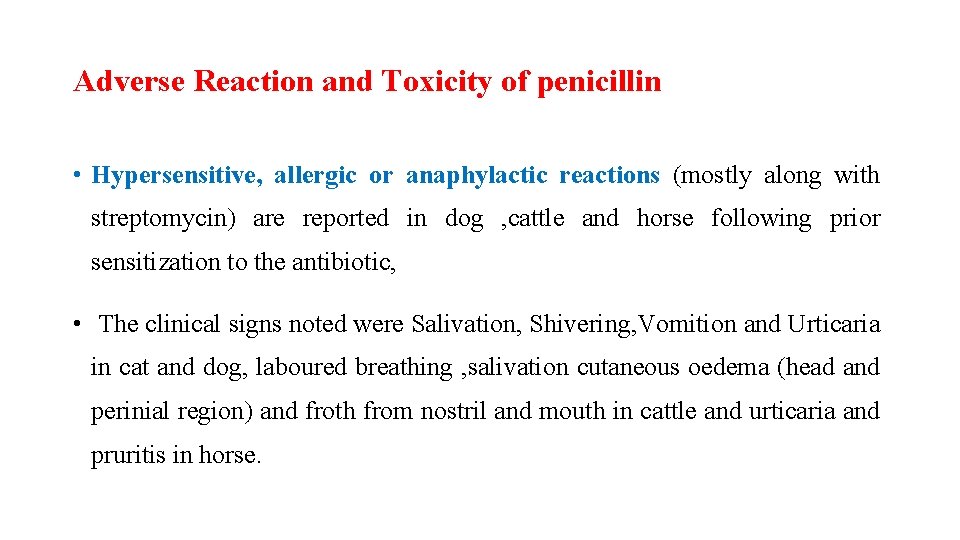
Adverse Reaction and Toxicity of penicillin • Hypersensitive, allergic or anaphylactic reactions (mostly along with streptomycin) are reported in dog , cattle and horse following prior sensitization to the antibiotic, • The clinical signs noted were Salivation, Shivering, Vomition and Urticaria in cat and dog, laboured breathing , salivation cutaneous oedema (head and perinial region) and froth from nostril and mouth in cattle and urticaria and pruritis in horse.
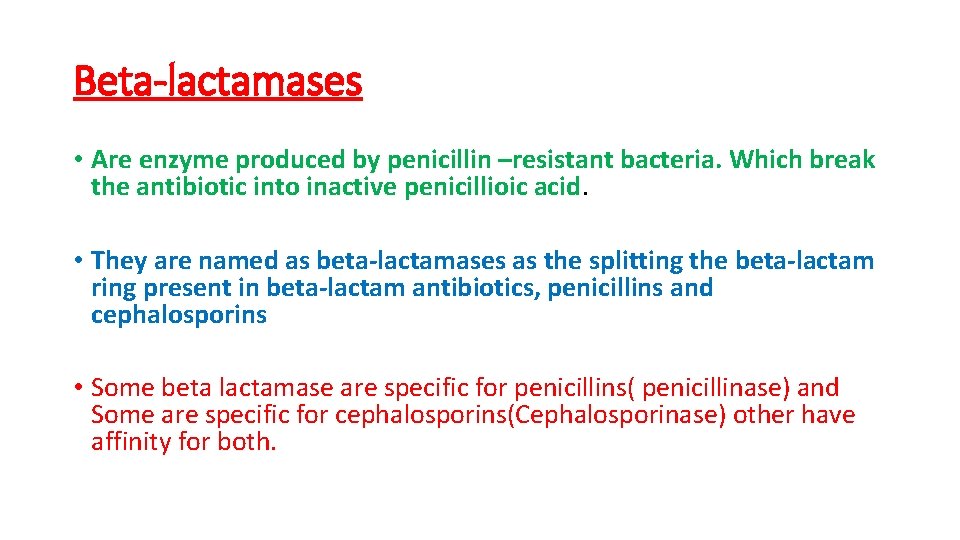
Beta-lactamases • Are enzyme produced by penicillin –resistant bacteria. Which break the antibiotic into inactive penicillioic acid. • They are named as beta-lactamases as the splitting the beta-lactam ring present in beta-lactam antibiotics, penicillins and cephalosporins • Some beta lactamase are specific for penicillins( penicillinase) and Some are specific for cephalosporins(Cephalosporinase) other have affinity for both.
Beta –lactamase inhibitor These potentiate or re-establish the antibacterial potency of penicillinase sensitive penicillin against beta-lactamase producing organism by inhibiting of the enzyme (Suicidal inhibition). These inhibitors are structurally similar to penicillin and act as Substitutes for penicillinase (β-lactamase) causing of the enzyme. • Clavulanic acid: Obtained from Streptomyces clavuligerus, has antibacterial activity of its own it is generally combined with amoxicillin (Augmentin) or ticarcillin (Timentin). • Sulbactam: -A semisynthetic beta-lactamase inhibitor, related chemically and in activity to clavulanic acid it is combined with ampicillin and preferably for oral and parenteral administration. • Tazobactum: It is similar to sulbactam and combined with piperacillin.
Potentiated Penicillins • The penicillins in combination with beta-lactamase inhibitors are called as potentiated penicillins. These combination are: • Clavulanic acid amoxicillin (2: 1), clavulanic acid –ticarcillin (15: 1) and Sulbactam –ampicillin. • Dose: Potassium Clavulanate: amoxicillin (1: 4) @ 10 – 20 mg/kg (amoxicillin) and 2. 5 -5 mg/kg • Penicillins with Sulbactam and tazobactum are administered IV; whereas, those with Clavulanic acid are administered orally or IV. •
• Thank You