
PENGANTAR KULIAH ANATOMI Dr Thontowi Djauhari NS M




- Slides: 72
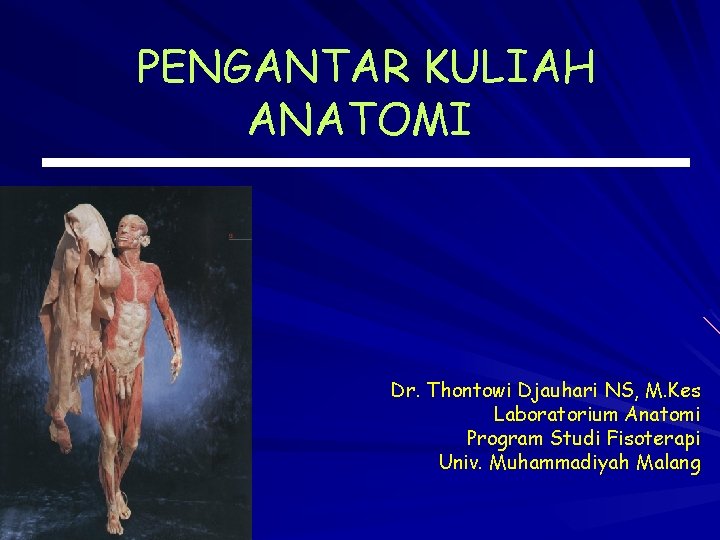
PENGANTAR KULIAH ANATOMI Dr. Thontowi Djauhari NS, M. Kes Laboratorium Anatomi Program Studi Fisoterapi Univ. Muhammadiyah Malang
Kuliah Perdana Laboratorium Anatomi PROGRAM STUDI FISIOTERAPI UNIVERSITAS MUHAMMADIYAH MALANG Tanggal, 18 September 2013
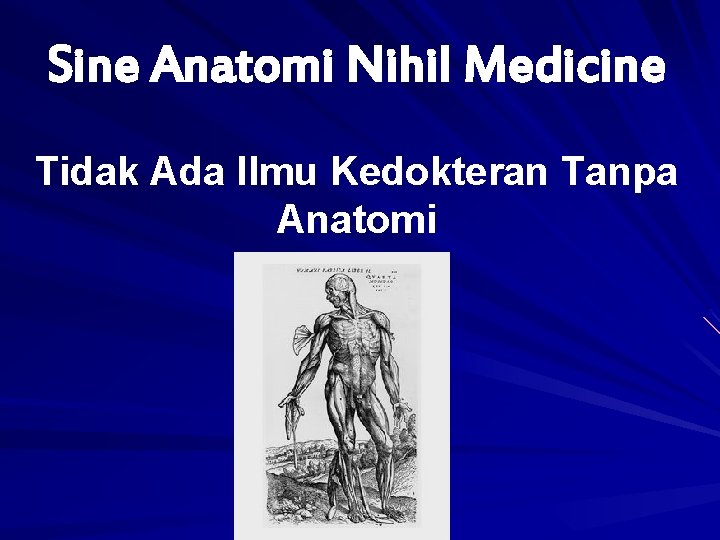
Sine Anatomi Nihil Medicine Tidak Ada Ilmu Kedokteran Tanpa Anatomi
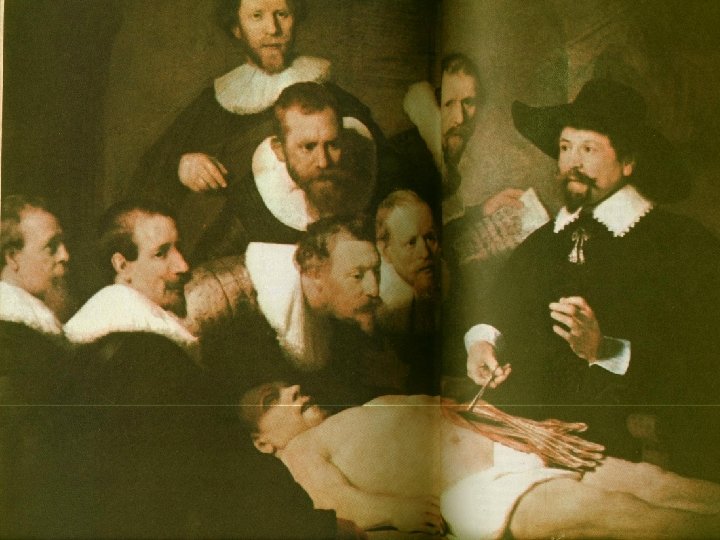
ANATOMI Asal Kata. Greek “ temnein” artinya “memotong” ( dissecting ) Pengertian. Adalah ilmu yang mempelajari struktur tubuh melalui pemotongan ( dissecting ) ----- Ilmu Urai.
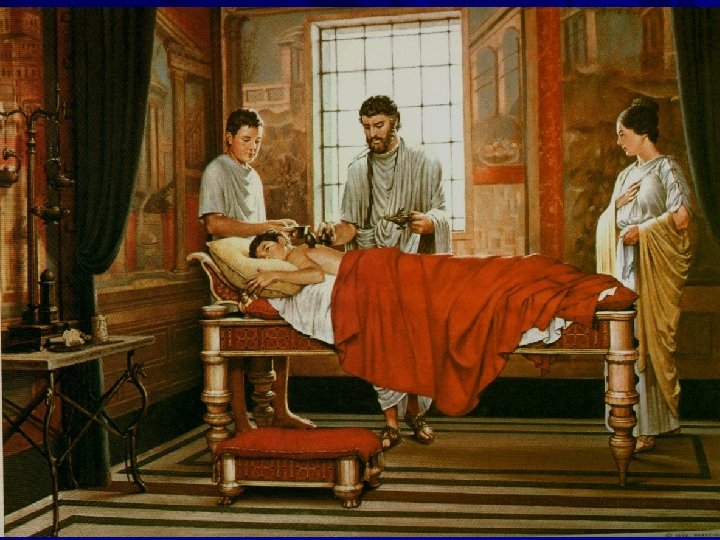
Selayang Pandang 130 -201 1538 : - Galen. Dokter Yunani melakukan dissecting pada hewan. - mengetahui bahwa darah mengalir dari jantung. - Membuat hypotese bahwa susunan syaraf terdiri dari devisi sensoris dan motoris. : - Andreas Vesalius Dokter Belgia tinggal di Italia melakukan dissecting pada manusia - menerbitkan buku anatomi pertama berjudul De Fabrica Corporis Humani 1578 -1657: William Harvey seorang Anatomis menerangkan bahwa aliran darah merupakan aliran darah searah Jantung arteri vena Jantung
Pembagian anatomi Mikroskopik Anatomi ( Histologi = Ilmu Jaringan). Ilmu yang mempelajari struktur tubuh dengan menggunakan mikroskop Makroskopik Anatomi ( Gross Anatomy = Ilmu Urai. ) Ilmu yang mempelajari struktur tubuh tanpa alat pembesar.
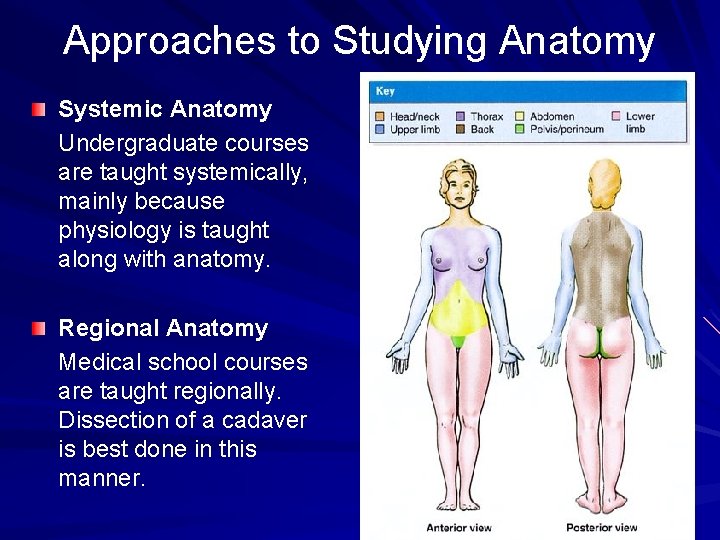
Approaches to Studying Anatomy Systemic Anatomy Undergraduate courses are taught systemically, mainly because physiology is taught along with anatomy. Regional Anatomy Medical school courses are taught regionally. Dissection of a cadaver is best done in this manner.
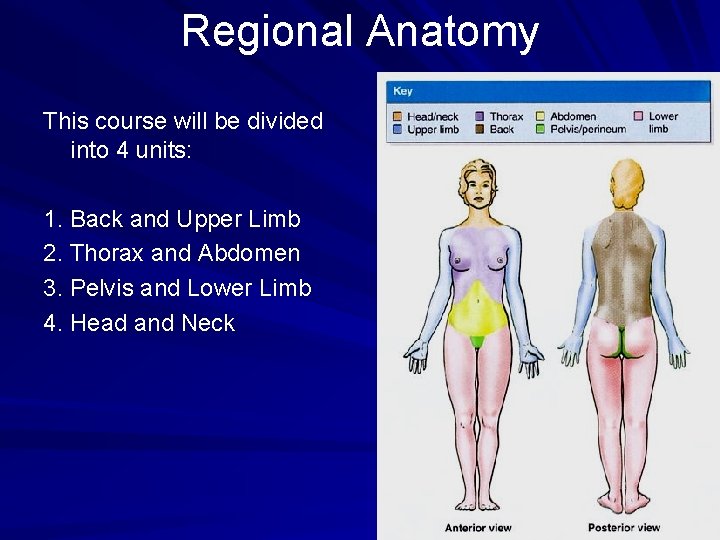
Regional Anatomy This course will be divided into 4 units: 1. Back and Upper Limb 2. Thorax and Abdomen 3. Pelvis and Lower Limb 4. Head and Neck
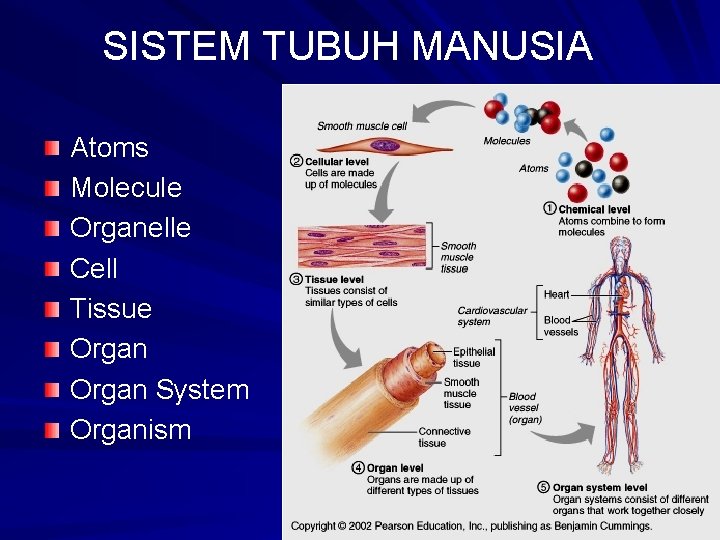
SISTEM TUBUH MANUSIA Atoms Molecule Organelle Cell Tissue Organ System Organism
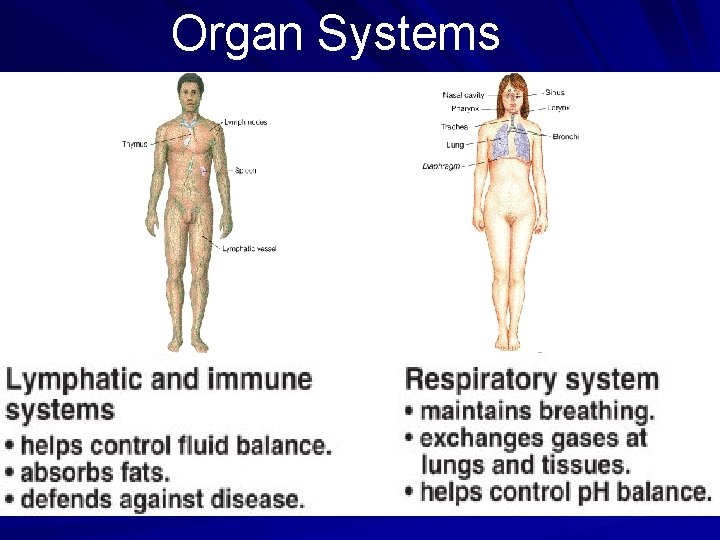
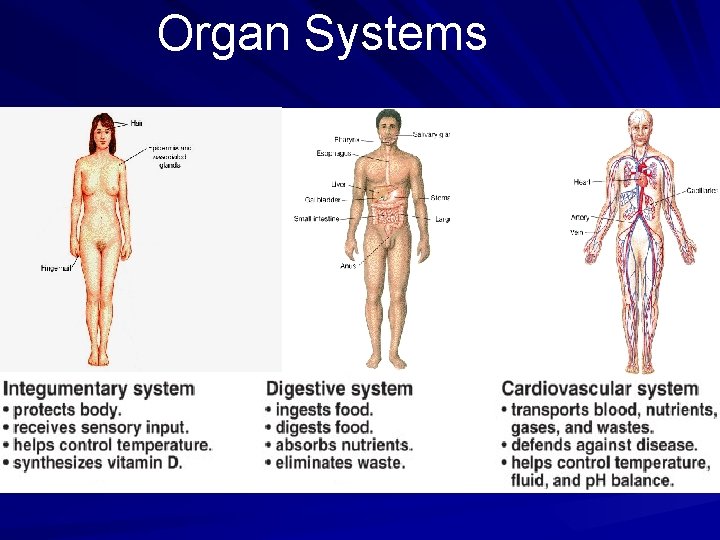
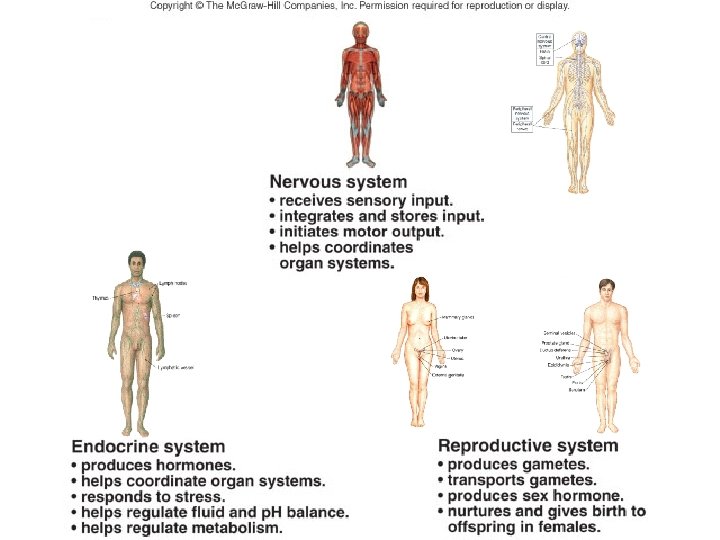
Organ Systems
Organ Systems
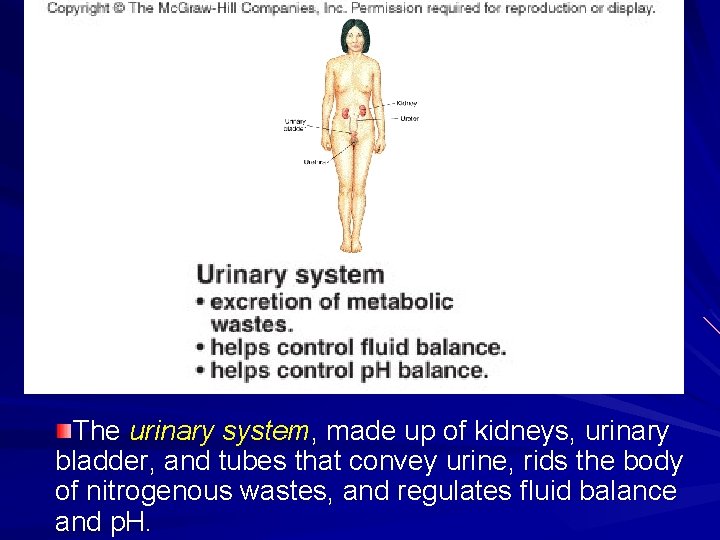
The urinary system, made up of kidneys, urinary bladder, and tubes that convey urine, rids the body of nitrogenous wastes, and regulates fluid balance and p. H.
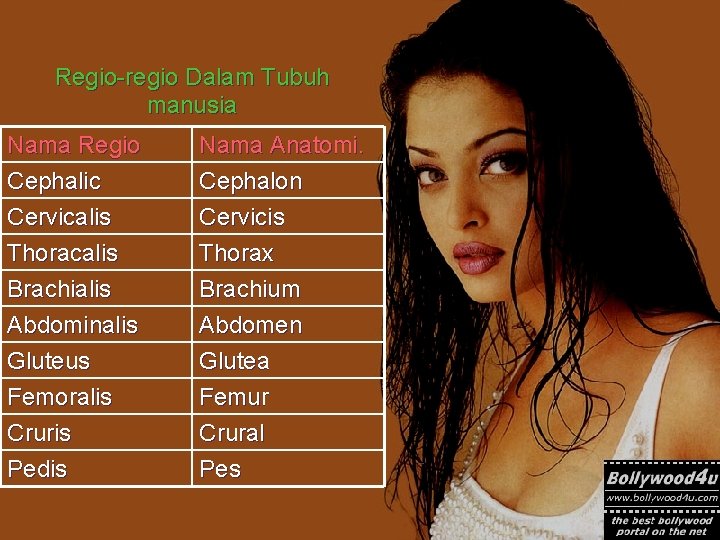
Regio-regio Dalam Tubuh manusia Nama Regio Cephalic Cervicalis Thoracalis Nama Anatomi. Cephalon Cervicis Thorax Brachialis Abdominalis Gluteus Femoralis Cruris Pedis Brachium Abdomen Glutea Femur Crural Pes
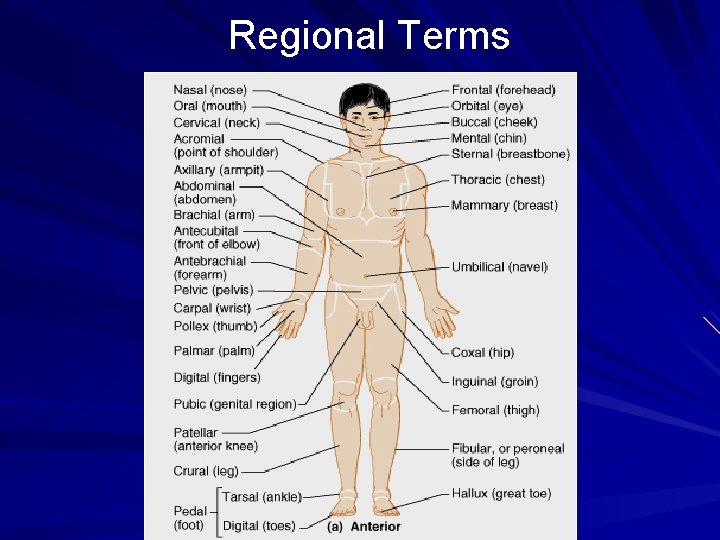
Regional Terms
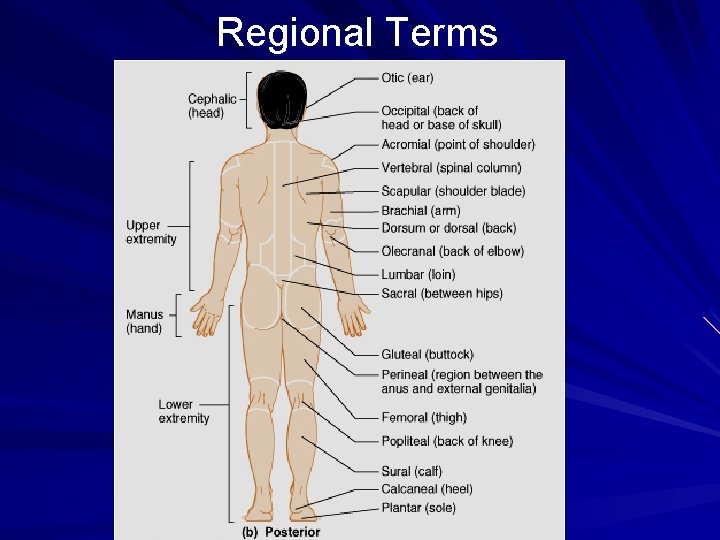
Regional Terms
Terminologi Anatomi
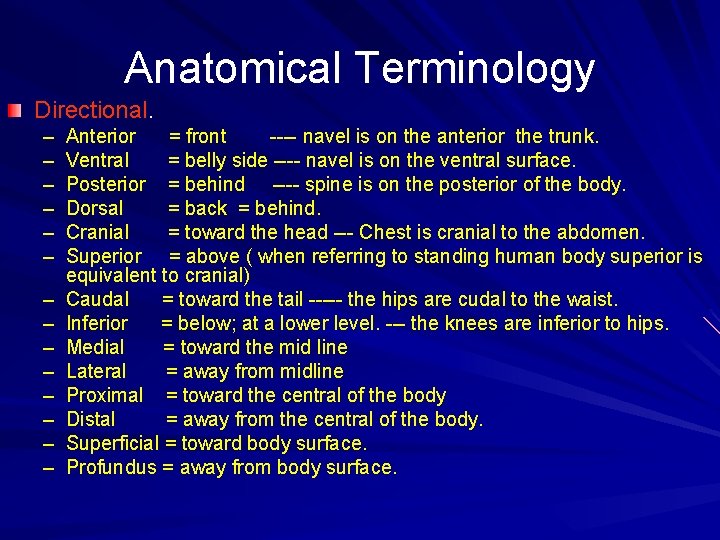
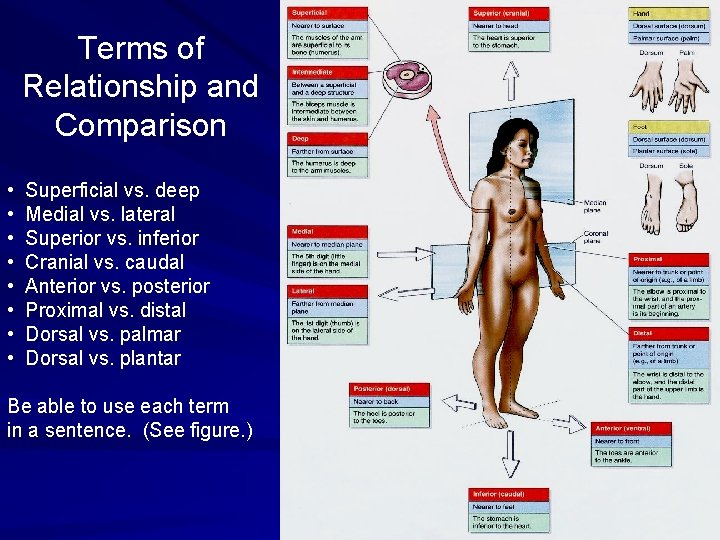
Anatomical Terminology Directional. – – – – Anterior = front ---- navel is on the anterior the trunk. Ventral = belly side ---- navel is on the ventral surface. Posterior = behind ---- spine is on the posterior of the body. Dorsal = back = behind. Cranial = toward the head --- Chest is cranial to the abdomen. Superior = above ( when referring to standing human body superior is equivalent to cranial) Caudal = toward the tail ----- the hips are cudal to the waist. Inferior = below; at a lower level. --- the knees are inferior to hips. Medial = toward the mid line Lateral = away from midline Proximal = toward the central of the body Distal = away from the central of the body. Superficial = toward body surface. Profundus = away from body surface.
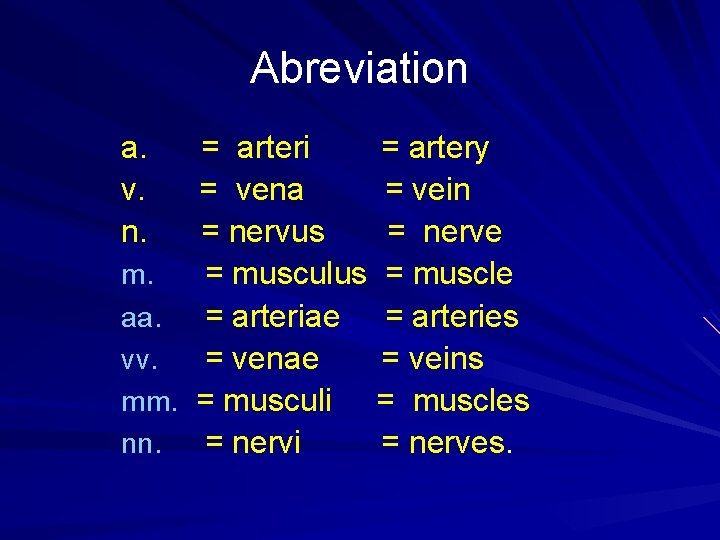
Abreviation a. v. n. = arteri = artery = vena = vein = nervus = nerve m. = musculus = muscle aa. = arteriae = arteries vv. = venae = veins mm. = musculi = muscles nn. = nervi = nerves.
Terms of Relationship and Comparison • • Superficial vs. deep Medial vs. lateral Superior vs. inferior Cranial vs. caudal Anterior vs. posterior Proximal vs. distal Dorsal vs. palmar Dorsal vs. plantar Be able to use each term in a sentence. (See figure. )
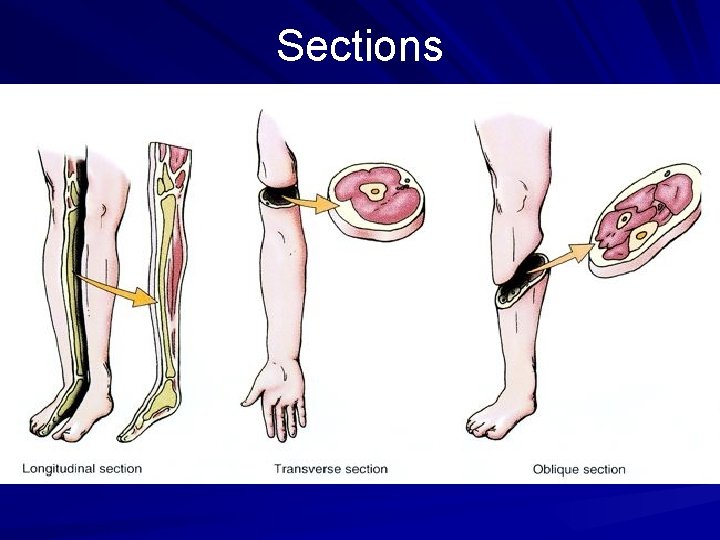
Sections
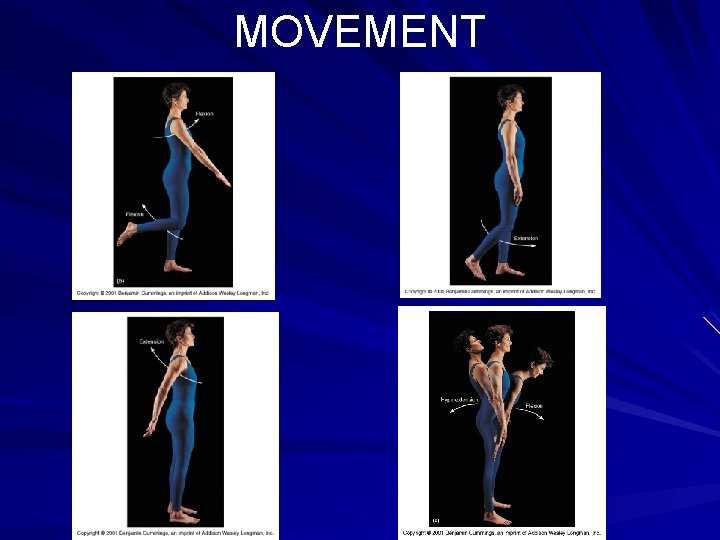
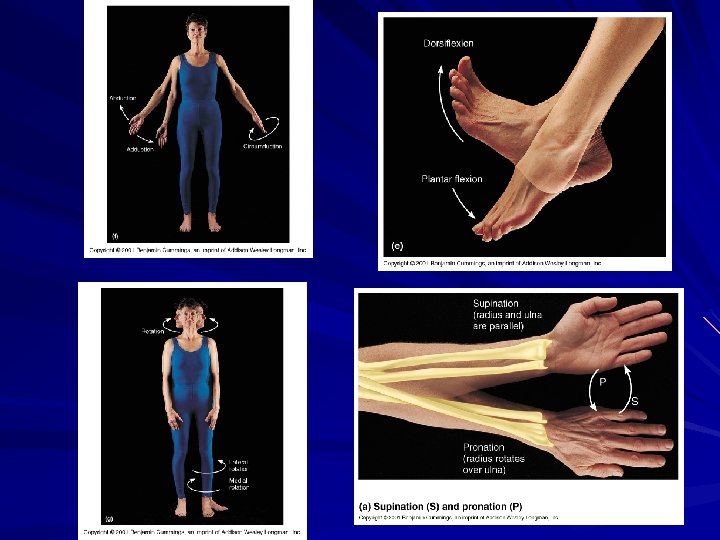
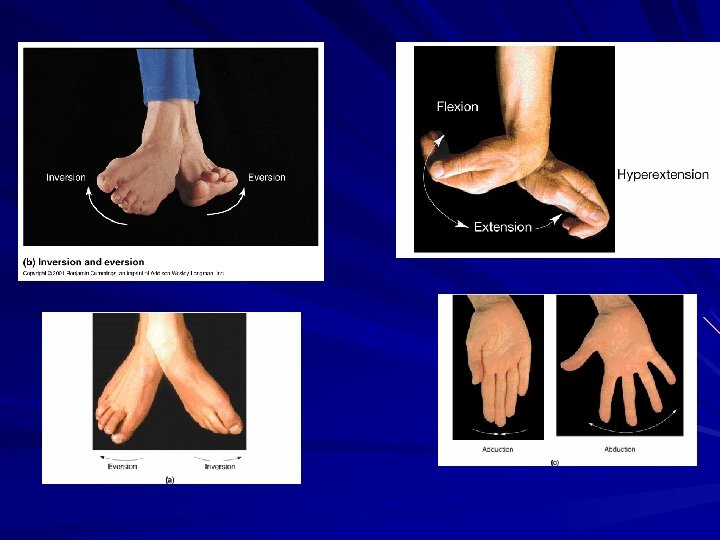
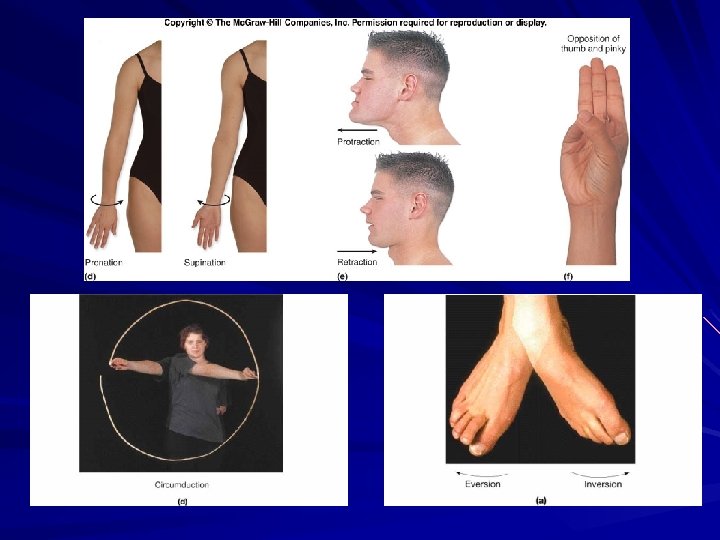
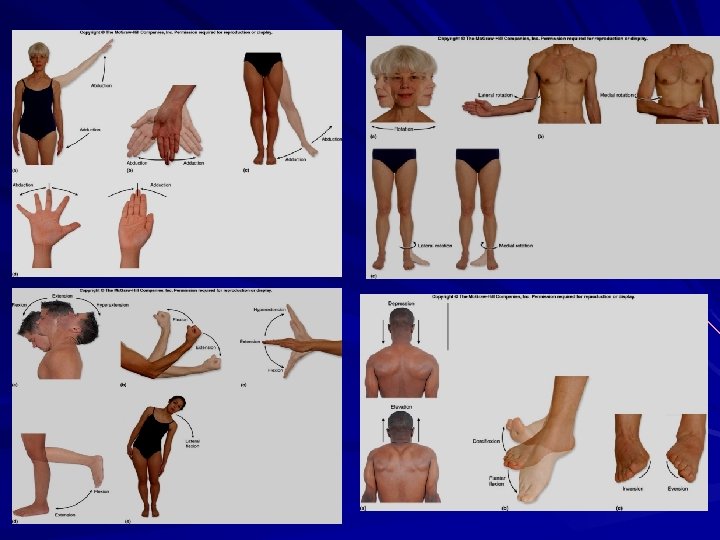
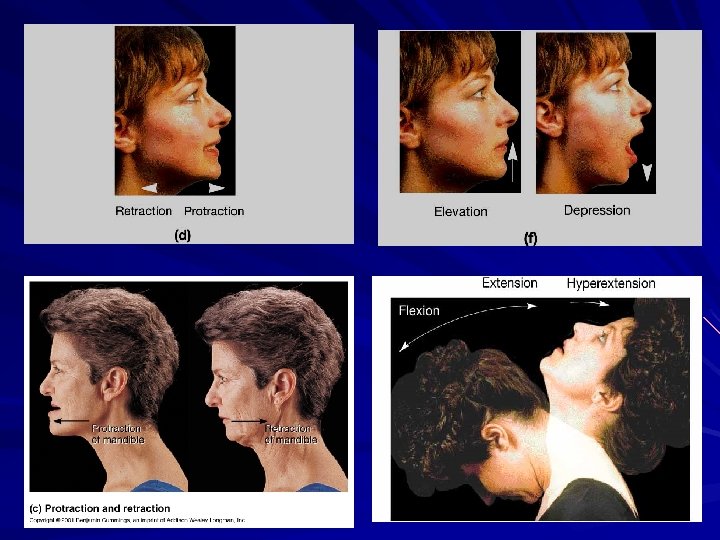
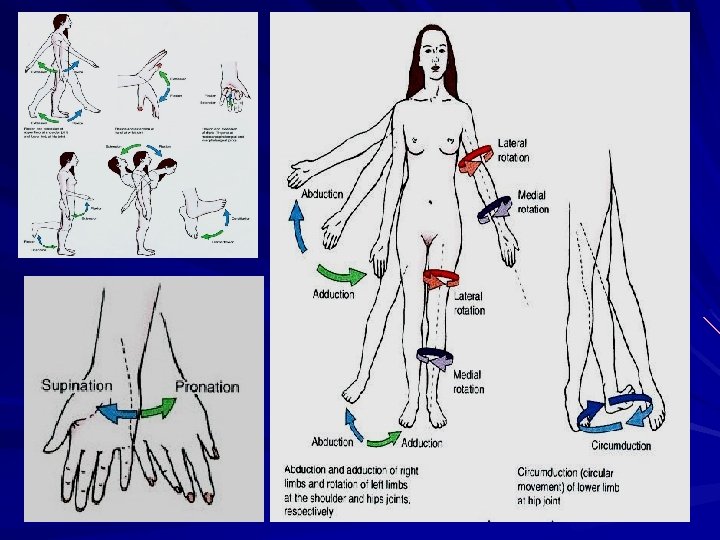
MOVEMENT
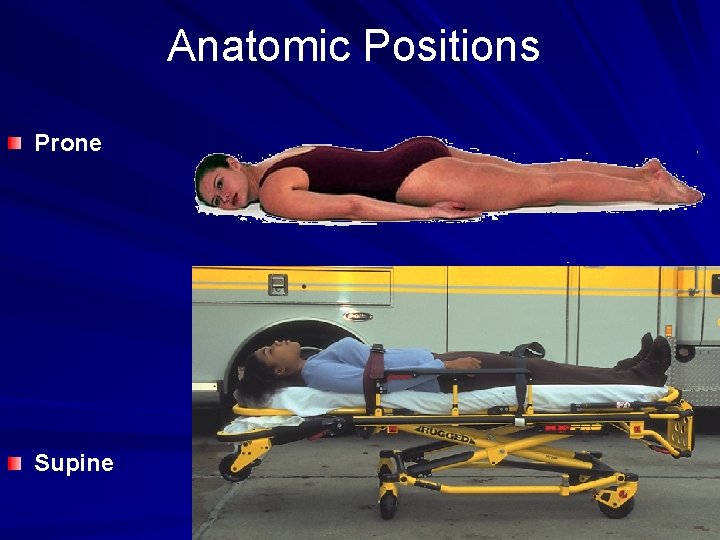
Anatomic Positions Prone Supine
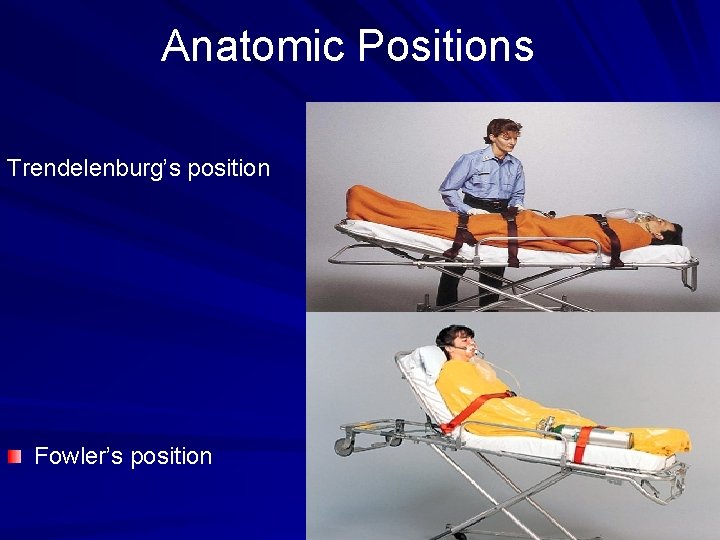
Anatomic Positions Trendelenburg’s position Fowler’s position
Cabang Lain Anatomi Perkembangan – Embryology. Ilmu yang mempelajari anatomi sebelum lahir. Disebut juga morphogenesis – Ontogeny. Ilmu yang mempelajari perkembangan mahluk dari fertilisasi sampai dewasa – Anthropology Ragawi. Adalah bagian dari phylogeny yaitu ilmu yang mempelajari terjadinya suatu phylum--- ras. Comparative Anatomi Radiographic Anatomi
Praktikum Menghargai preparat/cadaver Jas Praktikum Rapi + Tanda Pengenal Membawa alat-alat praktikum sendiri Kuku dipotong pendek Masuk Tepat Waktu Dimulai dengan doa bersama Keluar Lab. Harus Seijin Dosen Tempat Sholat disediakan
MATERI KULIAHFISIOTERAPI Anatomi Umum Embriologi Umum Osteologi bagian atas Osteologi bagian Bawah Artrologi Extremitas atas 1 Extremitas atas 2 Extremitas bawah 1 Extremitas bawah 2 Panca Indra Respirasi dan cardiovascular Pencernakan Urogenital dan uropoetika Endocrin Saraf
SISTEM TUBUH PERMUKAAN MUSCULOSKELETAL Thontowi Djauhari NS M. Kes Laboratorium Anatomi Program Studi Fisioterai Univ. Muhammadiyah Malang
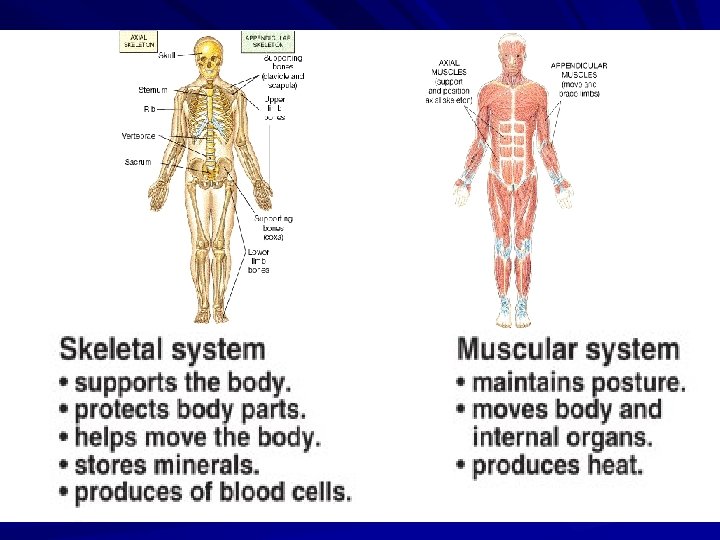
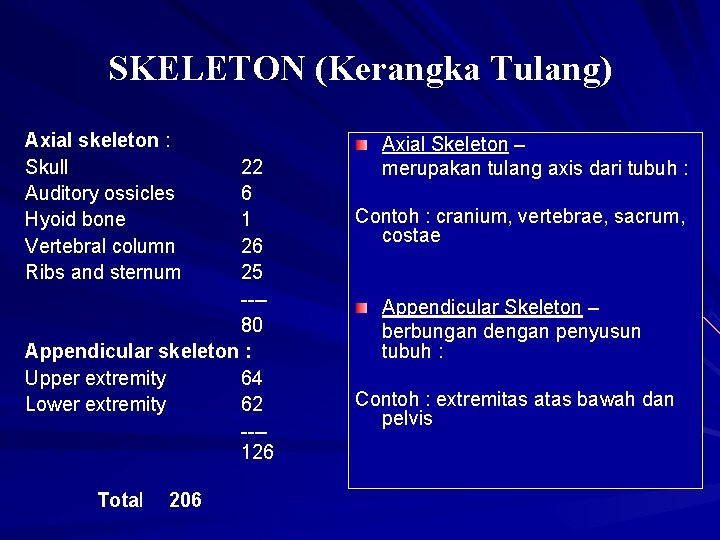
SKELETON (Kerangka Tulang) Axial skeleton : Skull Auditory ossicles Hyoid bone Vertebral column Ribs and sternum 22 6 1 26 25 ---80 Appendicular skeleton : Upper extremity 64 Lower extremity 62 ---126 Total 206 Axial Skeleton – merupakan tulang axis dari tubuh : Contoh : cranium, vertebrae, sacrum, costae Appendicular Skeleton – berbungan dengan penyusun tubuh : Contoh : extremitas atas bawah dan pelvis
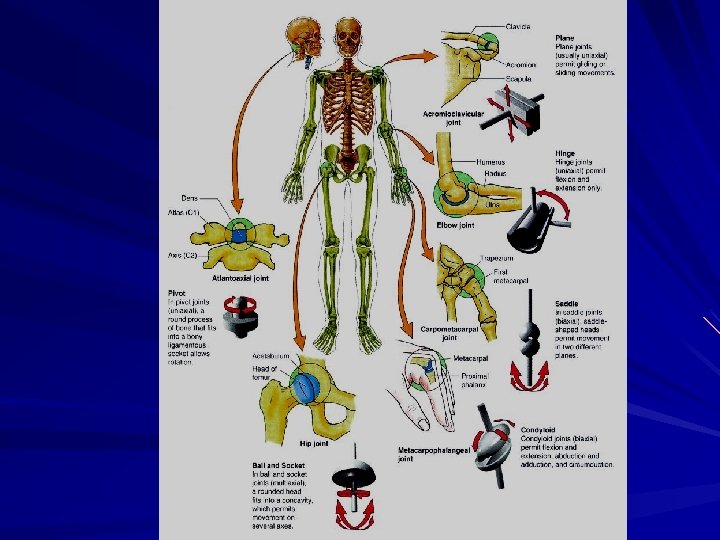
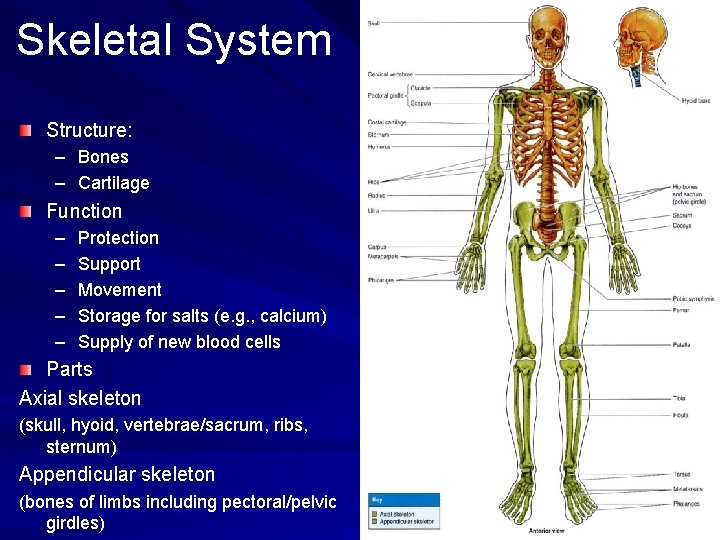
Skeletal System Structure: – Bones – Cartilage Function – – – Protection Support Movement Storage for salts (e. g. , calcium) Supply of new blood cells Parts Axial skeleton (skull, hyoid, vertebrae/sacrum, ribs, sternum) Appendicular skeleton (bones of limbs including pectoral/pelvic girdles)
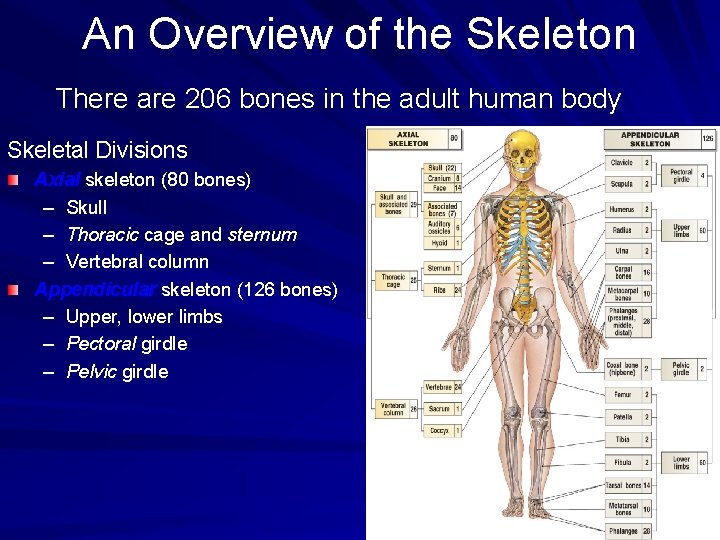
An Overview of the Skeleton There are 206 bones in the adult human body Skeletal Divisions Axial skeleton (80 bones) – Skull – Thoracic cage and sternum – Vertebral column Appendicular skeleton (126 bones) – Upper, lower limbs – Pectoral girdle – Pelvic girdle
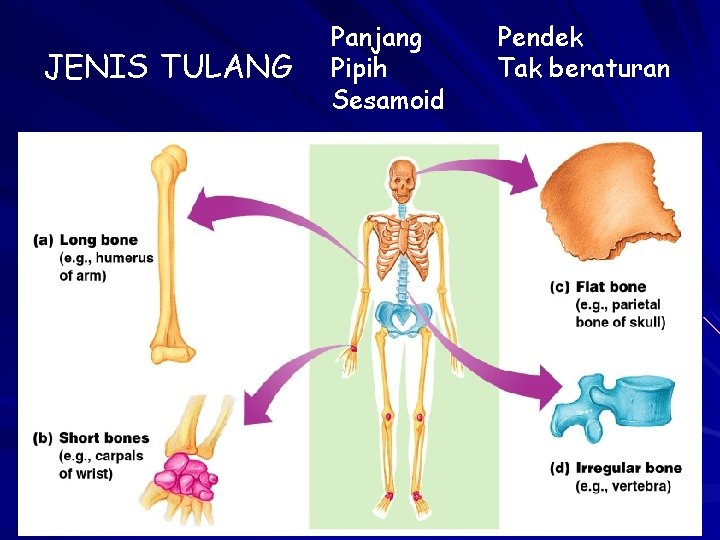
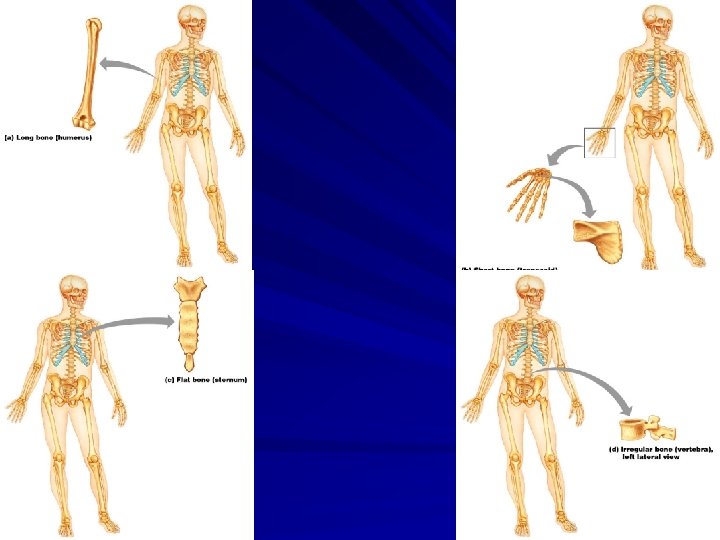
JENIS TULANG Panjang Pipih Sesamoid Pendek Tak beraturan
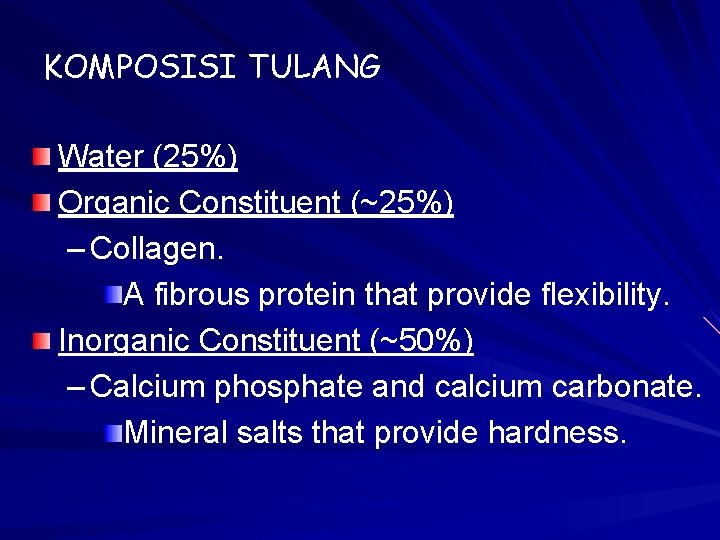
KOMPOSISI TULANG Water (25%) Organic Constituent (~25%) – Collagen. A fibrous protein that provide flexibility. Inorganic Constituent (~50%) – Calcium phosphate and calcium carbonate. Mineral salts that provide hardness.
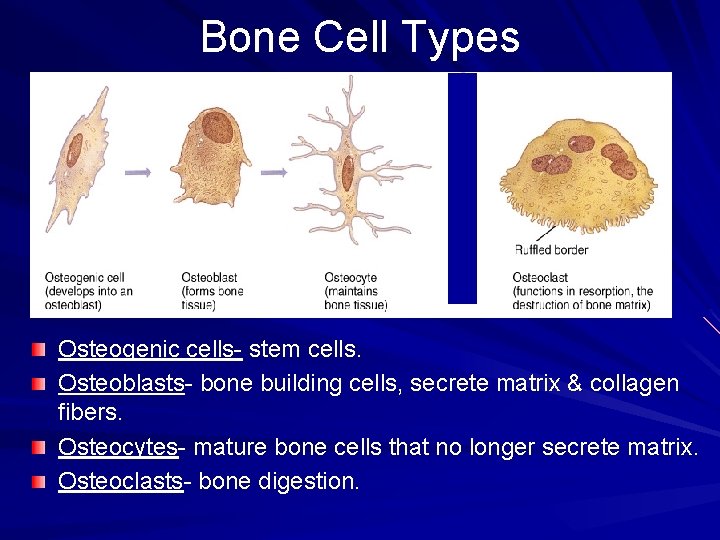
Bone Cell Types Osteogenic cells- stem cells. Osteoblasts- bone building cells, secrete matrix & collagen fibers. Osteocytes- mature bone cells that no longer secrete matrix. Osteoclasts- bone digestion.
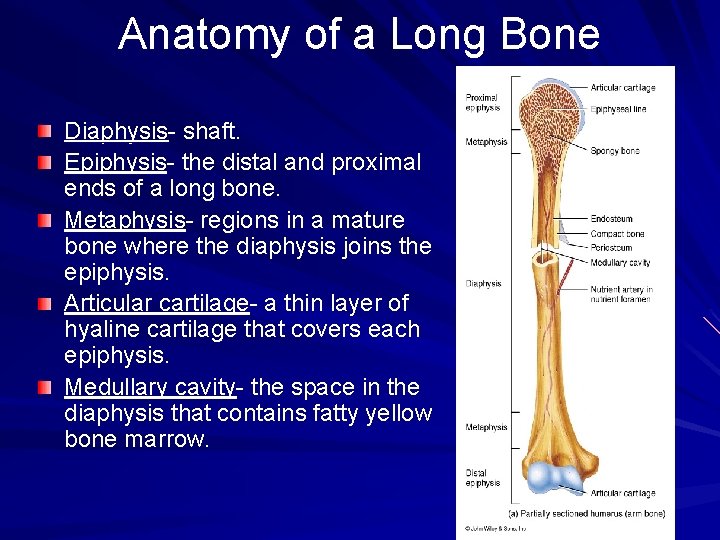
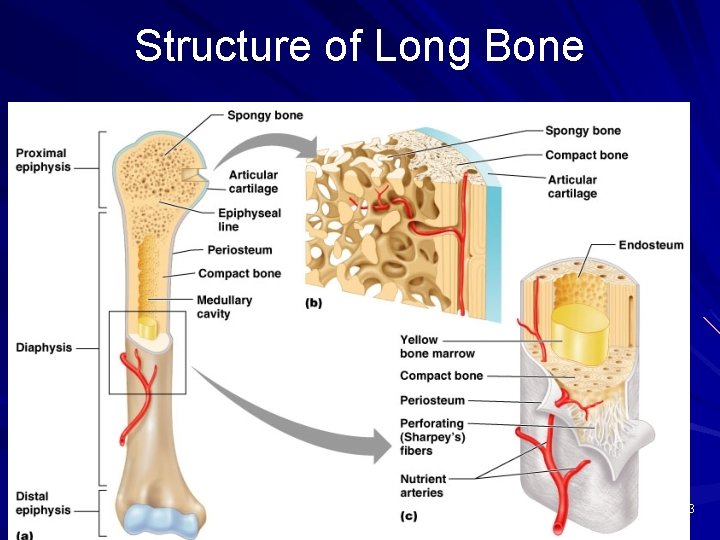
Anatomy of a Long Bone Diaphysis- shaft. Epiphysis- the distal and proximal ends of a long bone. Metaphysis- regions in a mature bone where the diaphysis joins the epiphysis. Articular cartilage- a thin layer of hyaline cartilage that covers each epiphysis. Medullary cavity- the space in the diaphysis that contains fatty yellow bone marrow.
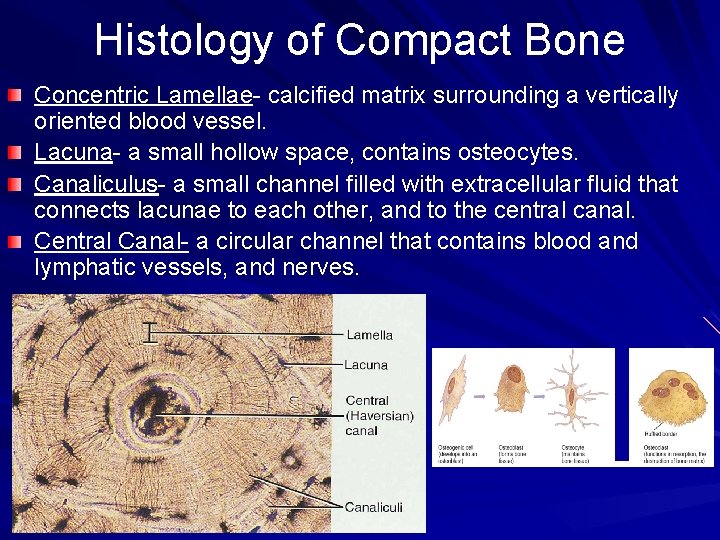
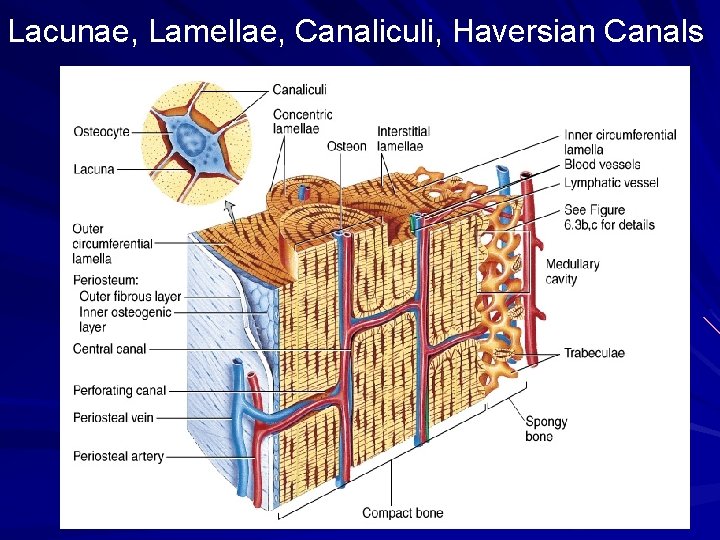
Histology of Compact Bone Concentric Lamellae- calcified matrix surrounding a vertically oriented blood vessel. Lacuna- a small hollow space, contains osteocytes. Canaliculus- a small channel filled with extracellular fluid that connects lacunae to each other, and to the central canal. Central Canal- a circular channel that contains blood and lymphatic vessels, and nerves.
Lacunae, Lamellae, Canaliculi, Haversian Canals
Structure of Long Bone Figure 6. 3
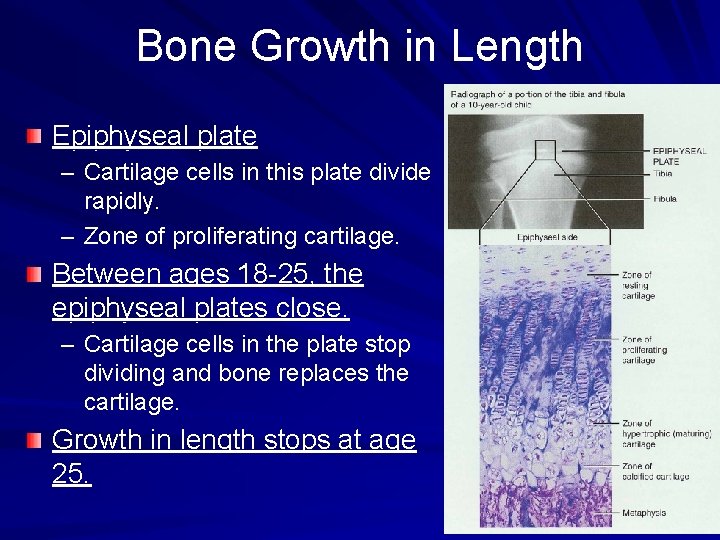
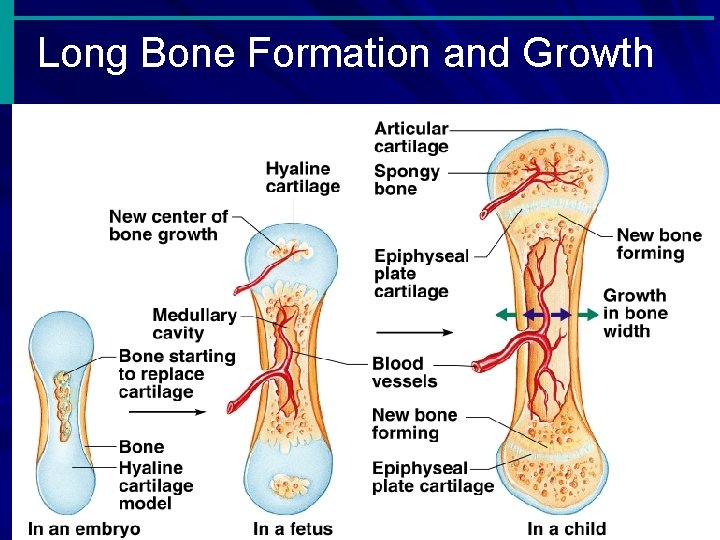
Bone Growth in Length Epiphyseal plate – Cartilage cells in this plate divide rapidly. – Zone of proliferating cartilage. Between ages 18 -25, the epiphyseal plates close. – Cartilage cells in the plate stop dividing and bone replaces the cartilage. Growth in length stops at age 25.
Long Bone Formation and Growth Slide
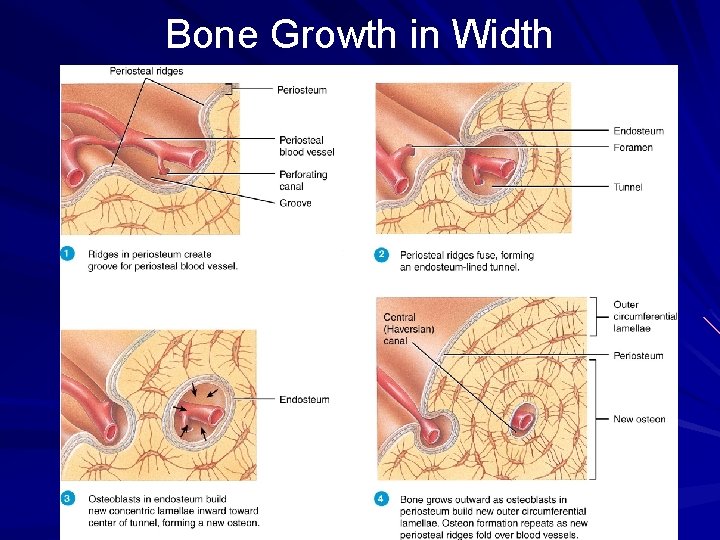
Bone Growth in Width
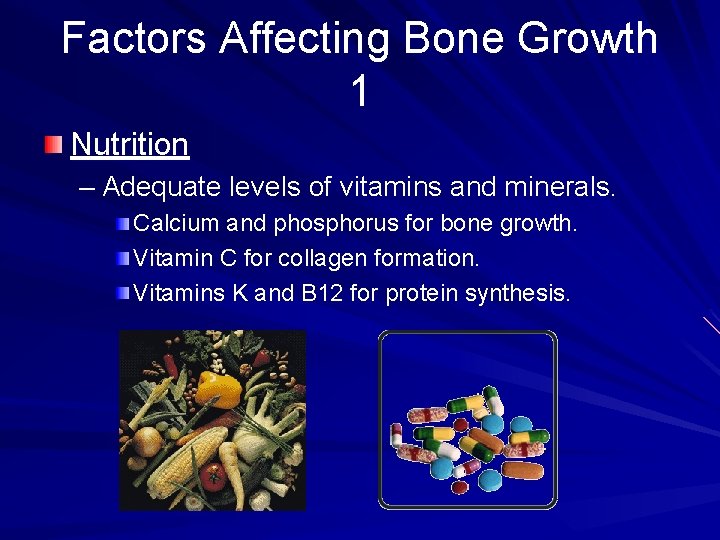
Factors Affecting Bone Growth 1 Nutrition – Adequate levels of vitamins and minerals. Calcium and phosphorus for bone growth. Vitamin C for collagen formation. Vitamins K and B 12 for protein synthesis.
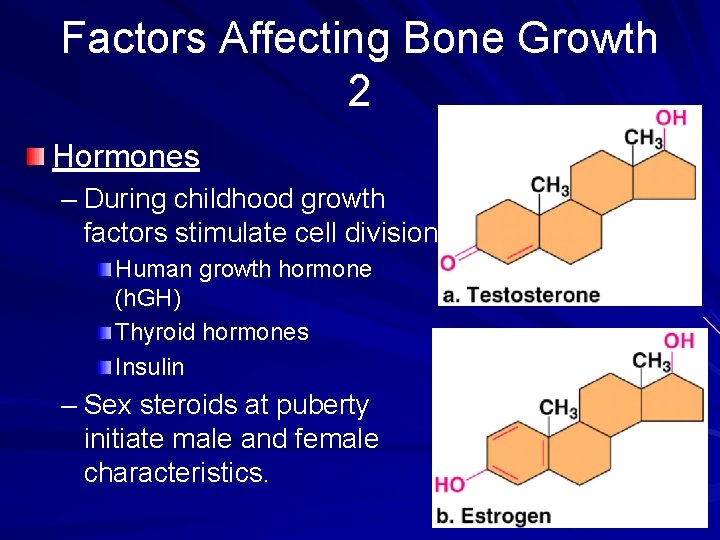
Factors Affecting Bone Growth 2 Hormones – During childhood growth factors stimulate cell division. Human growth hormone (h. GH) Thyroid hormones Insulin – Sex steroids at puberty initiate male and female characteristics.
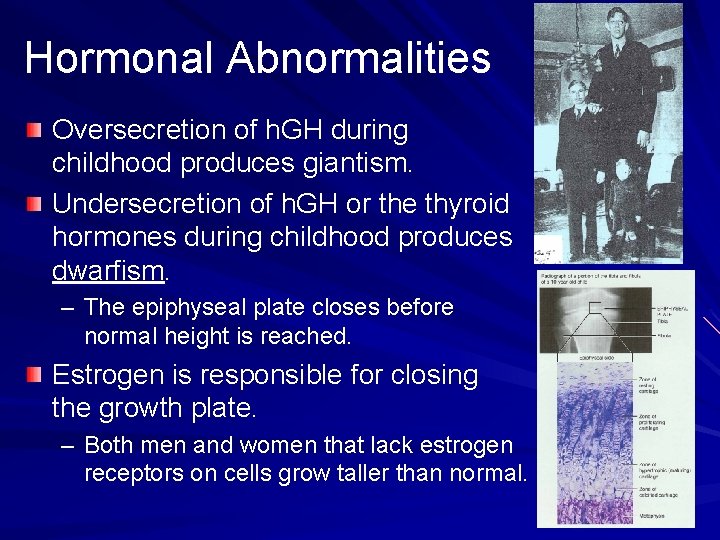
Hormonal Abnormalities Oversecretion of h. GH during childhood produces giantism. Undersecretion of h. GH or the thyroid hormones during childhood produces dwarfism. – The epiphyseal plate closes before normal height is reached. Estrogen is responsible for closing the growth plate. – Both men and women that lack estrogen receptors on cells grow taller than normal.
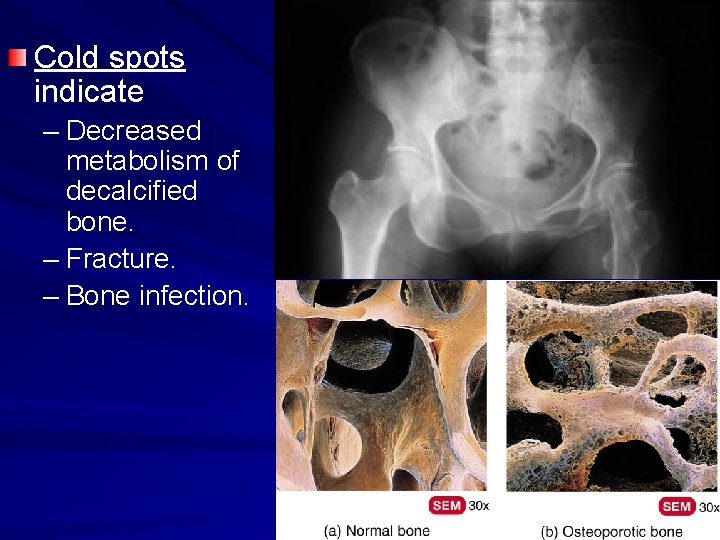
Aging and Bone Tissue Demineralization- loss of minerals. – Very rapid in women 40 -45 as estrogen levels decrease. – In males, begins after age 60, but is gradual. Decrease in protein synthesis – Decrease in growth hormone. – Decrease in collagen production, which gives bone its tensile strength, this causes bone to become brittle and susceptible to fracture.
Cold spots indicate – Decreased metabolism of decalcified bone. – Fracture. – Bone infection.
Bone Fractures · A break in a bone · Types of bone fractures · Closed (simple) fracture – break that does not penetrate the skin · Open (compound) fracture – broken bone penetrates through the skin · Bone fractures are treated by reduction and immobilization · Realignment of the bone Slide 5. 16
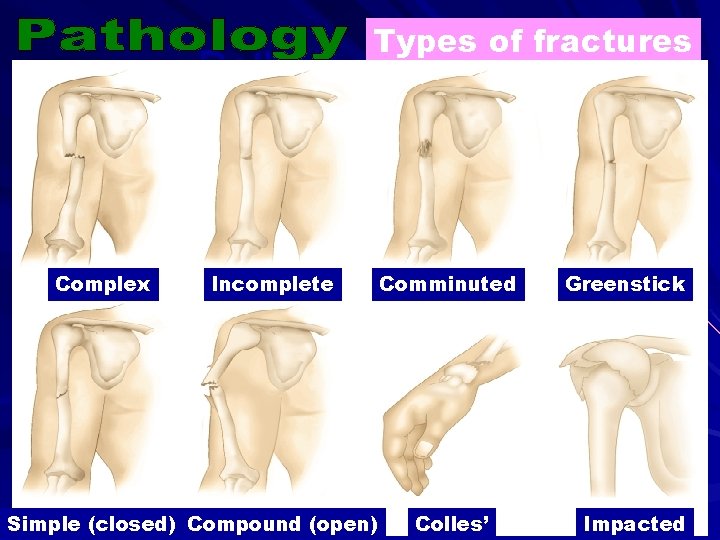
Types of fractures Pathology Part 2 Complex Incomplete Simple (closed) Compound (open) Comminuted Colles’ Greenstick Impacted
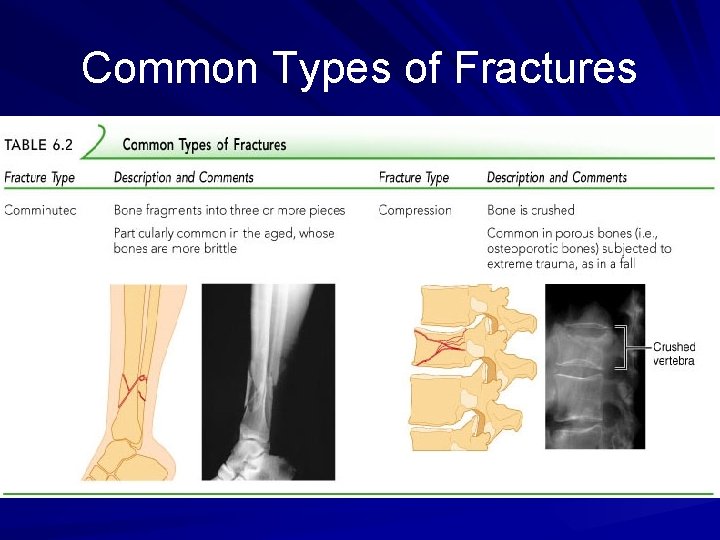
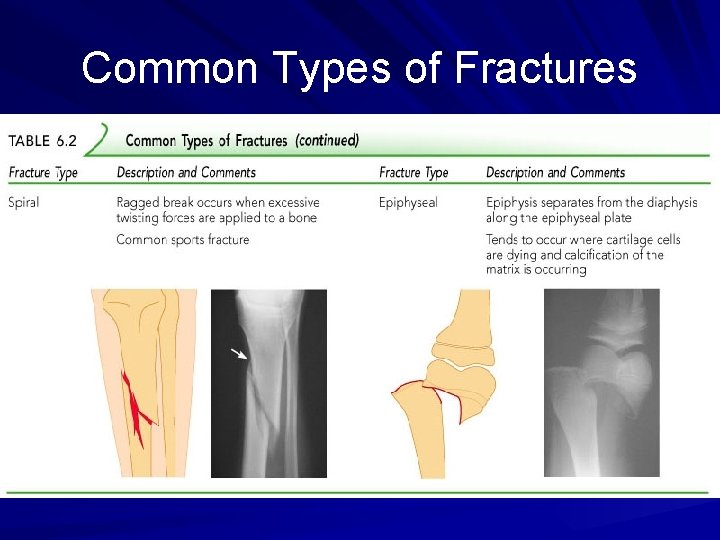
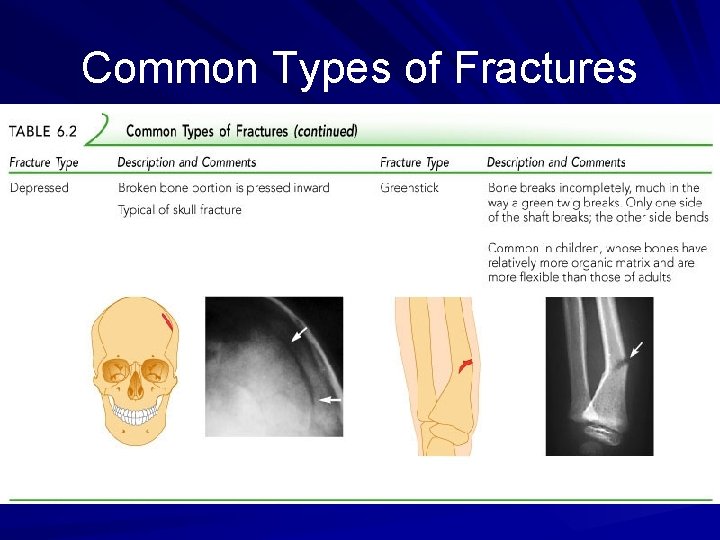
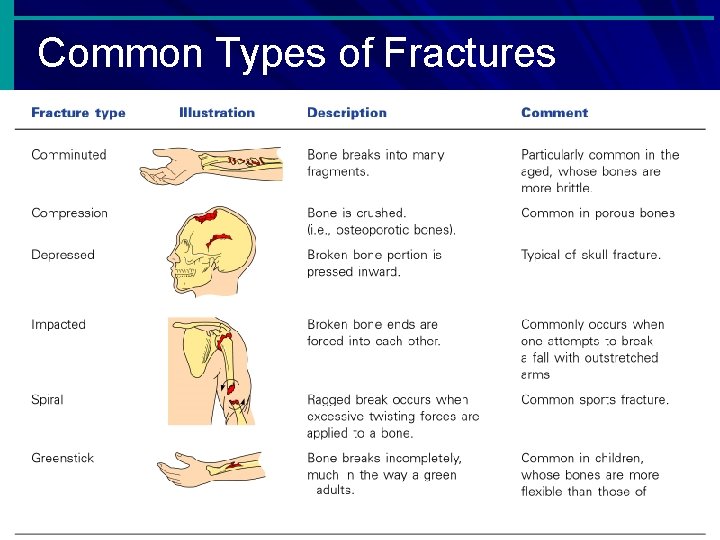
Common Types of Fractures
Common Types of Fractures
Common Types of Fractures
Common Types of Fractures Table 5. 2 Copyright © 2003 Pearson Education, Inc. publishing as Benjamin Cummings Slide 5. 17
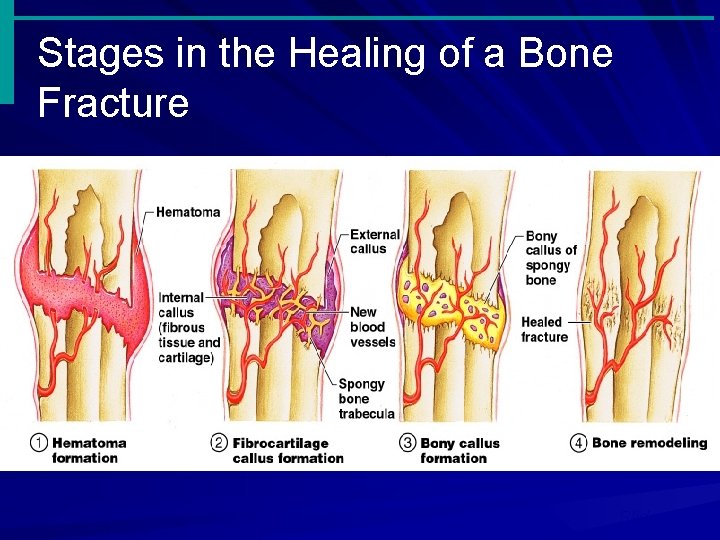
Stages in the Healing of a Bone Fracture Figure 5. 5 Slide 5. 19
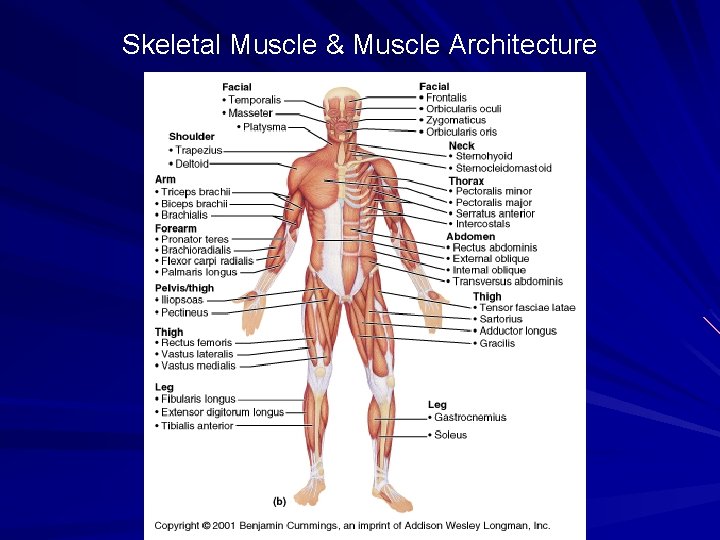
Skeletal Muscle & Muscle Architecture
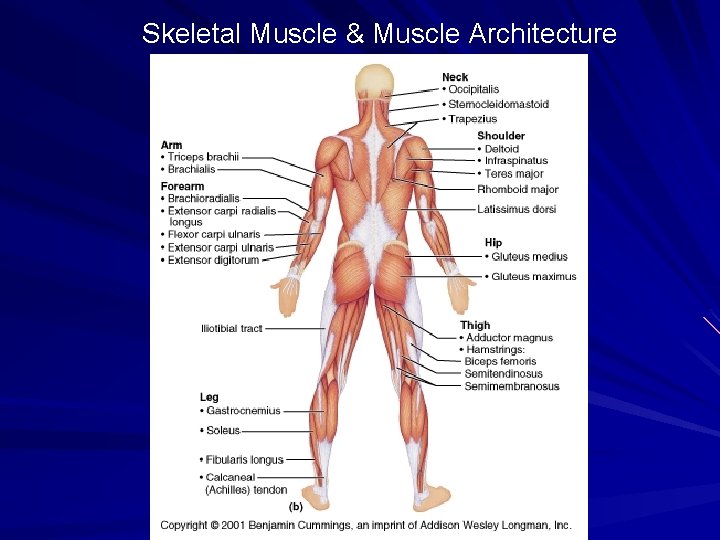
Skeletal Muscle & Muscle Architecture
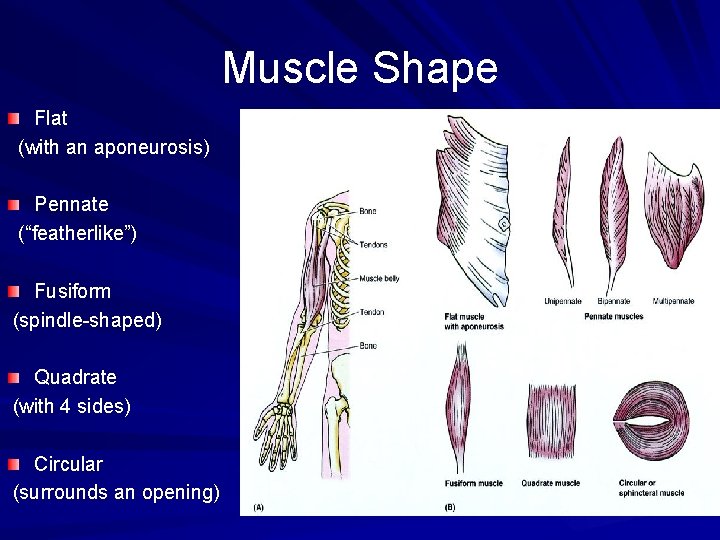
Muscle Shape Flat (with an aponeurosis) Pennate (“featherlike”) Fusiform (spindle-shaped) Quadrate (with 4 sides) Circular (surrounds an opening)
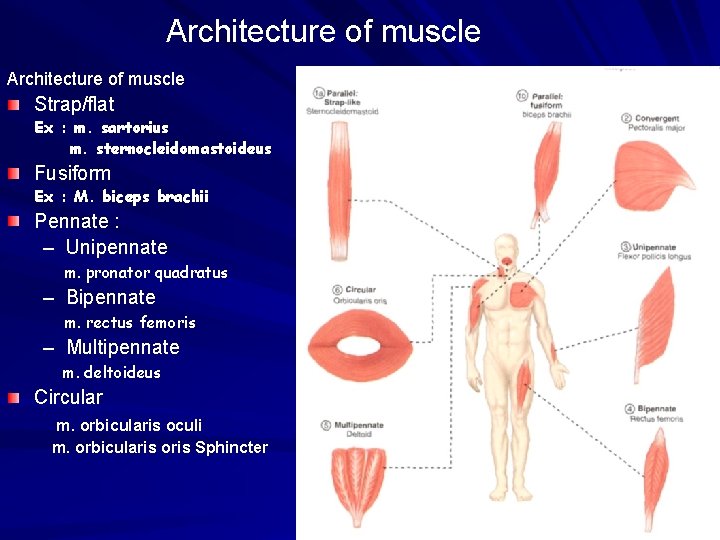
Architecture of muscle Strap/flat Ex : m. sartorius m. sternocleidomastoideus Fusiform Ex : M. biceps brachii Pennate : – Unipennate m. pronator quadratus – Bipennate m. rectus femoris – Multipennate m. deltoideus Circular m. orbicularis oculi m. orbicularis oris Sphincter
TERIMA KASIH