
Penetrating so many secrets we cease to believe
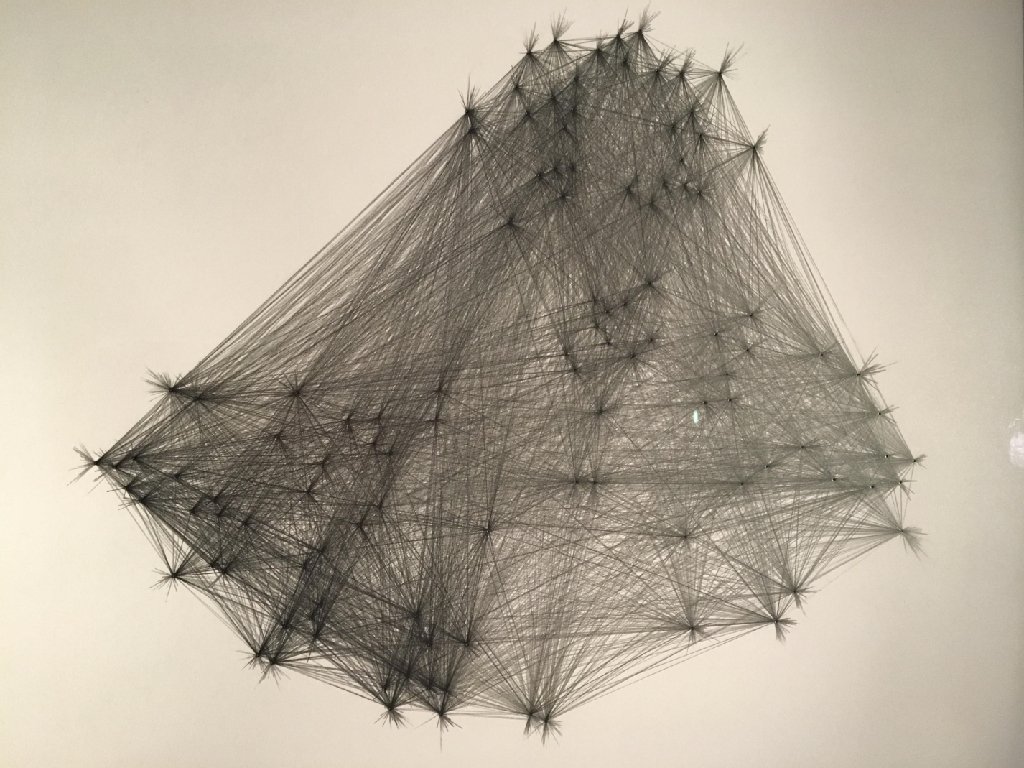
‘Penetrating so many secrets, we cease to believe in the unknowable. But there it sits nevertheless, calmly licking its chops’ H. L. Menken

New Pressures
‘We know that there are unknowns, there are things we know. We also know there are known unknowns, that is to say we know there are some things we do not know. But there also unknowns – the ones we don’t know’.
We live in a world of complexity We no longer live in a simplistic world Yet we still apply simplistic leadership and management thinking We repeat the same behaviours but expect different results
Traditional Systems “Traditional pyramidal structures demand too much of too few and not enough of everyone else. ”
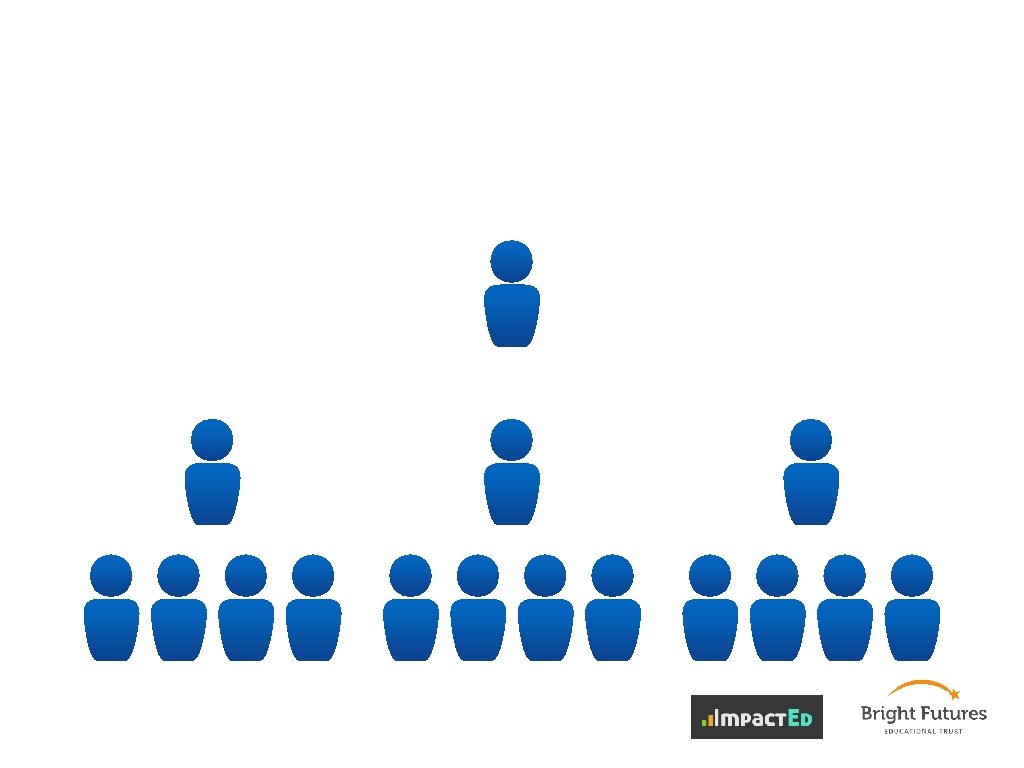
Hierarchical structures

Collaborative Appraisal
‘Never doubt that a small group of thoughtful, committed citizens can change the world; indeed, it's the only thing that ever has’
A Story ‘Out with the old, in with the new’

…. it started with a phone call
…. what we did and what we found out
• Over 100 staff over 3 schools • A mixture of qualitative (interviews/observations) and quantitative (validated questionnaires) • Statistically significant increases in: • • Sense of community • Openness Consistent across roles, supported by observational and qualitative evidence Written report: tiny. cc/collabappraisal Profiled by Df. E (#3): tiny. cc/collabappraisal 1

So, why aren’t all schools doing this?

Pros and Cons
Continuing research We’re looking to expand share our ideas with a broader network of schools. Get in touch at: owen. carter@impacted. org. uk ghandforth@bfet. uk
Learning Organisations To improve individual and organisational learning, we need to develop systems of professional practice, collecting both quantitative and qualitative data. These systems need to be based on knowledge sharing and a cycle of acquiring and exchanging, and of creating and reflecting in order to shape new practice and improve performance and positively influence the schools and our organisation.
‘Our ideas and sensibilities about change come from the world of Newton. We treat a problematic organization as if it were a machine that had broken down. We use reductionism to diagnose the problem; we expect to find a simple, singular cause for our woes. We sift through all the possible causes of failure, searching for that one broken part- a bad manager, a dysfunctional team, a poor department. To repair the organization, all we need to do is to replace the faulty part and gear back up to operate at predetermined performance levels’ Margaret Wheatley Leadership and the New Science
Collaboration Collaborative learning fosters shared understanding, better information retention, and deeper processing Garrison et al. , (2001) Johnson et al. 1981 Slavin. , (1992)
Collaboration ‘a feeling that members have of belonging, a feeling that members matter to one another and to the group, and a shared faith that members’ needs will be met through their commitment to be together’ Mc. Millan and Chavis (1986)
Collaboration Collaborative learning can promote higher-order learning such as critical thinking Anderson et al. 2001; Gokhale 1995; Meyer 2003; Webb 1989
Collaboration ‘Positive outcomes from a sense of community may develop the flow of information, support networks, genuine commitment towards common goals, foster cooperation and individual well-being and satisfaction’ Bruffee (1993)
- Slides: 23