
Penetrating Chest Wounds Pneumothorax Tension Pneumothorax and Hemothorax










- Slides: 34
Penetrating Chest Wounds, Pneumothorax, Tension Pneumothorax and Hemothorax Gary L. Weinstein M. D. Director of Pulmonary and Critical Care Medicine Presbyterian Hospital of Dallas September 14, 2006
Normal Physiology Breathing • Inspiration – – The diaphragm contracts and moves downward enlarging the chest cavity – And the rib muscles contract, widening the chest cavity causing air to fill the lungs through suction. • Expiration- The diaphragm and rib muscles then relax, decreasing the chest size and forcing air out of the lungs.
Normal Physiology Chest Wall Pleural Space Diaphragm
Penetrating Chest Wounds • Anything that disrupts these normal relationships can cause problems – A hole in the chest, lets air collect in the pleural space
Causes… Causes
Causes…
Causes…
Causes…
Pneumothorax Pleura Diaphragm Pleura
Pneumothorax • Pneumothorax - air gets between your lungs and your chest wall and the lung collapses. • Normally, two thin layers of tissue (pleura) separate the lung and chest wall. • Any air that leaks into this space (pleural space) will cause the lung to collapse. .
Pneumothorax • Air can collect inside the chest for many reasons, such as: – An injury that damages the chest wall, such as a stab or gunshot wound – A broken rib that punctures the lung
Pneumothorax • Signs and symptoms of a pneumothorax include: – Sudden, sharp chest pain – Shortness of breath – Chest tightness – Rapid pulse – Rapid, shallow breaths
Pneumothorax • A pneumothorax is a serious condition that can be life-threatening.
Tension Pneumothorax
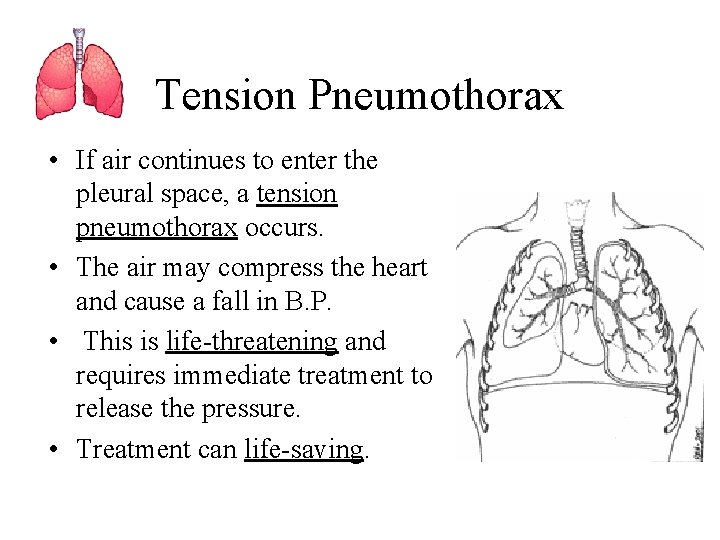
Tension Pneumothorax • If air continues to enter the pleural space, a tension pneumothorax occurs. • The air may compress the heart and cause a fall in B. P. • This is life-threatening and requires immediate treatment to release the pressure. • Treatment can life-saving.
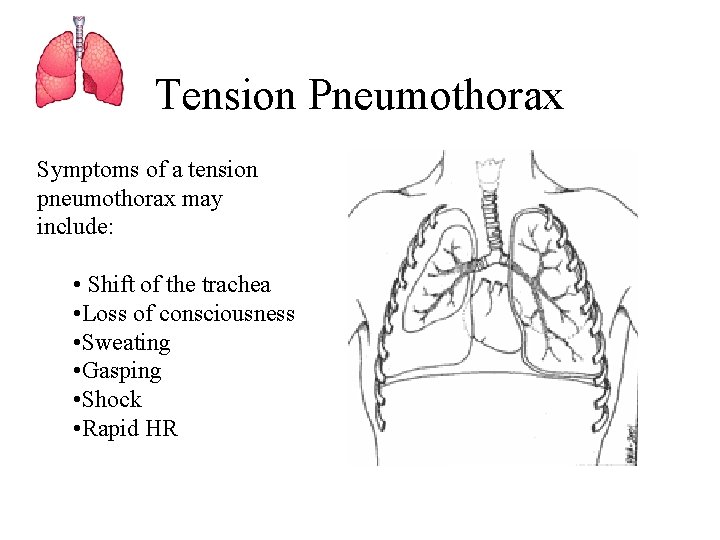
Tension Pneumothorax Symptoms of a tension pneumothorax may include: • Shift of the trachea • Loss of consciousness • Sweating • Gasping • Shock • Rapid HR
Hemothorax • Blood can also collect in the pleural space and cause all the same signs and symptoms and problems as a pneumothorax including a tension hemothorax
Classical physical examination findings: The size of the injury, and position of the patient will affect the clinical findings. For example, a small hemothorax may have no clinical signs at all. A moderate hemothorax will be dull to percussion with absent breath sounds at the bases in the erect patient, whereas signs will be posterior in the supine patient. This is also reflected in chest X-ray findings.
Assesment of patient with Blunt or Penetrating chest trauma Look • Determine the respiratory rate and depth Look for chest wall asymmetry. Paradoxical chest wall motion Look for bruising, seat belt or steering wheel marks, penetrating wounds Feel • Feel the trachea for deviation Assess whethere is adequate and equal chest wall movement Feel for chest wall tenderness or rib 'crunching' indicating rib fractures Feel for subcutaneous emphysema Listen • Listen for normal, equal breath sounds on both sides. Listen especially in the apices and axillae and at the back of the chest (or as far as you can get while supine). Percuss • Percuss both sides of the chest looking for dullness or resonance (more difficult to appreciate in the trauma room).
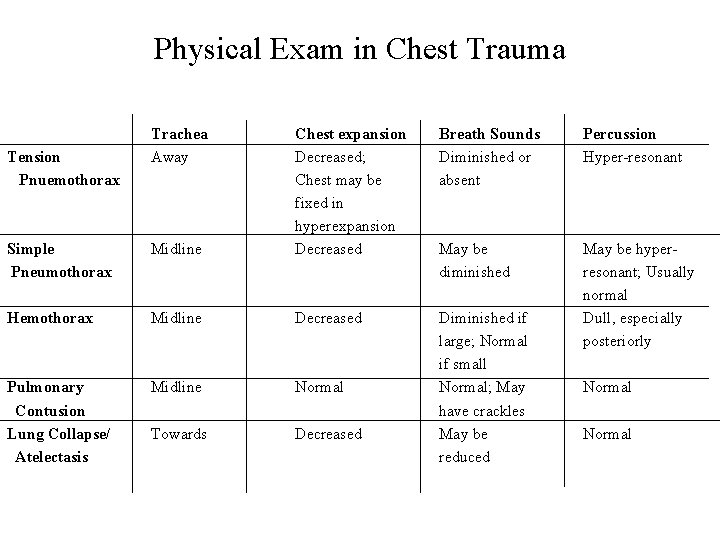
Physical Exam in Chest Trauma Simple Pneumothorax Midline Chest expansion Decreased; Chest may be fixed in hyperexpansion Decreased Hemothorax Midline Decreased Pulmonary Contusion Lung Collapse/ Atelectasis Midline Normal Towards Decreased Tension Pnuemothorax Trachea Away Breath Sounds Diminished or absent Percussion Hyper-resonant May be diminished Diminished if large; Normal if small Normal; May have crackles May be reduced May be hyperresonant; Usually normal Dull, especially posteriorly Normal
Hemothorax, supine Hemothorax, upright
Simple Pneumothorax
Tension Pneumothorax
Examples Stab wounds to back Open pneumothorax
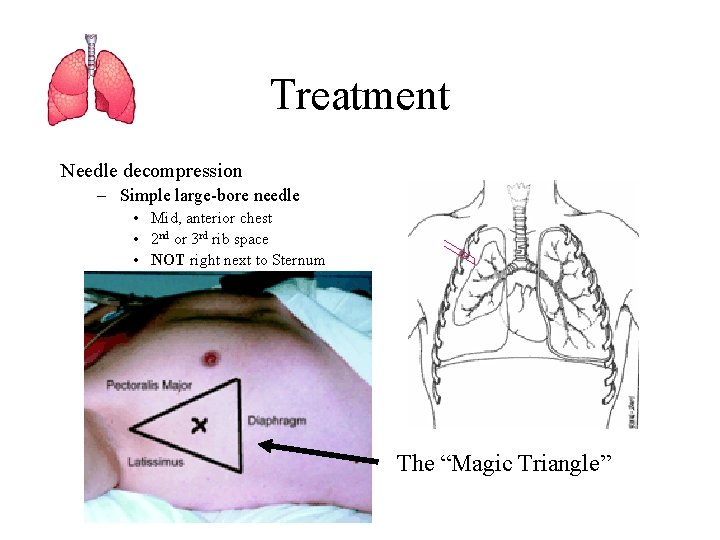
Treatment Needle decompression – Simple large-bore needle • Mid, anterior chest • 2 nd or 3 rd rib space • NOT right next to Sternum The “Magic Triangle”
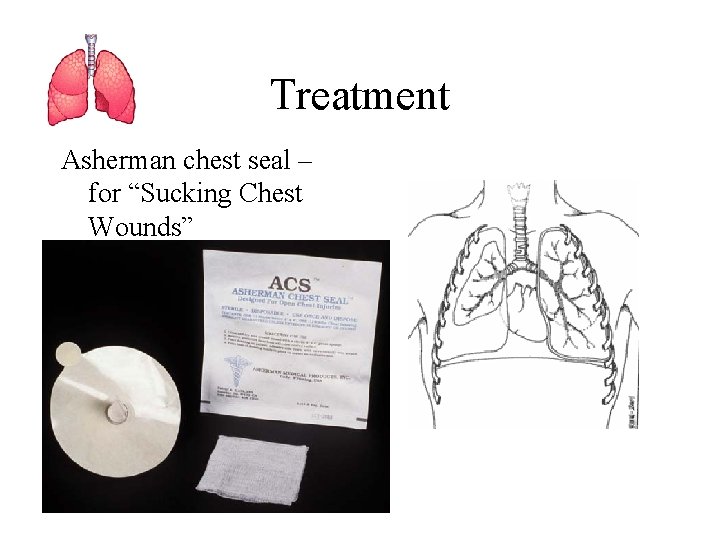
Treatment Asherman chest seal – for “Sucking Chest Wounds”
Treatment Asherman chest seal – convert sucking chest wounds to simple pneumo/hemothorax
Treatment Needle decompression – Cook Pneumothorax set
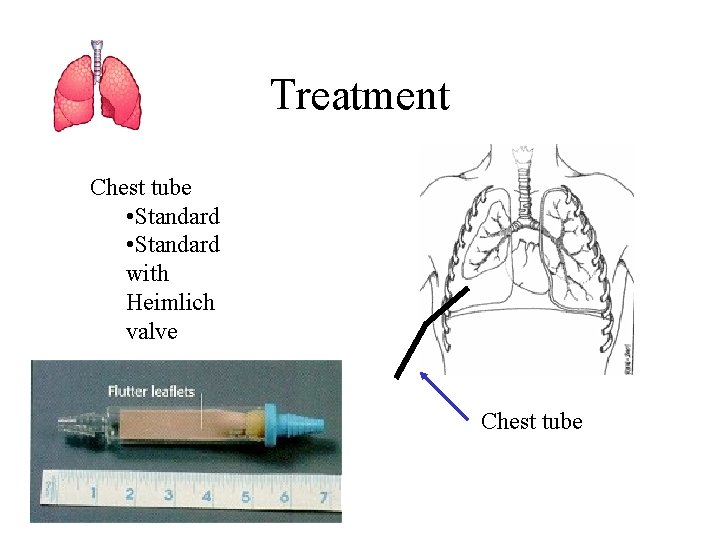
Treatment Chest tube • Standard with Heimlich valve Chest tube
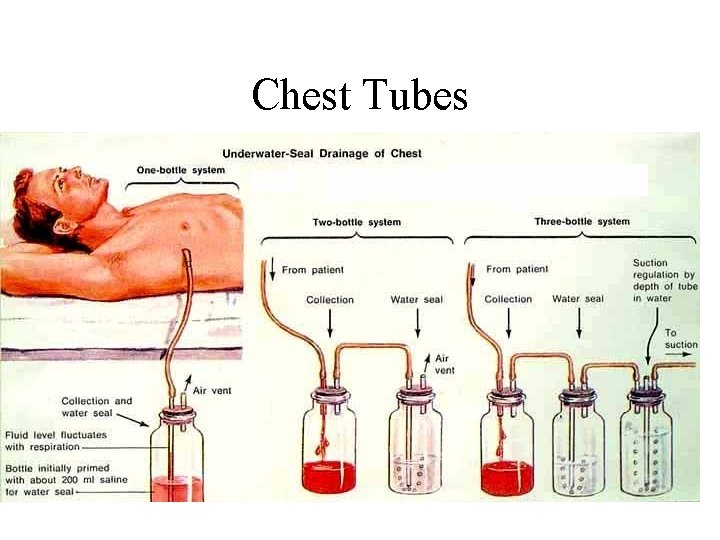
Chest Tubes
Suction Systems A - Suction Port/Connection C - Water Seal Fill Port G - Suction Setting IJ - Collection Chamber K - Suction Indicator L - Chest Tube Connector
Take Home Points • Simple Pneumothorax/Hemothorax should be expected with penetrating chest wounds and rarely kills • Tension pneumothorax can occur rapidly • Tension pneumothorax can KILL rapidly • Treatment SAVES lives • Needle decompression will never harm and may SAVE A LIFE!!
Questions? ? ? Drs Kumar and Weinmeister want everyone to come to their homes tonight for Food, Drink, And to take whatever they want!!!!