
Pemodelan Proses Bisnis BPM Life Cycle Pertemuan 2
Pemodelan Proses Bisnis BPM Life Cycle Pertemuan 2 Dosen Pengampu: Alivia Yulfitri (2017) Prodi Sistem Informasi - Fakultas Ilmu Komputer
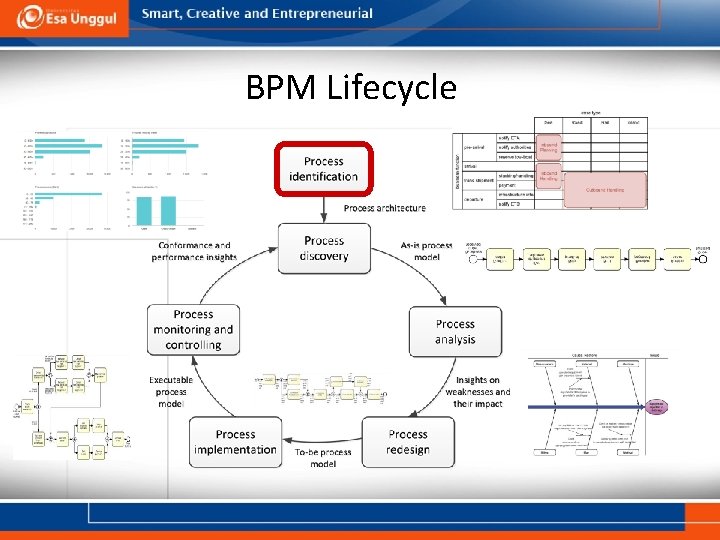
BPM Lifecycle

Process Identification What? 1. Define an organization’s business processes 2. Establish criteria to prioritize the management of these processes Why? 1. Understand the organization 2. Maximize value of BPM initiatives Output: Process Architecture

Process Identification Steps 1. Designation phase – Enumerate main processes – Determine process scope: boundaries (horizontal and vertical) and interrelationships (order and hierarchical) 2. Evaluation phase (a. k. a. Process Selection) Evaluate processes’ – Alignment with strategic objectives – Health (e. g. performance, compliance, After Davenport (1993)

Process Enumeration • There is no “number fits all” - it really depends on organization’s domain and size • Trade-off: – ensuring process scope is manageable, since – process scope determines potential impact 5

Process Scoping • Processes are interdependent Insights into interrelations required – Horizontal: upstream – downstream processes – Vertical: root (a. k. a. main) processes – subprocesses • Processes change over time – identification should be exploratory and iterative Process Architecture – improvement opportunities are time-constrained

Process Architecture
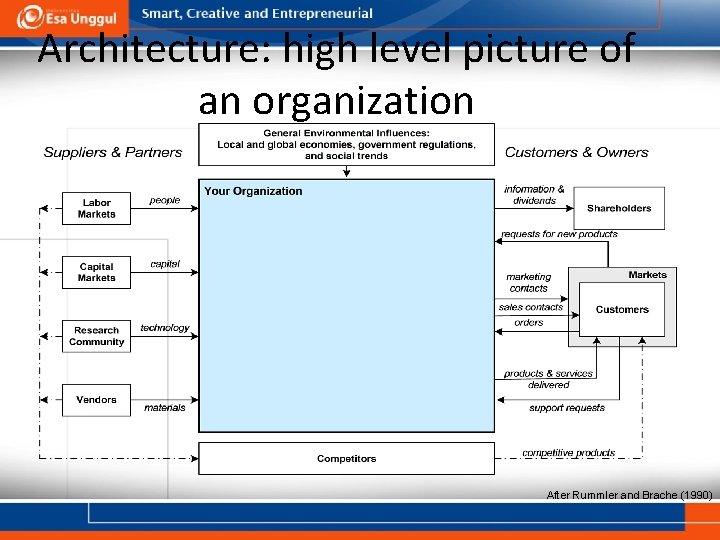
Architecture: high level picture of an organization After Rummler and Brache (1990)
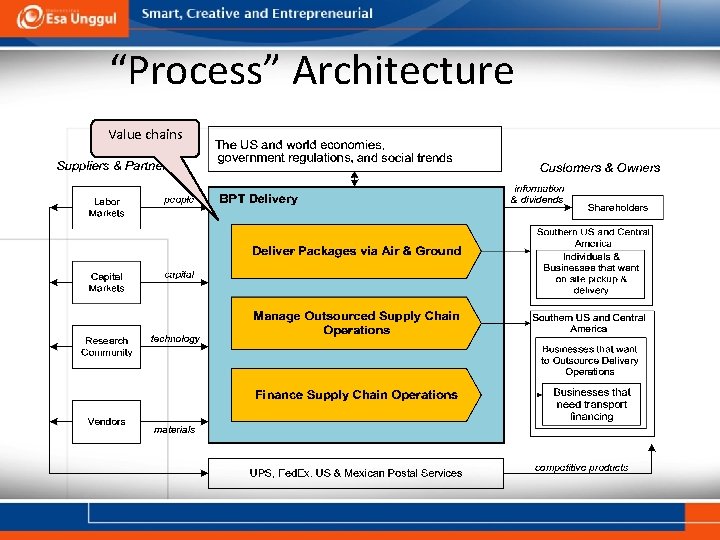
“Process” Architecture Value chains
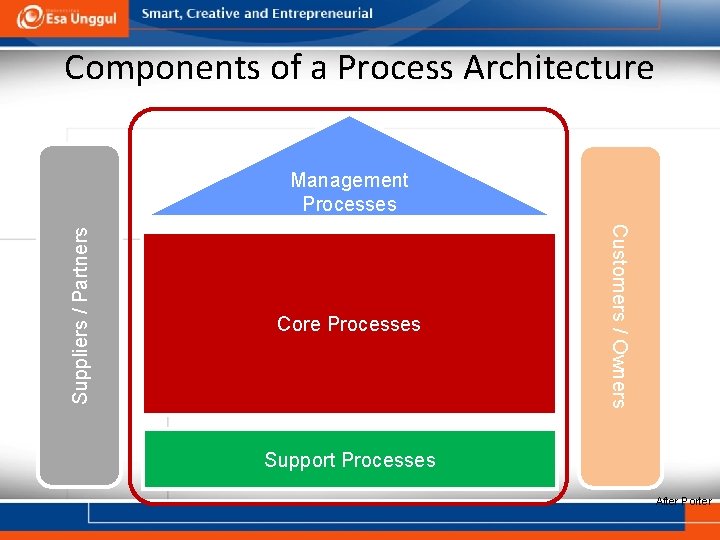
Components of a Process Architecture Core Processes Customers / Owners Suppliers / Partners Management Processes Support Processes After Porter
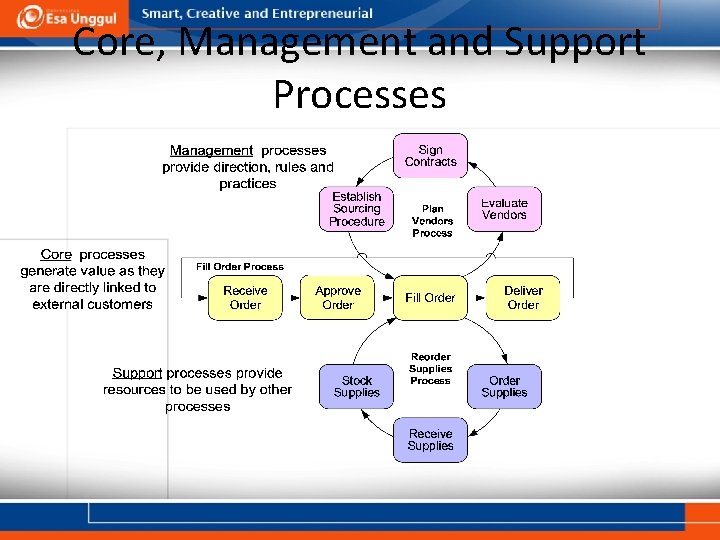
Core, Management and Support Processes
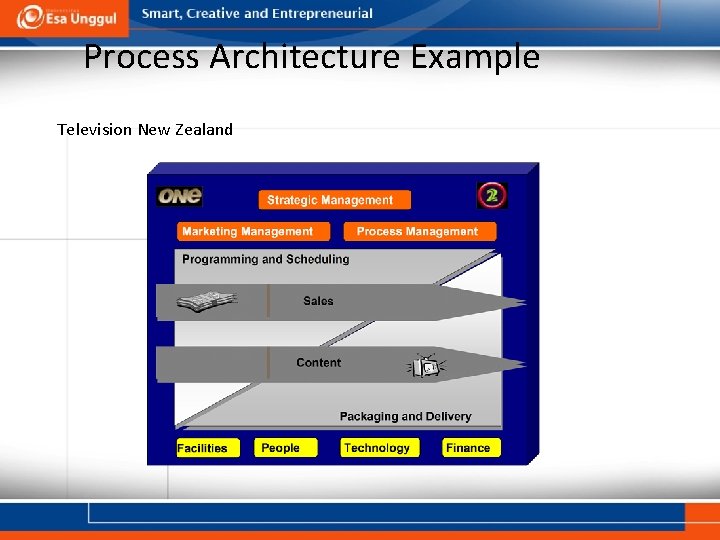
Process Architecture Example Television New Zealand
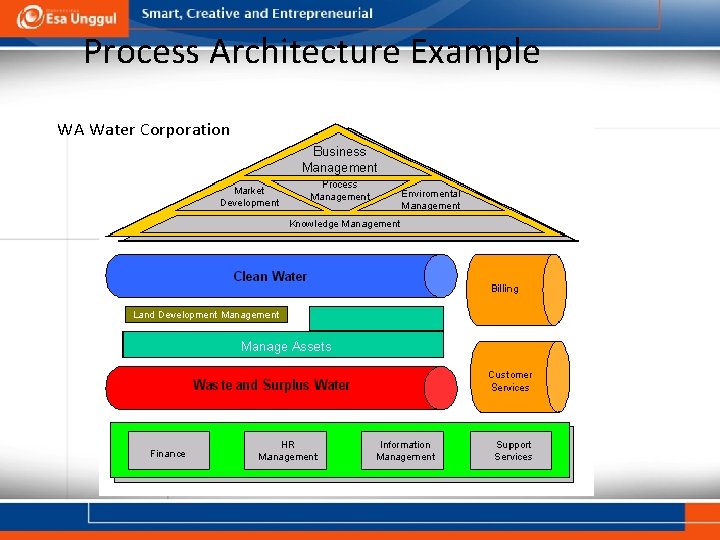
Process Architecture Example WA Water Corporation
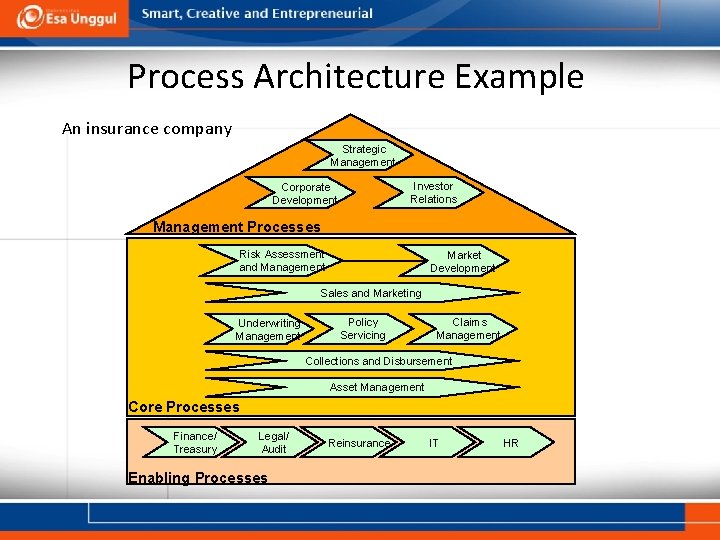
Process Architecture Example An insurance company Strategic Management Investor Relations Corporate Development Management Processes Risk Assessment and Management Market Development Sales and Marketing Underwriting Management Policy Servicing Claims Management Collections and Disbursement Asset Management Core Processes Finance/ Treasury Legal/ Audit Enabling Processes Reinsurance IT HR
Various techniques to scope a process • Identify relevant stakeholders and objectives, e. g. via a Stakeholder-Objectives Matrix • Identify relevant context, e. g. via a SIPOC (Suppliers, Inputs, Process, Output, Customers) Diagram • Identify relevant process boundaries, e. g. via a Case/Function Matrix
Identify Process Stakeholders – Process owner, responsible for the effective and efficient operation of the process being modeled – Primary process participants, i. e. those who are directly involved in the execution of the process under analysis – Secondary process participants, i. e. those who are directly involved in the execution of the preceding or succeeding processes
Identify Process Objectives • Primary (hard) process objectives – Time, cost, quality (minimise, maximise) – satisfaction, compliance, flexibility, predictability • Secondary process objectives – To purchase goods, to hire new staff members • Accompany with appropriate process metrics
Guidelines to identify horizontal boundaries 1. Change of flow object in the process 2. Change of multiplicity of flow object in the process 3. Change of transactional state 4. Process contains logical separation in time 5. Process contains logical separation in space 6. Process contains logical separation in other dimension 7. Follow scope in reference model (see later)
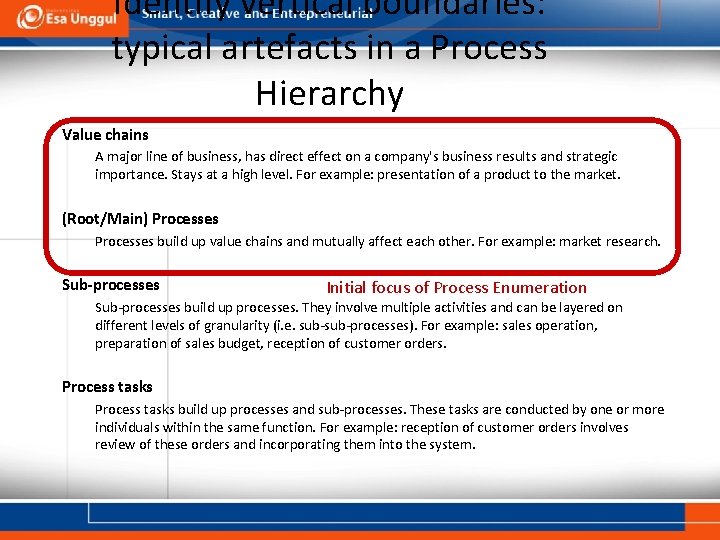
Identify vertical boundaries: typical artefacts in a Process Hierarchy Value chains A major line of business, has direct effect on a company's business results and strategic importance. Stays at a high level. For example: presentation of a product to the market. (Root/Main) Processes build up value chains and mutually affect each other. For example: market research. Sub-processes Initial focus of Process Enumeration Sub-processes build up processes. They involve multiple activities and can be layered on different levels of granularity (i. e. sub-processes). For example: sales operation, preparation of sales budget, reception of customer orders. Process tasks build up processes and sub-processes. These tasks are conducted by one or more individuals within the same function. For example: reception of customer orders involves review of these orders and incorporating them into the system.
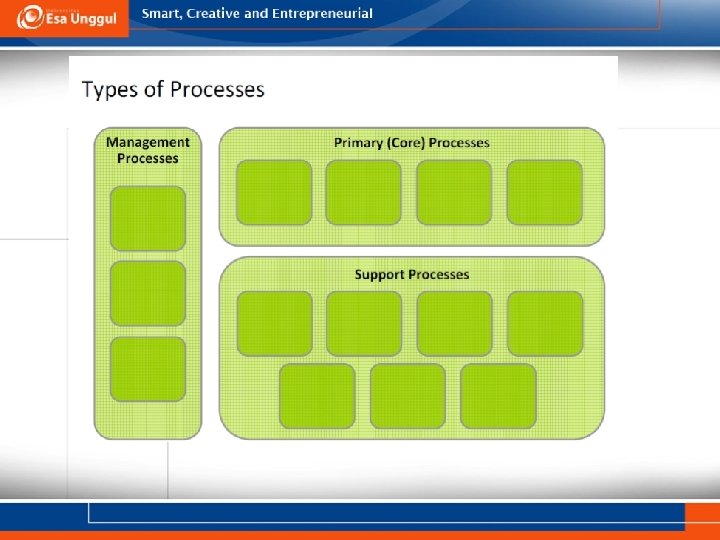
Primary Processes • • Primary processes are end-to-end, cross-functional processes which directly deliver value Represent the essential activities an organisation performs to fulfill its mission Make up the value chain where each step adds value to the preceding step as measured by its contribution to the creation or delivery of a product or service, ultimately delivering value Primary processes can move across functional organisations, across departments or even between enterprises and provide a complete end-to-end view of value creation
Support Processes • • Support primary processes, often by managing resources and/or infrastructure required by primary processes Differentiator is that support processes do not directly deliver value − Does not mean that they are unimportant to an organisation • • Examples of support processes include information technology management, facilities or capacity management and human resource management Support processes are generally associated with functional areas − Can and often do cross functional boundaries
Management Processes • Used to measure, monitor and control business activities • Ensure that a primary or supporting process meets operational, financial, regulatory and legal goals • Do not directly add value • Necessary in order to ensure the organisation operates effectively and efficiently
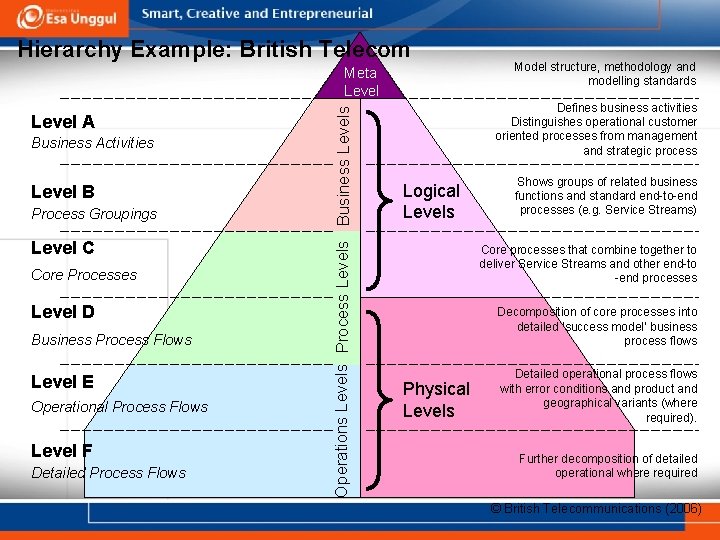
Hierarchy Example: British Telecom Level A Business Activities Level B Process Groupings Level C Core Processes Level D Business Process Flows Level E Operational Process Flows Level F Detailed Process Flows Operations Levels Process Levels Business Levels Meta Level Model structure, methodology and modelling standards Defines business activities Distinguishes operational customer oriented processes from management and strategic process Logical Levels Shows groups of related business functions and standard end-to-end processes (e. g. Service Streams) Core processes that combine together to deliver Service Streams and other end-to -end processes Decomposition of core processes into detailed ‘success model’ business process flows Physical Levels Detailed operational process flows with error conditions and product and geographical variants (where required). Further decomposition of detailed operational where required © British Telecommunications (2006)
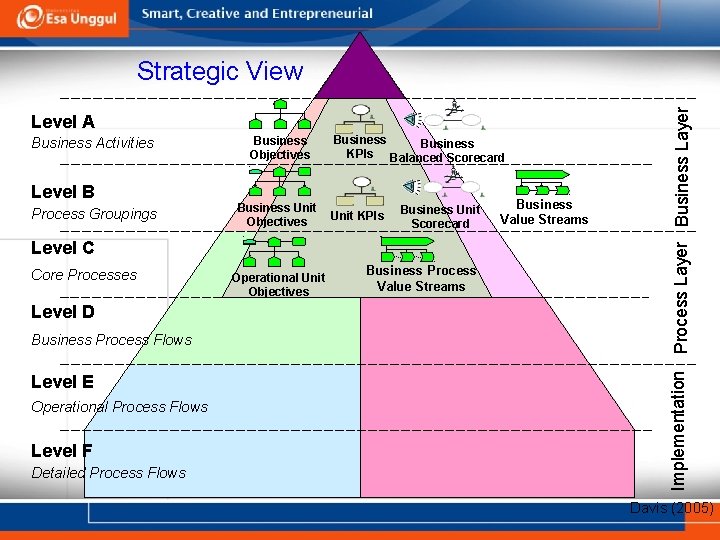
Level A Business Activities Level B Process Groupings Business Objectives Business Unit Objectives Business KPIs Balanced Scorecard Unit KPIs Business Unit Scorecard Level C Core Processes Level D Business Process Flows Level E Operational Process Flows Level F Detailed Process Flows Operational Unit Objectives Business Process Value Streams Business Value Streams Implementation Process Layer Business Layer Strategic View Davis (2005)
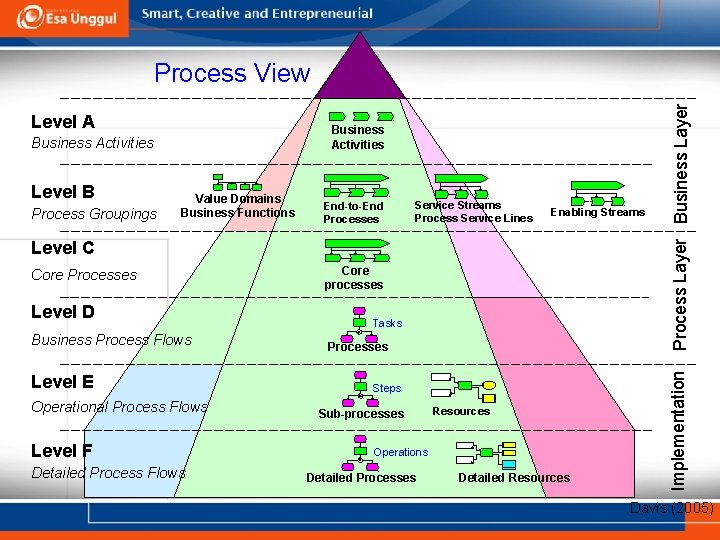
Level A Business Activities Level B Process Groupings Value Domains Business Functions End-to-End Processes Service Streams Process Service Lines Enabling Streams Level C Core Processes Level D Business Process Flows Level E Operational Process Flows Level F Detailed Process Flows Core processes Tasks Processes Steps Sub-processes Resources Operations Detailed Processes Detailed Resources Implementation Business Activities Process Layer Business Layer Process View Davis (2005)
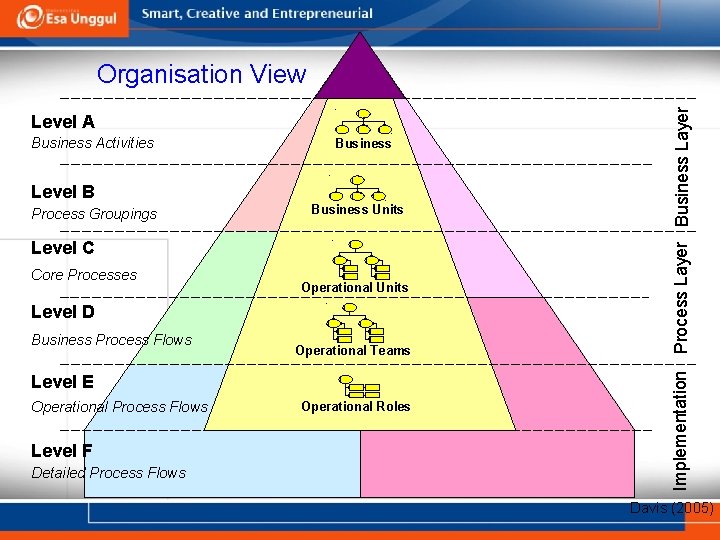
Level A Business Activities Business Level B Process Groupings Business Units Level C Core Processes Operational Units Level D Business Process Flows Operational Teams Level E Operational Process Flows Level F Detailed Process Flows Operational Roles Implementation Process Layer Business Layer Organisation View Davis (2005)
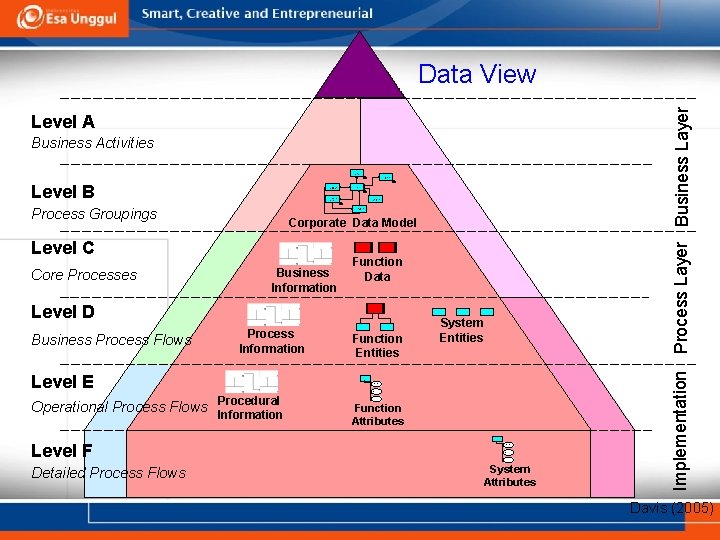
Level A Business Activities Cust contact cn Level B 1 Cust 1 1 Customer Account Customer Inquiry Process Groupings 1 1 n 1 1 Customer Offer 1 1 Customer credit limit n 1 Corporate Data Model Level C Core Processes n 1 1 Customer budget Business Information Function Data Level D Business Process Flows Process Information Level E Procedural Operational Process Flows Information Level F Detailed Process Flows Function Entities System Entities Phone # department Title Function Attributes Phone # department Title System Attributes Implementation Process Layer Business Layer Data View Davis (2005)
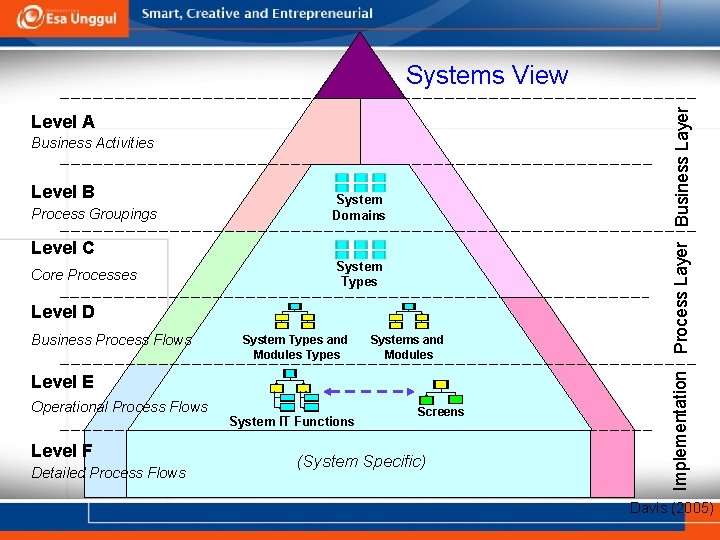
Level A Business Activities Level B Process Groupings System Domains Level C Core Processes System Types Level D Business Process Flows System Types and Modules Types Systems and Modules Level E Operational Process Flows Level F Detailed Process Flows System IT Functions Screens (System Specific) Implementation Process Layer Business Layer Systems View Davis (2005)
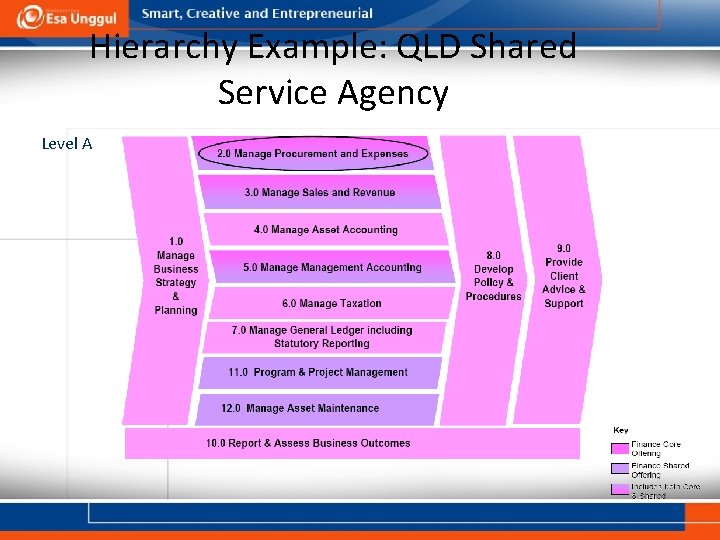
Hierarchy Example: QLD Shared Service Agency Level A
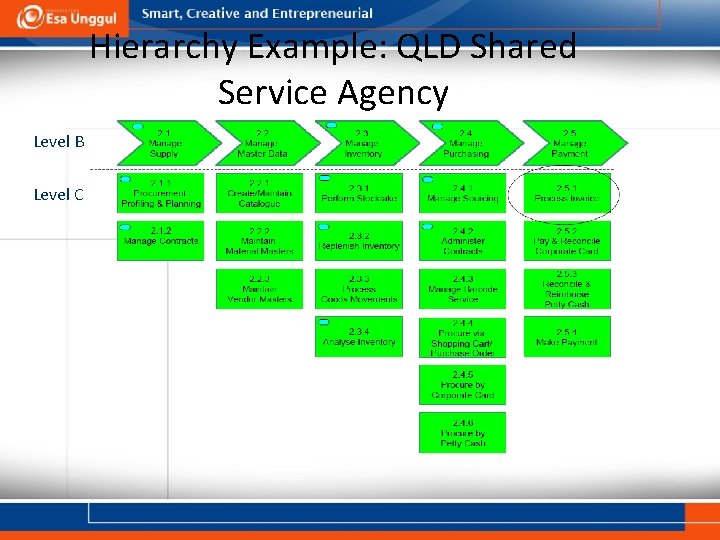
Hierarchy Example: QLD Shared Service Agency Level B Level C
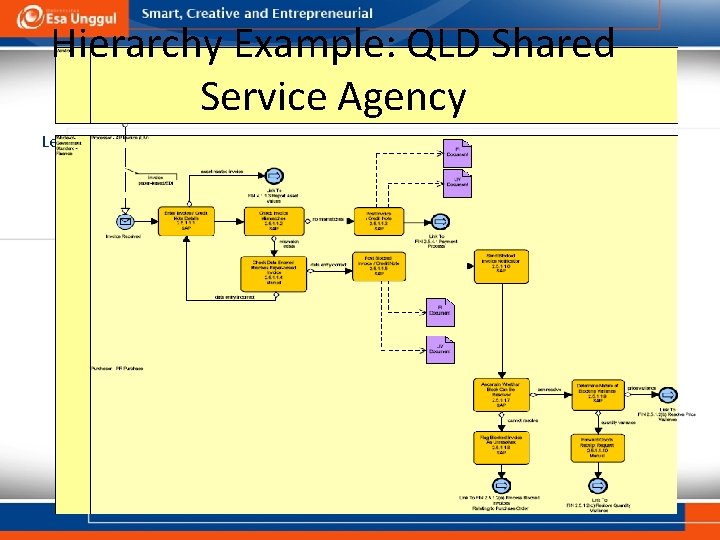
Hierarchy Example: QLD Shared Service Agency Level D
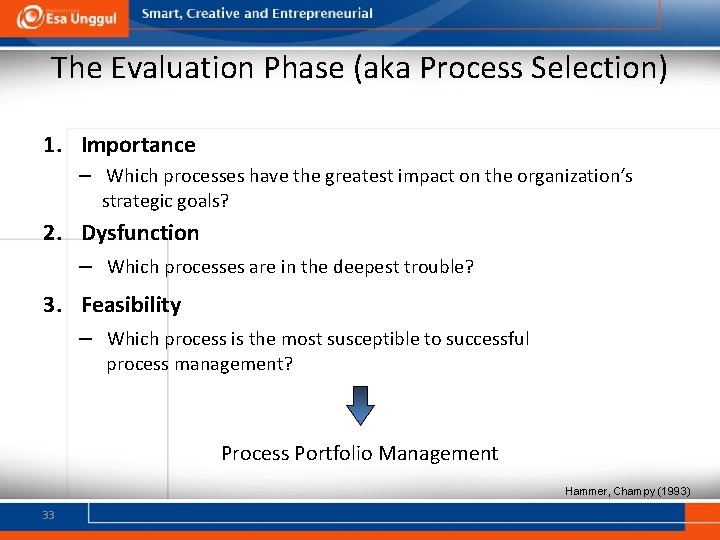
The Evaluation Phase (aka Process Selection) 1. Importance – Which processes have the greatest impact on the organization‘s strategic goals? 2. Dysfunction – Which processes are in the deepest trouble? 3. Feasibility – Which process is the most susceptible to successful process management? Process Portfolio Management Hammer, Champy (1993) 33
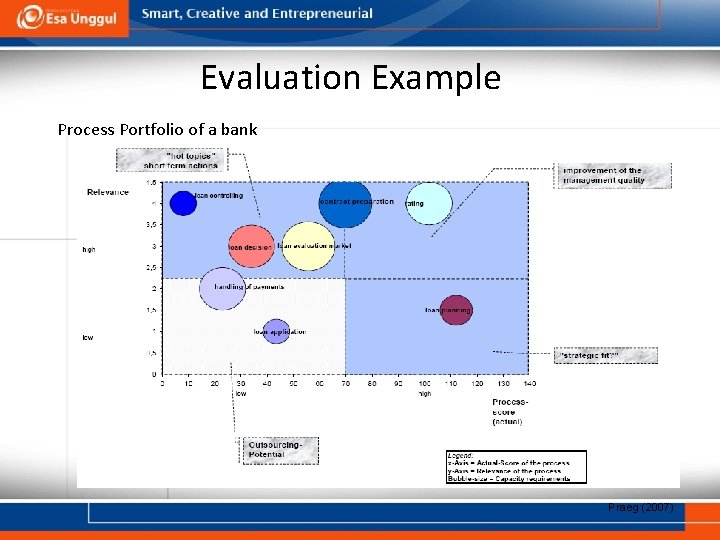
Evaluation Example Process Portfolio of a bank Praeg (2007)
References Required • Chapter 2 of textbook “Fundamentals of BPM” Recommended • T. H. Davenport, “Process Innovation: Reengineering Work Through Information Technology”, Harvard Business School Press, 1993 • M. Hammer, J. Champy, “Reengineering the Corporation: A Manifesto for Business Revolution”, Harper. Collins, 1993 • M. E. Porter, “Competitive Advantage: Creating and Sustaining Superior Performance”, Free Press, 1985 • M. Rosemann, “Process Portfolio Management”, BPTrends, April 2006 • R. Dijkman, I. Vanderfeesten, H. A. Reijers, “The road to a business process architecture: an overview of approaches and their use”. BETA Working Paper Series, WP 350. Eindhoven University of Technology, Eindhoven (2011) Web-sites • http: //www. value-chain. org (Value Reference Model) • http: //www. mindtools. com/pages/article/new. STR_66. htm (more on value chains) • http: //www. apqc. org/process-classification-framework (APQC PCF website)

- Slides: 36