
Pembrolizumab for adjuvant treatment of resected melanoma with
![Pembrolizumab for adjuvant treatment of resected melanoma with high risk of recurrence [ID 1266]–](https://slidetodoc.com/presentation_image_h2/0222ab5d3cbe456e108dca30873c82bc/image-1.jpg "Pembrolizumab for adjuvant treatment of resected melanoma with high risk of recurrence [ID 1266]–")
Pembrolizumab for adjuvant treatment of resected melanoma with high risk of recurrence [ID 1266]– STA Lead team presentation: Background and Clinical Effectiveness 1 st Appraisal Committee meeting Committee A Lead team: Jane Adam, Pam Rees, Steve Edwards ERG: Liverpool Reviews and Implementation Group (LRi. G) NICE technical team: Emily Eaton Turner, Victoria Kelly September 2018 © NICE 2018. All rights reserved. Subject to notice of rights. The content in this publication is owned by multiple parties and may not be re-used without the permission of the relevant copyright owner.
Preview: Clinical effectiveness issues (1) • Does pembrolizumab change the treatment pathway – Does it affect the subsequent use or effectiveness of immunotherapy in the metastatic setting? • Is the committee satisfied with the definition of high risk of recurrence? – In KEYNOTE-054 patients had either Stage IIIA (>1 mm metastasis), IIIB or IIIC disease with no in-transit metastases as defined by the American Joint Committee on Cancer 2009 classification, 7 th edition – The company has suggested that 90% will develop metastatic disease within 5 years - is this correct? (lower figures have been quoted previously) • Do the baseline characteristics of patients in KEYNOTE-054 match those in the NHS? – Practice not uniform in terms of resection within Stage III melanoma & the staging of melanoma has changed – Patients in KEYNOTE-054 had lower ECOG performance scores (all 0 or 1) 2
Preview: Clinical effectiveness issues (2) • What conclusions can be drawn about recurrence-free survival (RFS)? – KEYNOTE-054 data is limited to 16 months follow up median RFS for pembrolizumab not reached – Proportional hazards assumption may not hold is it reasonable to assume RFS is an appropriate surrogate outcome for overall survival? • Does pembrolizumab have a tolerable safety profile, both short and long term in patients with no known disseminated disease? 3
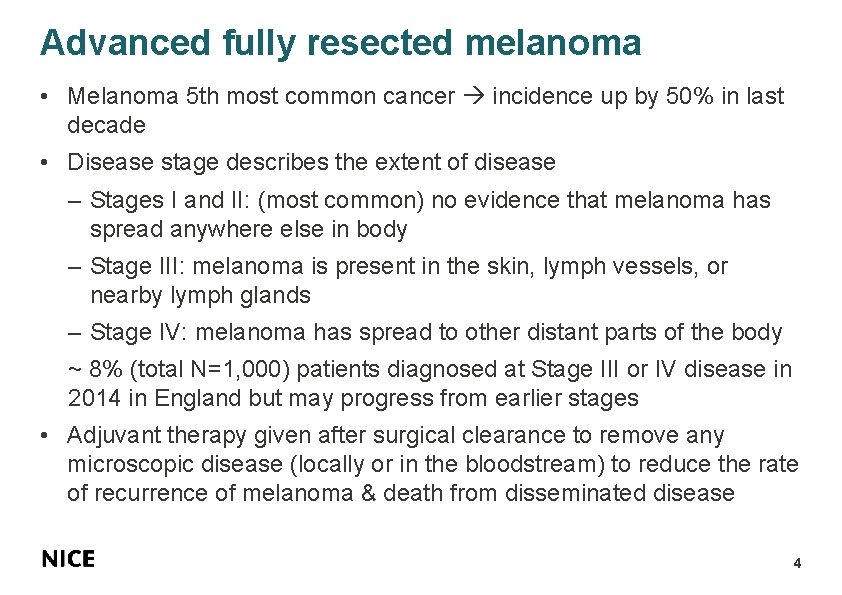
Advanced fully resected melanoma • Melanoma 5 th most common cancer incidence up by 50% in last decade • Disease stage describes the extent of disease – Stages I and II: (most common) no evidence that melanoma has spread anywhere else in body – Stage III: melanoma is present in the skin, lymph vessels, or nearby lymph glands – Stage IV: melanoma has spread to other distant parts of the body ~ 8% (total N=1, 000) patients diagnosed at Stage III or IV disease in 2014 in England but may progress from earlier stages • Adjuvant therapy given after surgical clearance to remove any microscopic disease (locally or in the bloodstream) to reduce the rate of recurrence of melanoma & death from disseminated disease 4

CONFIDENTIAL Pembrolizumab Mechanism of action Monoclonal antibody of the Ig. G 4/kappa isotype designed to exert a dual ligand blockade of the PD -1 pathway Anticipated marketing authorisation XXXXXXXXXXXXXXXXXXXXXXXXXXXXXXXXX XXXXXXXXXXXXX Administration, dosage & duration of treatment Intravenous, 200 mg every 3 weeks for 1 year Cost (list price) £ 2, 630 per 100 mg vial. Average cost of a course of treatment: XXXXXXX (list price). A commercial access agreement has been arranged with NHS England Other NICE recommendations/ appraisals Nivolumab for adjuvant treatment of resected stage III and IV melanoma [ID 1316]: publication date TBC 5
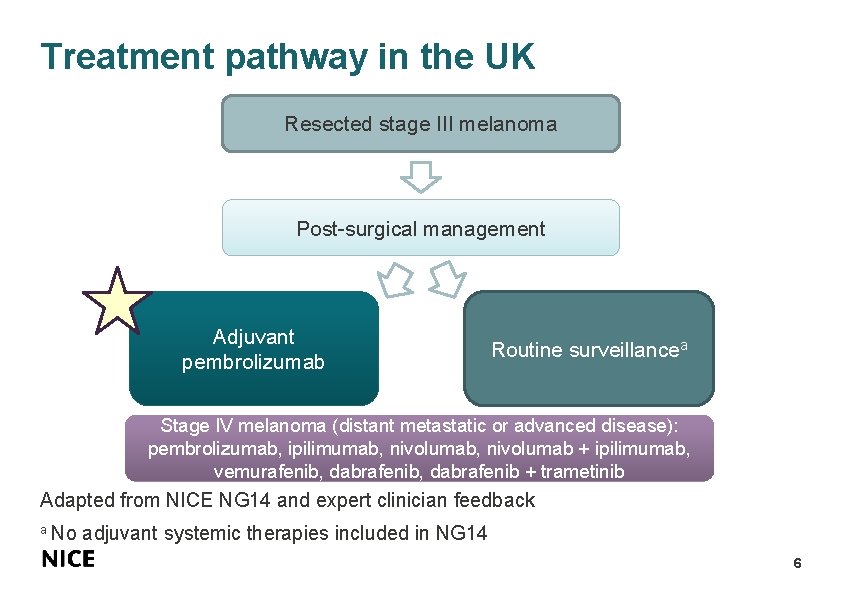
Treatment pathway in the UK Resected stage III melanoma Post-surgical management Adjuvant pembrolizumab Routine surveillancea Stage IV melanoma (distant metastatic or advanced disease): pembrolizumab, ipilimumab, nivolumab + ipilimumab, vemurafenib, dabrafenib + trametinib Adapted from NICE NG 14 and expert clinician feedback a No adjuvant systemic therapies included in NG 14 6
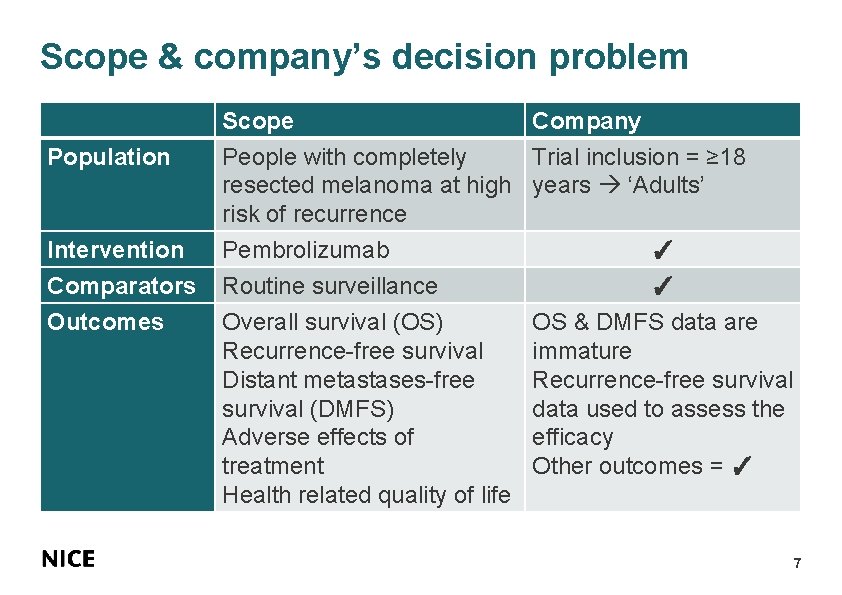
Scope & company’s decision problem Population Intervention Comparators Outcomes Scope Company People with completely Trial inclusion = ≥ 18 resected melanoma at high years ‘Adults’ risk of recurrence Pembrolizumab Routine surveillance Overall survival (OS) Recurrence-free survival Distant metastases-free survival (DMFS) Adverse effects of treatment Health related quality of life ✓ ✓ OS & DMFS data are immature Recurrence-free survival data used to assess the efficacy Other outcomes = ✓ 7
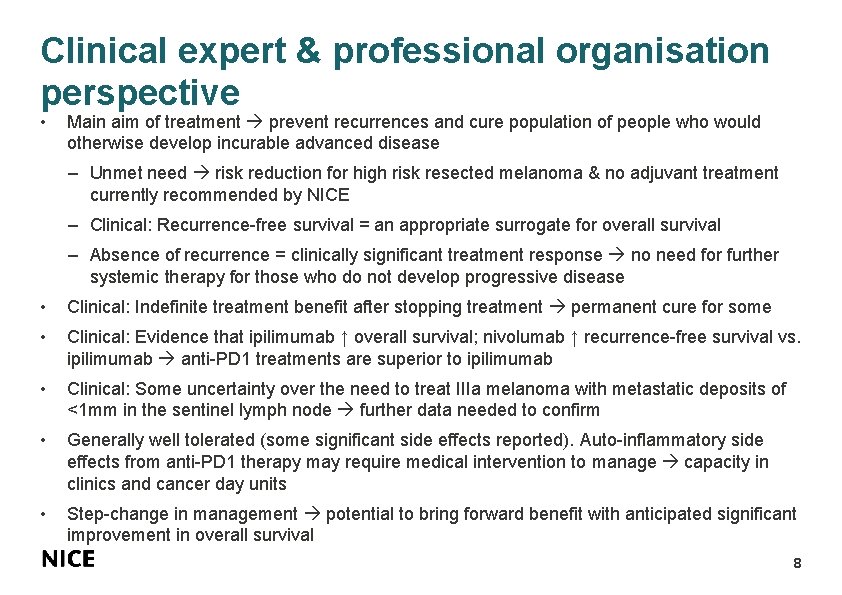
Clinical expert & professional organisation perspective • Main aim of treatment prevent recurrences and cure population of people who would otherwise develop incurable advanced disease – Unmet need risk reduction for high risk resected melanoma & no adjuvant treatment currently recommended by NICE – Clinical: Recurrence-free survival = an appropriate surrogate for overall survival – Absence of recurrence = clinically significant treatment response no need for further systemic therapy for those who do not develop progressive disease • Clinical: Indefinite treatment benefit after stopping treatment permanent cure for some • Clinical: Evidence that ipilimumab ↑ overall survival; nivolumab ↑ recurrence-free survival vs. ipilimumab anti-PD 1 treatments are superior to ipilimumab • Clinical: Some uncertainty over the need to treat IIIa melanoma with metastatic deposits of <1 mm in the sentinel lymph node further data needed to confirm • Generally well tolerated (some significant side effects reported). Auto-inflammatory side effects from anti-PD 1 therapy may require medical intervention to manage capacity in clinics and cancer day units • Step-change in management potential to bring forward benefit with anticipated significant improvement in overall survival 8
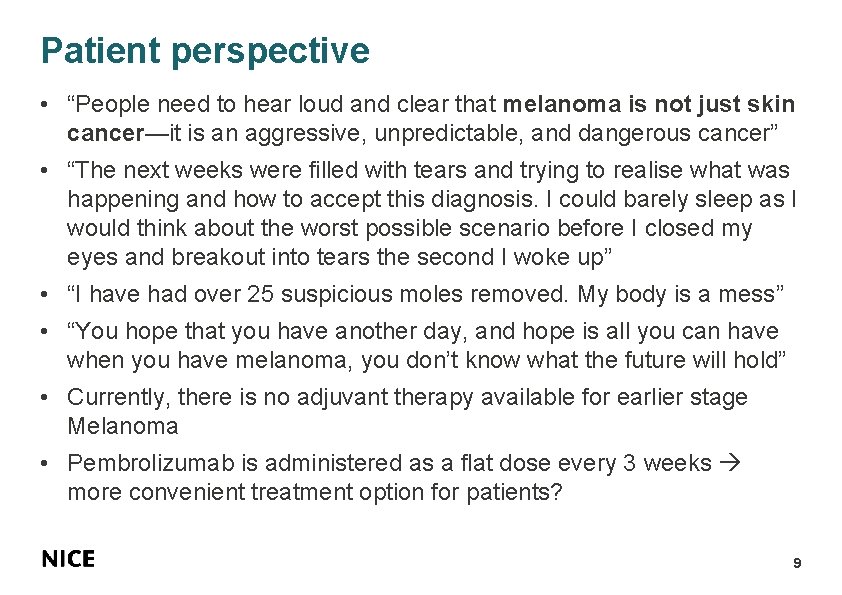
Patient perspective • “People need to hear loud and clear that melanoma is not just skin cancer—it is an aggressive, unpredictable, and dangerous cancer” • “The next weeks were filled with tears and trying to realise what was happening and how to accept this diagnosis. I could barely sleep as I would think about the worst possible scenario before I closed my eyes and breakout into tears the second I woke up” • “I have had over 25 suspicious moles removed. My body is a mess” • “You hope that you have another day, and hope is all you can have when you have melanoma, you don’t know what the future will hold” • Currently, there is no adjuvant therapy available for earlier stage Melanoma • Pembrolizumab is administered as a flat dose every 3 weeks more convenient treatment option for patients? 9
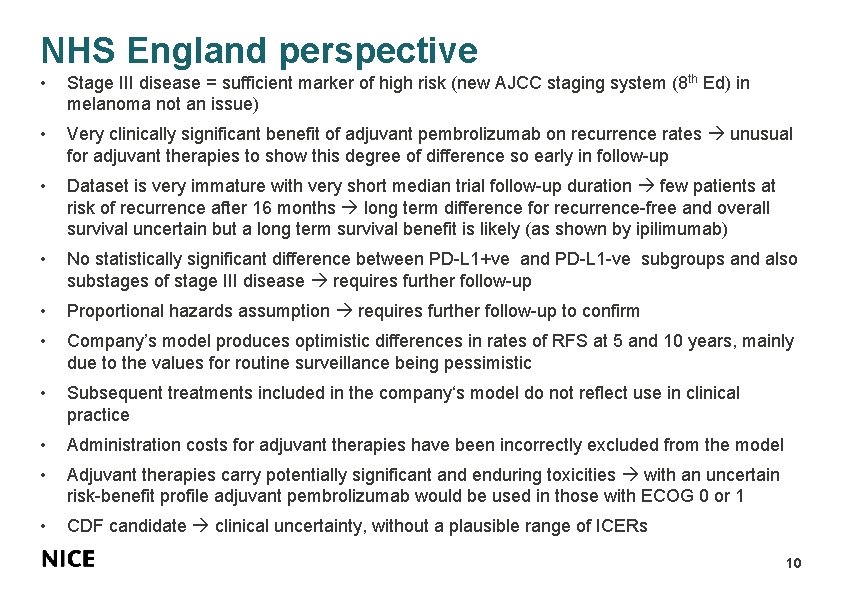
NHS England perspective • Stage III disease = sufficient marker of high risk (new AJCC staging system (8 th Ed) in melanoma not an issue) • Very clinically significant benefit of adjuvant pembrolizumab on recurrence rates unusual for adjuvant therapies to show this degree of difference so early in follow-up • Dataset is very immature with very short median trial follow-up duration few patients at risk of recurrence after 16 months long term difference for recurrence-free and overall survival uncertain but a long term survival benefit is likely (as shown by ipilimumab) • No statistically significant difference between PD-L 1+ve and PD-L 1 -ve subgroups and also substages of stage III disease requires further follow-up • Proportional hazards assumption requires further follow-up to confirm • Company’s model produces optimistic differences in rates of RFS at 5 and 10 years, mainly due to the values for routine surveillance being pessimistic • Subsequent treatments included in the company‘s model do not reflect use in clinical practice • Administration costs for adjuvant therapies have been incorrectly excluded from the model • Adjuvant therapies carry potentially significant and enduring toxicities with an uncertain risk-benefit profile adjuvant pembrolizumab would be used in those with ECOG 0 or 1 • CDF candidate clinical uncertainty, without a plausible range of ICERs 10
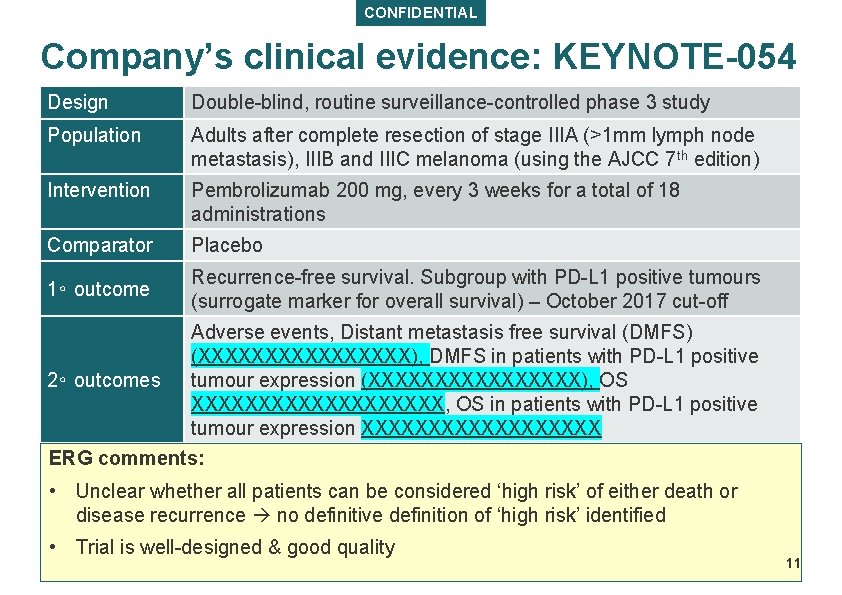
CONFIDENTIAL Company’s clinical evidence: KEYNOTE-054 Design Double-blind, routine surveillance-controlled phase 3 study Population Adults after complete resection of stage IIIA (>1 mm lymph node metastasis), IIIB and IIIC melanoma (using the AJCC 7 th edition) Intervention Pembrolizumab 200 mg, every 3 weeks for a total of 18 administrations Comparator Placebo 1∘ outcome Recurrence-free survival. Subgroup with PD-L 1 positive tumours (surrogate marker for overall survival) – October 2017 cut-off 2∘ outcomes Adverse events, Distant metastasis free survival (DMFS) (XXXXXXXX), DMFS in patients with PD-L 1 positive tumour expression (XXXXXXXX), OS XXXXXXXXXX, OS in patients with PD-L 1 positive tumour expression XXXXXXXXX ERG comments: • Unclear whether all patients can be considered ‘high risk’ of either death or disease recurrence no definitive definition of ‘high risk’ identified • Trial is well-designed & good quality 11
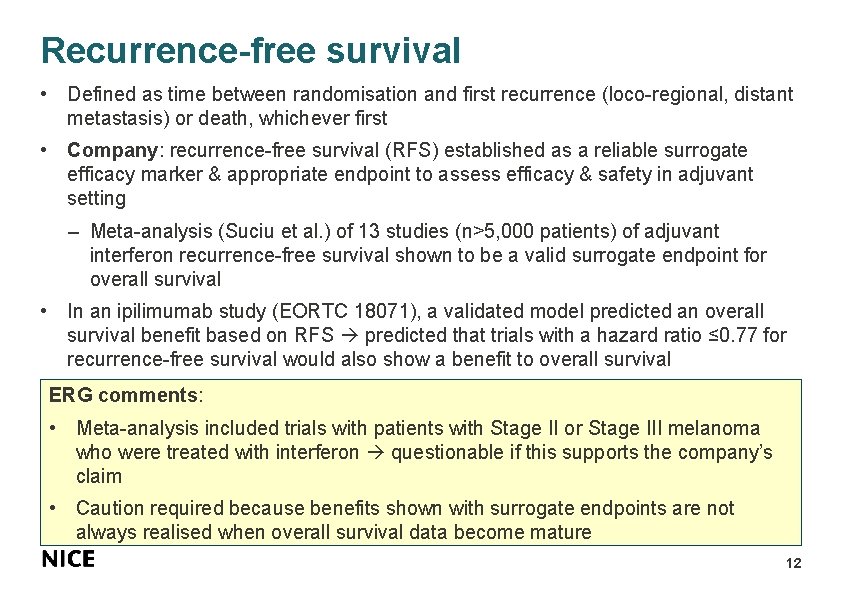
Recurrence-free survival • Defined as time between randomisation and first recurrence (loco-regional, distant metastasis) or death, whichever first • Company: recurrence-free survival (RFS) established as a reliable surrogate efficacy marker & appropriate endpoint to assess efficacy & safety in adjuvant setting – Meta-analysis (Suciu et al. ) of 13 studies (n>5, 000 patients) of adjuvant interferon recurrence-free survival shown to be a valid surrogate endpoint for overall survival • In an ipilimumab study (EORTC 18071), a validated model predicted an overall survival benefit based on RFS predicted that trials with a hazard ratio ≤ 0. 77 for recurrence-free survival would also show a benefit to overall survival ERG comments: • Meta-analysis included trials with patients with Stage II or Stage III melanoma who were treated with interferon questionable if this supports the company’s claim • Caution required because benefits shown with surrogate endpoints are not always realised when overall survival data become mature 12
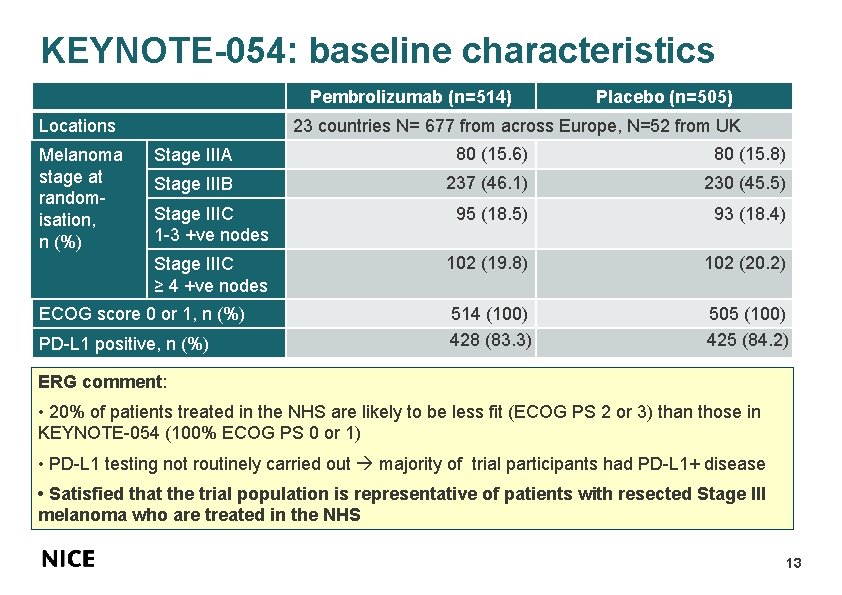
KEYNOTE-054: baseline characteristics Pembrolizumab (n=514) Locations Melanoma stage at randomisation, n (%) Placebo (n=505) 23 countries N= 677 from across Europe, N=52 from UK Stage IIIA 80 (15. 6) 80 (15. 8) Stage IIIB 237 (46. 1) 230 (45. 5) Stage IIIC 1 -3 +ve nodes 95 (18. 5) 93 (18. 4) Stage IIIC ≥ 4 +ve nodes 102 (19. 8) 102 (20. 2) 514 (100) 428 (83. 3) 505 (100) 425 (84. 2) ECOG score 0 or 1, n (%) PD-L 1 positive, n (%) ERG comment: • 20% of patients treated in the NHS are likely to be less fit (ECOG PS 2 or 3) than those in KEYNOTE-054 (100% ECOG PS 0 or 1) • PD-L 1 testing not routinely carried out majority of trial participants had PD-L 1+ disease • Satisfied that the trial population is representative of patients with resected Stage III melanoma who are treated in the NHS 13
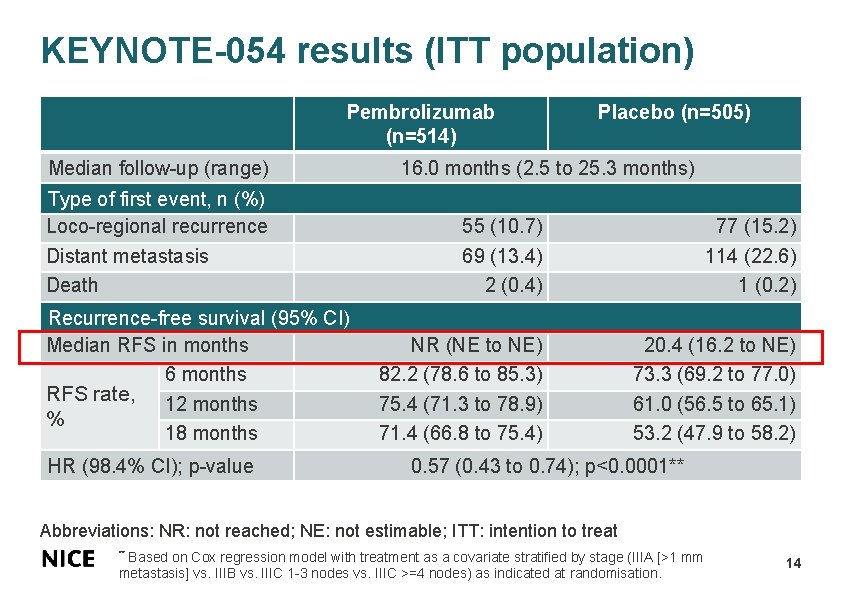
KEYNOTE-054 results (ITT population) Pembrolizumab (n=514) Median follow-up (range) Type of first event, n (%) Loco-regional recurrence Distant metastasis Death Recurrence-free survival (95% CI) Median RFS in months 6 months RFS rate, 12 months % 18 months HR (98. 4% CI); p-value Placebo (n=505) 16. 0 months (2. 5 to 25. 3 months) 55 (10. 7) 69 (13. 4) 2 (0. 4) 77 (15. 2) 114 (22. 6) 1 (0. 2) NR (NE to NE) 82. 2 (78. 6 to 85. 3) 75. 4 (71. 3 to 78. 9) 71. 4 (66. 8 to 75. 4) 20. 4 (16. 2 to NE) 73. 3 (69. 2 to 77. 0) 61. 0 (56. 5 to 65. 1) 53. 2 (47. 9 to 58. 2) 0. 57 (0. 43 to 0. 74); p<0. 0001** Abbreviations: NR: not reached; NE: not estimable; ITT: intention to treat ** Based on Cox regression model with treatment as a covariate stratified by stage (IIIA [>1 mm metastasis] vs. IIIB vs. IIIC 1 -3 nodes vs. IIIC >=4 nodes) as indicated at randomisation. 14
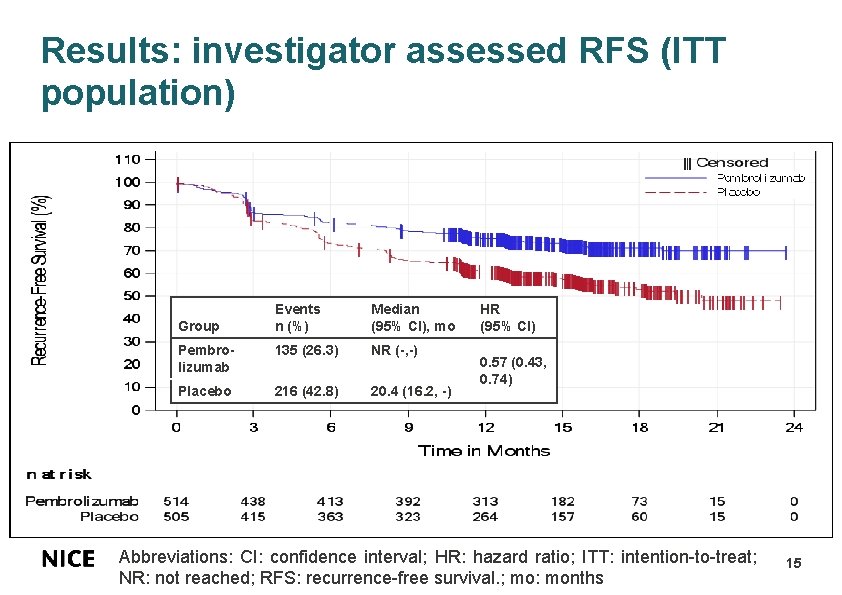
Results: investigator assessed RFS (ITT population) Events n (%) Median (95% CI), mo Pembrolizumab 135 (26. 3) NR (-, -) Placebo 216 (42. 8) 20. 4 (16. 2, -) Group HR (95% CI) 0. 57 (0. 43, 0. 74) Abbreviations: CI: confidence interval; HR: hazard ratio; ITT: intention-to-treat; NR: not reached; RFS: recurrence-free survival. ; mo: months 15
ERG comments: clinical effectiveness results • No reliable evidence available to inform whether or not adjuvant treatment of stage III melanoma with immunotherapies delivers an overall survival benefit • Concerned that: – median recurrence-free survival not reached in pembrolizumab arm – no data on overall survival (OS) & distant metastases-free survival (DMFS) • Proportional hazards assumption is unlikely to hold treat resulting estimates with caution • Results of subgroup analyses by stage of disease suggest that patients with Stage IIIA melanoma have the best prognosis, while patients with Stage IIIC melanoma have the worst prognosis, irrespective of whether treated with pembrolizumab or placebo 16
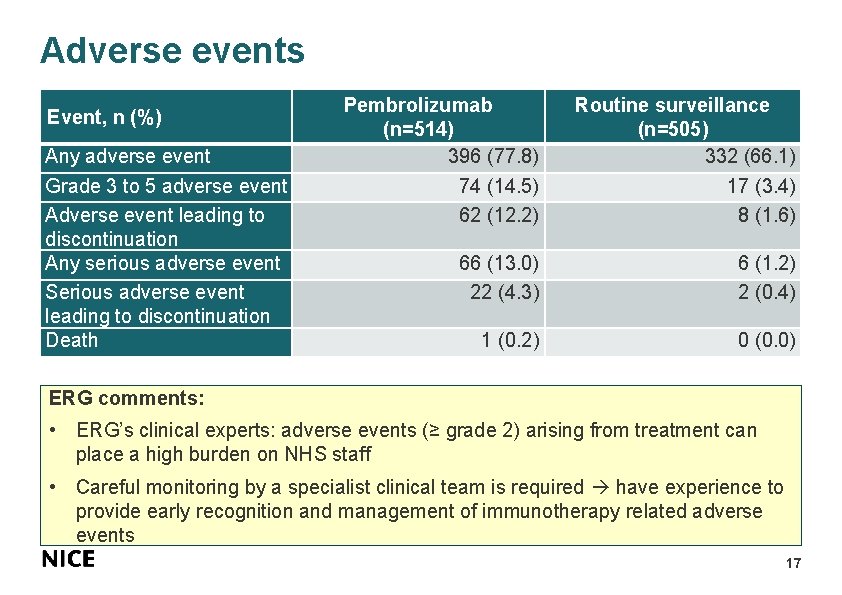
Adverse events Event, n (%) Any adverse event Grade 3 to 5 adverse event Adverse event leading to discontinuation Any serious adverse event Serious adverse event leading to discontinuation Death Pembrolizumab (n=514) 396 (77. 8) 74 (14. 5) 62 (12. 2) Routine surveillance (n=505) 332 (66. 1) 17 (3. 4) 8 (1. 6) 66 (13. 0) 22 (4. 3) 6 (1. 2) 2 (0. 4) 1 (0. 2) 0 (0. 0) ERG comments: • ERG’s clinical experts: adverse events (≥ grade 2) arising from treatment can place a high burden on NHS staff • Careful monitoring by a specialist clinical team is required have experience to provide early recognition and management of immunotherapy related adverse events 17
Clinical effectiveness issues (1) • Does pembrolizumab change the treatment pathway – Does it affect the subsequent use or effectiveness of immunotherapy in the metastatic setting? • Is the committee satisfied with the definition of high risk of recurrence? – In KEYNOTE-054 patients had either Stage IIIA (>1 mm metastasis), IIIB or IIIC disease with no in-transit metastases as defined by the American Joint Committee on Cancer 2009 classification, 7 th edition – The company has suggested that 90% will develop metastatic disease within 5 years - is this correct? (lower figures have been quoted previously) • Do the baseline characteristics of patients in KEYNOTE-054 match those in the NHS? – Practice not uniform in terms of resection within Stage III melanoma & the staging of melanoma has changed – Patients in KEYNOTE-054 had lower ECOG performance scores (all 0 or 1) 18
Clinical effectiveness issues (2) • What conclusions can be drawn about recurrence-free survival (RFS)? – KEYNOTE-054 data is limited to 16 months follow up median RFS for pembrolizumab not reached – Proportional hazards assumption may not hold is it reasonable to assume RFS is an appropriate surrogate outcome for overall survival? • Does pembrolizumab have a tolerable safety profile, both short and long term in patients with no known disseminated disease? 19
![Pembrolizumab for adjuvant treatment of resected melanoma with high risk of recurrence [ID 1266]–](http://slidetodoc.com/presentation_image_h2/0222ab5d3cbe456e108dca30873c82bc/image-20.jpg "Pembrolizumab for adjuvant treatment of resected melanoma with high risk of recurrence [ID 1266]–")
Pembrolizumab for adjuvant treatment of resected melanoma with high risk of recurrence [ID 1266]– STA Lead team presentation: Cost effectiveness Part 1 1 st Appraisal Committee meeting Committee A Lead team: Jane Adam, Pam Rees, Steve Edwards ERG: Liverpool Reviews and Implementation Group (LRi. G) NICE technical team: Emily Eaton Turner, Victoria Kelly September 2018 © NICE 2018. All rights reserved. Subject to notice of rights. The content in this publication is owned by multiple parties and may not be re-used without the permission of the relevant copyright owner.
Preview: cost effectiveness issues • Is the use of a first recurrence event either loco-regional or distant metastases to inform model transitions appropriate considering they are not pre-specified outcomes in the KEYNOTE-054 trial? • Are the company’s DMFS and OS projections clinically plausible? – Would more robust OS and DMFS data reduce the uncertainty in the model predictions? • Is it appropriate to assume a life time treatment effect with pembrolizumab? • What is the most plausible ICER? 21
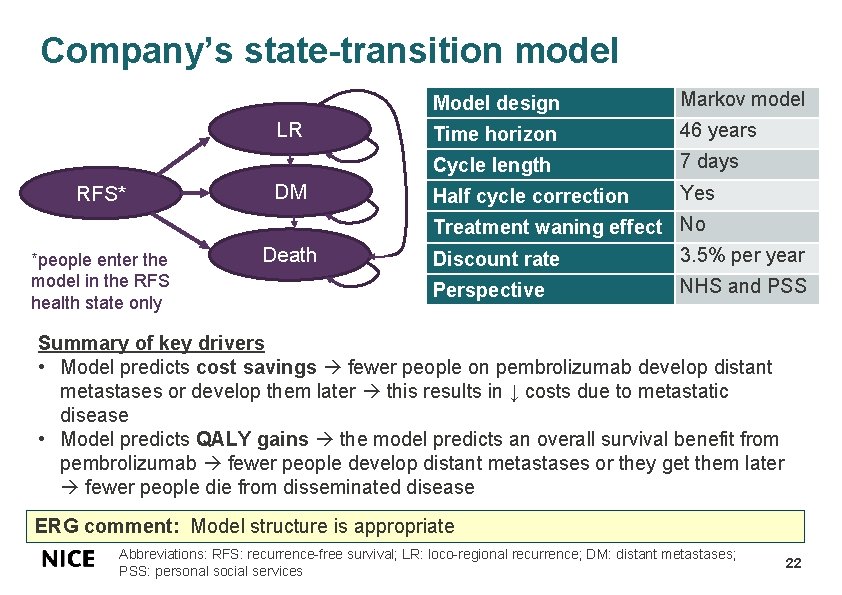
Company’s state-transition model LR RFS* *people enter the model in the RFS health state only DM Death Model design Markov model Time horizon 46 years Cycle length 7 days Half cycle correction Yes Treatment waning effect No 3. 5% per year Discount rate Perspective NHS and PSS Summary of key drivers • Model predicts cost savings fewer people on pembrolizumab develop distant metastases or develop them later this results in ↓ costs due to metastatic disease • Model predicts QALY gains the model predicts an overall survival benefit from pembrolizumab fewer people develop distant metastases or they get them later fewer people die from disseminated disease ERG comment: Model structure is appropriate Abbreviations: RFS: recurrence-free survival; LR: loco-regional recurrence; DM: distant metastases; PSS: personal social services 22
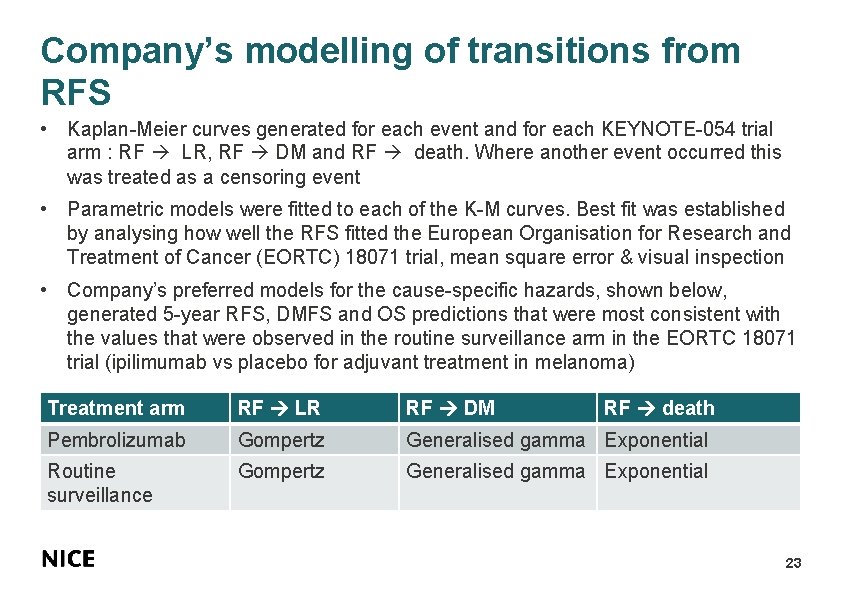
Company’s modelling of transitions from RFS • Kaplan-Meier curves generated for each event and for each KEYNOTE-054 trial arm : RF LR, RF DM and RF death. Where another event occurred this was treated as a censoring event • Parametric models were fitted to each of the K-M curves. Best fit was established by analysing how well the RFS fitted the European Organisation for Research and Treatment of Cancer (EORTC) 18071 trial, mean square error & visual inspection • Company’s preferred models for the cause-specific hazards, shown below, generated 5 -year RFS, DMFS and OS predictions that were most consistent with the values that were observed in the routine surveillance arm in the EORTC 18071 trial (ipilimumab vs placebo for adjuvant treatment in melanoma) Treatment arm RF LR RF DM RF death Pembrolizumab Gompertz Generalised gamma Exponential Routine surveillance Gompertz Generalised gamma Exponential 23
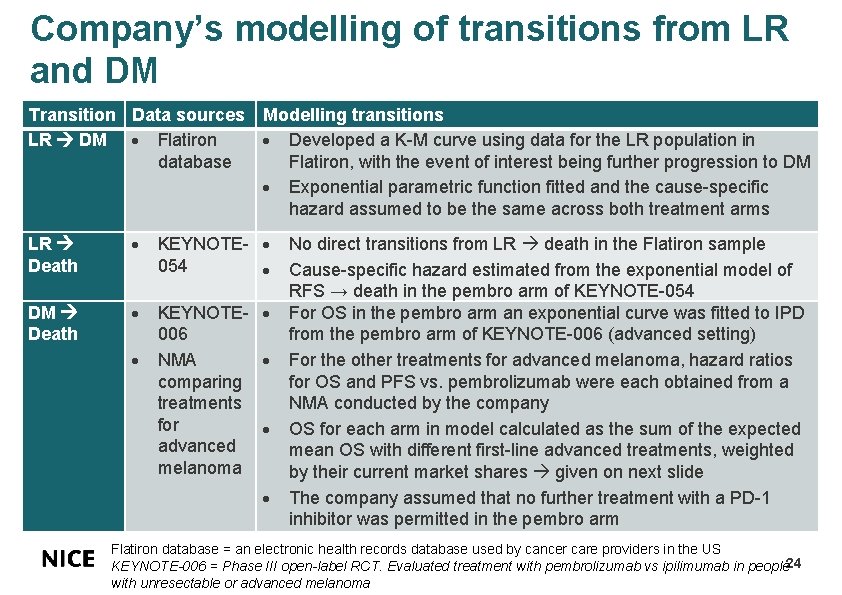
Company’s modelling of transitions from LR and DM Transition Data sources Modelling transitions LR DM Flatiron Developed a K-M curve using data for the LR population in database Flatiron, with the event of interest being further progression to DM Exponential parametric function fitted and the cause-specific hazard assumed to be the same across both treatment arms LR Death KEYNOTE- 054 DM Death KEYNOTE- 006 NMA comparing treatments for advanced melanoma No direct transitions from LR death in the Flatiron sample Cause-specific hazard estimated from the exponential model of RFS → death in the pembro arm of KEYNOTE-054 For OS in the pembro arm an exponential curve was fitted to IPD from the pembro arm of KEYNOTE-006 (advanced setting) For the other treatments for advanced melanoma, hazard ratios for OS and PFS vs. pembrolizumab were each obtained from a NMA conducted by the company OS for each arm in model calculated as the sum of the expected mean OS with different first-line advanced treatments, weighted by their current market shares given on next slide The company assumed that no further treatment with a PD-1 inhibitor was permitted in the pembro arm Flatiron database = an electronic health records database used by cancer care providers in the US KEYNOTE-006 = Phase III open-label RCT. Evaluated treatment with pembrolizumab vs ipilimumab in people 24 with unresectable or advanced melanoma
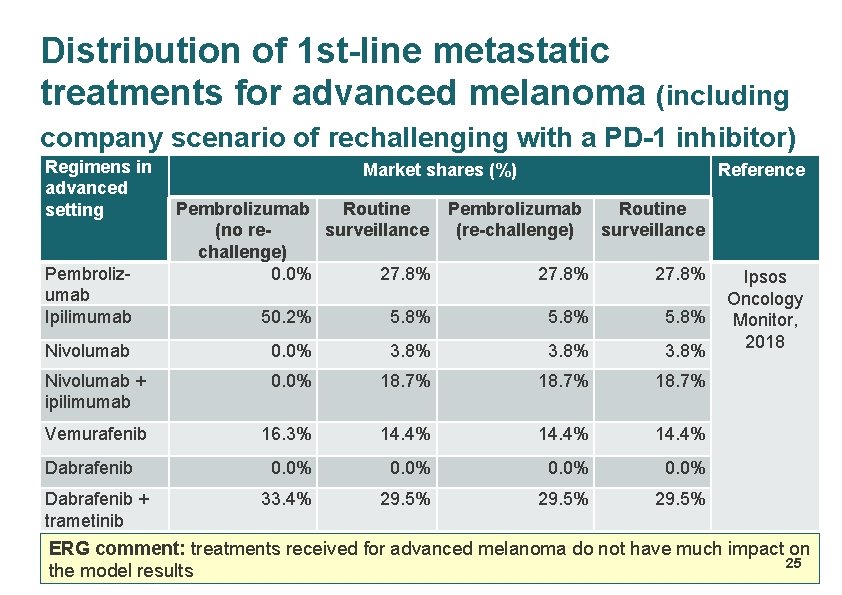
Distribution of 1 st-line metastatic treatments for advanced melanoma (including company scenario of rechallenging with a PD-1 inhibitor) Regimens in advanced setting Pembrolizumab Ipilimumab Market shares (%) Reference Pembrolizumab Routine (no resurveillance (re-challenge) surveillance challenge) 0. 0% 27. 8% 50. 2% 5. 8% Nivolumab 0. 0% 3. 8% Nivolumab + ipilimumab 0. 0% 18. 7% Vemurafenib 16. 3% 14. 4% 0. 0% 33. 4% 29. 5% Dabrafenib + trametinib Ipsos Oncology Monitor, 2018 ERG comment: treatments received for advanced melanoma do not have much impact on 25 the model results
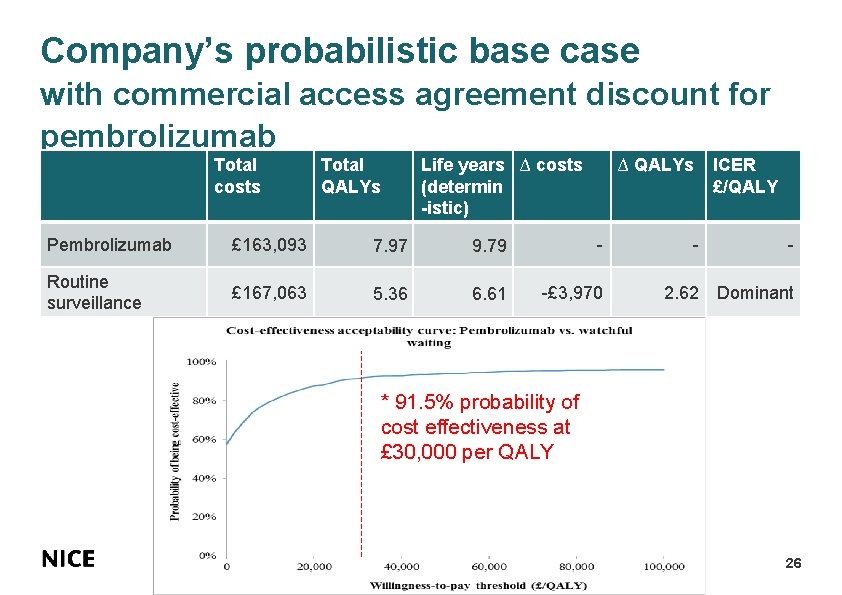
Company’s probabilistic base case with commercial access agreement discount for pembrolizumab Total costs Total QALYs Life years ∆ costs (determin -istic) ∆ QALYs ICER £/QALY Pembrolizumab £ 163, 093 7. 97 9. 79 - - - Routine surveillance £ 167, 063 5. 36 6. 61 -£ 3, 970 2. 62 Dominant * 91. 5% probability of cost effectiveness at £ 30, 000 per QALY 26
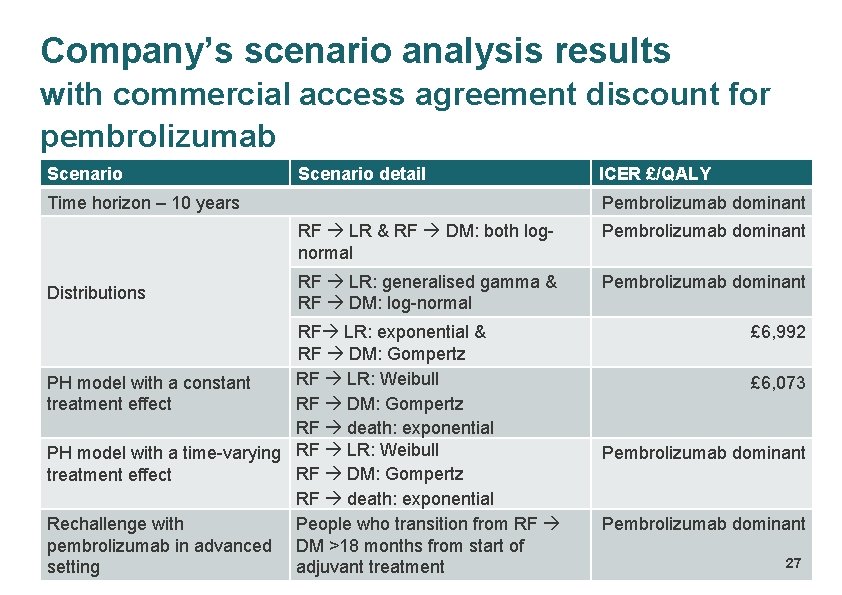
Company’s scenario analysis results with commercial access agreement discount for pembrolizumab Scenario detail Time horizon – 10 years ICER £/QALY Pembrolizumab dominant RF LR & RF DM: both lognormal Pembrolizumab dominant RF LR: generalised gamma & RF DM: log-normal Pembrolizumab dominant RF LR: exponential & RF DM: Gompertz RF LR: Weibull PH model with a constant RF DM: Gompertz treatment effect RF death: exponential PH model with a time-varying RF LR: Weibull RF DM: Gompertz treatment effect RF death: exponential People who transition from RF Rechallenge with pembrolizumab in advanced DM >18 months from start of setting adjuvant treatment £ 6, 992 Distributions £ 6, 073 Pembrolizumab dominant 27
ERG comments: affect of immature data on modelled overall survival (1) Company validated model by comparing the estimated 5 -year overall survival and distant metastases free survival for routine surveillance against those in the adjuvant ipilimumab trial (EORTC 18071 trial) • Model estimates slightly higher 5 -year OS & much lower 5 -year DMFS for ‘routine surveillance’ than similar data from EORTC 18071 – OS: 55. 2% in company model vs 54. 4% of EORTC 18071 – DMFS: 30. 2% in company model vs 38. 9% of EORTC 18071 • ERG validated the company’s OS projections by creating a composite stage III survival curve – Combined OS data from the 2010 SEER database for patients with Stage III melanoma by AJCC 7 th edition, weighted by the proportions of patients in each of these stages in the KEYNOTE-054 trial – The composite OS curve approximated expected OS for routine surveillance arm of the KEYNOTE-054 trial, next slide… 28
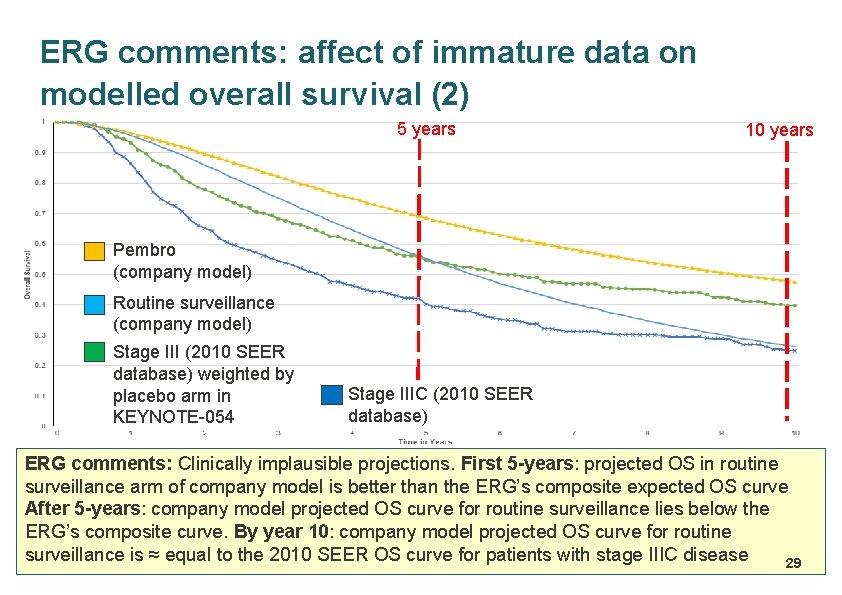
ERG comments: affect of immature data on modelled overall survival (2) 5 years 10 years Pembro (company model) Routine surveillance (company model) Stage III (2010 SEER database) weighted by placebo arm in KEYNOTE-054 Stage IIIC (2010 SEER database) ERG comments: Clinically implausible projections. First 5 -years: projected OS in routine surveillance arm of company model is better than the ERG’s composite expected OS curve After 5 -years: company model projected OS curve for routine surveillance lies below the ERG’s composite curve. By year 10: company model projected OS curve for routine surveillance is ≈ equal to the 2010 SEER OS curve for patients with stage IIIC disease 29
ERG comments: immature data on modelled distant metastases-free survival • Analysis of distant metastases-free survival data from KEYNOTE-054 (from the trial published paper, Eggermont et al. 2018) shows a statistically significant difference for DMFS at 12 and 18 months between the pembrolizumab and placebo arms – Approach inappropriate to extrapolate hazards in both arms when the hazard rate changes over time • Company’s model estimates: at 5 years, 68. 7% of patients on routine surveillance enter the DM state & of these 43. 7% die – However, data from the 2017 IMDDP dataset mortality is estimated to be 28% • Clinically implausible projections of distant metastases and death for people in the DM health state up to year 5 increasingly more clinically implausible after 5 years – Company’s model estimated that 91. 6% of all people on routine surveillance have developed a DM over the model time horizon (46 years) IMDDP: the International Melanoma Database and Discovery Platform 30
ERG comments: immature data on estimation of treatment effect • Data too immature to assess whethere is a lifetime treatment effect associated with treatment with pembrolizumab (company’s assumption) • Duration of treatment effect & model time horizon impacts company ICER: – Scenario 1: Stop the treatment effect for pembrolizumab at 3 years from starting treatment ICER approx. £ 19, 330 per QALY – Scenario 2: Time horizon of the company model limited to 16 months (i. e. no extrapolation) ICER aprox £ 750, 000 per QALY 31
ERG comments: overall conclusions • Company made best use of data from KEYNOTE-054 & other relevant trials • Model not populated with RFS data from KEYNOTE-054 first recurrence event used • OS and DMFS data from KEYNOTE-054 have not reached maturity yet – Too immature to be analysed or included in the economic model immature data can lead to spurious projections of overall survival (supported by previous research) • None of the projections undertaken by the company produces clinically plausible OS or DM estimates for the routine surveillance arm due to the immaturity of the trial data • Pembrolizumab treatment effect cannot be estimated from the data currently available given its immaturity • Only 1% (0. 03 QALYs) of the company’s total discounted QALY gain estimate (2. 73 QALYs) is accrued in first 16 months (the median period for available follow-up data from KEYNOTE-054) • The company’s estimated ICERs per QALY gained are unreliable • No additional or exploratory analyses have been undertaken ERG considers that KEYNOTE-054 is too immature to produce a reliable ICER 32
Equality and innovation Equality • No equality issues identified by the company or professional organisations (BAD & BASCSN) Innovation • Pembrolizumab has a novel mode of action can be used as standard adjuvant treatment regardless of tumour BRAF mutation status, PD-L 1 status and AJCC stage III classification ERG comments: ERG’s clinical expert advice & comments received during scoping highlighted that there is inequitable access to sentinel lymph node (SLN) mapping and biopsies across the UK may limit access to adjuvant treatment 33
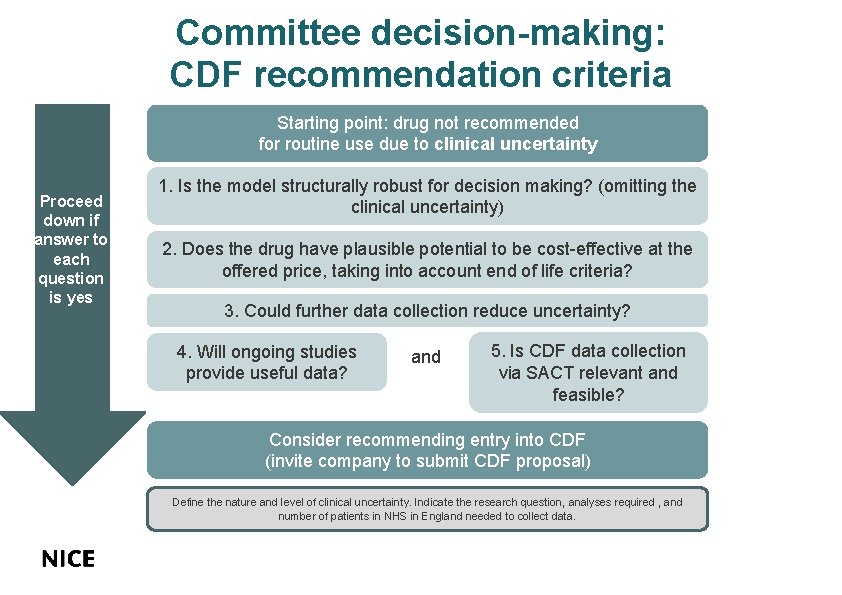
Committee decision-making: CDF recommendation criteria Starting point: drug not recommended for routine use due to clinical uncertainty Proceed down if answer to each question is yes 1. Is the model structurally robust for decision making? (omitting the clinical uncertainty) 2. Does the drug have plausible potential to be cost-effective at the offered price, taking into account end of life criteria? 3. Could further data collection reduce uncertainty? 4. Will ongoing studies provide useful data? and 5. Is CDF data collection via SACT relevant and feasible? Consider recommending entry into CDF (invite company to submit CDF proposal) Define the nature and level of clinical uncertainty. Indicate the research question, analyses required , and number of patients in NHS in England needed to collect data.
Cost effectiveness issues • Is the use of a first recurrence event either loco-regional or distant metastases to inform model transitions appropriate considering they are not pre-specified outcomes in the KEYNOTE-054 trial? • Are the company’s DMFS and OS projections clinically plausible? – Would more robust OS and DMFS data reduce the uncertainty in the model predictions? • Is it appropriate to assume a life time treatment effect with pembrolizumab? • What is the most plausible ICER? 35

Back up slides 36
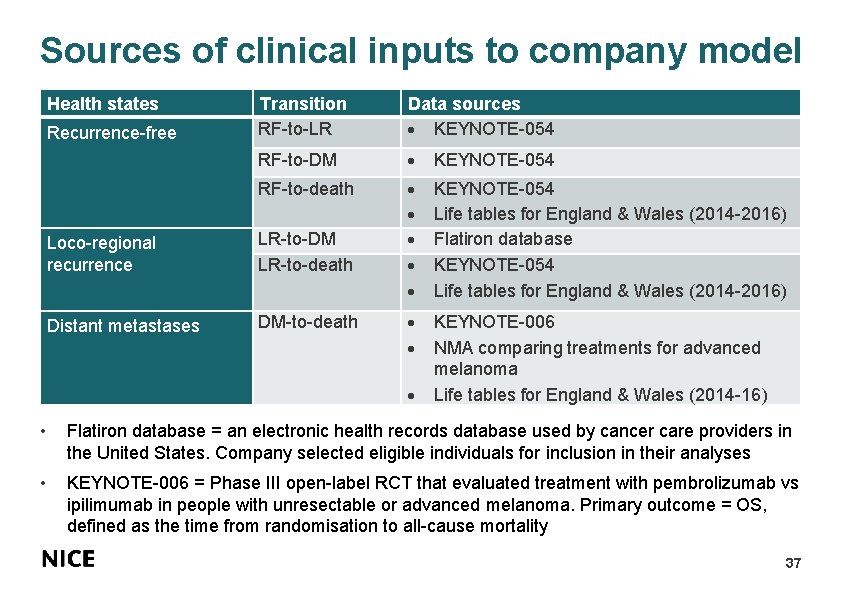
Sources of clinical inputs to company model Health states Recurrence-free Transition RF-to-LR Data sources KEYNOTE-054 RF-to-DM KEYNOTE-054 RF-to-death KEYNOTE-054 Life tables for England & Wales (2014 -2016) Flatiron database KEYNOTE-054 Life tables for England & Wales (2014 -2016) KEYNOTE-006 NMA comparing treatments for advanced melanoma Life tables for England & Wales (2014 -16) Loco-regional recurrence LR-to-DM LR-to-death Distant metastases DM-to-death • Flatiron database = an electronic health records database used by cancer care providers in the United States. Company selected eligible individuals for inclusion in their analyses • KEYNOTE-006 = Phase III open-label RCT that evaluated treatment with pembrolizumab vs ipilimumab in people with unresectable or advanced melanoma. Primary outcome = OS, defined as the time from randomisation to all-cause mortality 37
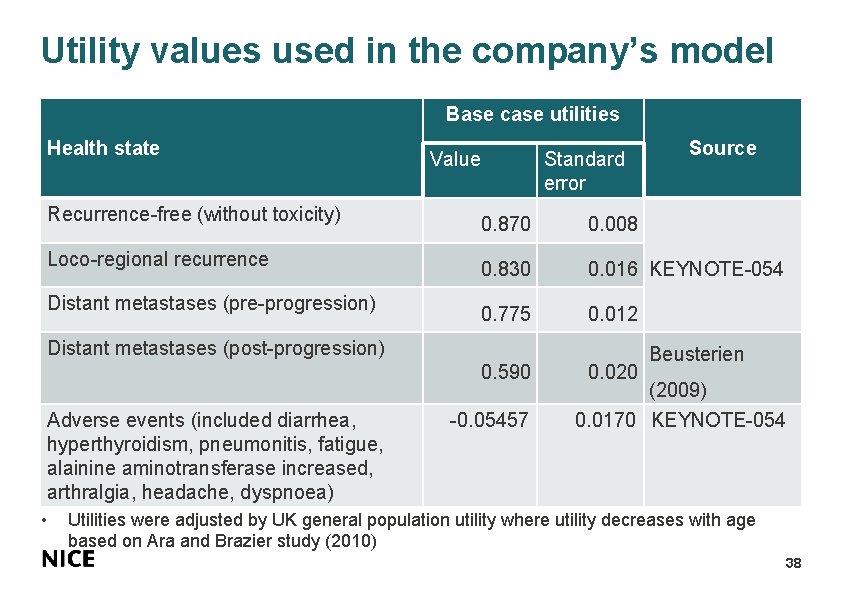
Utility values used in the company’s model Base case utilities Health state Recurrence-free (without toxicity) Loco-regional recurrence Distant metastases (pre-progression) Value Standard error 0. 870 0. 008 0. 830 0. 016 KEYNOTE-054 0. 775 0. 012 Distant metastases (post-progression) 0. 590 Adverse events (included diarrhea, hyperthyroidism, pneumonitis, fatigue, alainine aminotransferase increased, arthralgia, headache, dyspnoea) • Source -0. 05457 0. 020 Beusterien (2009) 0. 0170 KEYNOTE-054 Utilities were adjusted by UK general population utility where utility decreases with age based on Ara and Brazier study (2010) 38
- Slides: 38