
Pelvic Inflammatory Disease PID Max Brinsmead MB BS
Pelvic Inflammatory Disease (PID) Max Brinsmead MB BS Ph. D May 2015
This talk • • • What is Pelvic Inflammatory Disease? Why it is important How it is spread Diagnosis Treatment Prevention

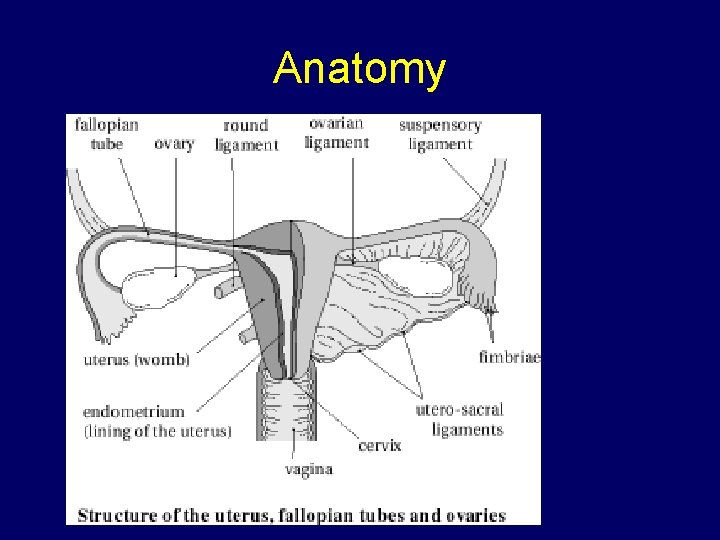
What is PID? • Inflammation of female pelvic structures • Ascending spread of infection from the cervix through the uterus, to fallopian tubes, ovaries and adjacent peritoneum • Upper genital tract infection • It is not infection in the vagina or vulva
Anatomy
PID comes in two forms. . . • Acute • • Patient has generalised symptoms Lasts a few days May recur in episodes Very infectious in this stage • Chronic • • Patient may have no symptoms Occurs over months and years Progressive organ damage & change May burn out (arrest)
Why PID is important • Affects up to 1: 4 women in PNG • Many hospital admissions • Sometimes fatal • Chronic damage causes infertility • Predisposes to ectopic pregnancy • Can affect a baby during birth • Lung inflammation • Eye infections • Is a common cause of chronic menstrual problems
Cause of PID • 85 – 95% is due to specific sexually transmitted organisms • Neisseria gonorrhoea • Chlamydia trachomatis • Others e. g. Mycoplasma species • 5 – 15% begins after reproductive tract damage • From pregnancy • From surgical procedures e. g. D&C • Includes insertion of IUCD
Cause of PID (2) • Endogenous infection occurs from commensal organisms • Anaerobes e. g. Bacteroides • Aerobes e. g. E Coli, Streptococcus species • Actinomycosis with IUCD • A smaller number of PID is due to Tuberculosis (TB) • Bloodborne spread after primary lung infection
Pathogenesis • Infection can occur after procedures that break cervical mucous barrier • The adult vagina is lined by stratified squamous epithelium like skin • But the cervix has mucous to receive sperm • Organisms can access higher when mucous is receptive • Endometrium sheds regularly so is infrequently a site of chronic infection • Fallopian tubes and peritoneum should be sterile
Chlamydia trachomatis • • • Produces a mild form of salpingitis Slow growing in culture (48 -72 hr) An intracellular organism Insidious onset Remain in tubes for months/years after initial colonization of upper genital tract • Can cause severe damage/changes over long periods
Neissera gonorrhoea • Gram negative Diplococcus • Grows rapidly in culture (doubles every 2040 min) • Causes a rapid & intense inflammatory response • May occur after prior Chlamydia infection • More likely to be symptomatic in the male partner

Risk Factors for PID • • Age of 1 st intercourse Number of sexual partners Number of sexual contacts by the sexual partner Cultural practices • Polygamy, • Prostitutes • Attitudes to menstruation and pregnancy • • Frequency of intercourse (Age) IUCD design Poor health resources Antibiotic exposure (resistance)
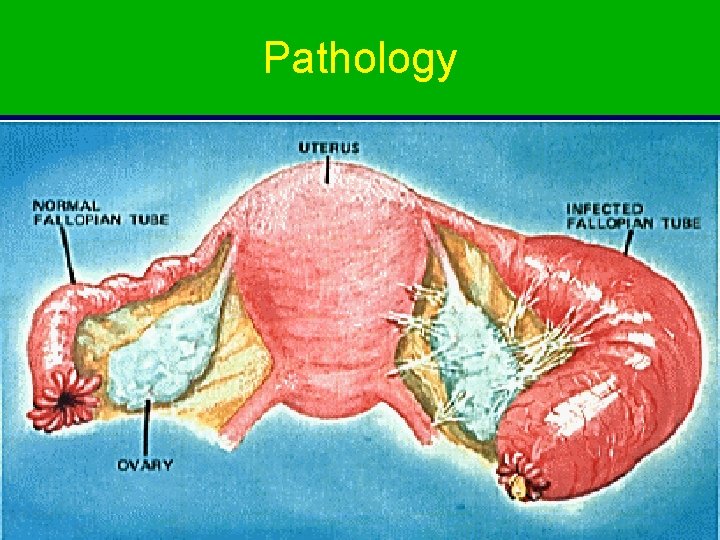
Pathology
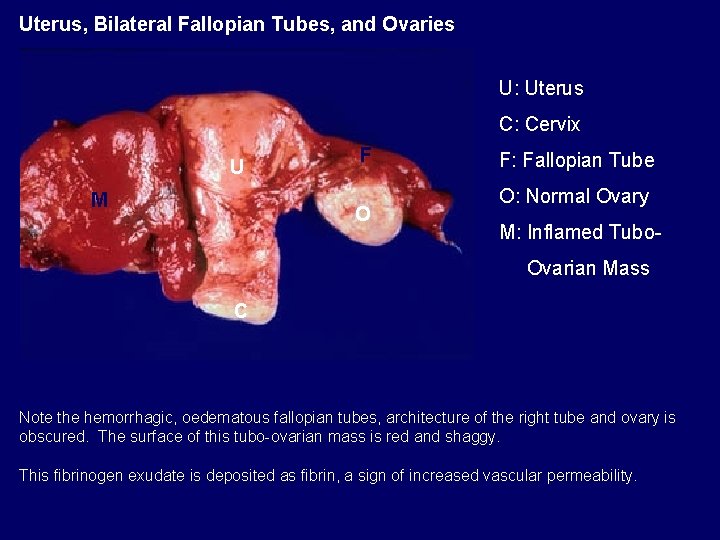
Uterus, Bilateral Fallopian Tubes, and Ovaries U: Uterus C: Cervix U M F O F: Fallopian Tube O: Normal Ovary M: Inflamed Tubo. Ovarian Mass C Note the hemorrhagic, oedematous fallopian tubes, architecture of the right tube and ovary is obscured. The surface of this tubo-ovarian mass is red and shaggy. This fibrinogen exudate is deposited as fibrin, a sign of increased vascular permeability.
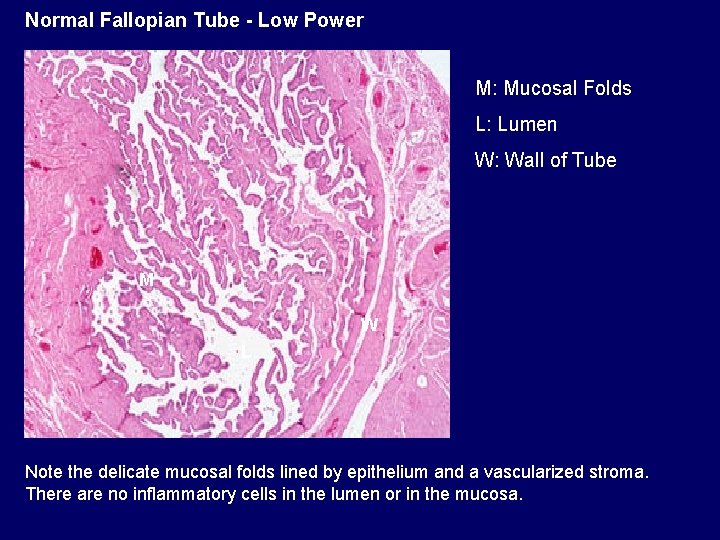
Normal Fallopian Tube - Low Power M: Mucosal Folds L: Lumen W: Wall of Tube M W L Note the delicate mucosal folds lined by epithelium and a vascularized stroma. There are no inflammatory cells in the lumen or in the mucosa.
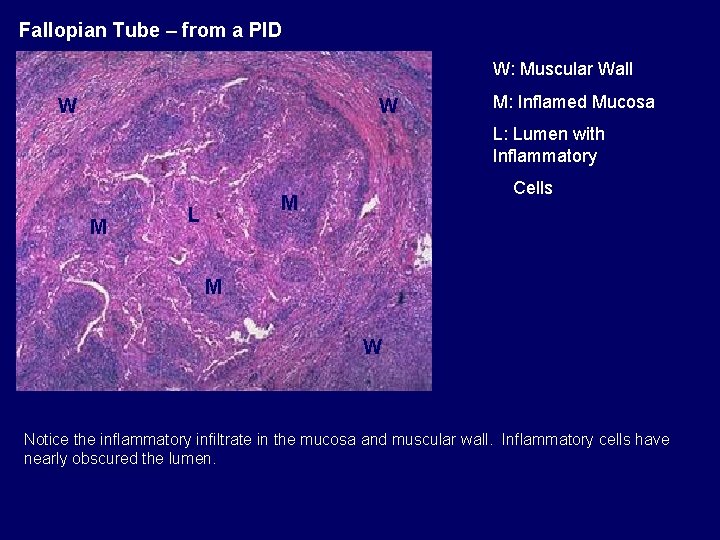
Fallopian Tube – from a PID W: Muscular Wall W W M: Inflamed Mucosa L: Lumen with Inflammatory M Cells M L M W Notice the inflammatory infiltrate in the mucosa and muscular wall. Inflammatory cells have nearly obscured the lumen.
Diagnosis of PID • Requires a high index of suspicion in a patient “at risk” when there is: • • Lower abdominal pain (90%) Fever (sometimes with malaise, vomiting) Mucopurulent discharge from cervix Pelvic tenderness • Tests • • Raised WCC Endocervical swab for organisms or PCR Ultrasound evidence of pelvic fluid collections Laparoscopy
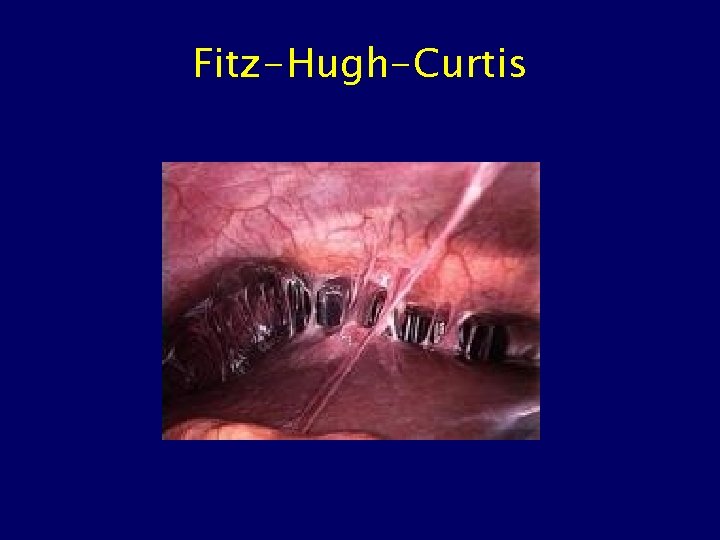
Fitz-Hugh-Curtis
Fitz-Hugh-Curtis Syndrome • • Perihepatic inflammation & adhesions Occurs with 1 – 10% acute PID Causes RUQ and pleuritic pain May be confused with cholecystitis or pneumonia
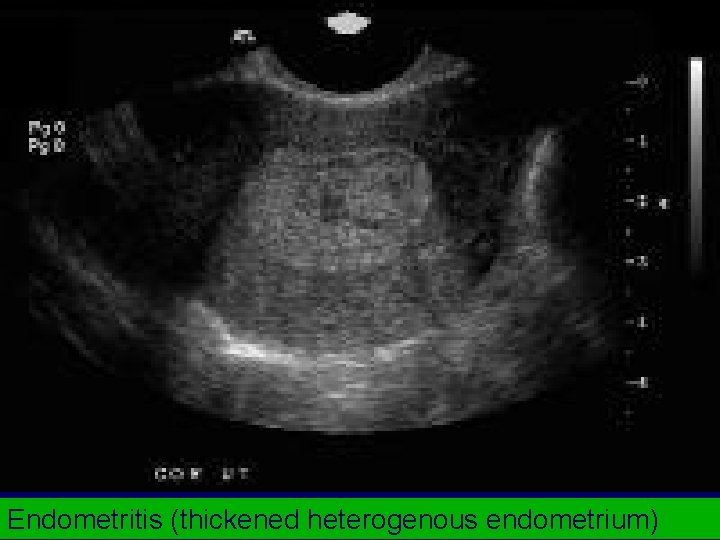
Endometritis (thickened heterogenous endometrium)
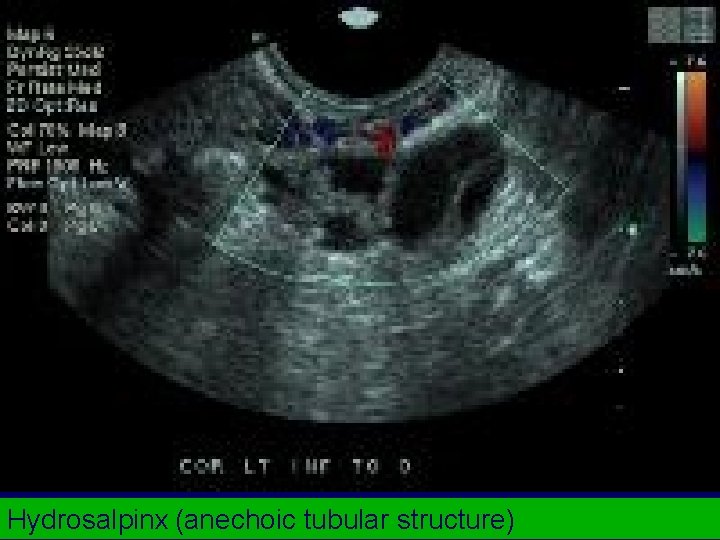
Hydrosalpinx (anechoic tubular structure)
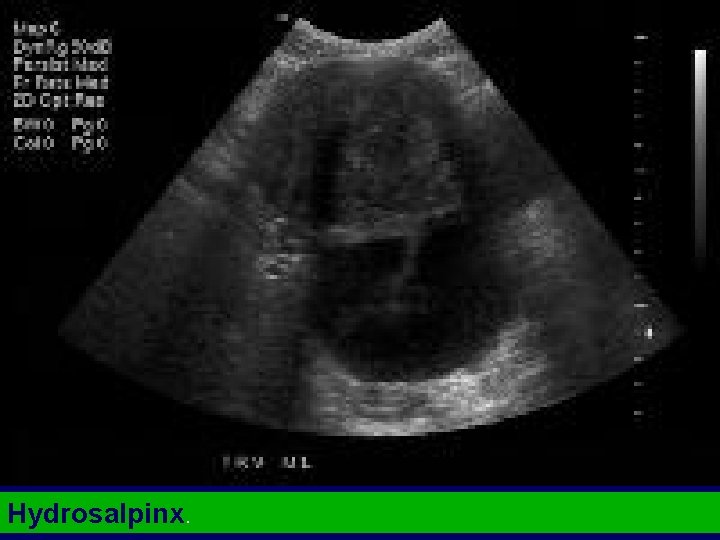
Hydrosalpinx.

Differential Diagnosis for PID • Endometriosis • Appendicitis & other gastro conditions • Appendicitis is unilateral and right sided • PID is bilateral • Ectopic pregnancy • Always do a pregnancy test • Urinary tract infection or stone • “Ovarian cysts” • Lower genital tract infection
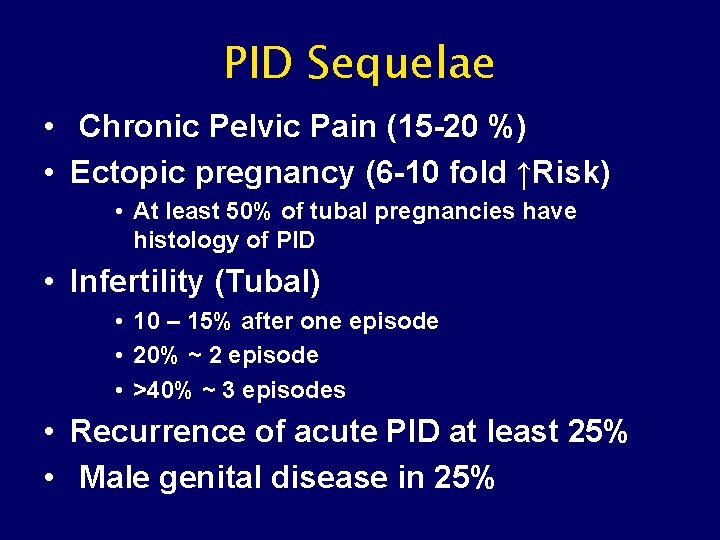
PID Sequelae • Chronic Pelvic Pain (15 -20 %) • Ectopic pregnancy (6 -10 fold ↑Risk) • At least 50% of tubal pregnancies have histology of PID • Infertility (Tubal) • 10 – 15% after one episode • 20% ~ 2 episode • >40% ~ 3 episodes • Recurrence of acute PID at least 25% • Male genital disease in 25%
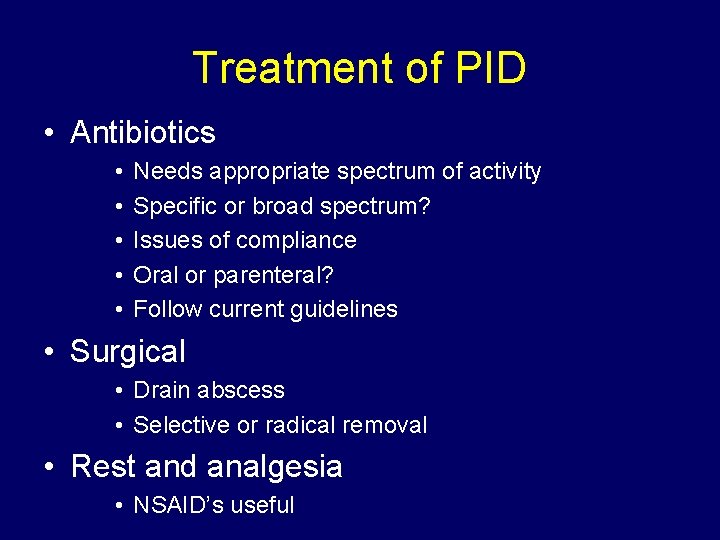
Treatment of PID • Antibiotics • • • Needs appropriate spectrum of activity Specific or broad spectrum? Issues of compliance Oral or parenteral? Follow current guidelines • Surgical • Drain abscess • Selective or radical removal • Rest and analgesia • NSAID’s useful
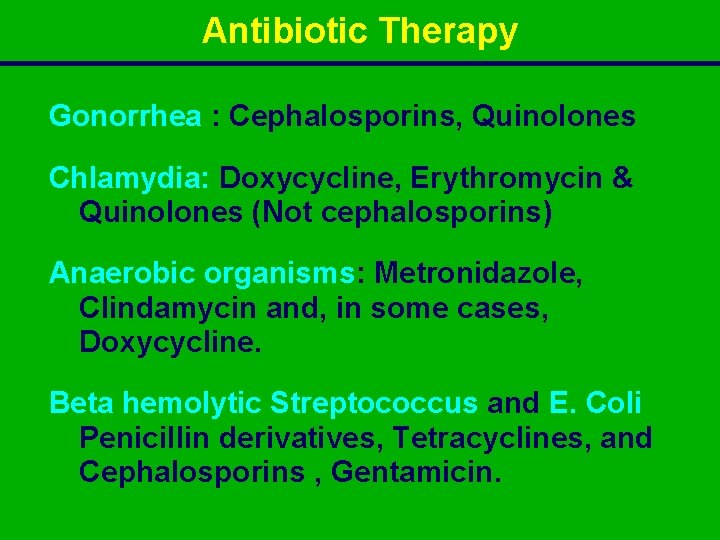
Antibiotic Therapy Gonorrhea : Cephalosporins, Quinolones Chlamydia: Doxycycline, Erythromycin & Quinolones (Not cephalosporins) Anaerobic organisms: Metronidazole, Clindamycin and, in some cases, Doxycycline. Beta hemolytic Streptococcus and E. Coli Penicillin derivatives, Tetracyclines, and Cephalosporins , Gentamicin.
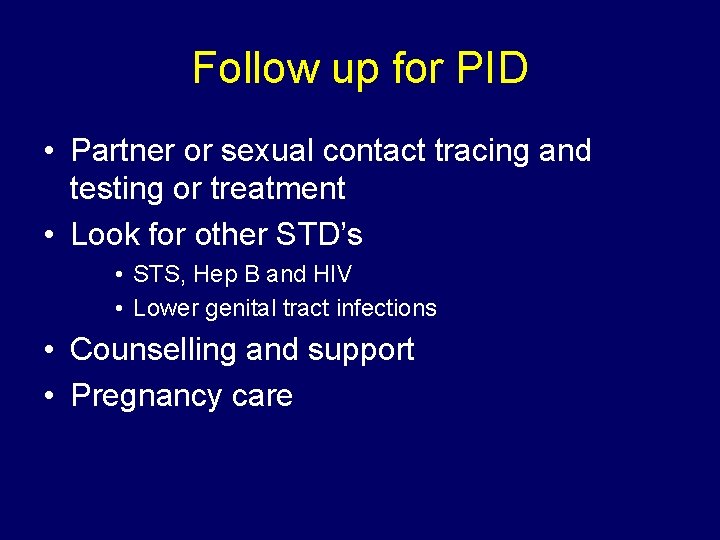
Follow up for PID • Partner or sexual contact tracing and testing or treatment • Look for other STD’s • STS, Hep B and HIV • Lower genital tract infections • Counselling and support • Pregnancy care
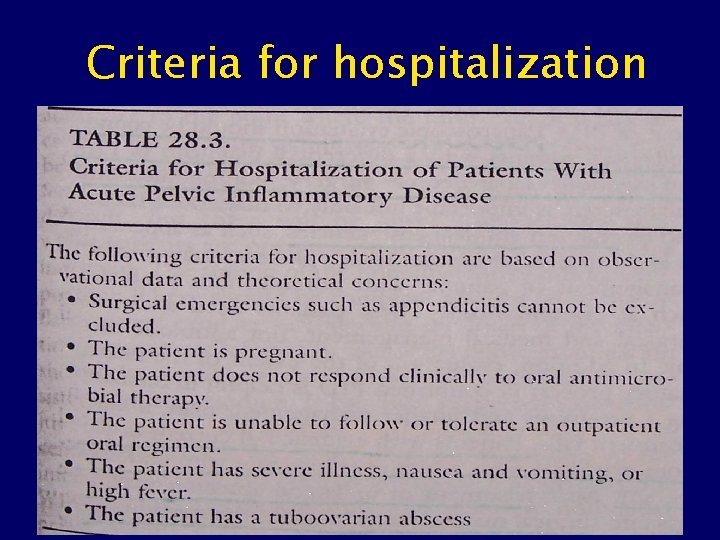
Criteria for hospitalization
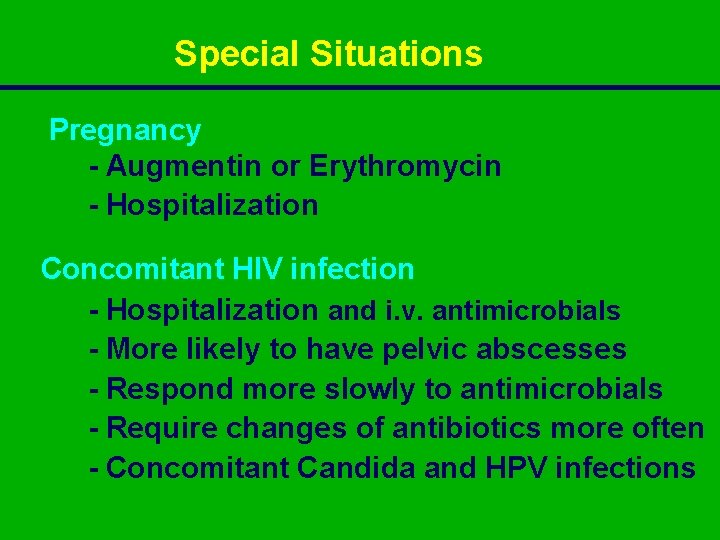
Special Situations Pregnancy - Augmentin or Erythromycin - Hospitalization Concomitant HIV infection - Hospitalization and i. v. antimicrobials - More likely to have pelvic abscesses - Respond more slowly to antimicrobials - Require changes of antibiotics more often - Concomitant Candida and HPV infections

Prevention of PID • • Screen & treat asymptomatic disease Sexual health counselling Barrier contraceptives Progestin-based contraception • COC & POP • Depot and Implanon • ? Mirena • Sexual fidelity or abstinence • Improving the education and status of women
PID – What we have covered • • • What it is Why it is important How it is spread How it is diagnosed How it is treated How it might be prevented

Any Questions or Comments? Please leave a note on the Welcome Page to this website
- Slides: 32