
PELVIC FRACTURES FIXATION DEVICES J E Tannebaum PGY
PELVIC FRACTURES & FIXATION DEVICES J. E. Tannebaum PGY 4 General Surgery
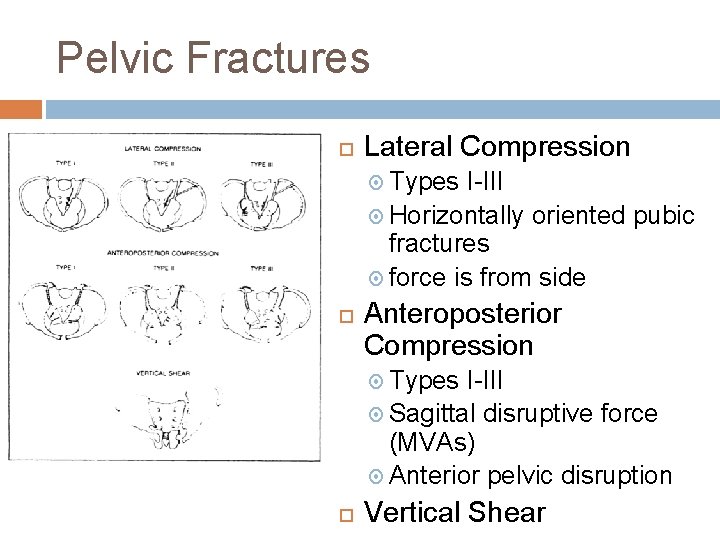
Pelvic Fractures Lateral Compression Types I-III Horizontally oriented pubic fractures force is from side Anteroposterior Compression Types I-III Sagittal disruptive force (MVAs) Anterior pelvic disruption Vertical Shear
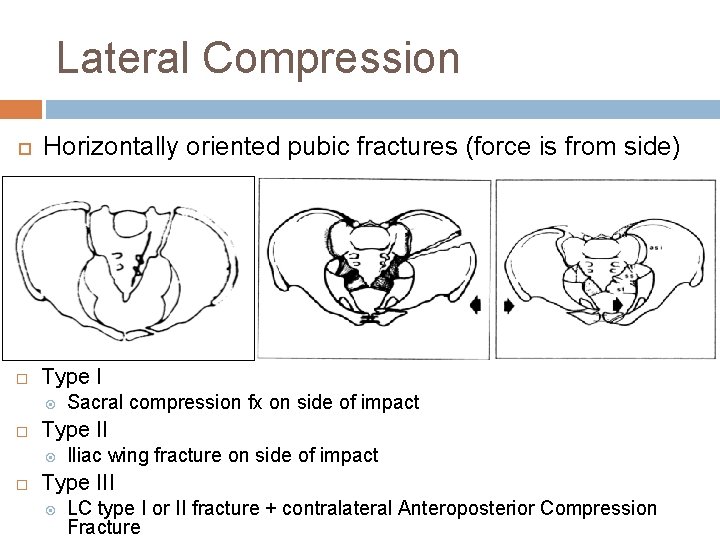
Lateral Compression Horizontally oriented pubic fractures (force is from side) Type II Sacral compression fx on side of impact Iliac wing fracture on side of impact Type III LC type I or II fracture + contralateral Anteroposterior Compression Fracture
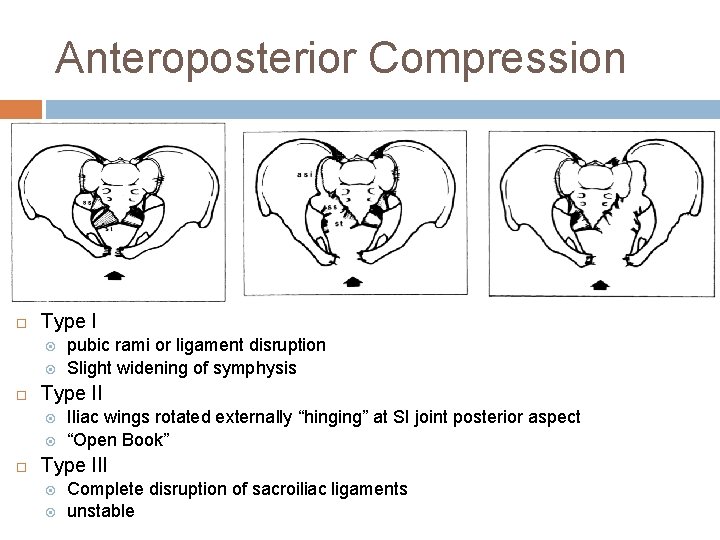
Anteroposterior Compression Type I Type II pubic rami or ligament disruption Slight widening of symphysis Iliac wings rotated externally “hinging” at SI joint posterior aspect “Open Book” Type III Complete disruption of sacroiliac ligaments unstable
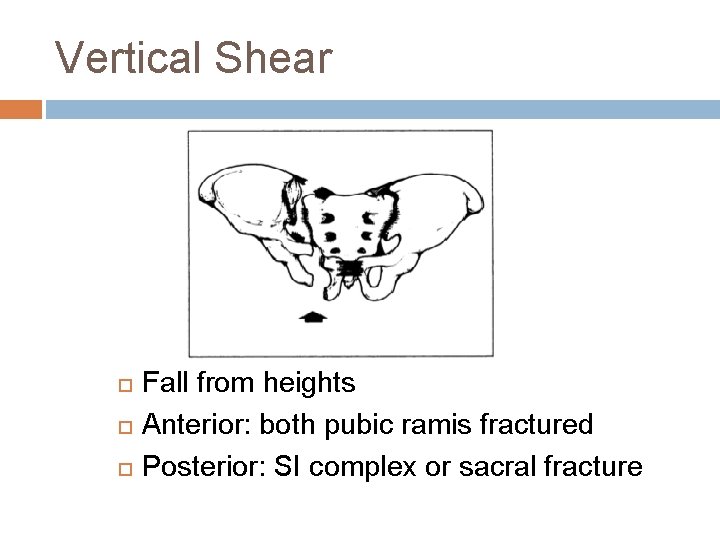
Vertical Shear Fall from heights Anterior: both pubic ramis fractured Posterior: SI complex or sacral fracture
Pelvic Stabilization Goal: reduce pelvic volume to decrease hemorrhage (earlier tamponade) External Pelvic Fixation (EPF) Standard Invasive Temporary stabilization Quickly applied (5 -60 min) Lower transfusion volumes at 24 h & 48 h C-clamp T-pod Journal of TRAUMA® Injury, Infection, and Critical Care • Volume 71, Number 6, December 2011 EAST Pelvic Fracture Guidelines
Pelvic Stabilization “because of their ease of use and fast application, TPBs have largely replaced the pelvic C-Clamp and EPF for early mechanical stability in pelvic fracture” Journal of TRAUMA® Injury, Infection, and Critical Care • Volume 71, Number 6, December 2011 EAST Pelvic Fracture Guidelines
References Wheeless’ Textbook of Orthopedics Accessed online 11/27/12 http: //www. wheelessonline. com/ortho/classificatio n_1 Young JW, Resnik CS. Fracture of the pelvis: current concepts of classification. AJR, Dec 1990, 155: 1169 -1175. Journal of TRAUMA® Injury, Infection, and Critical Care • Volume 71, Number 6, December 2011 EAST Pelvic Fracture Guidelines
- Slides: 8