
PEERS SCHOOLS AND SOCIETY Presentation by Tyler Adams
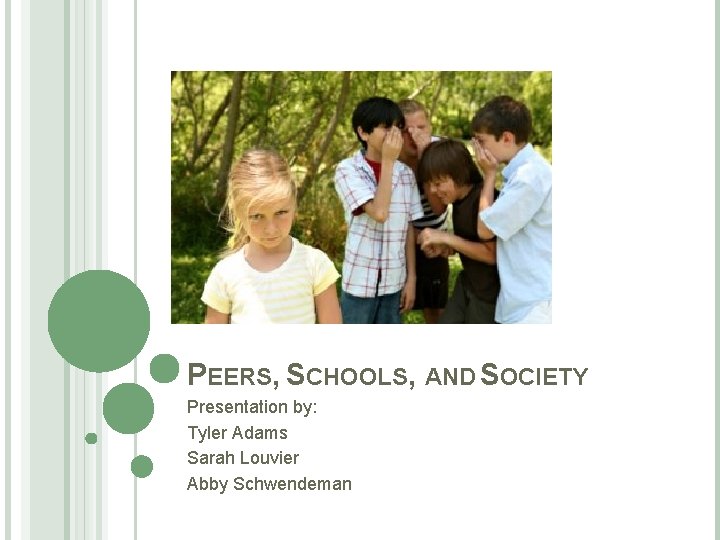
PEERS, SCHOOLS, AND SOCIETY Presentation by: Tyler Adams Sarah Louvier Abby Schwendeman
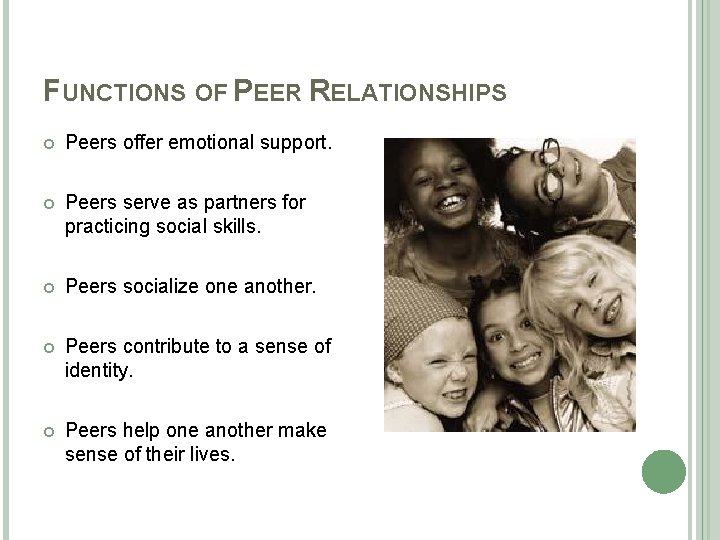
FUNCTIONS OF PEER RELATIONSHIPS Peers offer emotional support. Peers serve as partners for practicing social skills. Peers socialize one another. Peers contribute to a sense of identity. Peers help one another make sense of their lives.
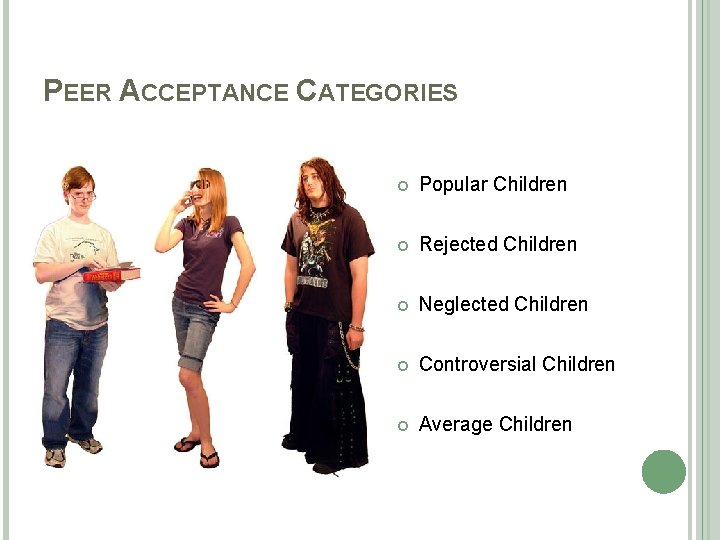
PEER ACCEPTANCE CATEGORIES Popular Children Rejected Children Neglected Children Controversial Children Average Children
FOSTERING FRIENDSHIPS IN THE CLASSROOM Help children ease into social groups. Set up situations in which youngsters can enjoy friendly interactions with one another. Be aware of family factors that affect children’s relationships. Minimize or eliminate barriers to social interaction. Cultivate children’s empathy for peers with special needs.
FOSTERING FRIENDSHIPS IN THE CLASSROOM Provide specific kinds of support rejected children need most. Help change the reputations of rejected children. Encourage a general feeling of respect for others. Encourage children to be honest and diplomatic during conflicts with friends. Be a backup system when relationships with peers aren’t going well.
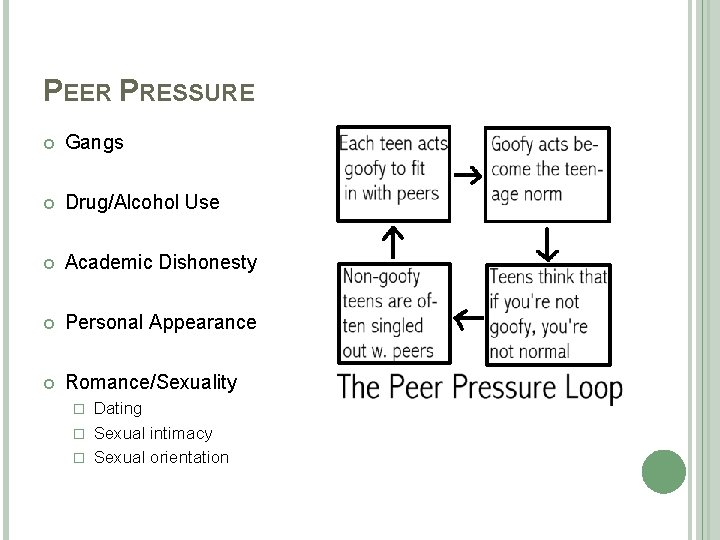
PEER PRESSURE Gangs Drug/Alcohol Use Academic Dishonesty Personal Appearance Romance/Sexuality Dating � Sexual intimacy � Sexual orientation �
WORKS CITED Mc. Devitt, Teresa M. , and Jeanne Ellis. Ormrod. "Chapter 15: Peers, Schools, and Society. " Child Development and Education. Upper Saddle River, NJ: Pearson Education, 2010. Print. "Peer Pressure Lesson Plan: Helpings Kids Learn Refusal Skills. " Lesson Plans & Materials. Web. 06 May 2010. <http: //lesson-plansmaterials. suite 101. com/article. cfm/peer_pressure_lesson_pla n#ixzz 0 n. AQEMCUY>.
- Slides: 7