
Peer Tutoring Training TWC LEC Company LOGO Contents
- Slides: 24
Peer Tutoring Training TWC & LEC Company LOGO
Contents A friend first, a tutor second, & never a teacher. . . 1 Imago Dialogue 2 Types of Mirroring 3 Empathizing and Roleplaying 4 The Tutoring Session 5 The Socratic Method
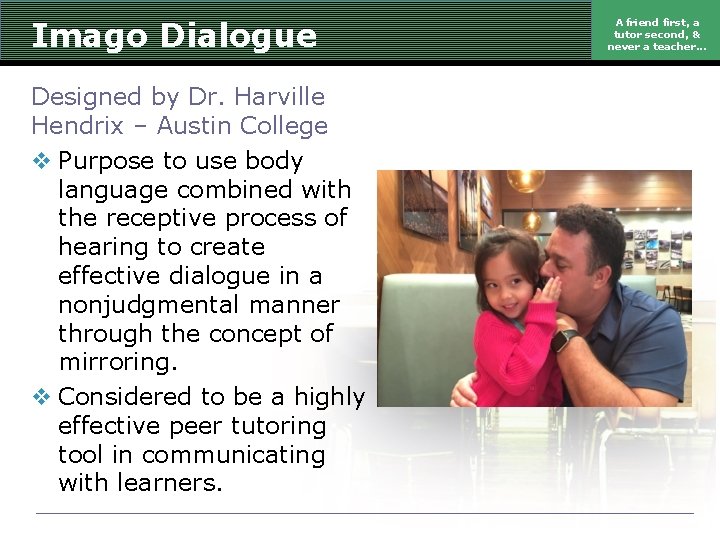
Imago Dialogue Designed by Dr. Harville Hendrix – Austin College v Purpose to use body language combined with the receptive process of hearing to create effective dialogue in a nonjudgmental manner through the concept of mirroring. v Considered to be a highly effective peer tutoring tool in communicating with learners. A friend first, a tutor second, & never a teacher. . .
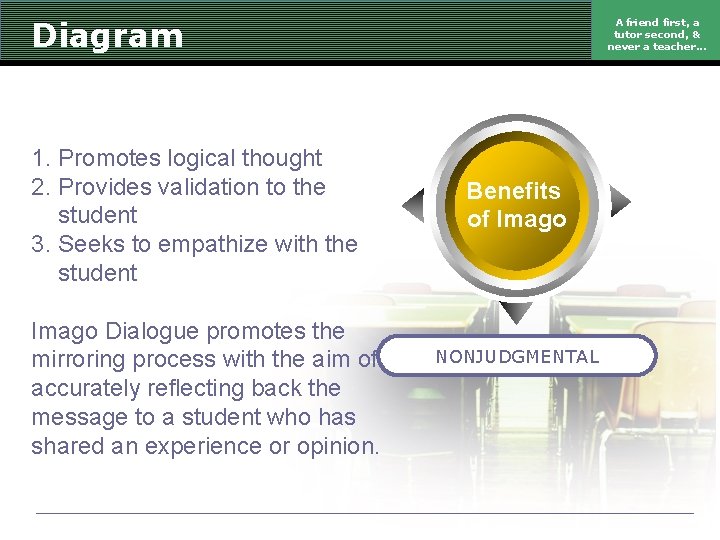
Diagram Text 1. Promotes logical thought Text 2. Provides validation to the student 3. Seeks to empathize with the Text student Imago Dialogue promotes the mirroring process with the aim of accurately reflecting back the message to a student who has shared an experience or opinion. A friend first, a tutor second, & never a teacher. . . Benefits of Imago Tex Tex NONJUDGMENTAL
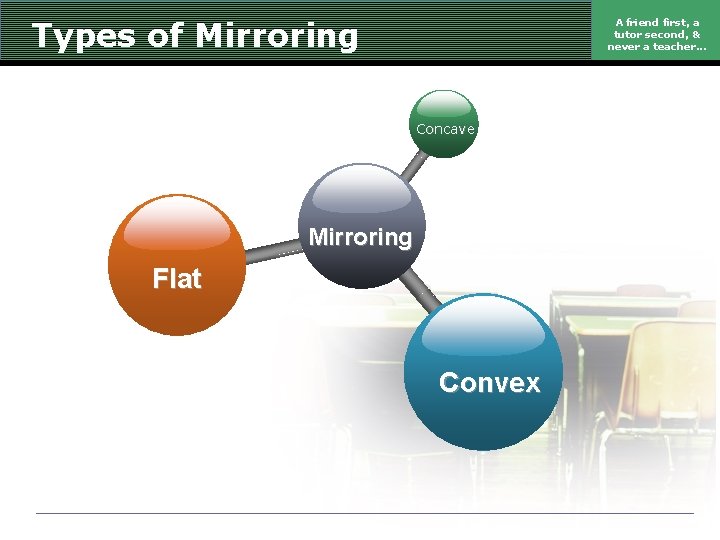
Types of Mirroring A friend first, a tutor second, & never a teacher. . . Concave Mirroring Flat Convex
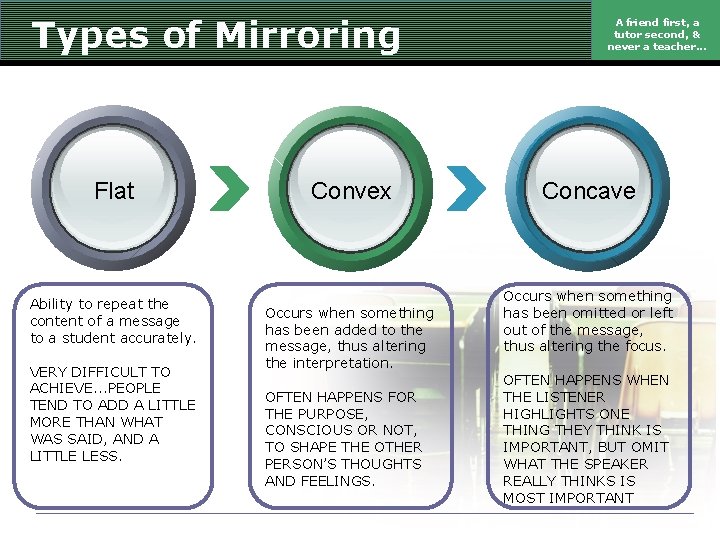
Types of Mirroring Flat Ability to repeat the content of a message to a student accurately. VERY DIFFICULT TO ACHIEVE. . . PEOPLE TEND TO ADD A LITTLE MORE THAN WHAT WAS SAID, AND A LITTLE LESS. Convex Occurs when something has been added to the message, thus altering the interpretation. OFTEN HAPPENS FOR THE PURPOSE, CONSCIOUS OR NOT, TO SHAPE THE OTHER PERSON’S THOUGHTS AND FEELINGS. A friend first, a tutor second, & never a teacher. . . Concave Occurs when something has been omitted or left out of the message, thus altering the focus. OFTEN HAPPENS WHEN THE LISTENER HIGHLIGHTS ONE THING THEY THINK IS IMPORTANT, BUT OMIT WHAT THE SPEAKER REALLY THINKS IS MOST IMPORTANT
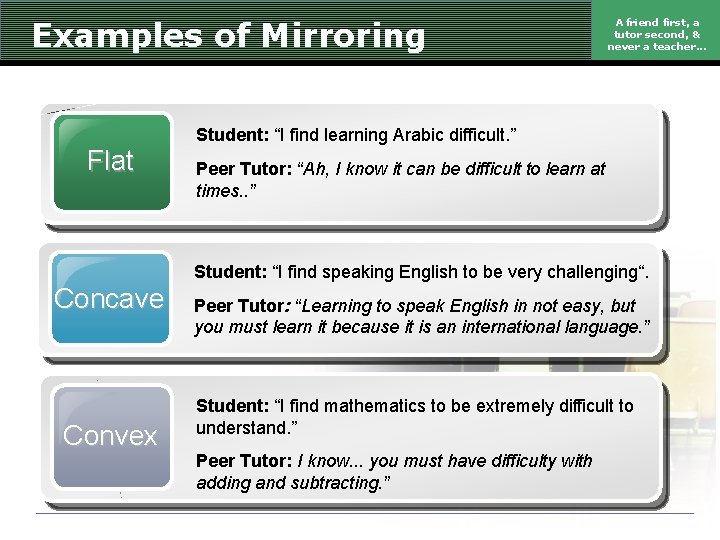
Examples of Mirroring Flat A friend first, a tutor second, & never a teacher. . . Student: “I find learning Arabic difficult. ” Peer Tutor: “Ah, I know it can be difficult to learn at times. . ” Student: “I find speaking English to be very challenging“. Concave Convex Peer Tutor: “Learning to speak English in not easy, but you must learn it because it is an international language. ” Student: “I find mathematics to be extremely difficult to understand. ” Peer Tutor: I know. . . you must have difficulty with adding and subtracting. ”
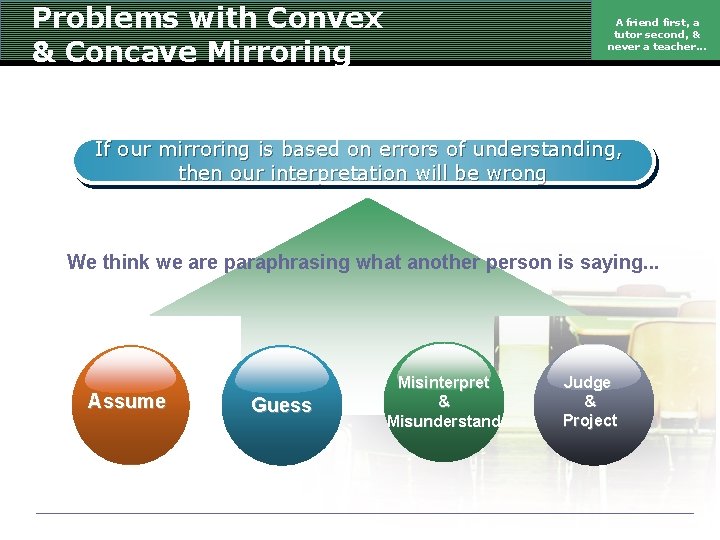
Problems with Convex & Concave Mirroring A friend first, a tutor second, & never a teacher. . . If our mirroring is based on errors of understanding, then our interpretation will be wrong We think we are paraphrasing what another person is saying. . . Assume Guess Misinterpret & Misunderstand Judge & Project
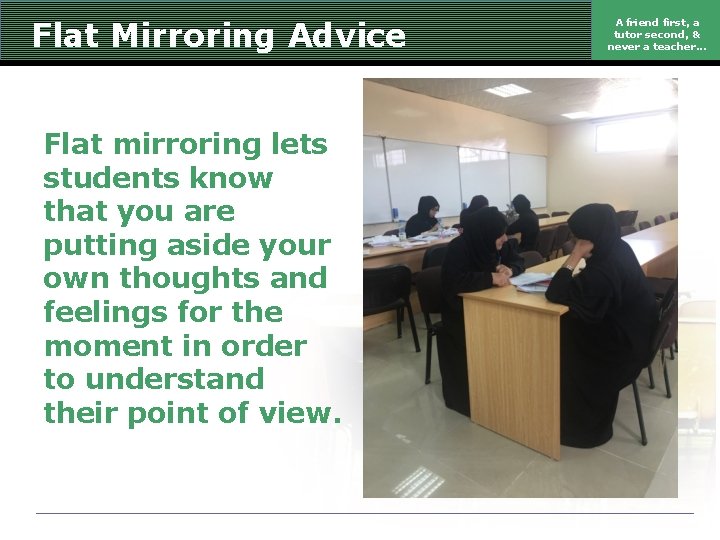
Flat Mirroring Advice Flat mirroring lets students know that you are putting aside your own thoughts and feelings for the moment in order to understand their point of view. A friend first, a tutor second, & never a teacher. . .
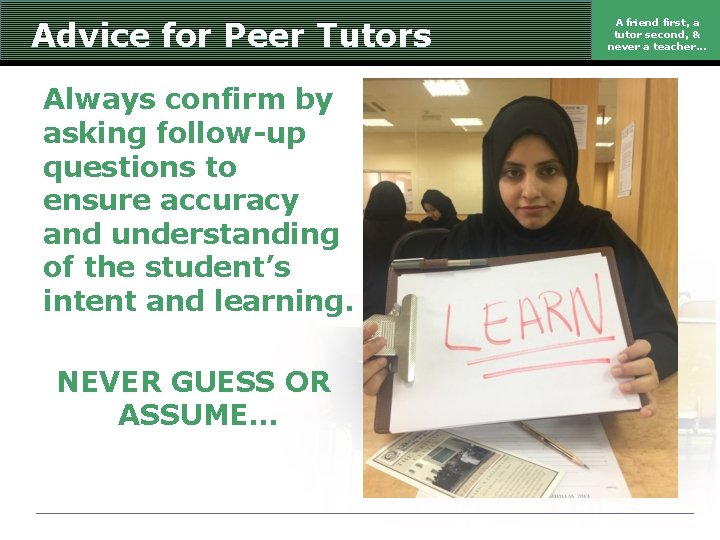
Advice for Peer Tutors Always confirm by asking follow-up questions to ensure accuracy and understanding of the student’s intent and learning. NEVER GUESS OR ASSUME. . . A friend first, a tutor second, & never a teacher. . .
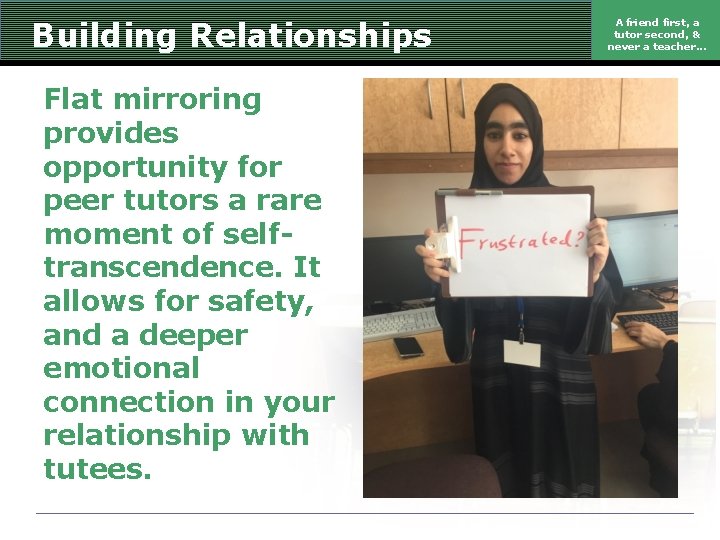
Building Relationships Flat mirroring provides opportunity for peer tutors a rare moment of selftranscendence. It allows for safety, and a deeper emotional connection in your relationship with tutees. A friend first, a tutor second, & never a teacher. . .
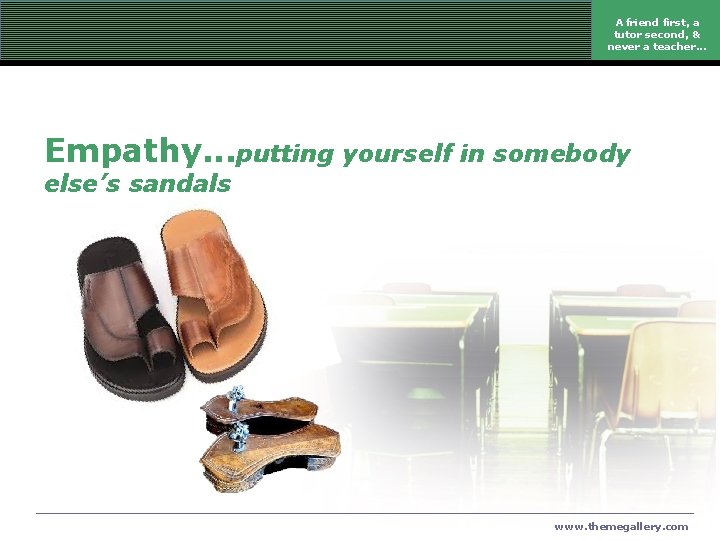
A friend first, a tutor second, & never a teacher. . . Empathy. . . putting yourself in somebody else’s sandals www. themegallery. com
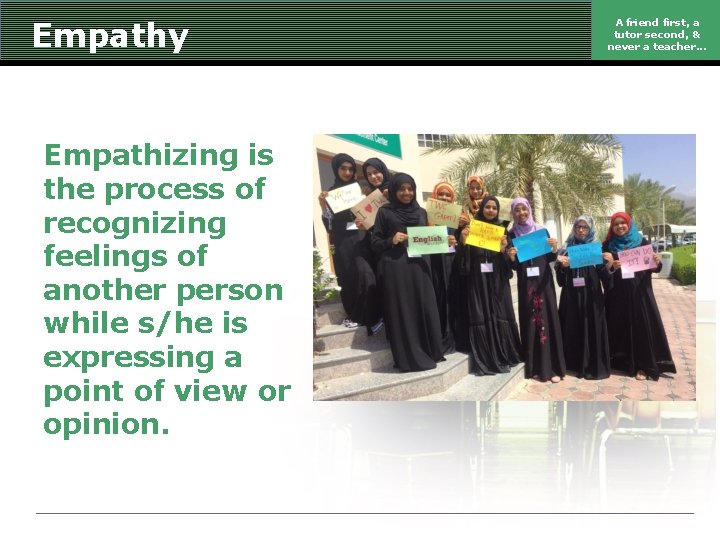
Empathy Empathizing is the process of recognizing feelings of another person while s/he is expressing a point of view or opinion. A friend first, a tutor second, & never a teacher. . .
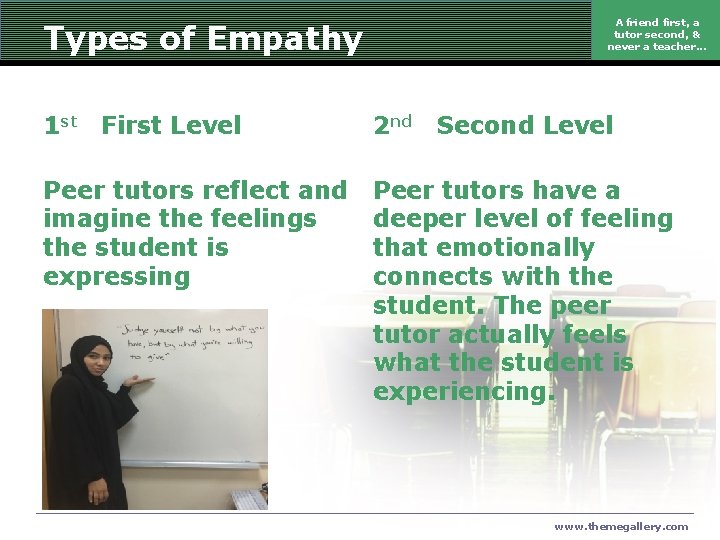
A friend first, a tutor second, & never a teacher. . . Types of Empathy 1 st First Level Peer tutors reflect and imagine the feelings the student is expressing 2 nd Second Level Peer tutors have a deeper level of feeling that emotionally connects with the student. The peer tutor actually feels what the student is experiencing. www. themegallery. com
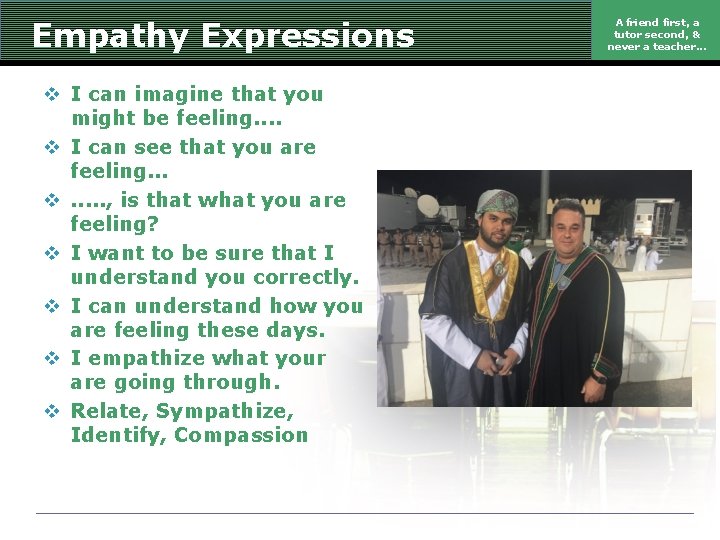
Empathy Expressions v I can imagine that you might be feeling. . v I can see that you are feeling. . . v. . . , is that what you are feeling? v I want to be sure that I understand you correctly. v I can understand how you are feeling these days. v I empathize what your are going through. v Relate, Sympathize, Identify, Compassion A friend first, a tutor second, & never a teacher. . .
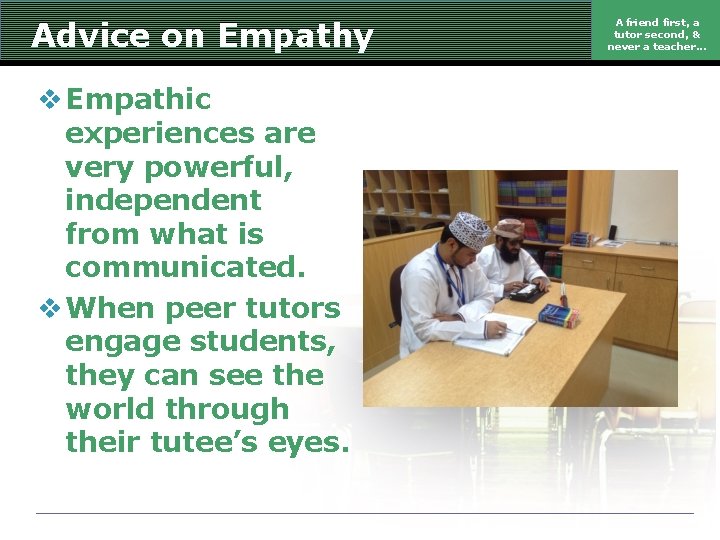
Advice on Empathy v Empathic experiences are very powerful, independent from what is communicated. v When peer tutors engage students, they can see the world through their tutee’s eyes. A friend first, a tutor second, & never a teacher. . .
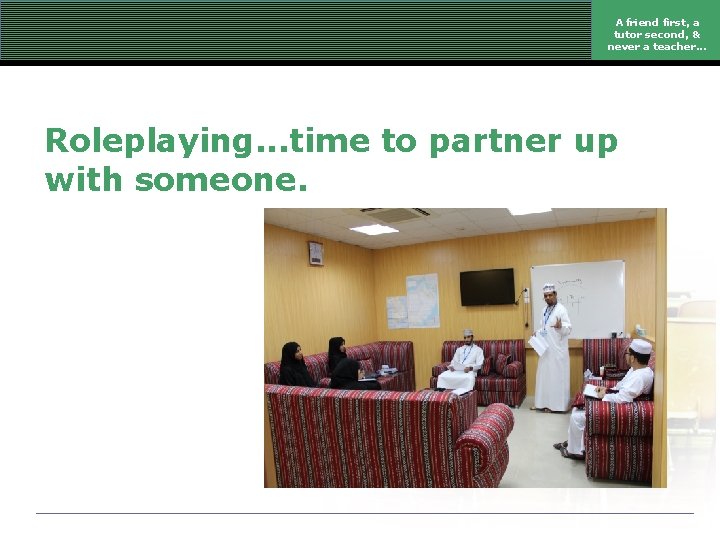
A friend first, a tutor second, & never a teacher. . . Roleplaying. . . time to partner up with someone.
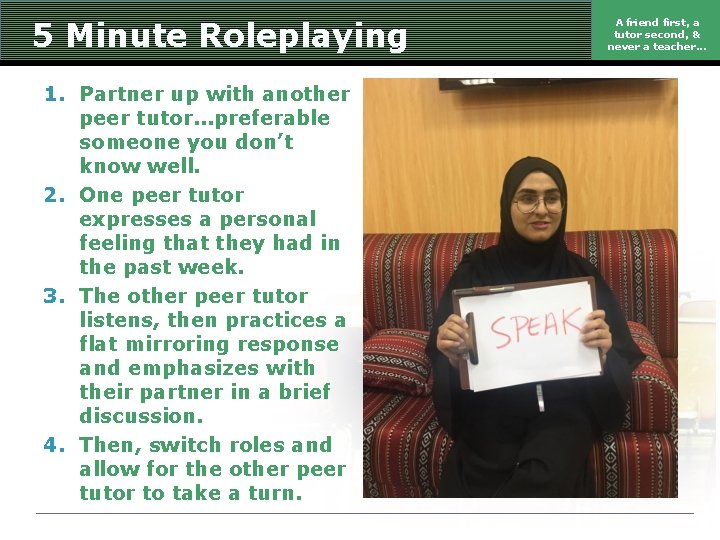
5 Minute Roleplaying 1. Partner up with another peer tutor. . . preferable someone you don’t know well. 2. One peer tutor expresses a personal feeling that they had in the past week. 3. The other peer tutor listens, then practices a flat mirroring response and emphasizes with their partner in a brief discussion. 4. Then, switch roles and allow for the other peer tutor to take a turn. A friend first, a tutor second, & never a teacher. . .
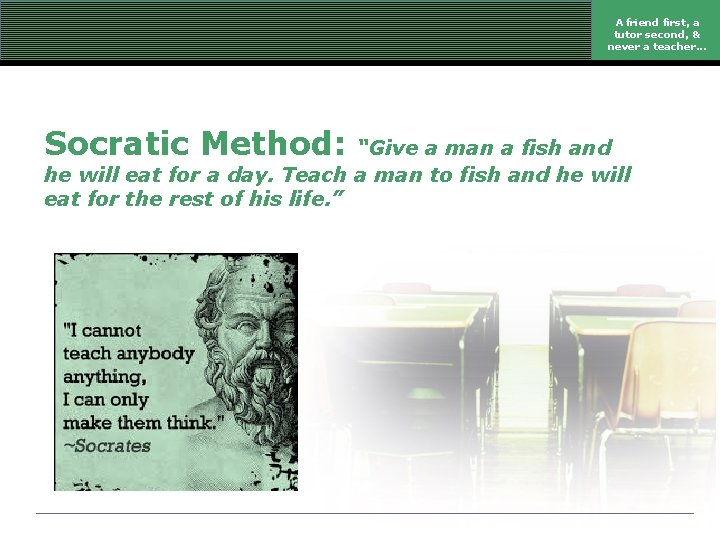
A friend first, a tutor second, & never a teacher. . . Socratic Method: “Give a man a fish and he will eat for a day. Teach a man to fish and he will eat for the rest of his life. ”
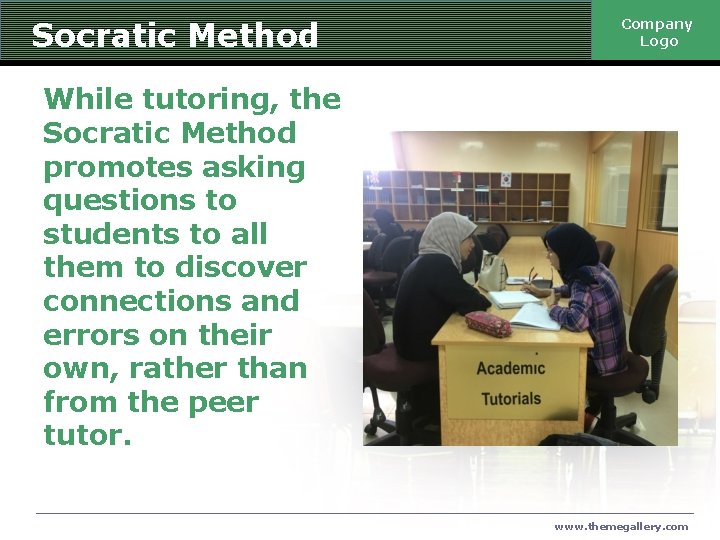
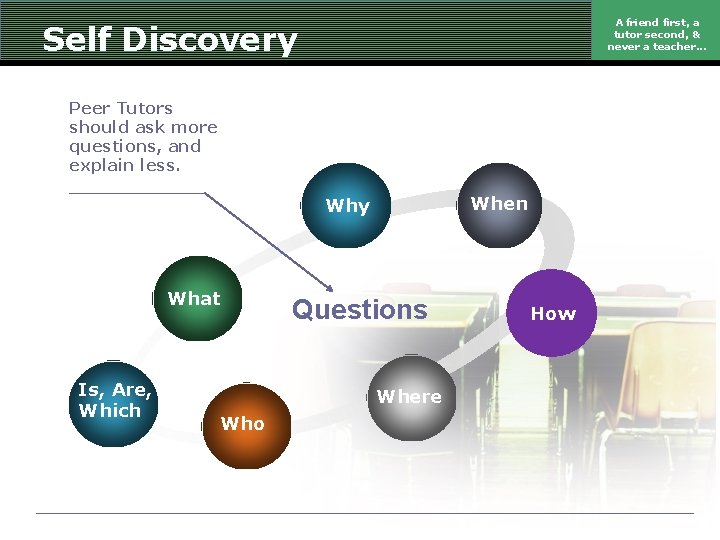
Socratic Method Company Logo While tutoring, the Socratic Method promotes asking questions to students to all them to discover connections and errors on their own, rather than from the peer tutor. www. themegallery. com
A friend first, a tutor second, & never a teacher. . . Self Discovery Peer Tutors should ask more questions, and explain less. When Why What Is, Are, Which Questions Where Who How
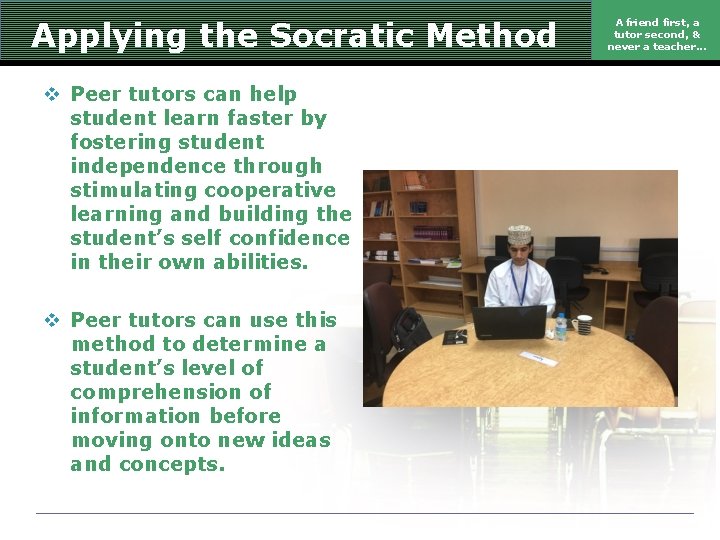
Applying the Socratic Method v Peer tutors can help student learn faster by fostering student independence through stimulating cooperative learning and building the student’s self confidence in their own abilities. v Peer tutors can use this method to determine a student’s level of comprehension of information before moving onto new ideas and concepts. A friend first, a tutor second, & never a teacher. . .
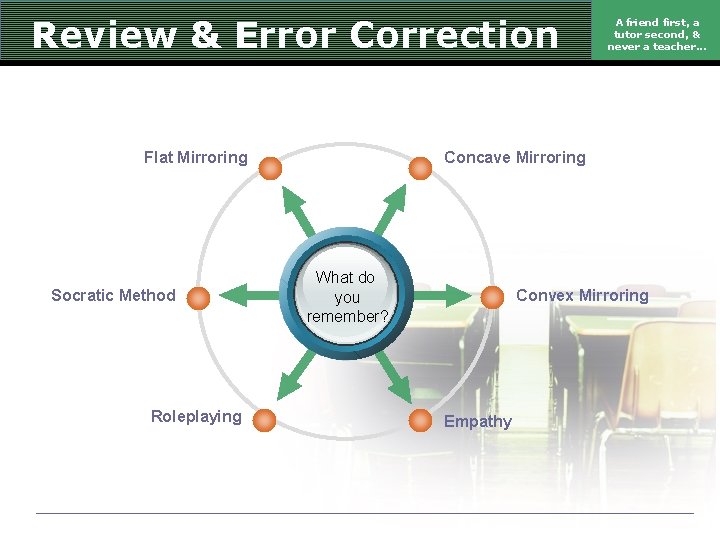
Review & Error Correction Flat Mirroring Socratic Method Roleplaying A friend first, a tutor second, & never a teacher. . . Concave Mirroring What do you remember? Convex Mirroring Empathy
Hope you can apply what you learned in your peer tutorials at TWC & LEC Company LOGO