
Peer to Coach Connection Recovery is Sweeter Objectives
Peer to Coach Connection Recovery is Sweeter
Objectives: � To describe the roles and functions of a recovery coach � To aide in developing a personal recovery process � To guide and support participant in early recover when entering treatment court � To assist participant to connect with resources in the community � List core values and principles of the many dimensions of recovery � Encourage participants to become involved in the alumni group
Recovery Coach Definition � � “A Recovery Coach is someone interested in promoting recovery by assisting recoveries to identify and overcome barriers to recovery, develop recovery capital and serve as a recovery guide and companion for those seeking or sustaining recovery. ” (From CCAR) “A Recovery Coach is a person who helps remove personal and environmental obstacles to recovery, links the newly recovering person to the recovering community, and serve as a personal guild to mentor in the management of personal and family recovery. Such supports are generated by mobilizing volunteer resources within the recovery community, or provided by the recovery coach where such natural support networks are lacking. ” (From William White)
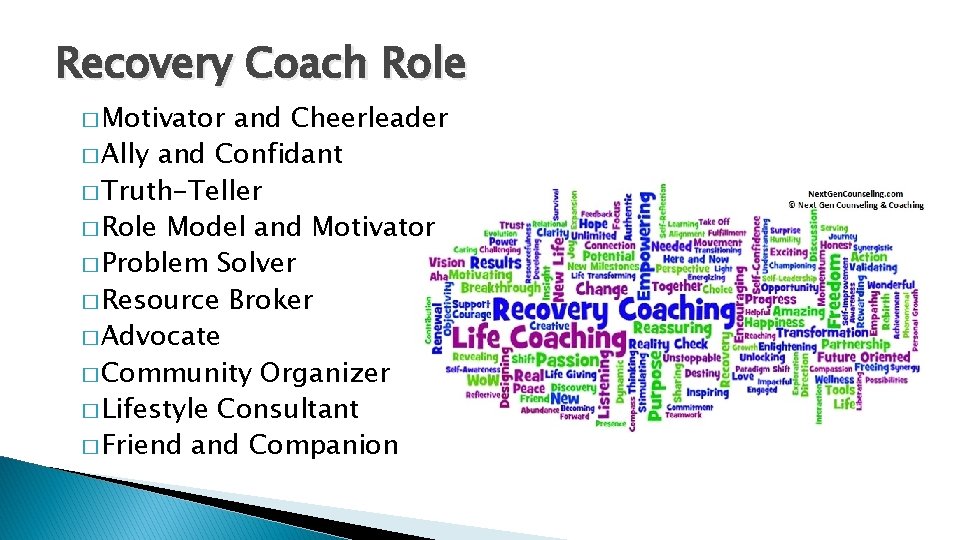
Recovery Coach Role � Motivator and Cheerleader � Ally and Confidant � Truth-Teller � Role Model and Motivator � Problem Solver � Resource Broker � Advocate � Community Organizer � Lifestyle Consultant � Friend and Companion
A Recovery Coach is NOT a � Sponsor � Counselor � Nurse/Doctor � Clergy Person
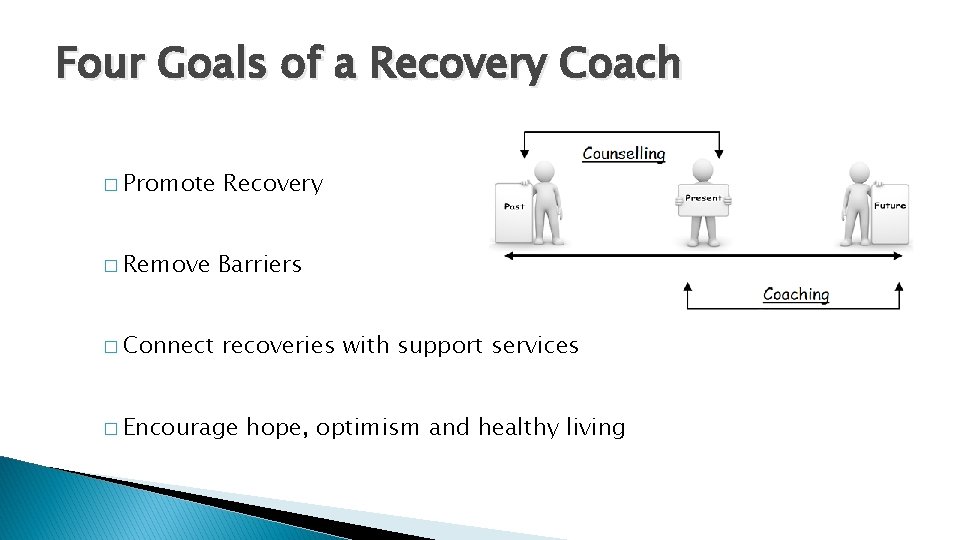
Four Goals of a Recovery Coach � Promote Recovery � Remove Barriers � Connect recoveries with support services � Encourage hope, optimism and healthy living
Pathways to Recovery � The role of a recovery coach includes honoring all pathways of recovery. What works for some may not work for others. The recovery coach is there to provide guidance and help a recoveree find what will work best for them.
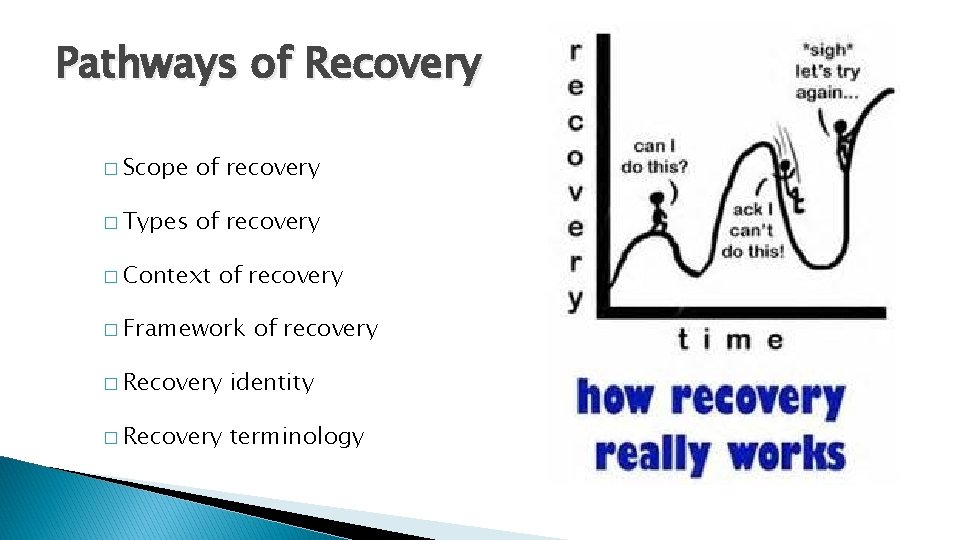
Pathways of Recovery � Scope of recovery � Types of recovery � Context of recovery � Framework of recovery � Recovery identity � Recovery terminology
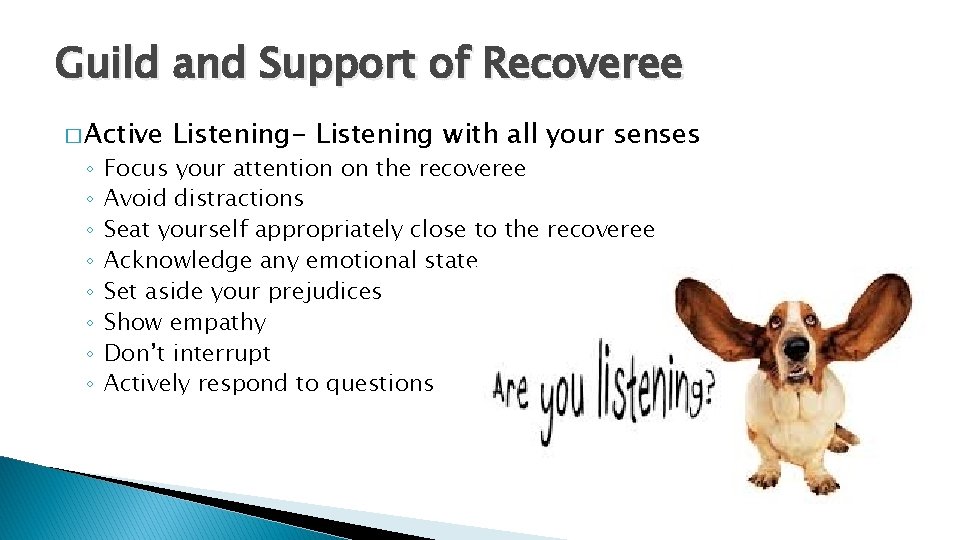
Guild and Support of Recoveree � Active ◦ ◦ ◦ ◦ Listening- Listening with all your senses Focus your attention on the recoveree Avoid distractions Seat yourself appropriately close to the recoveree Acknowledge any emotional state Set aside your prejudices Show empathy Don’t interrupt Actively respond to questions
Motivational Interviewing �Key Principles �Four Keys ◦ Express Empathy ◦ Open Ended Questions ◦ Develop Discrepancy ◦ Affirmation ◦ Avoid Argument ◦ Reflective listening ◦ Support Self-Efficacy ◦ Summary ◦ Roll with Resistance
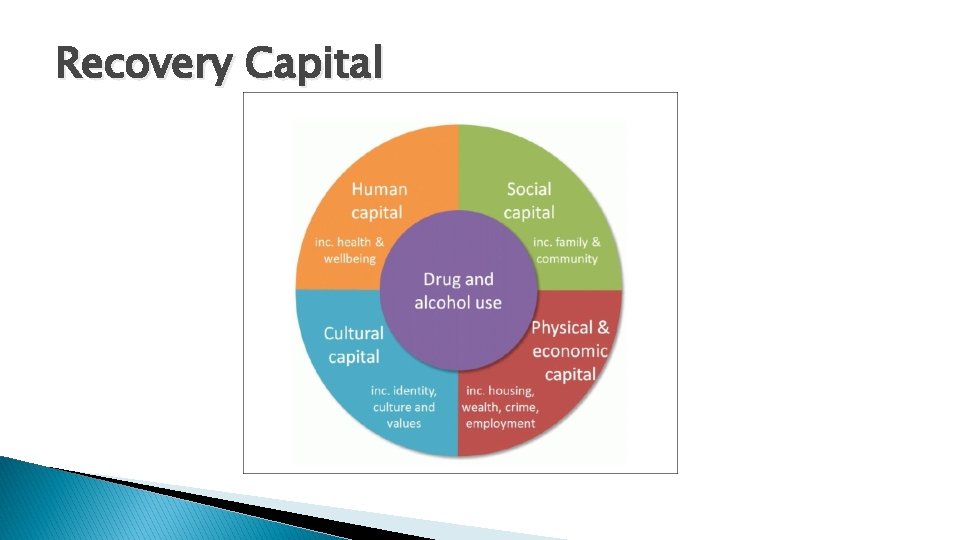
Recovery Capital
Making A Successful Referral � Things ◦ ◦ ◦ ◦ ◦ to know Where are they located What the neighborhood is like Is public transportation available Is it well lit Exactly what services are offered What are the protocols Cost Choice as to who they will see Recovery Friendly Would you refer a family member there
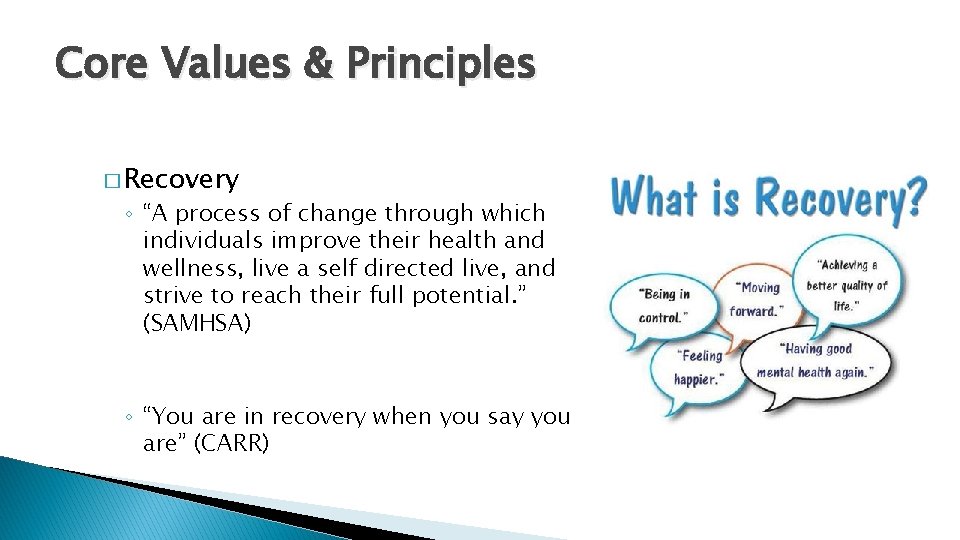
Core Values & Principles � Recovery ◦ “A process of change through which individuals improve their health and wellness, live a self directed live, and strive to reach their full potential. ” (SAMHSA) ◦ “You are in recovery when you say you are” (CARR)
Core Values of Recovery � Premise 1 � Premise 2 � Premise 3 ◦ All individuals are unique and have special needs, goals, health attitudes and behaviors, and expectation for recovery. ◦ Persons in recovery with mental health issues, substance use disorder, and/or gambling, share some similarities, however, management of their own lives and mastery of their own futures will require different pathways at times. ◦ All persons should be offered equal access to recovery and have the opportunity to participate in their own recovery process.
Guiding Principles of Recovery � Self-Directed � Strengths-based � Empowerment � Basic needs � Hope � Optimism � Positive � Being Self-Identity of Service
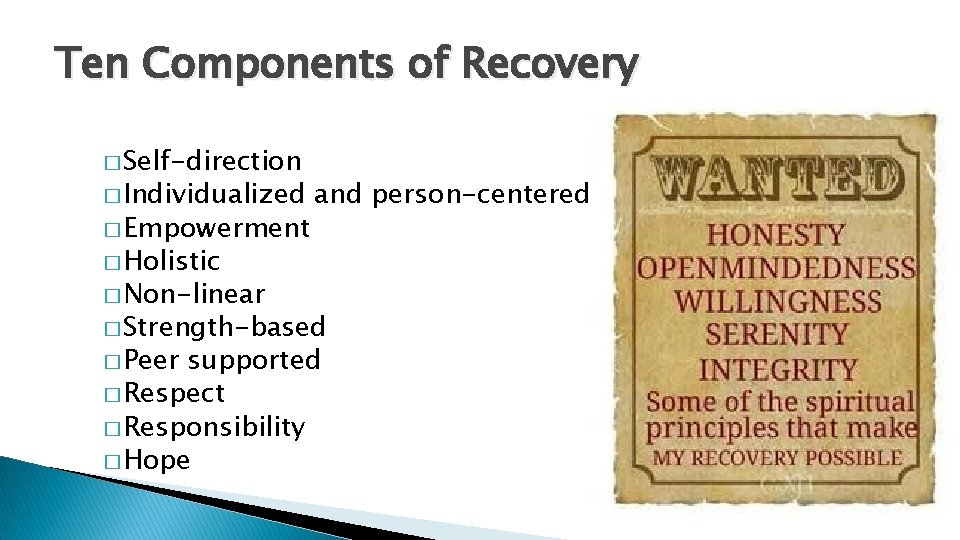
Ten Components of Recovery � Self-direction � Individualized � Empowerment and person-centered � Holistic � Non-linear � Strength-based � Peer supported � Respect � Responsibility � Hope
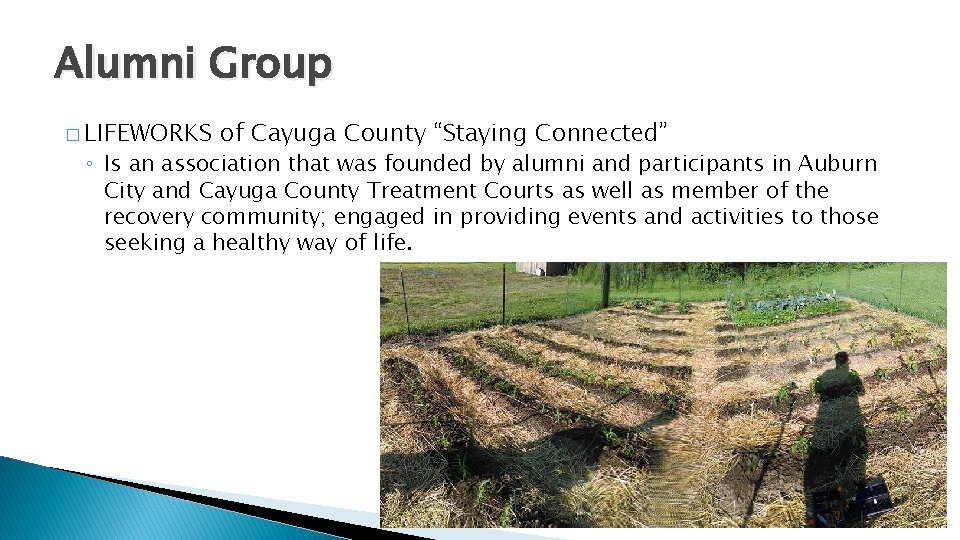
Alumni Group � LIFEWORKS of Cayuga County “Staying Connected” ◦ Is an association that was founded by alumni and participants in Auburn City and Cayuga County Treatment Courts as well as member of the recovery community; engaged in providing events and activities to those seeking a healthy way of life.
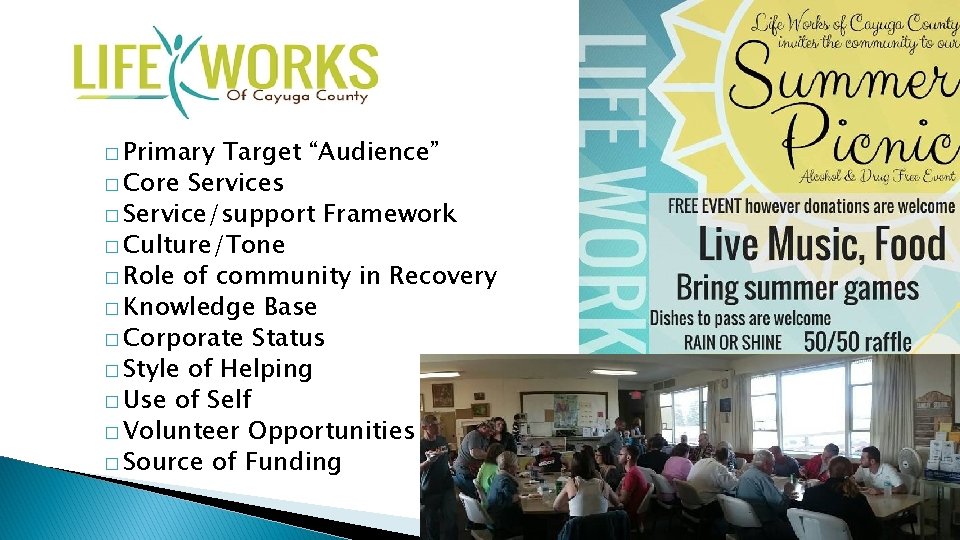
� Primary Target “Audience” � Core Services � Service/support Framework � Culture/Tone � Role of community in Recovery � Knowledge Base � Corporate Status � Style of Helping � Use of Self � Volunteer Opportunities � Source of Funding
- Slides: 18