
Peer TeachingLearning Experience Program Guiding students to a

- Slides: 28
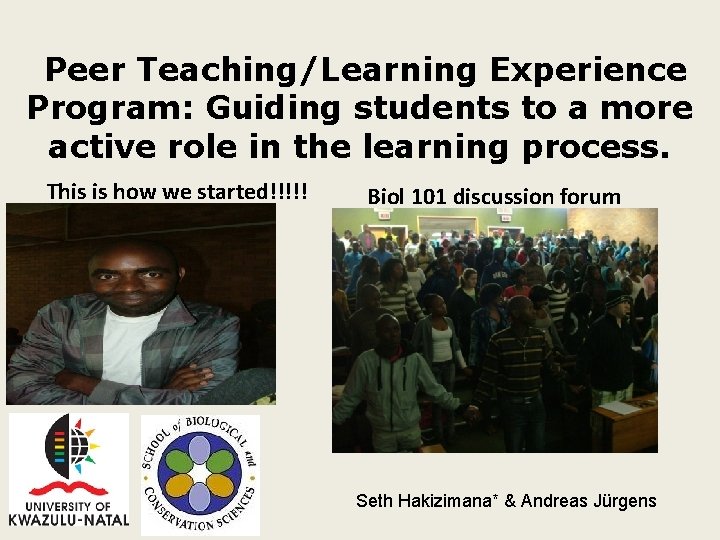
Peer Teaching/Learning Experience Program: Guiding students to a more active role in the learning process. This is how we started!!!!! Biol 101 discussion forum Seth Hakizimana* & Andreas Jürgens
Content of the talk • Historical foundation ideas of PTLEP • PTLEP: a 4 -5 layered system • Education theories support both symmetrical & asymmetrical relationships in PTLEP • Conscientization & Identification of oppressive elements hindering academic achievements • Operation of PTLEP allowing students to do all the work • Achievements of the system • Literature records on the use of similar systems
Peer teaching/Learning: What is the matter? Education long ago Education in SA to day • Education was for few selected individuals & become a right for all due to democracy • Drastic increase in enrolment • Considered as a solution to poverty & crime, mass education has been a challenge • Peer teaching was adopted as economical means to expand it to all • Students are not able to develop self-directed learning, communication & problem solving skills • High drop out & low completion rate (30%) put much pressure on education system • Peer teaching as adopted in the past, can be a solution
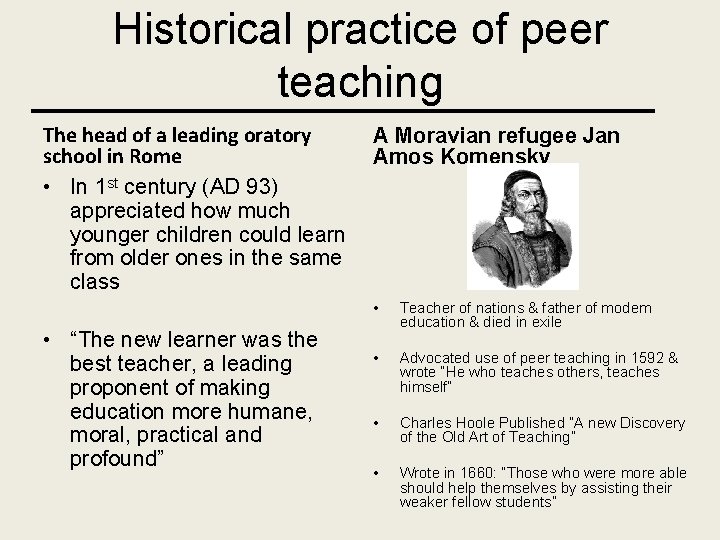
Historical practice of peer teaching The head of a leading oratory school in Rome • In 1 st century (AD 93) appreciated how much younger children could learn from older ones in the same class • “The new learner was the best teacher, a leading proponent of making education more humane, moral, practical and profound” A Moravian refugee Jan Amos Komensky • Teacher of nations & father of modem education & died in exile • Advocated use of peer teaching in 1592 & wrote “He who teaches others, teaches himself” • Charles Hoole Published ”A new Discovery of the Old Art of Teaching” • Wrote in 1660: “Those who were more able should help themselves by assisting their weaker fellow students”
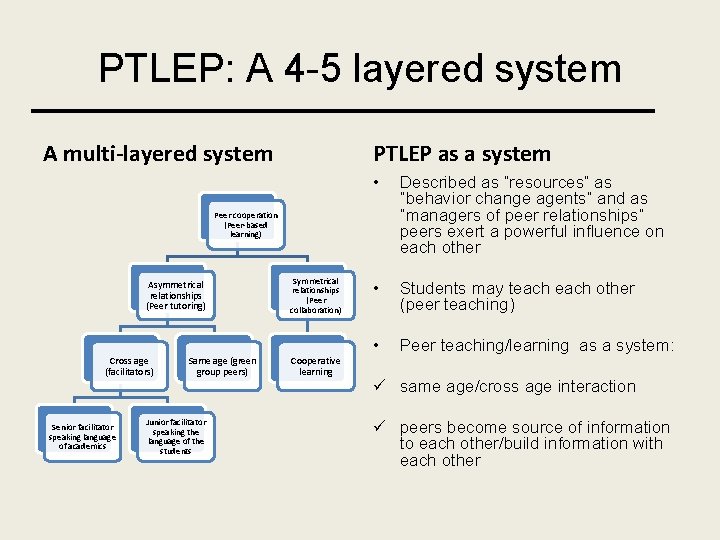
PTLEP: A 4 -5 layered system A multi-layered system PTLEP as a system • Described as “resources” as “behavior change agents” and as “managers of peer relationships” peers exert a powerful influence on each other • Students may teach other (peer teaching) • Peer teaching/learning as a system: Peer cooperation (Peer-based learning) Asymmetrical relationships (Peer tutoring) Cross age (facilitators) Senior facilitator speaking language of academics Same age (green group peers) Junior facilitator speaking the language of the students Symmetrical relationships (Peer collaboration) Cooperative learning ü same age/cross age interaction ü peers become source of information to each other/build information with each other
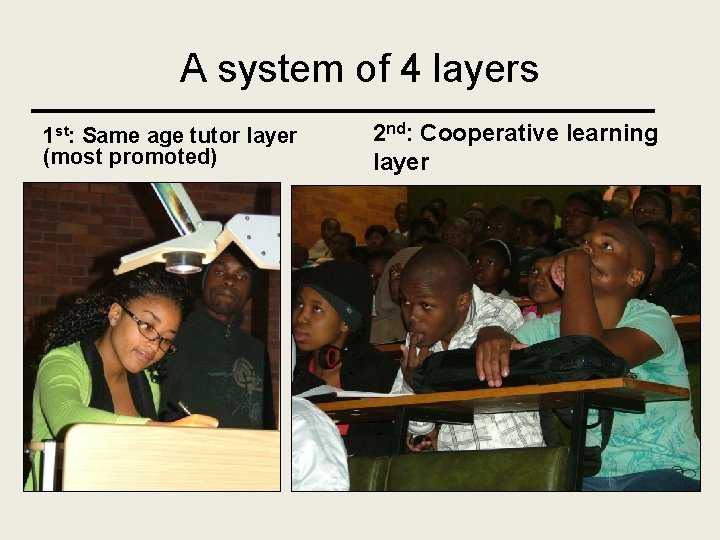
A system of 4 layers 1 st: Same age tutor layer (most promoted) 2 nd: Cooperative learning layer
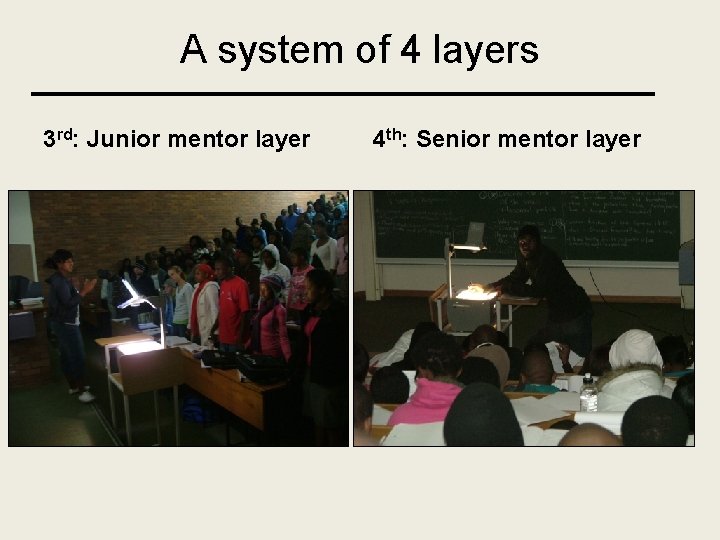
A system of 4 layers 3 rd: Junior mentor layer 4 th: Senior mentor layer
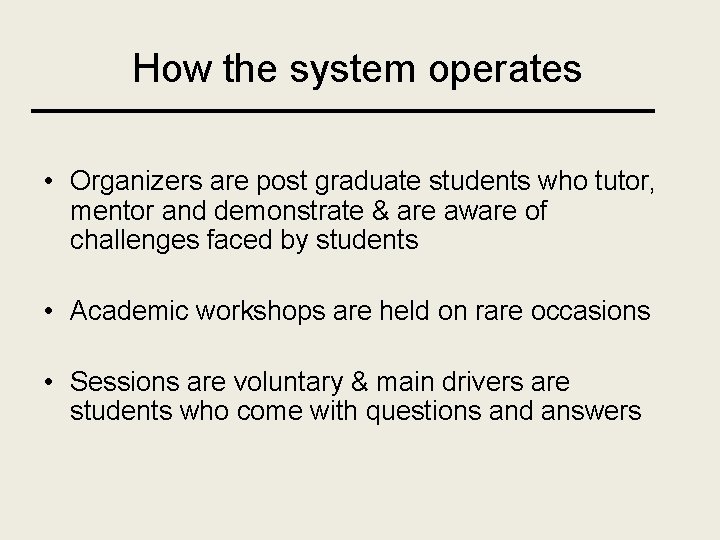
How the system operates • Organizers are post graduate students who tutor, mentor and demonstrate & are aware of challenges faced by students • Academic workshops are held on rare occasions • Sessions are voluntary & main drivers are students who come with questions and answers
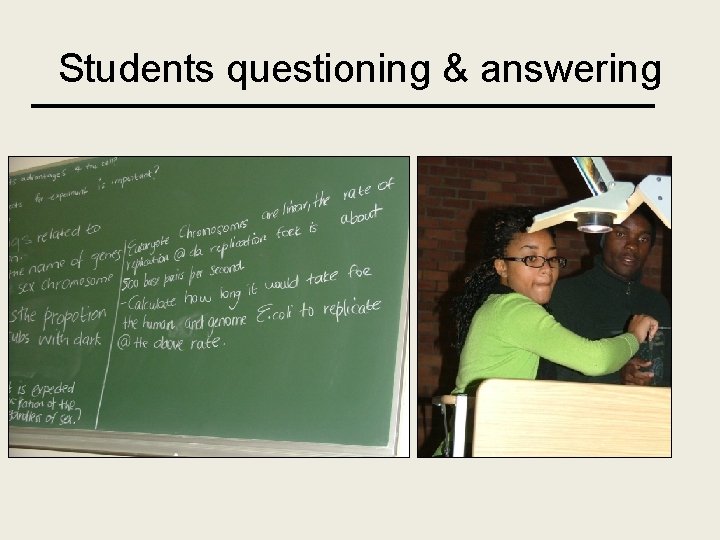
Students questioning & answering
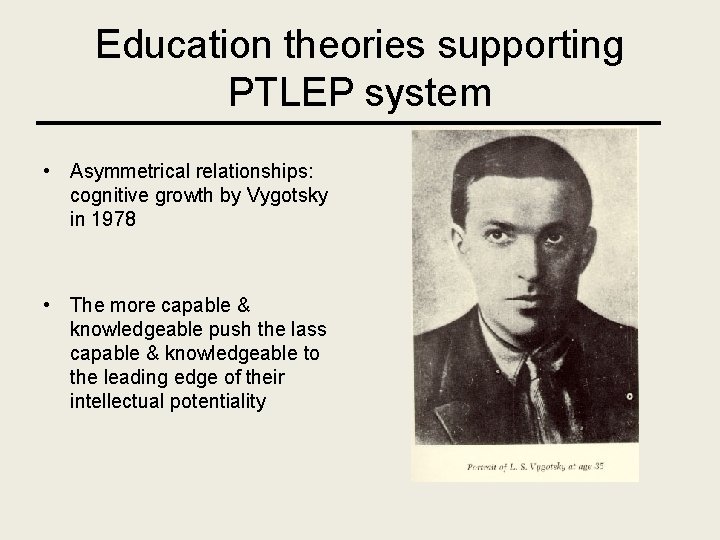
Education theories supporting PTLEP system • Asymmetrical relationships: cognitive growth by Vygotsky in 1978 • The more capable & knowledgeable push the lass capable & knowledgeable to the leading edge of their intellectual potentiality
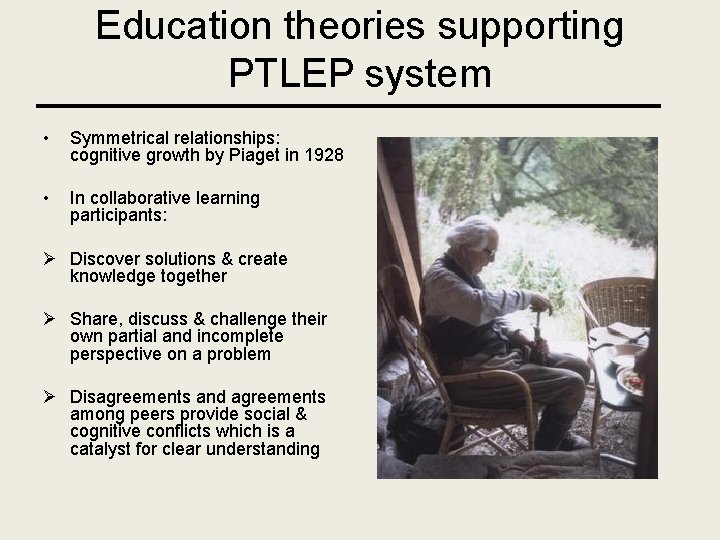
Education theories supporting PTLEP system • Symmetrical relationships: cognitive growth by Piaget in 1928 • In collaborative learning participants: Ø Discover solutions & create knowledge together Ø Share, discuss & challenge their own partial and incomplete perspective on a problem Ø Disagreements and agreements among peers provide social & cognitive conflicts which is a catalyst for clear understanding
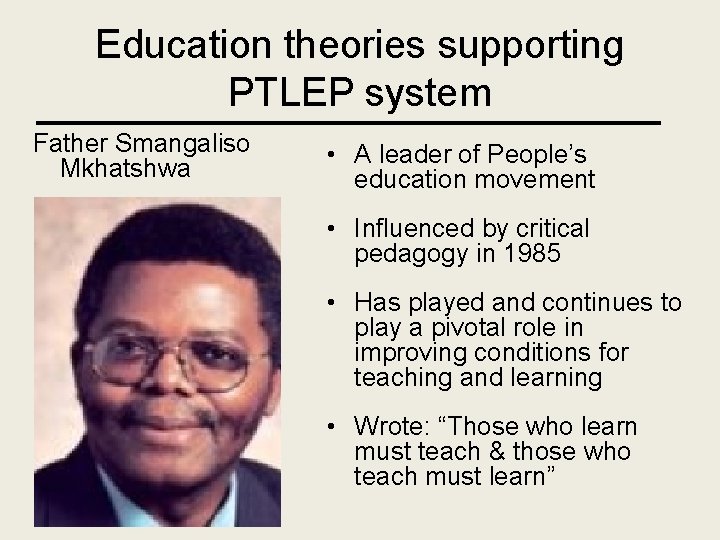
Education theories supporting PTLEP system Father Smangaliso Mkhatshwa • A leader of People’s education movement • Influenced by critical pedagogy in 1985 • Has played and continues to play a pivotal role in improving conditions for teaching and learning • Wrote: “Those who learn must teach & those who teach must learn”
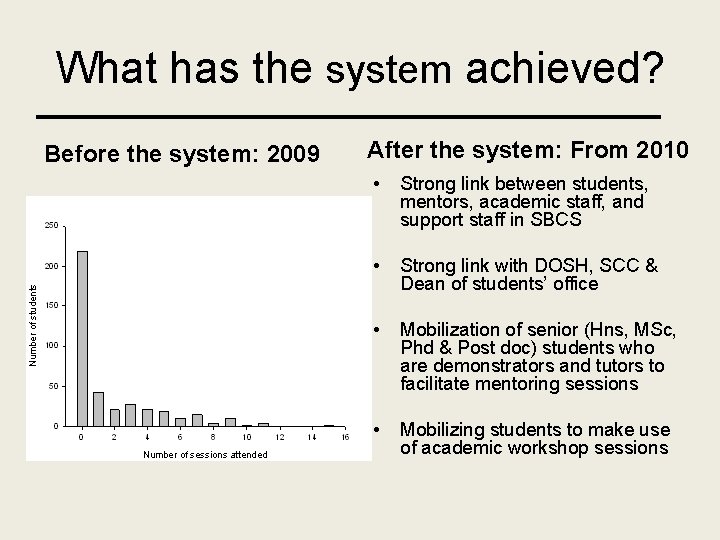
What has the system achieved? Before the system: 2009 After the system: From 2010 • Strong link between students, mentors, academic staff, and support staff in SBCS • Strong link with DOSH, SCC & Dean of students’ office • Mobilization of senior (Hns, MSc, Phd & Post doc) students who are demonstrators and tutors to facilitate mentoring sessions • Mobilizing students to make use of academic workshop sessions
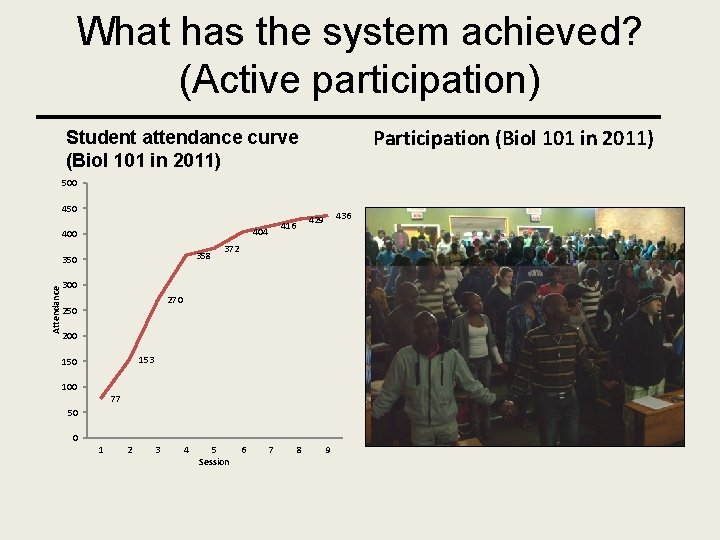
What has the system achieved? (Active participation) Participation (Biol 101 in 2011) Student attendance curve (Biol 101 in 2011) 500 450 404 400 358 Attendance 350 436 429 416 372 300 270 250 200 153 150 100 77 50 0 1 2 3 4 5 Session 6 7 8 9
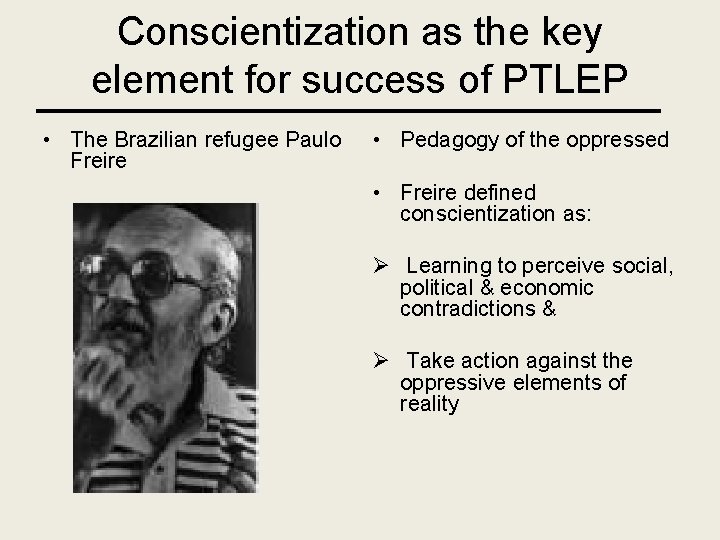
Conscientization as the key element for success of PTLEP • The Brazilian refugee Paulo Freire • Pedagogy of the oppressed • Freire defined conscientization as: Ø Learning to perceive social, political & economic contradictions & Ø Take action against the oppressive elements of reality
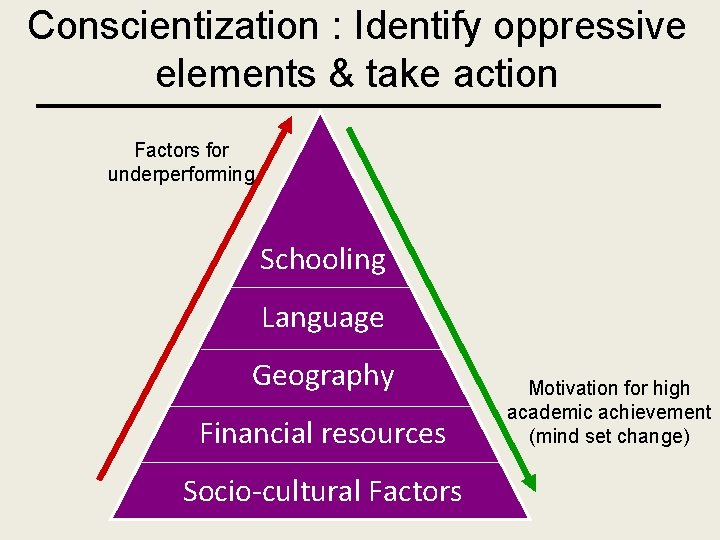
Conscientization : Identify oppressive elements & take action Factors for underperforming Schooling Language Geography Financial resources Socio-cultural Factors Motivation for high academic achievement (mind set change)
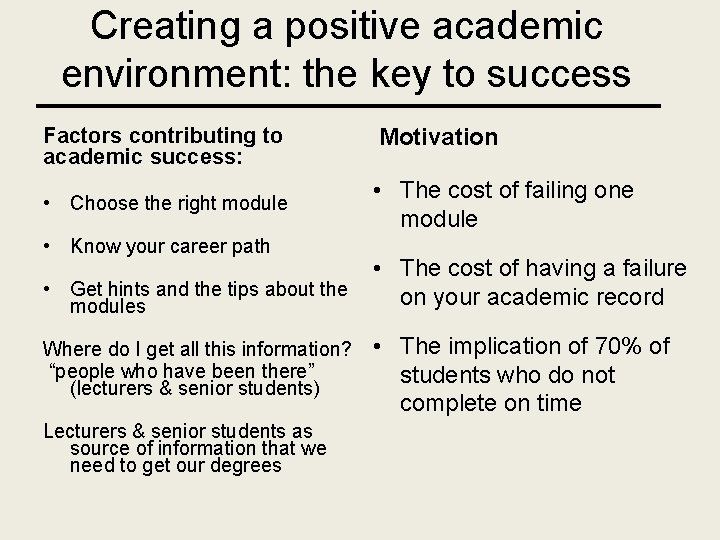
Creating a positive academic environment: the key to success Factors contributing to academic success: Motivation • Choose the right module • The cost of failing one module • Know your career path • Get hints and the tips about the modules Where do I get all this information? “people who have been there” (lecturers & senior students) Lecturers & senior students as source of information that we need to get our degrees • The cost of having a failure on your academic record • The implication of 70% of students who do not complete on time
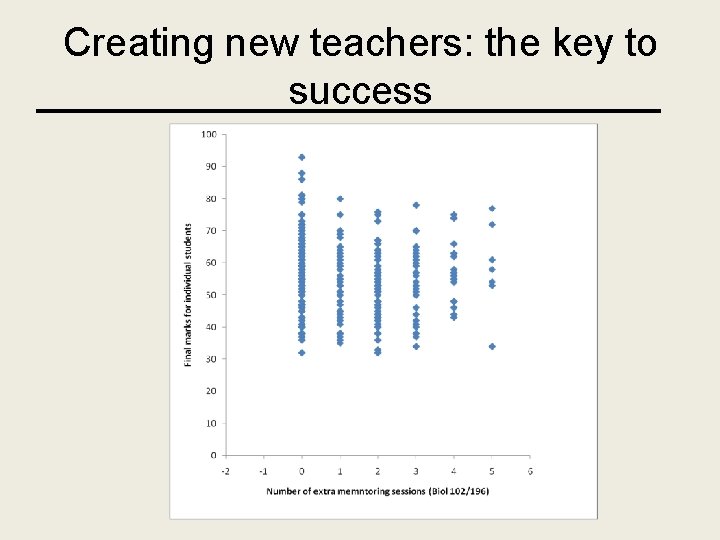
Creating new teachers: the key to success
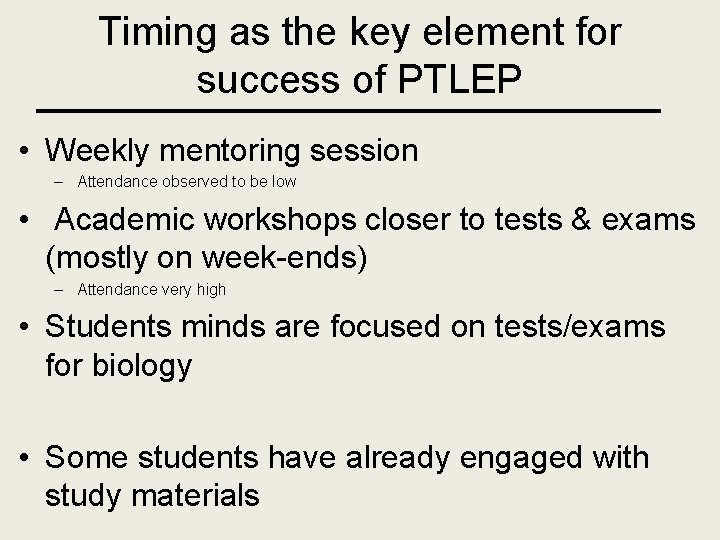
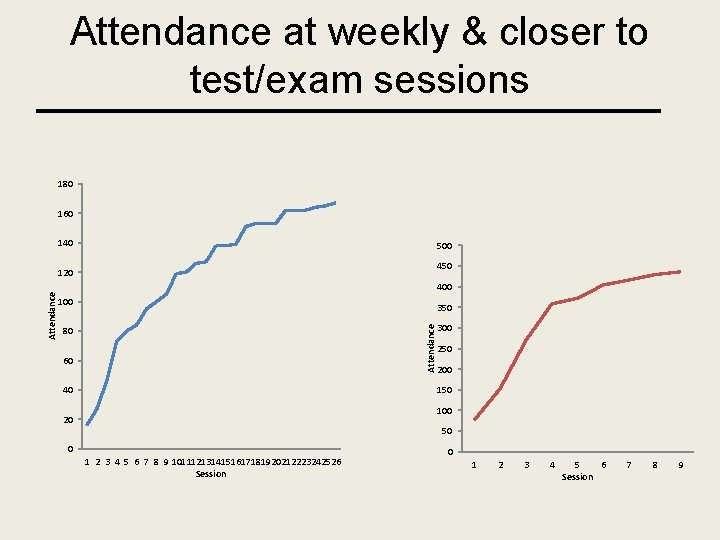
Timing as the key element for success of PTLEP • Weekly mentoring session – Attendance observed to be low • Academic workshops closer to tests & exams (mostly on week-ends) – Attendance very high • Students minds are focused on tests/exams for biology • Some students have already engaged with study materials
Attendance at weekly & closer to test/exam sessions 180 160 140 500 450 400 100 350 Attendance 120 80 60 300 250 200 150 40 100 20 50 0 1 2 3 4 5 6 7 8 9 1011121314151617181920212223242526 Session 0 1 2 3 4 5 6 Session 7 8 9
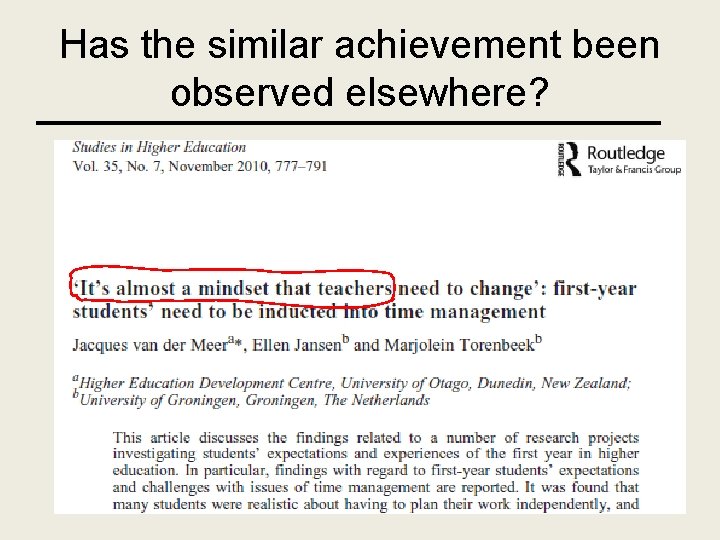
Has the similar achievement been observed elsewhere?
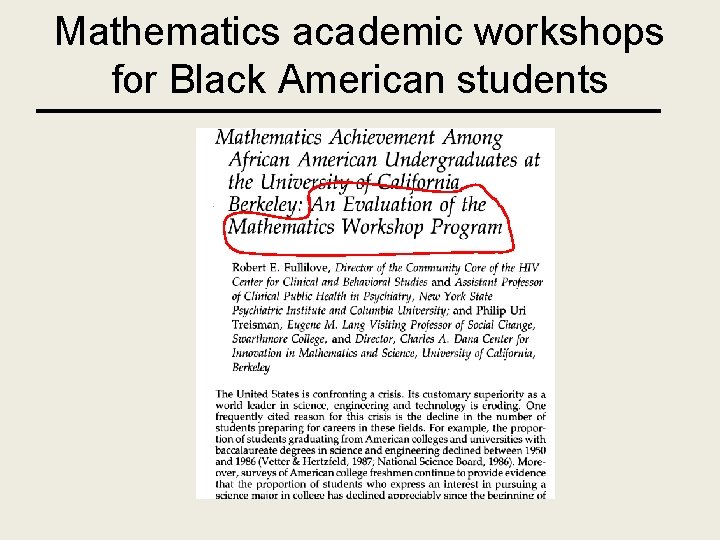
Mathematics academic workshops for Black American students
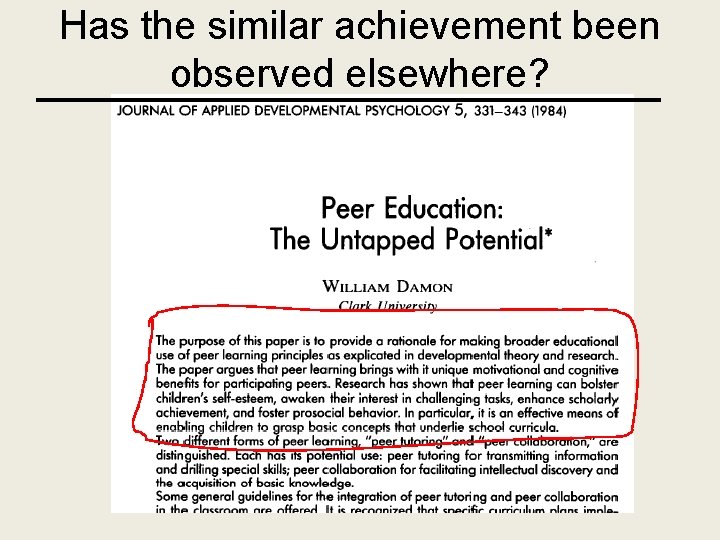
Has the similar achievement been observed elsewhere?
QUOTE “Many people have gone further than they thought they could because someone else thought they could” (anonymous)
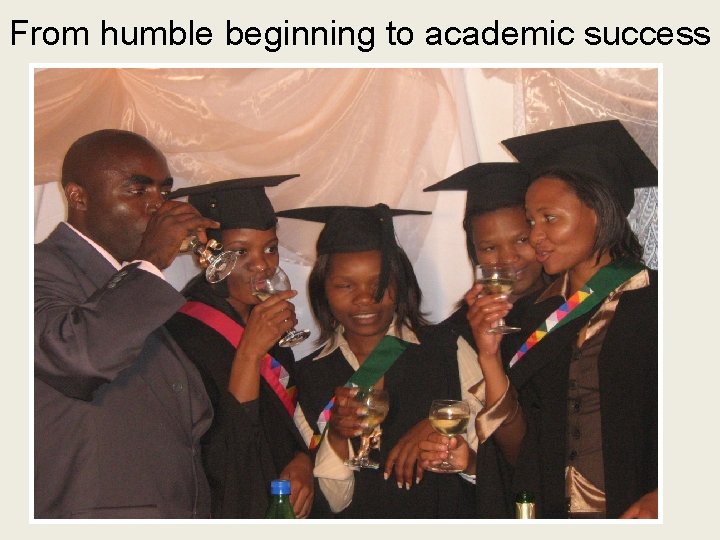
From humble beginning to academic success
A Brazilian refugee Paulo Freire • Pedagogy of critical education: Teachers & learners’ partnership to construct knowledge through dialogue • Published 1967: “Education as the Practice of Freedom” • “I understand the process of teaching as an act of love neither in the formal sense nor bureaucratically but as an expression of good care, a need to love what you do” • Without passion, things are done mechanically “How painful” • “Whoever teaches learns in the act of teaching & whoever learns teaches in the act of learning”
Acknowledgements Dr T. Olckers Prof C. Downs Dr S. Mc. Connachie Biol 101 & 102 lecturers Mrs Jane Flockhart Academic & Support staff of SBCS Deputy Dean of students: Mrs Khanyisile Nyembezi Mrs Zamangwane Khanyile RAs & staff of DOSH Facilitators Demonstrators in SBCS
“Stay on The Green, Reach Your Dream”