
Peer Support Network Community and Living Well Together




- Slides: 50
Peer Support Network: Community and Living Well Together Emily Norman Head of Networks, Church of England Foundation for Educational Leadership 13 th January 2020
Reflection
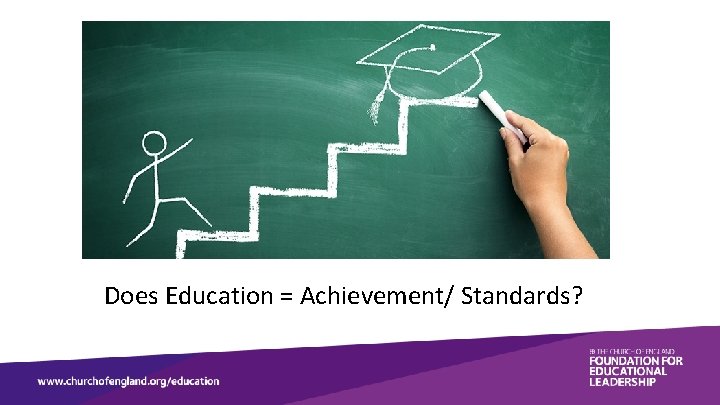
Does Education = Achievement/ Standards?
‘That which leaders choose to improve communicates much about their values. While academic success stands at the heart of great education, character development and wider flourishing stands as fundamental to any sustainable academic success. ’
‘There is no such thing as a neutral education. ’ Fruit of the Spirit (2015)
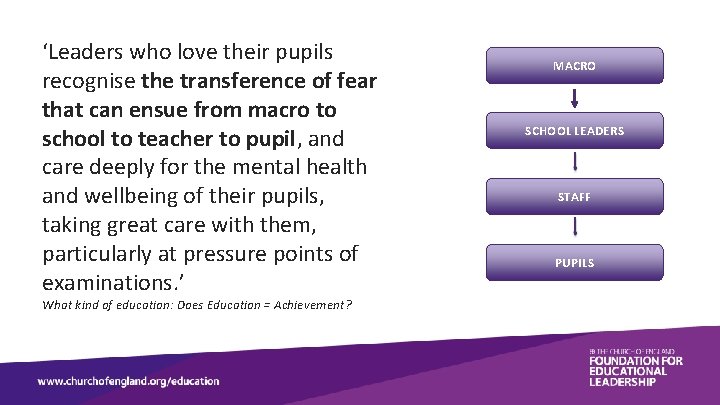
‘Leaders who love their pupils recognise the transference of fear that can ensue from macro to school to teacher to pupil, and care deeply for the mental health and wellbeing of their pupils, taking great care with them, particularly at pressure points of examinations. ’ What kind of education: Does Education = Achievement? MACRO SCHOOL LEADERS STAFF PUPILS
Defining our Current Reality/ Evaluating Prevailing Narratives
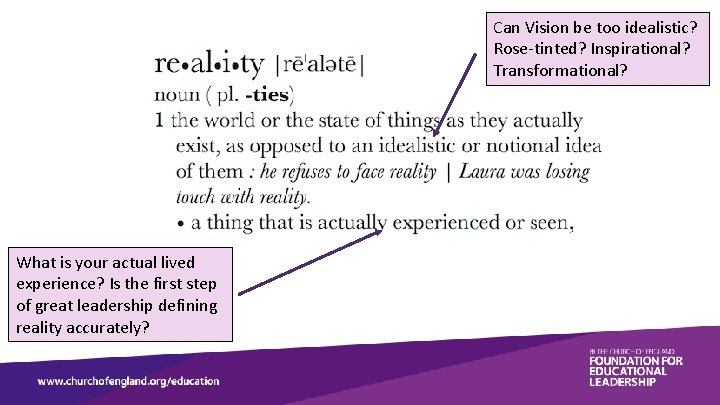
Can Vision be too idealistic? Rose-tinted? Inspirational? Transformational? What is your actual lived experience? Is the first step of great leadership defining reality accurately?
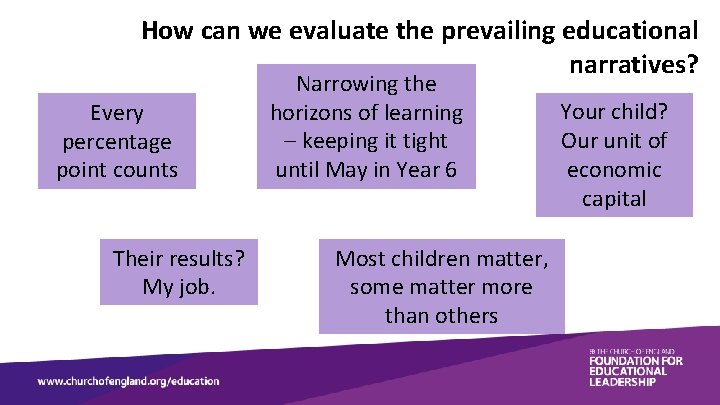
How can we evaluate the prevailing educational narratives? Every percentage point counts Their results? My job. Narrowing the horizons of learning – keeping it tight until May in Year 6 Most children matter, some matter more than others Your child? Our unit of economic capital
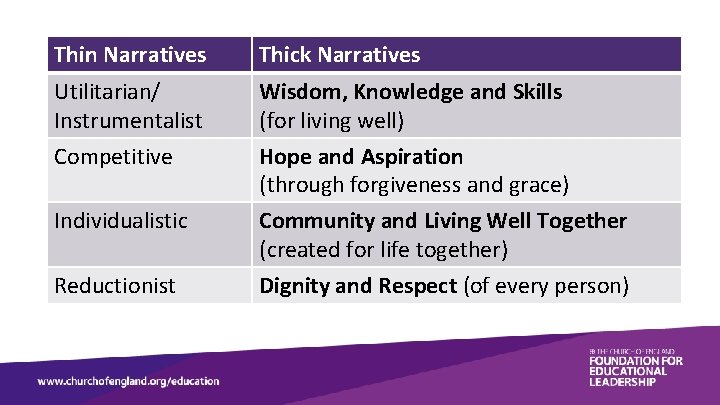
Thin Narratives Thick Narratives Utilitarian/ Instrumentalist Competitive Wisdom, Knowledge and Skills (for living well) Hope and Aspiration (through forgiveness and grace) Individualistic Community and Living Well Together (created for life together) Dignity and Respect (of every person) Reductionist
Are there any tensions between the educational landscape today and what I believe the core purpose of education in my school is?
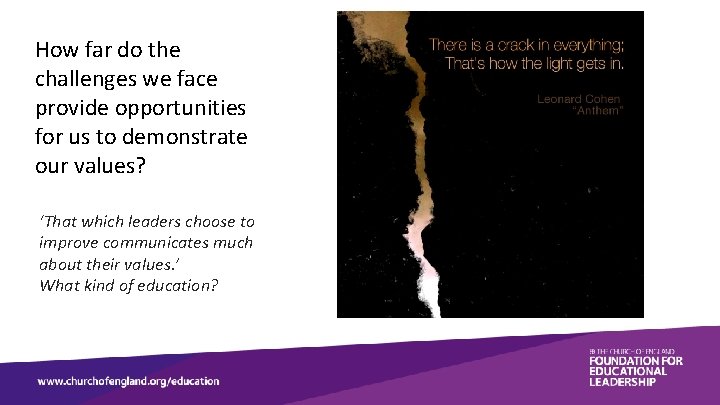
How far do the challenges we face provide opportunities for us to demonstrate our values? ‘That which leaders choose to improve communicates much about their values. ’ What kind of education?
‘…instead of eroding his spirits they merely added to his resolve. ’ Dare to be Different Will Ryan
The Importance of Leadership for Character Development
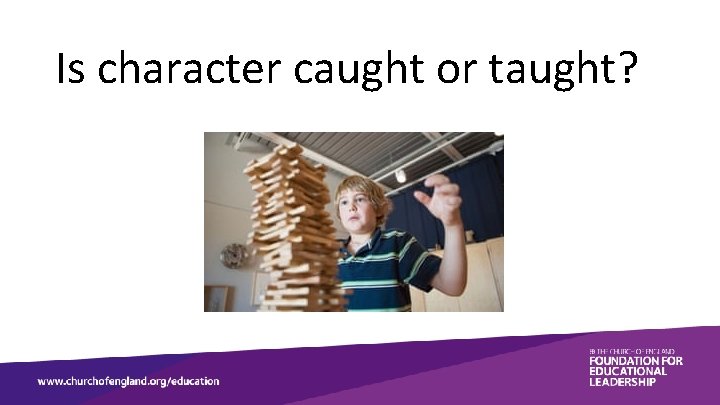
Is character caught or taught?
‘Imagine a school that expected its students to become literate without any formal instruction. Most parents would be alarmed by such an approach, which would leave their children confused and with gaps in their understanding. This however has been the philosophy on character development in many of our schools. Why is the development of character seen as somehow different from the other skills that we teach? Is it because the concept of being good has fallen out of fashion? In his book, Religion for Atheists, the philosopher Alain De Botton writes: "Announce that you are working on your body, and you will attract envy and respect. Declare that you are working on your character, and you will be thought insane. " Of course there will always be learning by osmosis in any school, but as a teacher and primary school head I have found that a child's moral literacy is enhanced when they acquire the building blocks of good character such as consideration, truthfulness, courage and honour; qualities which are commonly known as virtues. ’ Geoff Smith, The Guardian 28. 3. 13
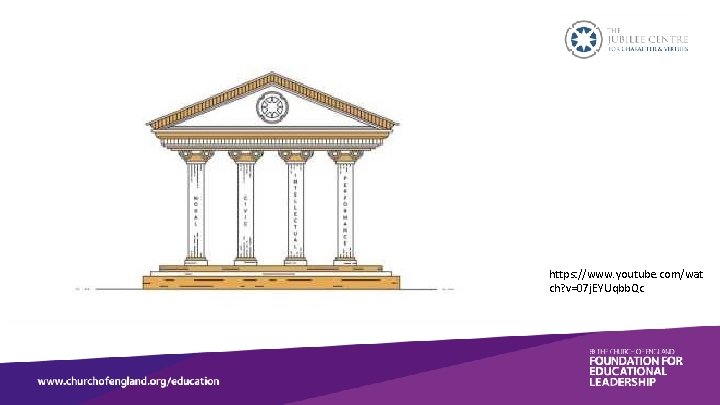
https: //www. youtube. com/wat ch? v=07 j. EYUqbb. Qc
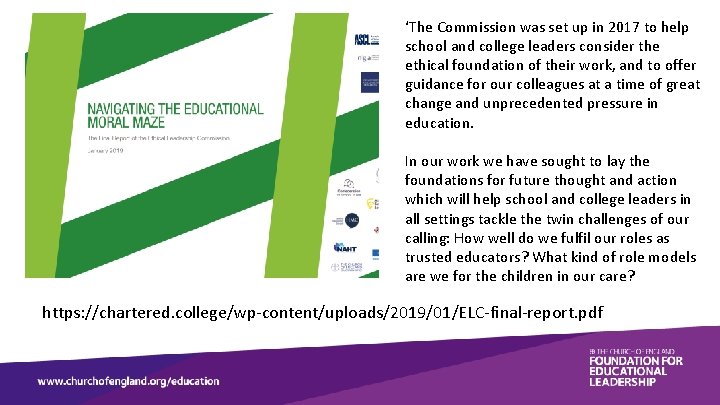
‘The Commission was set up in 2017 to help school and college leaders consider the ethical foundation of their work, and to offer guidance for our colleagues at a time of great change and unprecedented pressure in education. In our work we have sought to lay the foundations for future thought and action which will help school and college leaders in all settings tackle the twin challenges of our calling: How well do we fulfil our roles as trusted educators? What kind of role models are we for the children in our care? https: //chartered. college/wp-content/uploads/2019/01/ELC-final-report. pdf
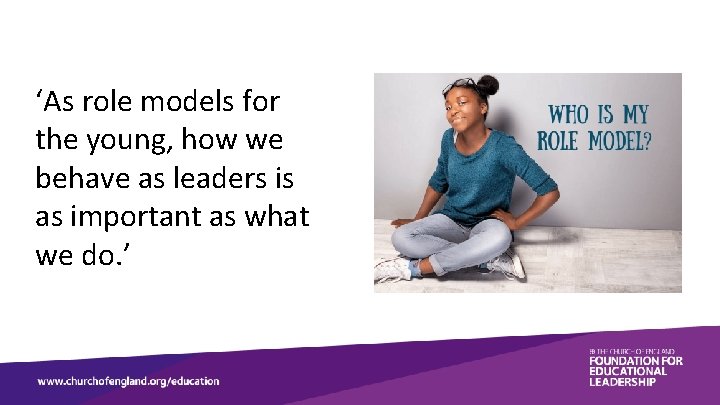
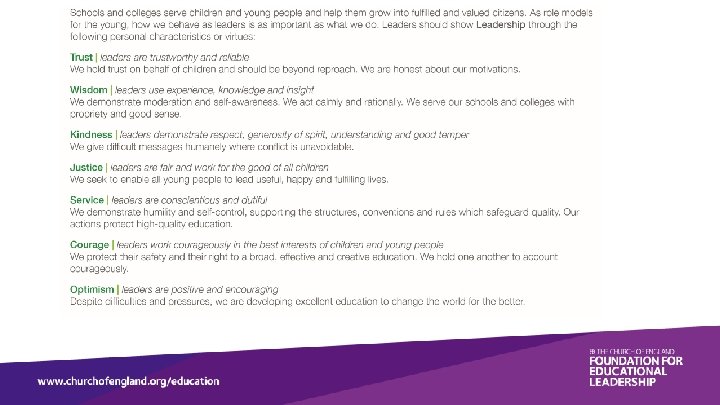
‘As role models for the young, how we behave as leaders is as important as what we do. ’
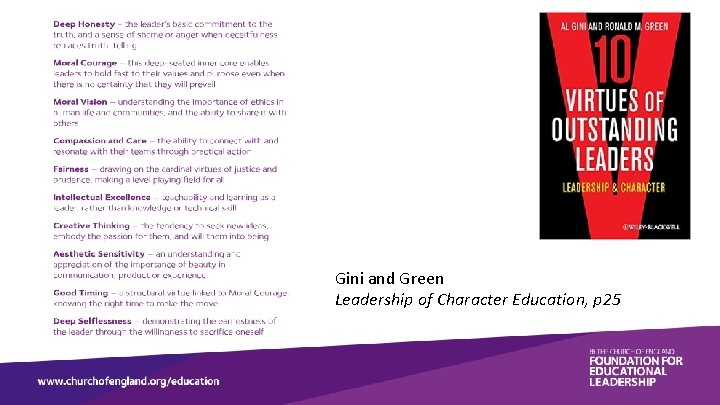
Gini and Green Leadership of Character Education, p 25
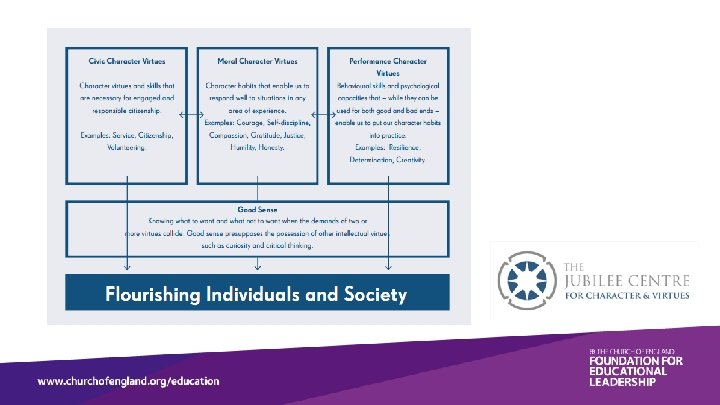
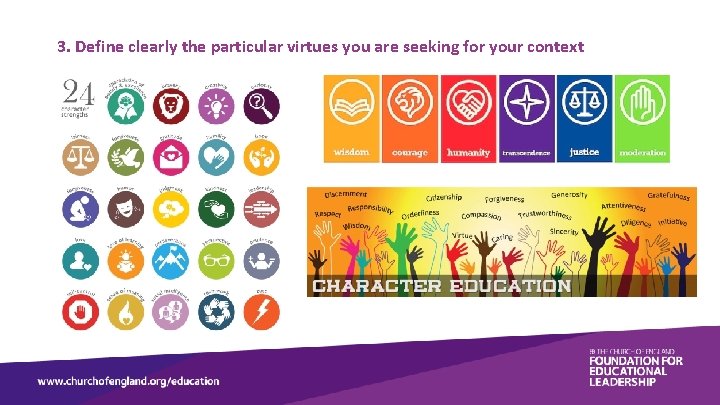
Which character virtues would be on your list?
‘Leadership virtues are character in action and a crucial factor in the impact of character education – the leadership of character is determined by the character of leadership. ’
Called, Connected, Committed: 24 Leadership Practices Matrix (2020)
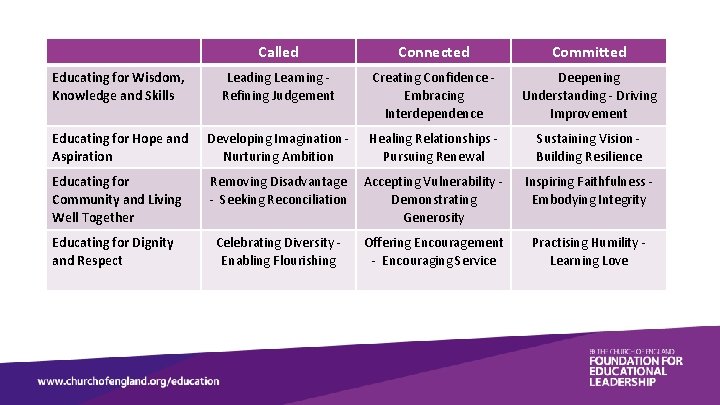
Called Connected Committed Educating for Wisdom, Knowledge and Skills Leading Learning Refining Judgement Creating Confidence Embracing Interdependence Deepening Understanding - Driving Improvement Educating for Hope and Aspiration Developing Imagination Nurturing Ambition Healing Relationships Pursuing Renewal Sustaining Vision Building Resilience Educating for Community and Living Well Together Removing Disadvantage - Seeking Reconciliation Accepting Vulnerability Demonstrating Generosity Inspiring Faithfulness Embodying Integrity Educating for Dignity and Respect Celebrating Diversity Enabling Flourishing Offering Encouragement - Encouraging Service Practising Humility Learning Love
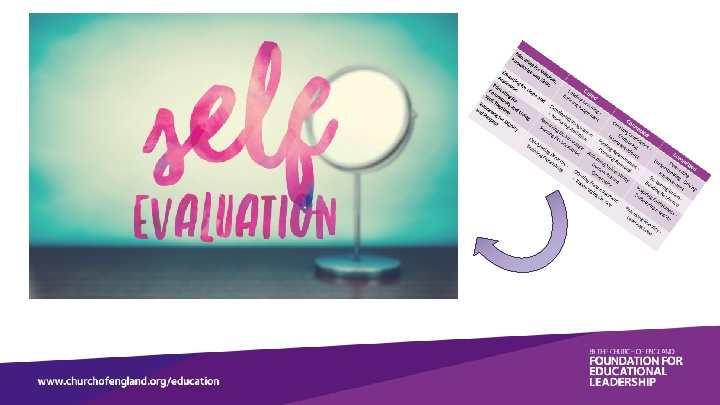
Leadership Practice Self -Evaluation Choose 3 leadership practices which you consider to be strengths, and one which you think is more of an area for development.
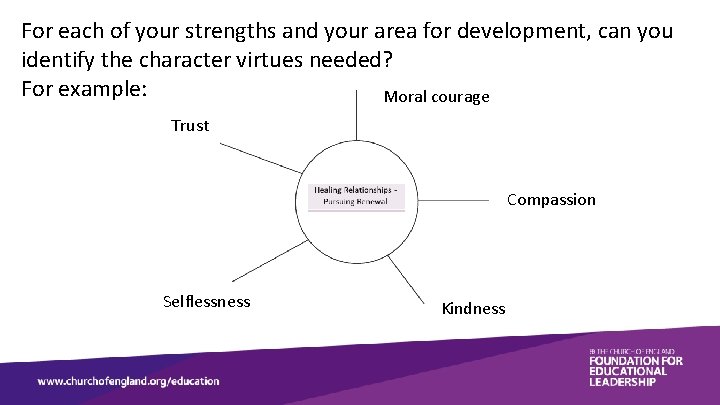
For each of your strengths and your area for development, can you identify the character virtues needed? For example: Moral courage Trust Compassion Selflessness Kindness
Strengths
Area for development
How does this impact upon the character virtues which are celebrated, encouraged, promoted and valued in your school?
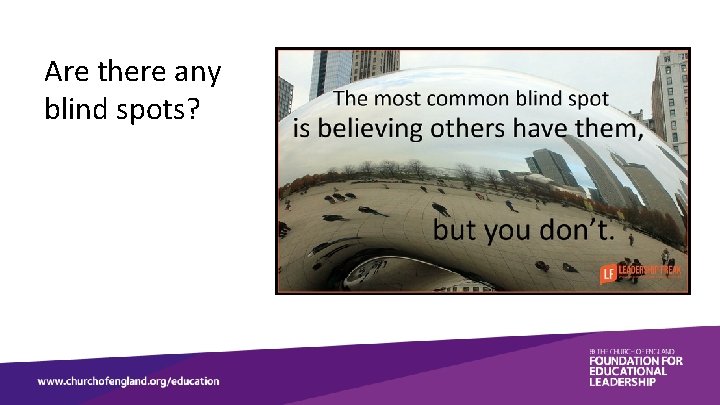
Are there any blind spots?
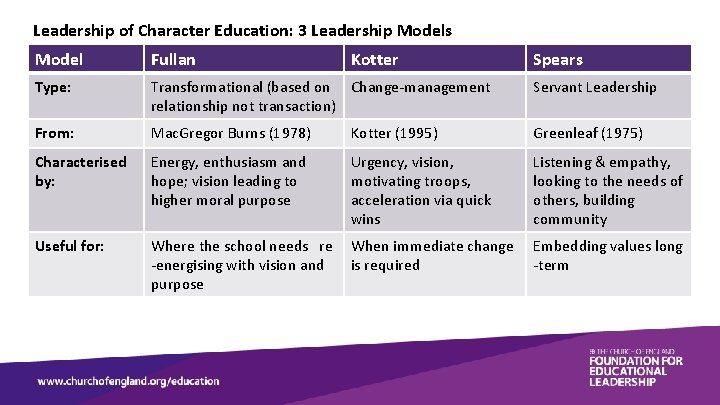
Leadership of Character Education: 3 Leadership Models Model Fullan Kotter Spears Type: Transformational (based on Change-management relationship not transaction) Servant Leadership From: Mac. Gregor Burns (1978) Kotter (1995) Greenleaf (1975) Characterised by: Energy, enthusiasm and hope; vision leading to higher moral purpose Urgency, vision, motivating troops, acceleration via quick wins Listening & empathy, looking to the needs of others, building community Useful for: Where the school needs re -energising with vision and purpose When immediate change is required Embedding values long -term
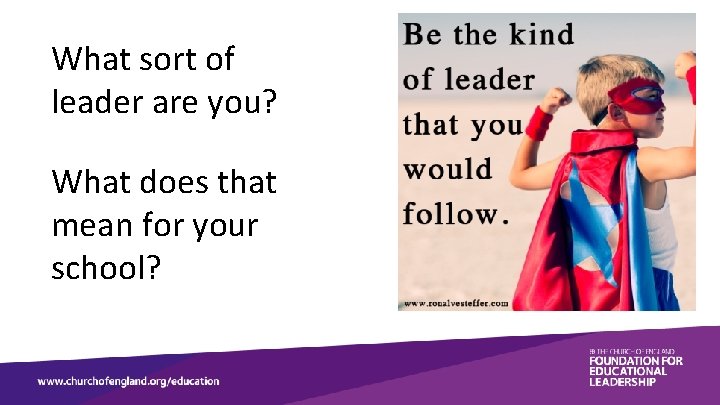
What sort of leader are you? What does that mean for your school?
Next Steps for Character Education
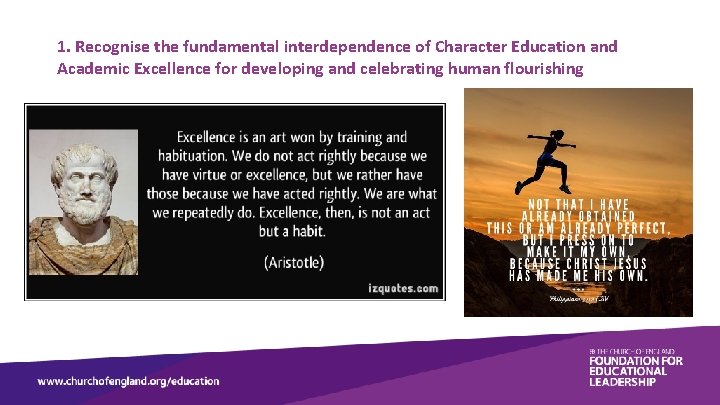
1. Recognise the fundamental interdependence of Character Education and Academic Excellence for developing and celebrating human flourishing
In what ways are Character Education and Academic Excellence interdependent? Where would we see this in action?
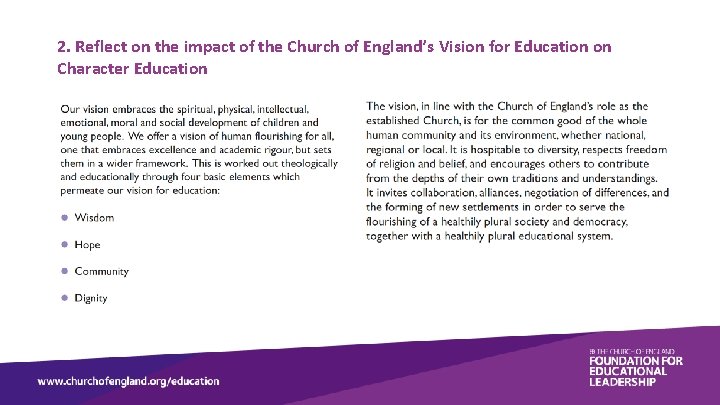
2. Reflect on the impact of the Church of England’s Vision for Education on Character Education
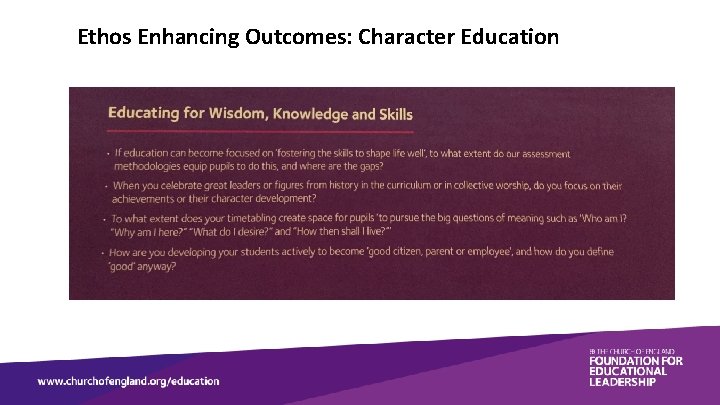
Ethos Enhancing Outcomes: Character Education
3. Define clearly the particular virtues you are seeking for your context
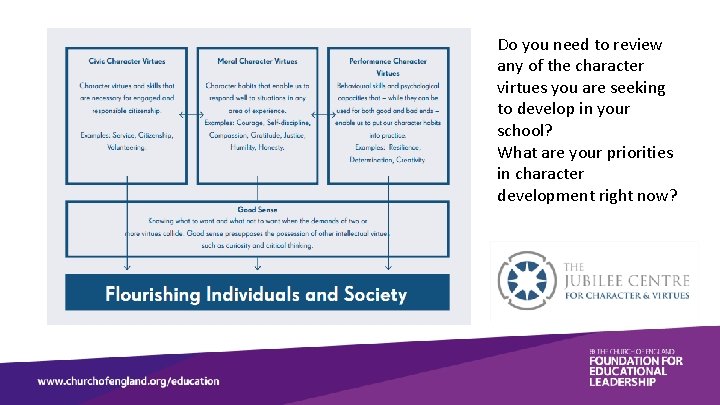
Do you need to review any of the character virtues you are seeking to develop in your school? What are your priorities in character development right now?
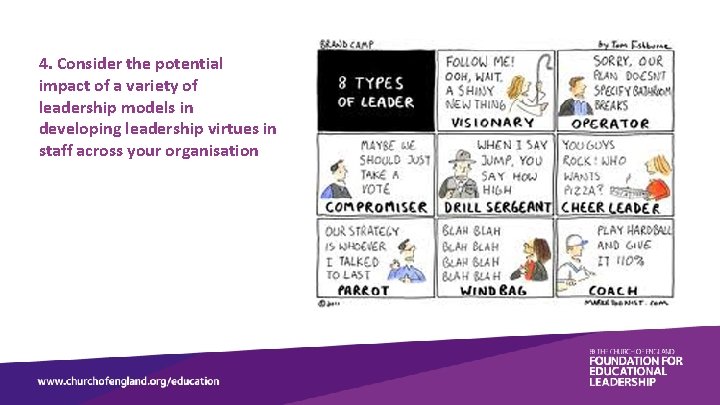
4. Consider the potential impact of a variety of leadership models in developing leadership virtues in staff across your organisation
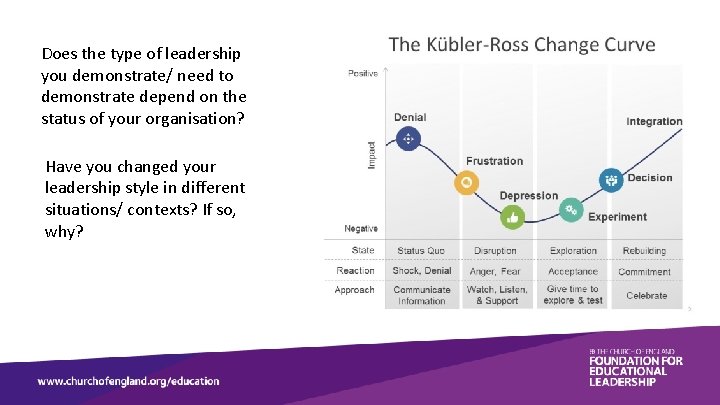
Does the type of leadership you demonstrate/ need to demonstrate depend on the status of your organisation? Have you changed your leadership style in different situations/ contexts? If so, why?
5. Share this vision for Character Education frequently and consistently as leaders (in words and deeds), creating opportunities for reinforcement and celebration whenever possible by all
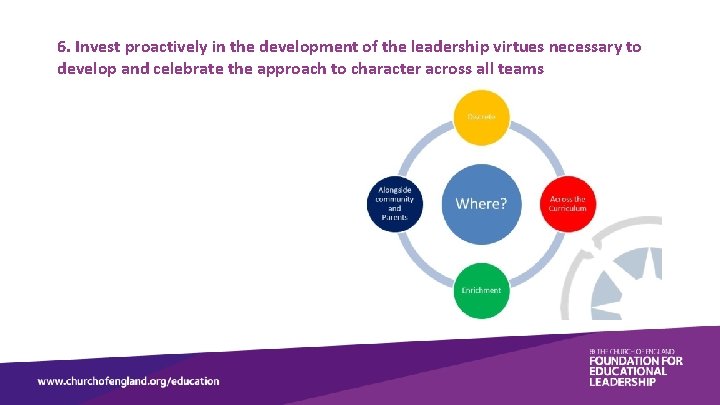
6. Invest proactively in the development of the leadership virtues necessary to develop and celebrate the approach to character across all teams
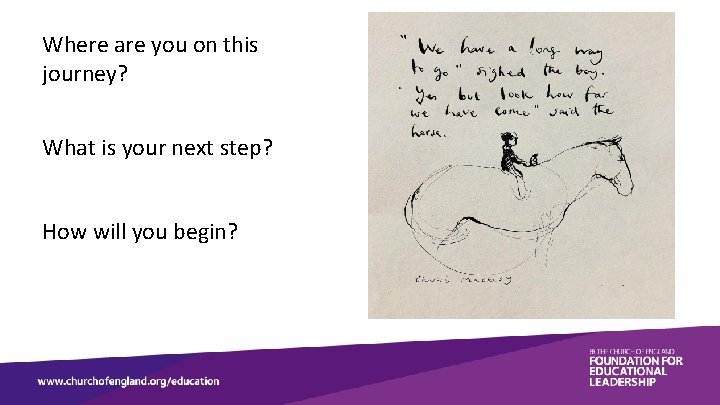
Where are you on this journey? What is your next step? How will you begin?