
Peer Recovery Support Services History Theory Science Practice
- Slides: 27
Peer Recovery Support Services: History, Theory, Science & Practice William White, MA Senior Research Consultant Chestnut Health Systems bwhite@chestnut. org
Presentation Goals �Outline the history of peer-based recovery support (PBRSS) in the U. S. �Discuss theoretical underpinnings of P-BRSS �Highlight scientific studies related to peer recovery support �Discuss key P-BRSS implementation issues
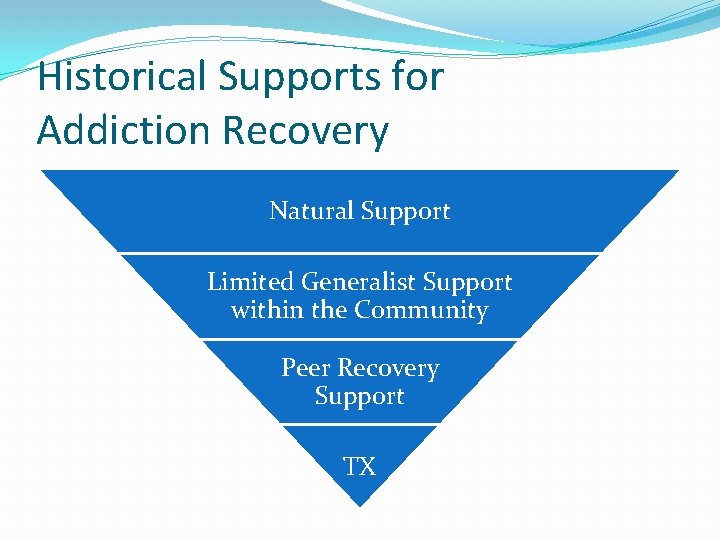
Historical Supports for Addiction Recovery Natural Support Limited Generalist Support within the Community Peer Recovery Support TX
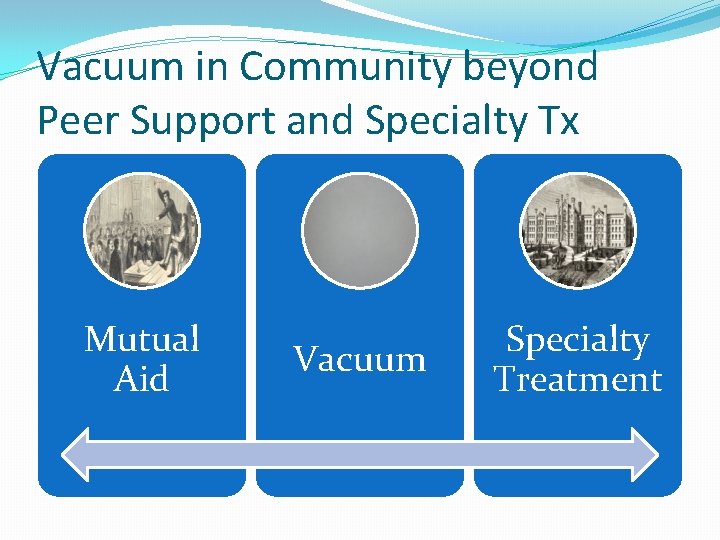
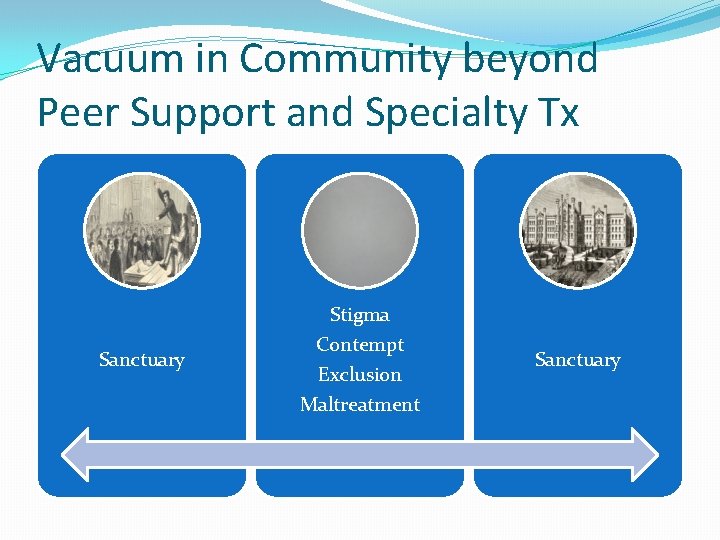
Vacuum in Community beyond Peer Support and Specialty Tx Mutual Aid Vacuum Specialty Treatment
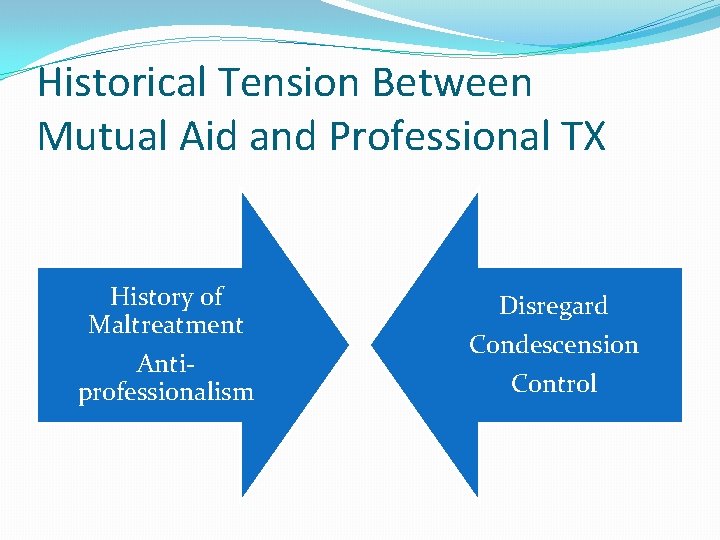
Historical Tension Between Mutual Aid and Professional TX History of Maltreatment Antiprofessionalism Disregard Condescension Control
Vacuum in Community beyond Peer Support and Specialty Tx Stigma Sanctuary Contempt Exclusion Maltreatment Sanctuary
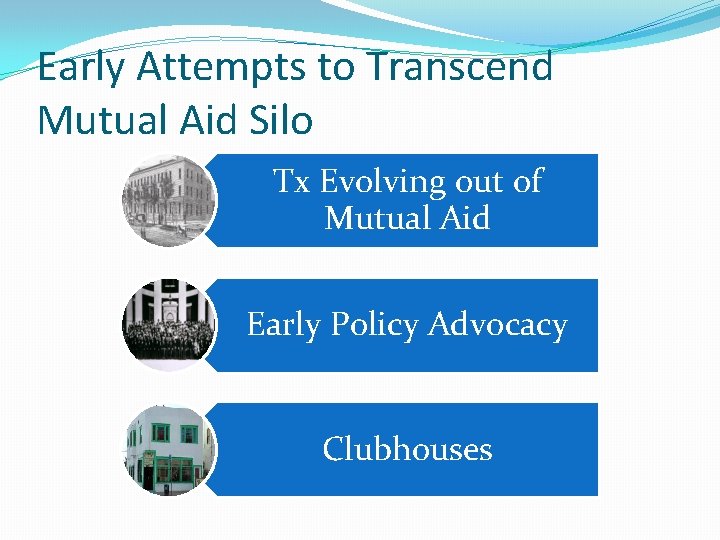
Early Attempts to Transcend Mutual Aid Silo Tx Evolving out of Mutual Aid Early Policy Advocacy Clubhouses
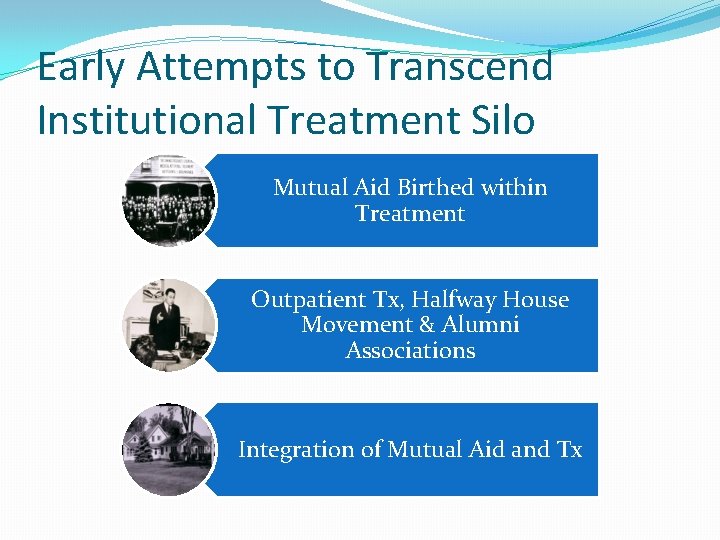
Early Attempts to Transcend Institutional Treatment Silo Mutual Aid Birthed within Treatment Outpatient Tx, Halfway House Movement & Alumni Associations Integration of Mutual Aid and Tx
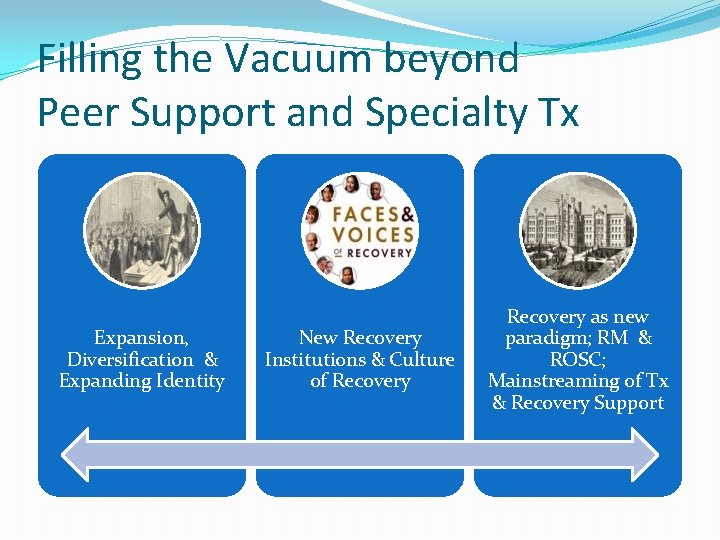
Filling the Vacuum beyond Peer Support and Specialty Tx Expansion, Diversification & Expanding Identity New Recovery Institutions & Culture of Recovery as new paradigm; RM & ROSC; Mainstreaming of Tx & Recovery Support
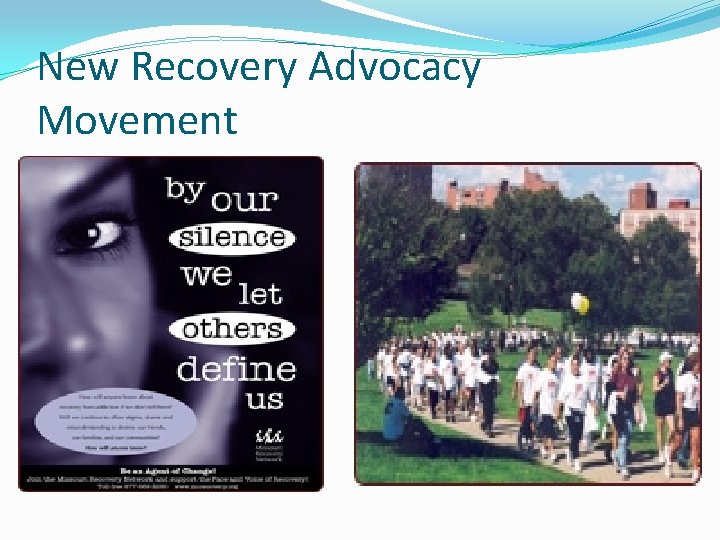
New Recovery Advocacy Movement
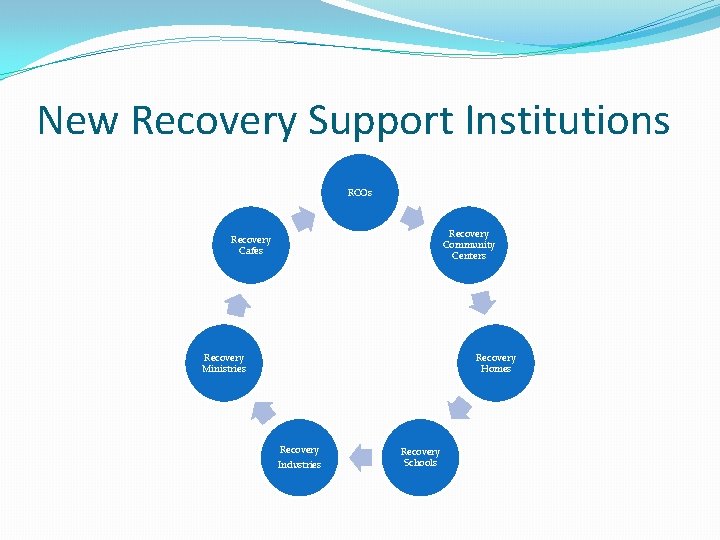
New Recovery Support Institutions RCOs Recovery Community Centers Recovery Cafes Recovery Ministries Recovery Homes Recovery Industries Recovery Schools
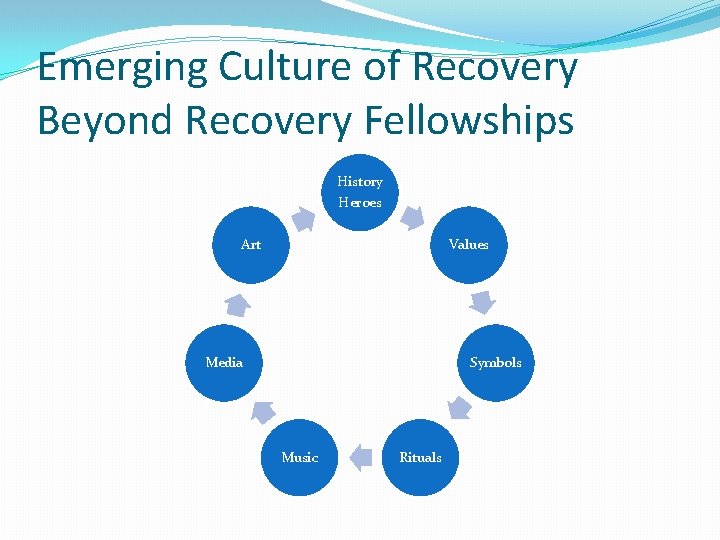
Emerging Culture of Recovery Beyond Recovery Fellowships History Heroes Art Values Media Symbols Music Rituals
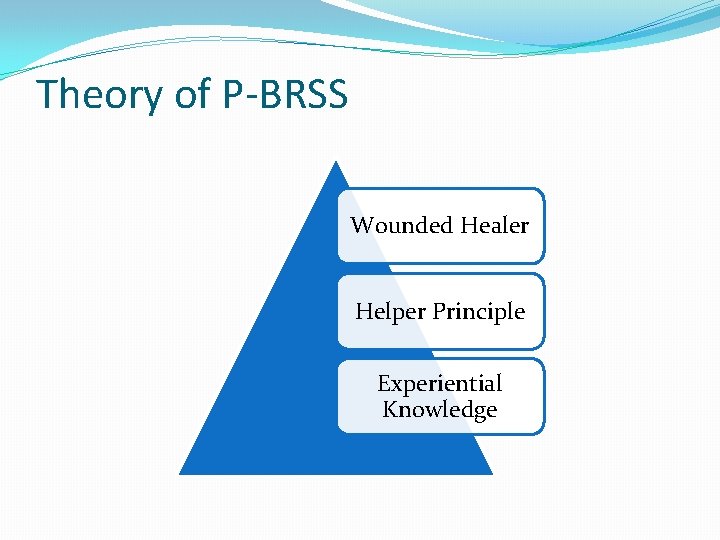
Theory of P-BRSS Wounded Healer Helper Principle Experiential Knowledge
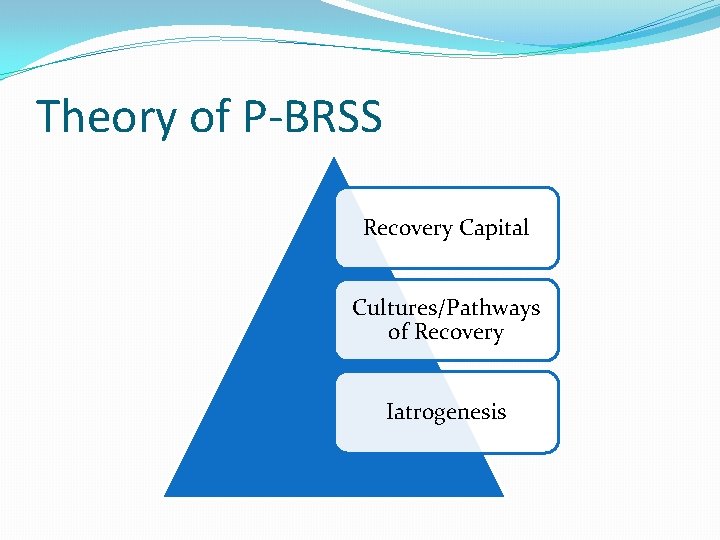
Theory of P-BRSS Recovery Capital Cultures/Pathways of Recovery Iatrogenesis
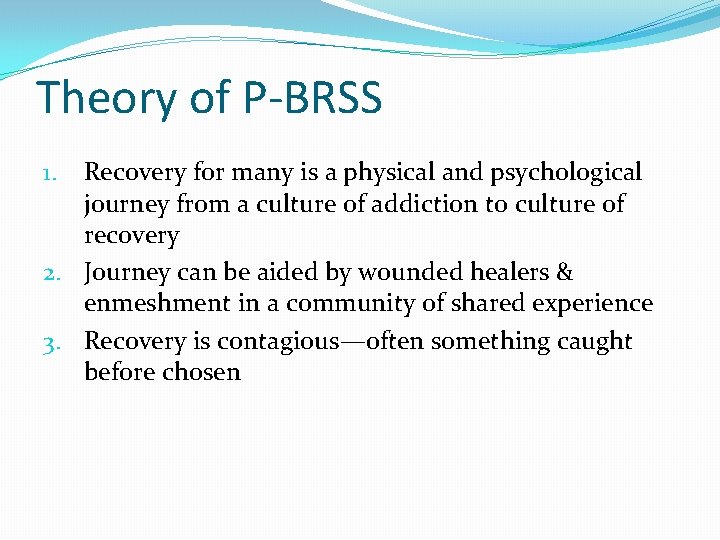
Theory of P-BRSS Recovery for many is a physical and psychological journey from a culture of addiction to culture of recovery 2. Journey can be aided by wounded healers & enmeshment in a community of shared experience 3. Recovery is contagious—often something caught before chosen 1.
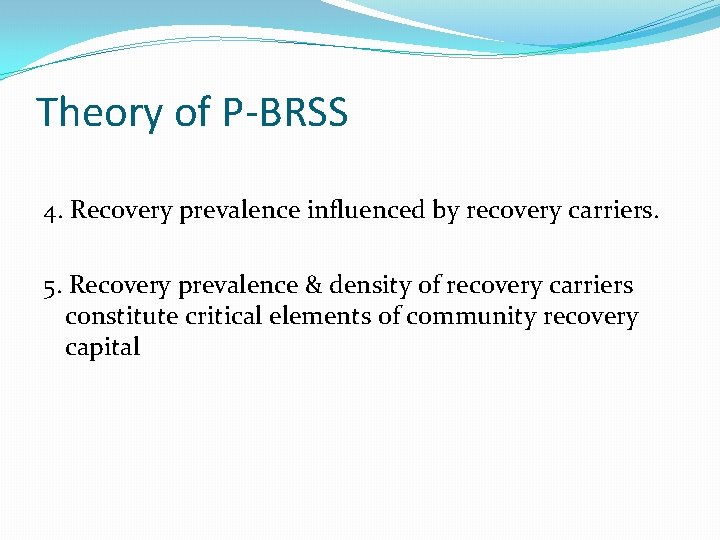
Theory of P-BRSS 4. Recovery prevalence influenced by recovery carriers. 5. Recovery prevalence & density of recovery carriers constitute critical elements of community recovery capital
Recovery Community/Culture Development Trends 6. Recovery outcomes in addiction treatment are influenced as much by scope and depth of community recovery capital as intrapersonal factors. 7. The density of recovery carriers and the volume and quality of recovery capital can be strategically increased through P-BRSS
Recovery Community/Culture Development Trends 8. The growth of personal/family/community recovery capital could result in four important outcomes: • Increased rates of natural recovery • Increased retention in both recovery mutual aid and treatment • Discovery of potent service/support combinations and sequences • Matching combinations/sequences to special populations
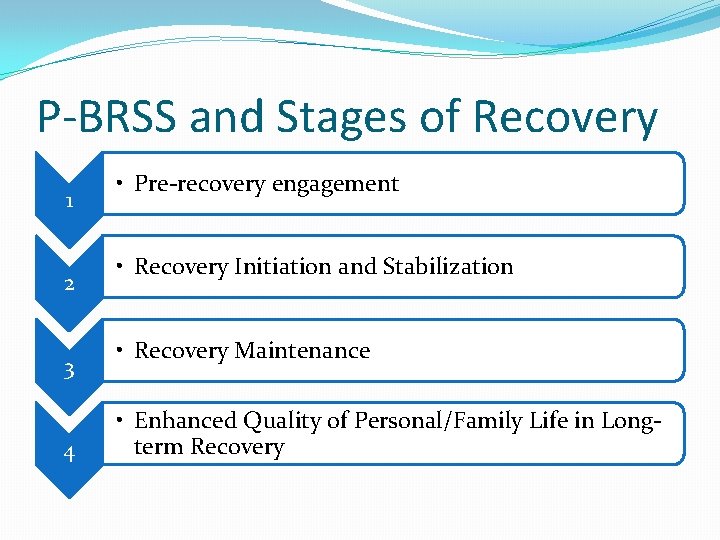
P-BRSS and Stages of Recovery 1 2 3 4 • Pre-recovery engagement • Recovery Initiation and Stabilization • Recovery Maintenance • Enhanced Quality of Personal/Family Life in Longterm Recovery
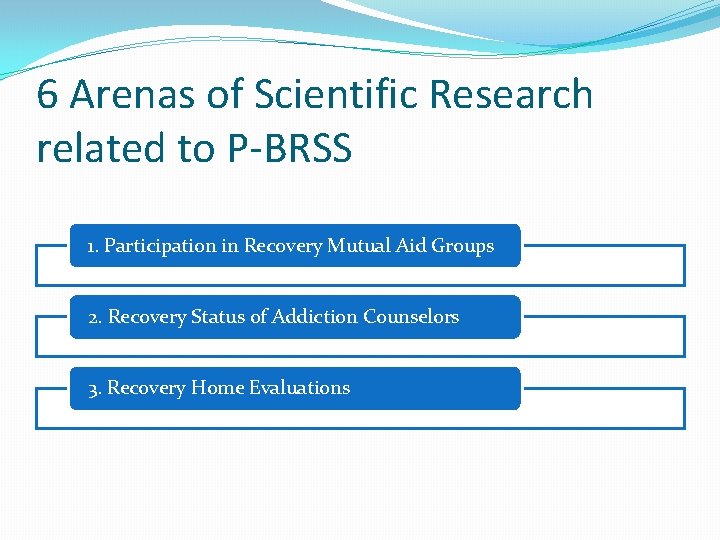
6 Arenas of Scientific Research related to P-BRSS 1. Participation in Recovery Mutual Aid Groups 2. Recovery Status of Addiction Counselors 3. Recovery Home Evaluations
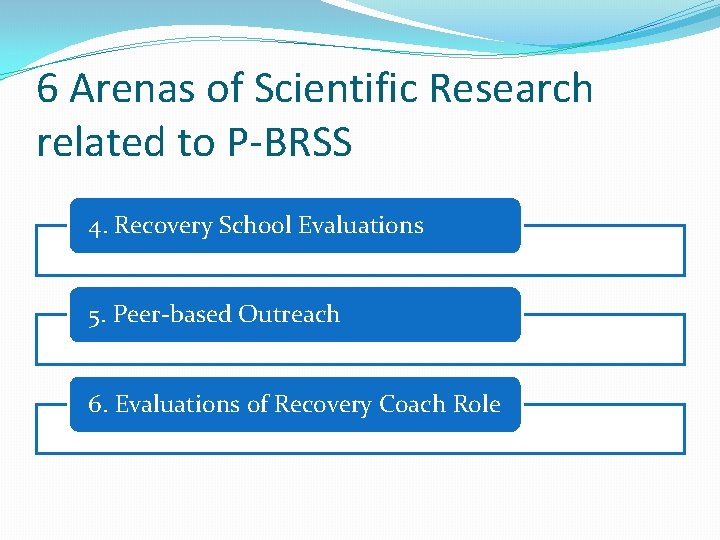
6 Arenas of Scientific Research related to P-BRSS 4. Recovery School Evaluations 5. Peer-based Outreach 6. Evaluations of Recovery Coach Role
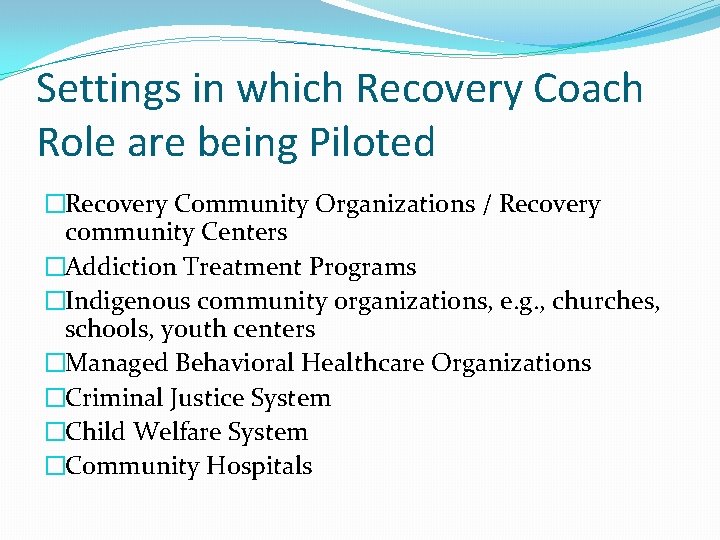
Settings in which Recovery Coach Role are being Piloted �Recovery Community Organizations / Recovery community Centers �Addiction Treatment Programs �Indigenous community organizations, e. g. , churches, schools, youth centers �Managed Behavioral Healthcare Organizations �Criminal Justice System �Child Welfare System �Community Hospitals
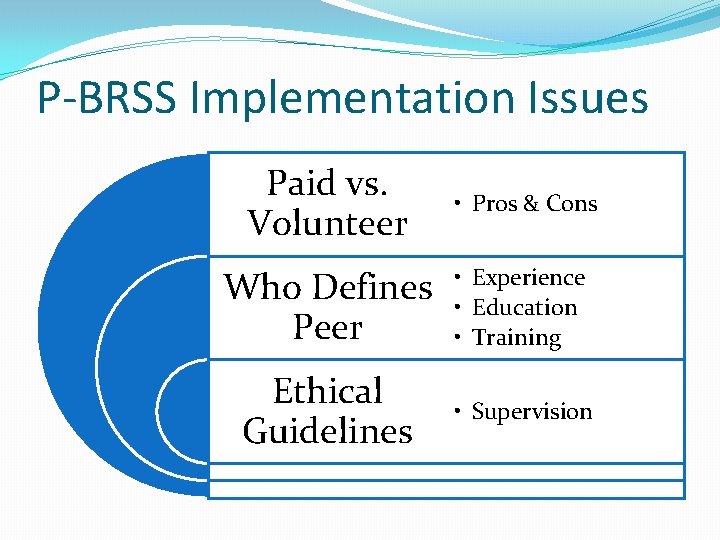
P-BRSS Implementation Issues Paid vs. Volunteer • Pros & Cons Who Defines Peer • Experience • Education • Training Ethical Guidelines • Supervision
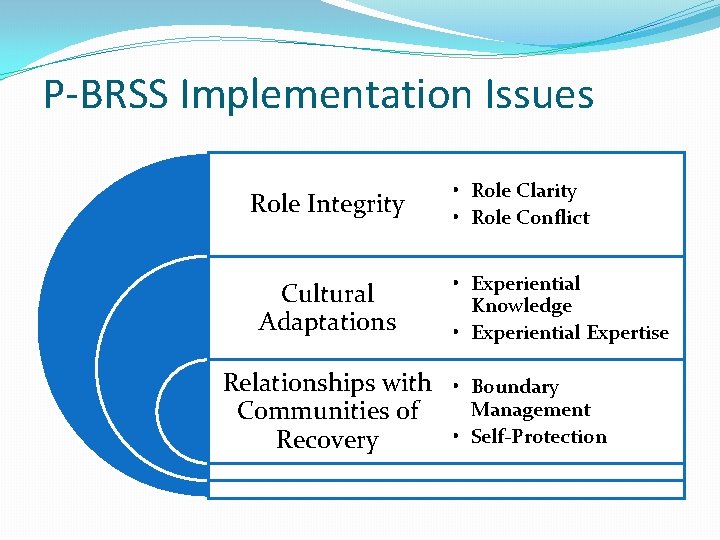
P-BRSS Implementation Issues Role Integrity Cultural Adaptations • Role Clarity • Role Conflict • Experiential Knowledge • Experiential Expertise Relationships with • Boundary Management Communities of • Self-Protection Recovery
Resources at www. williamwhitepapers. com White, W. (2009). Peer-based Addiction Recovery Support: History, Theory, Practice, and Scientific Evaluation. Chicago, IL: Great Lakes Addiction Technology Transfer Center and Philadelphia Department of Behavioral Health. White, W. , the PRO-ACT Ethics Workgroup, with legal discussion by Popovits R. & Donohue, B. (2007). Ethical Guidelines for the Delivery of Peer-based Recovery Support Services. Philadelphia: Philadelphia Department of Behavioral Health.
Resources at www. williamwhitepapers. com �White, W. (2006). Sponsor, Recovery Coach, Addiction Counselor: The Importance of Role Clarity and Role Integrity. (Monograph) Philadelphia, PA: Philadelphia Department of Behavioral Health. �White, W. (2008). Perspectives on Systems Transformation: How Visionary Leaders are Shifting Addiction Treatment Toward a Recovery-Oriented System of Care. (Interviews with H. Westley Clark, Thomas A. Kirk, Jr. , Arthur C. Evans, Michael Boyle, Phillip Valentine and Lonnetta Albright). Chicago, IL: Great Lakes Addiction Technology Transfer Center.
Resources at www. williamwhitepapers. com �RM & ROSC Resource Library contains manuals on recovery coaching, descriptive papers, key CSAT documents, and papers on peer support services from outside the U. S. �Link to: Kelly, J. & White, W. (Eds. , 2011). Recovery Management: Theory, Research & Practice. New York: Springer Science.