
Peer Pressure Effects on Interpretive Conformity Jon Kaplan

- Slides: 24
Peer Pressure Effects on Interpretive Conformity Jon Kaplan Central Catholic High School
Introduction ■ Two experiments were performed to explore peer pressure effects on interpretive conformity. ■ A majority of individuals directly and indirectly experience peer pressure. ■ New forms of peer pressure include the internet. ■ In a survey by Parent Further only 10% of children had not been affected by peer pressure.
Peer Pressure ■ Strong influence of a group, an individual’s peers, to behave in a certain way. ■ Positive and negative effects. ■ Pushes individuals to conform. ■ Affects individuals in different ways and magnitude.
Conformity ■ Behavior in accordance with socially accepted conventions or standards. ■ Change in behavior is in response to physical or imagined group pressure. ■ Peer pressure and conformity are directly related. ■ Herbert Kelman and Leon Mann studied different types of conformity
Types of Conformity Mann ■ Normative: group pressure to fit in. ■ Informational: lacking knowledge, looking to the group for help. ■ Ingratiational: to impress or gain favor from others. Kelman ■ Compliance: publically changing your behavior to fit in with the group, while disagreeing. ■ Internalization: publically changing your behavior to fit in. ■ Identification: conforming to expectations of a social role.
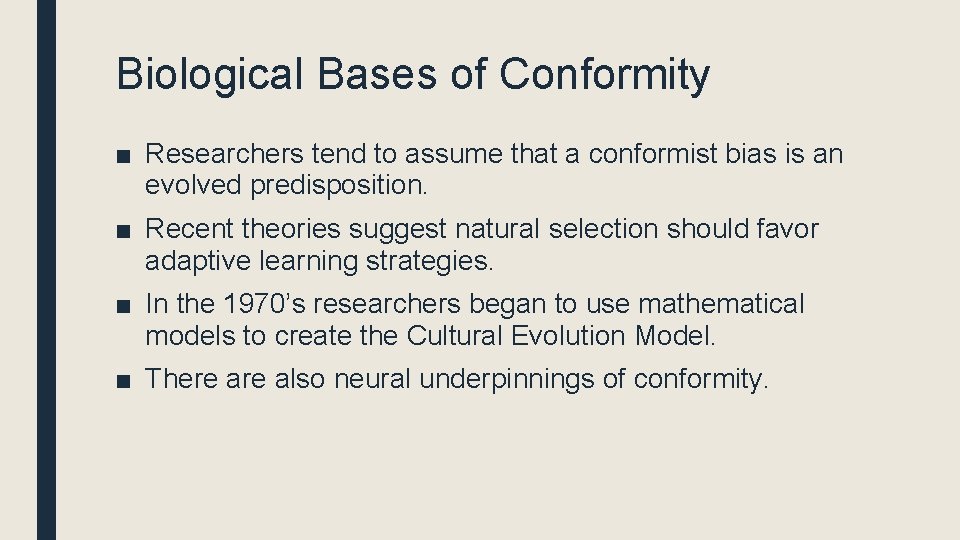
Biological Bases of Conformity ■ Researchers tend to assume that a conformist bias is an evolved predisposition. ■ Recent theories suggest natural selection should favor adaptive learning strategies. ■ In the 1970’s researchers began to use mathematical models to create the Cultural Evolution Model. ■ There also neural underpinnings of conformity.
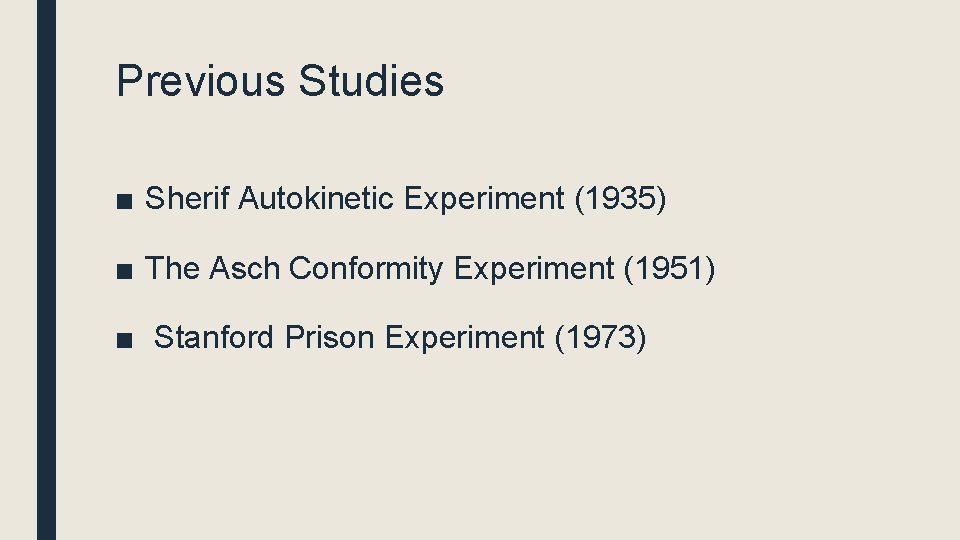
Previous Studies ■ Sherif Autokinetic Experiment (1935) ■ The Asch Conformity Experiment (1951) ■ Stanford Prison Experiment (1973)
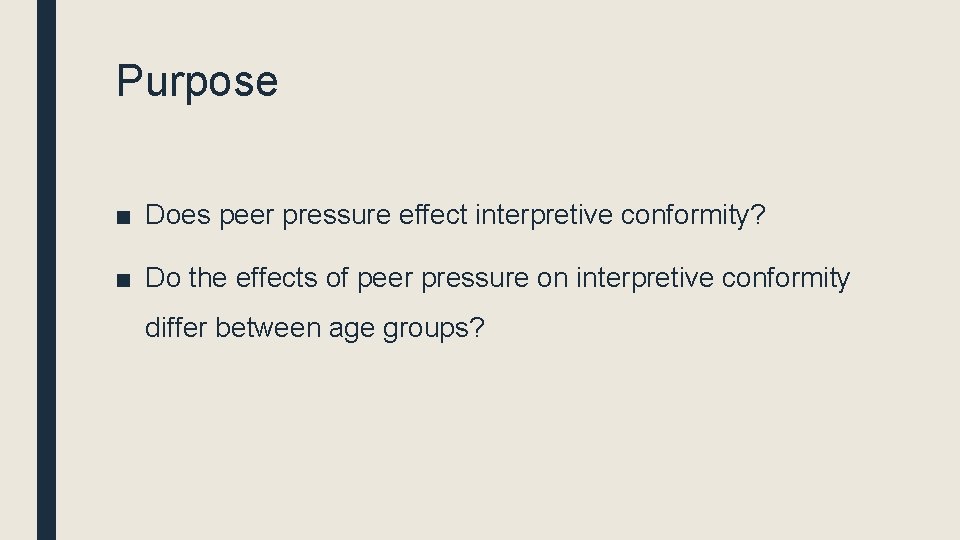
Purpose ■ Does peer pressure effect interpretive conformity? ■ Do the effects of peer pressure on interpretive conformity differ between age groups?
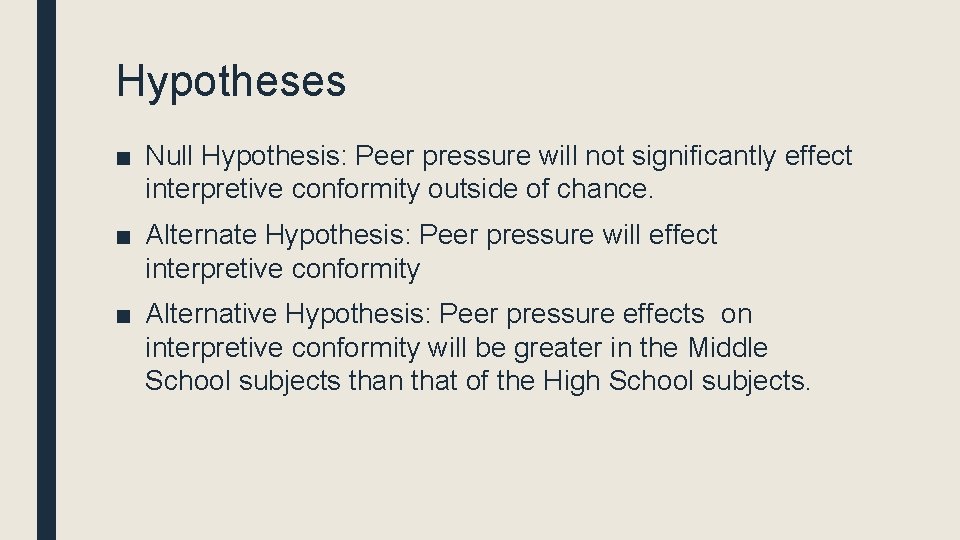
Hypotheses ■ Null Hypothesis: Peer pressure will not significantly effect interpretive conformity outside of chance. ■ Alternate Hypothesis: Peer pressure will effect interpretive conformity ■ Alternative Hypothesis: Peer pressure effects on interpretive conformity will be greater in the Middle School subjects than that of the High School subjects.
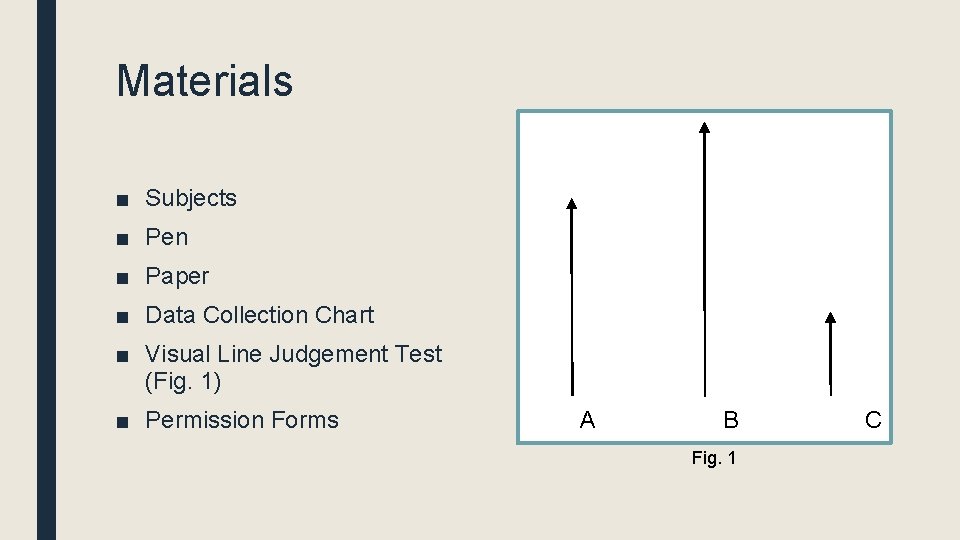
Materials ■ Subjects ■ Pen ■ Paper ■ Data Collection Chart ■ Visual Line Judgement Test (Fig. 1) ■ Permission Forms A B C Fig. 1
Test Subjects ■ Males ■ Group 1 (Middle School): 11 -12 years old – Similar Background: Educational, environmental, etc. ■ Group 2 (High School): 16 -18 years old – Similar Background: Educational, environmental, etc.
Procedure 1. A visual line judgement test was created. 2. A permission slip was created and administered to the Control Group. 3. The Visual Judgement test was administered to the control group, with no peer pressure, and the results were recorded 4. A permission slip was administered to the Middle School group. 5. Confederates of the experiment were selected at random and instructed of their role. 6. The confederates were brought into the test room and placed in a specific order, allowing the test subject to answer last. 7. The test subject was introduced into the test room, seated so he would give his answer last.
Procedure (cont. ) 8. The entire group, including the confederates, were given the visual line judgement test. On the first trial the confederates gave the correct answer, so as to see how the subject’s answers change. 9. The remaining 10 trials, the associates gave the incorrect answer. 10. The answers of the test subject was recorded only, due to the fact that the answer of the confederates was known to be wrong. If the test subject gave the correct answer he did not conform to the group, if he gave the wrong answer he conformed to the group. 11. Repeat steps 4 -10 with the remaining 9 test subjects. 12. Repeats steps 2 -10 with the High School test group. 13. Data analysis was completed. 14. Conclusions were drawn.
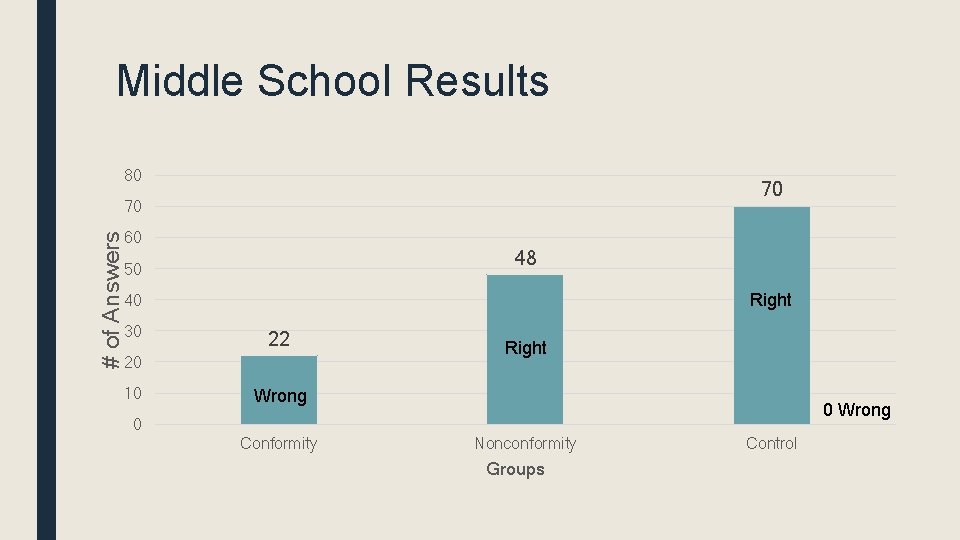
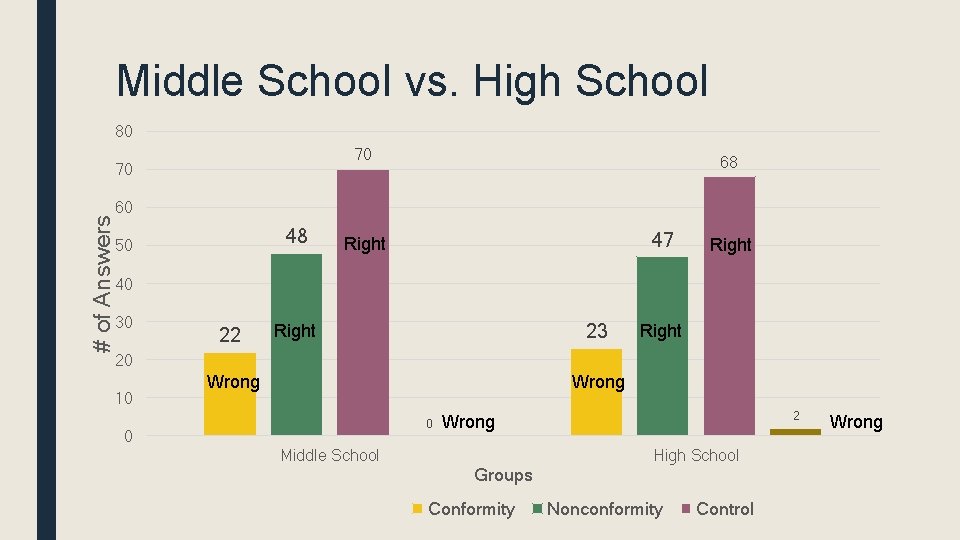
Middle School Results 80 70 # of Answers 70 60 48 50 Right 40 30 22 20 10 Right Wrong 0 Conformity Nonconformity Groups Control
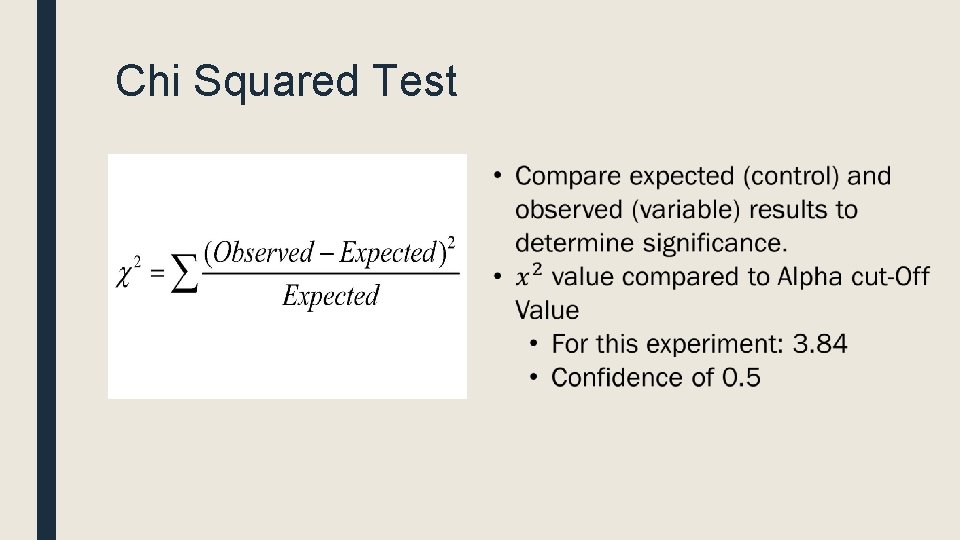
Chi Squared Test
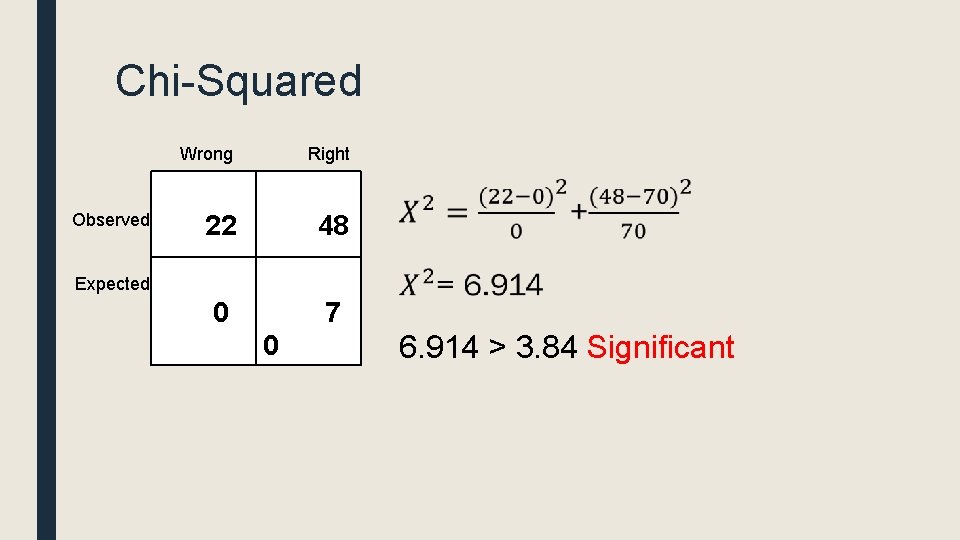
Chi-Squared Wrong Right Observed 22 48 Expected 0 7 0 6. 914 > 3. 84 Significant
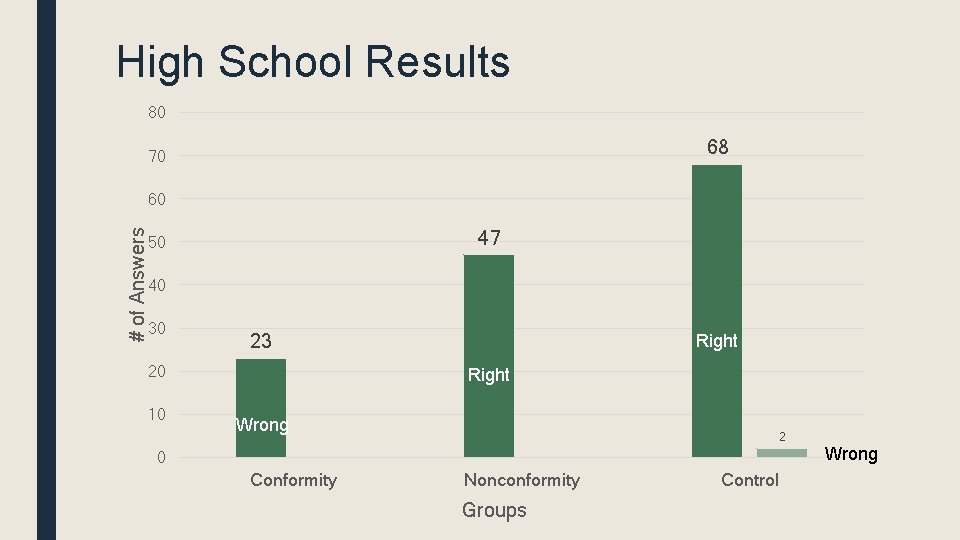
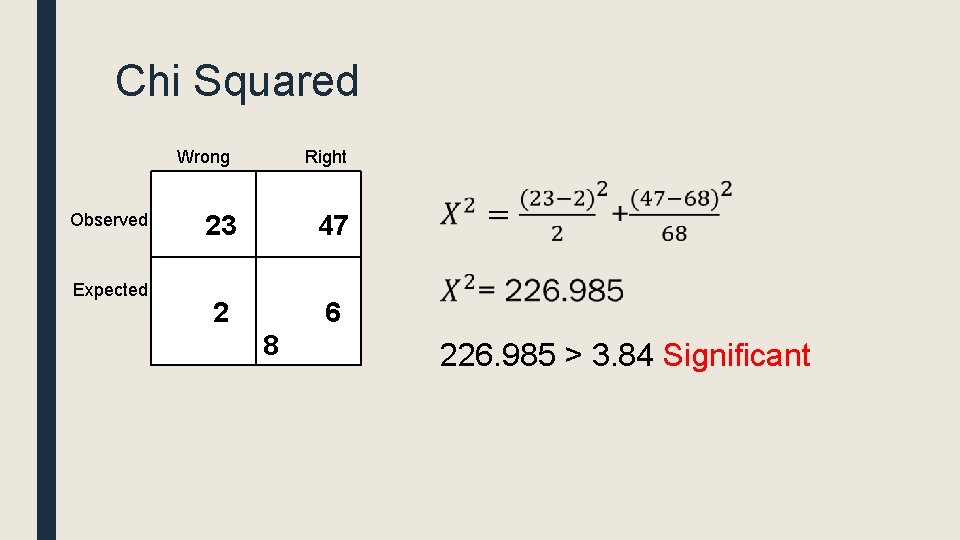
High School Results 80 68 70 # of Answers 60 47 50 40 30 23 20 10 Right Wrong 2 Wrong 0 Conformity Nonconformity Groups Control
Chi Squared Wrong Right Observed Expected 23 47 2 6 8 226. 985 > 3. 84 Significant
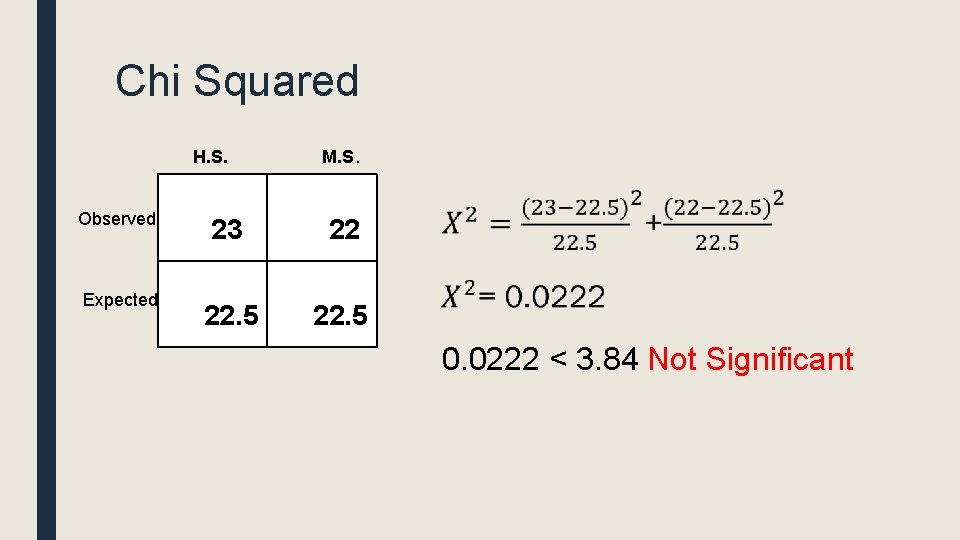
Middle School vs. High School 80 70 # of Answers 70 68 60 48 50 47 Right 40 30 22 23 Right 20 10 Wrong 0 0 2 Wrong Middle School High School Groups Conformity Nonconformity Control Wrong
Chi Squared H. S. M. S. Observed Expected 23 22. 5 22 22. 5 0. 0222 < 3. 84 Not Significant
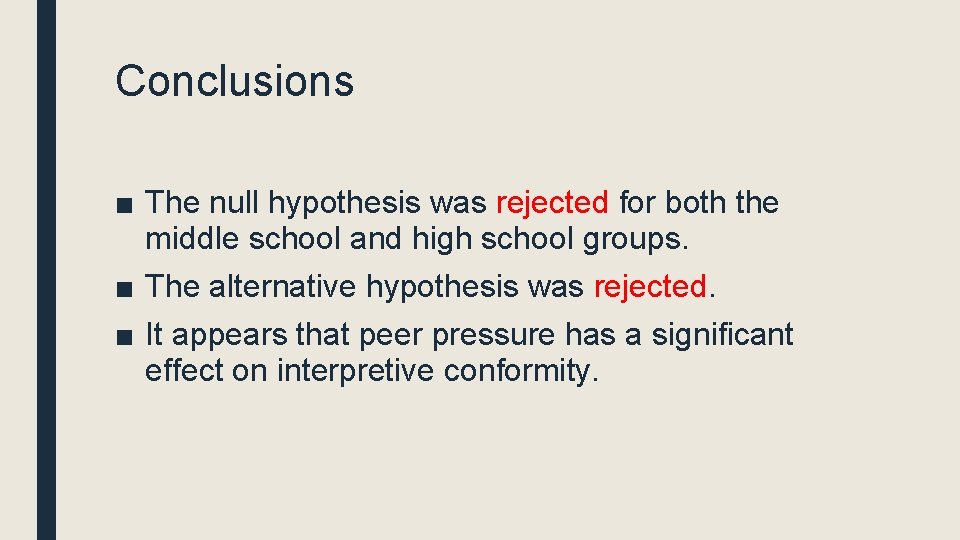
Conclusions ■ The null hypothesis was rejected for both the middle school and high school groups. ■ The alternative hypothesis was rejected. ■ It appears that peer pressure has a significant effect on interpretive conformity.
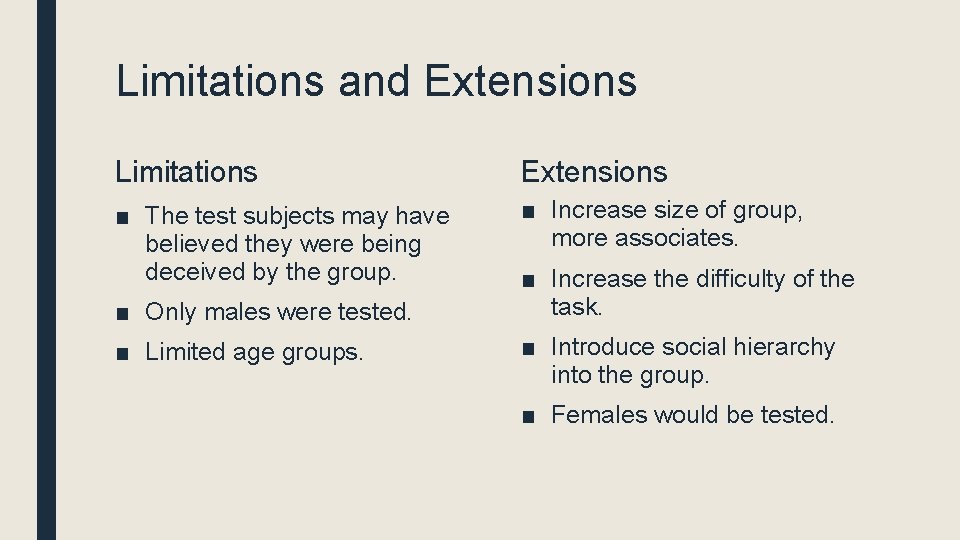
Limitations and Extensions Limitations Extensions ■ The test subjects may have believed they were being deceived by the group. ■ Increase size of group, more associates. ■ Only males were tested. ■ Limited age groups. ■ Increase the difficulty of the task. ■ Introduce social hierarchy into the group. ■ Females would be tested.
Sources ■ http: //kidshealth. org/teen/homework/problems/peer_pressure. html# ■ http: //www. simplypsychology. org/conformity. html ■ http: //www. simplypsychology. org/zimbardo. html ■ http: //www. simplypsychology. org/asch-conformity. html ■ http: //www. ncbi. nlm. nih. gov/pmc/articles/PMC 3375089/
THANK YOU FOR YOUR TIME! Are there any questions?