
PEER LEADERSHIP DEVELOPMENT AND INTEGRATION PROGRAMME 2017 2018
- Slides: 9
PEER LEADERSHIP DEVELOPMENT AND INTEGRATION PROGRAMME 2017 -2018
1 THE BEGININGS FUNDING IHREC funding drawn down through HSE Addiction Services CHO 6 & 7 Implementing its core principle of supporting human rights within the HSE Addiction Services COLLABORATORS Keri Goodliffe, Co-ordinator, SICLDATF Dr. Margaret Bourke, GP Liaison Co-ordinator, CHO 7 Denis O`Driscoll, Chief Pharmacist, HSE Addiction Services Nicola Perry, Project Manager, Community Response
2 RECRUITMENT TARGETED AREA HSE Addiction Services CHO 6&7 REFERRAL AGENTS Organisations with: • Significant standing and track record in addiction service delivery and peer led initiatives • Drug use was not seen as a barrier to participation
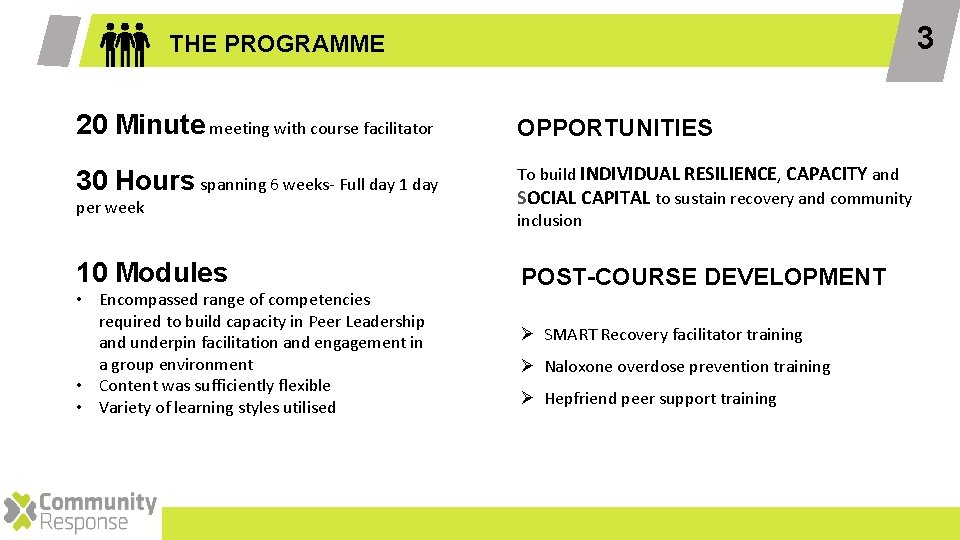
3 THE PROGRAMME 20 Minute meeting with course facilitator OPPORTUNITIES 30 Hours spanning 6 weeks- Full day 1 day To build INDIVIDUAL RESILIENCE, CAPACITY and SOCIAL CAPITAL to sustain recovery and community inclusion per week 10 Modules • Encompassed range of competencies required to build capacity in Peer Leadership and underpin facilitation and engagement in a group environment • Content was sufficiently flexible • Variety of learning styles utilised POST-COURSE DEVELOPMENT Ø SMART Recovery facilitator training Ø Naloxone overdose prevention training Ø Hepfriend peer support training
4 MEASUREMENTS 20 PARTICIPANTS. Completed 2 PROGRAMMES INTERNAL EVALUATION EXTERNAL EVALUATION Ø Conducted by facilitator who conducted Ø Independent external evaluation METHOD Ø Pre- course questionnaire m Ø Mid- term review Ø End of programme evaluation METHOD Ø Questionnaire Ø Focus group feedback with 14 participants Ø Stakeholder and facilitator interviews
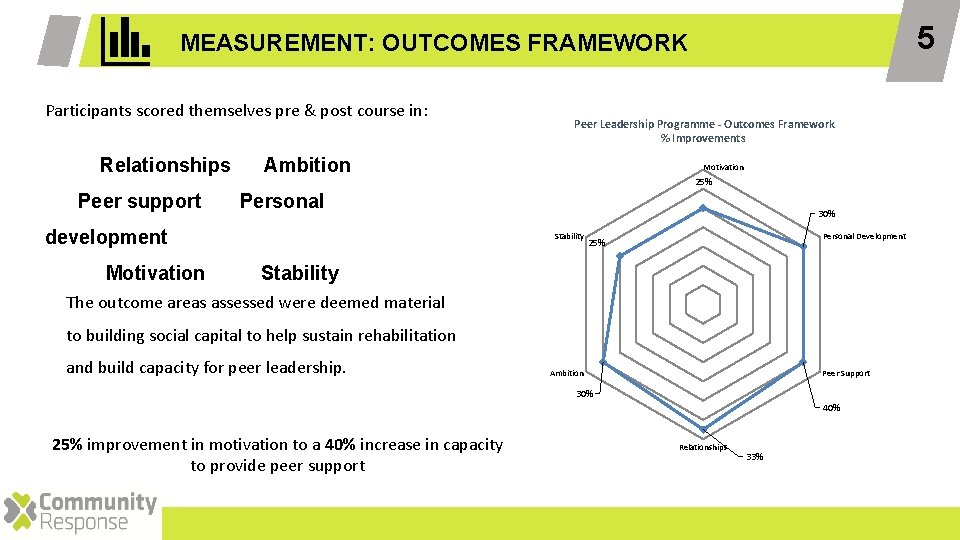
5 MEASUREMENT: OUTCOMES FRAMEWORK Participants scored themselves pre & post course in: Relationships Peer support Ambition Motivation 25% Personal development Motivation Peer Leadership Programme - Outcomes Framework % Improvements 30% Stability Personal Development 25% Stability The outcome areas assessed were deemed material to building social capital to help sustain rehabilitation and build capacity for peer leadership. Ambition Peer Support 30% 40% 25% improvement in motivation to a 40% increase in capacity to provide peer support Relationships 33%
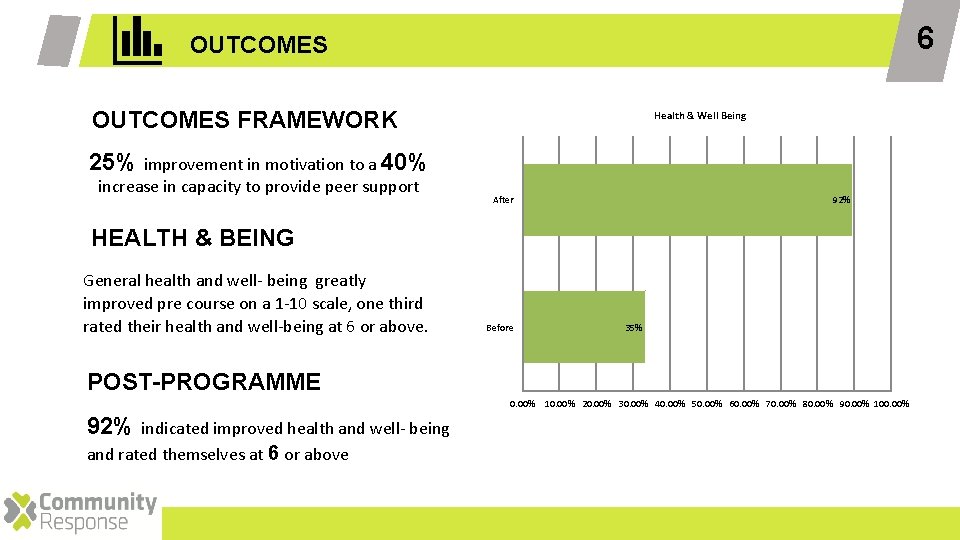
6 OUTCOMES FRAMEWORK Health & Well Being 25% improvement in motivation to a 40% increase in capacity to provide peer support After 92% HEALTH & BEING General health and well- being greatly improved pre course on a 1 -10 scale, one third rated their health and well-being at 6 or above. Before 35% POST-PROGRAMME 0. 00% 10. 00% 20. 00% 30. 00% 40. 00% 50. 00% 60. 00% 70. 00% 80. 00% 90. 00% 100. 00% 92% indicated improved health and well- being and rated themselves at 6 or above
7 OUTCOMES Participants reported an increase in levels of knowledge, skills and competencies in relation to the programme modules KEY OUTCOMES Ø A positive journey of change was evidenced in key soft outcome areas such as: MOTIVATION, AMBITION, PERSONAL DEVELOPMENT, PEER SUPPORT and STABILITY ATTRIBUTABLE to the Peer Leadership Programme. Ø The achievement of such outcomes is a crucial factor in increasing resilience to sustain recovery and increase capacity to eventually exit services.
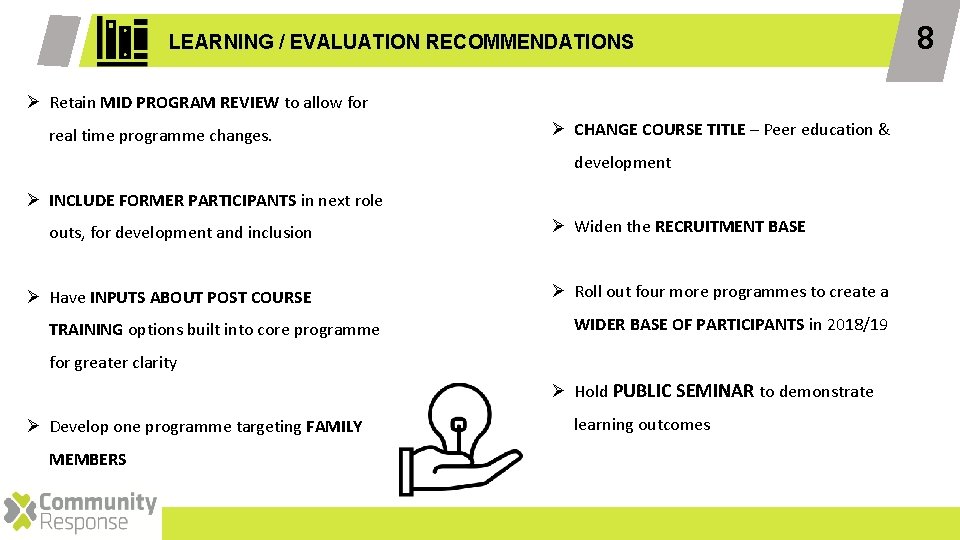
LEARNING / EVALUATION RECOMMENDATIONS Ø Retain MID PROGRAM REVIEW to allow for real time programme changes. Ø CHANGE COURSE TITLE – Peer education & development Ø INCLUDE FORMER PARTICIPANTS in next role outs, for development and inclusion Ø Have INPUTS ABOUT POST COURSE TRAINING options built into core programme Ø Widen the RECRUITMENT BASE Ø Roll out four more programmes to create a WIDER BASE OF PARTICIPANTS in 2018/19 for greater clarity Ø Hold PUBLIC SEMINAR to demonstrate Ø Develop one programme targeting FAMILY MEMBERS learning outcomes 8