
Peer Groups Cliques Adolescent Groups versus Childrens Groups
- Slides: 6
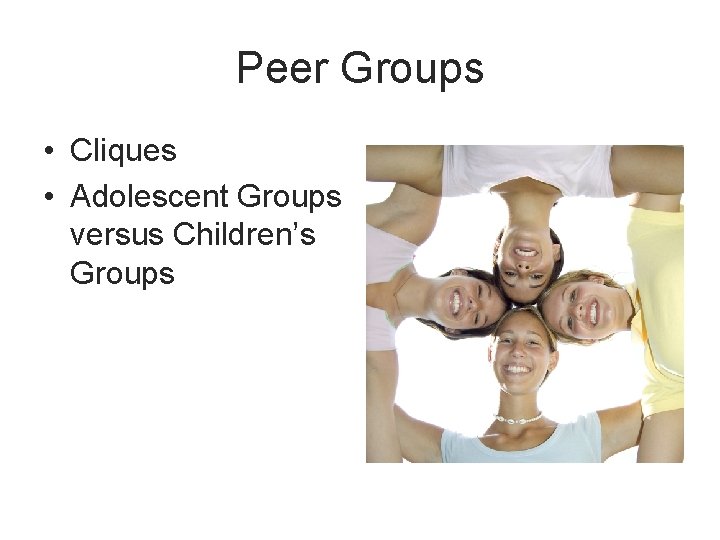
Peer Groups • Cliques • Adolescent Groups versus Children’s Groups
Cliques • Allegiance to cliques can exert powerful control over the lives of adolescents. • Group identity often overrides personal identity. • Clique leaders may place members in positions of considerable moral conflict by asking teens to choose between their “code” and that of their parents. • One study has found correlational data linking clique membership to self-esteem.
Adolescent Groups versus Childhood Groups • Children groups are usually made up of friends or neighbourhood acquaintances. • Adolescent groups tend to include a broader array of members. • Adolescent groups are more likely to have a mixture of individuals from different ethnic groups than are peer groups in childhood. • Children groups are not as formalized as many adolescent groups.
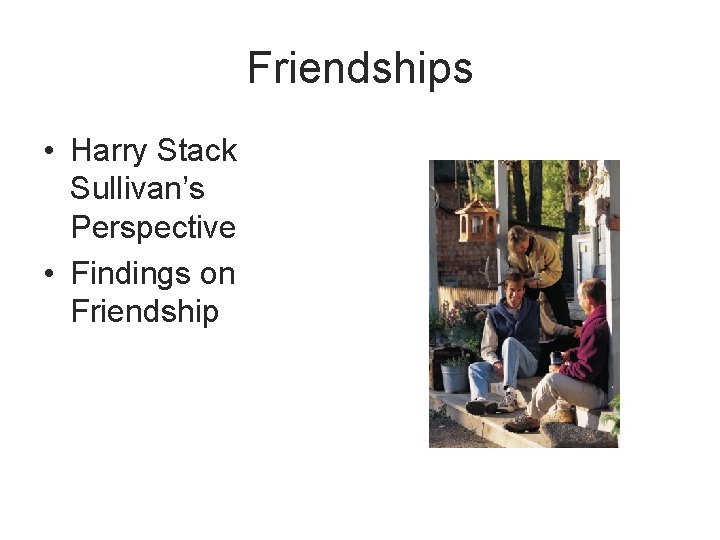
Friendships • Harry Stack Sullivan’s Perspective • Findings on Friendship
Harry Stack Sullivan’s Perspective • Sullivan believed that all people have a number of basic social needs that must be fulfilled for our emotional wellbeing. • Developmentally, friends become increasingly depended on to satisfy these needs during adolescence. • The need for intimacy intensifies during early adolescence, motivating teenagers to seek out close friends. • If teens fail to forge such close friendships, they experience painful feelings of loneliness and reduced sense of self-worth.
Findings on Friendship • Research supports many of Sullivan’s ideas. • Adolescents report disclosing intimate and personal information to their friends more often than younger children. • Adolescents say they depend more on friends than on parents to satisfy their needs for intimacy, companionship, and reassurance of worth. • The quality of friendship is more strongly linked to feelings of well-being during adolescence than during childhood.