
Pedro Amrico de Figueiredo e Melo mais conhecido

- Slides: 22
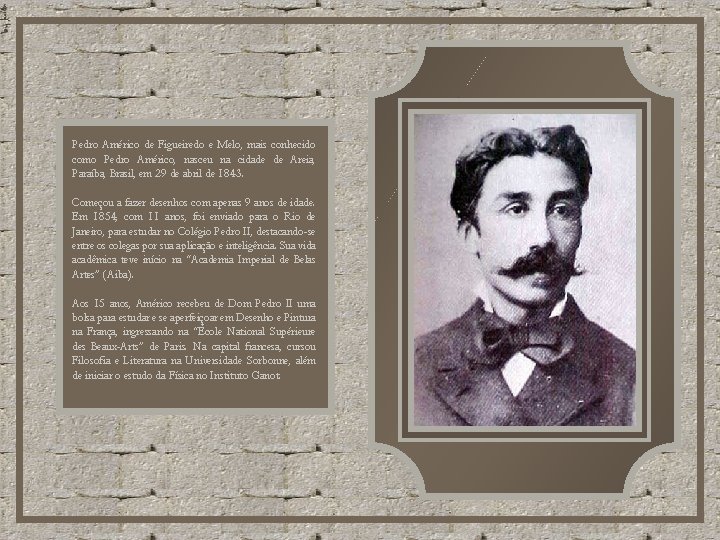
Pedro Américo de Figueiredo e Melo, mais conhecido como Pedro Américo, nasceu na cidade de Areia, Paraíba, Brasil, em 29 de abril de 1843. Começou a fazer desenhos com apenas 9 anos de idade. Em 1854, com 11 anos, foi enviado para o Rio de Janeiro, para estudar no Colégio Pedro II, destacando-se entre os colegas por sua aplicação e inteligência. Sua vida acadêmica teve início na “Academia Imperial de Belas Artes” (Aiba). Aos 15 anos, Américo recebeu de Dom Pedro II uma bolsa para estudar e se aperfeiçoar em Desenho e Pintura na França, ingressando na “École National Supérieure des Beaux-Arts” de Paris. Na capital francesa, cursou Filosofia e Literatura na Universidade Sorbonne, além de iniciar o estudo da Física no Instituto Ganot.
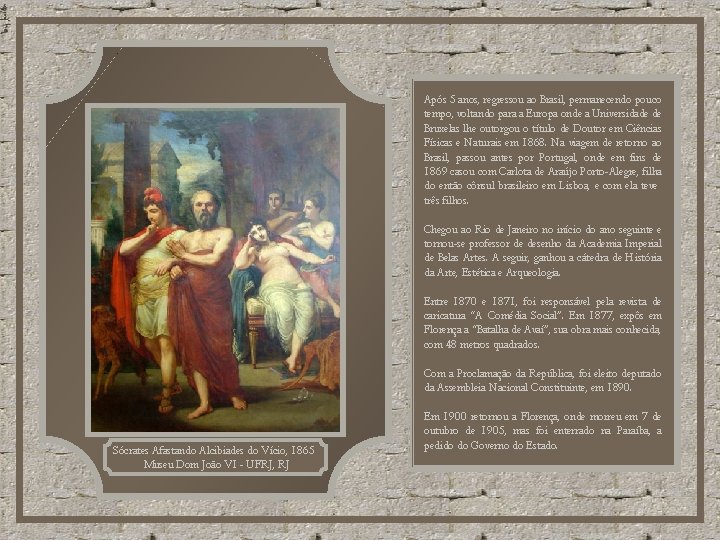
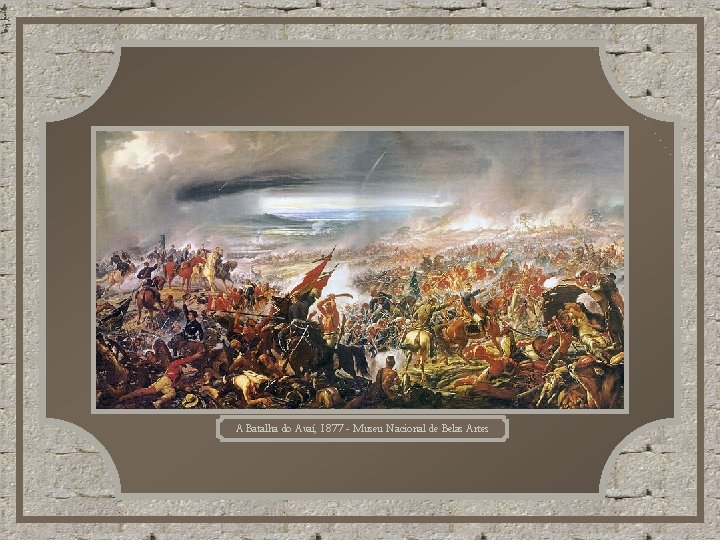
Após 5 anos, regressou ao Brasil, permanecendo pouco tempo, voltando para a Europa onde a Universidade de Bruxelas lhe outorgou o título de Doutor em Ciências Físicas e Naturais em 1868. Na viagem de retorno ao Brasil, passou antes por Portugal, onde em fins de 1869 casou com Carlota de Araújo Porto-Alegre, filha do então cônsul brasileiro em Lisboa, e com ela teve três filhos. Chegou ao Rio de Janeiro no início do ano seguinte e tornou-se professor de desenho da Academia Imperial de Belas Artes. A seguir, ganhou a cátedra de História da Arte, Estética e Arqueologia. Entre 1870 e 1871, foi responsável pela revista de caricatura “A Comédia Social”. Em 1877, expôs em Florença a “Batalha de Avaí”, sua obra mais conhecida, com 48 metros quadrados. Com a Proclamação da República, foi eleito deputado da Assembleia Nacional Constituinte, em 1890. Sócrates Afastando Alcibiades do Vício, 1865 Museu Dom João VI - UFRJ, RJ Em 1900 retornou a Florença, onde morreu em 7 de outubro de 1905, mas foi enterrado na Paraíba, a pedido do Governo do Estado.
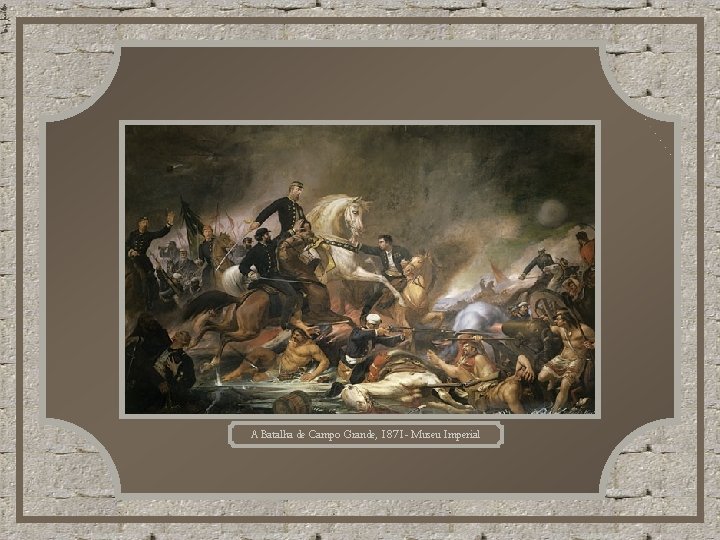
A Batalha de Campo Grande, 1871 - Museu Imperial
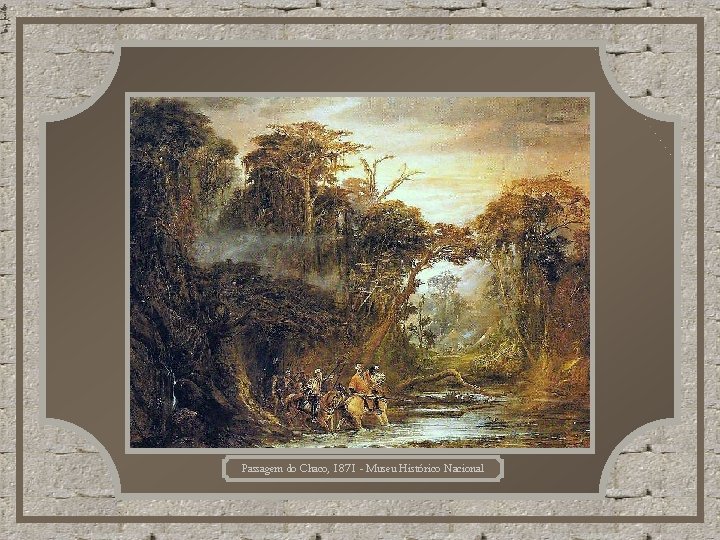
Passagem do Chaco, 1871 - Museu Histórico Nacional
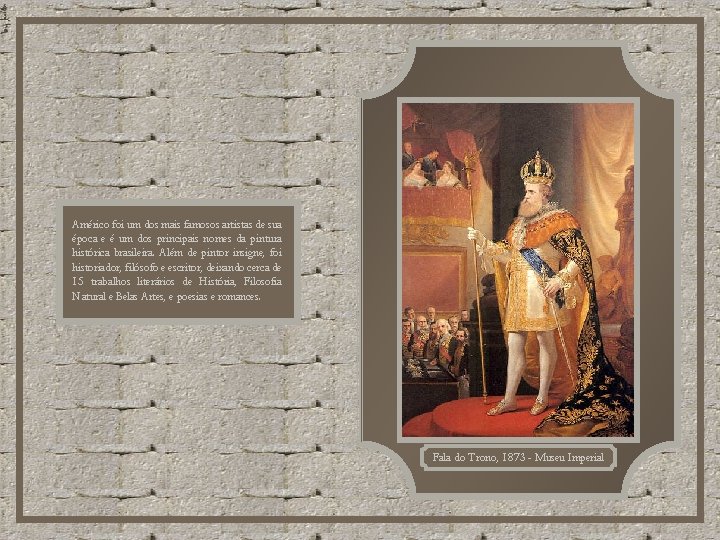
Américo foi um dos mais famosos artistas de sua época e é um dos principais nomes da pintura histórica brasileira. Além de pintor insigne, foi historiador, filósofo e escritor, deixando cerca de 15 trabalhos literários de História, Filosofia Natural e Belas Artes, e poesias e romances. Fala do Trono, 1873 - Museu Imperial
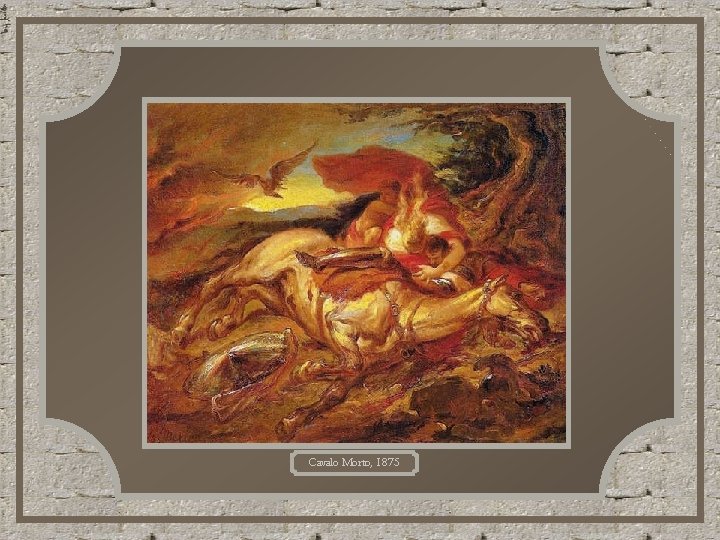
Cavalo Morto, 1875
A Batalha do Avaí, 1877 - Museu Nacional de Belas Artes
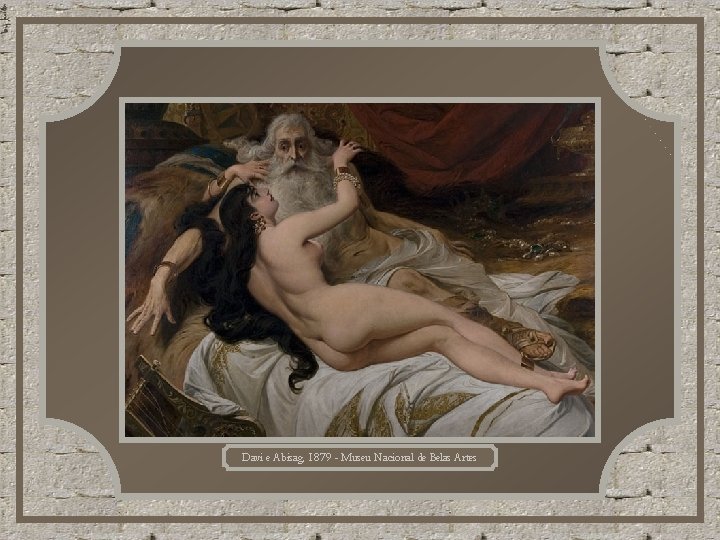
Davi e Abisag, 1879 - Museu Nacional de Belas Artes
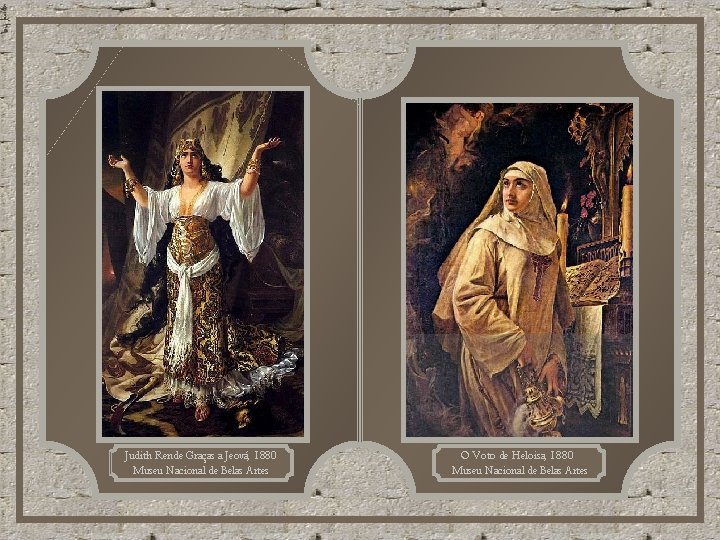
Judith Rende Graças a Jeová, 1880 Museu Nacional de Belas Artes O Voto de Heloisa, 1880 Museu Nacional de Belas Artes
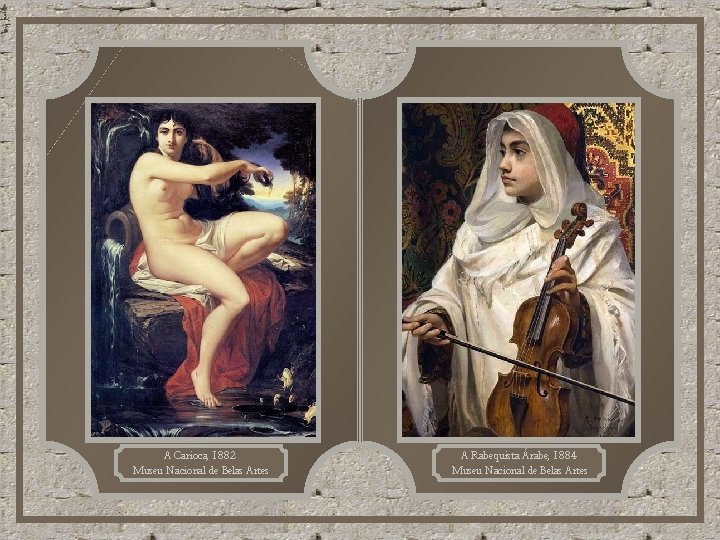
A Carioca, 1882 Museu Nacional de Belas Artes A Rabequista Árabe, 1884 Museu Nacional de Belas Artes
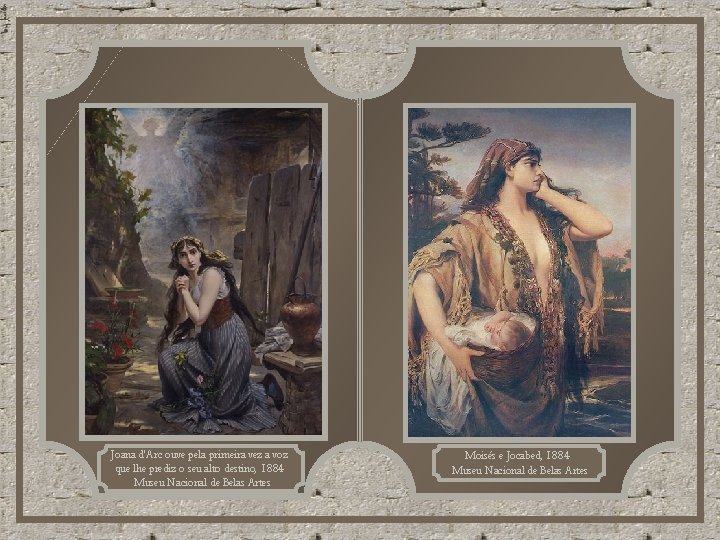
Joana d'Arc ouve pela primeira vez a voz que lhe prediz o seu alto destino, 1884 Museu Nacional de Belas Artes Moisés e Jocabed, 1884 Museu Nacional de Belas Artes
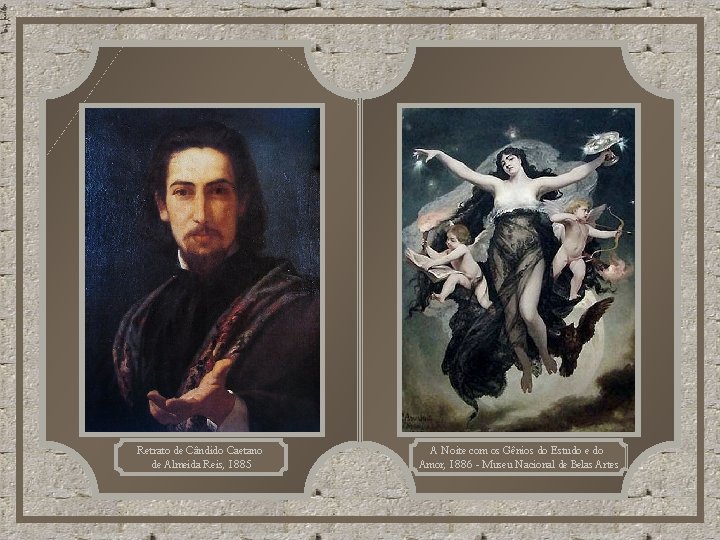
Retrato de Cândido Caetano de Almeida Reis, 1885 A Noite com os Gênios do Estudo e do Amor, 1886 - Museu Nacional de Belas Artes
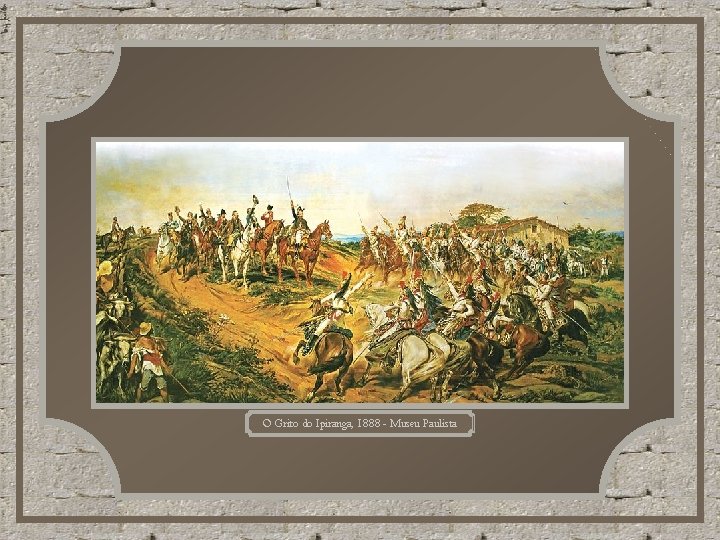
O Grito do Ipiranga, 1888 - Museu Paulista
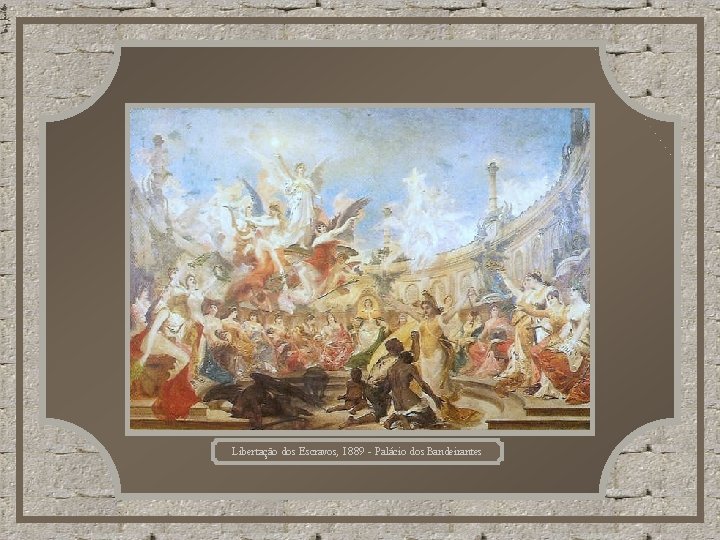
Libertação dos Escravos, 1889 - Palácio dos Bandeirantes
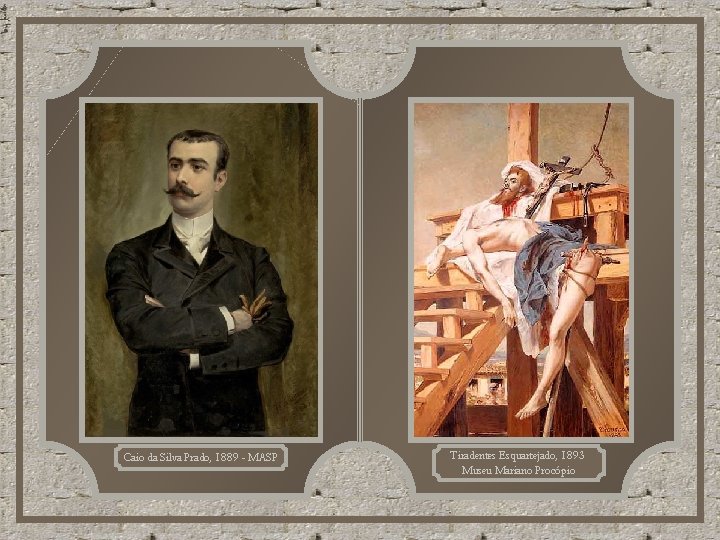
Caio da Silva Prado, 1889 - MASP Tiradentes Esquartejado, 1893 Museu Mariano Procópio
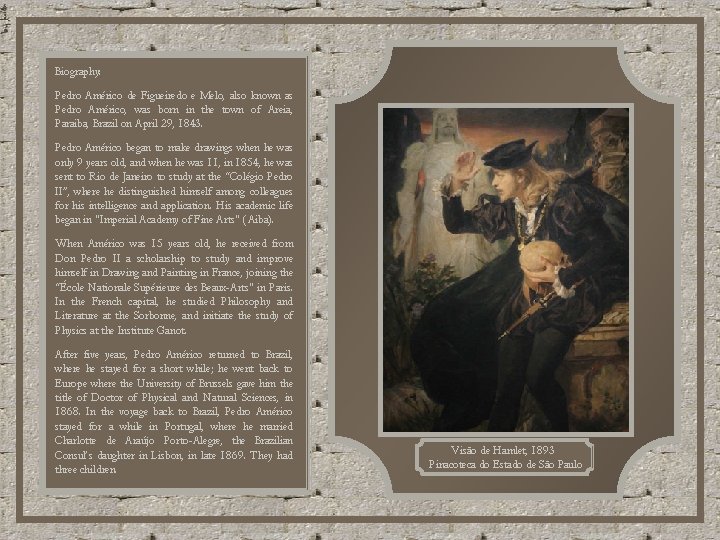
Biography: Pedro Américo de Figueiredo e Melo, also known as Pedro Américo, was born in the town of Areia, Paraiba, Brazil on April 29, 1843. Pedro Américo began to make drawings when he was only 9 years old, and when he was 11, in 1854, he was sent to Rio de Janeiro to study at the “Colégio Pedro II”, where he distinguished himself among colleagues for his intelligence and application. His academic life began in "Imperial Academy of Fine Arts" (Aiba). When Américo was 15 years old, he received from Don Pedro II a scholarship to study and improve himself in Drawing and Painting in France, joining the “École Nationale Supérieure des Beaux-Arts" in Paris. In the French capital, he studied Philosophy and Literature at the Sorbonne, and initiate the study of Physics at the Institute Ganot. After five years, Pedro Américo returned to Brazil, where he stayed for a short while; he went back to Europe where the University of Brussels gave him the title of Doctor of Physical and Natural Sciences, in 1868. In the voyage back to Brazil, Pedro Américo stayed for a while in Portugal, where he married Charlotte de Araújo Porto-Alegre, the Brazilian Consul’s daughter in Lisbon, in late 1869. They had three children. Visão de Hamlet, 1893 Pinacoteca do Estado de São Paulo
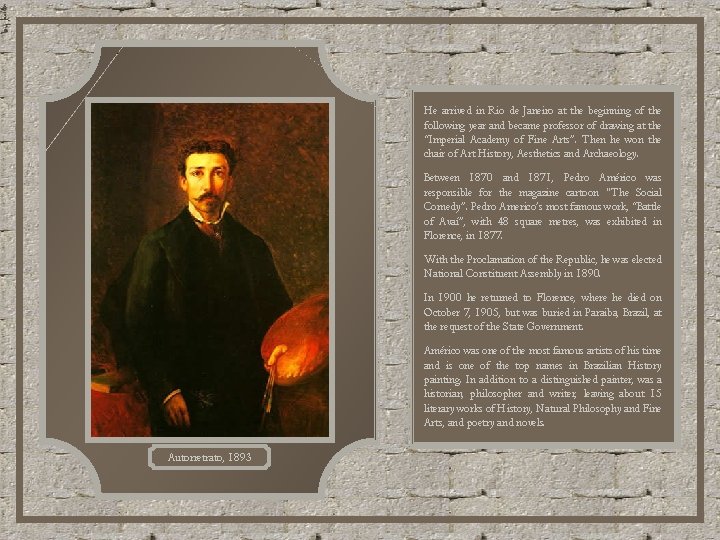
He arrived in Rio de Janeiro at the beginning of the following year and became professor of drawing at the “Imperial Academy of Fine Arts”. Then he won the chair of Art History, Aesthetics and Archaeology. Between 1870 and 1871, Pedro Américo was responsible for the magazine cartoon "The Social Comedy”. Pedro Americo’s most famous work, “Battle of Avaí”, with 48 square metres, was exhibited in Florence, in 1877. With the Proclamation of the Republic, he was elected National Constituent Assembly in 1890. In 1900 he returned to Florence, where he died on October 7, 1905, but was buried in Paraiba, Brazil, at the request of the State Government. Américo was one of the most famous artists of his time and is one of the top names in Brazilian History painting. In addition to a distinguished painter, was a historian, philosopher and writer, leaving about 15 literary works of History, Natural Philosophy and Fine Arts, and poetry and novels. Autorretrato, 1893
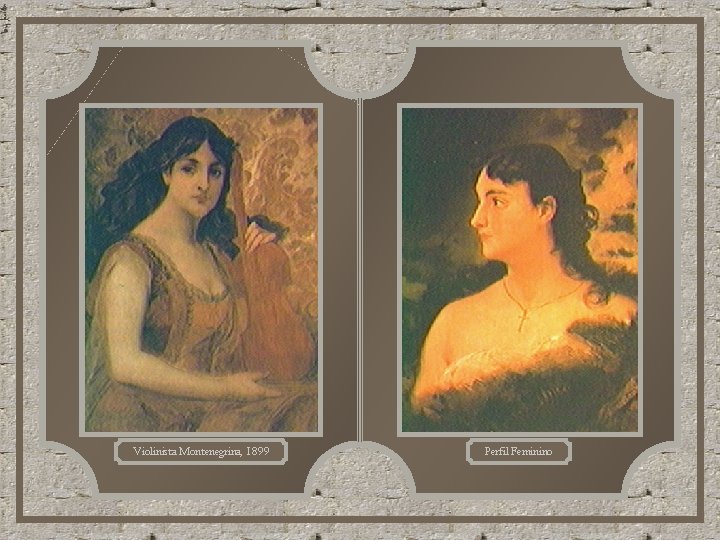
Violinista Montenegrina, 1899 Perfil Feminino
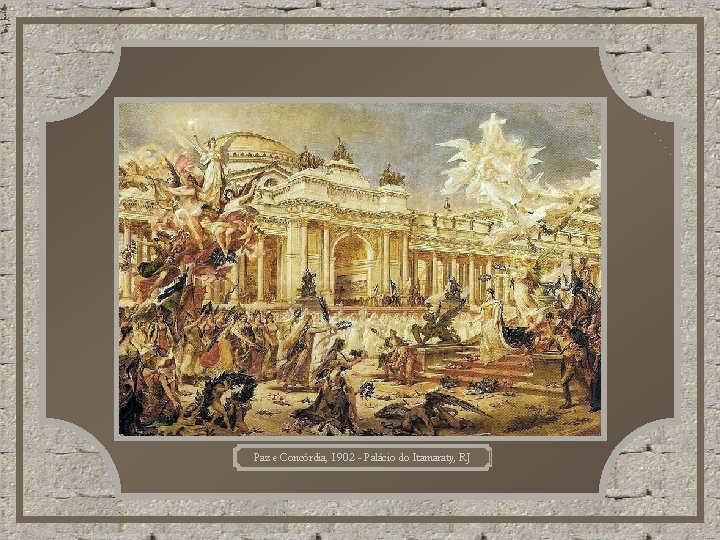
Paz e Concórdia, 1902 - Palácio do Itamaraty, RJ
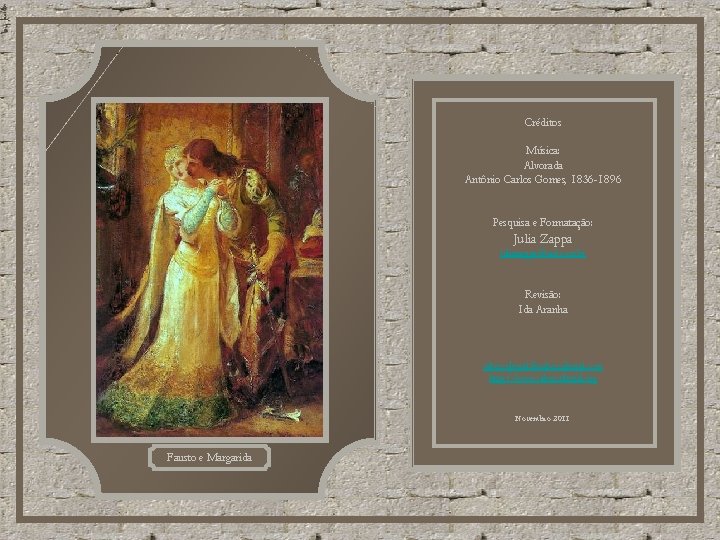
Créditos Música: Alvorada Antônio Carlos Gomes, 1836 -1896 Pesquisa e Formatação: Julia Zappa juliazappa@uol. com. br Revisão: Ida Aranha sabercultural@sabercultural. com http: //www. sabercultural. org Novembro 2011 Fausto e Margarida
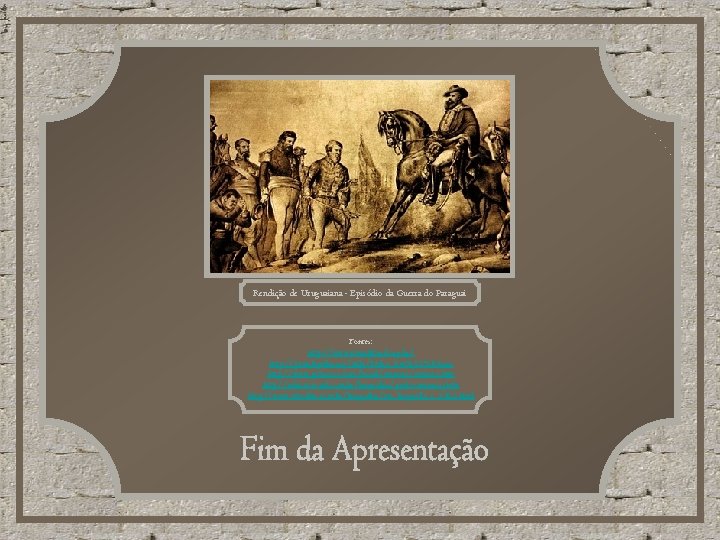
Rendição de Uruguaiana - Episódio da Guerra do Paraguai Fontes: http: //www. itaucultural. org. br/ http: //pt. wikipedia. org/wiki/Pedro_Am%C 3%A 9 rico http: //www. pitoresco. com/brasil/americo. htm http: //educacao. uol. com. br/biografias/pedro-americo. jhtm http: //www. netsaber. com. br/biografias/ver_biografia_c_1455. html