
PEDIGREE Diagram of relationships in a family Representations
- Slides: 24
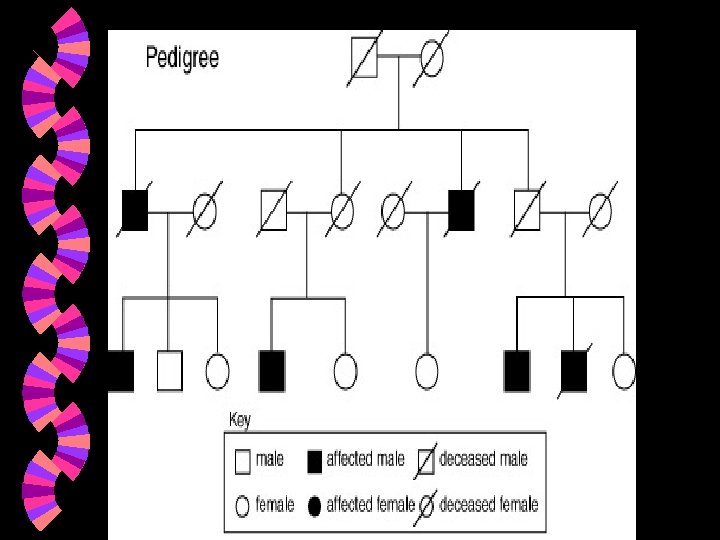
PEDIGREE è Diagram of relationships in a family.
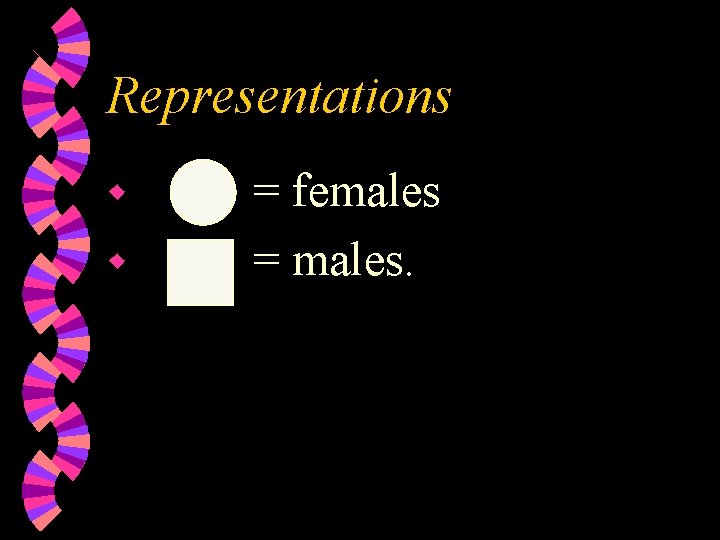
Representations w w = females = males.
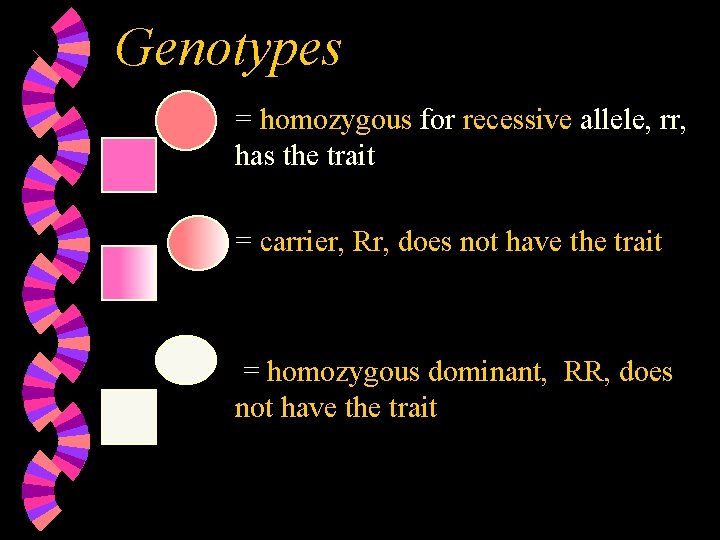
Genotypes = homozygous for recessive allele, rr, has the trait = carrier, Rr, does not have the trait = homozygous dominant, RR, does not have the trait
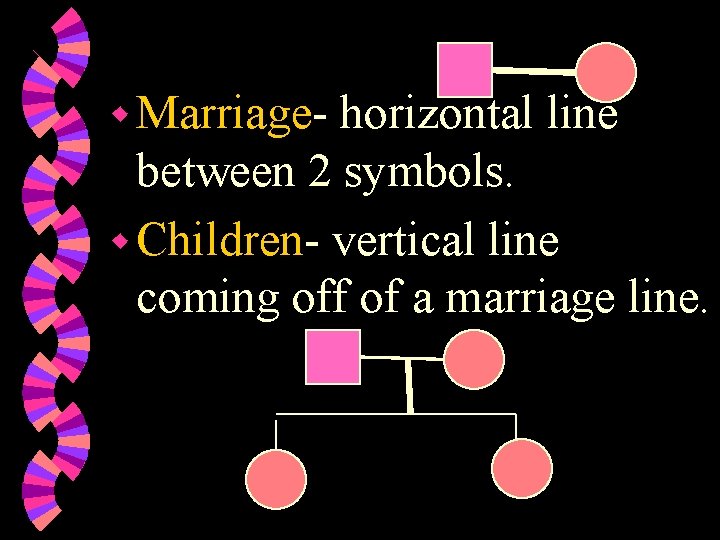
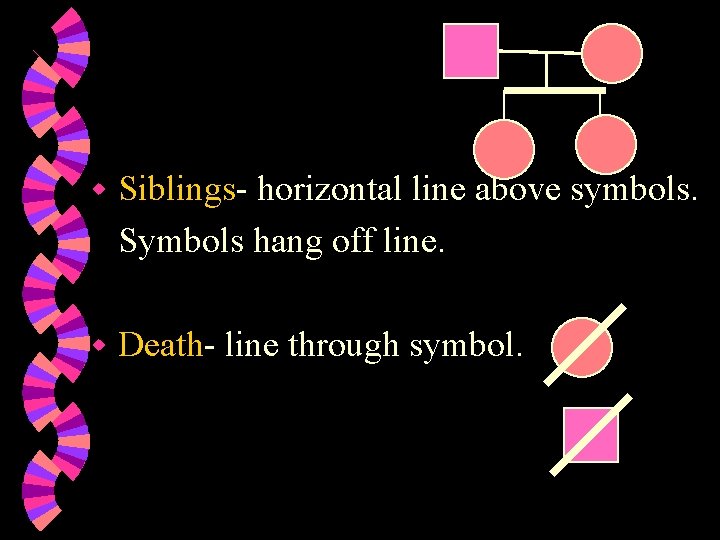
w Marriage- horizontal line between 2 symbols. w Children- vertical line coming off of a marriage line.
w Siblings- horizontal line above symbols. Symbols hang off line. w Death- line through symbol.
Numbers w I, II, IV- Generations w 1, 2, 3, 4 - Individuals
1 Make a pedigree from the following information. D = normal hearing d = deafness M = male F = female
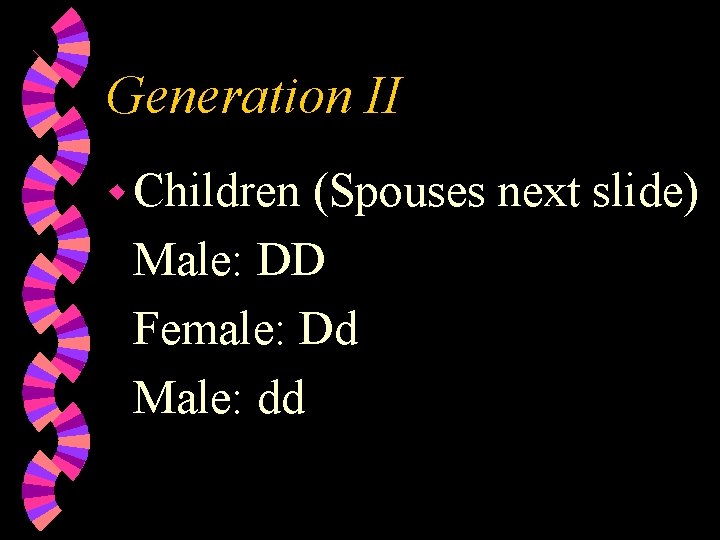
Generation I w Male: Dd w Female: Dd
Generation II w Children (Spouses next slide) Male: DD Female: Dd Male: dd
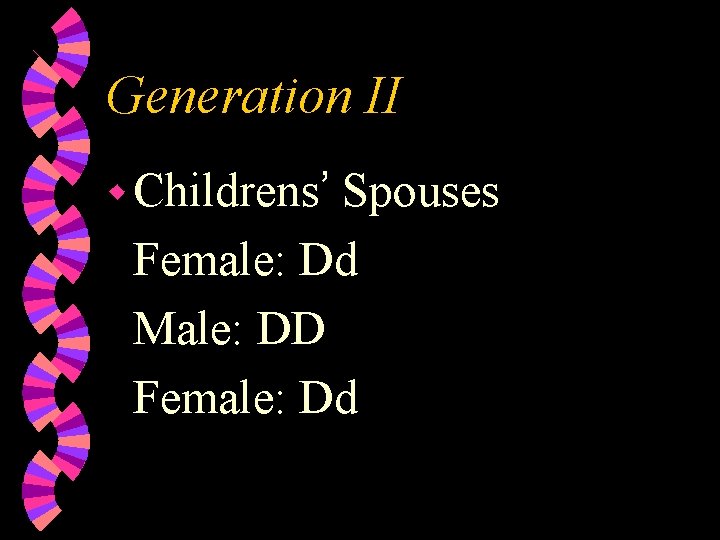
Generation II w Childrens’ Spouses Female: Dd Male: DD Female: Dd
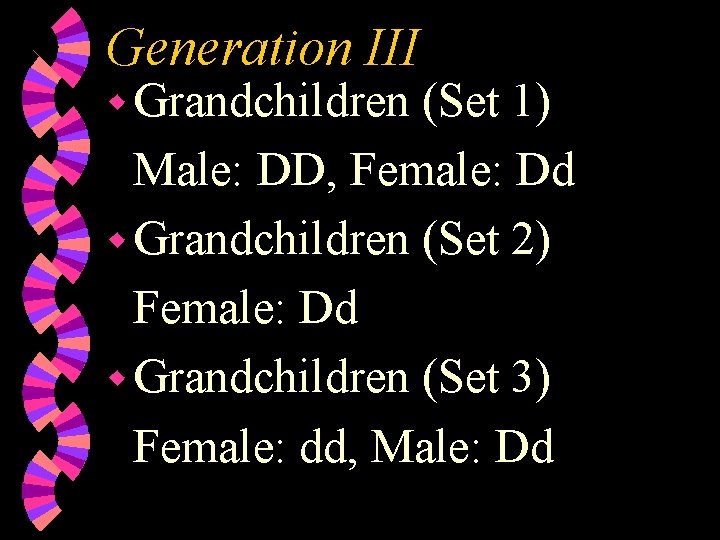
Generation III w Grandchildren (Set 1) Male: DD, Female: Dd w Grandchildren (Set 2) Female: Dd w Grandchildren (Set 3) Female: dd, Male: Dd
2 Use the pedigree chart shown for sickle-cell anemia to answer the questions. *First, label each image as: N N, N S, or S S (here sex doesn’t matter, because this is an autosomal trait)
w How many generations are represented in the chart? w How many carriers of the trait are in each generation? w How many people in the family were born with sicklecell anemia?
w From which parent did the second-generation children inherit the disease? w In which generation did sickle-cell anemia first show?
3 A color-blind man marries a woman with normal redgreen vision. They have two daughters and one son. The son is color-blind and the other has normal vision.
w Draw a pedigree showing the phenotypes of the parents and children. Shade in those symbols representing colorblind individuals. Symbols representing people with normal vision should remain blank.
w What is the genotype of the father? w What is the phenotype of the mother?
4 Duchenne muscular dystrophy is a deadly disorder in which the muscles grow progressively weaker. The disease is caused by a recessive gene on the X chromosome.
w Is this disease more likely to occur in males or females? w How did individual III-6 get this disorder? w Individual II-2 has the disorder, but his father didn’t. How?
w Individual III-5 does not have the disease, yet his mother was a carrier and his father had the disease. How? w Why is the genotype of the father unimportant when looking at the sons?
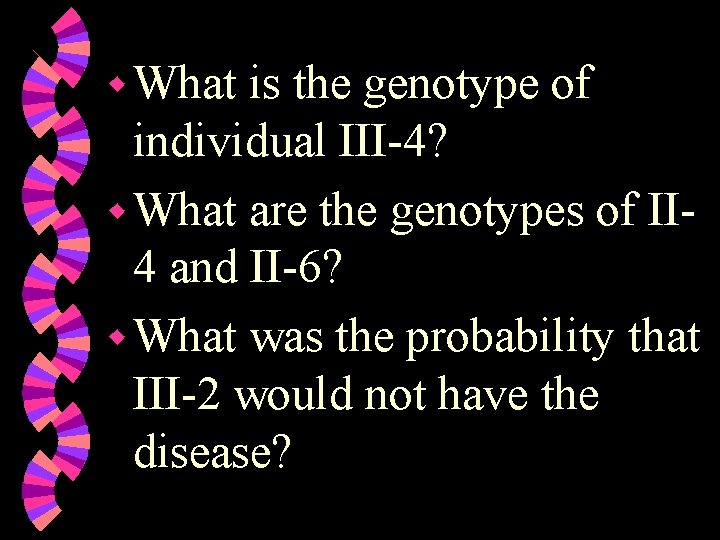
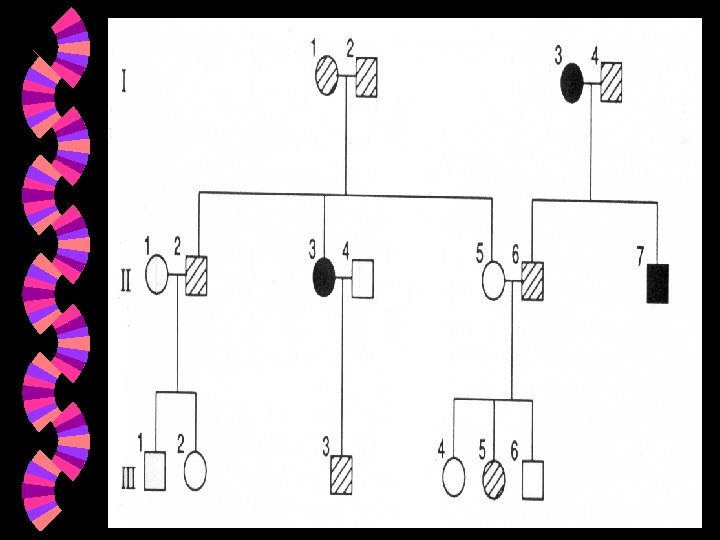
5 Huntington disease, a disease of the nervous system, is caused by an autosomal dominant gene. The pedigree below illustrates a family who have Huntington disease.
w What is the genotype of individual III-4? w What are the genotypes of II 4 and II-6? w What was the probability that III-2 would not have the disease?