
Pedigree Charts The family tree of genetics Pedigree

- Slides: 40
Pedigree Charts The family tree of genetics
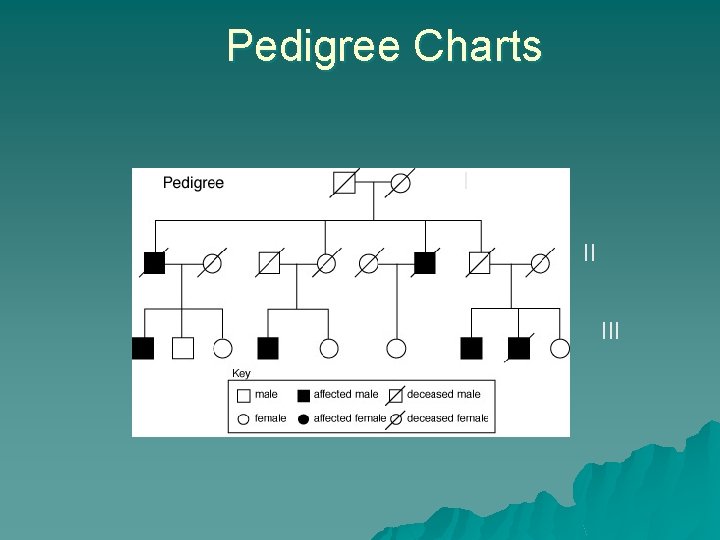
Pedigree Charts I II III
Overview What is a pedigree? I. a. b. Definition Uses Constructing a pedigree II. a. b. III. Symbols Connecting the symbols Interpreting a pedigree
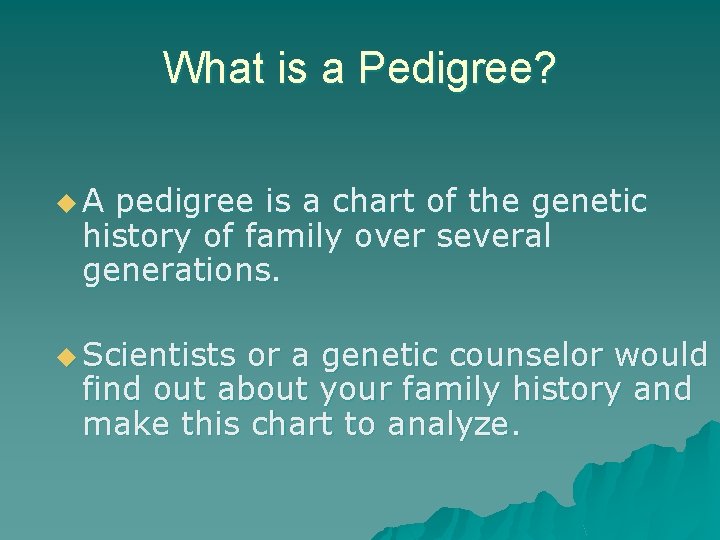
What is a Pedigree? u. A pedigree is a chart of the genetic history of family over several generations. u Scientists or a genetic counselor would find out about your family history and make this chart to analyze.
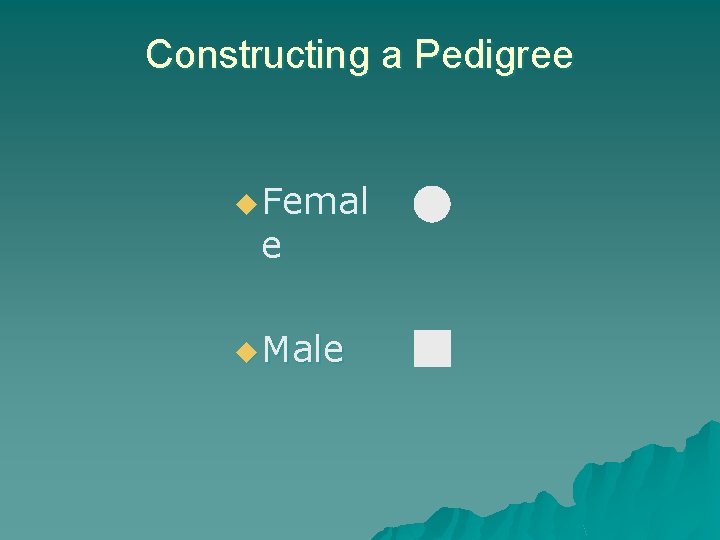
Constructing a Pedigree u Femal e u Male
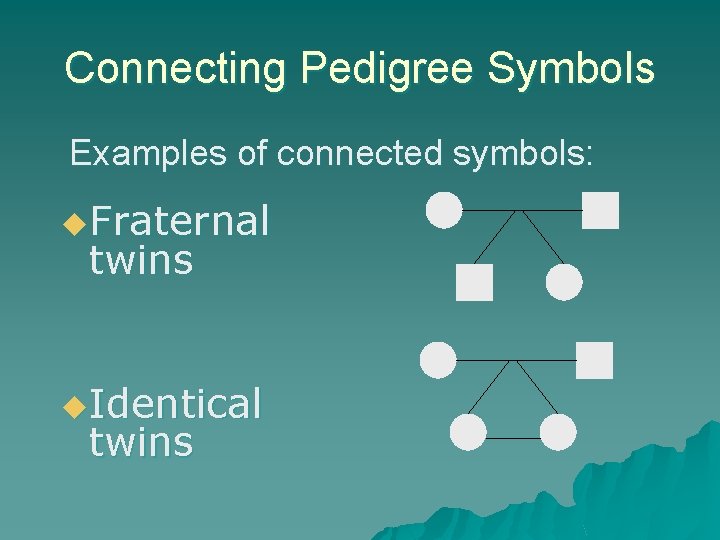
Connecting Pedigree Symbols Examples of connected symbols: u. Fraternal twins u. Identical twins
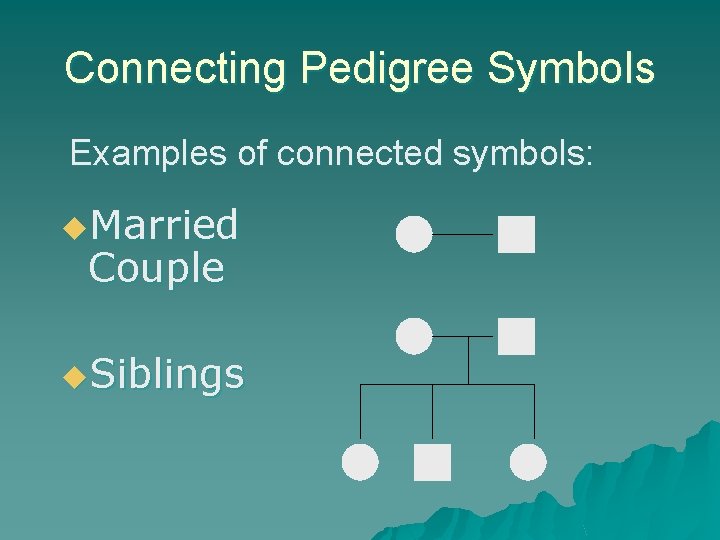
Connecting Pedigree Symbols Examples of connected symbols: u. Married Couple u. Siblings
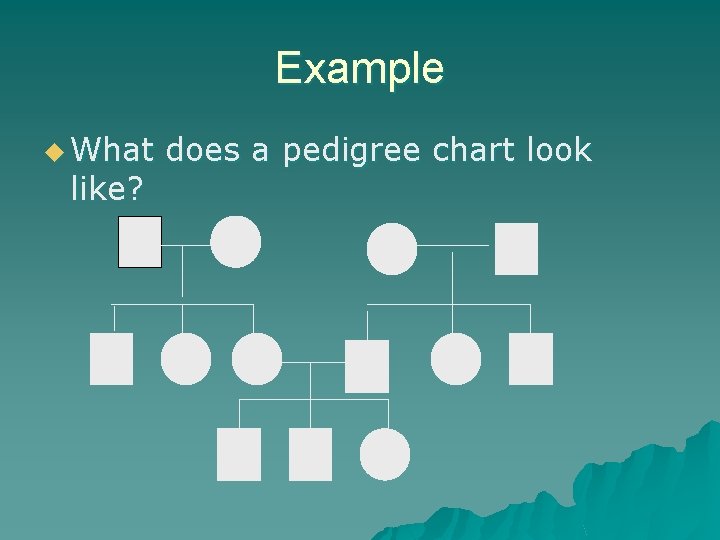
Example u What like? does a pedigree chart look
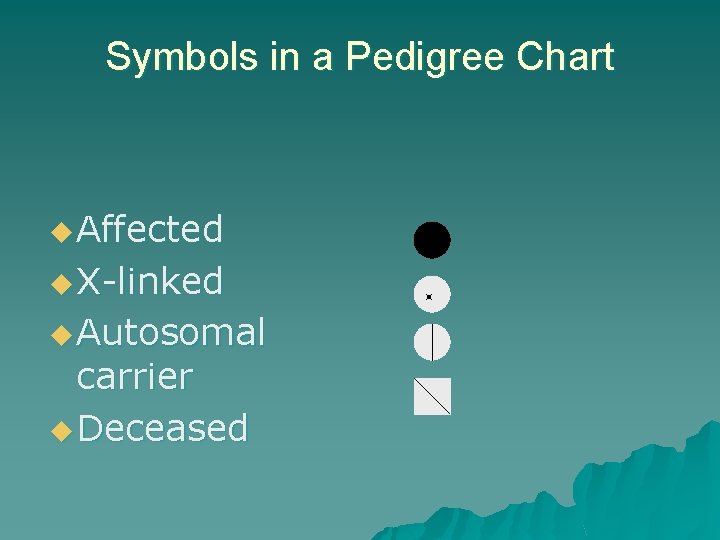
Symbols in a Pedigree Chart u Affected u X-linked u Autosomal carrier u Deceased
Interpreting a Pedigree Chart 1. Determine if the pedigree chart shows an autosomal or X-linked disease. – If most of the males in the pedigree are affected the disorder is X-linked – If it is a 50/50 ratio between men and women the disorder is autosomal.
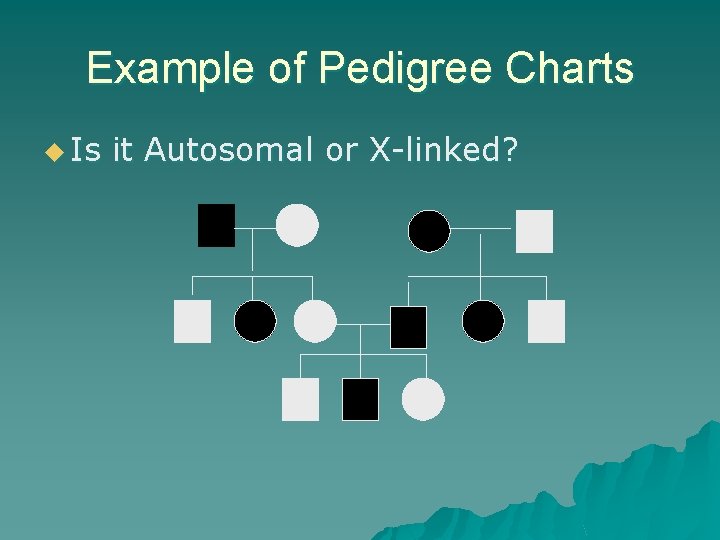
Example of Pedigree Charts u Is it Autosomal or X-linked?
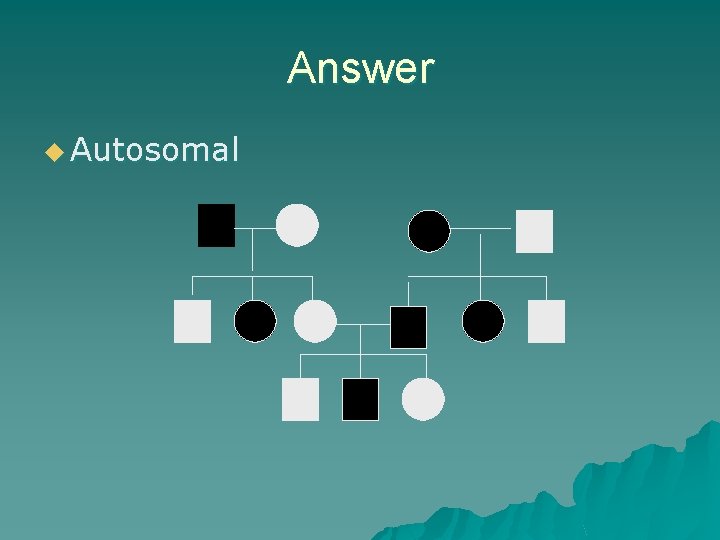
Answer u Autosomal
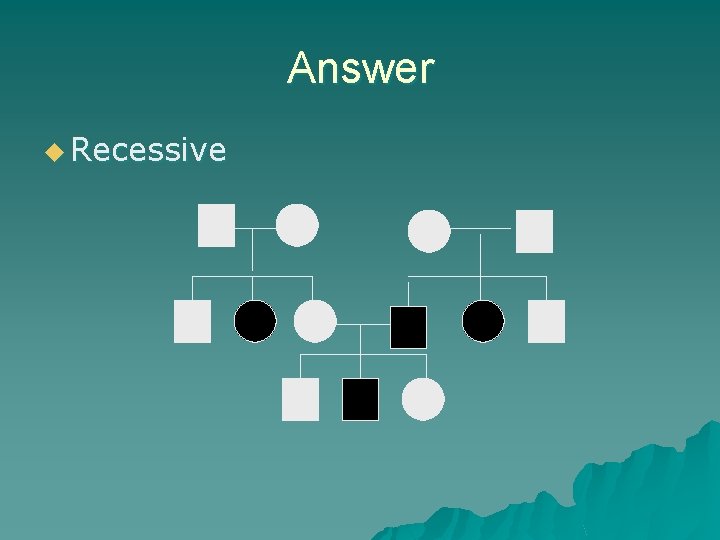
Interpreting a Pedigree Chart 2. Determine whether the disorder is dominant or recessive. – If the disorder is dominant, one of the parents must have the disorder. – If the disorder is recessive, neither parent has to have the disorder because they can be heterozygous.
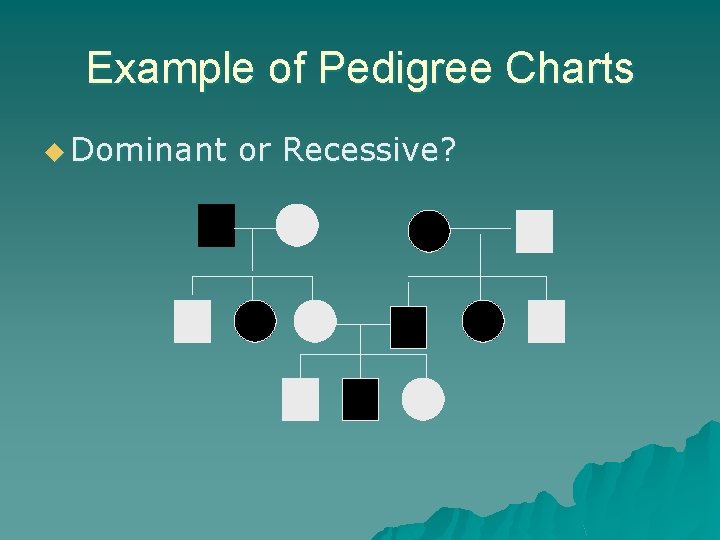
Example of Pedigree Charts u Dominant or Recessive?
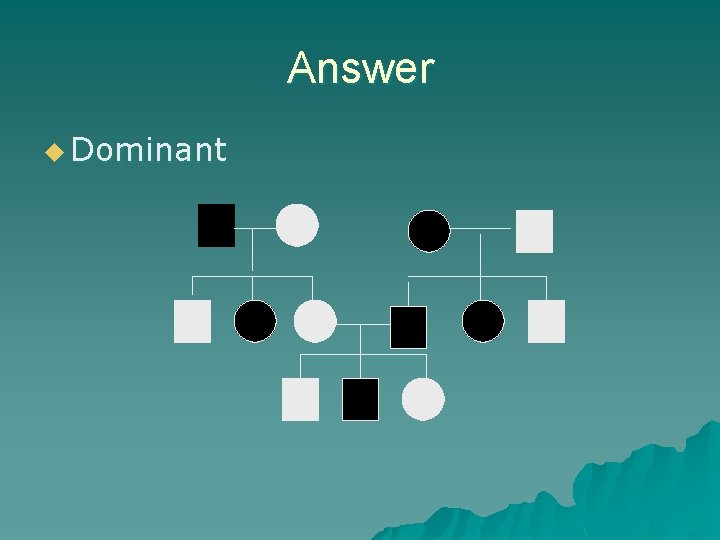
Answer u Dominant
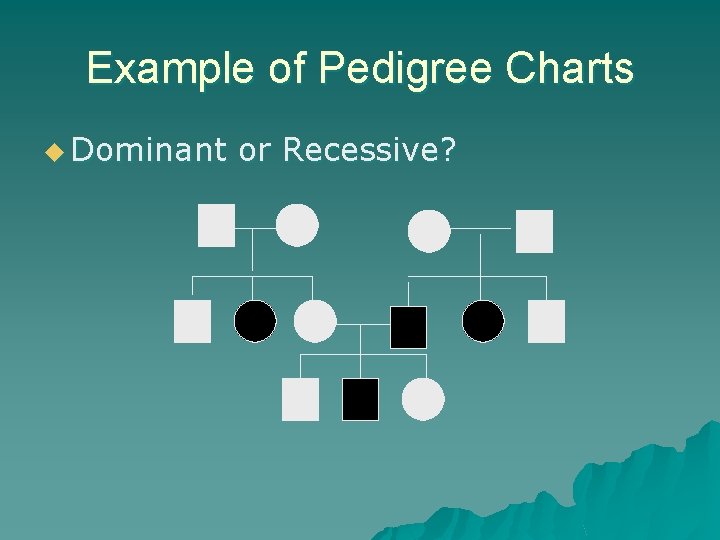
Example of Pedigree Charts u Dominant or Recessive?
Answer u Recessive
Summary u Pedigrees are family trees that explain your genetic history. u Pedigrees are used to find out the probability of a child having a disorder in a particular family. u To begin to interpret a pedigree, determine if the disease or condition is autosomal or X-linked and dominant or recessive.
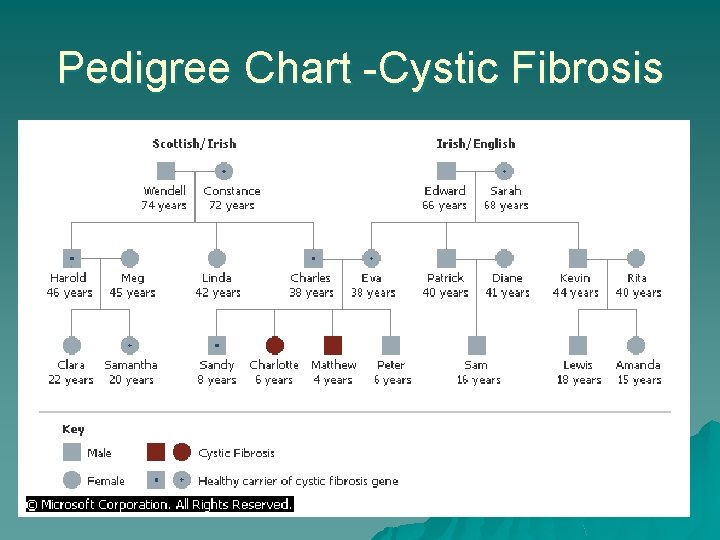
Pedigree Chart -Cystic Fibrosis
Human Genetics
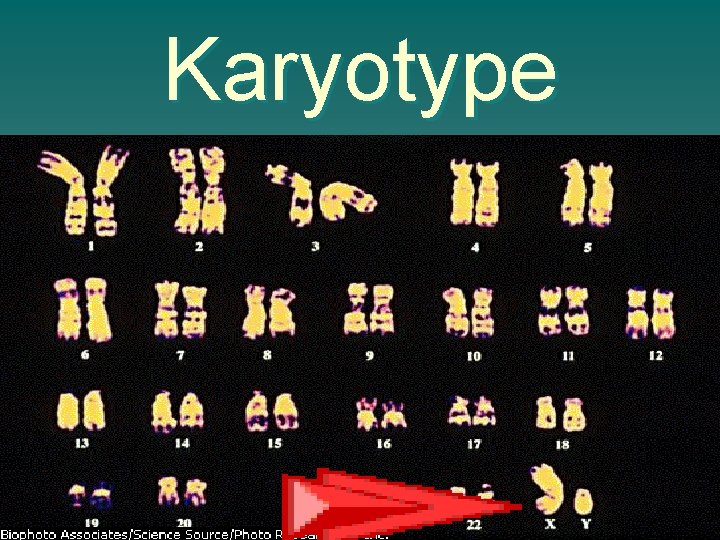
Karyotype
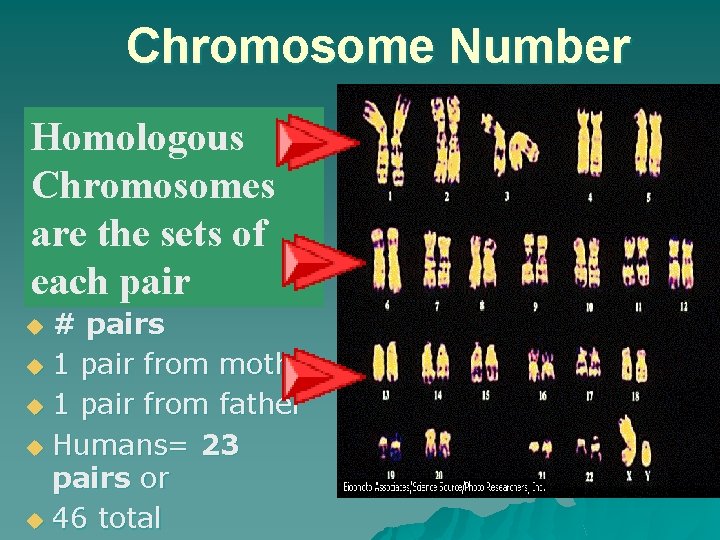
Chromosome Number Different # for Homologous different species Chromosomes u Full set = are the sets of 2 N= Diploid u N= pair each u # pairs u 1 pair from mother u 1 pair from father u Humans= 23 pairs or u 46 total u
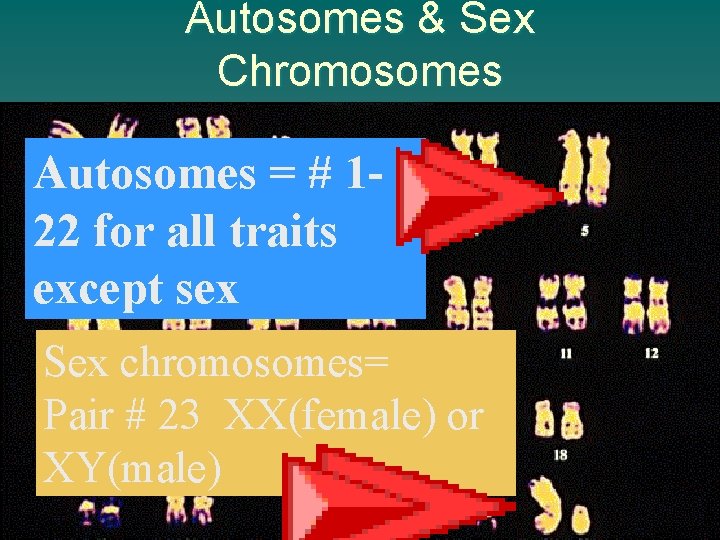
Autosomes & Sex Chromosomes Autosomes = # 122 for all traits except sex Sex chromosomes= Pair # 23 XX(female) or XY(male)
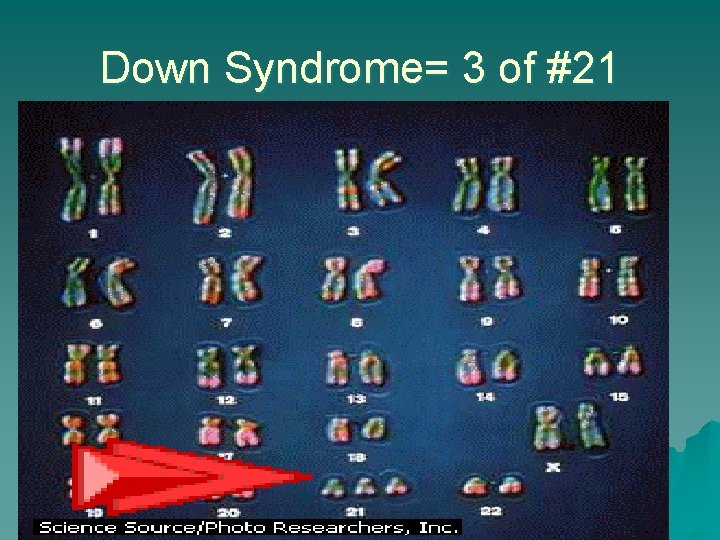
Down Syndrome= 3 of #21
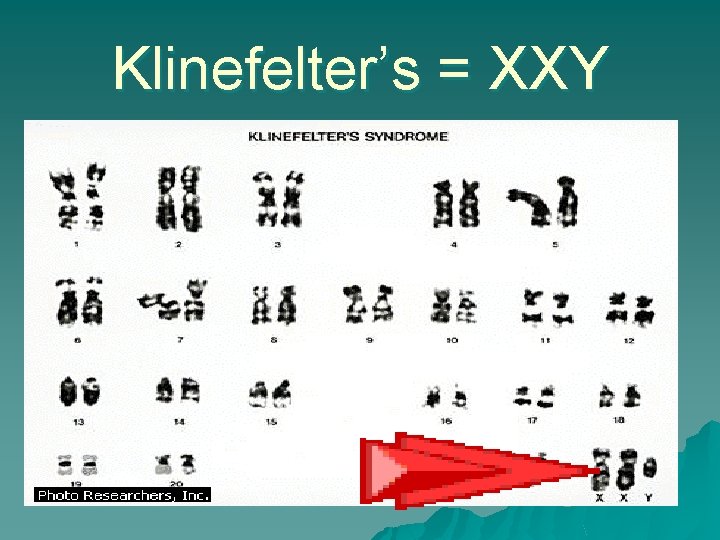
Klinefelter’s = XXY
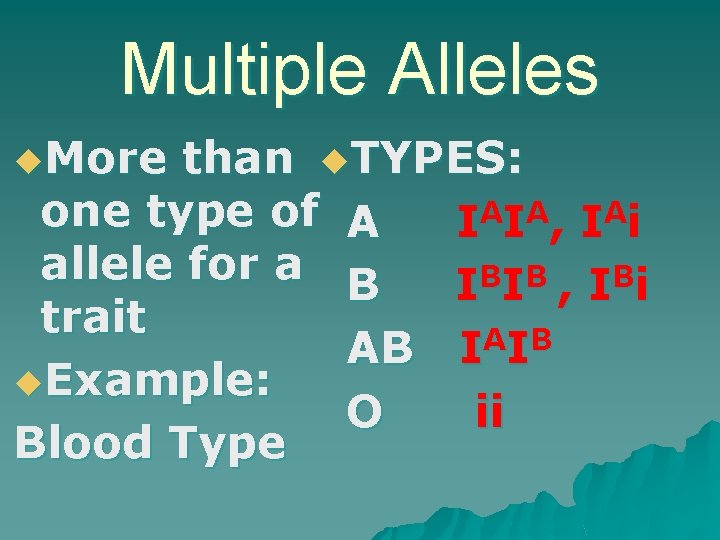
Multiple Alleles u. More than u. TYPES: A A A one type of A I I , I i allele for a B I BI B , I Bi trait AB IAIB u. Example: O ii Blood Type
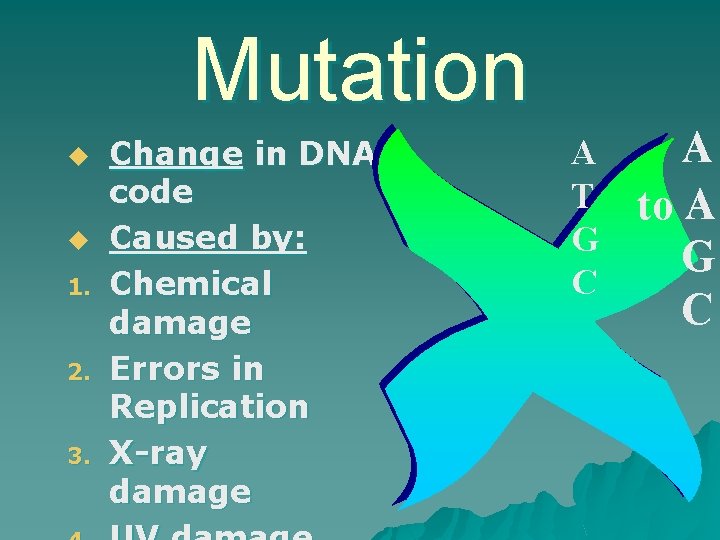
Mutation u u 1. 2. 3. Change in DNA code Caused by: Chemical damage Errors in Replication X-ray damage A T G C A to A G C
Mutation u. Changes in the DNA code u= Changes in the final proteins made u=Changes in the organism
Genetic Technology u. Recombinant DNA & u. Bacterial Transformation
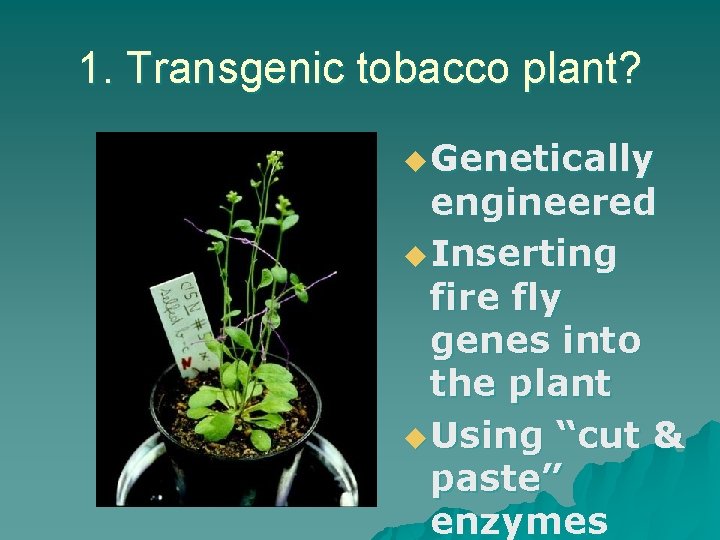
1. Transgenic tobacco plant? u Genetically engineered u Inserting fire fly genes into the plant u Using “cut & paste” enzymes
2. Genetic Engineering: u. Altering the genetic makeup of an organism u. By Cutting DNA from one organism and inserting fragments into a host u. Recombinant DNA u. Alters the allele frequency of a population by artificial
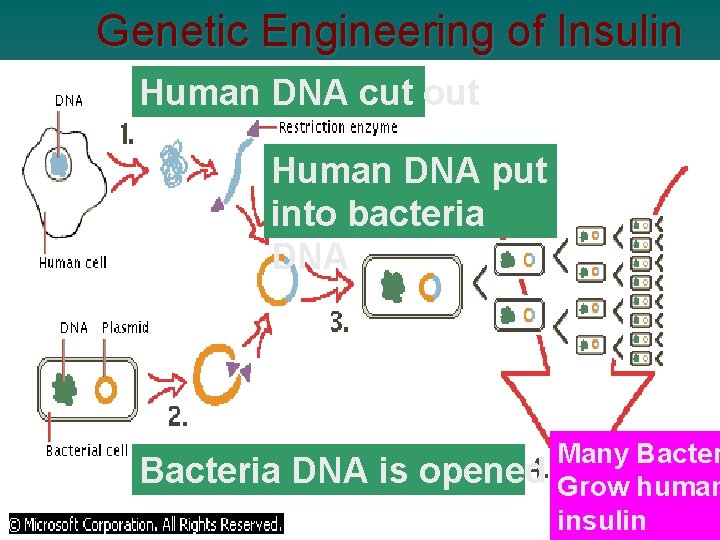
Recombinant DNA: u“Recombine” u. Connecting or reconnecting DNA fragments u. DNA of two different organisms u Example: lab of inserting human DNA
Genetic Engineering of Insulin Human DNA cut out Human DNA put into bacteria DNA Bacteria DNA is opened Many Bacter up Grow human insulin
4. Transgenic Organism: u “trans” = across u “genic” = race u Contains genes from another organism u Bacteria u Virus u Human
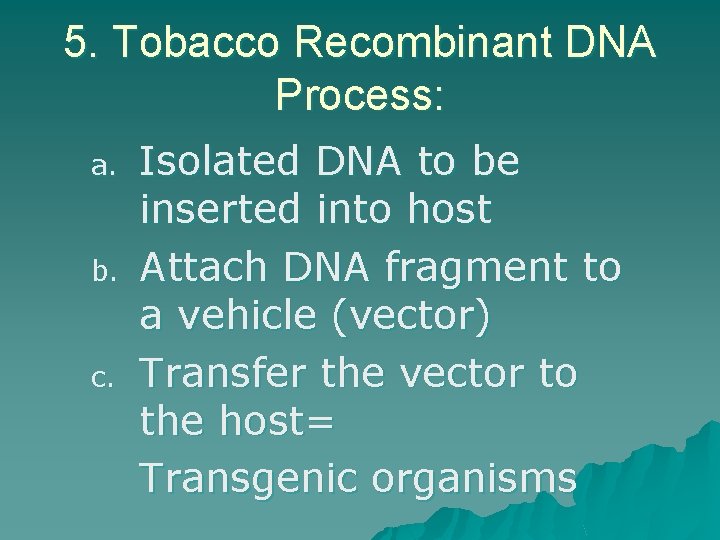
5. Tobacco Recombinant DNA Process: a. b. c. Isolated DNA to be inserted into host Attach DNA fragment to a vehicle (vector) Transfer the vector to the host= Transgenic organisms
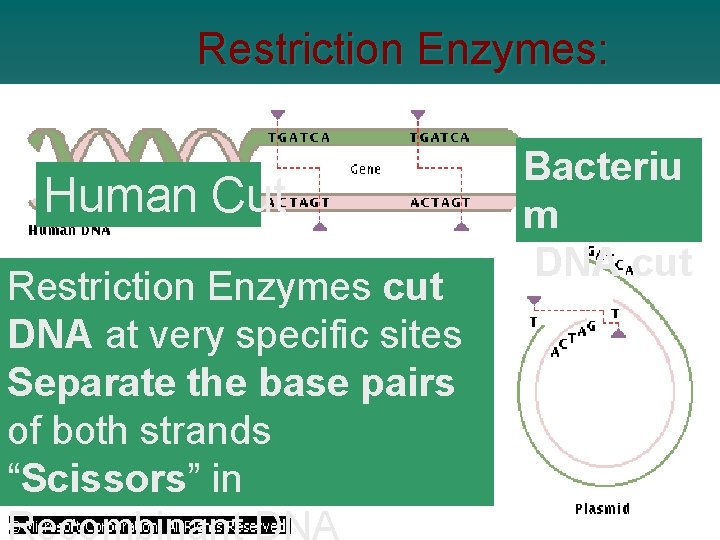
Restriction Enzymes: Human Cut Restriction Enzymes cut DNA at very specific sites Separate the base pairs of both strands “Scissors” in Bacteriu m DNA cut
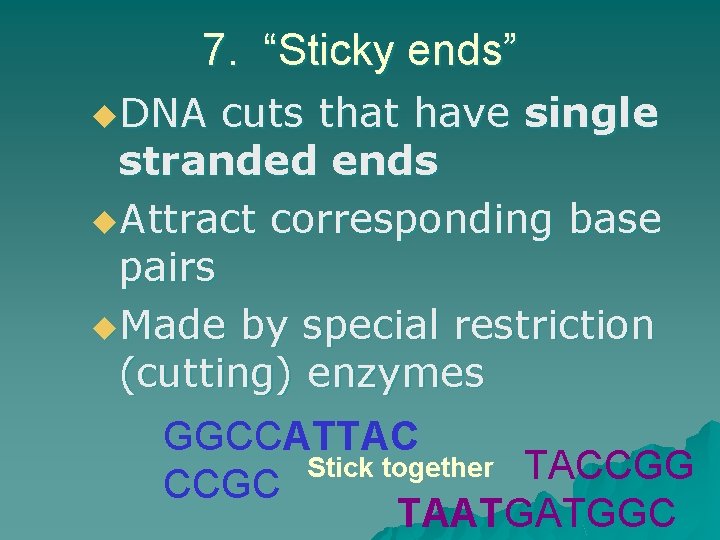
7. “Sticky ends” u. DNA cuts that have single stranded ends u. Attract corresponding base pairs u. Made by special restriction (cutting) enzymes GGCCATTAC Stick together TACCGG CCGC TAATGATGGC
Vectors = vehicles u. Carry foreign DNA fragments into the host u. Bacteria carried the firefly DNA into the tobacco cells u. Biological or
Vectors: Biological: Mechanical: u. Virus u. Micropipett u. Bacterial e plasmid u. Metal bullet (circular coated with DNA) DNA
Recombinant DNA Uses: Grow human hormones in bacteria cultures u Artificial sweeteners using bacteria to make amino acids u Study human diseases by inserting human DNA into mice u Replace incorrect DNA sequences u Replace harmful bacteria on plants u Nitrogen bacteria in the soil & plants to make fertilizer u Improve transport of fruits u Resist diseases u Increase protein u