
Pedigree Charts The family tree of genetics Learning
- Slides: 19
Pedigree Charts The family tree of genetics
Learning Objective • I can use the correct symbols to put together a pedigree chart • I can predict a genotype based on a pedigree chart
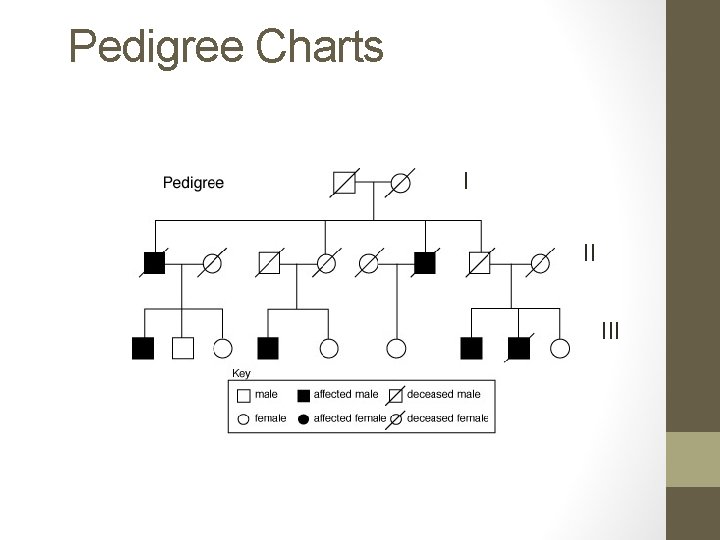
Pedigree Charts I II III
What is a Pedigree? u. Pedigree – a tool used to study pattern of inheritance u. A pedigree chart traces the occurrence of a trait through generations of a family u. The trait must be inherited u. Scientists or a genetic counselor would find out about your family history and make this chart to analyze.
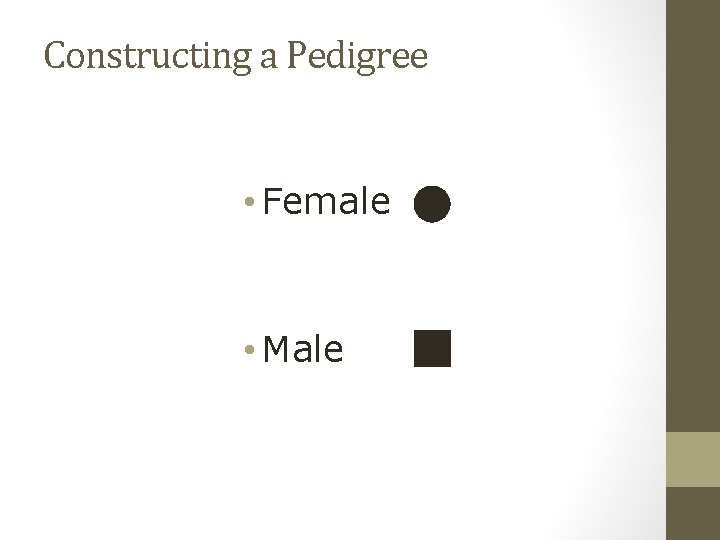
Constructing a Pedigree • Female • Male
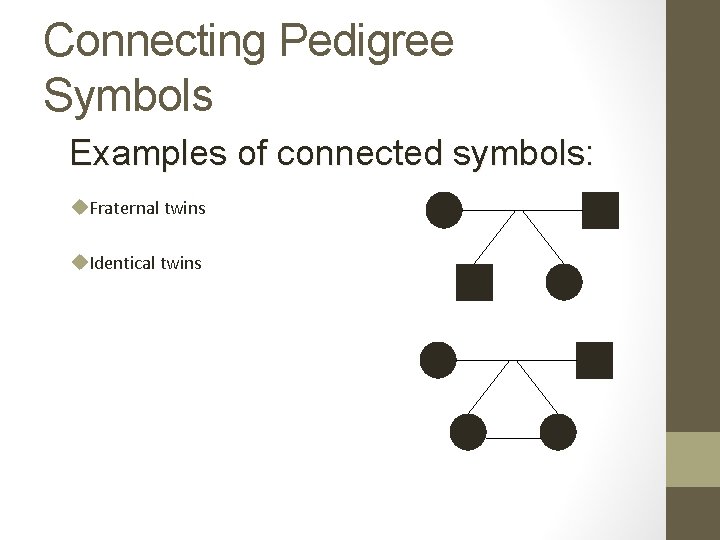
Connecting Pedigree Symbols Examples of connected symbols: u. Fraternal twins u. Identical twins
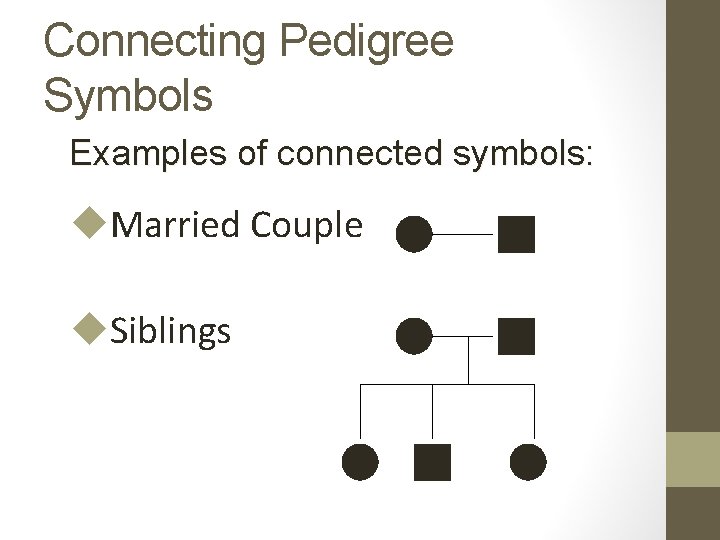
Connecting Pedigree Symbols Examples of connected symbols: u. Married Couple u. Siblings
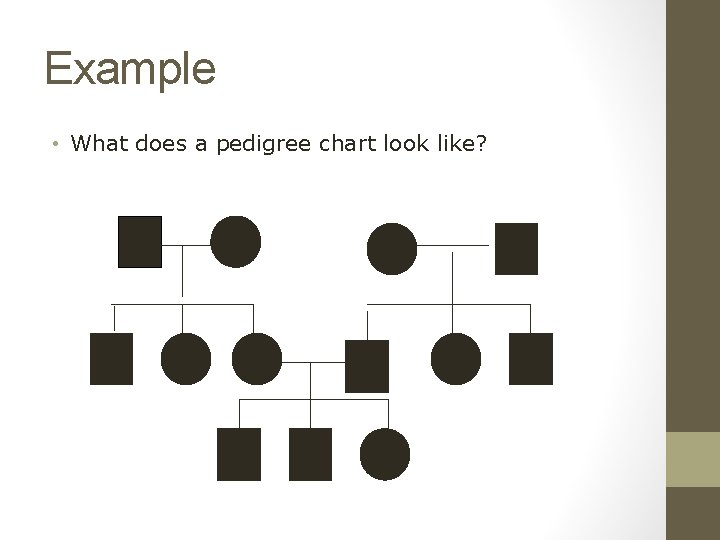
Example • What does a pedigree chart look like?
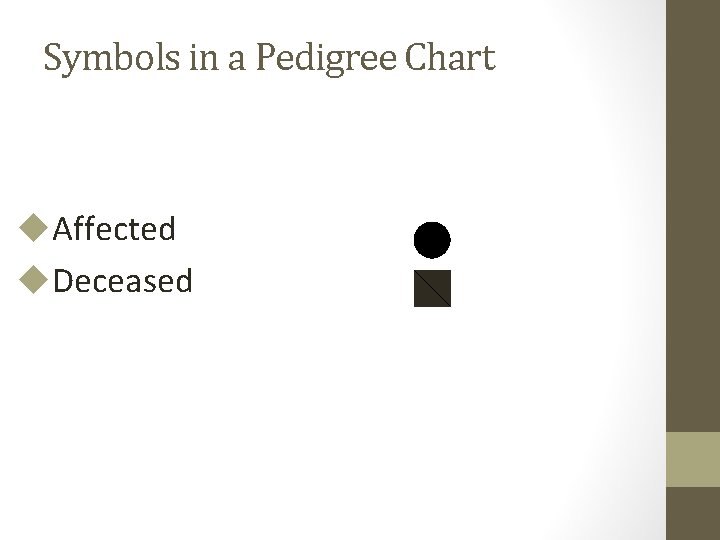
Symbols in a Pedigree Chart u. Affected u. Deceased
Interpreting a Pedigree Chart 1. Determine if the pedigree chart shows an autosomal or X-linked disease. • If most of the males in the pedigree are affected the disorder is X-linked • If it is a 50/50 ratio between men and women the disorder is autosomal.
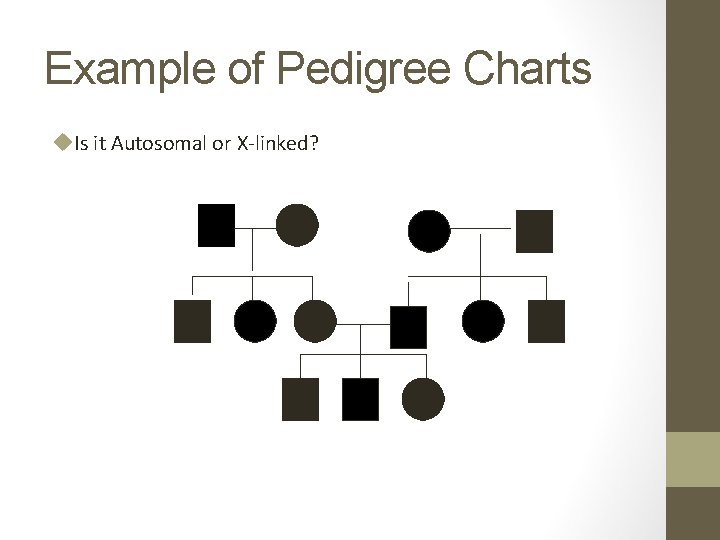
Example of Pedigree Charts u. Is it Autosomal or X-linked?
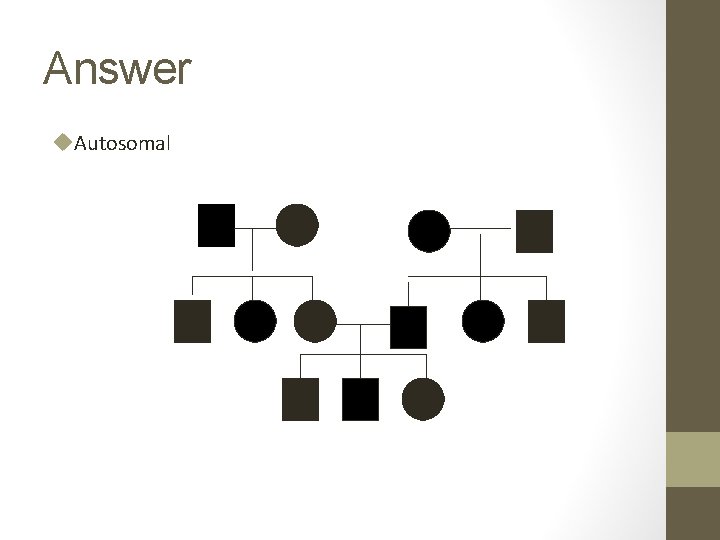
Answer u. Autosomal
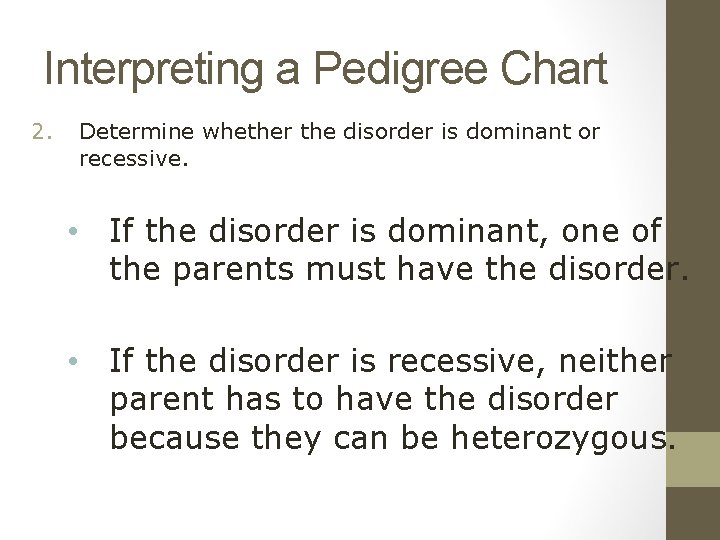
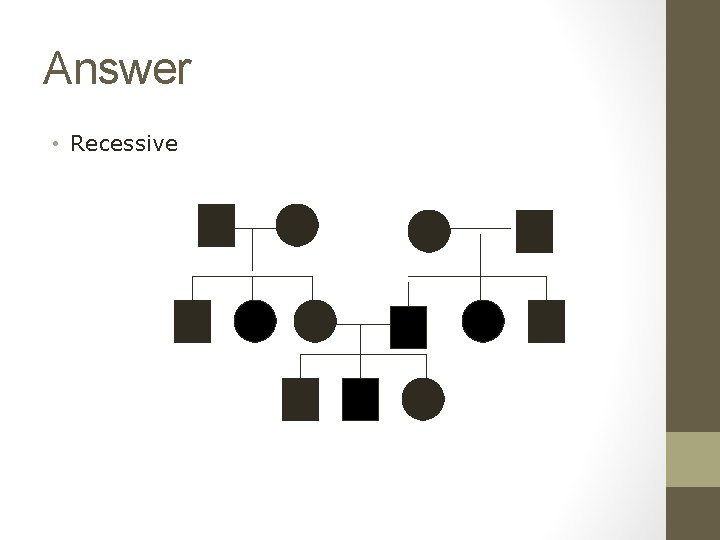
Interpreting a Pedigree Chart 2. Determine whether the disorder is dominant or recessive. • If the disorder is dominant, one of the parents must have the disorder. • If the disorder is recessive, neither parent has to have the disorder because they can be heterozygous.
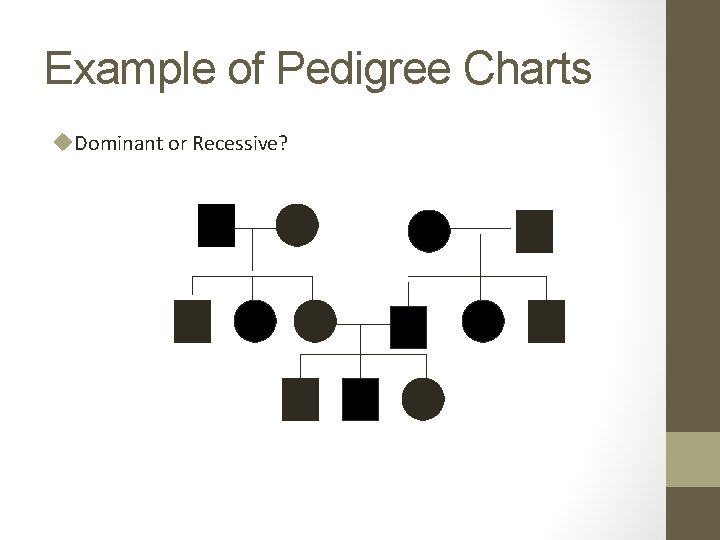
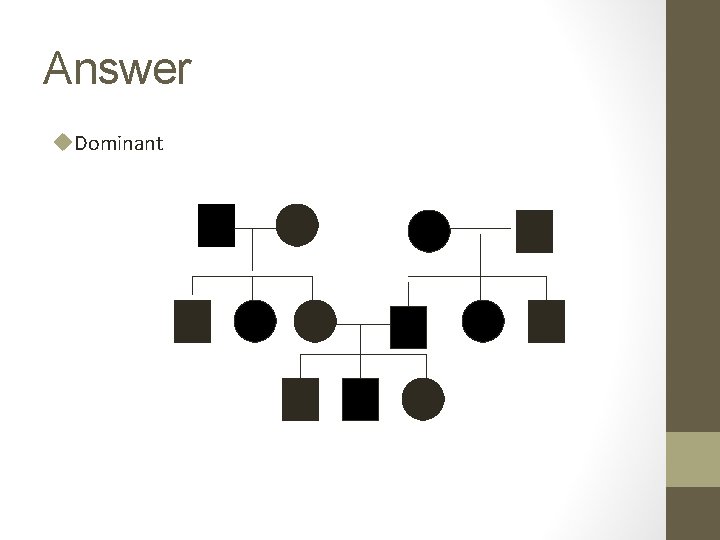
Example of Pedigree Charts u. Dominant or Recessive?
Answer u. Dominant
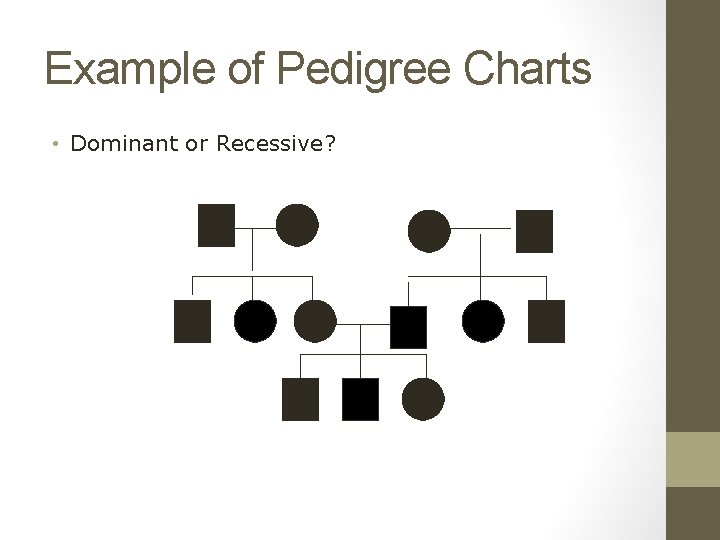
Example of Pedigree Charts • Dominant or Recessive?
Answer • Recessive
Summary • Pedigrees are family trees that explain your genetic history. • Pedigrees are used to find out the probability of a child having a disorder in a particular family. • To begin to interpret a pedigree, determine if the disease or condition is autosomal or X-linked and dominant or recessive.
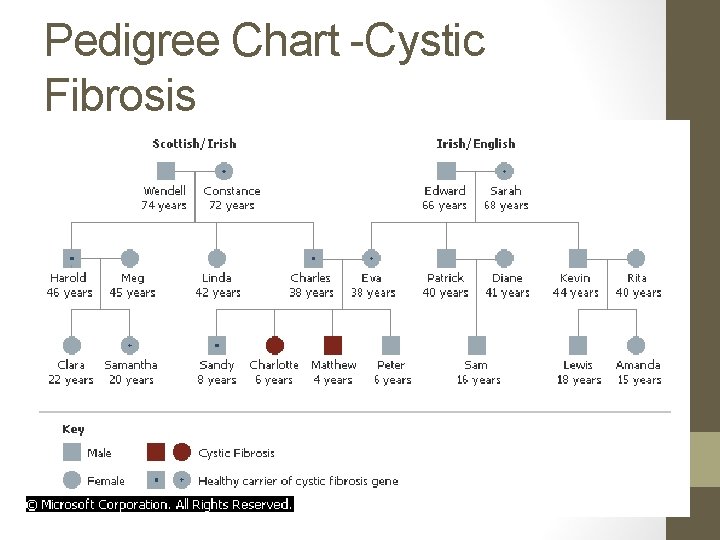
Pedigree Chart -Cystic Fibrosis