
PEDIGREE CHARTS A family history of a genetic
- Slides: 30
PEDIGREE CHARTS A family history of a genetic condition © 2016 Paul Billiet ODWS
What is a pedigree chart? ¢ ¢ ¢ A record of the family of an individual Used to study the transmission of a hereditary condition Useful when there are large families and a there is a good family record over several generations. © 2016 Paul Billiet ODWS
Studying human genetics ¢ Pedigree charts offer an ethical way of studying human genetics Dominant/Recessive l Relationships l Sex l Genotypes l Phenotypes l ¢ A genetic counsellor will still use pedigree charts to help determine the distribution of a disease in an affected family. © 2016 Paul Billiet ODWS
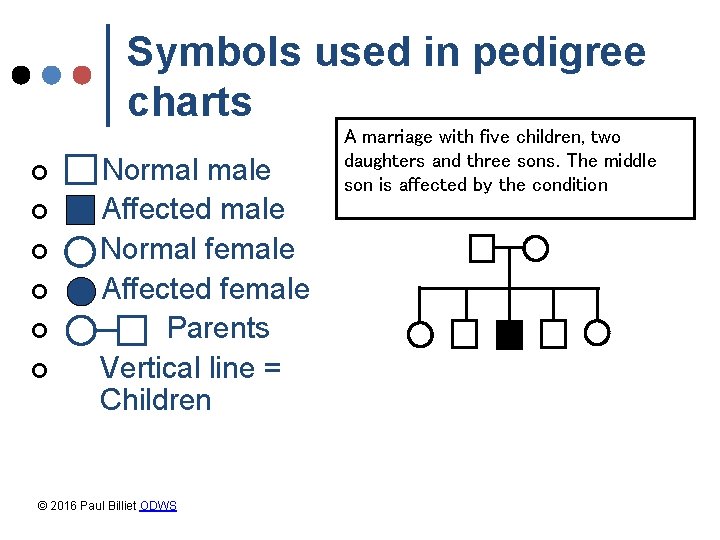
Symbols used in pedigree charts ¢ ¢ ¢ Normal male Affected male Normal female Affected female Parents Vertical line = Children © 2016 Paul Billiet ODWS A marriage with five children, two daughters and three sons. The middle son is affected by the condition
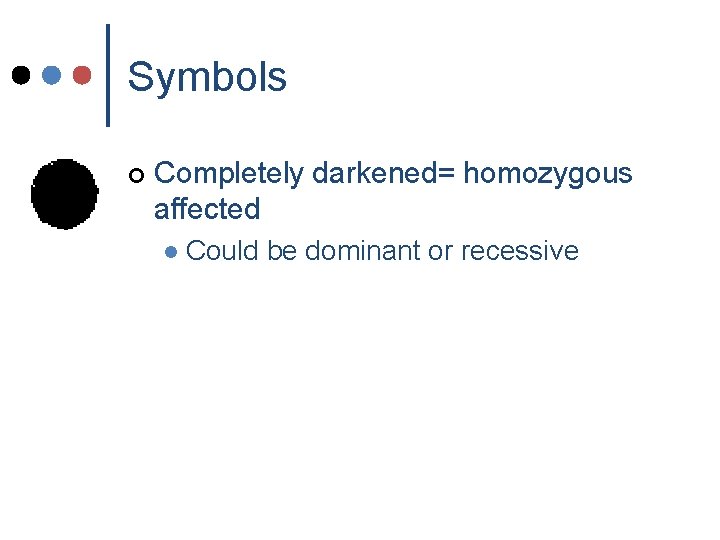
Symbols ¢ Completely darkened= homozygous affected l Could be dominant or recessive
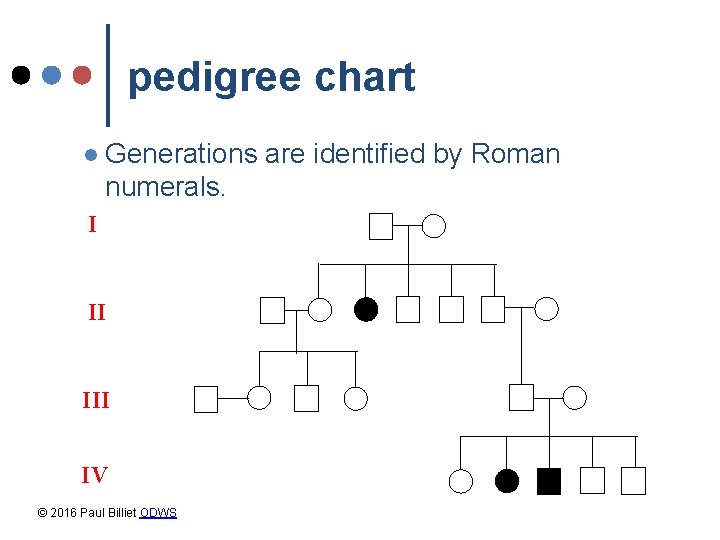
pedigree chart l Generations are identified by Roman numerals. I II IV © 2016 Paul Billiet ODWS
Identifying ¢Dominant Recessive vs
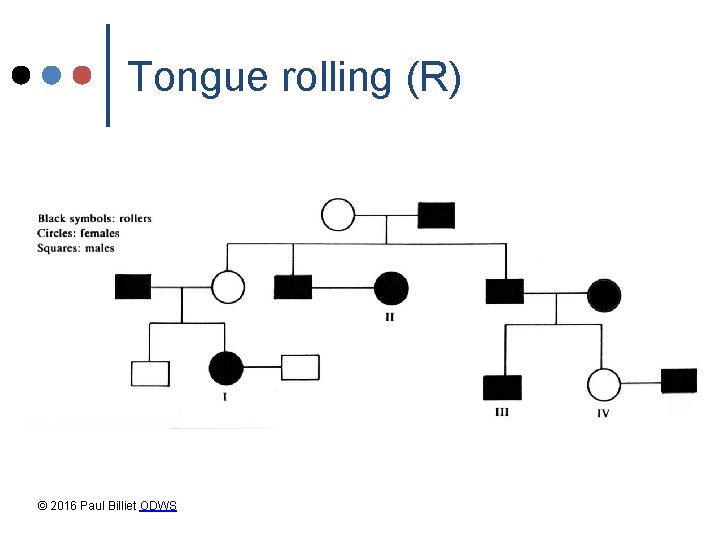
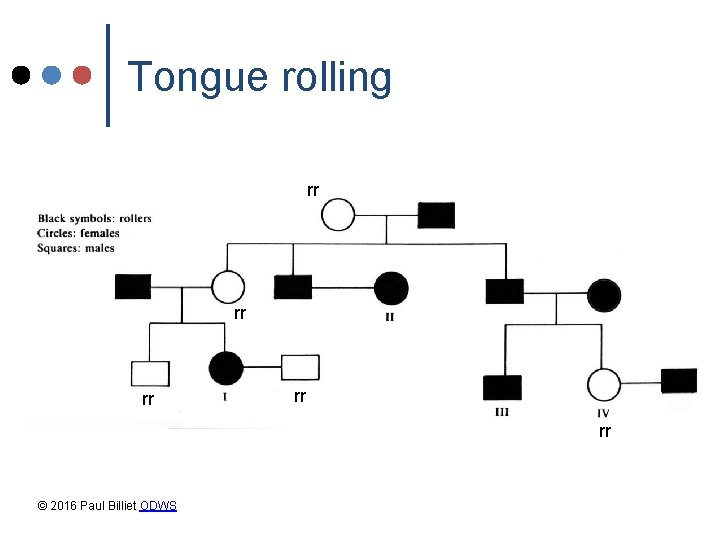
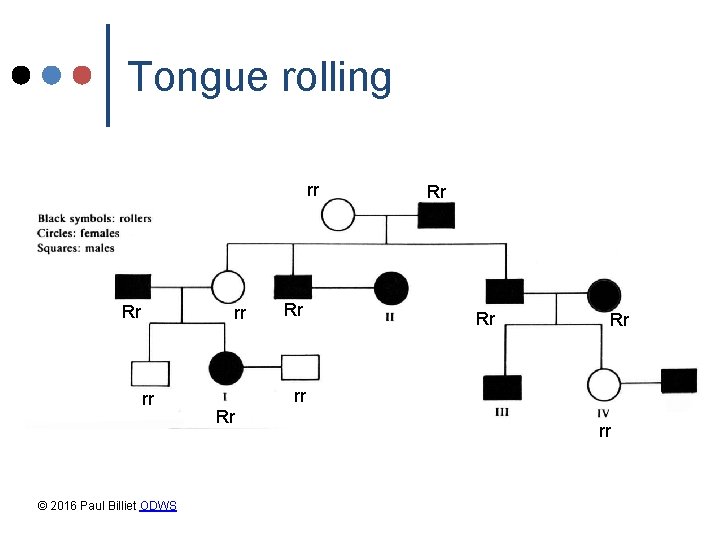
Tongue rolling (R) © 2016 Paul Billiet ODWS
Tongue rolling rr rr rr © 2016 Paul Billiet ODWS
Tongue rolling rr Rr rr rr © 2016 Paul Billiet ODWS Rr Rr rr
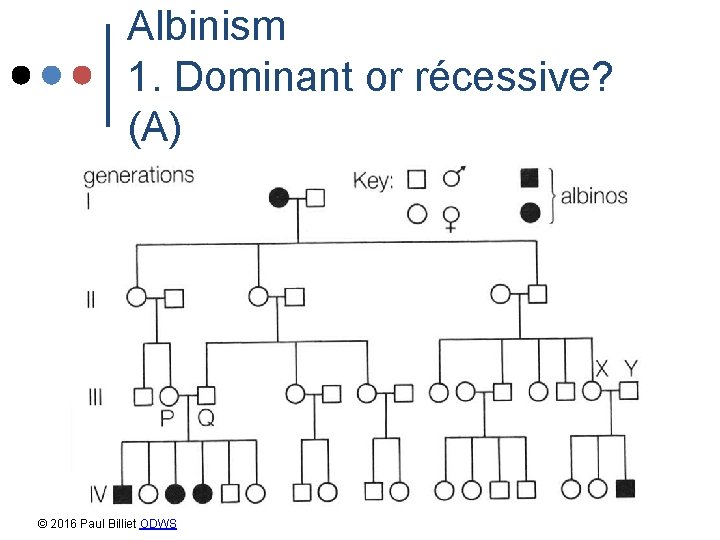
Albinism 1. Dominant or récessive? (A) © 2016 Paul Billiet ODWS
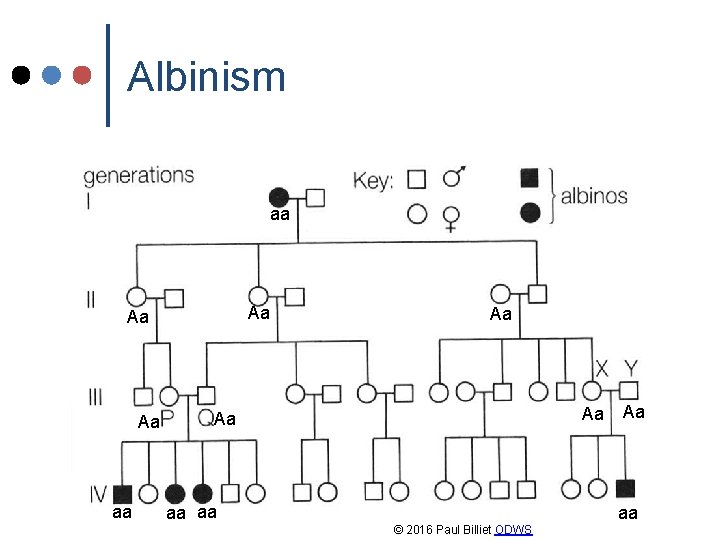
Albinism aa Aa Aa Aa aa aa Aa aa © 2016 Paul Billiet ODWS
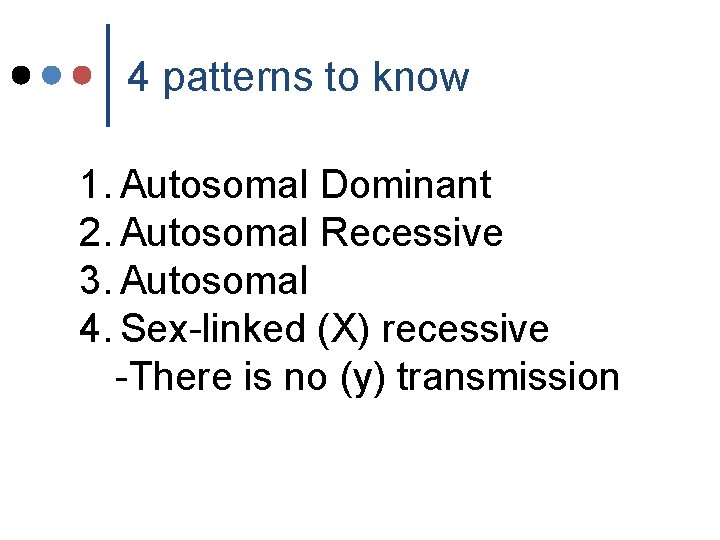
4 patterns to know 1. Autosomal Dominant 2. Autosomal Recessive 3. Autosomal 4. Sex-linked (X) recessive -There is no (y) transmission
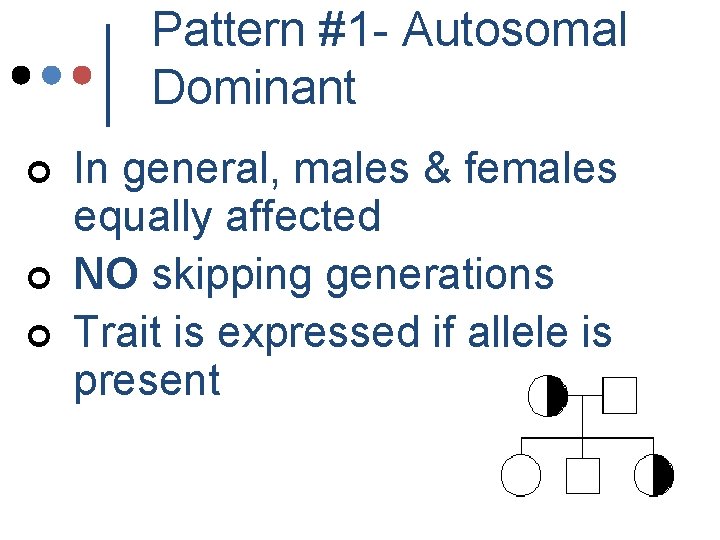
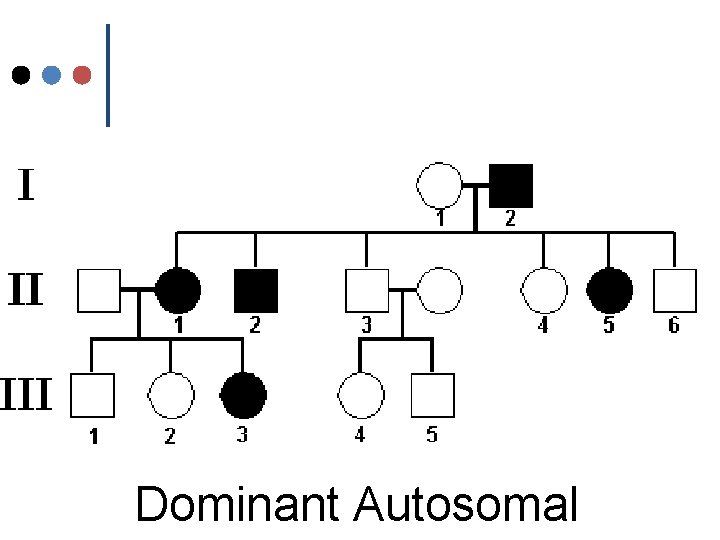
Pattern #1 - Autosomal Dominant ¢ ¢ ¢ In general, males & females equally affected NO skipping generations Trait is expressed if allele is present
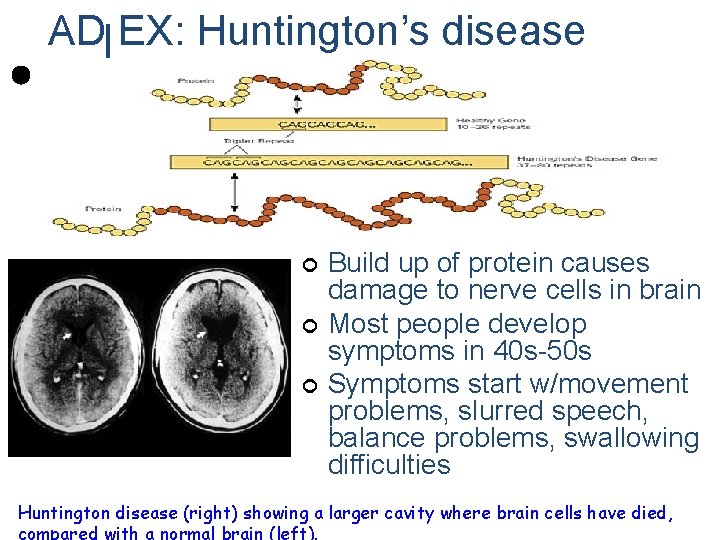
AD EX: Huntington’s disease ¢ ¢ ¢ Build up of protein causes damage to nerve cells in brain Most people develop symptoms in 40 s-50 s Symptoms start w/movement problems, slurred speech, balance problems, swallowing difficulties Huntington disease (right) showing a larger cavity where brain cells have died,
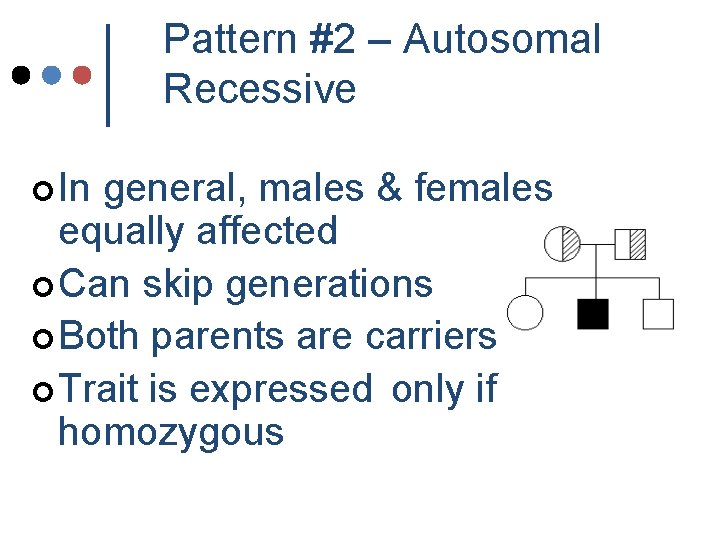
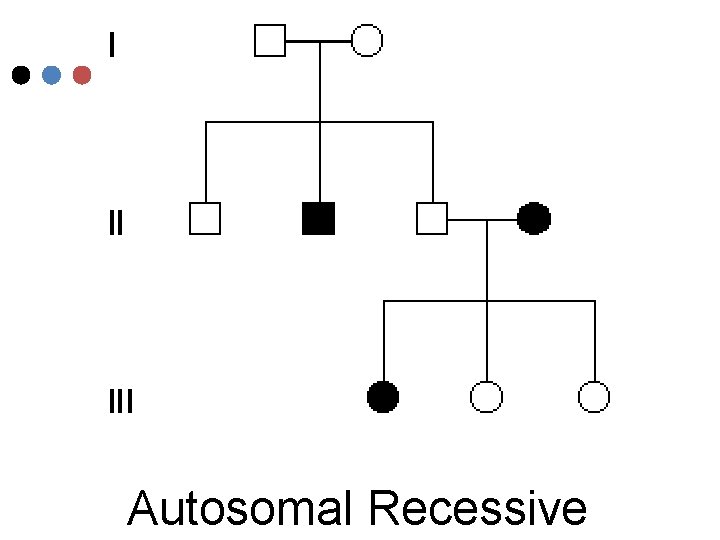
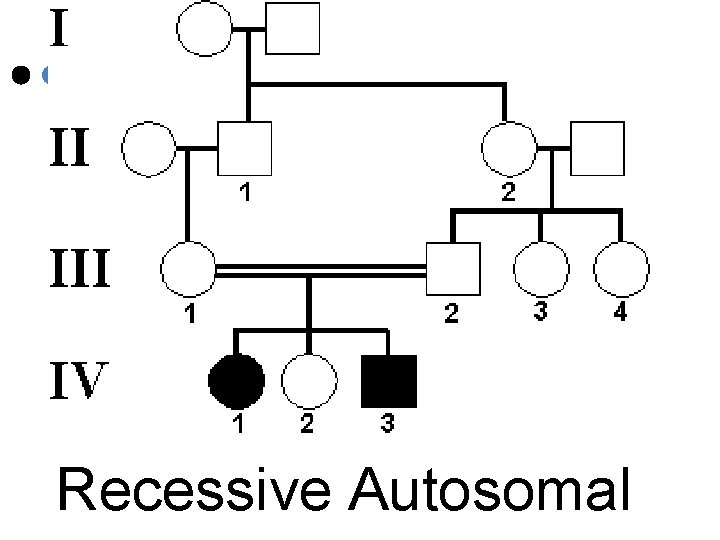
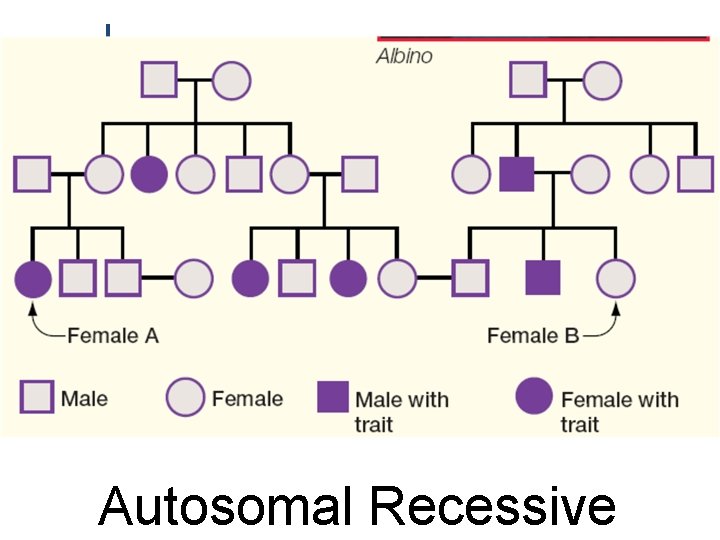
Pattern #2 – Autosomal Recessive ¢ In general, males & females equally affected ¢ Can skip generations ¢ Both parents are carriers ¢ Trait is expressed only if homozygous
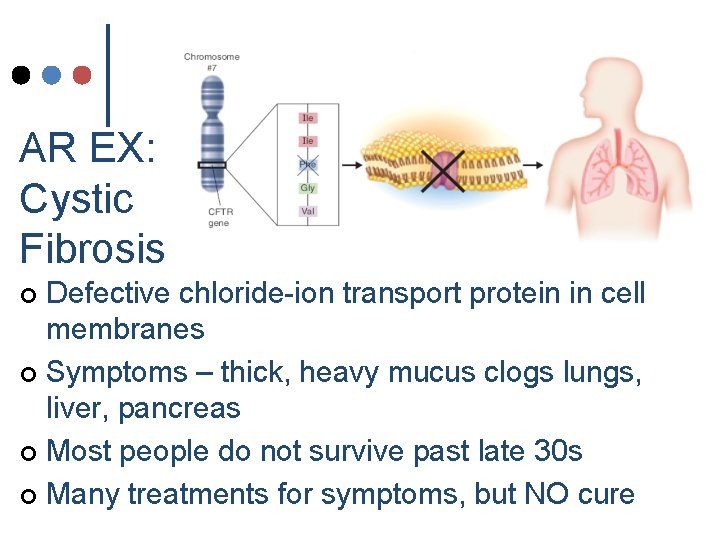
AR EX: Cystic Fibrosis Defective chloride-ion transport protein in cell membranes ¢ Symptoms – thick, heavy mucus clogs lungs, liver, pancreas ¢ Most people do not survive past late 30 s ¢ Many treatments for symptoms, but NO cure ¢
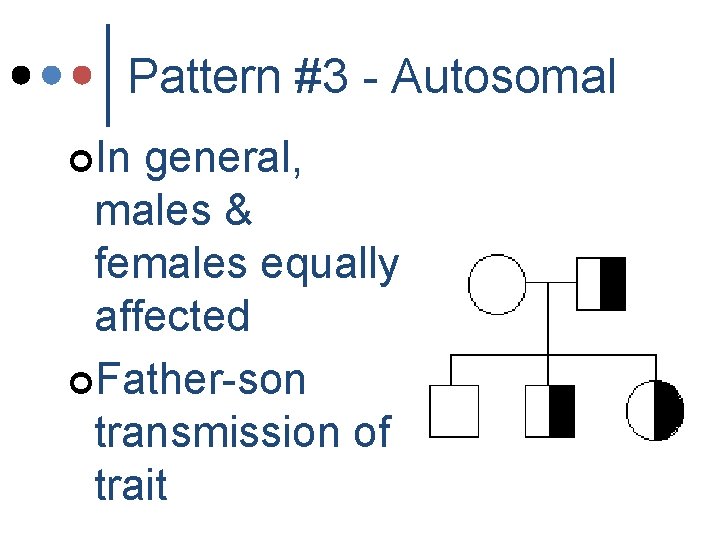
Pattern #3 - Autosomal ¢In general, males & females equally affected ¢Father-son transmission of trait
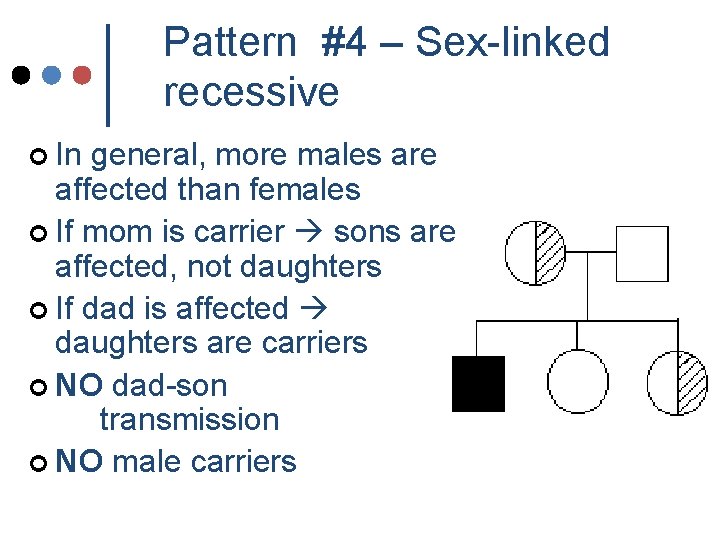
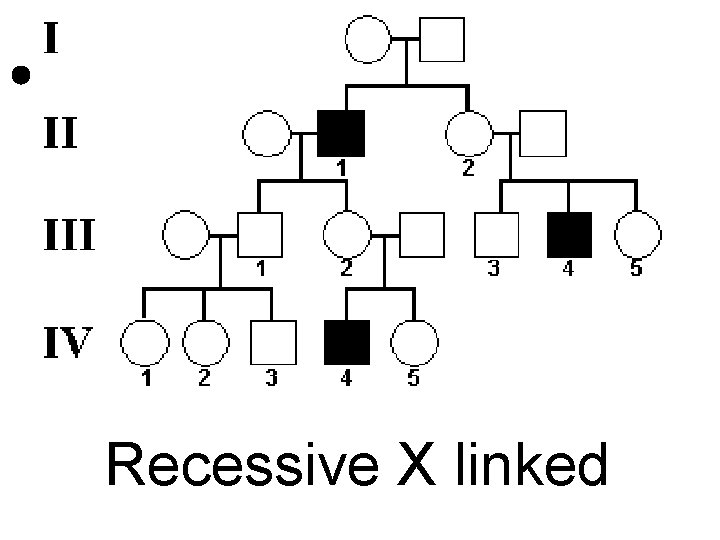
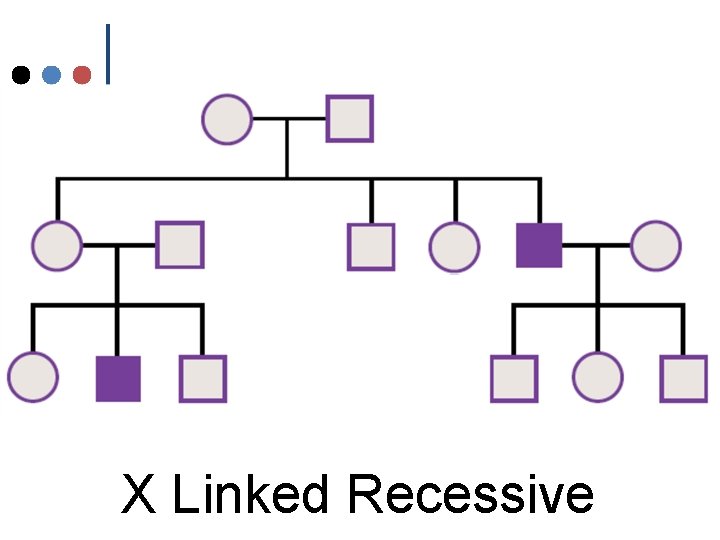
Pattern #4 – Sex-linked recessive ¢ In general, more males are affected than females ¢ If mom is carrier sons are affected, not daughters ¢ If dad is affected daughters are carriers ¢ NO dad-son transmission ¢ NO male carriers
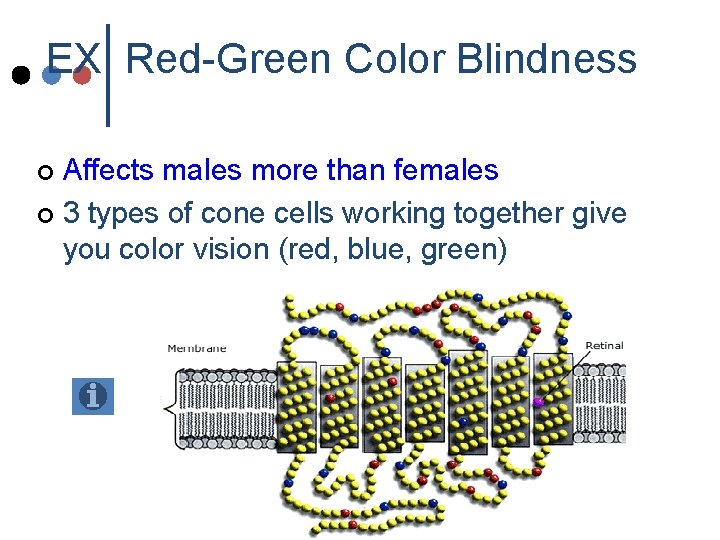
EX: Red-Green Color Blindness Affects males more than females ¢ 3 types of cone cells working together give you color vision (red, blue, green) ¢
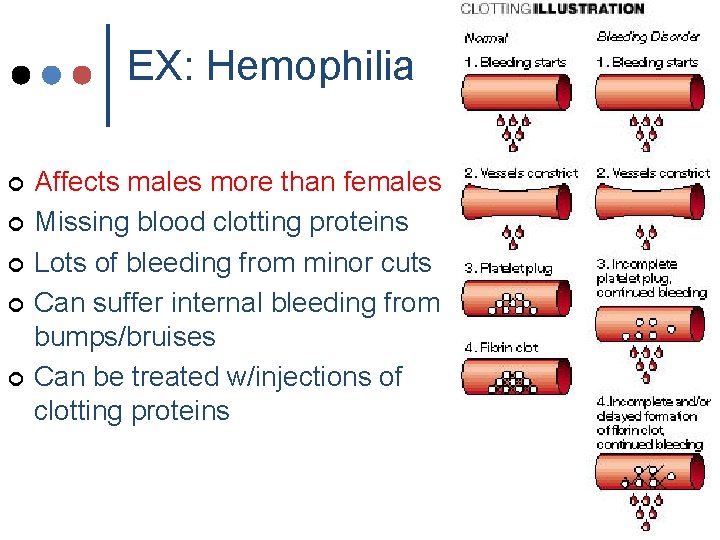
EX: Hemophilia ¢ ¢ ¢ Affects males more than females Missing blood clotting proteins Lots of bleeding from minor cuts Can suffer internal bleeding from bumps/bruises Can be treated w/injections of clotting proteins
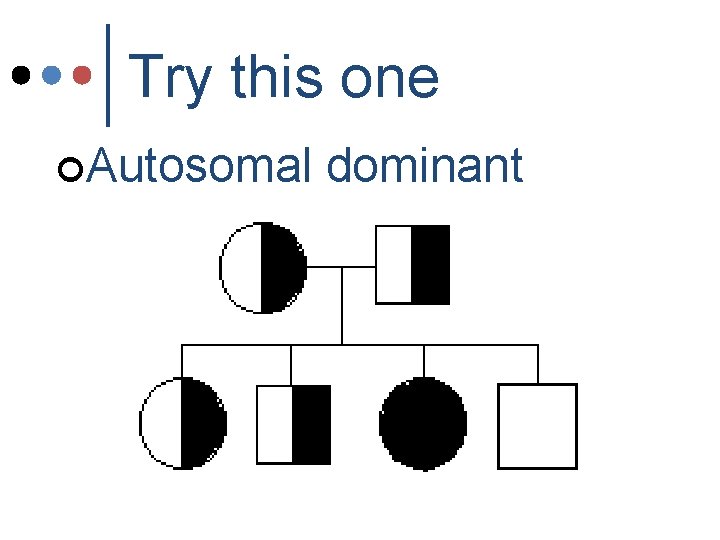
Try this one ¢Autosomal dominant
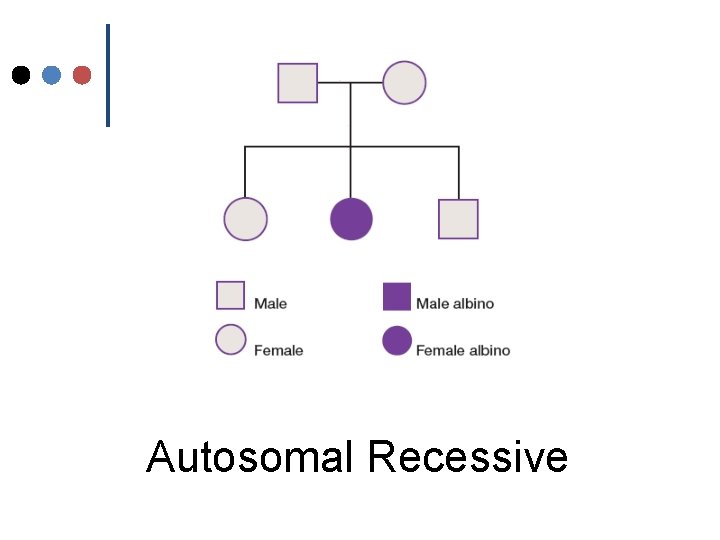
Autosomal Recessive
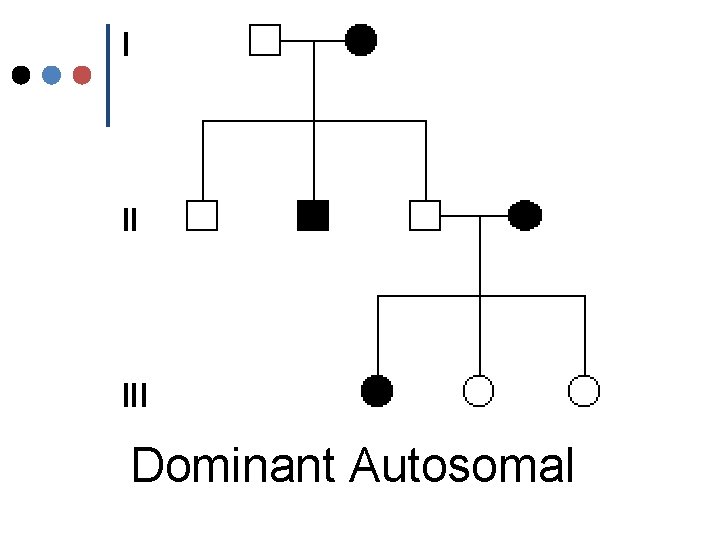
Dominant Autosomal
Autosomal Recessive
Recessive X linked
Recessive Autosomal
Dominant Autosomal
Autosomal Recessive
X Linked Recessive