
Pediatric Trauma Ray Taylor Valencia Community College Department


- Slides: 153
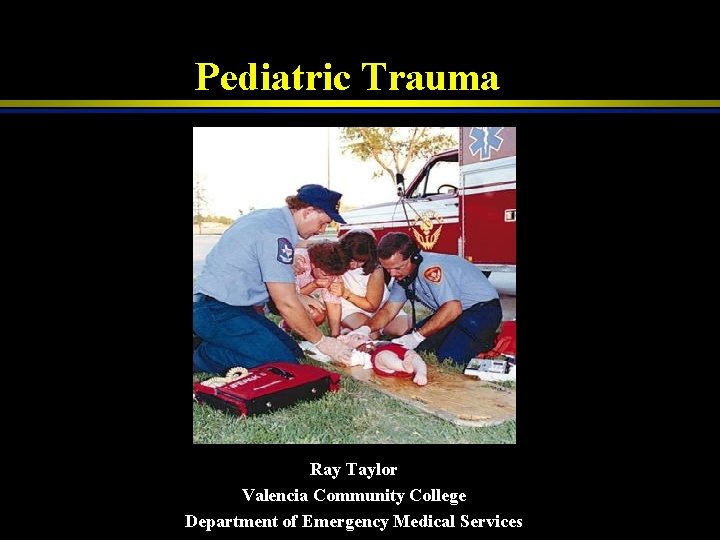
Pediatric Trauma Ray Taylor Valencia Community College Department of Emergency Medical Services
Objectives Overview v Anatomic Features v Injury patterns v Initial assessment v Review trauma resuscitation (ABCDE’s) v Specific Protocol v ² NAEMSP
Pediatric Trauma Background
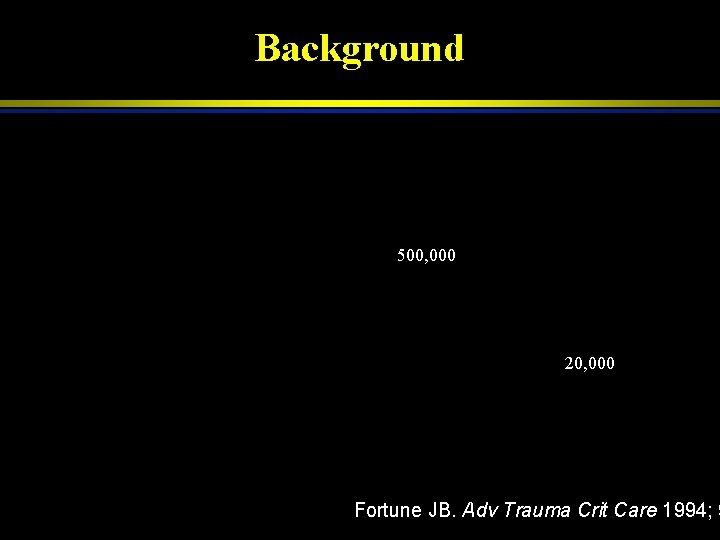
Background 500, 000 20, 000 Fortune JB. Adv Trauma Crit Care 1994; 9
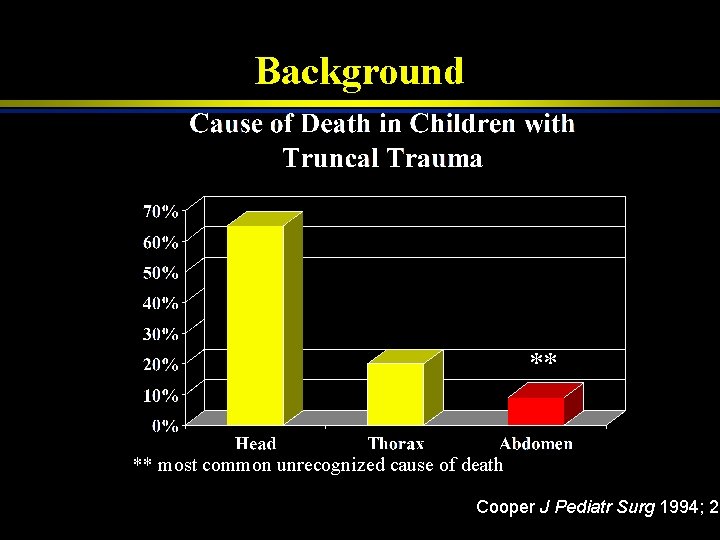
Background ** ** most common unrecognized cause of death Cooper J Pediatr Surg 1994; 29
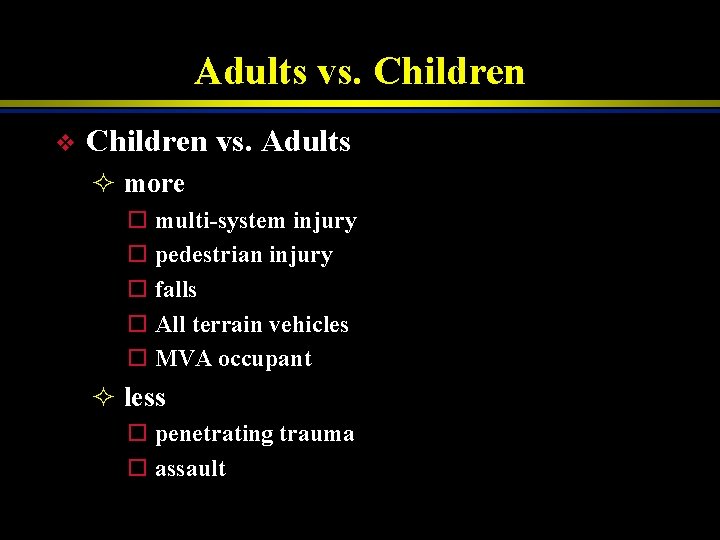
Adults vs. Children vs. Adults ² more o multi-system injury o pedestrian injury o falls o All terrain vehicles o MVA occupant ² less o penetrating trauma o assault
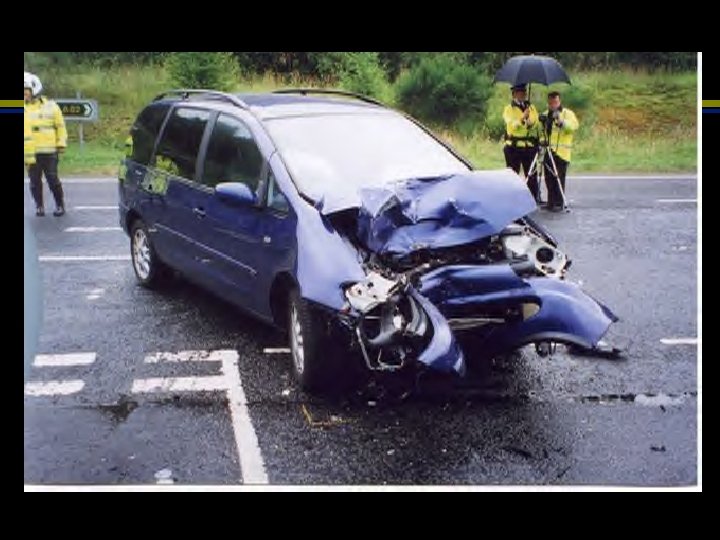
Injury Patterns & Mechanisms Knowledge of the exact mechanism & surrounding events can help in the evaluation & management
Injury Patterns National Pediatric Trauma Regist
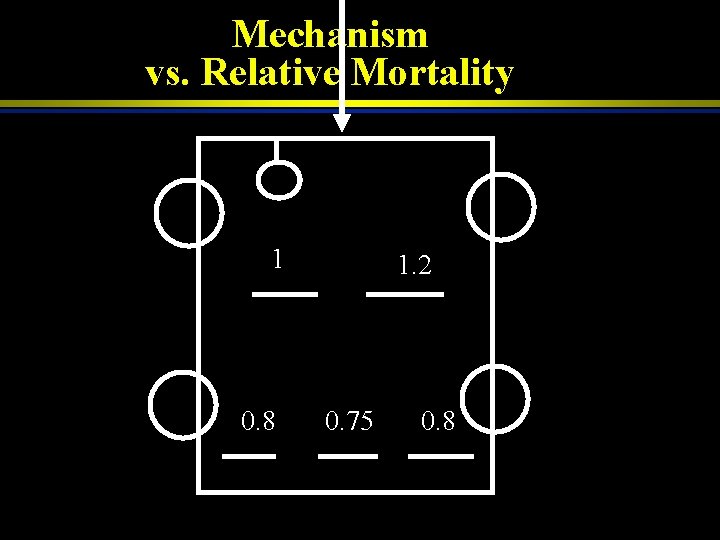
Mechanism vs. Relative Mortality 1 0. 8 1. 2 0. 75 0. 8
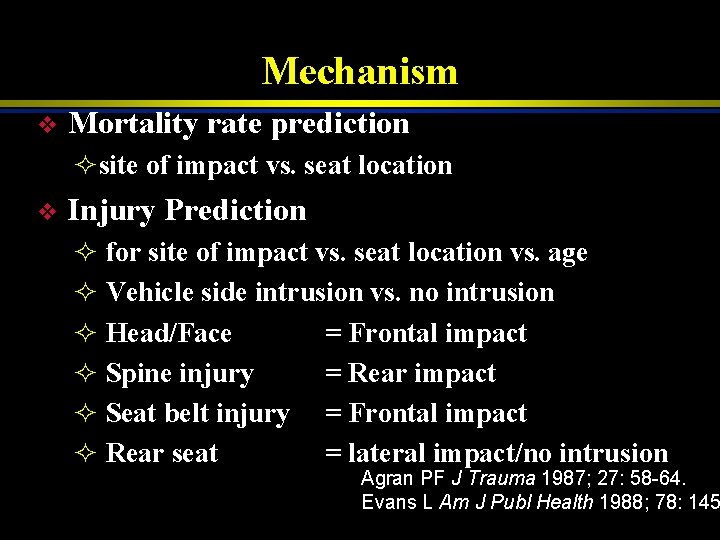
Mechanism v Mortality rate prediction ²site of impact vs. seat location v Injury Prediction ² for site of impact vs. seat location vs. age ² Vehicle side intrusion vs. no intrusion ² Head/Face = Frontal impact ² Spine injury = Rear impact ² Seat belt injury = Frontal impact ² Rear seat = lateral impact/no intrusion Agran PF J Trauma 1987; 27: 58 -64. Evans L Am J Publ Health 1988; 78: 145
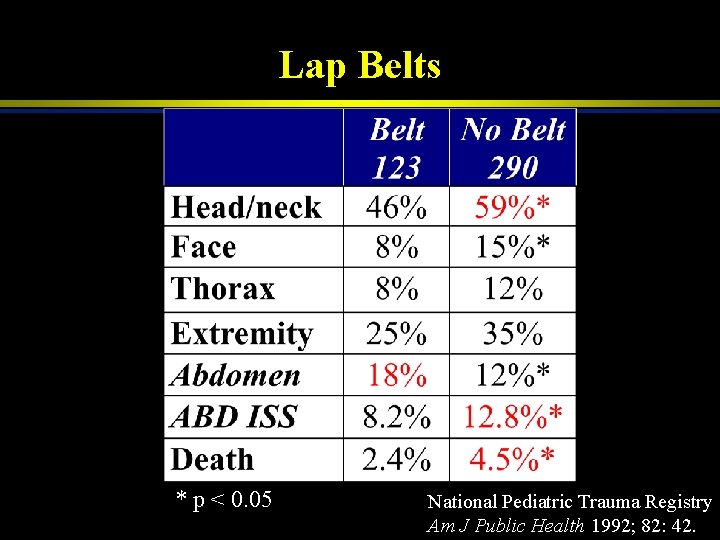
Lap Belts * p < 0. 05 National Pediatric Trauma Registry Am J Public Health 1992; 82: 42.
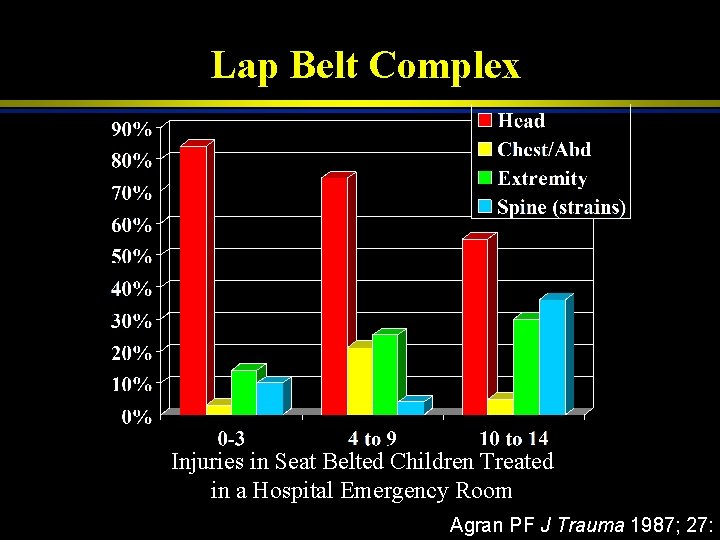
Lap Belt Complex Injuries in Seat Belted Children Treated in a Hospital Emergency Room Agran PF J Trauma 1987; 27: 5
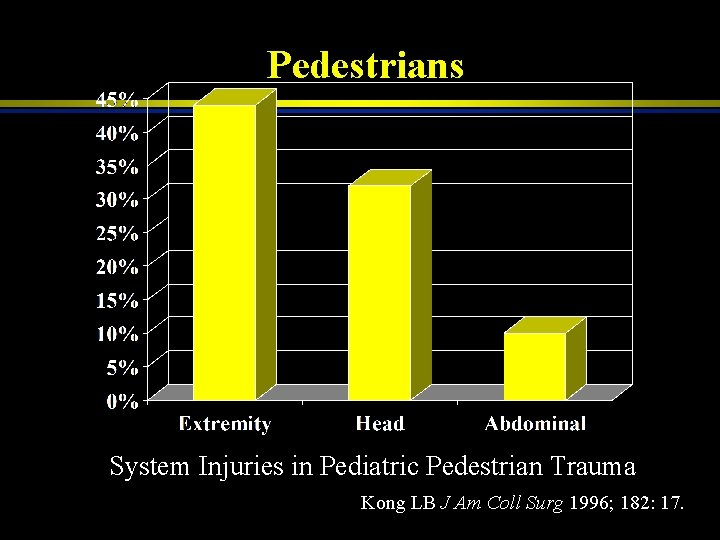
Pedestrians System Injuries in Pediatric Pedestrian Trauma Kong LB J Am Coll Surg 1996; 182: 17.
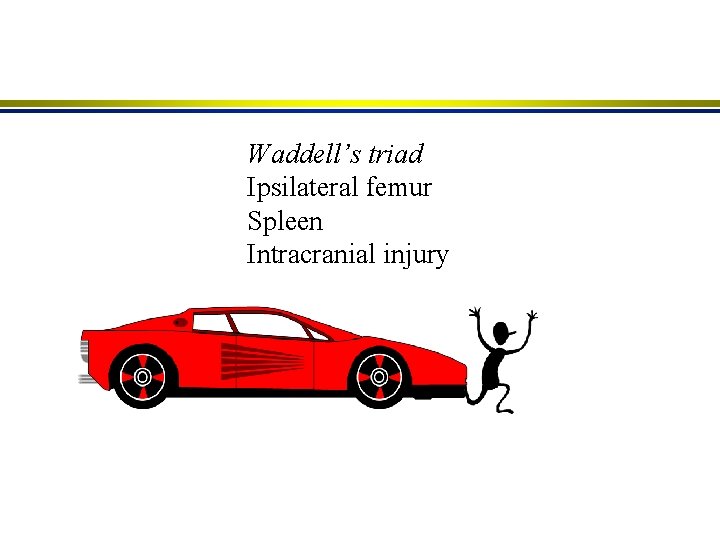
What is a British Waddel’s Triad?
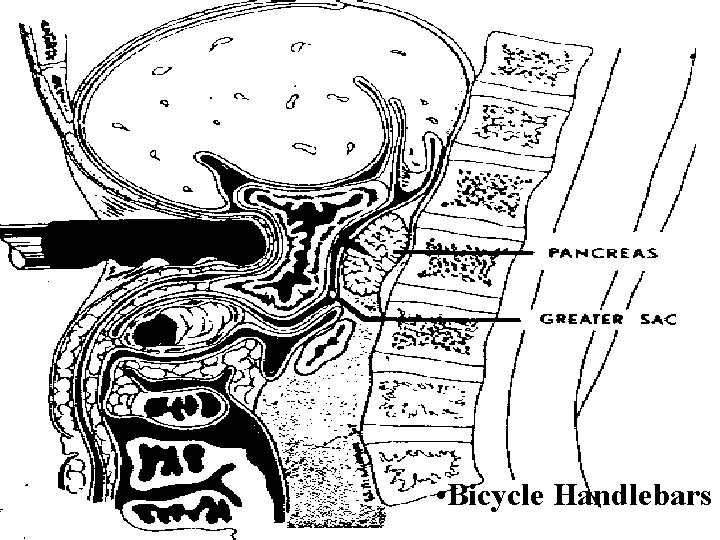
Waddell’s triad Ipsilateral femur Spleen Intracranial injury
• Bicycle Handlebars
Bottom Line - Injury Patterns v Knowledge of incident is important ² Exact mechanism of accident ² Location in car ² Helmets o bicycle vs. motorcycle ² Seat belt? ² Airbags ² Prehospital Vitals, GCS, Interventions v Missing information may cause ² delayed diagnosis, misdiagnosis ² worse outcome potential
Dispatch Information v. You and your partner, both EMTs, are dispatched to a reported child struck by a car v. While en route, the dispatcher tells you that ALS is unavailable at the moment and asks you to advise if they are needed. © 2007 by Pearson Education, Inc. Pearson Prentice Hall, Upper Saddle River, NJ
Dispatch Information v. Your partner comments that the nearest hospital, which happens to be a trauma center, is a 20 -minute drive response from the accident scene. © 2007 by Pearson Education, Inc. Pearson Prentice Hall, Upper Saddle River, NJ
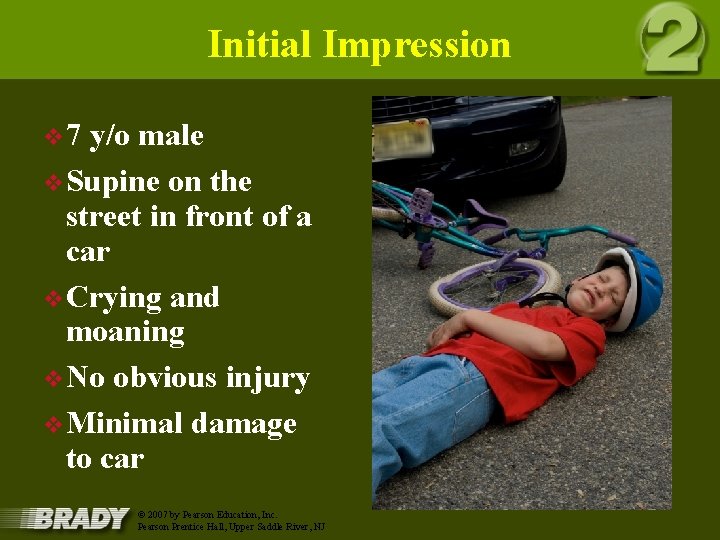
Initial Impression v 7 y/o male v. Supine on the street in front of a car v. Crying and moaning v. No obvious injury v. Minimal damage to car © 2007 by Pearson Education, Inc. Pearson Prentice Hall, Upper Saddle River, NJ
Discussion v. What is your initial impression of the patient’s status? ²Concerns? v. What are your immediate priorities? v. Would you call for an ALS unit? © 2007 by Pearson Education, Inc. Pearson Prentice Hall, Upper Saddle River, NJ
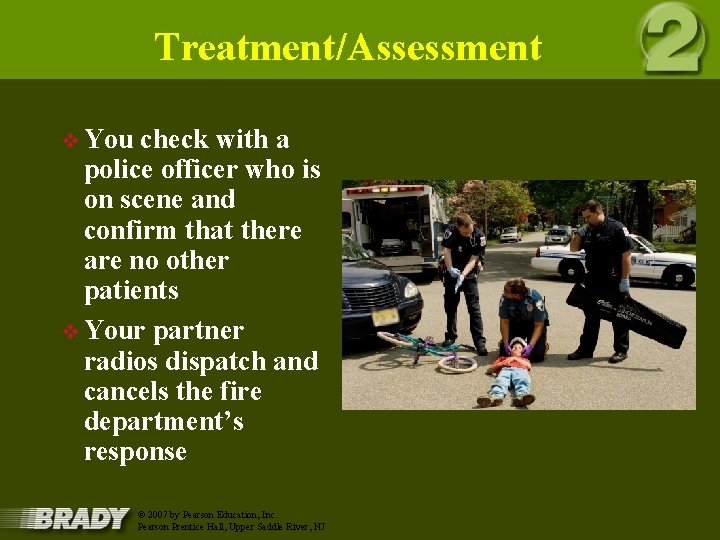
Treatment/Assessment v You check with a police officer who is on scene and confirm that there are no other patients v Your partner radios dispatch and cancels the fire department’s response © 2007 by Pearson Education, Inc. Pearson Prentice Hall, Upper Saddle River, NJ
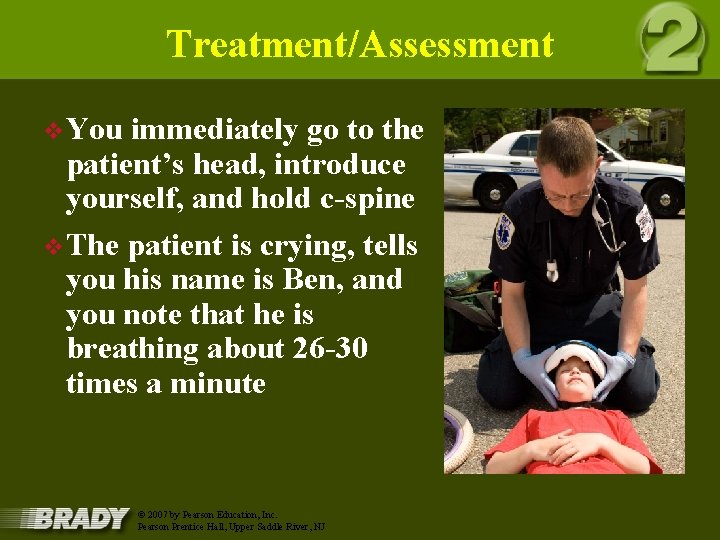
Treatment/Assessment v. You immediately go to the patient’s head, introduce yourself, and hold c-spine v. The patient is crying, tells you his name is Ben, and you note that he is breathing about 26 -30 times a minute © 2007 by Pearson Education, Inc. Pearson Prentice Hall, Upper Saddle River, NJ
Discussion v. What do you know about the patient’s airway and breathing? v. Are you comfortable with the patient’s airway and breathing? ²Why or why not? © 2007 by Pearson Education, Inc. Pearson Prentice Hall, Upper Saddle River, NJ
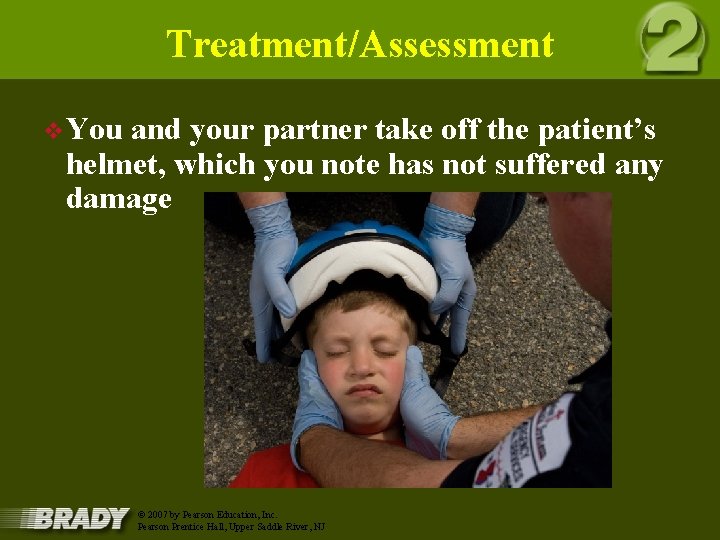
Treatment/Assessment v. You and your partner take off the patient’s helmet, which you note has not suffered any damage © 2007 by Pearson Education, Inc. Pearson Prentice Hall, Upper Saddle River, NJ
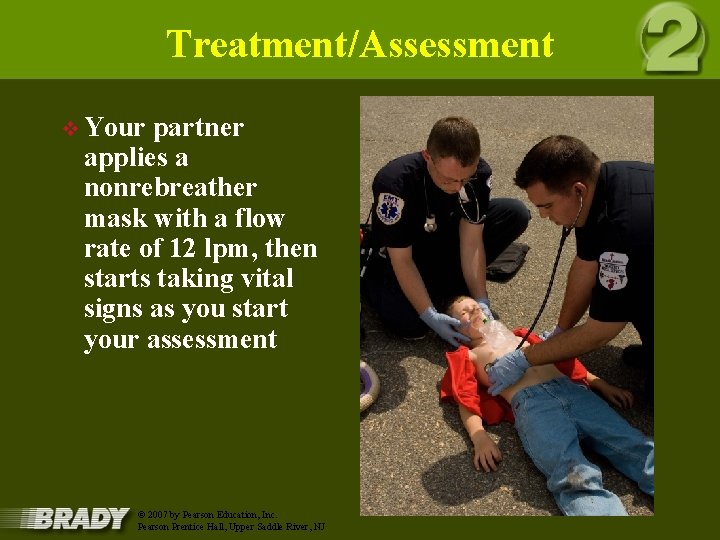
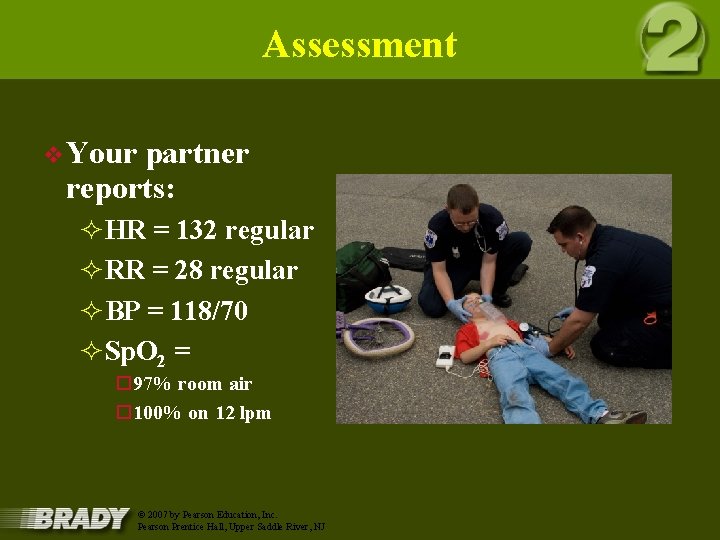
Treatment/Assessment v Your partner applies a nonrebreather mask with a flow rate of 12 lpm, then starts taking vital signs as you start your assessment © 2007 by Pearson Education, Inc. Pearson Prentice Hall, Upper Saddle River, NJ
Assessment v The patient states: ²He was riding his bike, was hit by car on right side, then fell to ground ²Hit his head but was wearing his helmet ²No loss of consciousness ²Has abdominal pain v You note: ²Skin pale, warm, dry ²Capillary refill 2 sec © 2007 by Pearson Education, Inc. Pearson Prentice Hall, Upper Saddle River, NJ
Assessment v. Your partner reports: ²HR = 132 regular ²RR = 28 regular ²BP = 118/70 ²Sp. O 2 = o 97% room air o 100% on 12 lpm © 2007 by Pearson Education, Inc. Pearson Prentice Hall, Upper Saddle River, NJ
Discussion v. What is your impression of the patient’s status? ²Concerns? v. What is your next course of action? v. If you have not yet, would you call for an ALS unit? © 2007 by Pearson Education, Inc. Pearson Prentice Hall, Upper Saddle River, NJ
Detailed Assessment v. You continue to talk to the patient, explaining that your partner is going to perform a physical exam v. Physical exam reveals: ²Head o. No trauma noted o. PEARL o. No blood in ears, nose, or mouth © 2007 by Pearson Education, Inc. Pearson Prentice Hall, Upper Saddle River, NJ
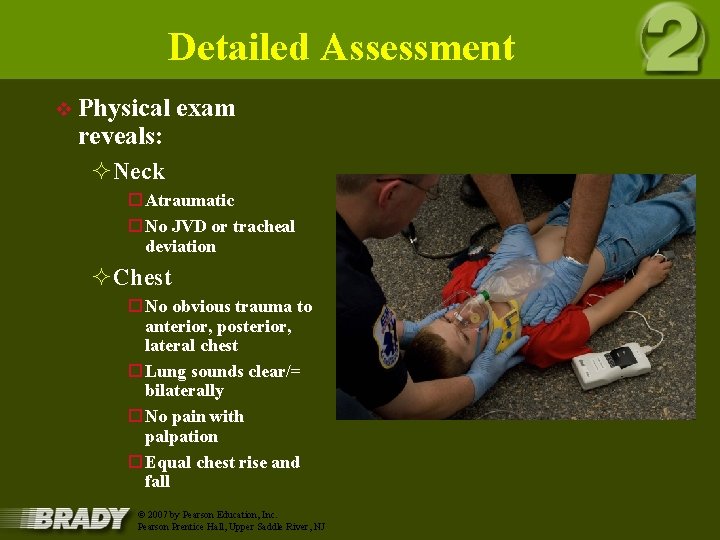
Detailed Assessment v Physical reveals: exam ²Neck o Atraumatic o No JVD or tracheal deviation ²Chest o No obvious trauma to anterior, posterior, lateral chest o Lung sounds clear/= bilaterally o No pain with palpation o Equal chest rise and fall © 2007 by Pearson Education, Inc. Pearson Prentice Hall, Upper Saddle River, NJ
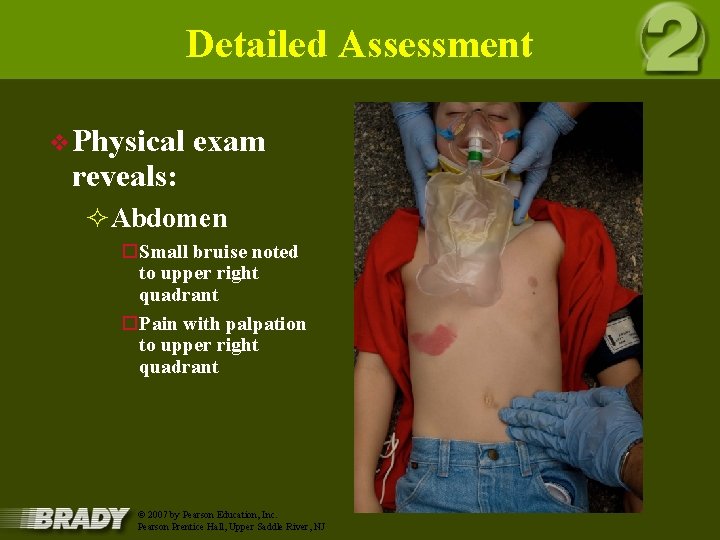
Detailed Assessment v. Physical reveals: exam ²Abdomen o. Small bruise noted to upper right quadrant o. Pain with palpation to upper right quadrant © 2007 by Pearson Education, Inc. Pearson Prentice Hall, Upper Saddle River, NJ
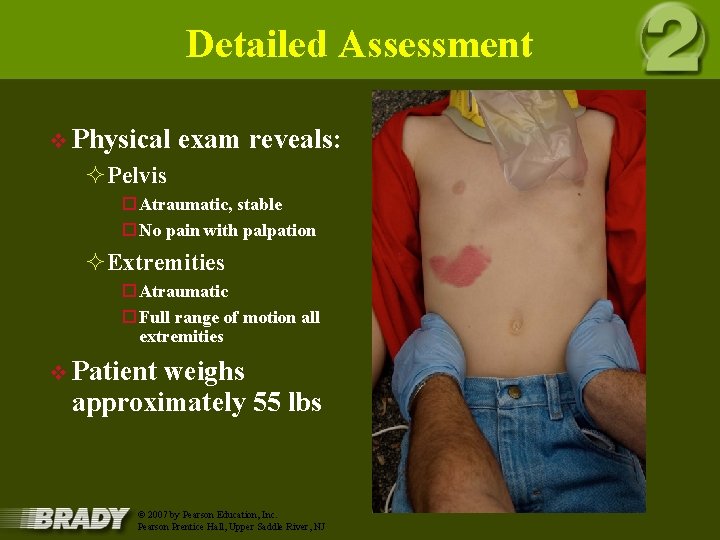
Detailed Assessment v Physical exam reveals: ²Pelvis o Atraumatic, stable o No pain with palpation ²Extremities o Atraumatic o Full range of motion all extremities v Patient weighs approximately 55 lbs © 2007 by Pearson Education, Inc. Pearson Prentice Hall, Upper Saddle River, NJ
Discussion v. What is your impression of the patient’s status? ²Concerns? v. What is your next course of action? v. If you have not yet, would you call for an ALS unit? © 2007 by Pearson Education, Inc. Pearson Prentice Hall, Upper Saddle River, NJ
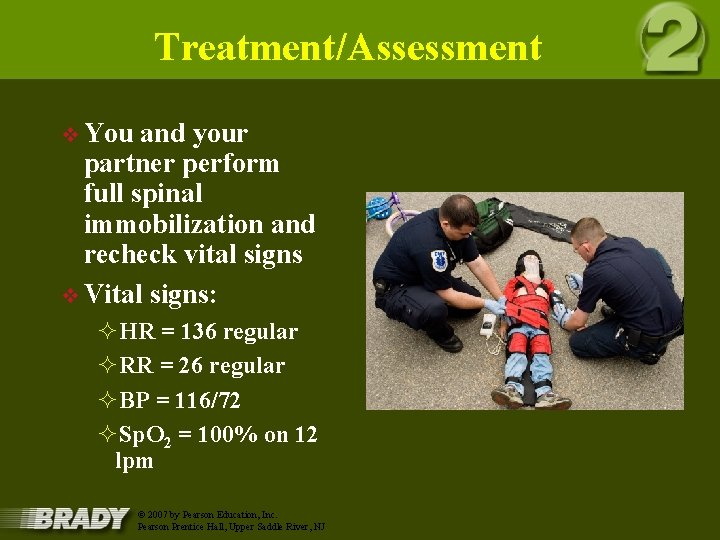
Treatment/Assessment v You and your partner perform full spinal immobilization and recheck vital signs v Vital signs: ²HR = 136 regular ²RR = 26 regular ²BP = 116/72 ²Sp. O 2 = 100% on 12 lpm © 2007 by Pearson Education, Inc. Pearson Prentice Hall, Upper Saddle River, NJ
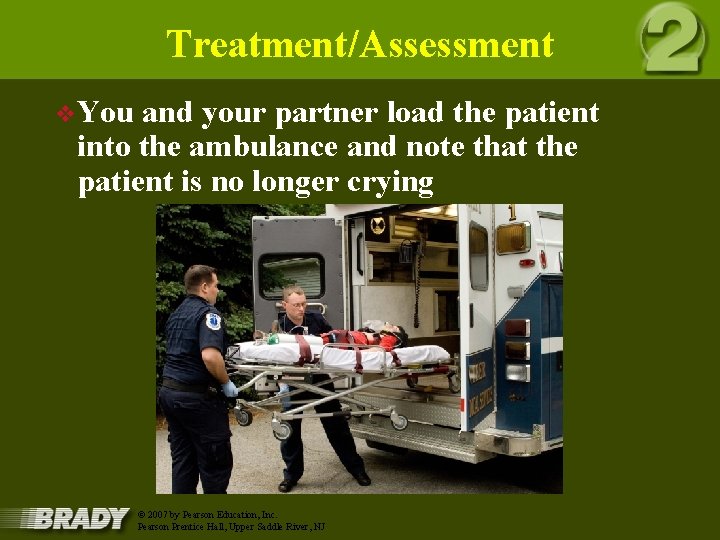
Treatment/Assessment v. You and your partner load the patient into the ambulance and note that the patient is no longer crying © 2007 by Pearson Education, Inc. Pearson Prentice Hall, Upper Saddle River, NJ
Discussion v. Does this concern you? v. What would be your immediate course of action? © 2007 by Pearson Education, Inc. Pearson Prentice Hall, Upper Saddle River, NJ
Ongoing Assessment v. You go to the patient’s head and note that he is responsive to verbal stimuli but slightly confused v. You also note: ²Skin cool, ashen, slightly diaphoretic ²Capillary refill delayed © 2007 by Pearson Education, Inc. Pearson Prentice Hall, Upper Saddle River, NJ
Ongoing Assessment v. Your signs: partner reports the following vital ²HR = 108 regular ²RR = 22 regular, shallow ²BP = 82/42 ²Sp. O 2 = 97% on 12 lpm v. Palpation of the patient’s abdomen reveals it to be slightly distended and rigid © 2007 by Pearson Education, Inc. Pearson Prentice Hall, Upper Saddle River, NJ
Discussion v. How would you describe the patient’s current condition? v. What would be your immediate actions? © 2007 by Pearson Education, Inc. Pearson Prentice Hall, Upper Saddle River, NJ
Ongoing Assessment v. You ask the officer to begin transport to the ED and attempt to have ALS meet you while en route. v. You assess the patient’s airway and note: ²It’s open ²No need for suction ²He is able to verbally respond to stimuli © 2007 by Pearson Education, Inc. Pearson Prentice Hall, Upper Saddle River, NJ
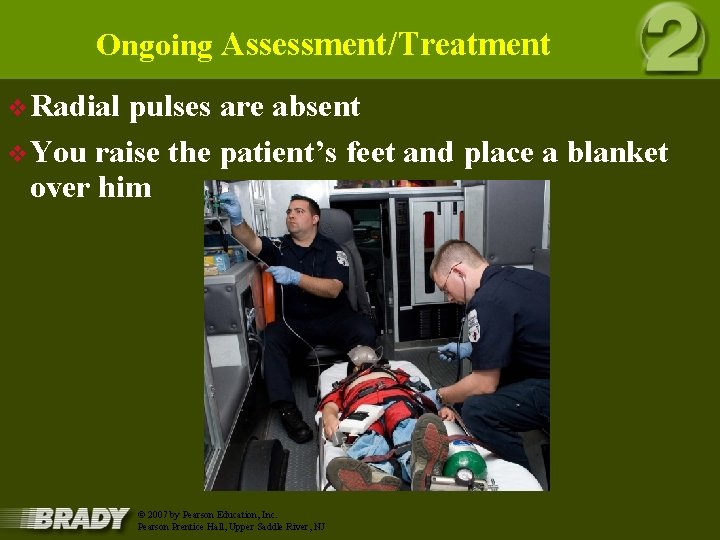
Ongoing Assessment/Treatment v. Radial pulses are absent v. You raise the patient’s feet and place a blanket over him © 2007 by Pearson Education, Inc. Pearson Prentice Hall, Upper Saddle River, NJ
Ongoing Assessment v. The ALS unit meets you while en route v. The paramedic joins you in the patient compartment and instructs the officer to continue the response to the ED v. The paramedic listens to your report while performing a rapid exam © 2007 by Pearson Education, Inc. Pearson Prentice Hall, Upper Saddle River, NJ
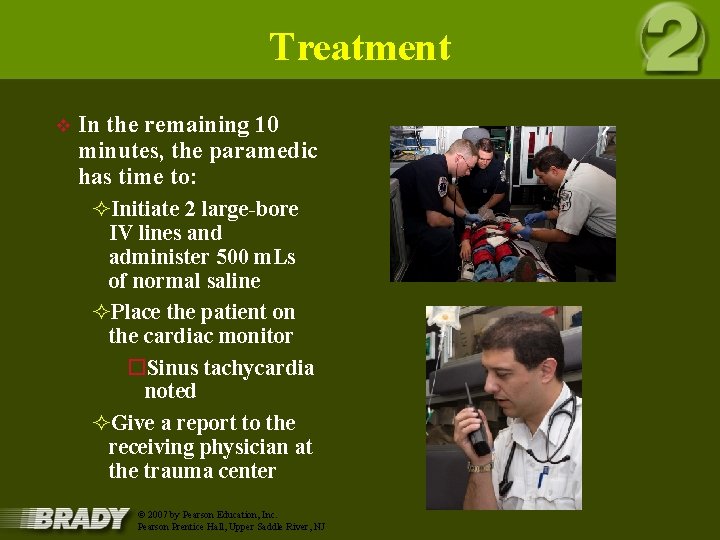
Treatment v In the remaining 10 minutes, the paramedic has time to: ²Initiate 2 large-bore IV lines and administer 500 m. Ls of normal saline ²Place the patient on the cardiac monitor o. Sinus tachycardia noted ²Give a report to the receiving physician at the trauma center © 2007 by Pearson Education, Inc. Pearson Prentice Hall, Upper Saddle River, NJ
Discussion v. How should fluid bolus volumes be determined in pediatric patients? v. How much fluid would you administer to this patient? v. What should your next actions be? © 2007 by Pearson Education, Inc. Pearson Prentice Hall, Upper Saddle River, NJ
Ongoing Assessment v. Vital signs upon arrival at ED: ²HR = 108 regular ²RR = 22 regular, shallow ²BP = 80/40 ²Sp. O 2 = 99% on 12 lpm © 2007 by Pearson Education, Inc. Pearson Prentice Hall, Upper Saddle River, NJ
ED Treatment and Beyond v. The patient’s airway is assessed and determined to be adequate at the time v. Whole blood is administered v. An ultrasound is performed and a large amount of intraperitoneal blood identified ²CBC and crossmatch ordered v. Lab studies ordered ²Arterial blood gas, trauma panels © 2007 by Pearson Education, Inc. Pearson Prentice Hall, Upper Saddle River, NJ
ED Treatment and Beyond v. The patient is rushed to the OR for surgical repair of a lacerated hepatic artery v. Post-surgical CT scan reveals the presence of a small pulmonary contusion on the lower right lung © 2007 by Pearson Education, Inc. Pearson Prentice Hall, Upper Saddle River, NJ
Discussion v. What about the mechanism of injury, pediatric anatomical characteristics, and physical exam findings should have led to suspicions of intrathoracic and intraabdominal injuries? © 2007 by Pearson Education, Inc. Pearson Prentice Hall, Upper Saddle River, NJ
Discussion v. What signs of compensated shock were present early in patient care? v. How should this call have been managed differently? © 2007 by Pearson Education, Inc. Pearson Prentice Hall, Upper Saddle River, NJ
Epidemiology v. Traumatic injury the leading cause of death in children < 1 year old v. In children, trauma greater than all other causes of death combined v 50% of deaths occur within the first hour after injury © 2007 by Pearson Education, Inc. Pearson Prentice Hall, Upper Saddle River, NJ
Epidemiology v. Blunt trauma most frequent mechanism of injury (80 -90% of all injuries) v. Motor vehicle collisions account for 40% of deaths, followed by: ²Drownings ²Pedestrian injuries ²Fires/burns ²Bicycle crashes ²Firearms ²Falls © 2007 by Pearson Education, Inc. Pearson Prentice Hall, Upper Saddle River, NJ
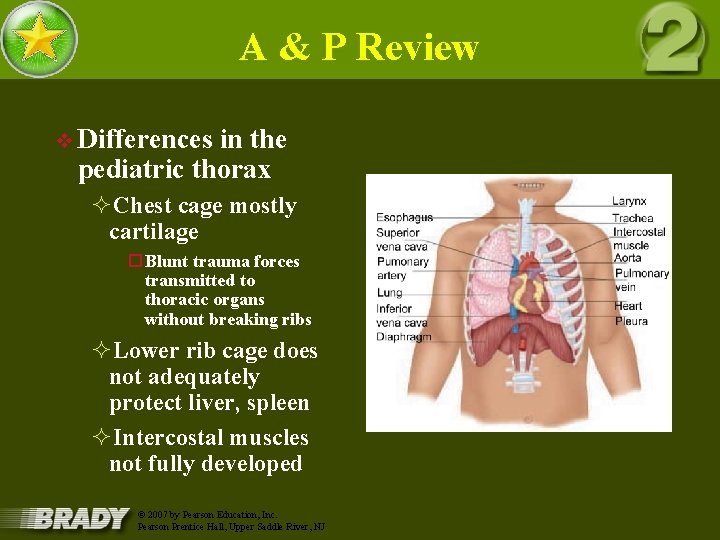
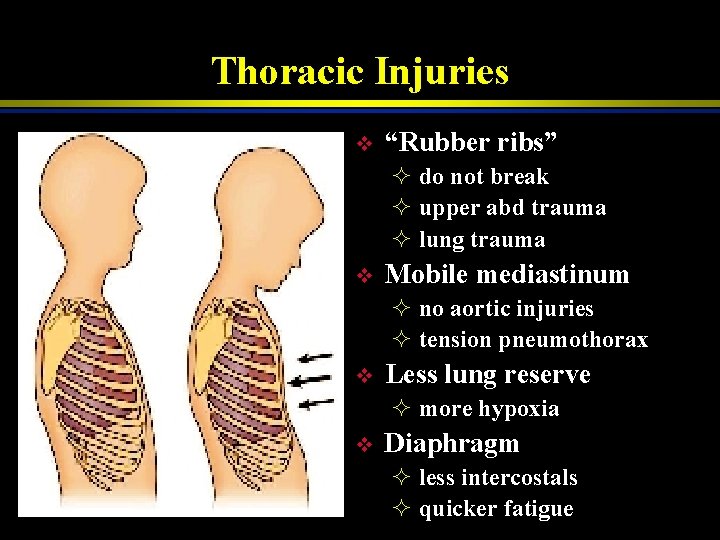
A & P Review v Differences in the pediatric thorax ²Chest cage mostly cartilage o Blunt trauma forces transmitted to thoracic organs without breaking ribs ²Lower rib cage does not adequately protect liver, spleen ²Intercostal muscles not fully developed © 2007 by Pearson Education, Inc. Pearson Prentice Hall, Upper Saddle River, NJ
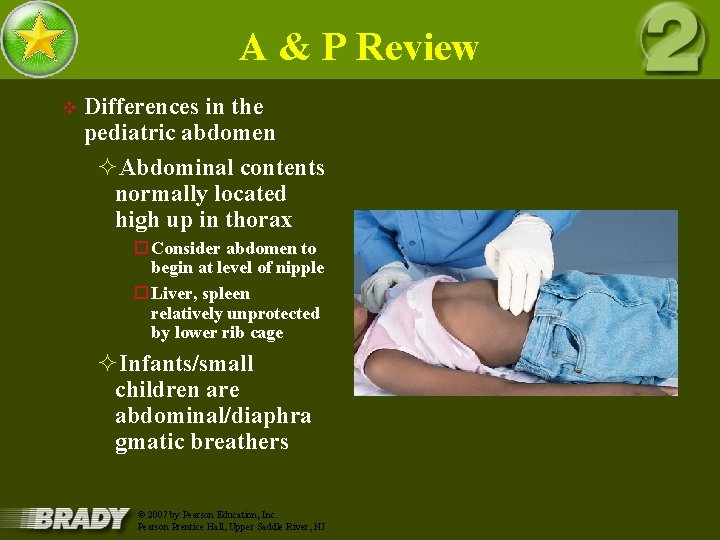
A & P Review v Differences in the pediatric abdomen ²Abdominal contents normally located high up in thorax o Consider abdomen to begin at level of nipple o Liver, spleen relatively unprotected by lower rib cage ²Infants/small children are abdominal/diaphra gmatic breathers © 2007 by Pearson Education, Inc. Pearson Prentice Hall, Upper Saddle River, NJ
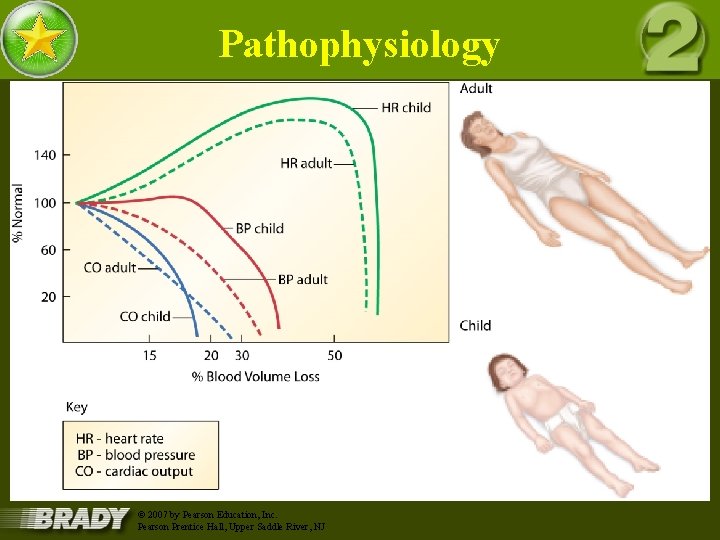
A & P Review v. Physiologic differences: Hemodynamics ²Can compensate for developing hypoxia with tachypnea ²Blood volume much lower o. Small-volume blood loss may be significant ²Can compensate for developing shock with tachycardia and vasoconstriction o. Unable to effectively increase cardiac contractility o. Patient “crashes” when cardiac output can no longer meet demand © 2007 by Pearson Education, Inc. Pearson Prentice Hall, Upper Saddle River, NJ
Pathophysiology Early and effective support of airway, ventilation, oxygenation, and circulation is vital in the pediatric blunt-trauma patient. Survival of an out-of-hospital cardiac arrest secondary to blunt trauma is poor. © 2007 by Pearson Education, Inc. Pearson Prentice Hall, Upper Saddle River, NJ
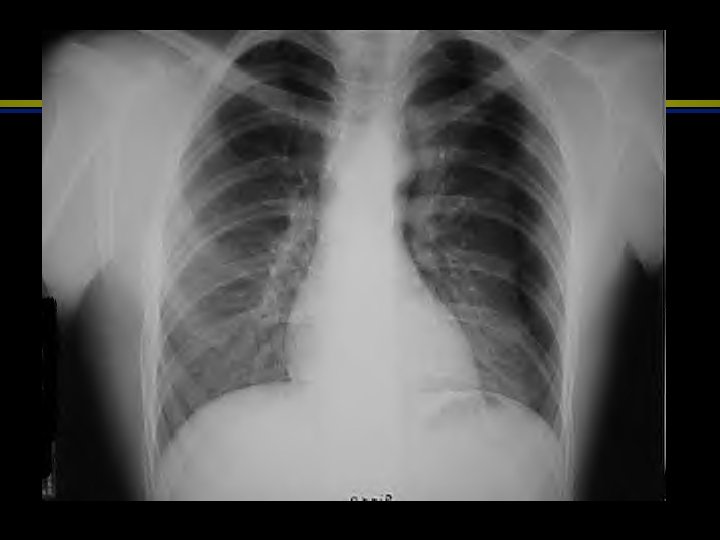
Pathophysiology v. Significant intrathoracic injury can occur without external signs of trauma ²Pulmonary contusions, pneumothorax commonly present without rib fractures © 2007 by Pearson Education, Inc. Pearson Prentice Hall, Upper Saddle River, NJ
Pathophysiology v. Spleen, then the liver most commonly injured abdominal organs ²Spleen and liver injuries tend to stop bleeding spontaneously, unless major blood vessels involved ²Major blood vessel injury creates significant hemodynamic instability © 2007 by Pearson Education, Inc. Pearson Prentice Hall, Upper Saddle River, NJ
Pathophysiology v. Children are able to compensate for shock very effectively ²Increased cardiac output through tachycardia v. When blood loss overwhelms compensatory mechanisms, cardiovascular collapse develops rapidly © 2007 by Pearson Education, Inc. Pearson Prentice Hall, Upper Saddle River, NJ
Pathophysiology Fig 7 -1 Pediatric prehospital Care. Graph of peds versus adult CO, BP, HR during compensation. Figure 4. 2 -3 © 2007 by Pearson Education, Inc. Pearson Prentice Hall, Upper Saddle River, NJ
Pathophysiology v. Avoid hypothermia in trauma patients ²Children can lose body heat rapidly ²Can result in: o. Vasoconstriction o. Low-flow states o. Acidosis o. Consumptive coagulopathy © 2007 by Pearson Education, Inc. Pearson Prentice Hall, Upper Saddle River, NJ
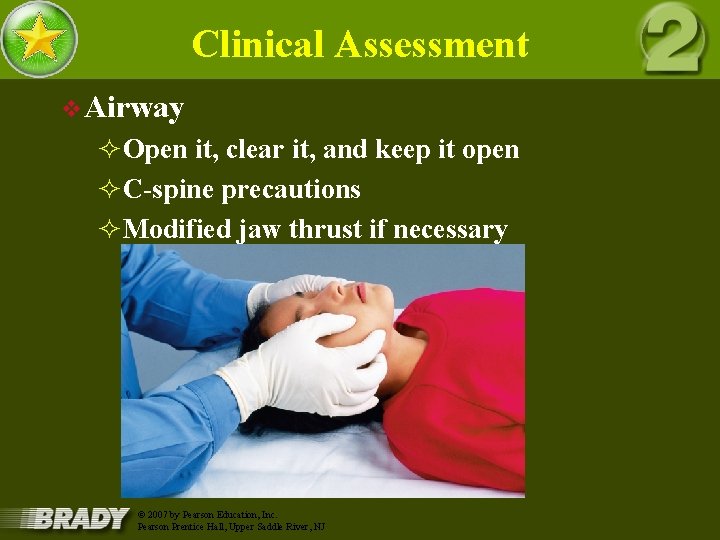
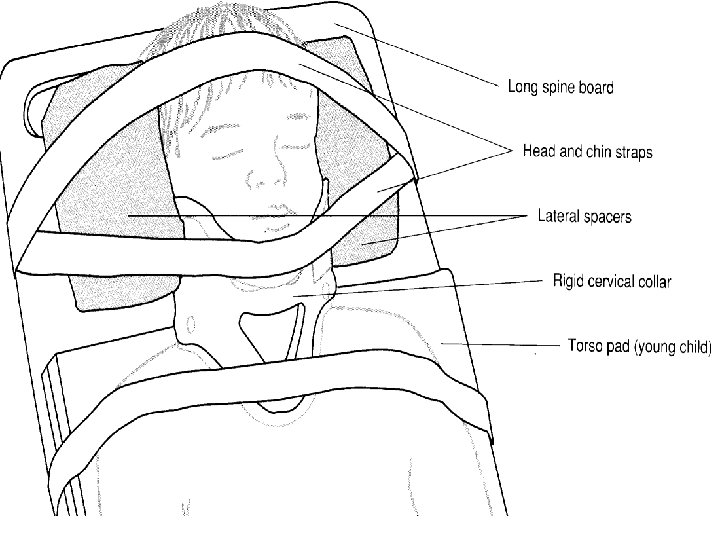
Clinical Assessment v. Airway ²Open it, clear it, and keep it open ²C-spine precautions ²Modified jaw thrust if necessary Figure 4. 2 -4 © 2007 by Pearson Education, Inc. Pearson Prentice Hall, Upper Saddle River, NJ
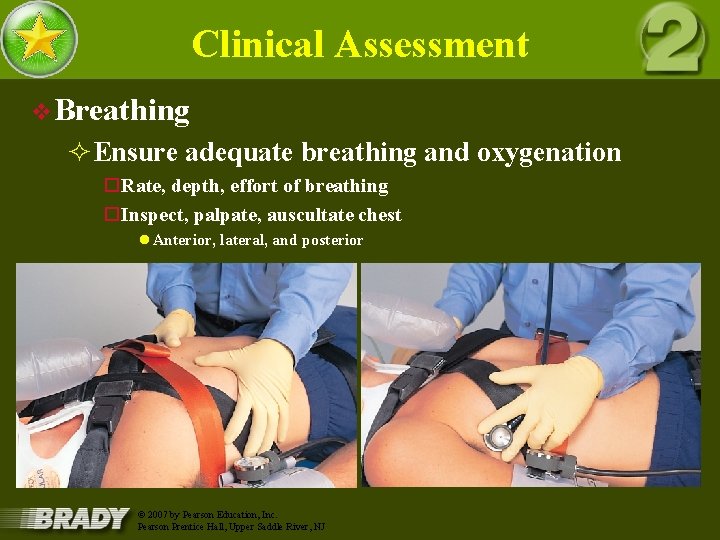
Clinical Assessment v. Breathing ²Ensure adequate breathing and oxygenation o. Rate, depth, effort of breathing o. Inspect, palpate, auscultate chest l Anterior, lateral, and posterior Fig 9 -31 k: Prehospital EC, 7 th ed. Pic of palp of chest Figure 4. 2 -5 © 2007 by Pearson Education, Inc. Pearson Prentice Hall, Upper Saddle River, NJ
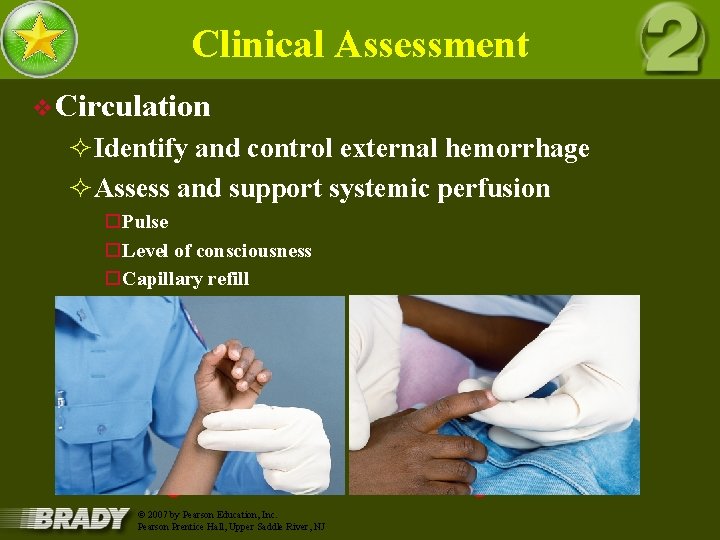
Clinical Assessment v. Circulation ²Identify and control external hemorrhage ²Assess and support systemic perfusion o. Pulse o. Level of consciousness o. Capillary refill Figure 2 -4 g: Prehospital Pediatric Care. Pic of radial pulse Figure 4. 2 -7 © 2007 by Pearson Education, Inc. Pearson Prentice Hall, Upper Saddle River, NJ Figure 2 -4 h: Prehospital Pediatric Care. Pic of capillary refill Figure 4. 2 -8
Clinical Assessment v. Compensated shock ²Evidenced by: o. Tachycardia o. Tachypnea o. Adequate blood pressure o. Irritability, anxiety o. Delayed capillary refill o. Cool, pale extremities © 2007 by Pearson Education, Inc. Pearson Prentice Hall, Upper Saddle River, NJ
Clinical Assessment v. Decompensated shock ²Evidenced by: o. Decreased level of consciousness o. Marked tachycardia or bradycardia o. Absent peripheral, weak central pulses o. Markedly delayed capillary refill o. Hypotension © 2007 by Pearson Education, Inc. Pearson Prentice Hall, Upper Saddle River, NJ
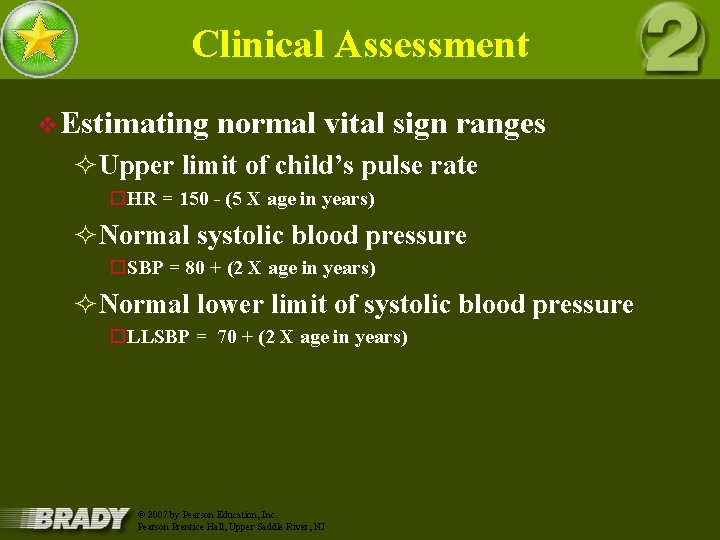
Clinical Assessment v. Estimating normal vital sign ranges ²Upper limit of child’s pulse rate o. HR = 150 - (5 X age in years) ²Normal systolic blood pressure o. SBP = 80 + (2 X age in years) ²Normal lower limit of systolic blood pressure o. LLSBP = 70 + (2 X age in years) © 2007 by Pearson Education, Inc. Pearson Prentice Hall, Upper Saddle River, NJ
Clinical Assessment v. Disability ²Rapid assessment of neurologic function ²GCS, AVPU Pediatric Response Scale v. Expose ²Remove clothing as appropriate ²Perform head-to-toe physical exam © 2007 by Pearson Education, Inc. Pearson Prentice Hall, Upper Saddle River, NJ
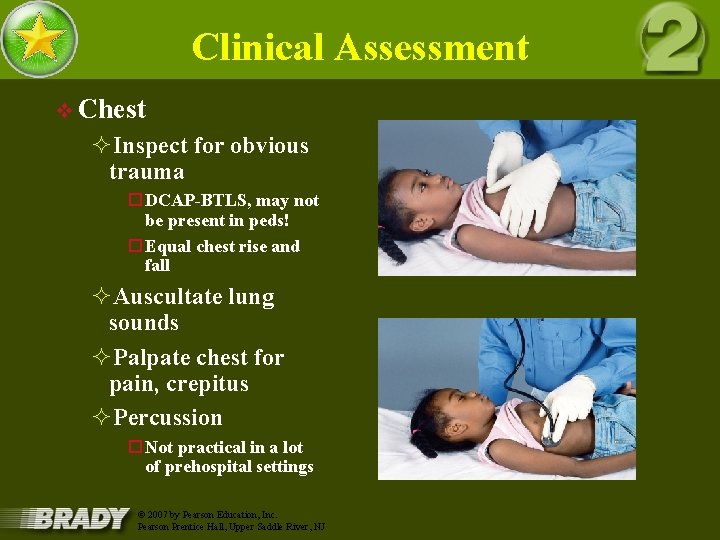
Clinical Assessment v Chest ²Inspect for obvious trauma o DCAP-BTLS, may not be present in peds! o Equal chest rise and fall ²Auscultate lung sounds ²Palpate chest for pain, crepitus ²Percussion o Not practical in a lot of prehospital settings © 2007 by Pearson Education, Inc. Pearson Prentice Hall, Upper Saddle River, NJ
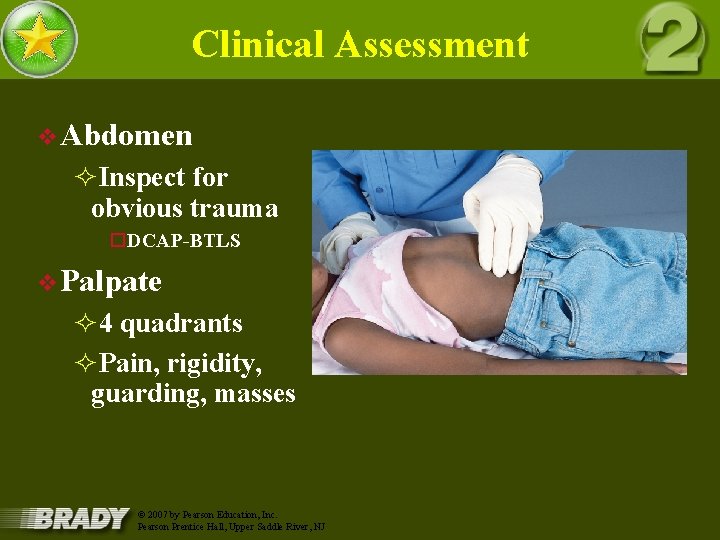
Clinical Assessment v. Abdomen ²Inspect for obvious trauma o. DCAP-BTLS v. Palpate ² 4 quadrants ²Pain, rigidity, guarding, masses © 2007 by Pearson Education, Inc. Pearson Prentice Hall, Upper Saddle River, NJ
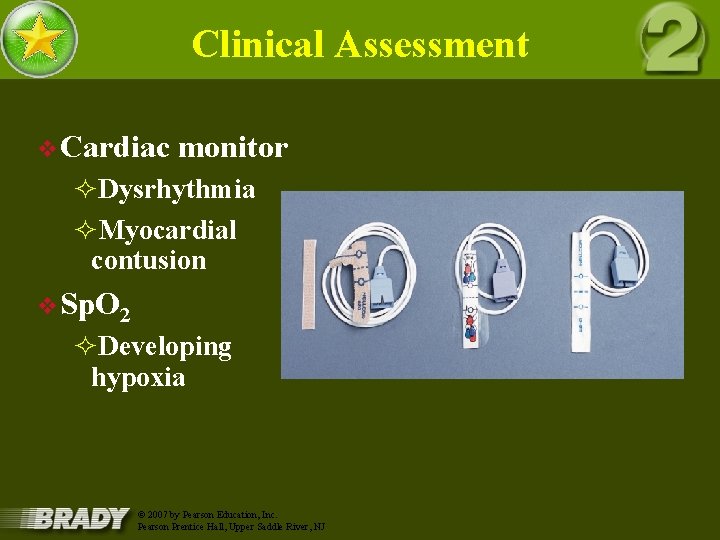
Clinical Assessment v. Cardiac monitor ²Dysrhythmia ²Myocardial contusion Fig 4 -5 A , Prehospital Ped Care. Insert pic vertically. v. Sp. O 2 ²Developing hypoxia © 2007 by Pearson Education, Inc. Pearson Prentice Hall, Upper Saddle River, NJ Figure 4. 2 -12
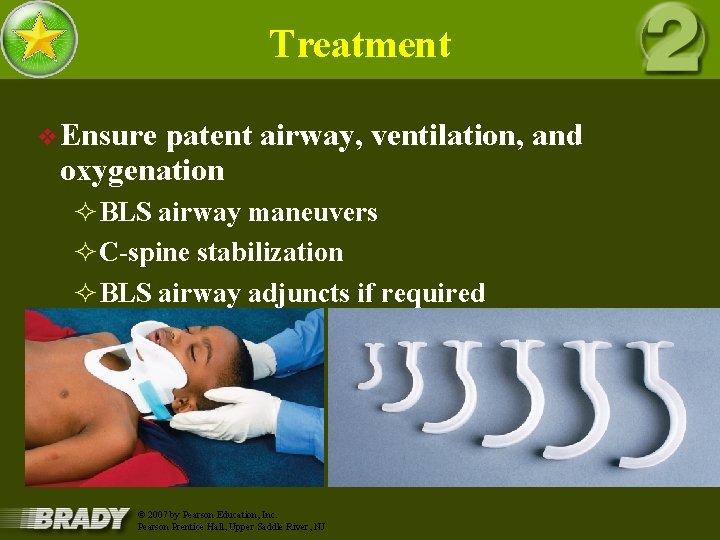
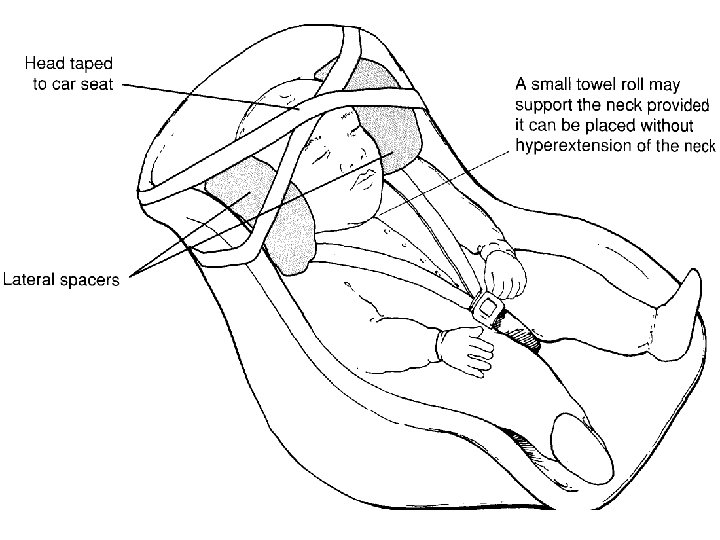
Treatment v. Ensure patent airway, ventilation, and oxygenation ²BLS airway maneuvers ²C-spine stabilization ²BLS airway adjuncts if required Figure 7 -5 D, Prehospital Ped Care. Pic collar, stabilization. Figure 4. 2 -13 © 2007 by Pearson Education, Inc. Pearson Prentice Hall, Upper Saddle River, NJ Figure 3 -8 D, Prehospital Ped Care. Pic OPAs. Figure 4. 2 -14
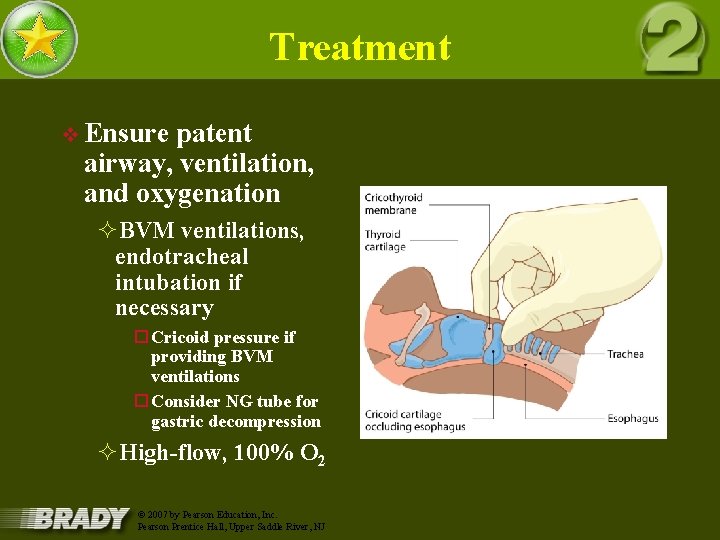
Treatment v Ensure patent airway, ventilation, and oxygenation ²BVM ventilations, endotracheal intubation if necessary o Cricoid pressure if providing BVM ventilations o Consider NG tube for gastric decompression ²High-flow, 100% O 2 © 2007 by Pearson Education, Inc. Pearson Prentice Hall, Upper Saddle River, NJ
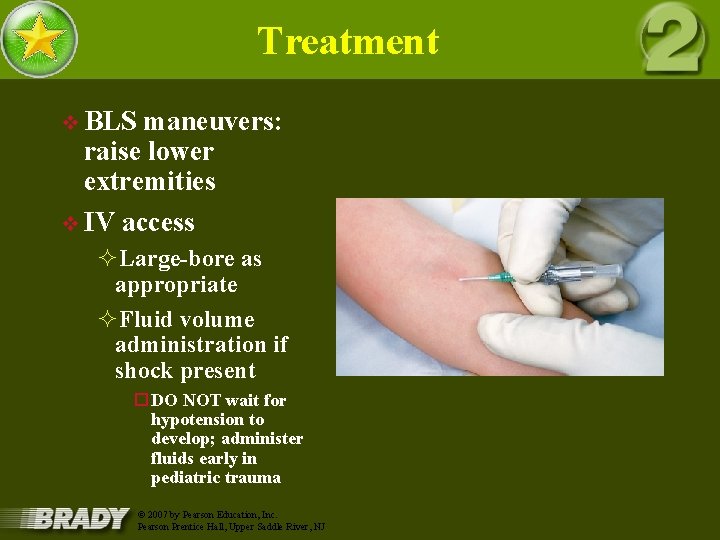
Treatment v BLS maneuvers: raise lower extremities v IV access ²Large-bore as appropriate ²Fluid volume administration if shock present o DO NOT wait for hypotension to develop; administer fluids early in pediatric trauma © 2007 by Pearson Education, Inc. Pearson Prentice Hall, Upper Saddle River, NJ
Treatment v. Protect against hypothermia v. Cardiac monitoring v. Sp. O 2 monitoring v. Pain control ²Morphine for skeletal injury as appropriate © 2007 by Pearson Education, Inc. Pearson Prentice Hall, Upper Saddle River, NJ
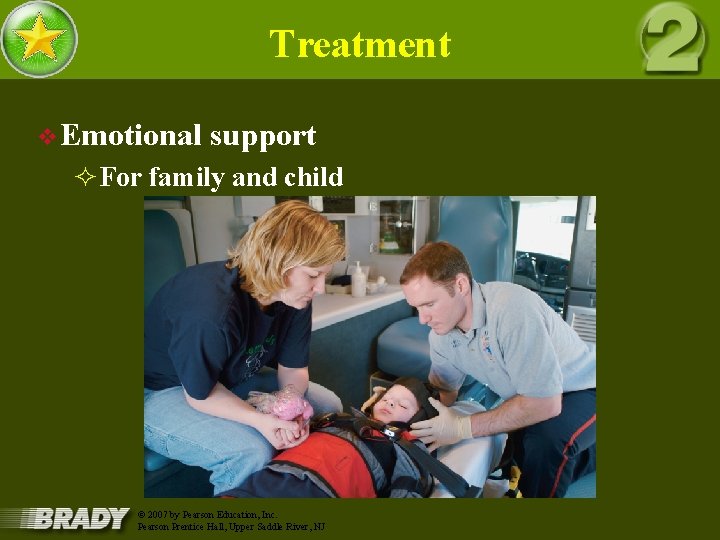
Treatment v. Emotional support ²For family and child Figure 4. 2 -17 Fig 2 -25: PCP&P Vol 5, 2 nd Ed. Pic of immobilized child in ambulance with mom & medic providing emotional support. © 2007 by Pearson Education, Inc. Pearson Prentice Hall, Upper Saddle River, NJ
ED Treatment and Beyond v. Continuation of airway, breathing, and oxygenation support ²RSI, surgical airways if needed v. Peripheral field IV access if not accomplished in ²Central line placement if patient hemodynamically unstable v. Administration of blood or blood products for volume expansion ²CBC, type and crossmatching © 2007 by Pearson Education, Inc. Pearson Prentice Hall, Upper Saddle River, NJ
ED Treatment and Beyond v. Diagnostic imaging ²Initial screening X-rays o. C-spine series, anteroposterior chest and pelvis ²CT scan ²Ultrasound ²Diagnostic peritoneal lavage has limited role v. Laboratory studies ²Arterial blood gas analysis ²Trauma panels v. Consideration of antimicrobial prophylaxis © 2007 by Pearson Education, Inc. Pearson Prentice Hall, Upper Saddle River, NJ
Anatomy & Physiology
Head Injury
Head Trauma Injuries are the leading cause of death in children, and brain injury is the most common cause of pediatric traumatic death. The automobile is the most lethal component of a child's environment.
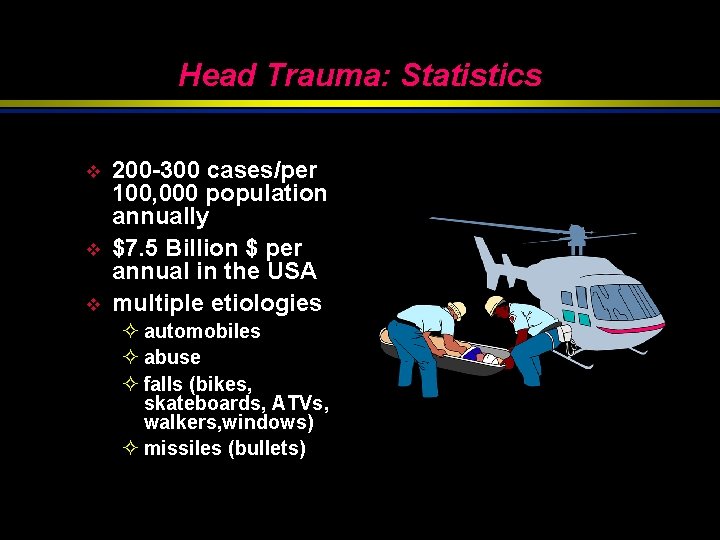
Head Trauma: Statistics v v v 200 -300 cases/per 100, 000 population annually $7. 5 Billion $ per annual in the USA multiple etiologies ² automobiles ² abuse ² falls (bikes, skateboards, ATVs, walkers, windows) ² missiles (bullets)
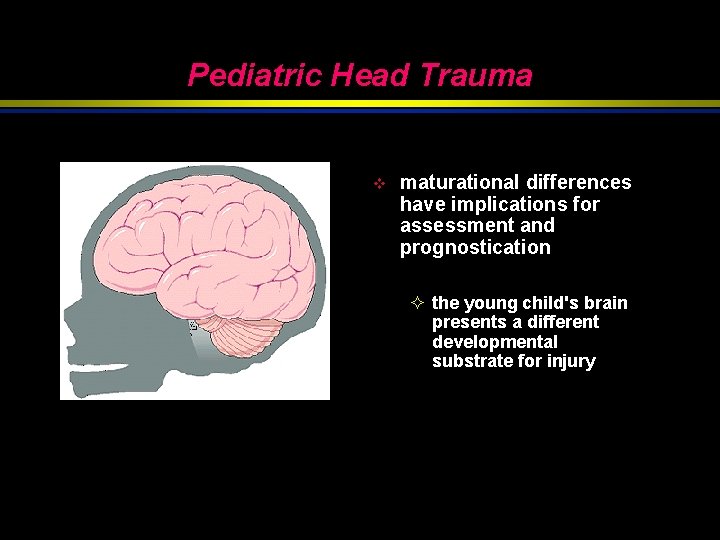
Pediatric Head Trauma v maturational differences have implications for assessment and prognostication ² the young child's brain presents a different developmental substrate for injury
The child's brain v has greater water content than the adult's v is relatively resistant to damage from hypoxia / ischemia v typically responds to injury with hyperaemia with out edema.
Coma can result from: v diffuse axonal injury v brainstem injury v bilateral hemispheric damage
Head Injury v # 1 killer v Thinner skull - < 1 -2 years v Vascular scalp ² scalp hematoma/cephalohematoma ² hypotension v Open fontanelle ² protection? v Unreliable examination
Head Injury v CNS injuries ² Skull fracture o Depressed o Growing - weeks/months ² Subdural o Venous bleeding o Shaking/abuse ² Epidural hematoma o Arterial bleed > venous o Delayed bleeding and delayed deterioration o 30% no fracture o 50% from falls < 4 -6 feet ² Diffuse Edema o Abnormal (increased flow)
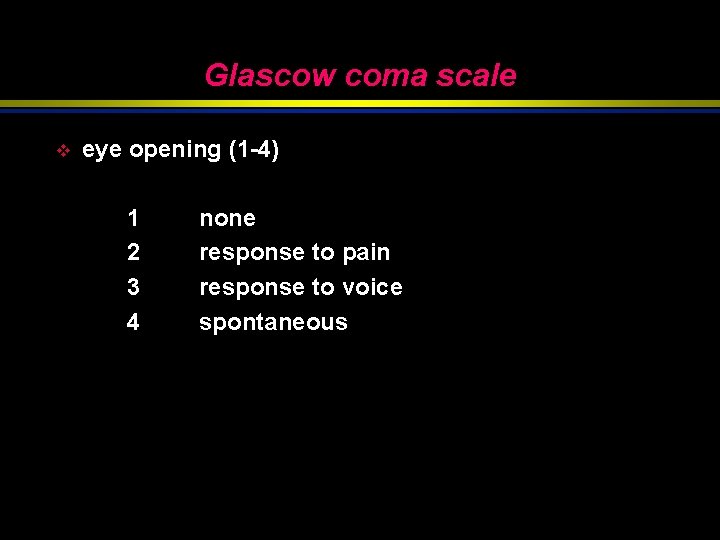
Glascow coma scale v eye opening (1 -4) 1 2 3 4 none response to pain response to voice spontaneous
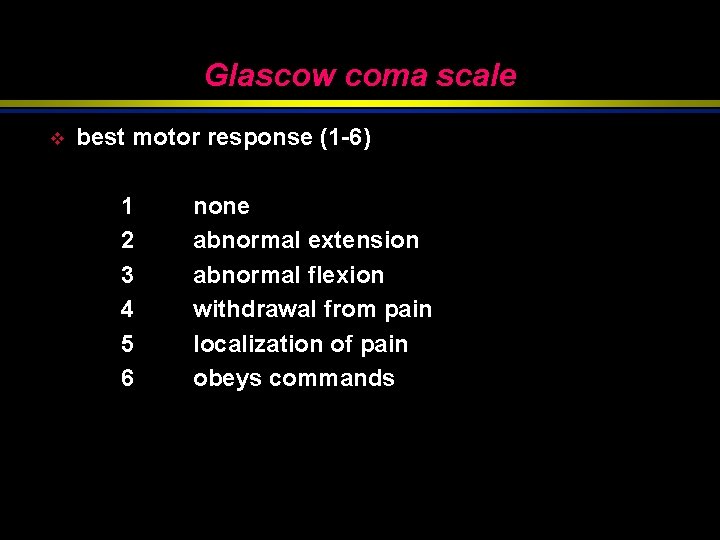
Glascow coma scale v best motor response (1 -6) 1 2 3 4 5 6 none abnormal extension abnormal flexion withdrawal from pain localization of pain obeys commands
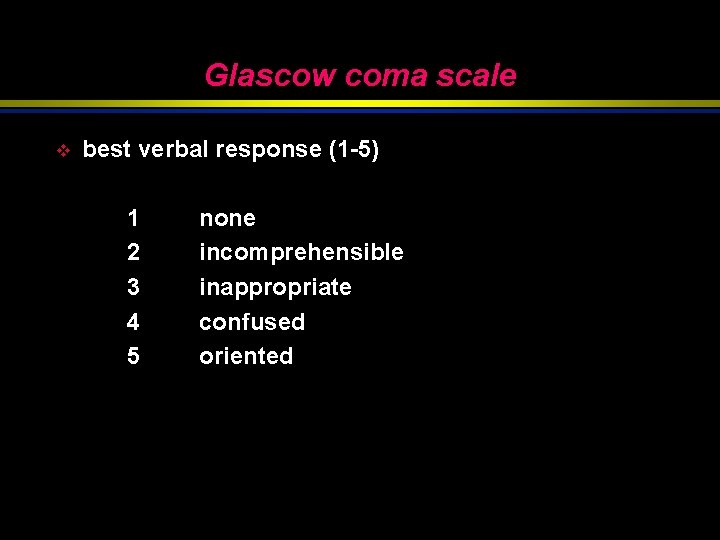
Glascow coma scale v best verbal response (1 -5) 1 2 3 4 5 none incomprehensible inappropriate confused oriented
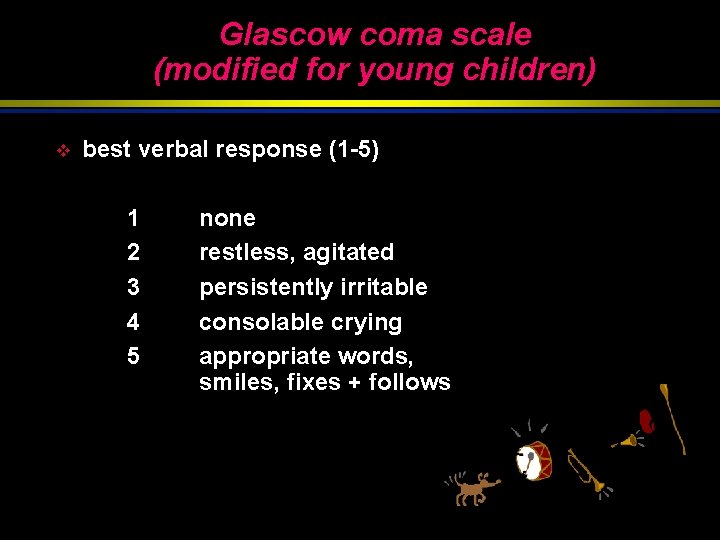
Glascow coma scale (modified for young children) v best verbal response (1 -5) 1 2 3 4 5 none restless, agitated persistently irritable consolable crying appropriate words, smiles, fixes + follows
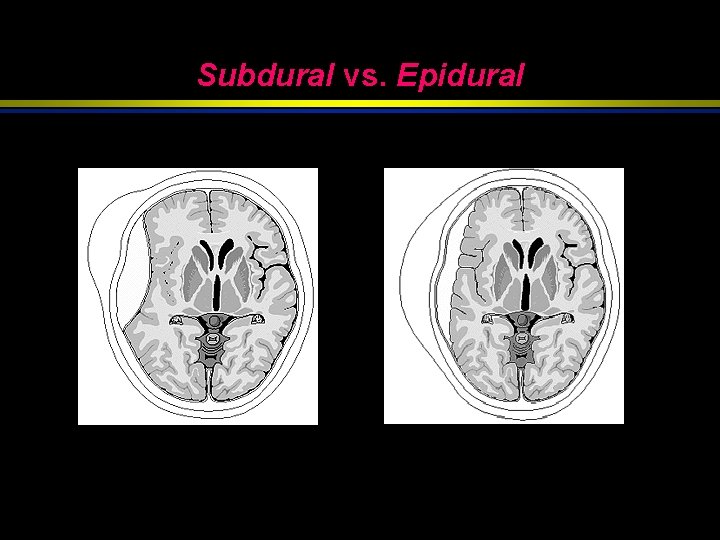
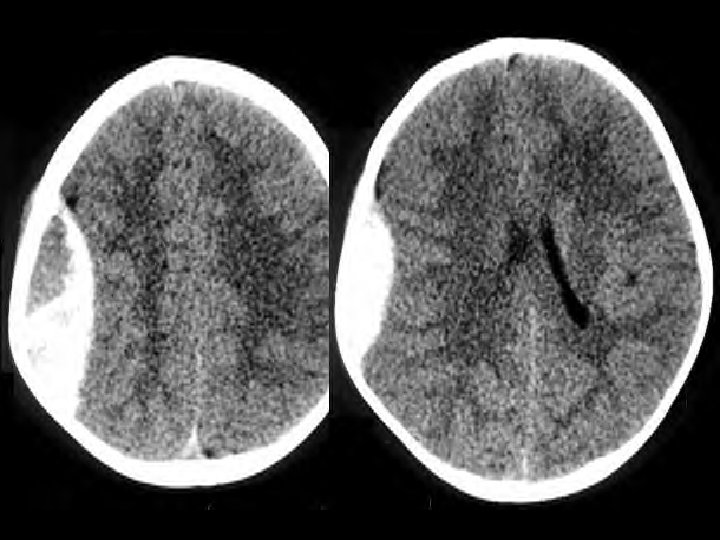
Subdural vs. Epidural
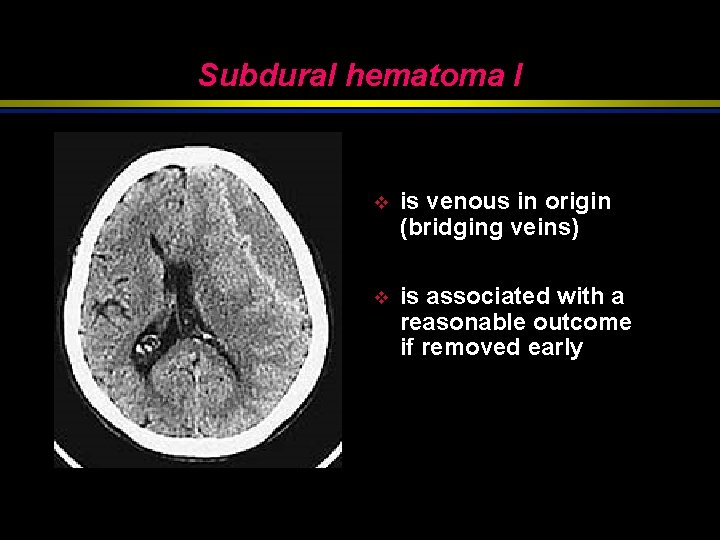
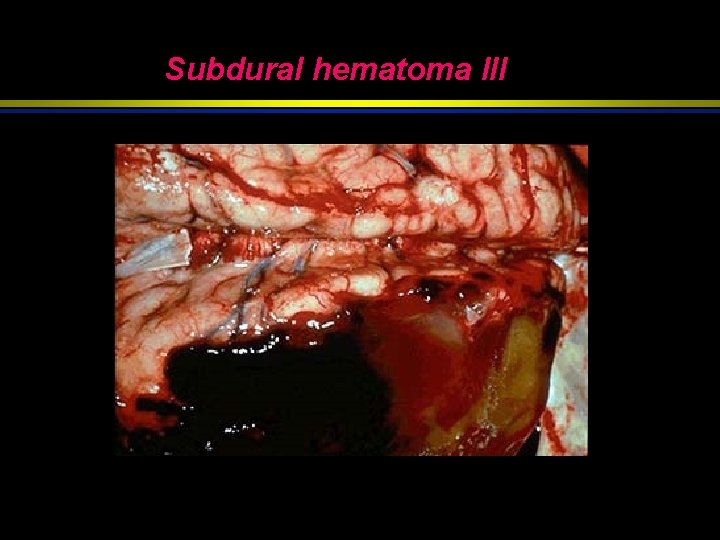
Subdural hematoma I v is venous in origin (bridging veins) v is associated with a reasonable outcome if removed early
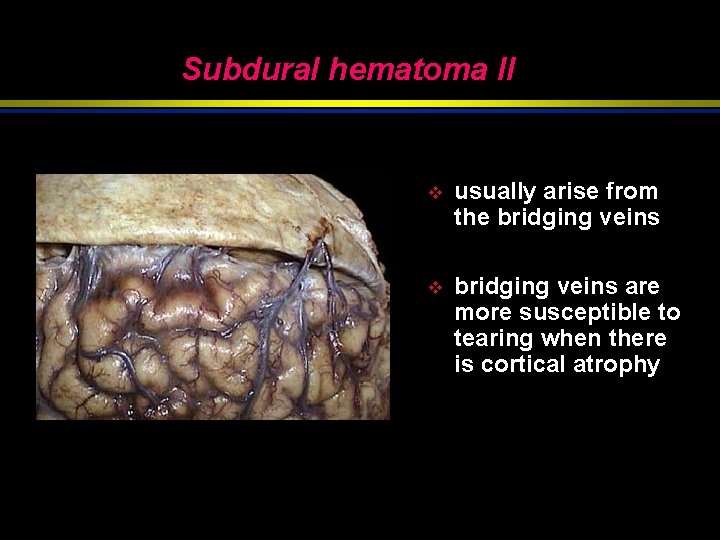
Subdural hematoma II v usually arise from the bridging veins v bridging veins are more susceptible to tearing when there is cortical atrophy
Subdural hematoma III
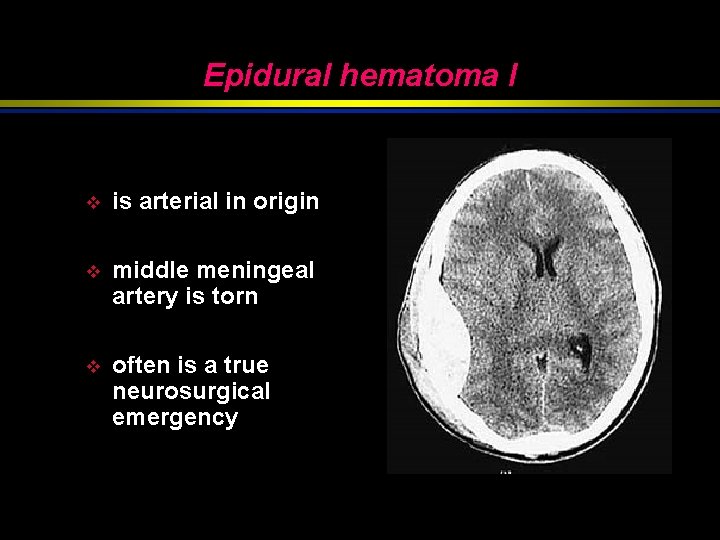
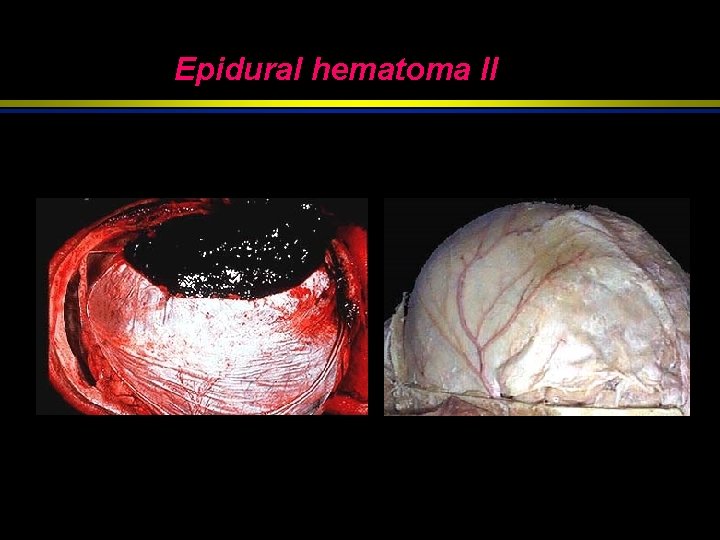
Epidural hematoma I v is arterial in origin v middle meningeal artery is torn v often is a true neurosurgical emergency
Epidural hematoma II
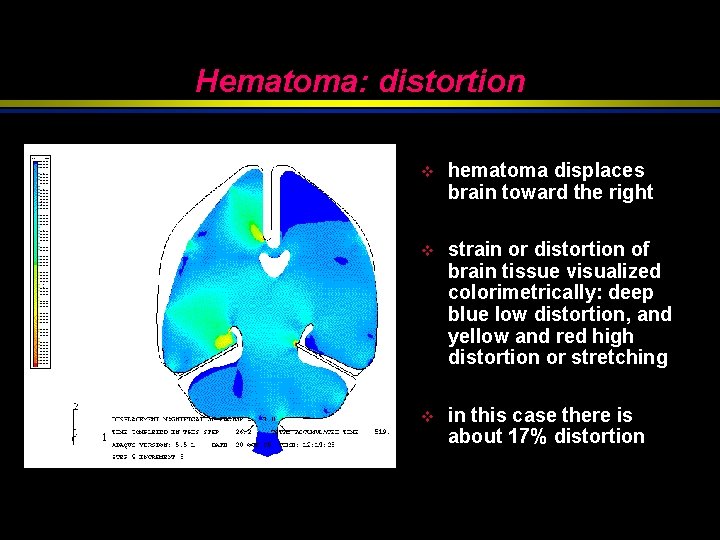
Hematoma: distortion v hematoma displaces brain toward the right v strain or distortion of brain tissue visualized colorimetrically: deep blue low distortion, and yellow and red high distortion or stretching v in this case there is about 17% distortion
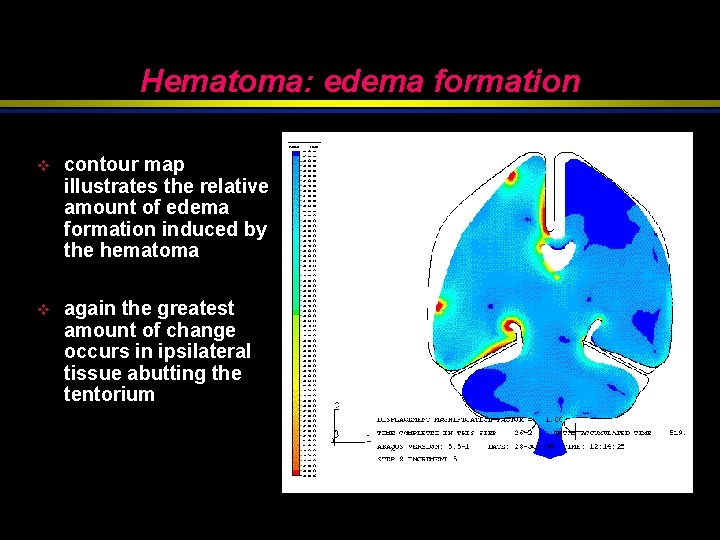
Hematoma: edema formation v contour map illustrates the relative amount of edema formation induced by the hematoma v again the greatest amount of change occurs in ipsilateral tissue abutting the tentorium
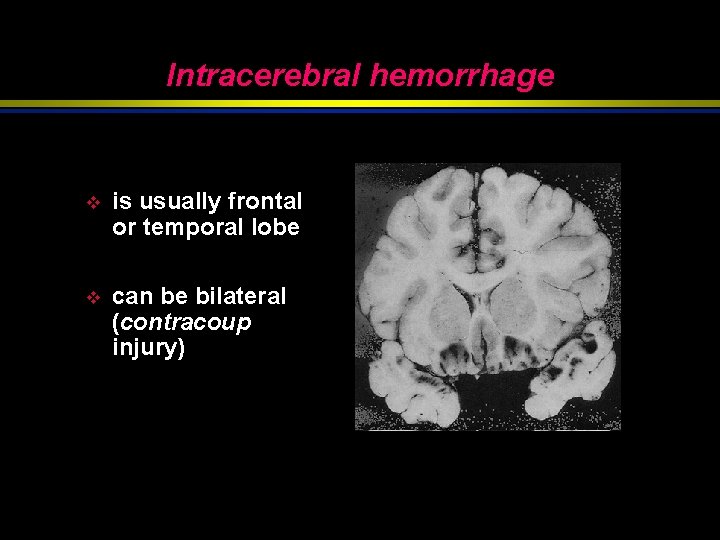
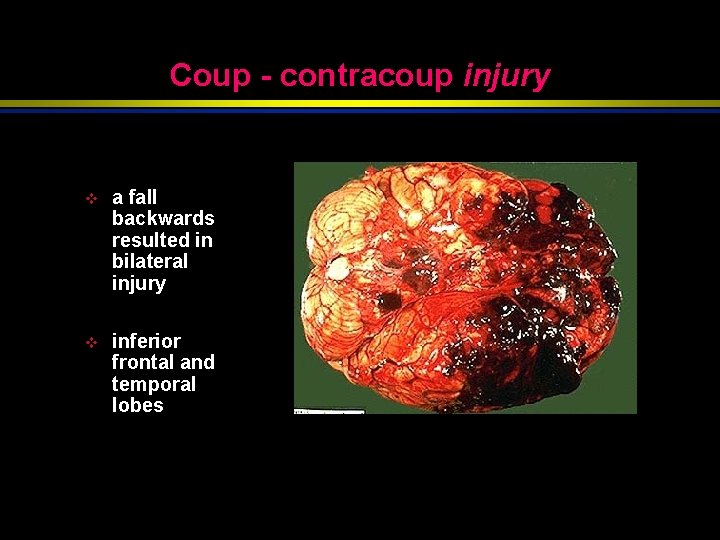
Intracerebral hemorrhage v is usually frontal or temporal lobe v can be bilateral (contracoup injury)
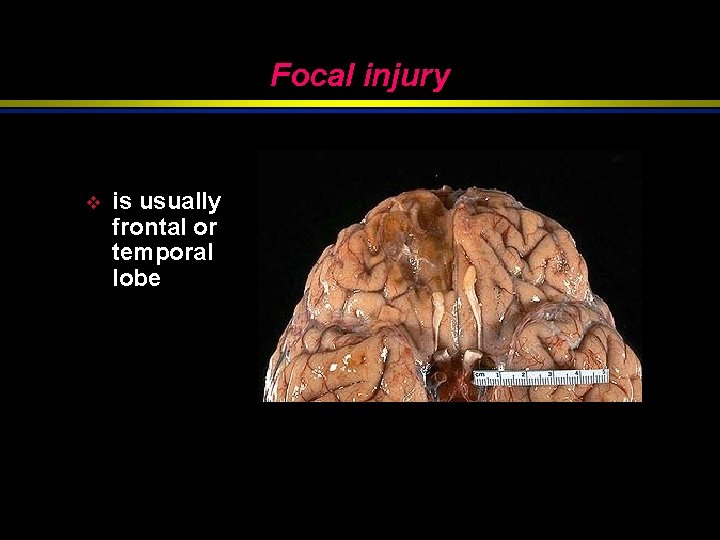
Focal injury v is usually frontal or temporal lobe
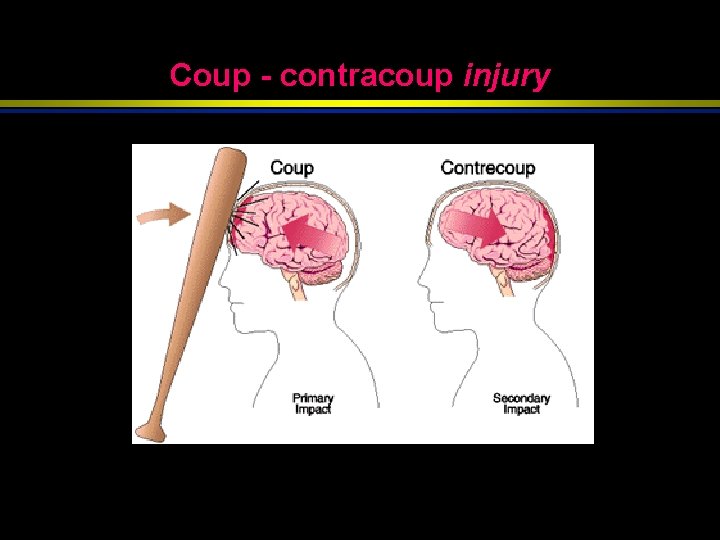
Coup - contracoup injury
Coup - contracoup injury v a fall backwards resulted in bilateral injury v inferior frontal and temporal lobes
Cervical Spine
Spinal/Neck Injuries
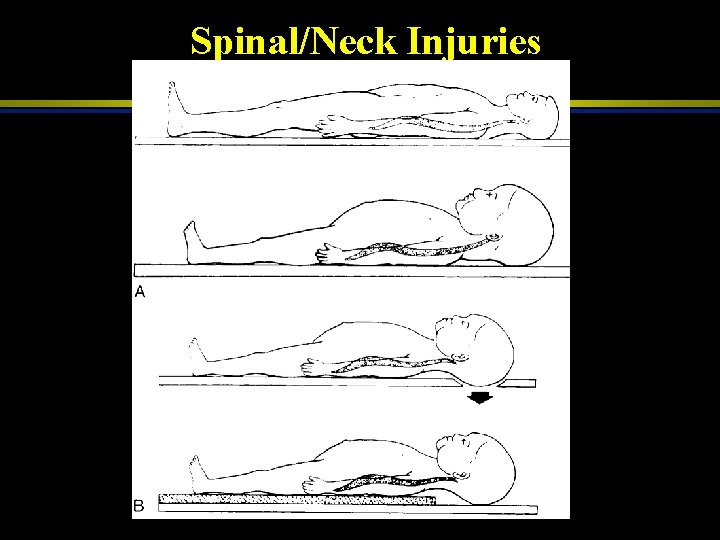
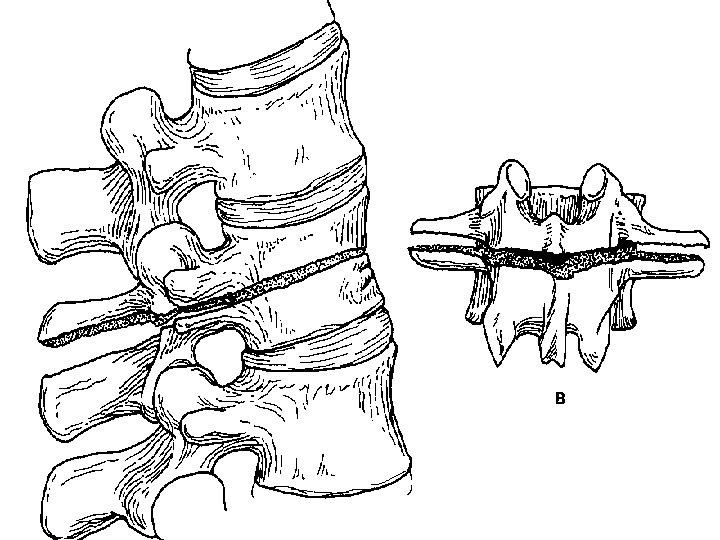
Spine/Neck Injuries v Locations ² < 8 years C 1 -2 (more room) ² > 8 years C 5 -6 ² Diaphragm C 3 (respiratory arrest) o Abdominal breathing o Hypoventilation/Apnea v Unique reflexes - infants ² mass flexion withdrawal from stimulation o when paralyzed o indistinguishable from normal movement
Spine/Neck Injuries v SCIWORA ² Spinal Cord Injury Without Radiologic Abnormality ² DELAYED ONSET of Neurologic Deficit (54%) o Swelling o Vascular Insult to Cord (hypermobility) o Many with initial Symptoms - disappear - reappear
Cervical Spine Level of Injury Based On Age J Pediatr Surg 2001; 36: 100 -105.
Cervical Spine Specific Injuries Occurring at Different Ages J Pediatr Surg 2001; 36: 100 -105
Thoracic Injuries v “Rubber ribs” ² do not break ² upper abd trauma ² lung trauma v Mobile mediastinum ² no aortic injuries ² tension pneumothorax v Less lung reserve ² more hypoxia v Diaphragm ² less intercostals ² quicker fatigue
Abdominal Injuries
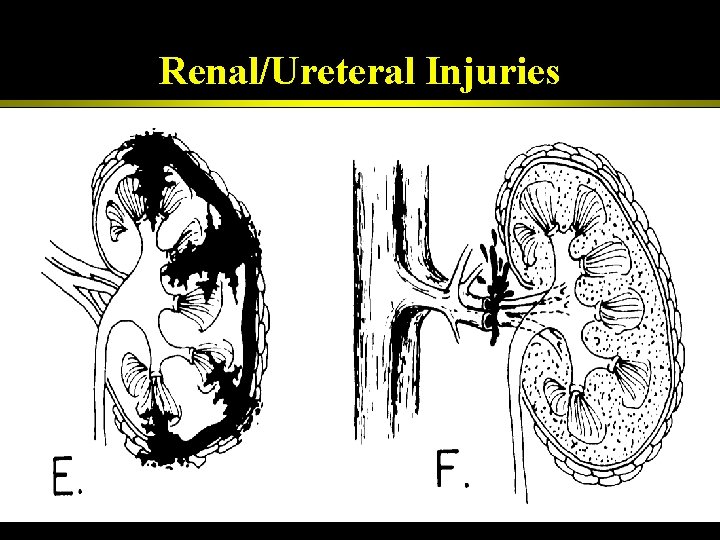
Renal/Ureteral Injuries
ALS vs. BLS Interventions ALS vs. BLS Mortality in 15 studies Liberman J Trauma 2000; 49: 58
ALS vs BLS Interventions Mean On Scene Times ALS vs BLS
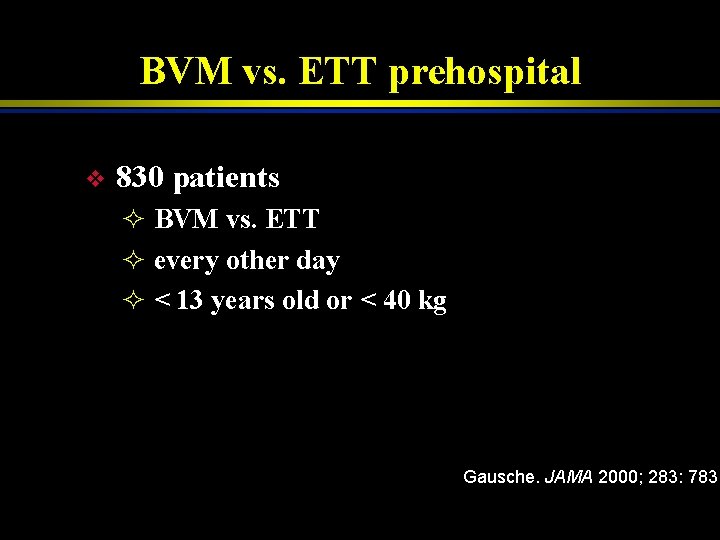
BVM vs. ETT prehospital v 830 patients ² BVM vs. ETT ² every other day ² < 13 years old or < 40 kg Gausche. JAMA 2000; 283: 783.
BVM vs. ETT Gausche JAMA 2000; 283: 783.
Prehospital BVM vs. ETT Survival * * * statistically significant Gausche JAMA 2000; 283: 783.
Pediatric Trauma Arrests Prehospital Pediatric Trauma Arrest Outcome Based on Intubation (N = 729) Perron Prehosp Emerg Care 2001; 5:
Pediatric Trauma Protocol v Basic Life Support (ABCDE) ² Establish responsiveness ² Airway/breathing o Assessment o Jaw thrust - NOT chin lift o 100% oxygen o bag valve mask/laryngeal mask airway ² Circulation o Control hemorrhage o Assess circulation l Pulses (proximal vs. distal) l Capillary refill
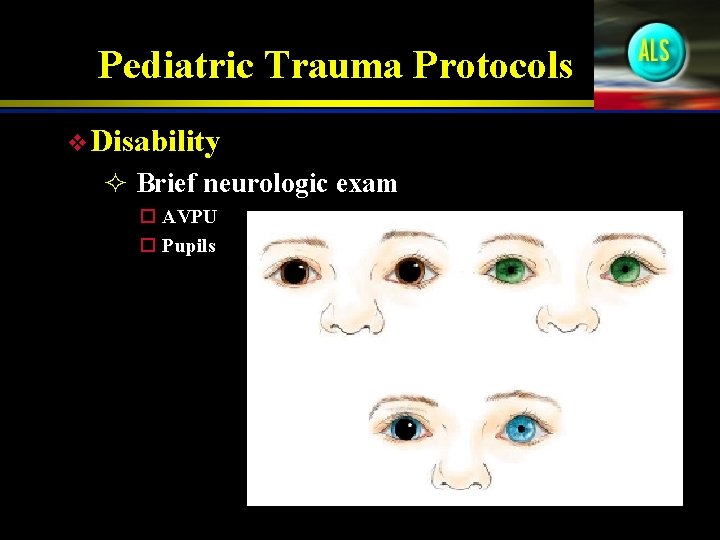
Pediatric Trauma Protocols v. Disability ² Brief neurologic exam o AVPU o Pupils
Pediatric Trauma Protocols v Exposure ² Splint obvious fractures of long bones ² Maintain normal temperature
Pediatric Trauma Protocols Advanced Life Support v Repeat ABCDEs v Airway (Cspine immobilization) v ² Advanced ² BVM/ETT/LMA v Breathing ² Assess work, rate ² Listen ² Pulse oximetry/ETC 02
Pediatric Trauma v Breathing -
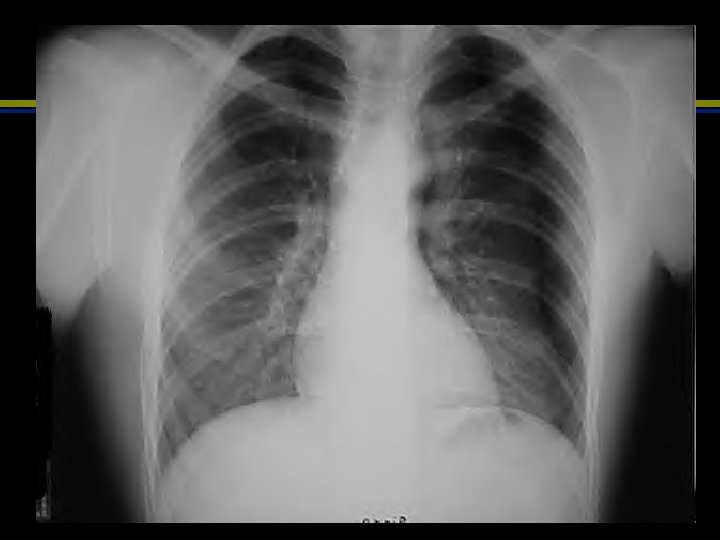
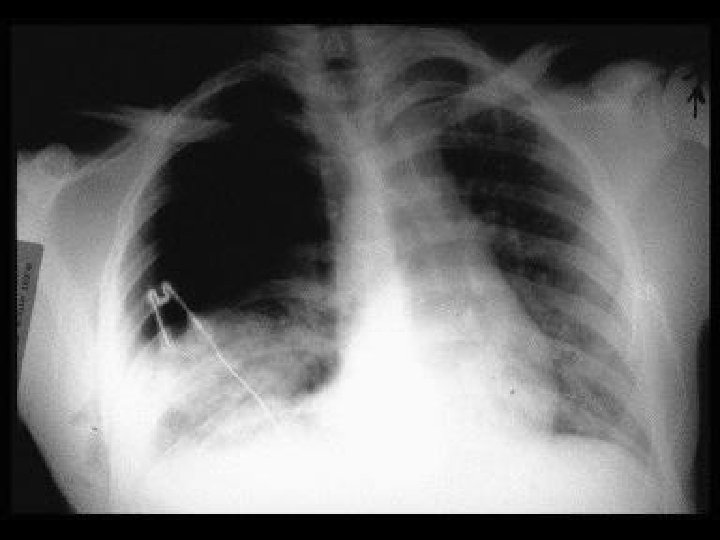
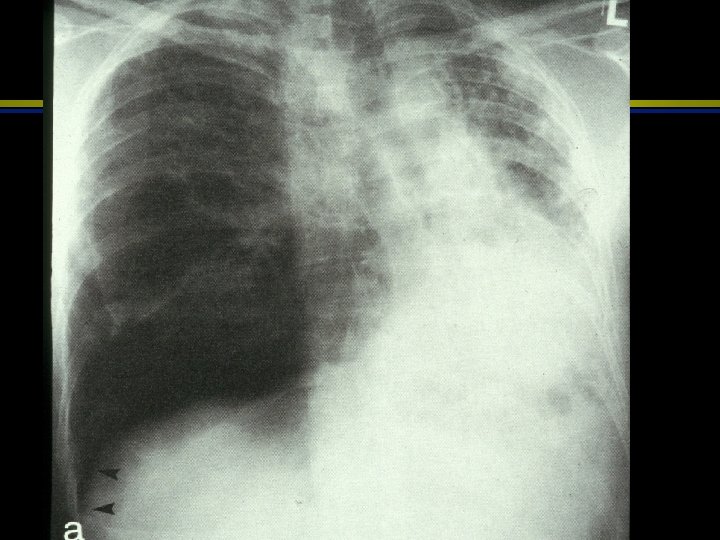
Pediatric Trauma v Simple pneumothorax/contusion ² Abdominal bleeding Massive Hemothorax v Tension pneumothorax v Flail chest - contusion/hypoxia v Cardiac tamponade v Diaphragm rupture v
Pediatric Trauma
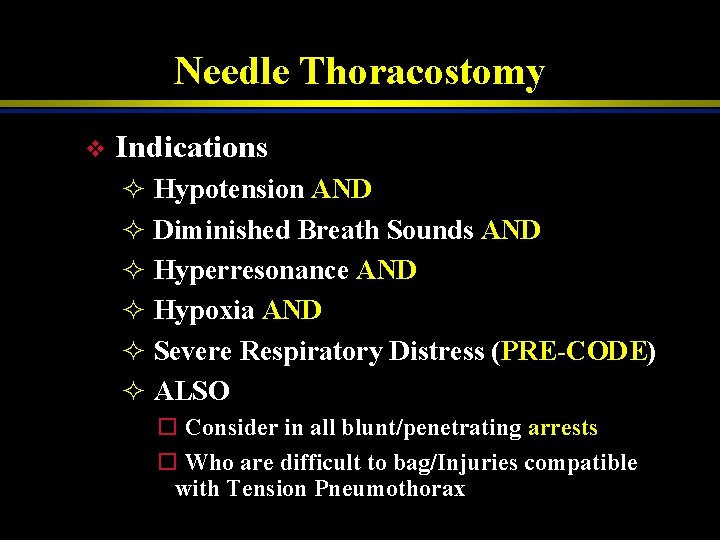
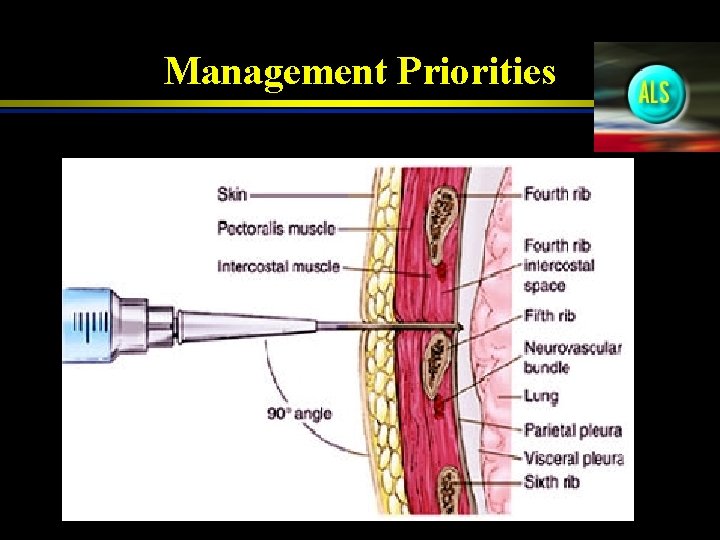
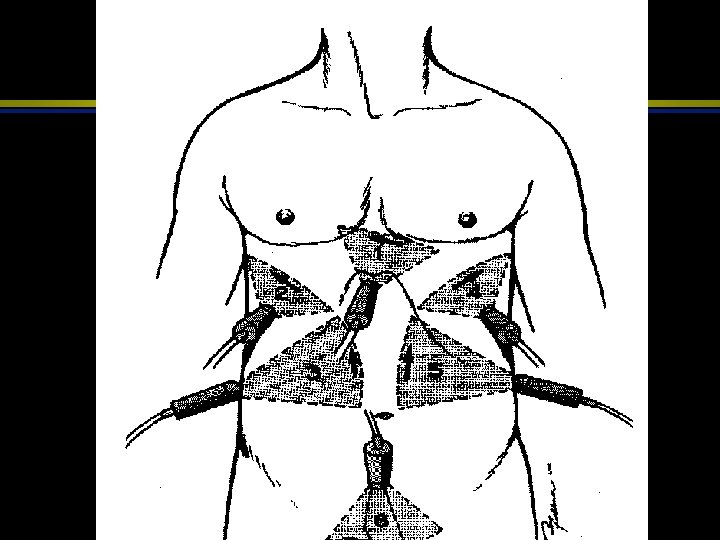
Needle Thoracostomy v Indications ² Hypotension AND ² Diminished Breath Sounds AND ² Hyperresonance AND ² Hypoxia AND ² Severe Respiratory Distress (PRE-CODE) ² ALSO o Consider in all blunt/penetrating arrests o Who are difficult to bag/Injuries compatible with Tension Pneumothorax
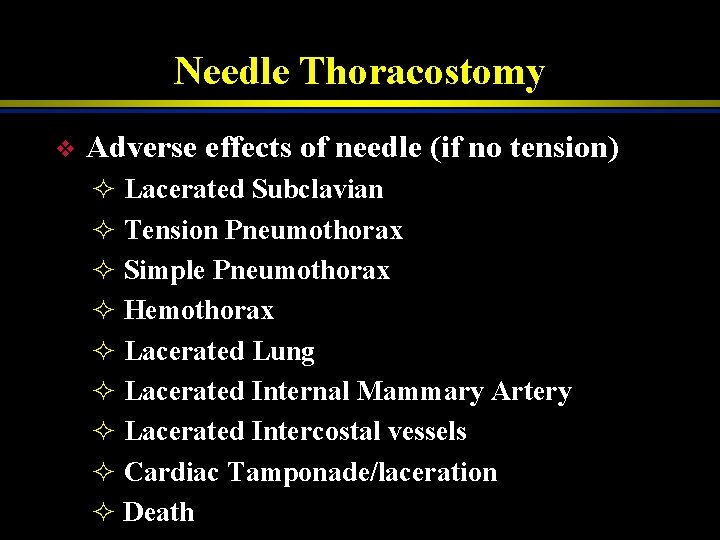
Needle Thoracostomy v Adverse effects of needle (if no tension) ² Lacerated Subclavian ² Tension Pneumothorax ² Simple Pneumothorax ² Hemothorax ² Lacerated Lung ² Lacerated Internal Mammary Artery ² Lacerated Intercostal vessels ² Cardiac Tamponade/laceration ² Death
Management Priorities
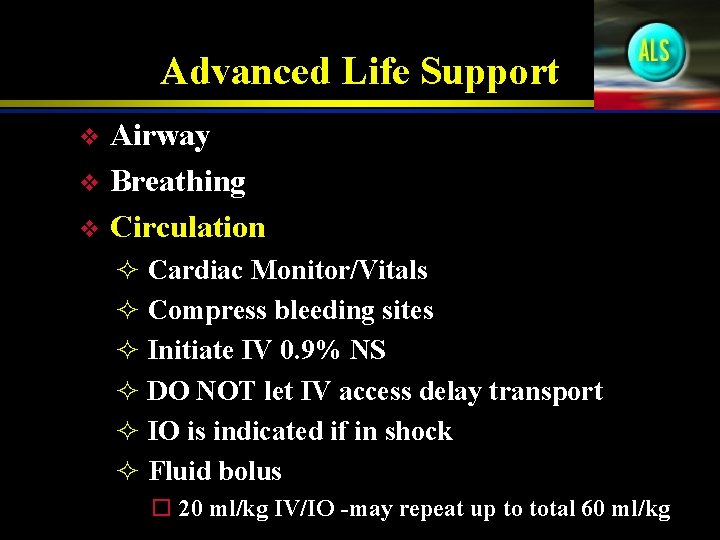
Advanced Life Support Airway v Breathing v Circulation v ² Cardiac Monitor/Vitals ² Compress bleeding sites ² Initiate IV 0. 9% NS ² DO NOT let IV access delay transport ² IO is indicated if in shock ² Fluid bolus o 20 ml/kg IV/IO -may repeat up to total 60 ml/kg
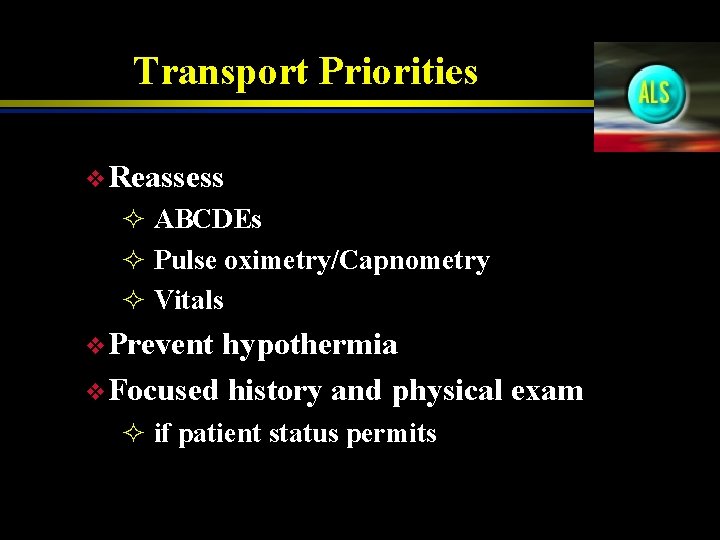
Transport Priorities v. Reassess ² ABCDEs ² Pulse oximetry/Capnometry ² Vitals v. Prevent hypothermia v. Focused history and physical exam ² if patient status permits
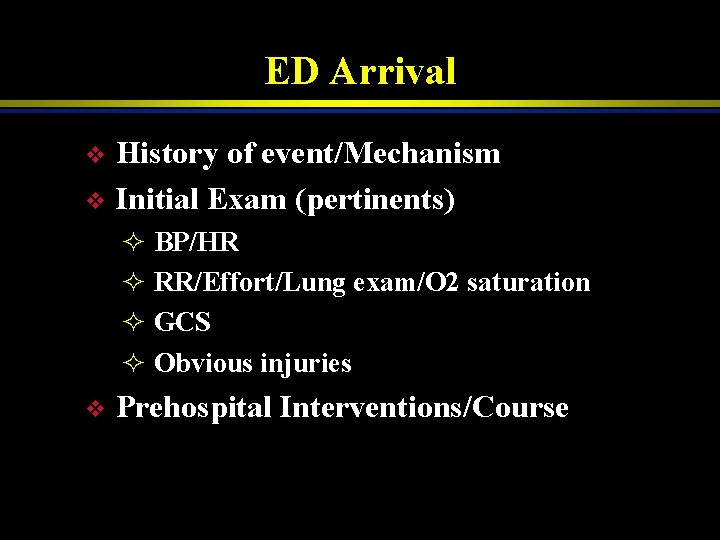
ED Arrival History of event/Mechanism v Initial Exam (pertinents) v ² BP/HR ² RR/Effort/Lung exam/O 2 saturation ² GCS ² Obvious injuries v Prehospital Interventions/Course
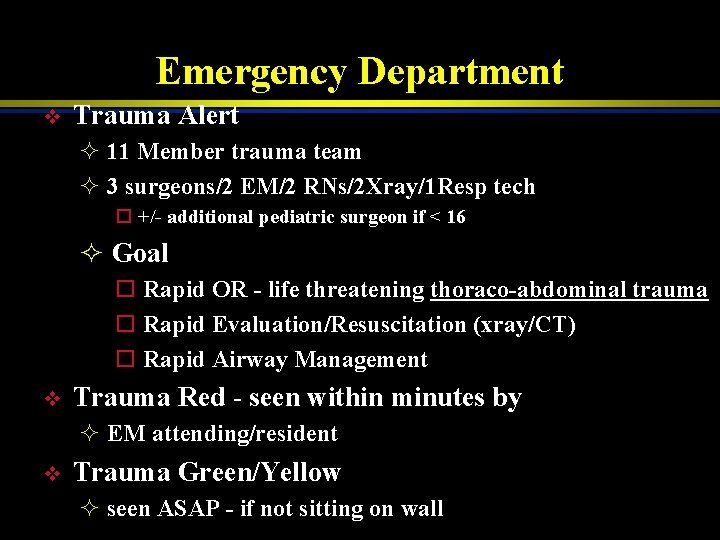
Emergency Department v Trauma Alert ² 11 Member trauma team ² 3 surgeons/2 EM/2 RNs/2 Xray/1 Resp tech o +/- additional pediatric surgeon if < 16 ² Goal o Rapid OR - life threatening thoraco-abdominal trauma o Rapid Evaluation/Resuscitation (xray/CT) o Rapid Airway Management v Trauma Red - seen within minutes by ² EM attending/resident v Trauma Green/Yellow ² seen ASAP - if not sitting on wall
Prehospital triage
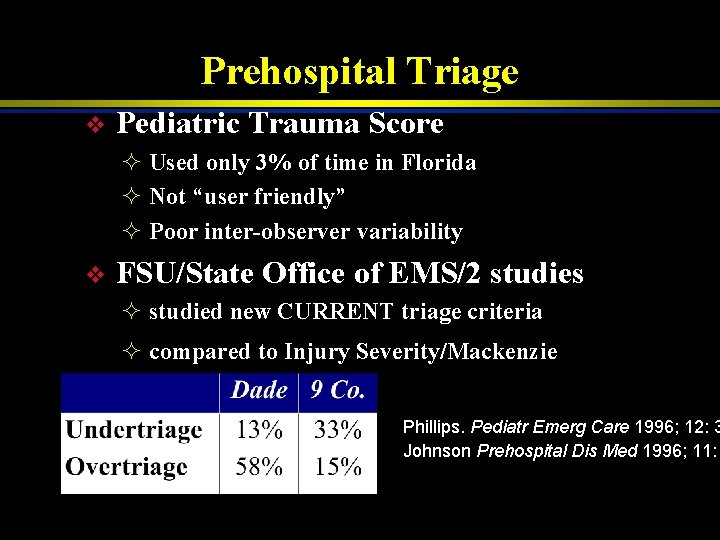
Prehospital Triage v Pediatric Trauma Score ² Used only 3% of time in Florida ² Not “user friendly” ² Poor inter-observer variability v FSU/State Office of EMS/2 studies ² studied new CURRENT triage criteria ² compared to Injury Severity/Mackenzie Phillips. Pediatr Emerg Care 1996; 12: 3 Johnson Prehospital Dis Med 1996; 11:
Trauma Alert Criteria (1 red/2 blue) • Judgement
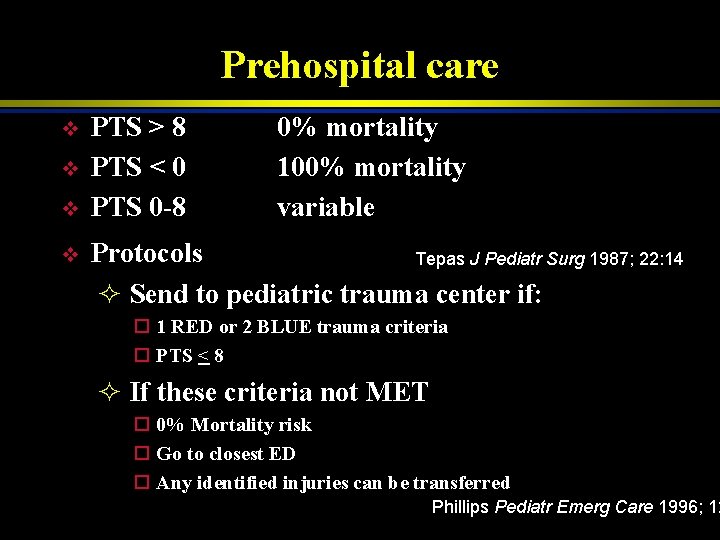
Prehospital care v v PTS > 8 PTS < 0 PTS 0 -8 0% mortality 100% mortality variable Protocols Tepas J Pediatr Surg 1987; 22: 14 ² Send to pediatric trauma center if: o 1 RED or 2 BLUE trauma criteria o PTS < 8 ² If these criteria not MET o 0% Mortality risk o Go to closest ED o Any identified injuries can be transferred Phillips Pediatr Emerg Care 1996; 12
Thank you!