
Pediatric Surge Triage and Decontamination of Children During


- Slides: 29
Pediatric Surge Triage and Decontamination of Children During an MCI Dr. Paula Fink Kocken, Children’s Minnesota | Ross A. Chávez, Hennepin EMS 2018
Objectives After viewing this module, the participant should be able to: 1. Summarize the unique characteristics of pediatric triage during a mass casualty incident (MCI). 2. Review Jump-Start triage. 3. Understand unique needs of children when being decontaminated.
Triage
Won’t triage be done by EMS at the scene? • A large volume of victims are often transported by police or private car. • Mass shooting examples: • Colorado movie theater • Orlando nightclub • Las Vegas music festival • Be prepared to triage! • Secondary triage.
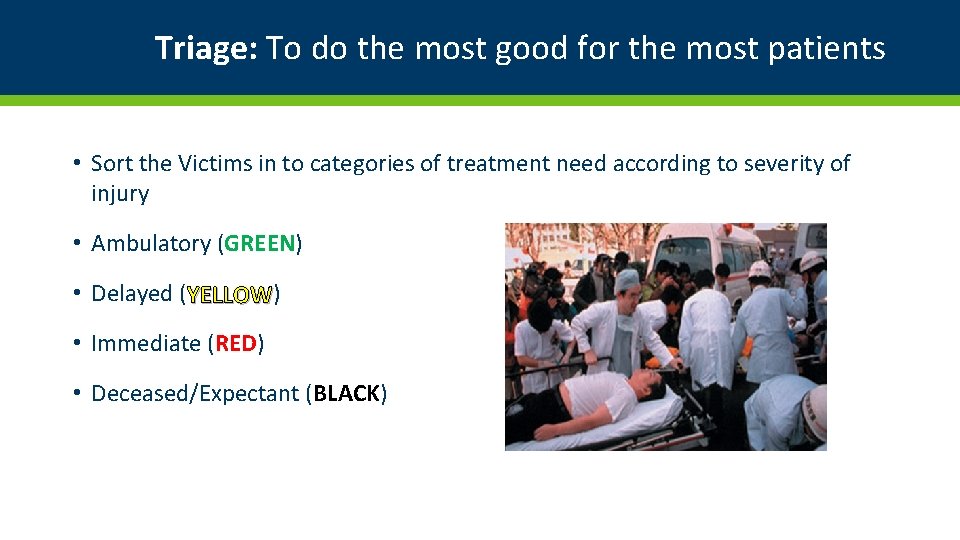
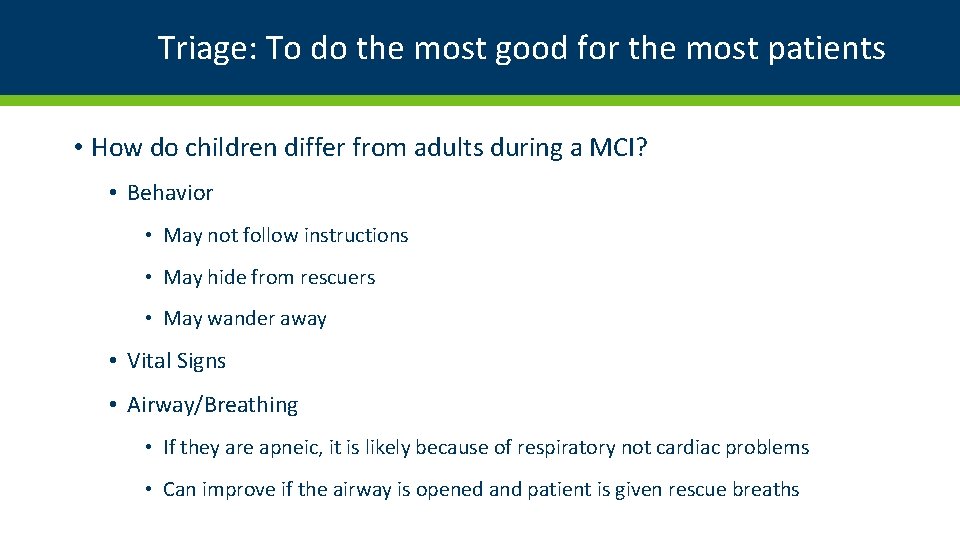
Triage: To do the most good for the most patients • Sort the Victims in to categories of treatment need according to severity of injury • Ambulatory (GREEN) • Delayed (YELLOW) YELLOW • Immediate (RED) • Deceased/Expectant (BLACK)
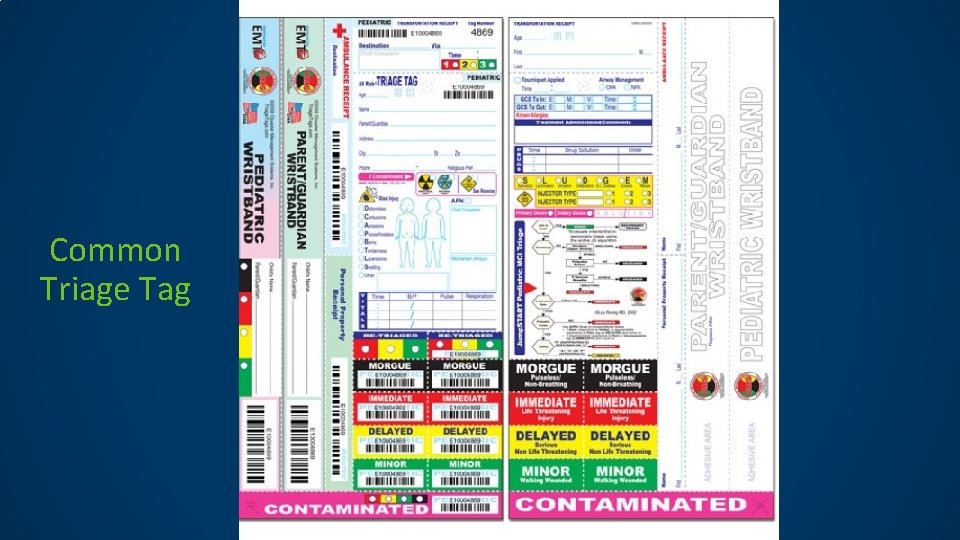
Common Triage Tag
Triage: To do the most good for the most patients • How do children differ from adults during a MCI? • Behavior • May not follow instructions • May hide from rescuers • May wander away • Vital Signs • Airway/Breathing • If they are apneic, it is likely because of respiratory not cardiac problems • Can improve if the airway is opened and patient is given rescue breaths
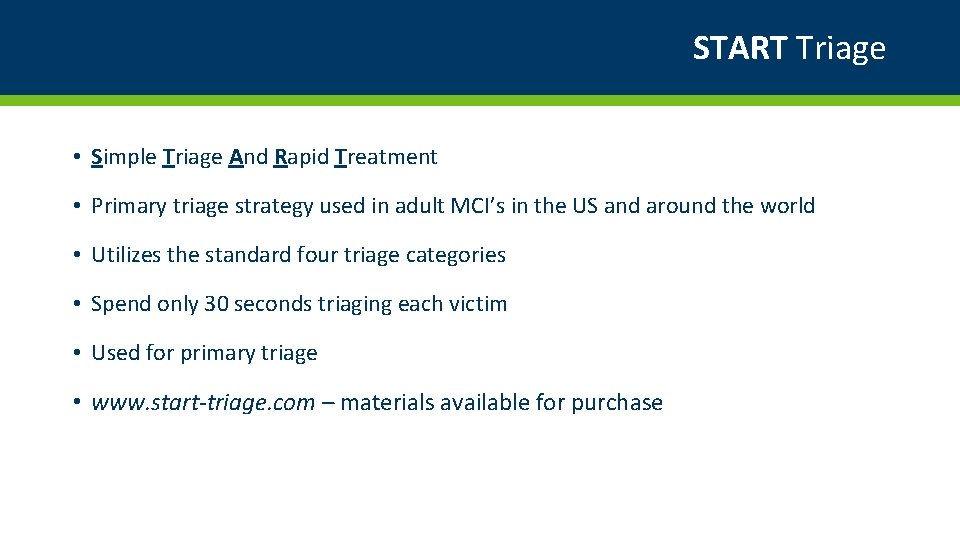
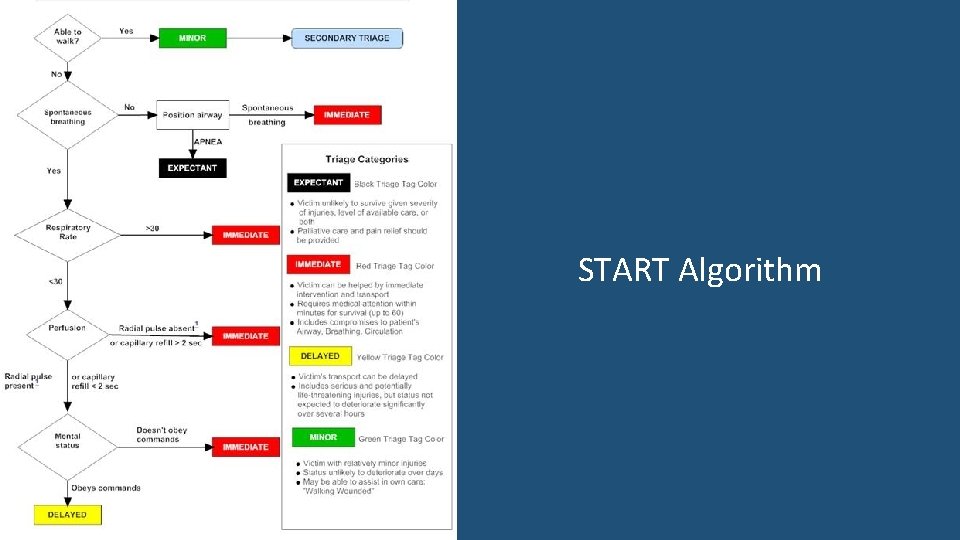
START Triage • Simple Triage And Rapid Treatment • Primary triage strategy used in adult MCI’s in the US and around the world • Utilizes the standard four triage categories • Spend only 30 seconds triaging each victim • Used for primary triage • www. start-triage. com – materials available for purchase
START Algorithm
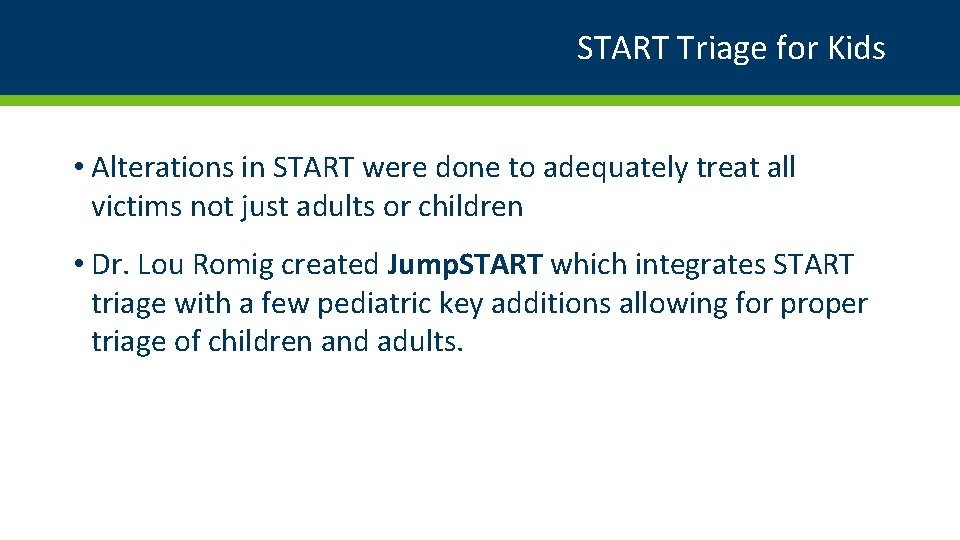
START Triage for Kids • Alterations in START were done to adequately treat all victims not just adults or children • Dr. Lou Romig created Jump. START which integrates START triage with a few pediatric key additions allowing for proper triage of children and adults.
Jump. START • Designed for ages 1 -8 years old • Can be used for infants • For the “tweens” 9 -14, the caveat is “if they look like a child, use Jump. START, if they look like an adult, use START” • www. jumpstarttriage. com
Jump. START • As with START, in Jump. START you are to spend only 30 seconds triaging each victim • As soon as you have the victim assigned a category, you move on to the next victim • Other caregivers should be assigned to either treat or transport the victim
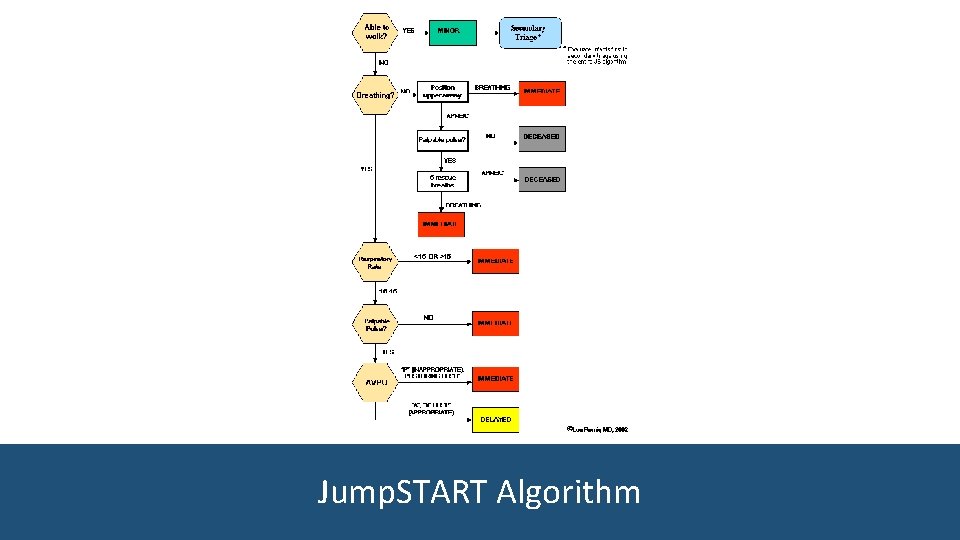
Jump. START Algorithm
Jump. START: Ambulatory? • Green Patients • All ambulatory patients • Children with Special Healthcare Needs who are chronically nonambulatory and minimally injured • Direct all Green patients to an area for secondary triage • Children Need: • Close monitoring • Diversions (toys, videos, etc. )
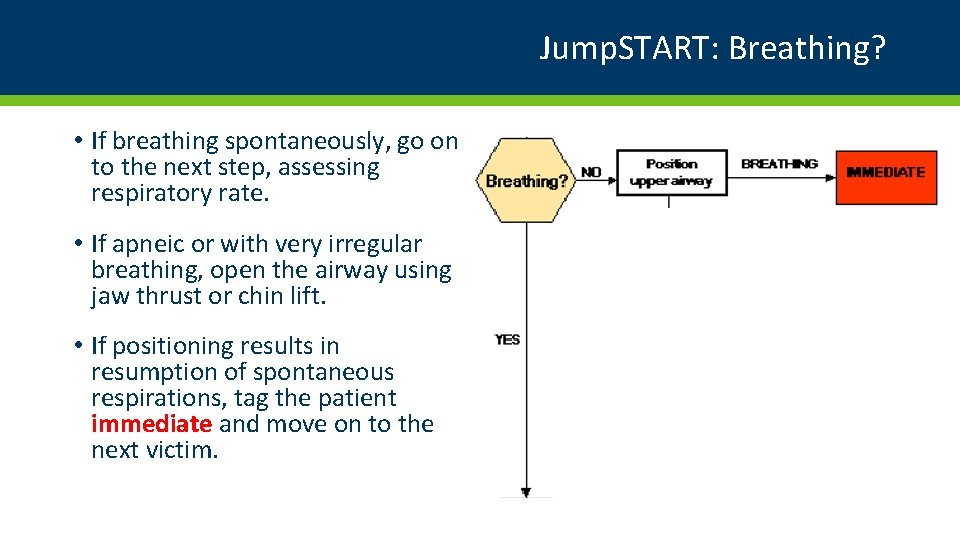
Jump. START: Breathing? • If breathing spontaneously, go on to the next step, assessing respiratory rate. • If apneic or with very irregular breathing, open the airway using jaw thrust or chin lift. • If positioning results in resumption of spontaneous respirations, tag the patient immediate and move on to the next victim.
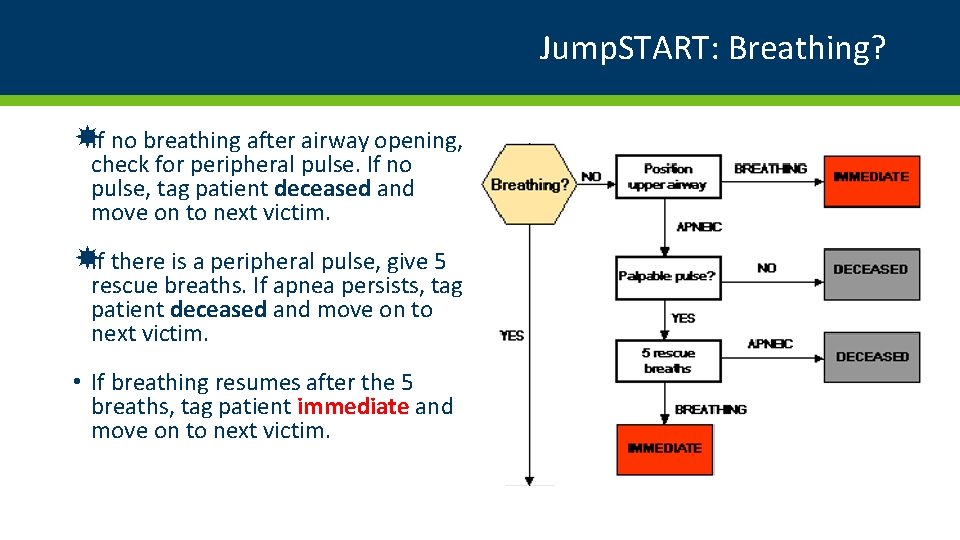
Jump. START: Breathing? If no breathing after airway opening, check for peripheral pulse. If no pulse, tag patient deceased and move on to next victim. If there is a peripheral pulse, give 5 rescue breaths. If apnea persists, tag patient deceased and move on to next victim. • If breathing resumes after the 5 breaths, tag patient immediate and move on to next victim.
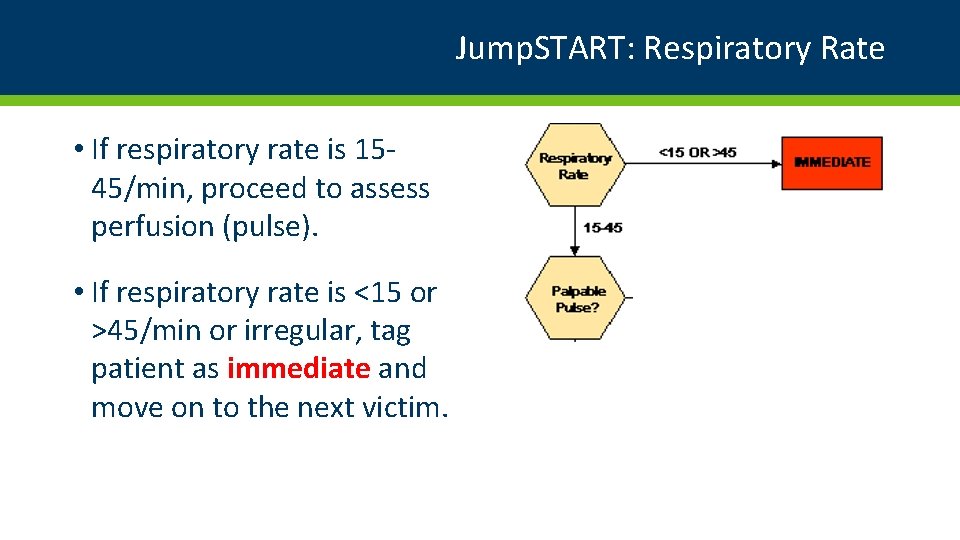
Jump. START: Respiratory Rate • If respiratory rate is 1545/min, proceed to assess perfusion (pulse). • If respiratory rate is <15 or >45/min or irregular, tag patient as immediate and move on to the next victim.
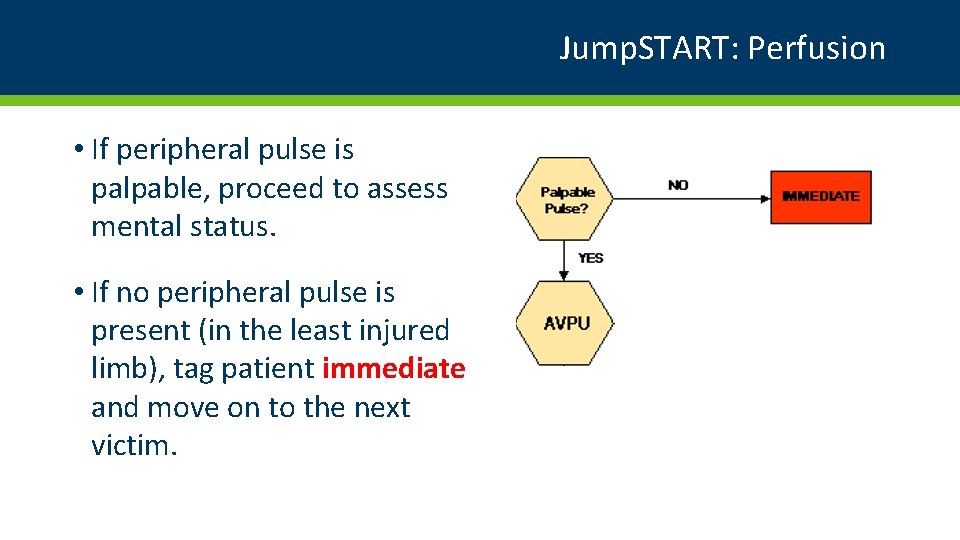
Jump. START: Perfusion • If peripheral pulse is palpable, proceed to assess mental status. • If no peripheral pulse is present (in the least injured limb), tag patient immediate and move on to the next victim.
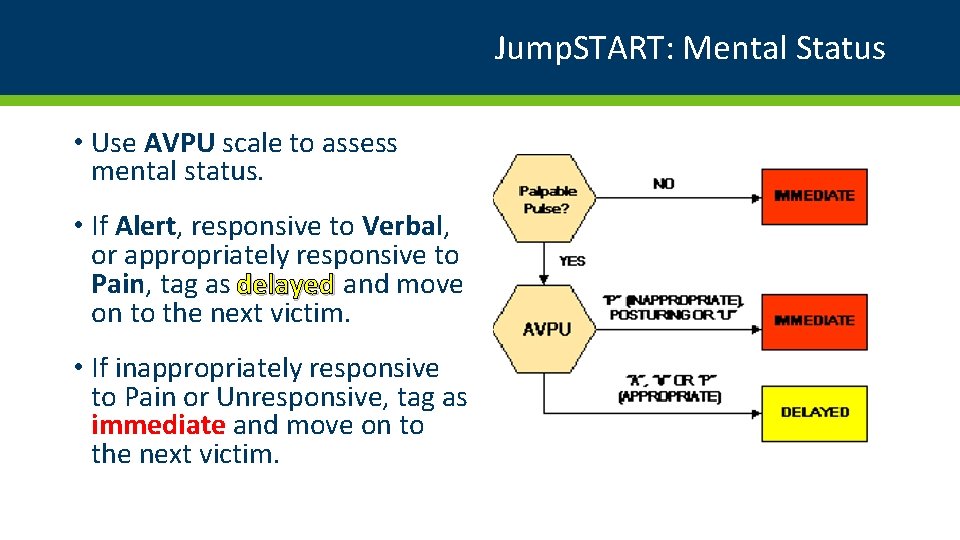
Jump. START: Mental Status • Use AVPU scale to assess mental status. • If Alert, responsive to Verbal, or appropriately responsive to Pain, tag as delayed and move on to the next victim. • If inappropriately responsive to Pain or Unresponsive, tag as immediate and move on to the next victim.
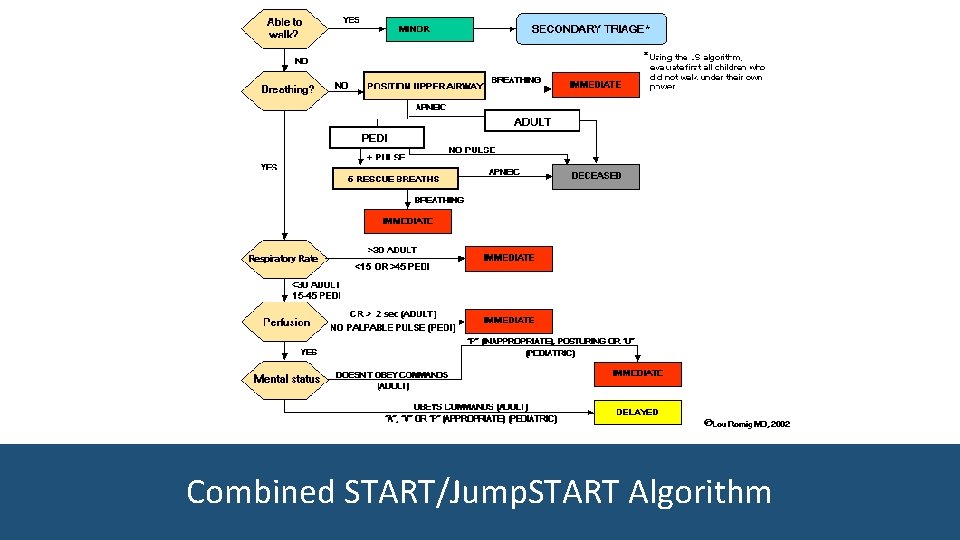
Combined START/Jump. START Algorithm
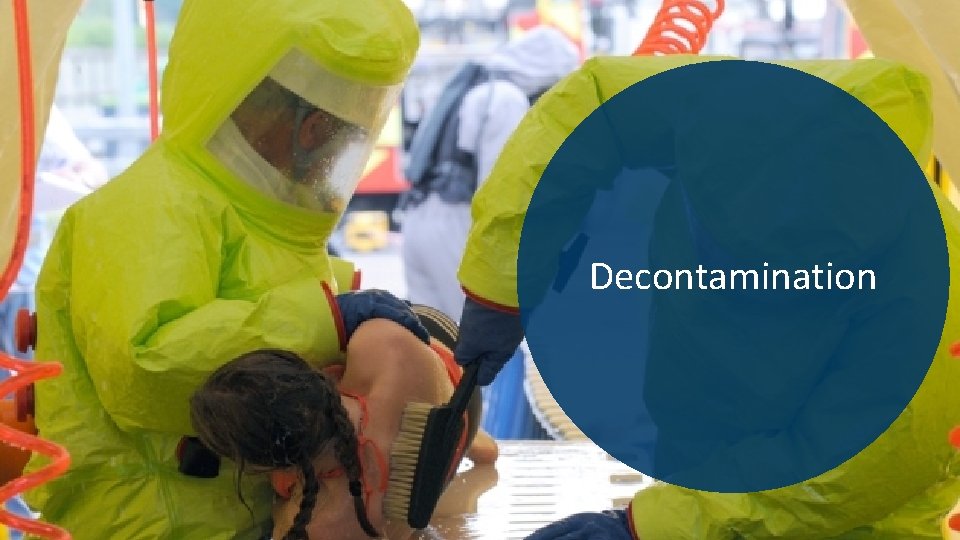
Decontamination
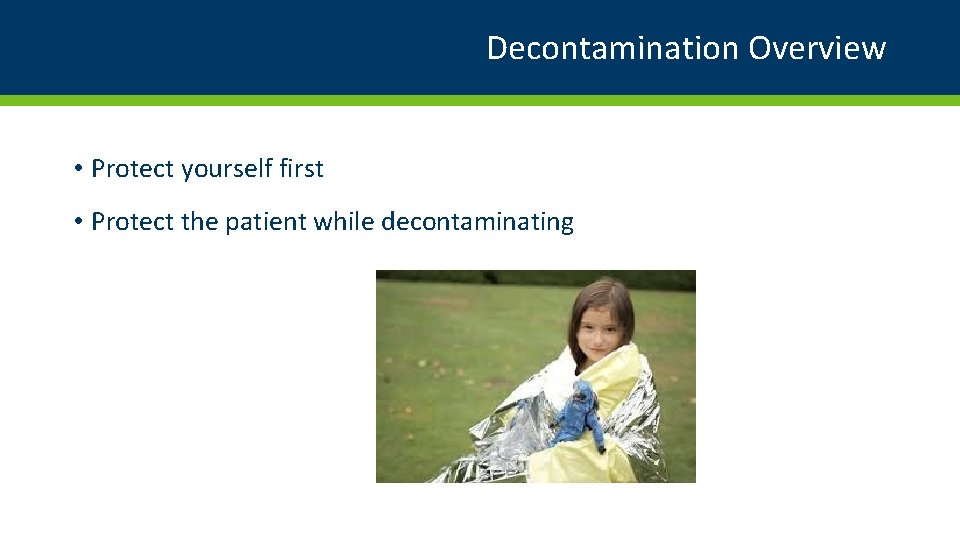
Decontamination Overview • Protect yourself first • Protect the patient while decontaminating
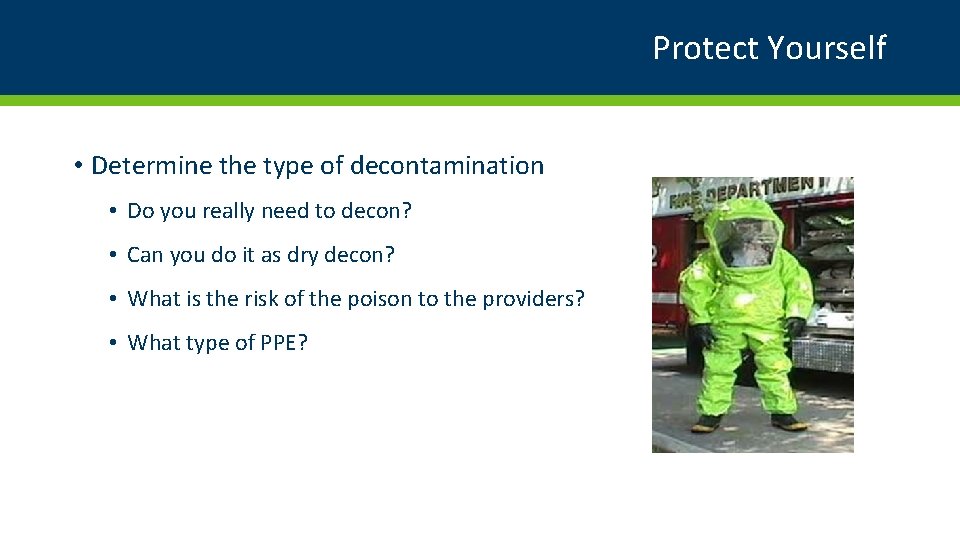
Protect Yourself • Determine the type of decontamination • Do you really need to decon? • Can you do it as dry decon? • What is the risk of the poison to the providers? • What type of PPE?
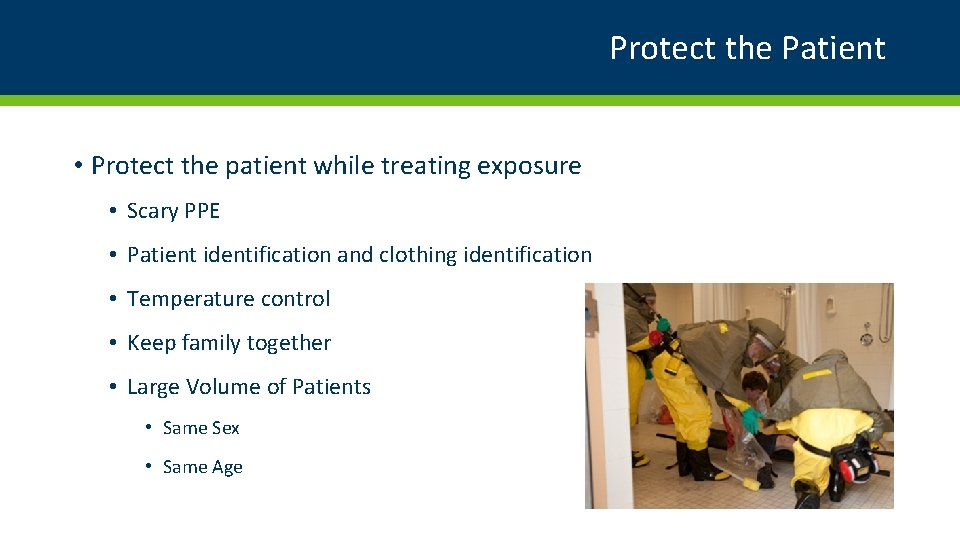
Protect the Patient • Protect the patient while treating exposure • Scary PPE • Patient identification and clothing identification • Temperature control • Keep family together • Large Volume of Patients • Same Sex • Same Age
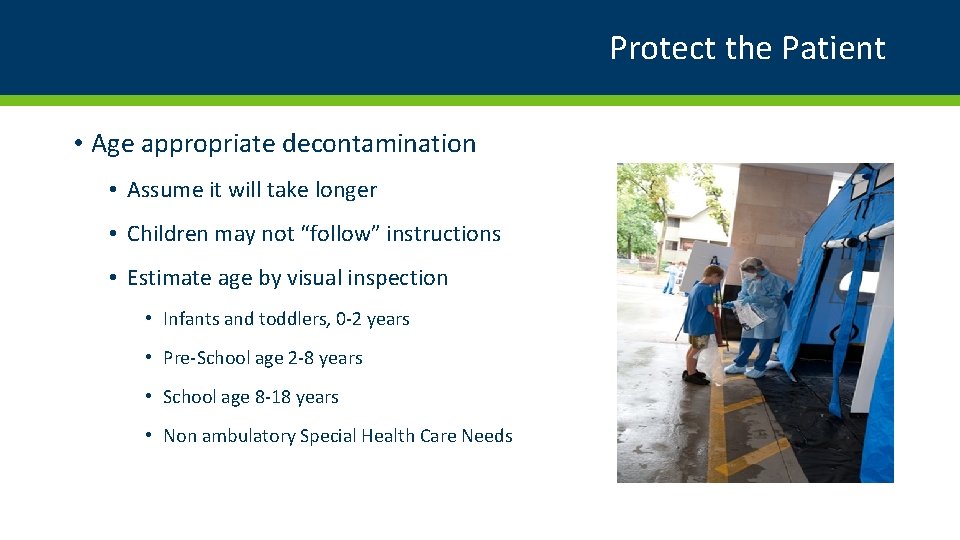
Protect the Patient • Age appropriate decontamination • Assume it will take longer • Children may not “follow” instructions • Estimate age by visual inspection • Infants and toddlers, 0 -2 years • Pre-School age 2 -8 years • School age 8 -18 years • Non ambulatory Special Health Care Needs
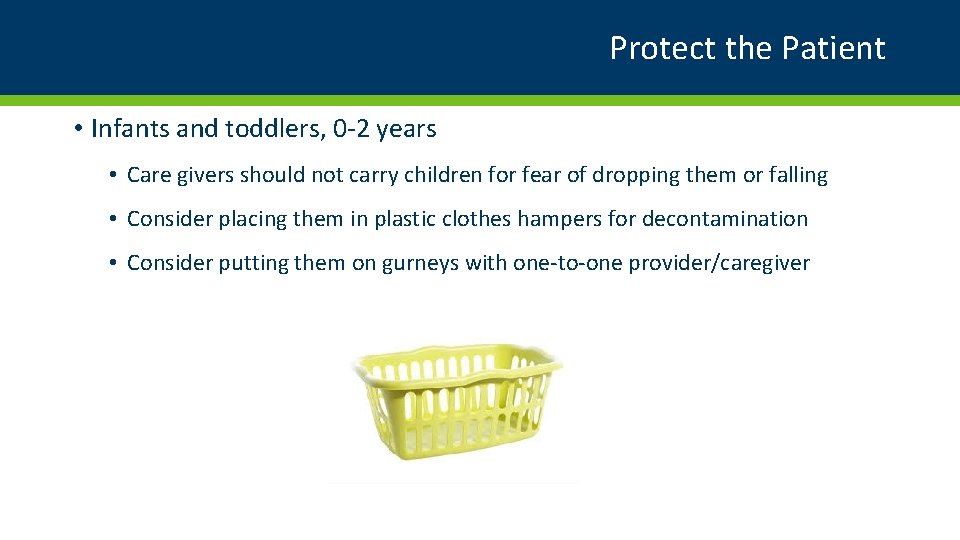
Protect the Patient • Infants and toddlers, 0 -2 years • Care givers should not carry children for fear of dropping them or falling • Consider placing them in plastic clothes hampers for decontamination • Consider putting them on gurneys with one-to-one provider/caregiver
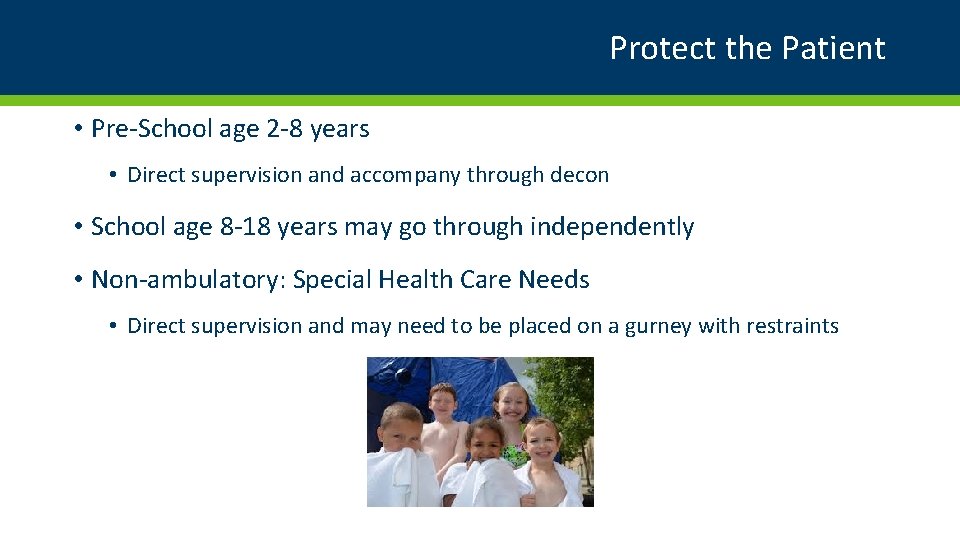
Protect the Patient • Pre-School age 2 -8 years • Direct supervision and accompany through decon • School age 8 -18 years may go through independently • Non-ambulatory: Special Health Care Needs • Direct supervision and may need to be placed on a gurney with restraints
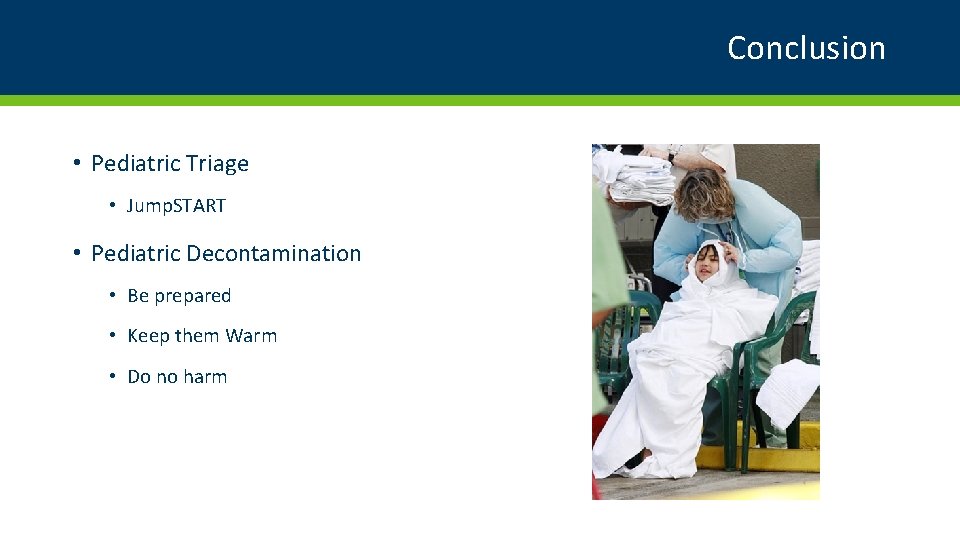
Conclusion • Pediatric Triage • Jump. START • Pediatric Decontamination • Be prepared • Keep them Warm • Do no harm
Thank you! Pediatric Surge Project Health. HPP@state. mn. us 651 -201 -5700