
Pediatric Overuse Syndromes of the Upper Extremity Its












- Slides: 41
Pediatric Overuse Syndromes of the Upper Extremity It’s not just for Adults anymore
James Bruno, MD • No Relevant Disclosu res
References • Difori. J. P. et al Overuse Injuries and Burnout in Youth Sports: A position Statement from the American Medical Society for Sports Medicine. Clinics in Sports Medicine. Vol 24, Number 1, Jan 2014, 3 -18 • Jayanthi N. A. et al Sports Specialization intensive training and the risk of Injury in the Young Athlete: a clinical case control study Amer Jour Sports Med 2015 Apr; 43(4): 794 -801 • Martus J E, What’s new in Pediatric Orthopedics. Journal Bone Joint Surg 2016 Feb 177; 98(4): 317 • Melamed M L, Low Levels of 25 hydroxy Vit D in the Pediatric Population: Preveleance and Clinical Outcomes. Pediatric Health 2010 Feb : 4(1) 8997 • Paz G H et al Upper Extremity Overuse in Pediatric Athletes. DOI: http: //dx. doi. org/10. 1016/j. clinimag. 2015. 07. 028
The Why of Youth Sports • • • Improved Physical well being Improved Emotional well being Foster a love of Activity Improved Self Esteem Socialization and avoidance of isolation at a time when the young person is developing interpersonal skills
The Why of Youth Sports • The positives of youth sports can get lost in the need for competitive success • However, not all overuse injuries are the result of poor supervision. Usually the injuries are the result of an imbalance between accelerated growth and therefore increased vulnerability, without commensurate reduction in repetitive motions.
Overuse Injury Defined • An injury to the Musculoskeletal system due to repetitive sub-maximal loading and rest intervals that are inadequate for healing of the micro-trauma or the structural adaptation of the structure • Fatigue failure
How Big is the problem? • The incidence of overuse injuries is unknown, as it is under reported. • It is estimated 60 million 6 to 18 year olds participate in organized sports
Risk Factors • Prior injury is a strong predictor of future injury • A sudden growth spurt
Risk Factors • Specialization in a given sport at younger and younger age • More common to play or train for one sport, year round • Participants now more often play on more than one team in a given season • If that isn’t enough exposure, some youngsters are getting private lessons and training in addition to time at regular practice
Risk Factors • Poor fitting equipment or poor quality equipment such as shoes or pads • Racket grip size, racket string tension
Risk Factors • Parents and coaches are not trained to judge sports and conditioning readiness
Causation • Single sport training can lead to unchanging stress to a specific body area • Inadequate rest and recovery • Due to increased competitiveness, young individuals may be encouraged to “play through” pain and fatigue
The Problem of Overuse injuries • Some overuse injuries result in permanent joint changes that are not reversible. • Theses changes can result in earlier surgery • Theses changes can lead to premature degenerative arthritis. • The sport is not fun if played in pain • Injuries reduce competitiveness and participation
Mini-Me Not • The Child is not a Little Adult or adult in miniature
Uniqueness of the growing Body • The bones grow first • The increased length causes increased tension across ligaments • The increased length increases the pull of muscles • Growth plates are weaker than the tendons and ligaments, and can fail with overload
Uniqueness of the growing Body • When the Physis is in a rapid phase of growth, it is less resistant to tension, compression and shear • The physis is less mineralized • Joints may be hyper-mobile • Protective muscle mass is less
Human Growth Plate
Symptoms of a Pediatric Overuse Injury • • Increased Pain with activity Pain is not related to a fall or trauma Decreased interest in practice or participation Changed technique or form
Physical Exam findings • • Tenderness over affected anatomic structure Swelling Warmth Limited Range of Motion
Prevention rule of thumb • Risk of serious limiting injury is two times greater, if hours of practice and participation per week is greater than the athletes age in years
Prevention: pro-active avoidance strategies • Preseason conditioning focus on flexibility, core strength, proper technique • Thoughtful Pre-season Evaluation to identify prior pattern of injury and apply thoughtful relevant modulation of activity • Thoughtful Pre-season assessment of sports readiness
Prevention • Diversify sports participation especially early to mid adolescent years. Sports specialization is an independent risk factor for overuse injuries • Limit number of teams per season • If a patients is having trouble with overuse syndromes, take a break from organized sports • Coaches should consider practice breaks with a different game for example baseball players have a brief soccer scrimmage, or swimmers play water polo
Prevention • Resistance Training building structural strength • Adequate dietary Calcium and Vit D • Identify female athlete triad Low energy, eating disorder, menstruation less than 4 time per year, low bone mineral density. • Low bone mass is associated with BMI < 17. 5 kg/m(2)
Prevention • Adequate dietary or supplemental Vit D, and dietary calcium intake. Many of the overuse problems are at the growth plate • 61% of pediatric population thought to have Vit D levels <29 ng/ml • Risk factors non-white, obese, urban dweller • Increased use sunscreens, cold weather clothing, milk drinking substitution with “power” drinks all decrease Vit D intake or production
Treatment of Overuse: Adequate Recovery and Repair • Limiting Weekly Participation • Limiting Yearly participation • Limit Sports Specific Movement (change position or sport) • Monitor Work Load especially during a growth Spurt
Case presentation • 13 yo male presents with medial sided elbow pain. He is a football quarterback. • Exam remarkable for medial sided elbow tenderness, pain on valgus stress.
Little leaguers Elbow aka Pitcher’s Elbow • Medial Epicondyle Apophysitis • Cause: repetitive Throwing • May never fuse
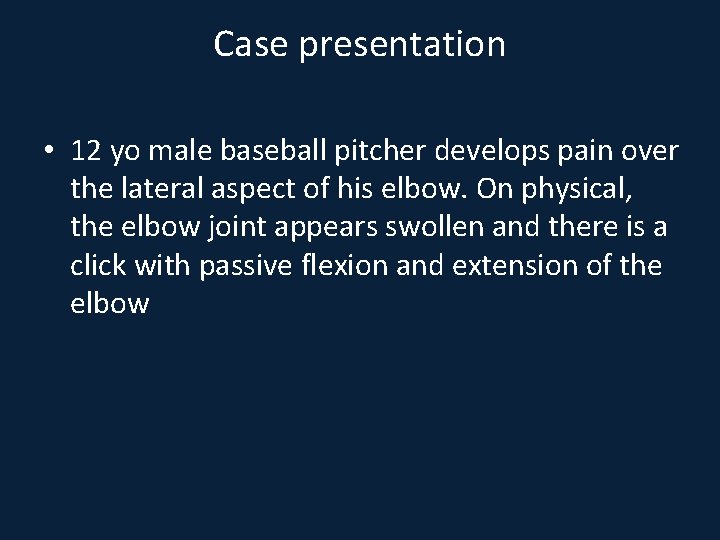
Case presentation • 12 yo male baseball pitcher develops pain over the lateral aspect of his elbow. On physical, the elbow joint appears swollen and there is a click with passive flexion and extension of the elbow
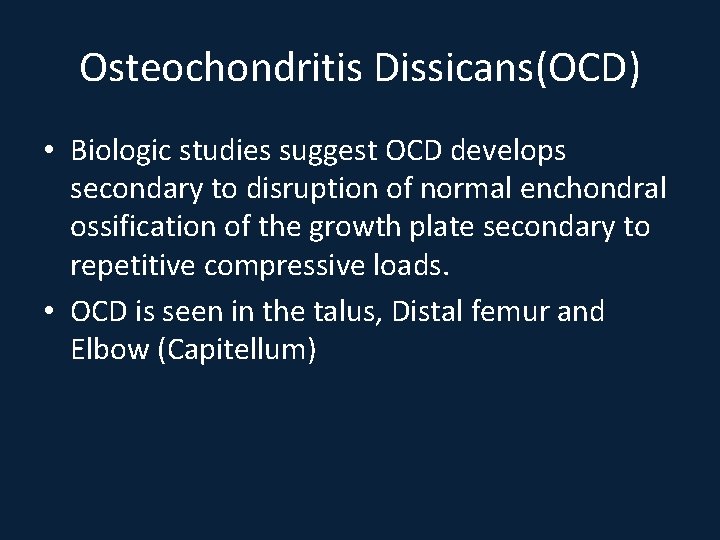
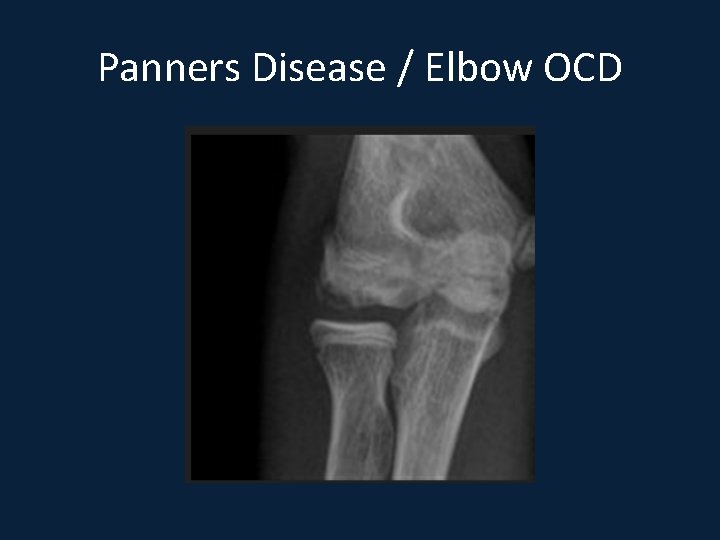
Osteochondritis Dissicans(OCD) • Biologic studies suggest OCD develops secondary to disruption of normal enchondral ossification of the growth plate secondary to repetitive compressive loads. • OCD is seen in the talus, Distal femur and Elbow (Capitellum)
Panners Disease / Elbow OCD
Case presentation • 11 yo slim female gymnast presents with 4 weeks of vague wrist pain to the radial side. No major trauma. Pain is improved with rest, and taping, but resumption of gymnastics increases the discomfort. Exam show mild, barely detectable swelling and vague diffuse tenderness. X-rays read as negative.
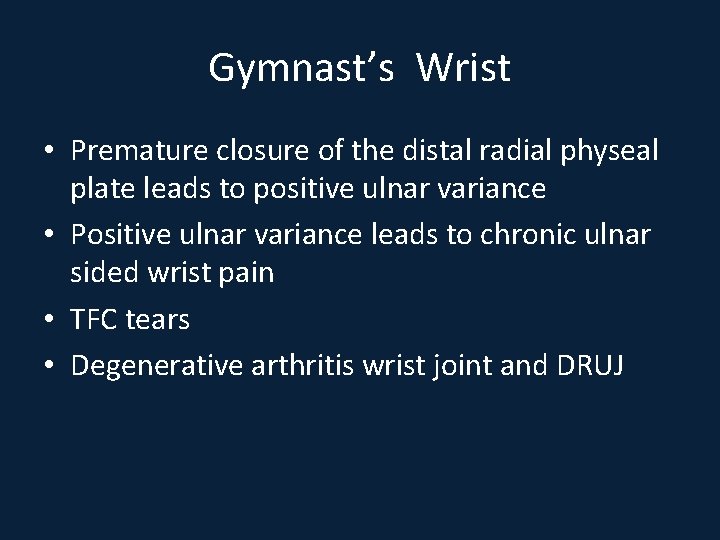
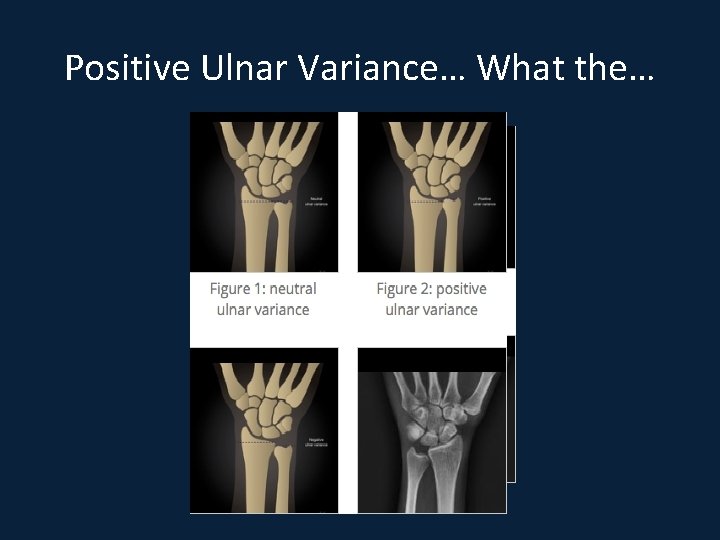
Gymnast’s Wrist • Premature closure of the distal radial physeal plate leads to positive ulnar variance • Positive ulnar variance leads to chronic ulnar sided wrist pain • TFC tears • Degenerative arthritis wrist joint and DRUJ
Gymnast’s Wrist • Repetitive stress and load bearing on the distal radial physis decreases blood flow to the physis, and leads to premature growth plate closure
Gymnast’s Wrist • Dose response curve: • Increased Intensity of training leads to increased radial-ulnar length discrepency
Gymnasts Wrist Treatment • 4 weeks no load bearing activity. • If there are x-ray changes, it may require 3 -4 months protection and or casting • Note the importance of early recognition
Positive Ulnar Variance… What the…
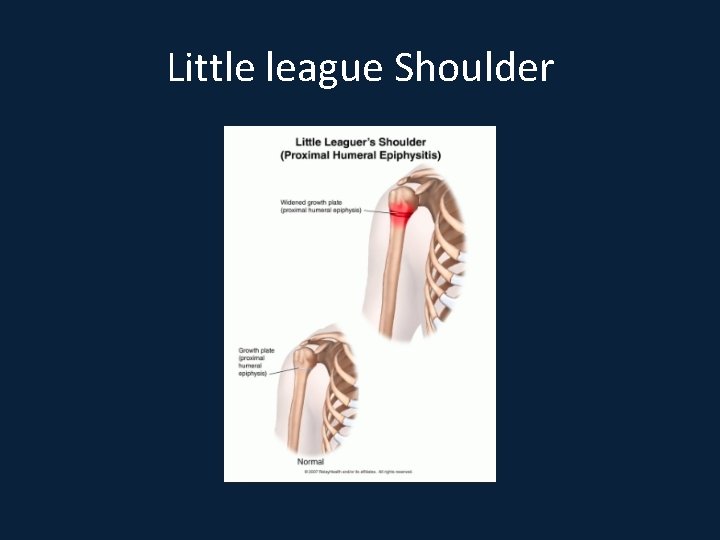
Case presentation • 14 yo male, avid tennis player with vague left shoulder pain, his dominant side. Pain increased with overhead activity, and the shoulder feels weak. Exam is remarkable for mild proximal humeral tenderness and subtle decrease in ROM, especially IR. X-rays show subtle proximal humeral physeal widening
Little league Shoulder
Treatment Little league shoulder or Proximal humeral epiphysiolysis • Rest • Change positions • Risk fracture through growth plate
Other Pediatric Sports overuse conditions (AKA , sorry we have run out of time) • Psychological Burnout • Thoracic outlet syndrome or effort thrombosis • Stress fractures
Thank You James Bruno, MD