
Pediatric Neurology Dr Kristen Johnson Dr Adam Oster








- Slides: 63
Pediatric Neurology Dr. Kristen Johnson Dr. Adam Oster April 14, 2011
In 60 minutes…. What we will try to cover. What we will not. • Seizures • Common seizure mimics • Hydrocephalus and VP shunts • A few other interesting cases…. • • Headache Stroke Intracranial mass lesions Lower motor neuron weakness
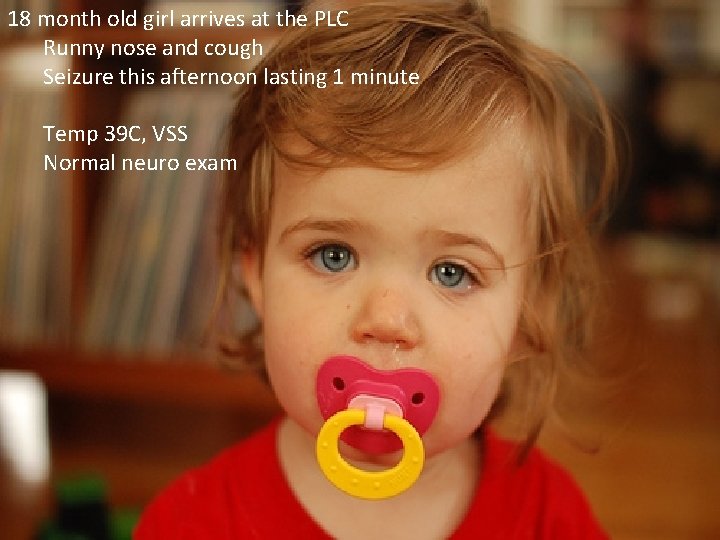
18 month old girl arrives at the PLC Runny nose and cough Seizure this afternoon lasting 1 minute Temp 39 C, VSS Normal neuro exam
DIAGNOSIS?
What are the criteria to diagnose a febrile seizure? ✓ 6 -60 months of age ✓No evidence of intracranial infection ✓Neurologically normal child ✓No history of afebrile seizures Simple febrile Complex febrile • < 15 minutes in duration • Generalized • Occur once in a 24 hr period • Prolonged • Focal • Occur more than once in a 24 hour period
WHAT INVESTIGATIONS WOULD YOU LIKE TO ORDER?
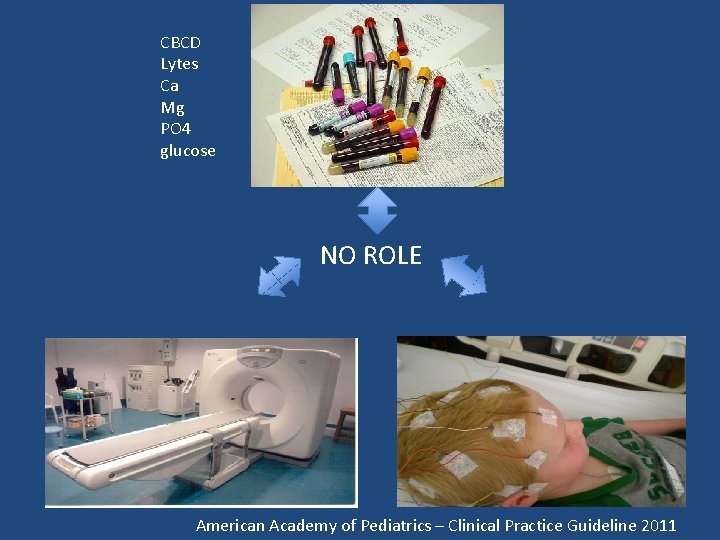
CBCD Lytes Ca Mg PO 4 glucose NO ROLE American Academy of Pediatrics – Clinical Practice Guideline 2011
. A lumbar puncture should be performed if: A. signs and symptoms of meningitis B. in an infant between 6 -12 mo who is considered deficient in Hib or S. pneumo immunizations (option) C. in a child who has been pretreated with antibiotics (option) American Academy of Pediatrics – Clinical Practice Guideline 2011
THE PARENTS NOW HAVE A LIST OF QUESTIONS FOR YOU….
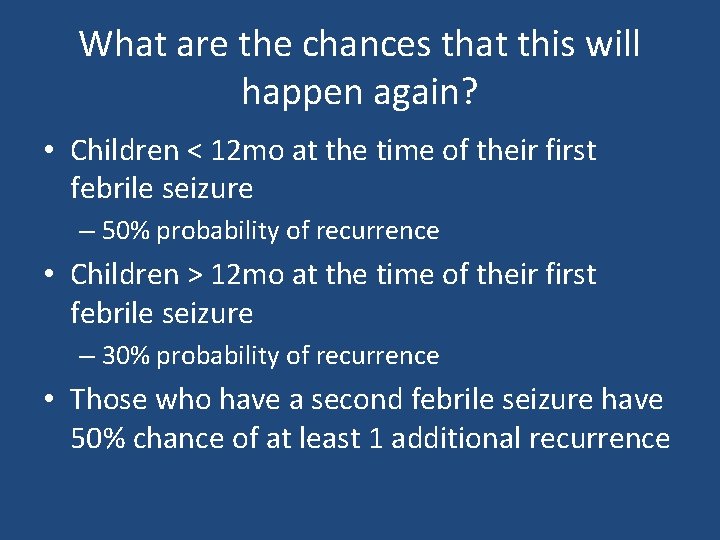
What are the chances that this will happen again? • Children < 12 mo at the time of their first febrile seizure – 50% probability of recurrence • Children > 12 mo at the time of their first febrile seizure – 30% probability of recurrence • Those who have a second febrile seizure have 50% chance of at least 1 additional recurrence
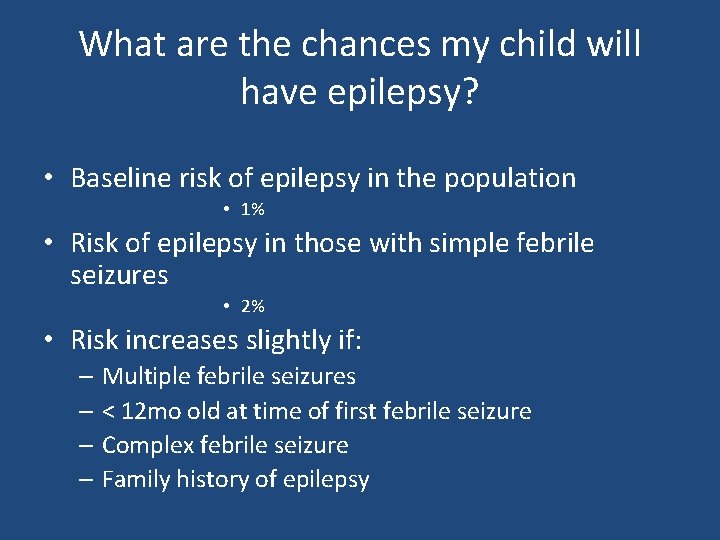
What are the chances my child will have epilepsy? • Baseline risk of epilepsy in the population • 1% • Risk of epilepsy in those with simple febrile seizures • 2% • Risk increases slightly if: – Multiple febrile seizures – < 12 mo old at time of first febrile seizure – Complex febrile seizure – Family history of epilepsy
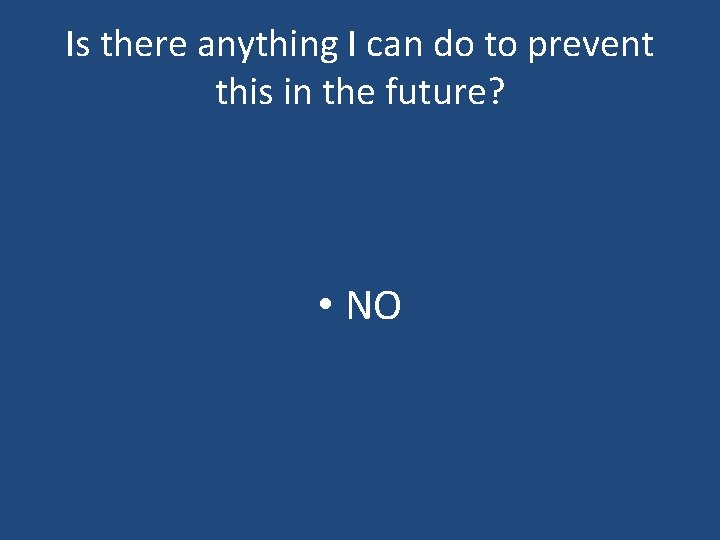
Is there anything I can do to prevent this in the future? • NO
American Academy of Pediatrics – Clinical Practice Guideline 2008 • 1. Neither continuous or intermittent anticonvulsant therapy is recommended. – Adverse effects outweigh benefits • 2. Antipyretics do not reduce the recurrence risk and are therefore not recommended.
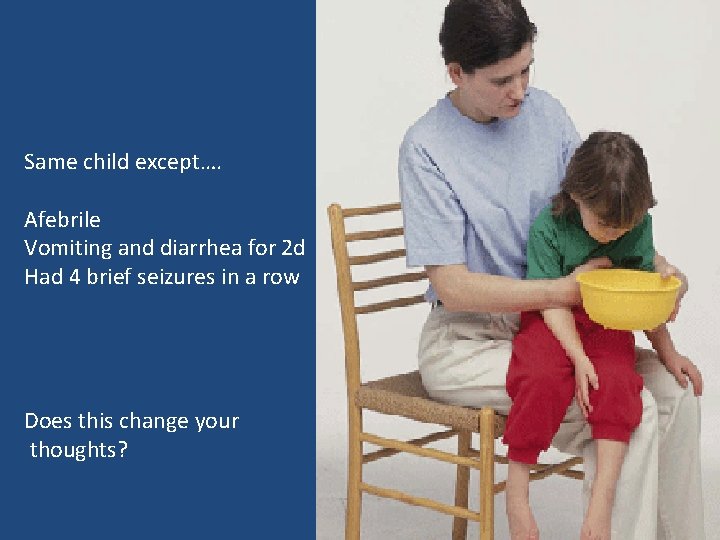
Same child except…. Afebrile Vomiting and diarrhea for 2 d Had 4 brief seizures in a row Does this change your thoughts?
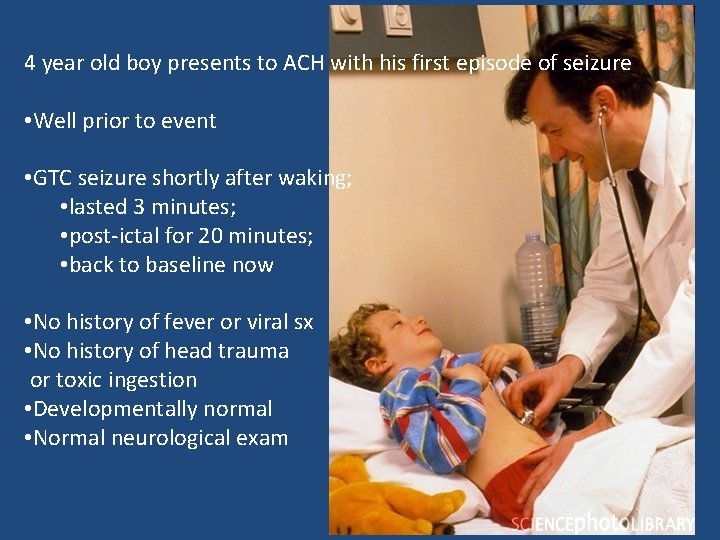
4 year old boy presents to ACH with his first episode of seizure • Well prior to event • GTC seizure shortly after waking; • lasted 3 minutes; • post-ictal for 20 minutes; • back to baseline now • No history of fever or viral sx • No history of head trauma or toxic ingestion • Developmentally normal • Normal neurological exam
1 st unprovoked seizure… WHAT INVESTIGATIONS WOULD YOU LIKE TO ORDER?
• 1. Lab tests should be ordered based on individual clinical circumstances – i. e. Vomiting, diarrhea, dehydration – Higher incidence of abnormalities (hypo. Na+) in < 6 mo • 2. Consider toxicology screening if clinical suspicion • 3. LP is of limited value in absence of clinical signs and symptoms of meningitis/encephalitis – Consider in < 6 mo age group American Academy of Neurology – Practice Parameter 2000
• 4. EEG should be part of standard workup – Helps determine seizure type, epilepsy syndromes, risk of recurrence – Recurrence rate of 54% with abnormal EEG vs. 25% with normal EEG • 5. If neuroimaging is obtained, MRI is preferred modality – Emergent neuroimaging • postictal focal deficit (Todd’s paresis) or slow return to baseline – Nonurgent MRI should be considered in • Children < 1 yo • Those with focal seizures • Those with EEG not in keeping with a benign epilepsy of childhood • Those with developmental delays American Academy of Neurology – Practice Parameter 2000
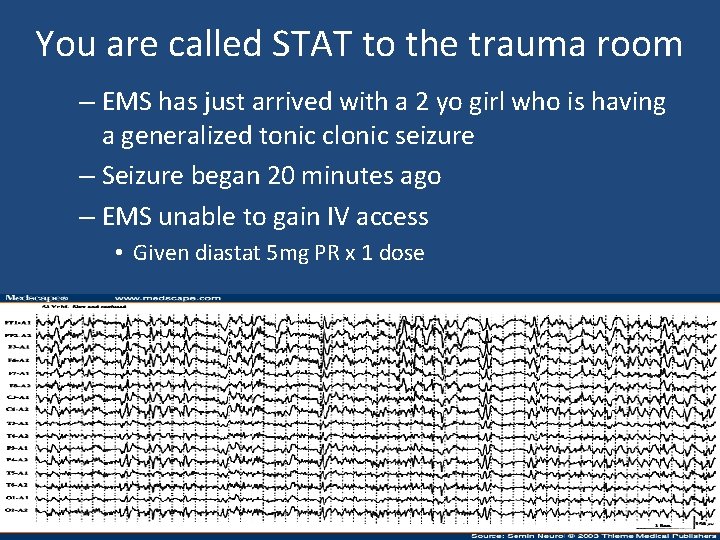
You are called STAT to the trauma room – EMS has just arrived with a 2 yo girl who is having a generalized tonic clonic seizure – Seizure began 20 minutes ago – EMS unable to gain IV access • Given diastat 5 mg PR x 1 dose
The nurses cannot get an IV… what are your options? – Rectal diazepam 0. 5 mg/kg – Buccal midazolam 0. 5 mg/kg – Intranasal midazolam 0. 2 mg/kg – Intramuscular midazolam 0. 2 mg/kg – Intranasal lorazepam 0. 1 mg/kg – Sublingual lorazepam 0. 1 mg/kg
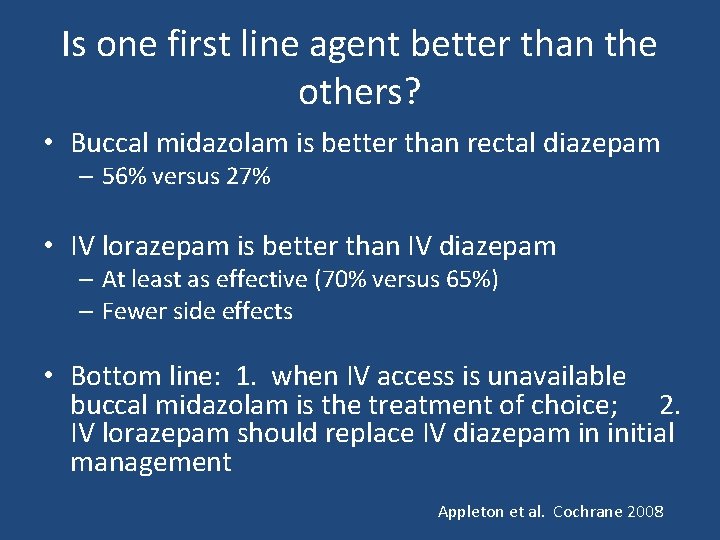
Is one first line agent better than the others? • Buccal midazolam is better than rectal diazepam – 56% versus 27% • IV lorazepam is better than IV diazepam – At least as effective (70% versus 65%) – Fewer side effects • Bottom line: 1. when IV access is unavailable buccal midazolam is the treatment of choice; 2. IV lorazepam should replace IV diazepam in initial management Appleton et al. Cochrane 2008
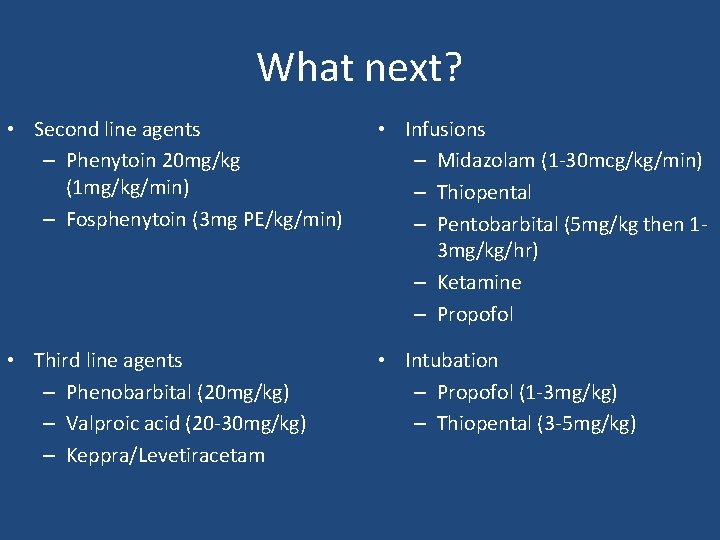
What next? • Second line agents – Phenytoin 20 mg/kg (1 mg/kg/min) – Fosphenytoin (3 mg PE/kg/min) • Infusions – Midazolam (1 -30 mcg/kg/min) – Thiopental – Pentobarbital (5 mg/kg then 13 mg/kg/hr) – Ketamine – Propofol • Third line agents – Phenobarbital (20 mg/kg) – Valproic acid (20 -30 mg/kg) – Keppra/Levetiracetam • Intubation – Propofol (1 -3 mg/kg) – Thiopental (3 -5 mg/kg)
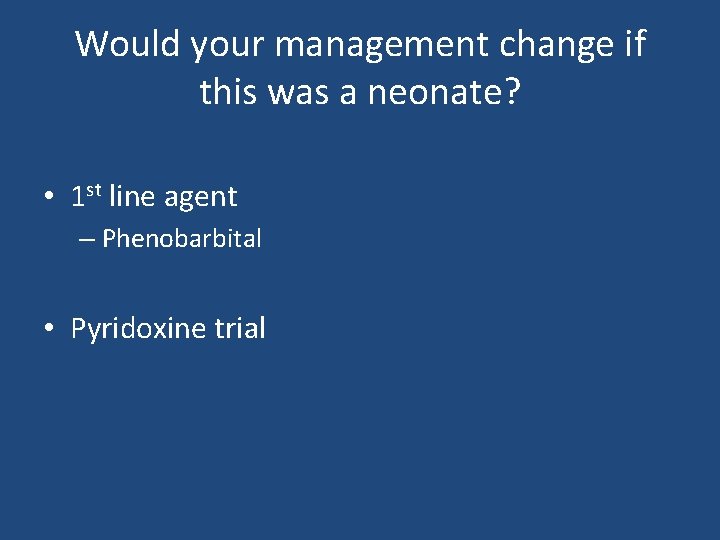
Would your management change if this was a neonate? • 1 st line agent – Phenobarbital • Pyridoxine trial
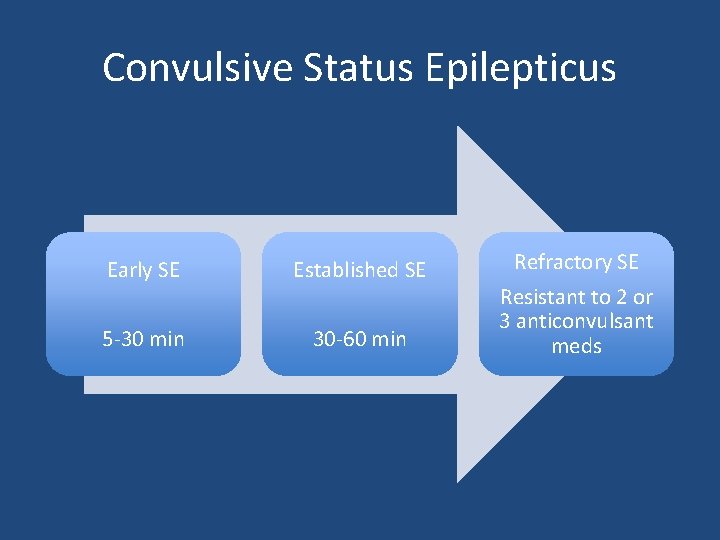
Convulsive Status Epilepticus Early SE Established SE 5 -30 min 30 -60 min Refractory SE Resistant to 2 or 3 anticonvulsant meds
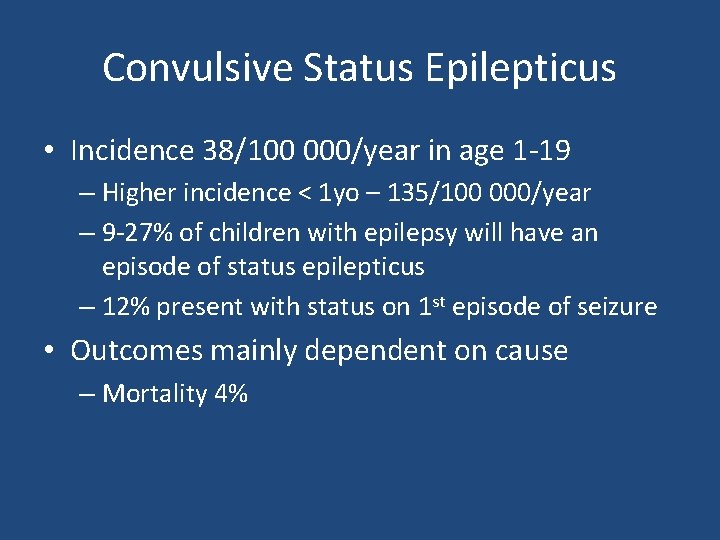
Convulsive Status Epilepticus • Incidence 38/100 000/year in age 1 -19 – Higher incidence < 1 yo – 135/100 000/year – 9 -27% of children with epilepsy will have an episode of status epilepticus – 12% present with status on 1 st episode of seizure • Outcomes mainly dependent on cause – Mortality 4%
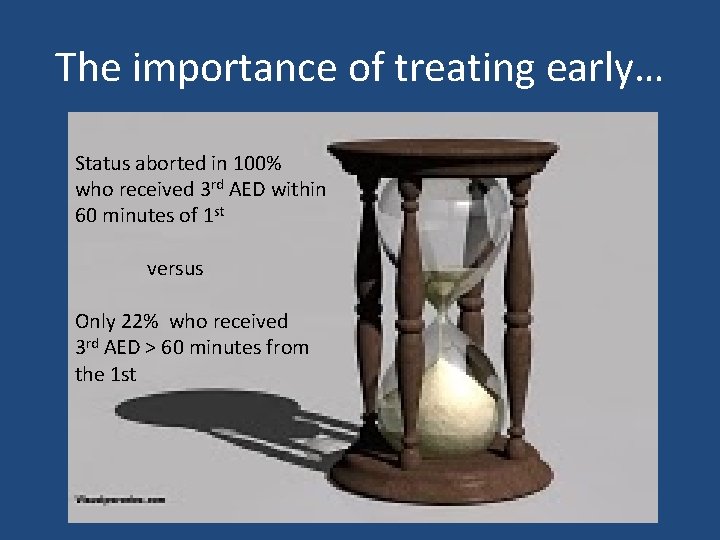
The importance of treating early… Status aborted in 100% who received 3 rd AED within 60 minutes of 1 st versus Only 22% who received 3 rd AED > 60 minutes from the 1 st
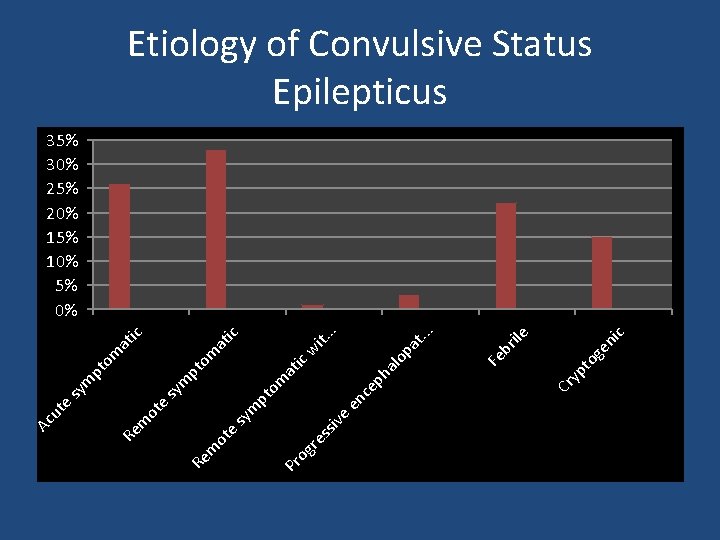
og Pr og pt Cr y . ic en ile br Fe at. . it. w op al ph ce en at ic om ic pt om at sy m at ic om pt m sy pt sy m ss ive re e ot m Re e ut Ac Etiology of Convulsive Status Epilepticus 35% 30% 25% 20% 15% 10% 5% 0%
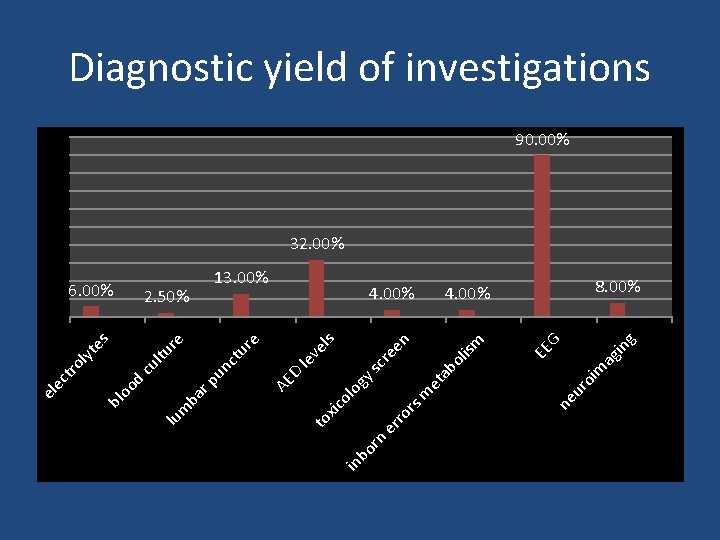
rn bo in er g ag in m oi ur EE G 4. 00% ism ol ab m et n ee cr ys ls ve 13. 00% ne rs ro og ol xic to le 2. 50% AE D e re ct ur un rp ba m ltu cu lyt es 6. 00% lu d ro ec t oo bl el Diagnostic yield of investigations 90. 00% 32. 00% 4. 00% 8. 00%
NOW ON TO RANDOM CASES… SPOT DIAGNOSES
2 mo boy with jerky movements • Mom notices that he flinches and tenses up periodically • Occurs during awake periods • Becoming more and more frequent • She has brought a video in for you to see
See video http: //www. youtube. com/watch? v=AQ 3 Zb. WPSx 1 g
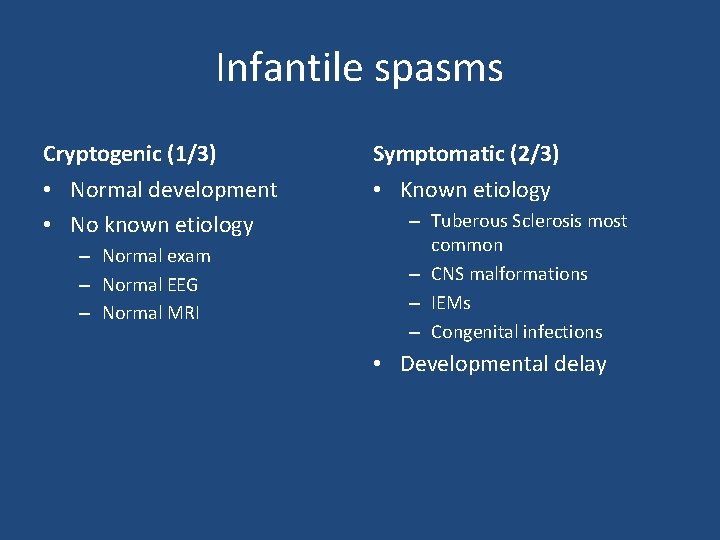
Infantile spasms Cryptogenic (1/3) Symptomatic (2/3) • Normal development • No known etiology • Known etiology – Normal exam – Normal EEG – Normal MRI – Tuberous Sclerosis most common – CNS malformations – IEMs – Congenital infections • Developmental delay
18 month old boy presenting with ? seizure • He was crying and all of the sudden he turned blue, fell over and had a few twitches • He was awake 1 minute later and now seems fine • Otherwise healthy boy • Mom recorded the episode for you
See video http: //www. youtube. com/watch? v=2 b. KVHSe 6 h. VQ
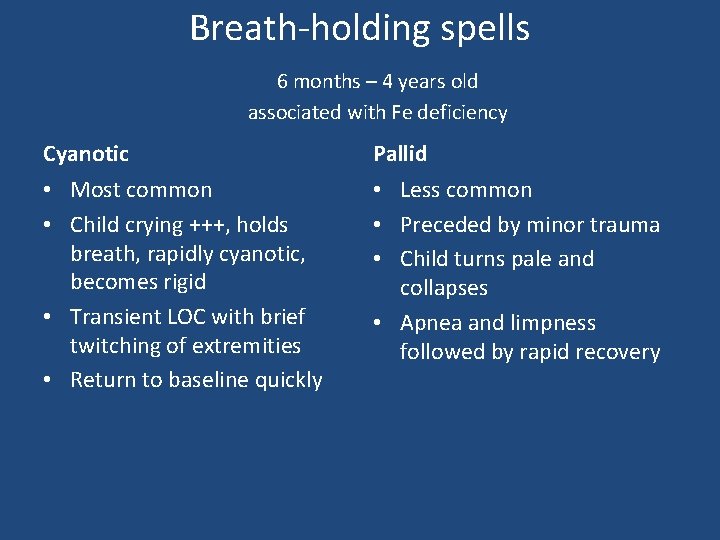
Breath-holding spells 6 months – 4 years old associated with Fe deficiency Cyanotic Pallid • Most common • Child crying +++, holds breath, rapidly cyanotic, becomes rigid • Transient LOC with brief twitching of extremities • Return to baseline quickly • Less common • Preceded by minor trauma • Child turns pale and collapses • Apnea and limpness followed by rapid recovery
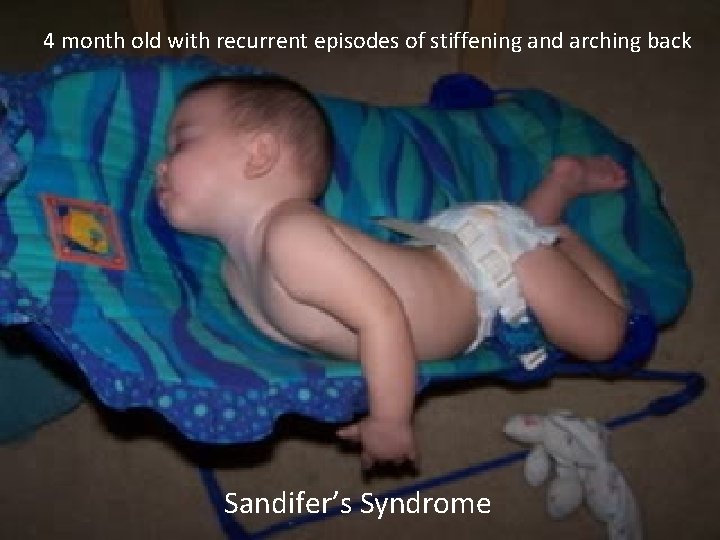
4 month old with recurrent episodes of stiffening and arching back Sandifer’s Syndrome
3 wk old girl with jerky movements during sleep • Video clip http: //www. youtube. com/watch? v=7 z 2 FXVtxga. I
5 month old girl with jerky movements • • Come in clusters Often around mealtime Otherwise developing normally Normal examination • Watch video • http: //www. youtube. com/watch? v=KI 7 JTn. Qo d. GE
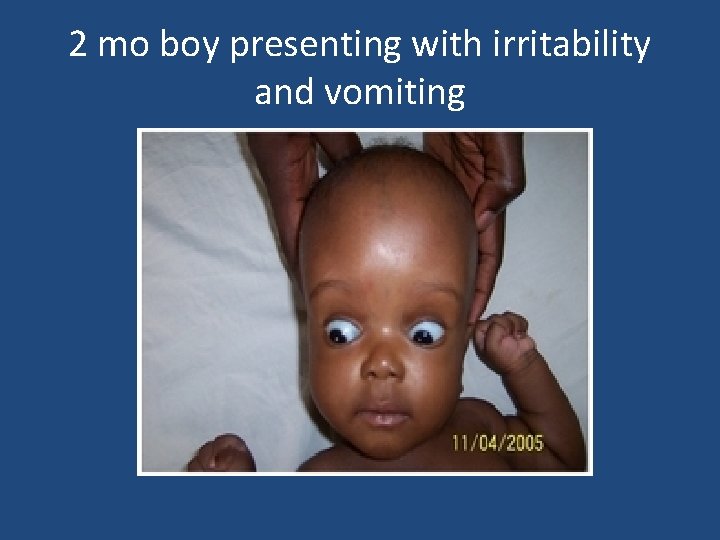
2 mo boy presenting with irritability and vomiting
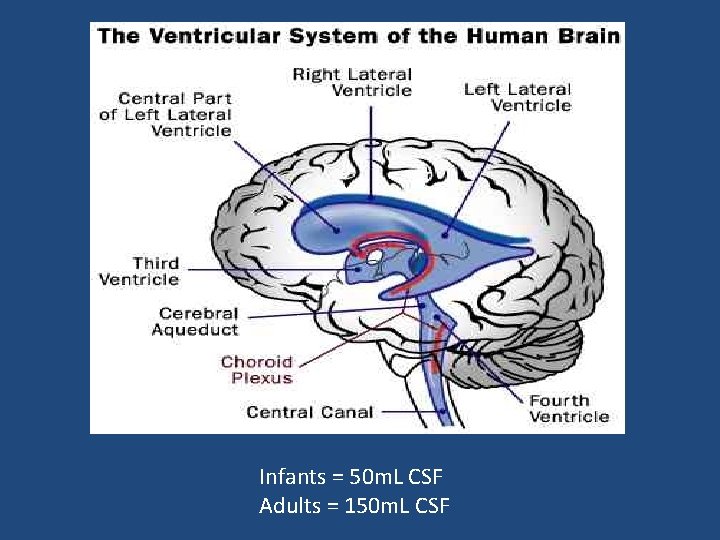
Infants = 50 m. L CSF Adults = 150 m. L CSF
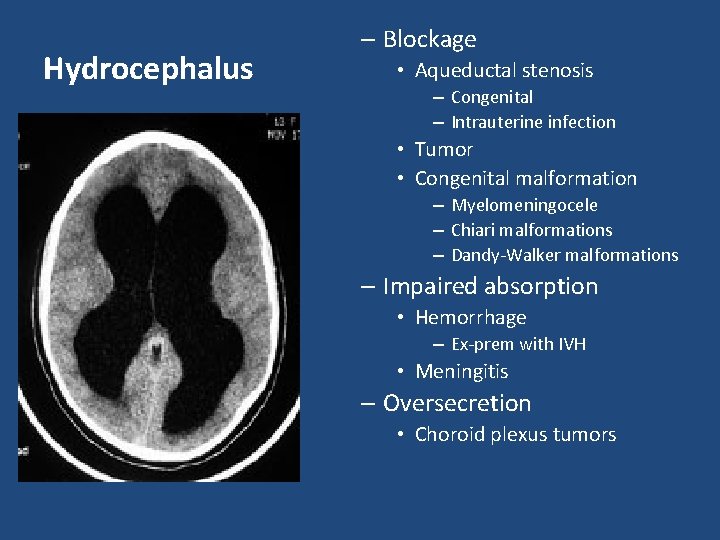
Hydrocephalus – Blockage • Aqueductal stenosis – Congenital – Intrauterine infection • Tumor • Congenital malformation – Myelomeningocele – Chiari malformations – Dandy-Walker malformations – Impaired absorption • Hemorrhage – Ex-prem with IVH • Meningitis – Oversecretion • Choroid plexus tumors
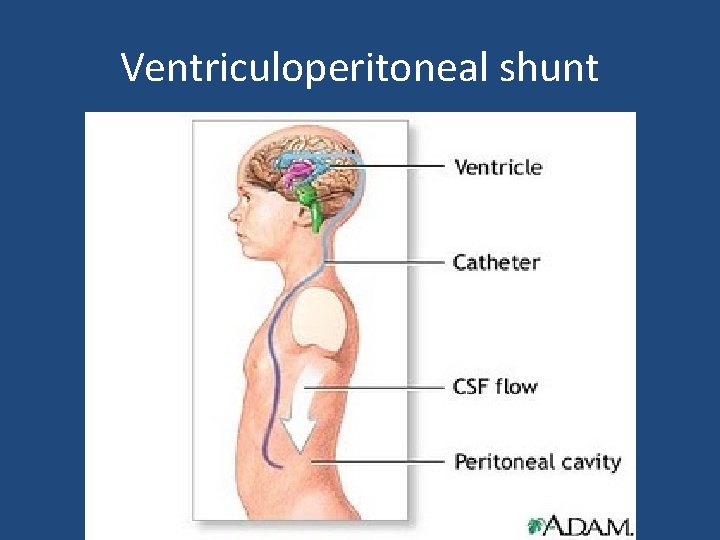
Ventriculoperitoneal shunt
Same infant returns 6 weeks later with vomiting • Low grade fever for the past 2 days • Has been more irritable than usual • • Hr 140, rr 28, BP 85/50, T 38. 2 C Fontanel feels slightly full Full EOM, PERL, no facial asymmetry Mild increased tone in extremities
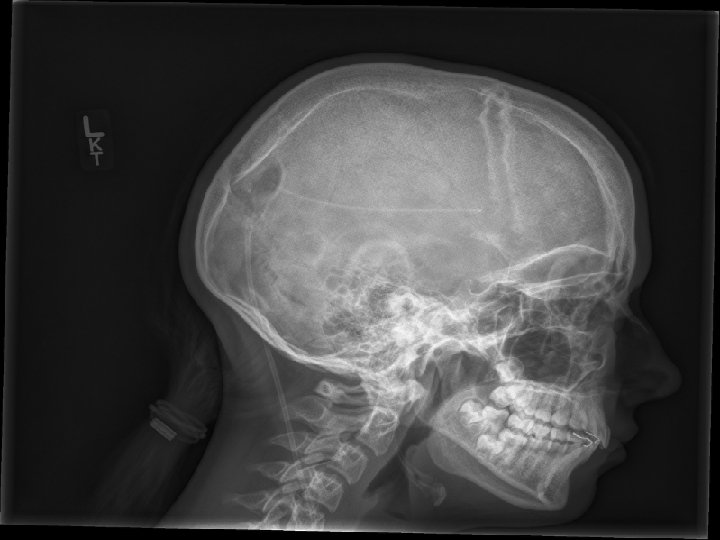
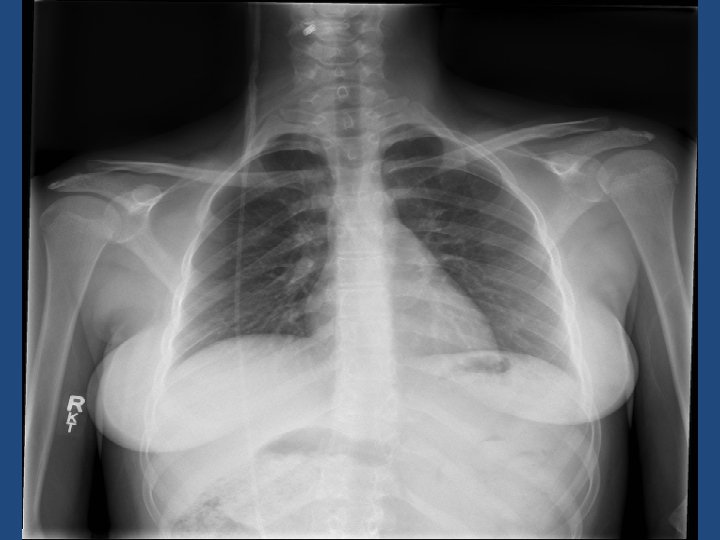
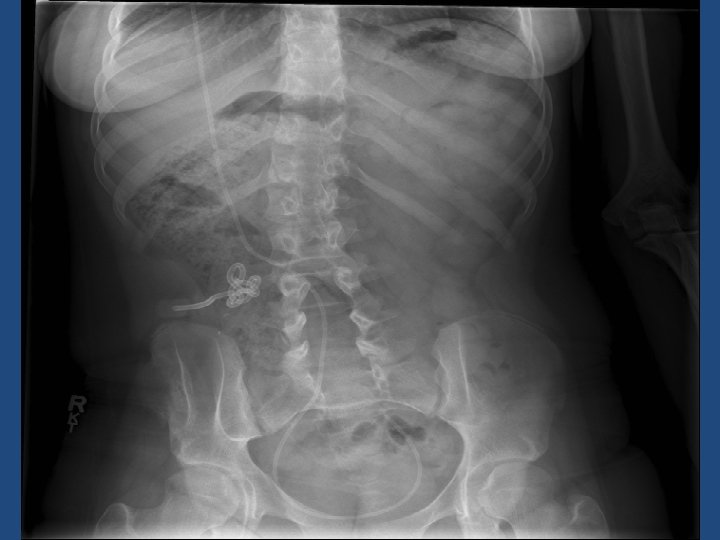
VP shunt complications Infection Obstruction • Usually within first 2 months • Staph epi and Staph aureus most common • Late infections are usually gram negative organisms • Treat with vancomycin and cefotaxime • Most common within first 6 months; over half within first 2 years • Investigations – Shunt series – Fast MRI – CT
Shunt series
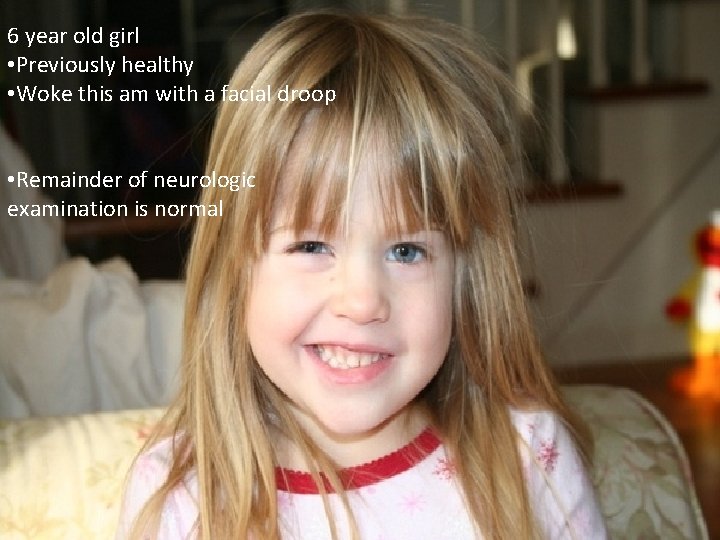
6 year old girl • Previously healthy • Woke this am with a facial droop • Remainder of neurologic examination is normal
What is your differential diagnosis? • • • Bell’s palsy Lyme disease HIV infection Otitis media Cholesteatoma
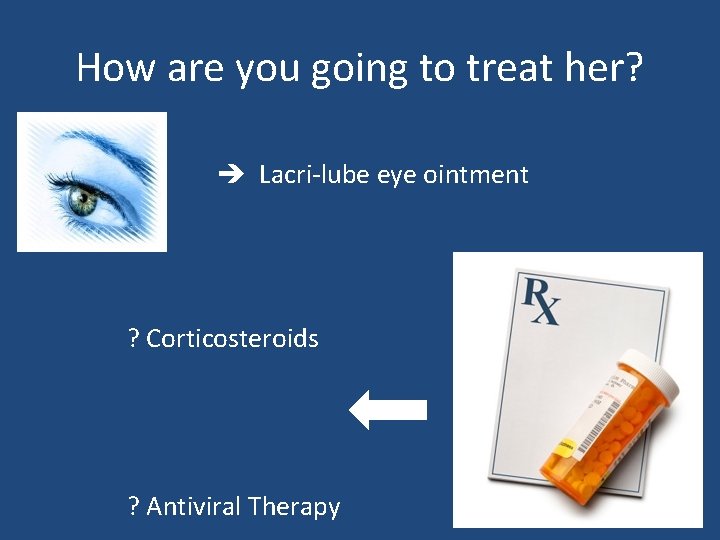
How are you going to treat her? Lacri-lube eye ointment ? Corticosteroids ? Antiviral Therapy
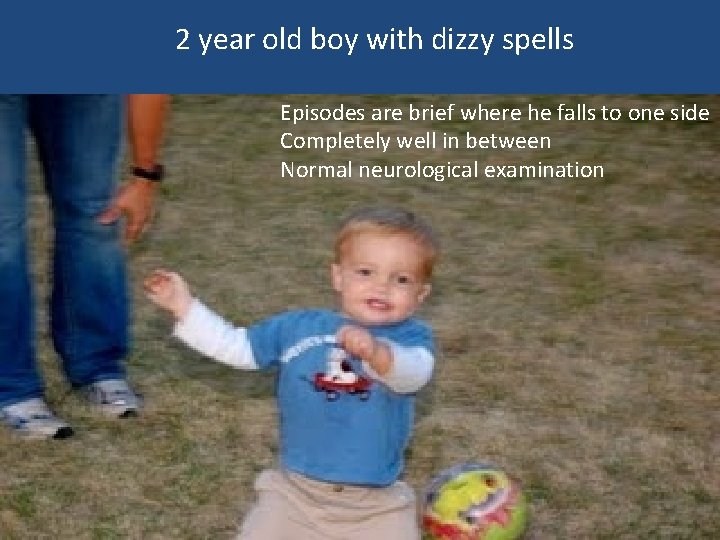
2 year old boy with dizzy spells Episodes are brief where he falls to one side Completely well in between Normal neurological examination
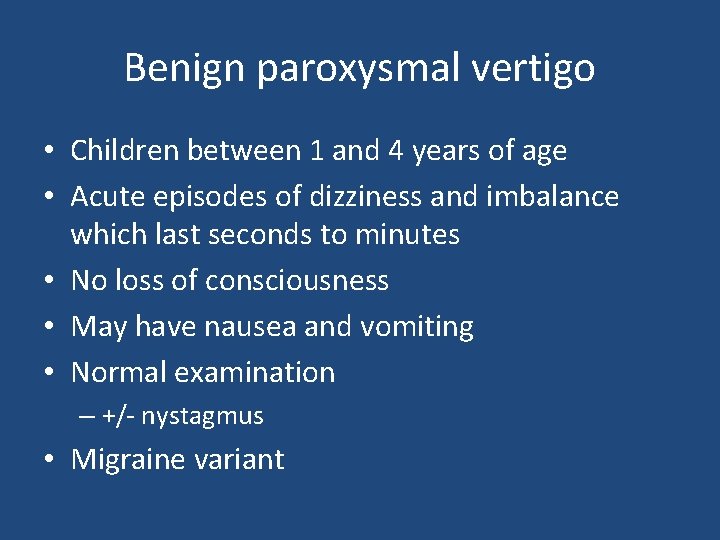
Benign paroxysmal vertigo • Children between 1 and 4 years of age • Acute episodes of dizziness and imbalance which last seconds to minutes • No loss of consciousness • May have nausea and vomiting • Normal examination – +/- nystagmus • Migraine variant
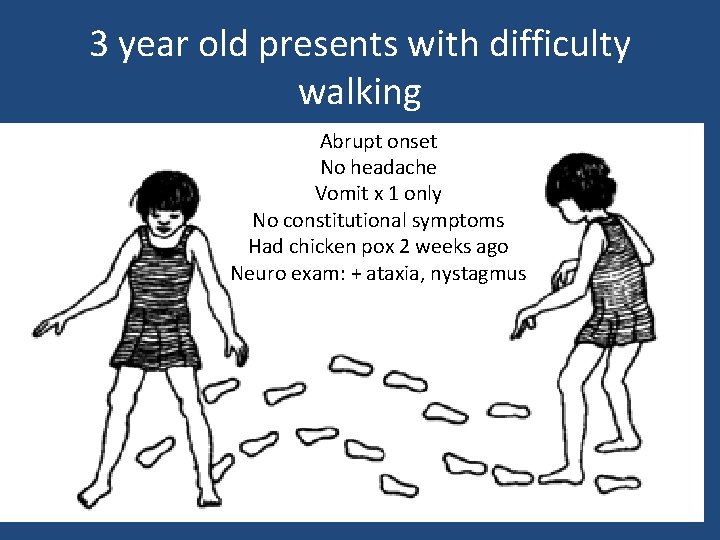
3 year old presents with difficulty walking Abrupt onset No headache Vomit x 1 only No constitutional symptoms Had chicken pox 2 weeks ago Neuro exam: + ataxia, nystagmus
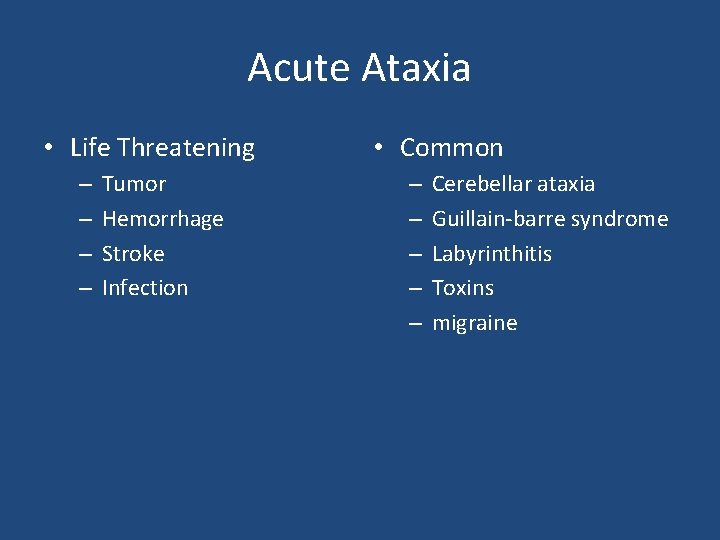
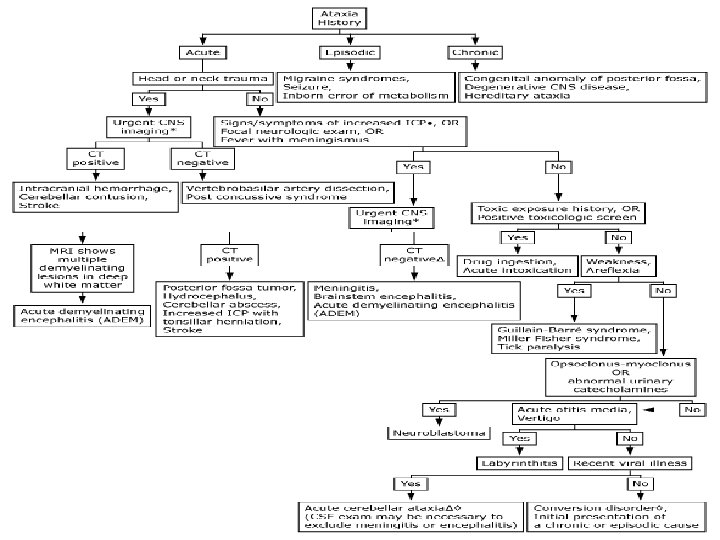
Acute Ataxia • Life Threatening – – Tumor Hemorrhage Stroke Infection • Common – – – Cerebellar ataxia Guillain-barre syndrome Labyrinthitis Toxins migraine
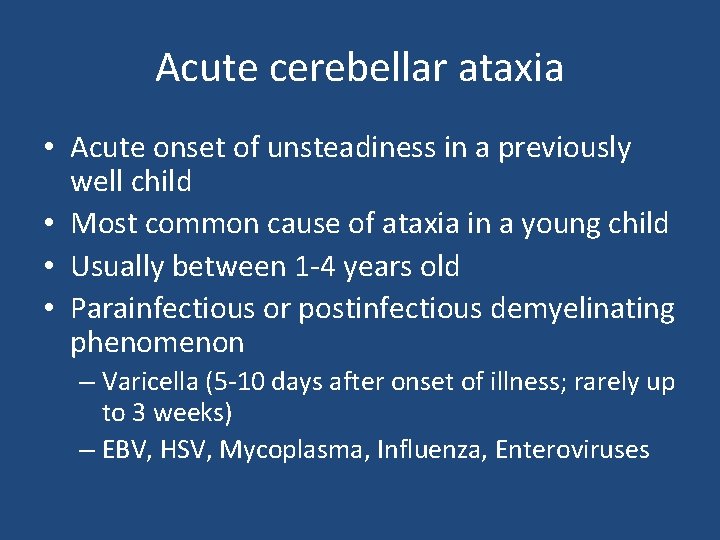
Acute cerebellar ataxia • Acute onset of unsteadiness in a previously well child • Most common cause of ataxia in a young child • Usually between 1 -4 years old • Parainfectious or postinfectious demyelinating phenomenon – Varicella (5 -10 days after onset of illness; rarely up to 3 weeks) – EBV, HSV, Mycoplasma, Influenza, Enteroviruses
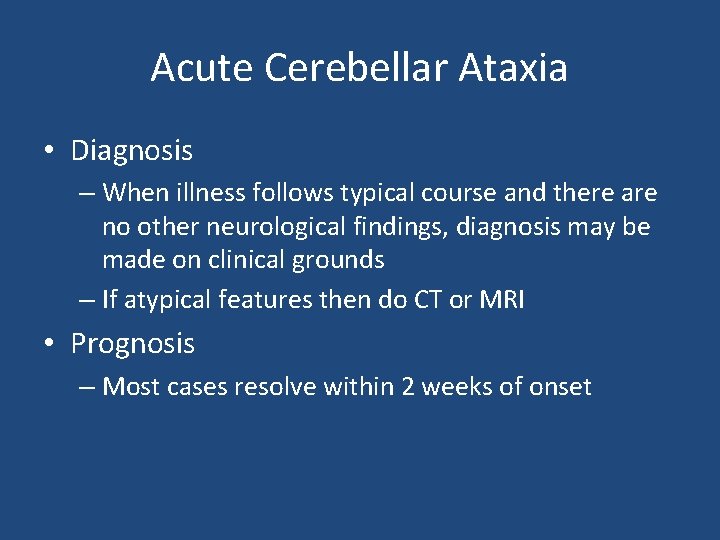
Acute Cerebellar Ataxia • Diagnosis – When illness follows typical course and there are no other neurological findings, diagnosis may be made on clinical grounds – If atypical features then do CT or MRI • Prognosis – Most cases resolve within 2 weeks of onset
6 year old girl presents with funny movements and irritability • Watch video http: //www. youtube. com/watch? v=Rs. IQFe. YOk. Ag
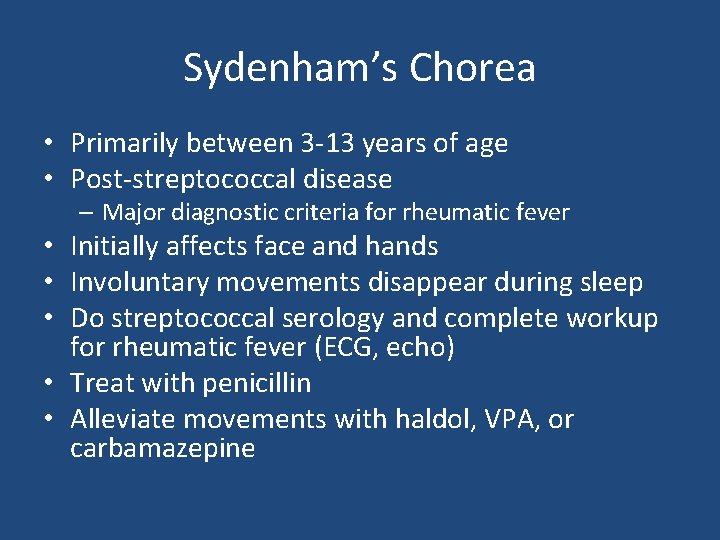
Sydenham’s Chorea • Primarily between 3 -13 years of age • Post-streptococcal disease – Major diagnostic criteria for rheumatic fever • Initially affects face and hands • Involuntary movements disappear during sleep • Do streptococcal serology and complete workup for rheumatic fever (ECG, echo) • Treat with penicillin • Alleviate movements with haldol, VPA, or carbamazepine
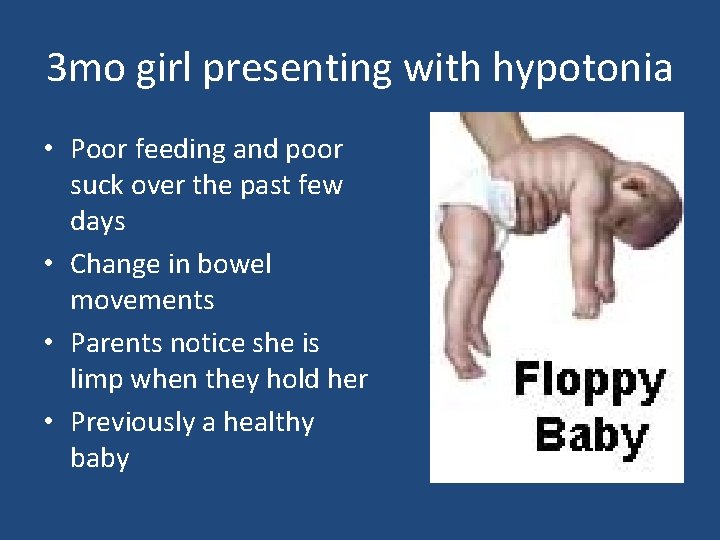
3 mo girl presenting with hypotonia • Poor feeding and poor suck over the past few days • Change in bowel movements • Parents notice she is limp when they hold her • Previously a healthy baby
Infant Botulism • Clostridium botulinum toxin – Binds presynaptic receptors and disrupts ACh release • Occurs between 1 wk-12 mo (usually 2 -8 mo) • Ingestion of raw honey or environmental dust – Utah, Pennsylvania, California • Constipation cranial nerve dysfunction (poor suck/gag, ptosis, decreased eye movements) hypotonia/weakness respiratory failure
Infant botulism • Diagnosis is clinical – Check for spores and toxin in stool • Treatment – Human botulism Immunoglobulin – Supportive
Thanks! Questions?