
Pediatric Gastrointestinal Diseases By Dr Ashraf Radwan MD
Pediatric Gastrointestinal Diseases By Dr. Ashraf Radwan, MD Pediatric Department
DIARRHOEA
Diarrhea Definition Diarrhea is defined as excessive loss of fluid and electrolyte in the stool Clinically Diarrhea is an increase in the number , volume And Fluidity of stools relative to the usual habits of each individual
DIARRHOEA Morbidity The average child ( <5 years ) suffers 3 bouts of diarrhea per year
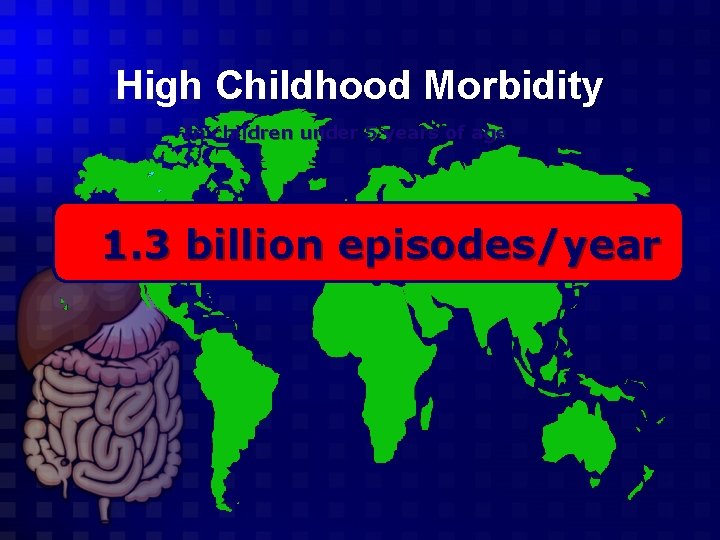
High Childhood Morbidity In children under 5 years of age 1. 3 billion episodes/year
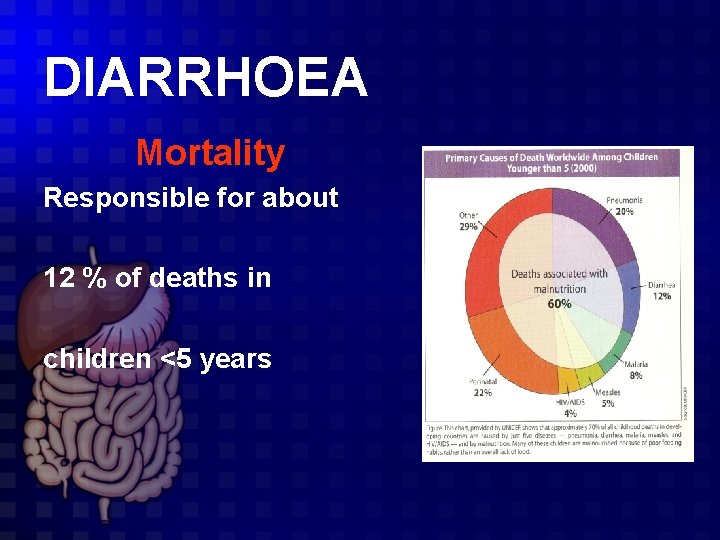
DIARRHOEA Mortality Responsible for about 12 % of deaths in children <5 years
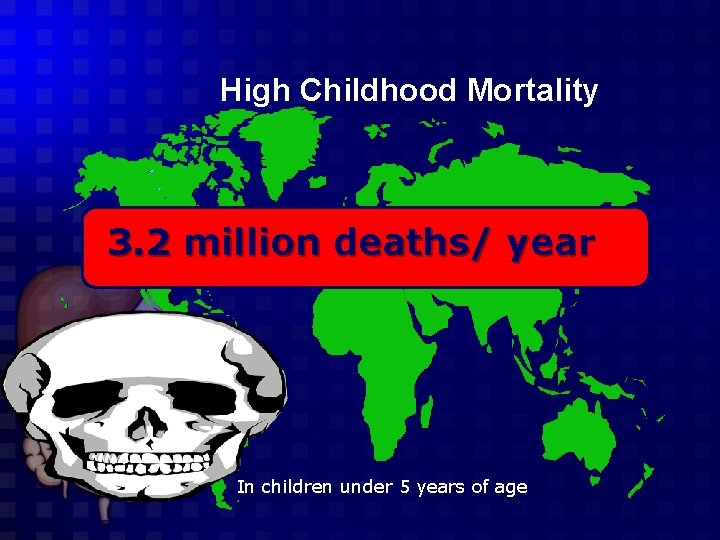
High Childhood Mortality 3. 2 million deaths/ year In children under 5 years of age
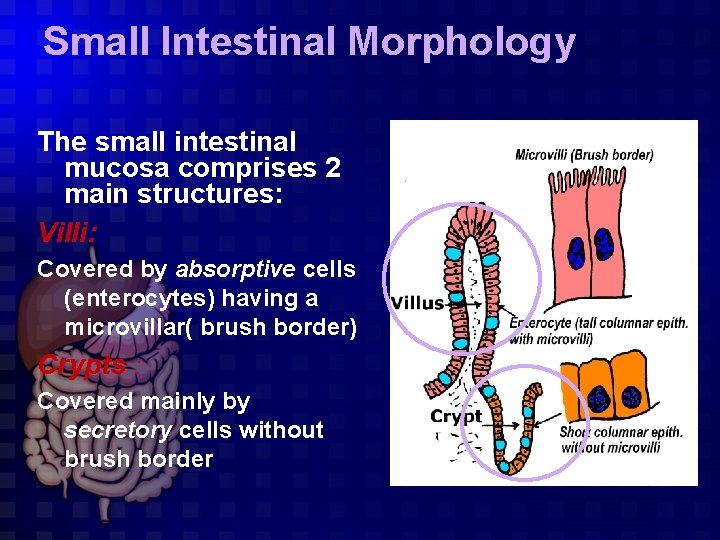
Small Intestinal Morphology The small intestinal mucosa comprises 2 main structures: Villi: Covered by absorptive cells (enterocytes) having a microvillar( brush border) Crypts : Covered mainly by secretory cells without brush border
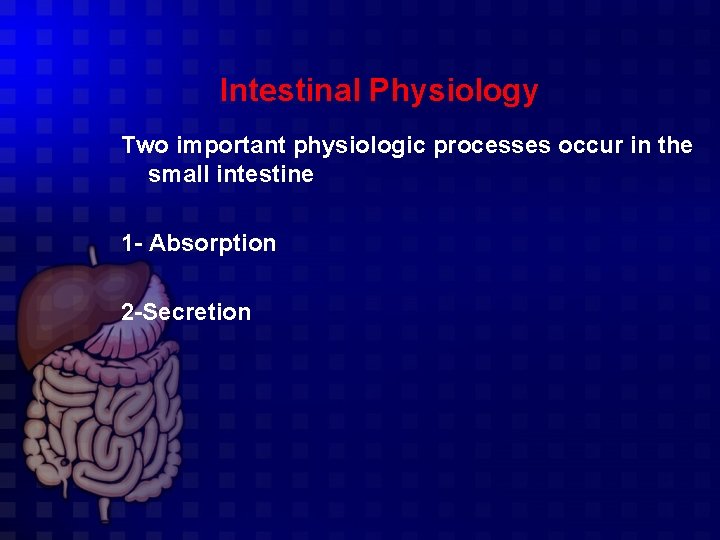
Intestinal Physiology Two important physiologic processes occur in the small intestine 1 - Absorption 2 -Secretion
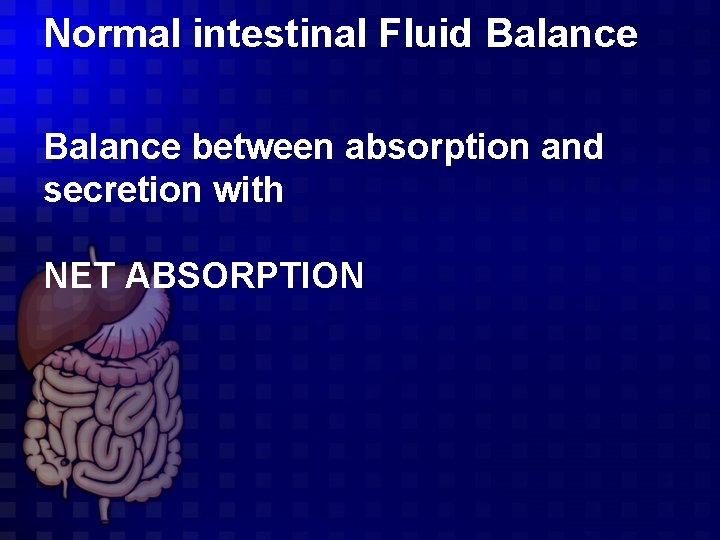
Normal intestinal Fluid Balance between absorption and secretion with NET ABSORPTION
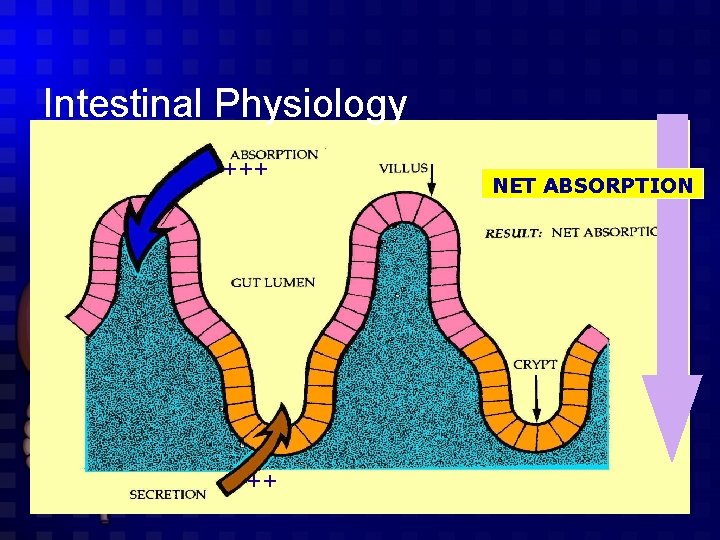
Intestinal Physiology +++ ++ NET ABSORPTION
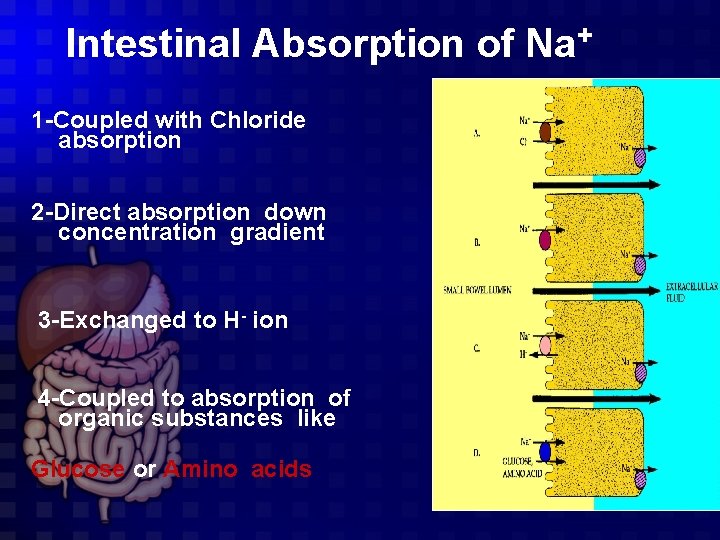
Intestinal Absorption of Na+ 1 -Coupled with Chloride absorption 2 -Direct absorption down concentration gradient 3 -Exchanged to H- ion 4 -Coupled to absorption of organic substances like Glucose or Amino acids
Absorption of Na+ Coupled absorption of Na+ with Glucose or Amino acids is NOT AFFECTED during diarrhea
DIARRHOEA (Pathophysiology ) Physiologically diarrhea is considered as imbalance between absorption and secretion. There are two physiologic mechanisms of diarrhea 1 -Secretory diarrhea 2 -Osmotic diarrhea However other mechanisms play a role 1 - Increased GIT motility 2 - Short bowl
Secretory diarrhea There is increased net secretion of water and salts into the small intestine through activation of the intracellular mediators such as c. AMP, c. GMP which 1 -Stimulate active chloride secretion from the crypt cells 2 - Inhibit the sodium chloride absorption.
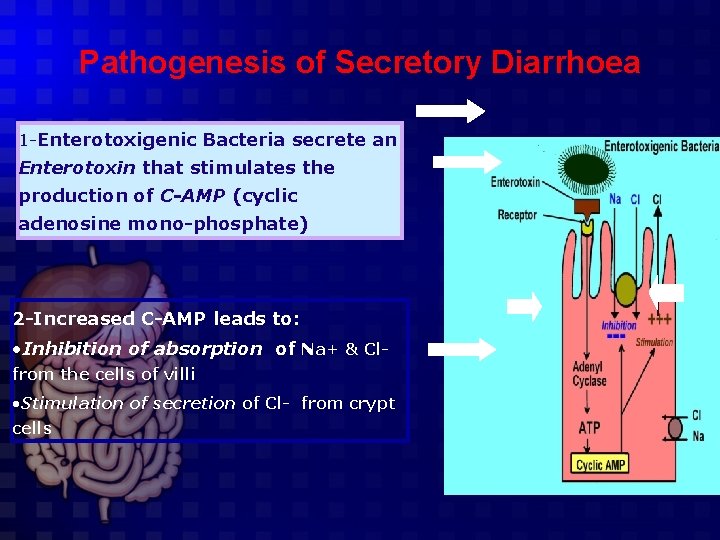
Pathogenesis of Secretory Diarrhoea 1 -Enterotoxigenic Bacteria secrete an Enterotoxin that stimulates the production of C-AMP (cyclic adenosine mono-phosphate) 2 -Increased C-AMP leads to: • Inhibition of absorption of Na+ & Clfrom the cells of villi • Stimulation of secretion of Cl- from crypt cells
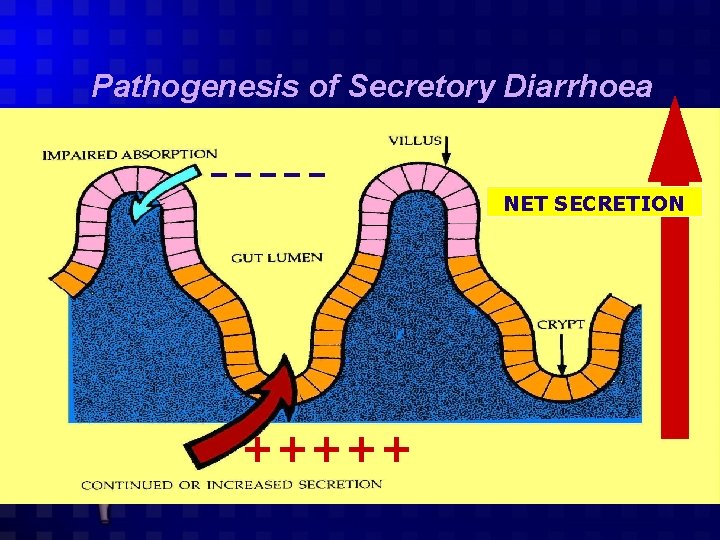
Pathogenesis of Secretory Diarrhoea ----- +++++ NET SECRETION
Secretory diarrhea The major causes of secretory diarrhea are 1 -Bacterial toxins 2 -Vasoactive intestinal peptide
Osmotic diarrhea is caused by the presence of nonabsorbable materials in the gastrointestinal tract these nonabsorbable materials will generate an osmotic load and cause water to be secreted into the lumen
Osmotic diarrhea The classic example of osmotic diarrhea is lactose intolerance 1 - lactase enzyme deficiency 2 -lactose is not absorbed in the small intestine and reaches the colon intact 3 -The colonic bacteria ferment the lactose to short-chain organic acids, generating an osmotic load
Osmotic diarrhea Other examples include ingestion of excessive amounts of 1 -carbonated fluids 2 -magnesium hydroxide 3 -sorbitol 4 -Lactulose( a synthetic therapeutic disaccharide composed of galactose and fructose)
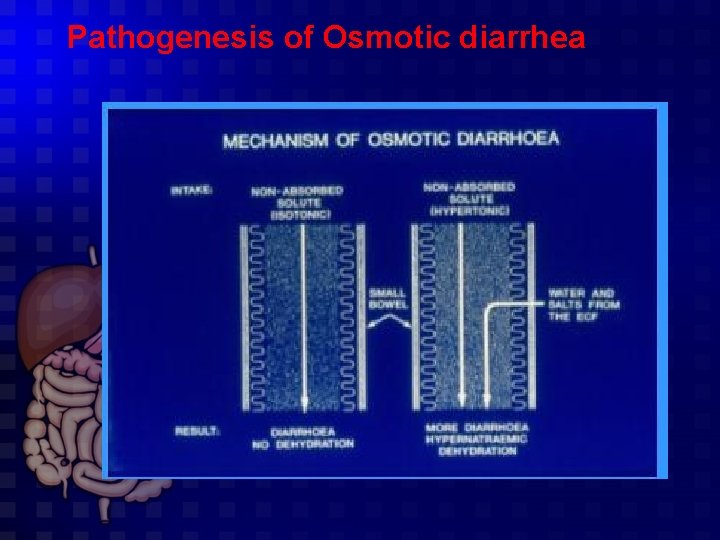
Pathogenesis of Osmotic diarrhea
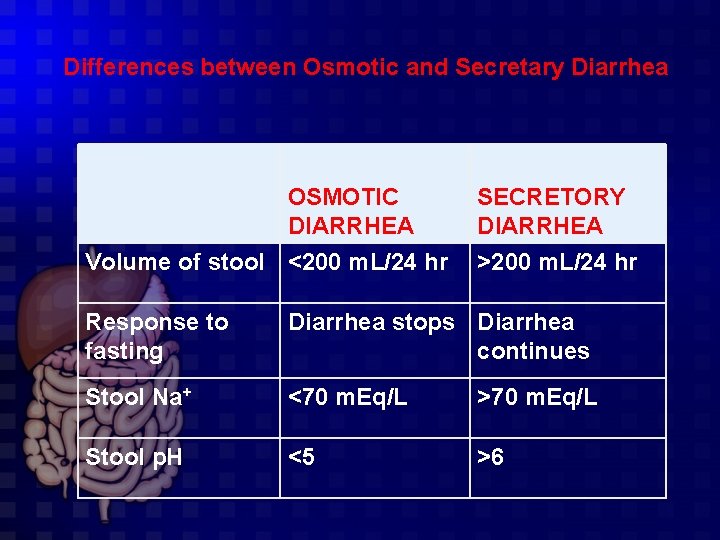
Differences between Osmotic and Secretary Diarrhea OSMOTIC DIARRHEA Volume of stool <200 m. L/24 hr SECRETORY DIARRHEA >200 m. L/24 hr Response to fasting Diarrhea stops Diarrhea continues Stool Na+ <70 m. Eq/L >70 m. Eq/L Stool p. H <5 >6
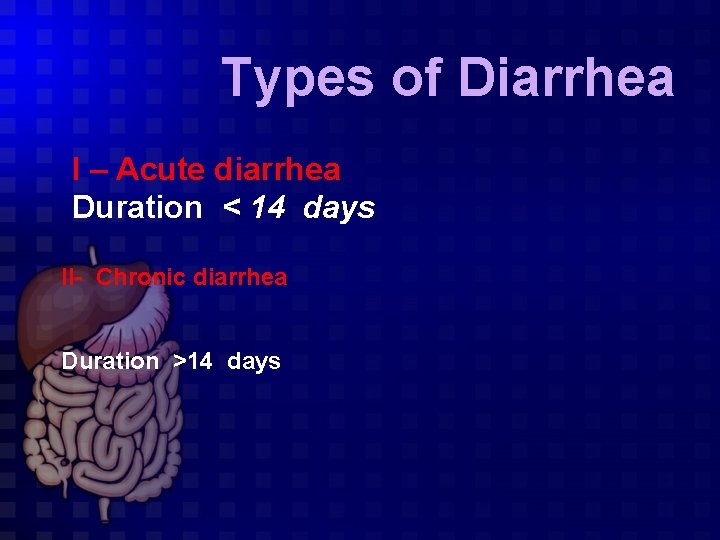
Types of Diarrhea I – Acute diarrhea Duration < 14 days II- Chronic diarrhea Duration >14 days
DIARRHOEA Consequences 1 -Dehydration 2 -Electrolyte disturbances 3 -Acid base disturbances
DEHYDRATION Definition is the loss of body water and electrolytes Importance the most dangerous event in diarrhea Degrees Minimal or NO dehydration < 3% loss of body weight Mild to Moderate 3 – 9 % loss of body weight Severe > 9 % loss of body weight
DEHYDRATION Types 1 - Isonatremic ( isotonic ) 2 - Hypernatremic ( hypertonic ) 3 -Hyponatremic ( Hypo tonic)
Isonatremic ( isotonic )dehydration -The most common type -Equal loss of water and sodium -Serum sodium and the osmolality of the extracellular fluid are normal
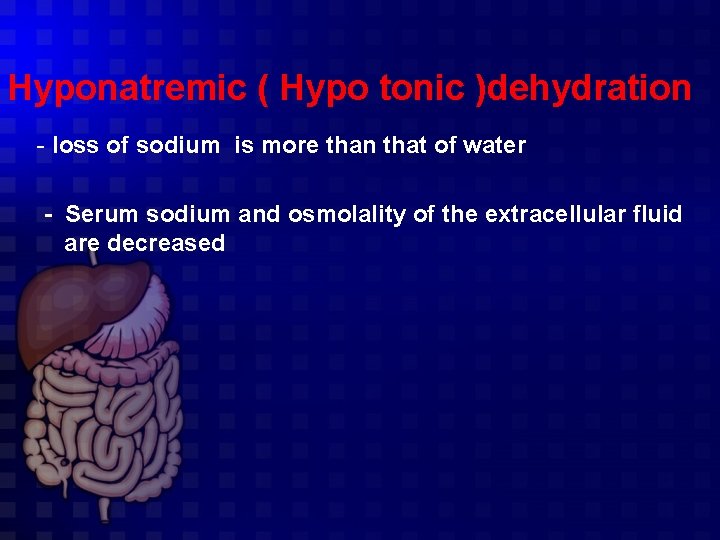
Hyponatremic ( Hypo tonic )dehydration - loss of sodium is more than that of water - Serum sodium and osmolality of the extracellular fluid are decreased
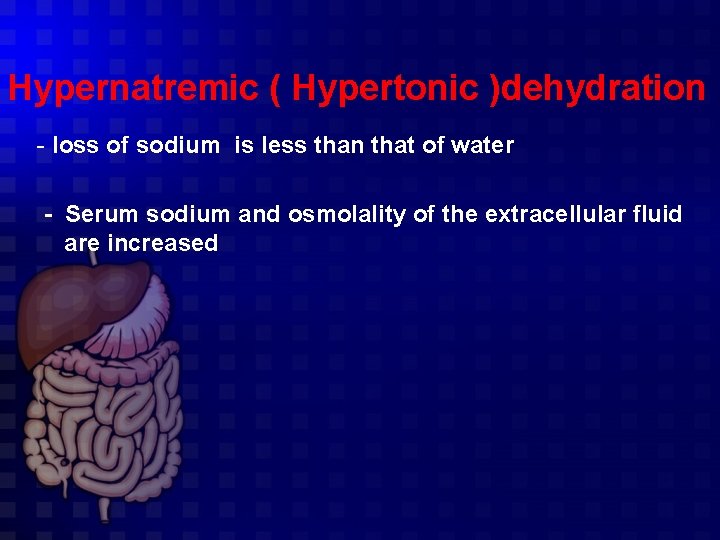
Hypernatremic ( Hypertonic )dehydration - loss of sodium is less than that of water - Serum sodium and osmolality of the extracellular fluid are increased
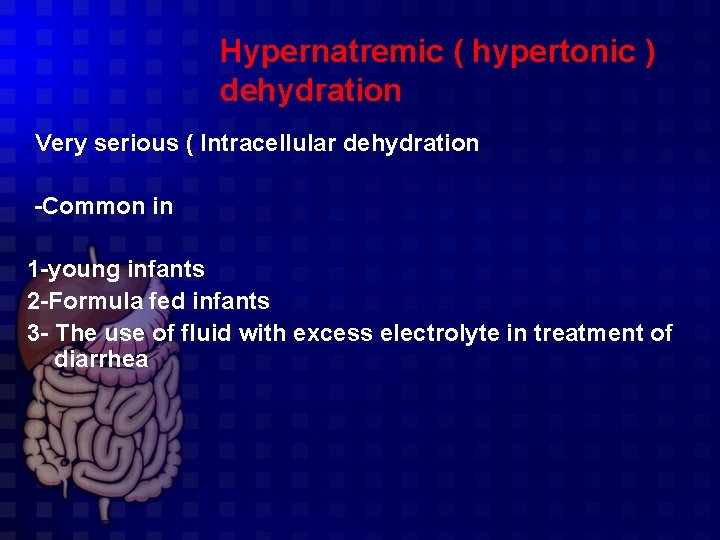
Hypernatremic ( hypertonic ) dehydration -Very serious ( Intracellular dehydration -Common in 1 -young infants 2 -Formula fed infants 3 - The use of fluid with excess electrolyte in treatment of diarrhea
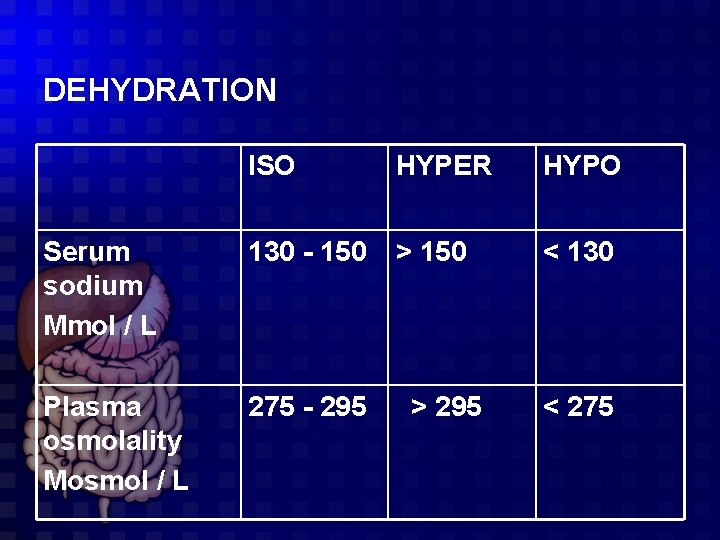
DEHYDRATION ISO HYPER HYPO Serum sodium Mmol / L 130 - 150 > 150 < 130 Plasma osmolality Mosmol / L 275 - 295 > 295 < 275
DEHYDRATION (manifestations ) 1 -Thirst 2 - Oliguria 3 - Depressed anterior fontanel 4 - Sunken eyes 5 - Decreased or absent tears 6 - Dry tongue 7 - Loss of skin turgor
DEHYDRATION (manifestations) ) 8 - Shock a – Tachycardia b- Hypotension c-Cold extremities d- Impaired consciousness Lethargy Coma
Skin Pinch Normal — it goes back immediately Slowly — the fold is visible for less than 2 second Very slowly — the fold is visible for more than 2 seconds.
Classification of dehydration 1 - MINIMAL OR NO DEHYDRATION 2 - MILD TO MODERATE DEHYDRATION 3 - SEVERE DEHYDRATION
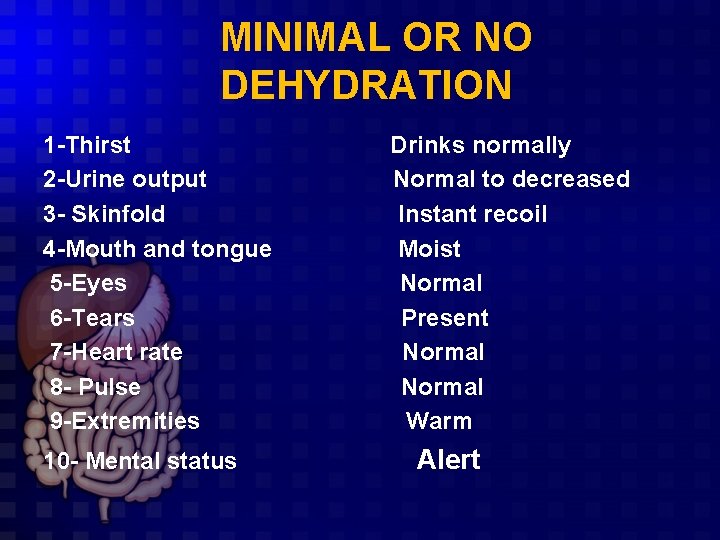
MINIMAL OR NO DEHYDRATION 1 -Thirst Drinks normally 2 -Urine output Normal to decreased 3 - Skinfold Instant recoil 4 -Mouth and tongue Moist 5 -Eyes Normal 6 -Tears Present 7 -Heart rate Normal 8 - Pulse Normal 9 -Extremities Warm 10 - Mental status Alert
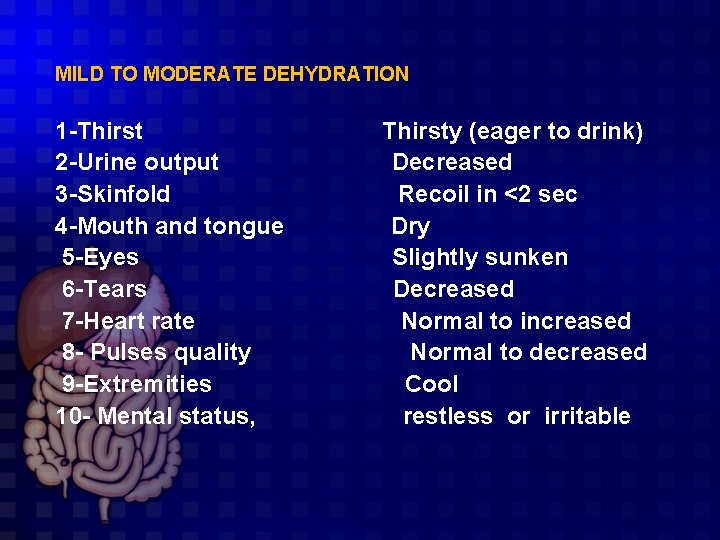
MILD TO MODERATE DEHYDRATION 1 -Thirst Thirsty (eager to drink) 2 -Urine output Decreased 3 -Skinfold Recoil in <2 sec 4 -Mouth and tongue Dry 5 -Eyes Slightly sunken 6 -Tears Decreased 7 -Heart rate Normal to increased 8 - Pulses quality Normal to decreased 9 -Extremities Cool 10 - Mental status, restless or irritable
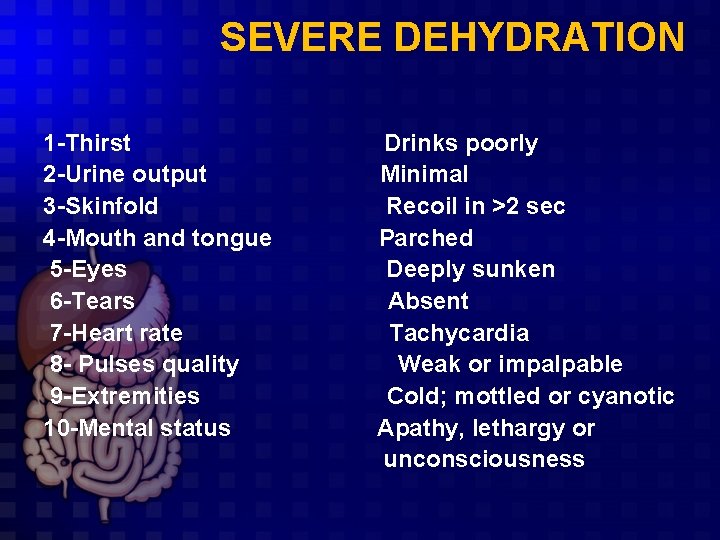
SEVERE DEHYDRATION 1 -Thirst Drinks poorly 2 -Urine output Minimal 3 -Skinfold Recoil in >2 sec 4 -Mouth and tongue Parched 5 -Eyes Deeply sunken 6 -Tears Absent 7 -Heart rate Tachycardia 8 - Pulses quality Weak or impalpable 9 -Extremities Cold; mottled or cyanotic 10 -Mental status Apathy, lethargy or unconsciousness
Causes of Diarrhea I – Non infectious diarrhea II - infectious diarrhea (Gastroenteritis )
Gastroenteritis The term gastroenteritis denotes infections of the gastrointestinal tract Etiology Organisms 1 -Viral 2 - Bacterial 3 - Parasitic
Gastroenteritis Viral pathogens 1 - Rotavirus ( 30 – 50 % ) 2 - Noroviruses 3 - Others Enteric adenoviruses Astroviruses
Gastroenteritis Bacterial pathogens 1 - Escherichia coli 2 -Shigella 3 - Salmonella 4 - Others -Vibrio cholera -Campylobacter -Yersinia enterocolitica -Clostridium difficile
Gastroenteritis Parasitic pathogens 1 -Cryptosporidium 2 –Giardia lamblia 3 - Entameba histolytica
Gastroenteritis Transmission 1 - Fecal-Oral Transmission 2 - Personal Transmission
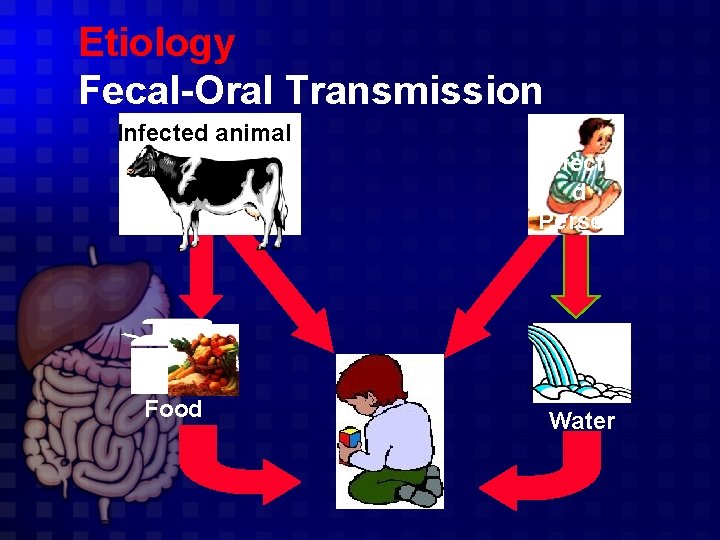
Etiology Fecal-Oral Transmission Infected animal Infecte d Person Food Water
EPIDEMIOLOGY Age incidence Between 3 months and 3 years Peak incidence is 6 -24 months Season Present allover the year Bacterial ( More in Summer ) Viral ( More in winter )
Gastroenteritis Pathogenesis Enteropathogens can lead to either an inflammatory or noninflammatory response in the intestinal mucosa.
Inflammatory diarrhea is usually caused by bacteria that 1 -Directly invade the intestine 2 - Produce cytotoxins with consequent passage of fluids, protein, and cells (erythrocytes, leukocytes) into the intestinal lumen
Noninflammatory diarrhea through 1 -Enterotoxin production ( some bacteria) 2 - Destruction of villus cells ( viruses) 3 - Adherence ( parasites)
Gastroenteritis Clinical manifestations Onset Acute Course: Usually 3 -5 days (< 14 days ) (self limited disease ) Vomiting and diarrhea are the main manifestations. Other manifestations depend on 1 - Type of infecting organism 2 - The development of dehydration and electrolyte imbalance
Gastroenteritis Clinical manifestations Three patterns of gastroenteritis are known according to the type of infecting organism 1 -Acute watery diarrhea 2 - Bloody diarrhea (Dysentery ) 3 - Persistent diarrhe
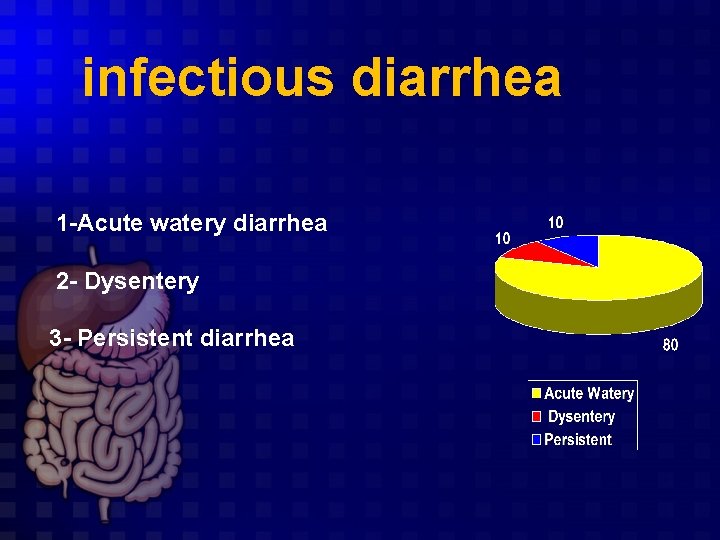
infectious diarrhea 1 -Acute watery diarrhea 2 - Dysentery 3 - Persistent diarrhea
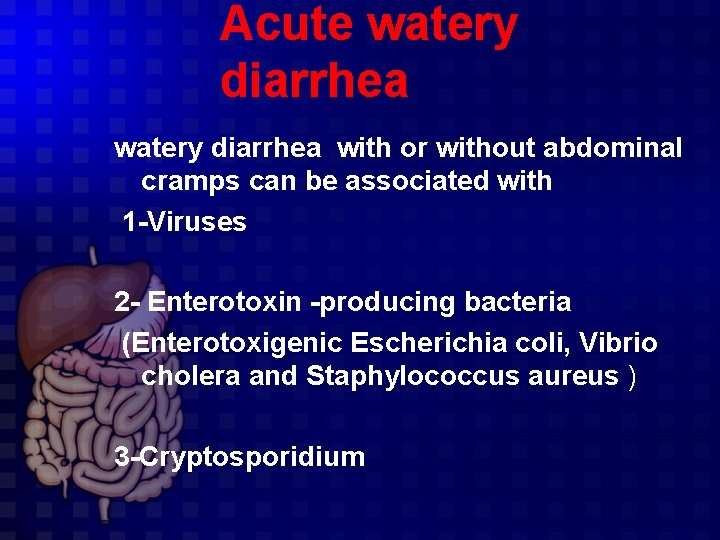
Acute watery diarrhea with or without abdominal cramps can be associated with 1 -Viruses 2 - Enterotoxin -producing bacteria (Enterotoxigenic Escherichia coli, Vibrio cholera and Staphylococcus aureus ) 3 -Cryptosporidium
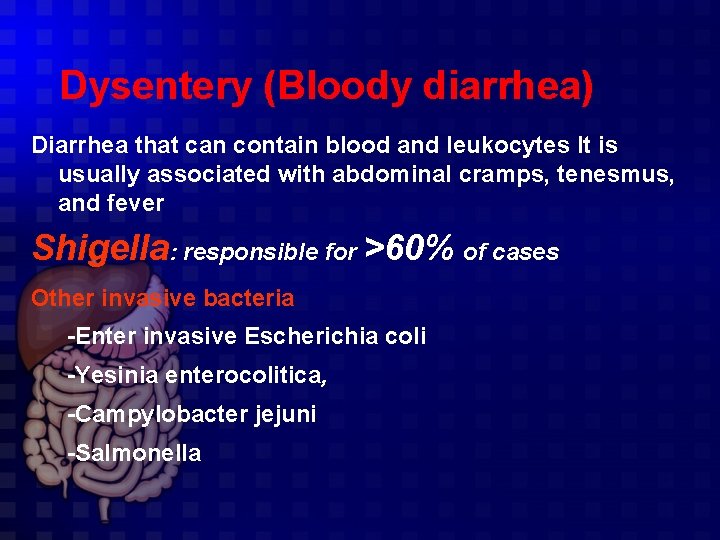
Dysentery (Bloody diarrhea) Diarrhea that can contain blood and leukocytes It is usually associated with abdominal cramps, tenesmus, and fever Shigella: responsible for >60% of cases Other invasive bacteria -Enter invasive Escherichia coli -Yesinia enterocolitica, -Campylobacter jejuni -Salmonella
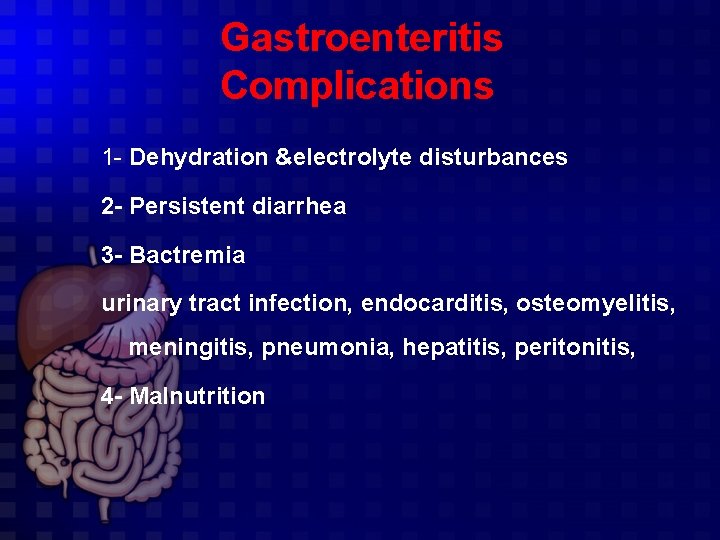
Gastroenteritis Complications 1 - Dehydration &electrolyte disturbances 2 - Persistent diarrhea 3 - Bactremia urinary tract infection, endocarditis, osteomyelitis, meningitis, pneumonia, hepatitis, peritonitis, 4 - Malnutrition
Persistent Diarrhea • Infectious diarrhea that begins acutely and persists for 14 days or more • Risk Factors 1 -Malnutrition (PEM) is an important predisposing factor 2 -Absence of breast -feeding 3 -Recent introduction of animal milk 4 -Milk protein allergy 5 -Lactose intolerance
Persistent Diarrhea Risk Factors 6 -Recurrent diarrhea 7 -Immunological impairment 8 - Mismanagement of acute diarrhea -Prolonged intravenous therapy -Slow introduction of food -Antibiotics 9 -Other factors: -Low birth weight -Young age -Vitamin A deficiency &other micronutrient deficiencies
Persistent Diarrhea Mortality: Responsible for about 30 -50 % of diarrheaassociated deaths Morbidity: A major cause of malnutrition
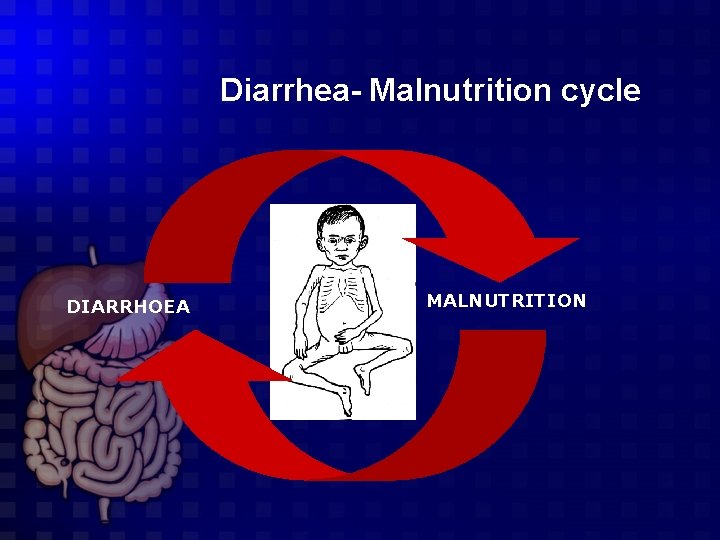
Diarrhea- Malnutrition cycle DIARRHOEA MALNUTRITION
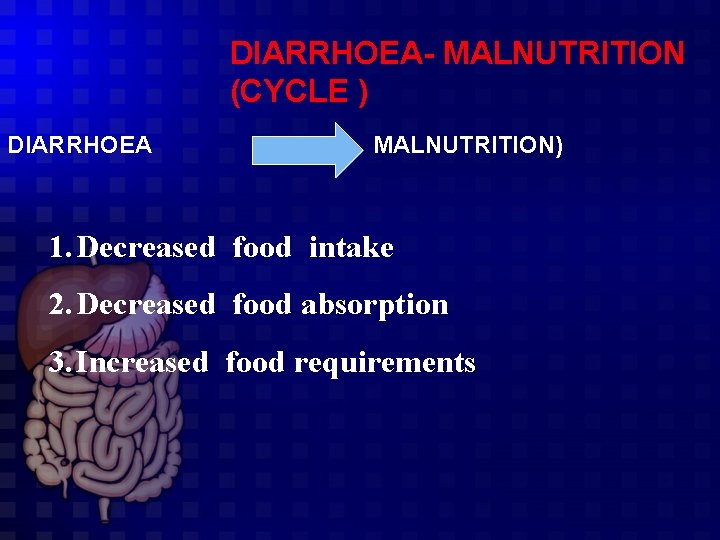
DIARRHOEA- MALNUTRITION (CYCLE ) DIARRHOEA MALNUTRITION) 1. Decreased food intake 2. Decreased food absorption 3. Increased food requirements
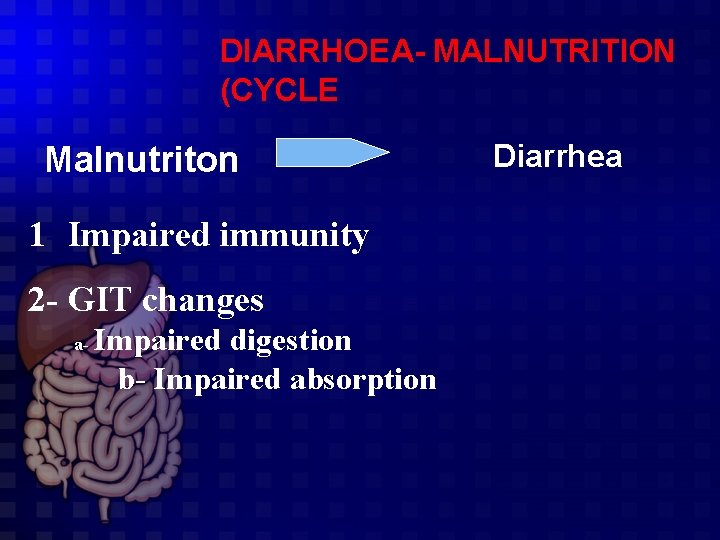
DIARRHOEA- MALNUTRITION (CYCLE ) Malnutriton 1 - Impaired immunity 2 - GIT changes a- Impaired digestion b- Impaired absorption Diarrhea
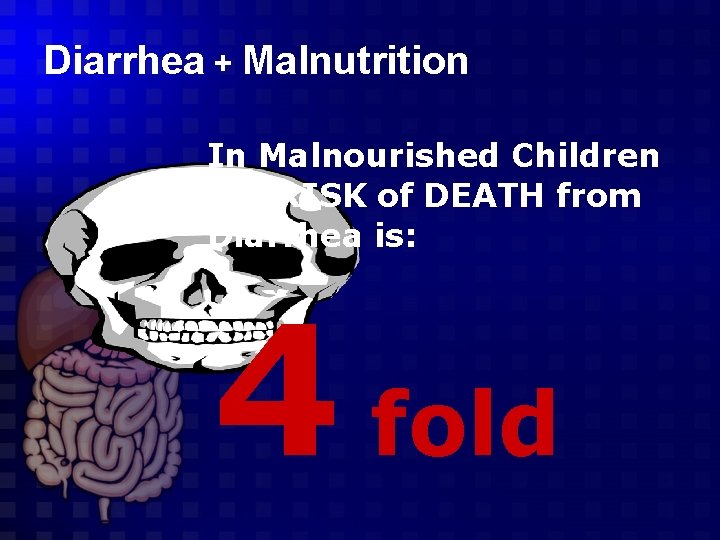
Diarrhea + Malnutrition In Malnourished Children the RISK of DEATH from Diarrhea is: 4 fold

Thank You
- Slides: 64