
Pediatric Exanthems and rashes Viral n Classic I
- Slides: 81
+ Pediatric Exanthems and rashes
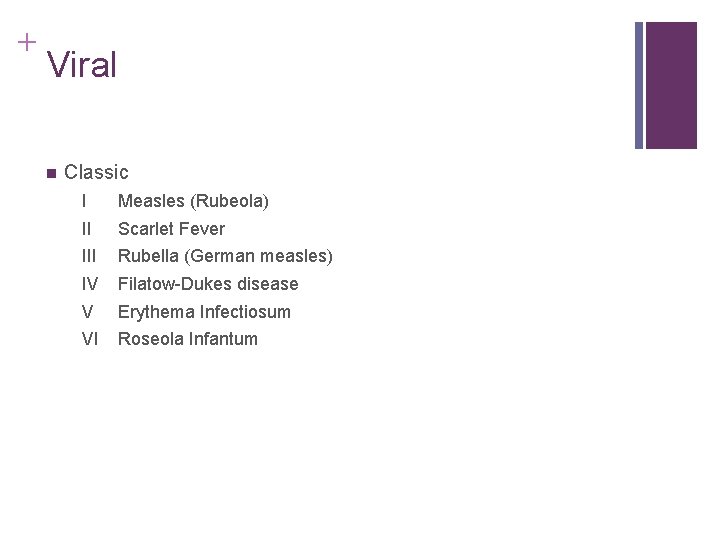
+ Viral n Classic I Measles (Rubeola) II Scarlet Fever III Rubella (German measles) IV Filatow-Dukes disease V Erythema Infectiosum VI Roseola Infantum
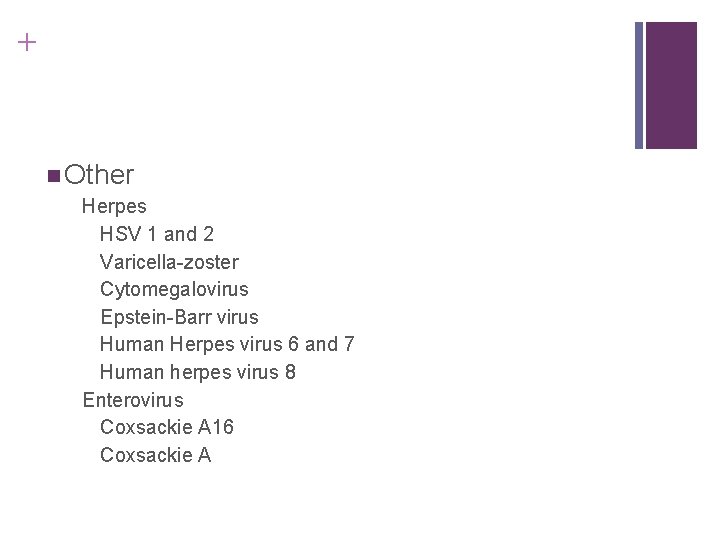
+ n Other Herpes HSV 1 and 2 Varicella-zoster Cytomegalovirus Epstein-Barr virus Human Herpes virus 6 and 7 Human herpes virus 8 Enterovirus Coxsackie A 16 Coxsackie A
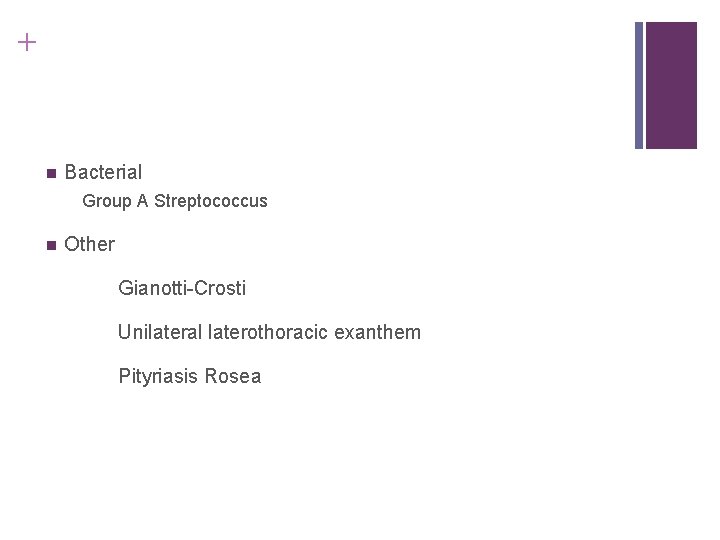
+ n Bacterial Group A Streptococcus n Other Gianotti-Crosti Unilateral laterothoracic exanthem Pityriasis Rosea
+ Measles n Paramyxovirus n Incubation period: 7 – 14 days n Infectious period: 1 - 2 days before prodrome to 4 days after onset of rash n Very infectious (90% attack rates in household contacts) n Droplet spread – oral secretions n Typical course 7‐ 10 days (without complications n Risk factors: non-vaccination
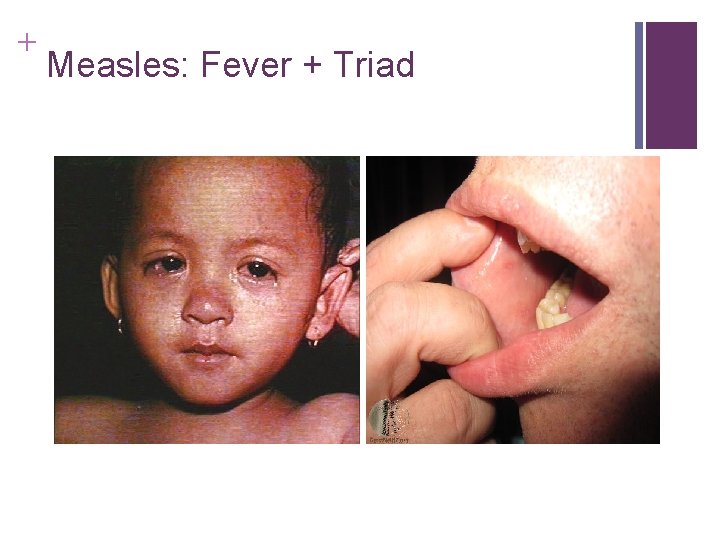
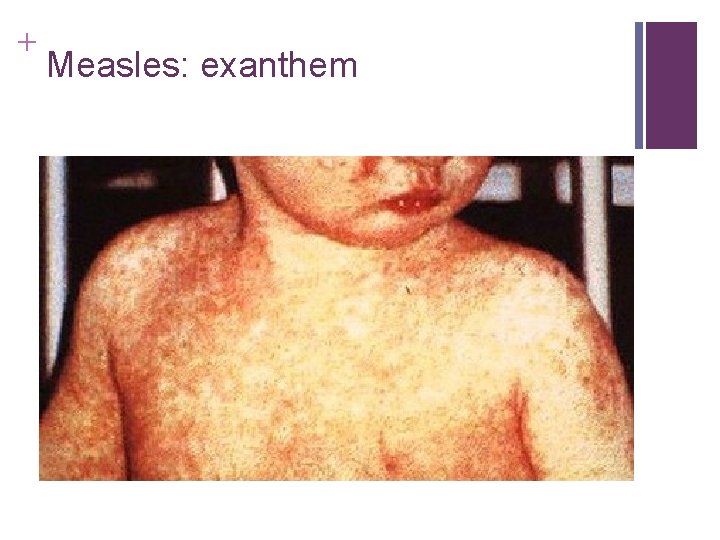
+ Measles: clinical features n Prodrome: day 7 -14 after exposure n Fever n Cough n Coryza n Conjunctivitis n Koplik’s spots (1 -2 days before rash) n Rash (D 3‐ 7) started behind ears n Miserable
+ Measles: Fever + Triad
+ Measles: exanthem
+ Measles complications Respiratory - Common - Secondary bacterial inftection - OM - LTB Cardiac - Myocarditis - Pericarditis - ECG Changes
+ Measles Complications Neurological - Abnormal EEG common - Encephalitis - 1: 1000 - Usually during exanthem - 25% sequalae - CSF increased wcc (pleocytosis), protein
+ Measles Complications Others - Black measles (haemorrhagic skin eruption) - SSPE - - 0. 6/100, 000 Mean incubation 7 years Increased CSF Ig. G 6 -9 months until death Keratitis (blindness)
+ Measles: diagnosis n Serology n Ig. M n n Detectable 3 – 30 days after exanthem Ig. G n Detectable from 7 days after the exanthem appears
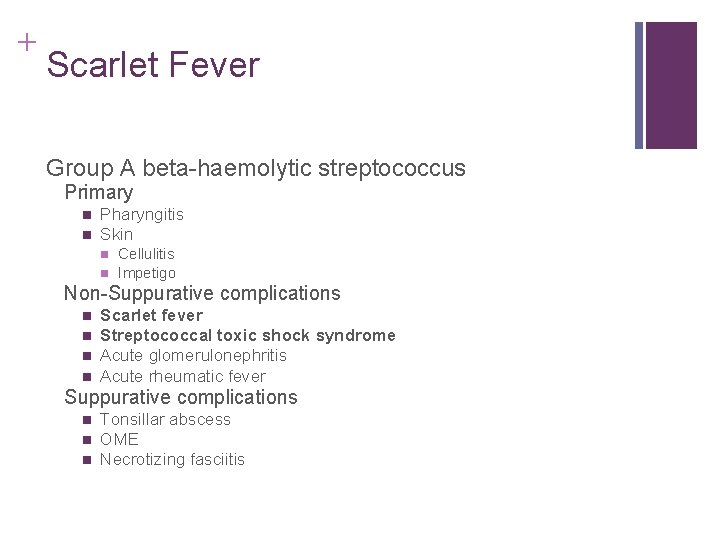
+ Scarlet Fever Group A beta-haemolytic streptococcus Primary n n Pharyngitis Skin n n Cellulitis Impetigo Non-Suppurative complications n n Scarlet fever Streptococcal toxic shock syndrome Acute glomerulonephritis Acute rheumatic fever Suppurative complications n n n Tonsillar abscess OME Necrotizing fasciitis
+ GAS n Aerobic gram-positive coccus n Forms chains
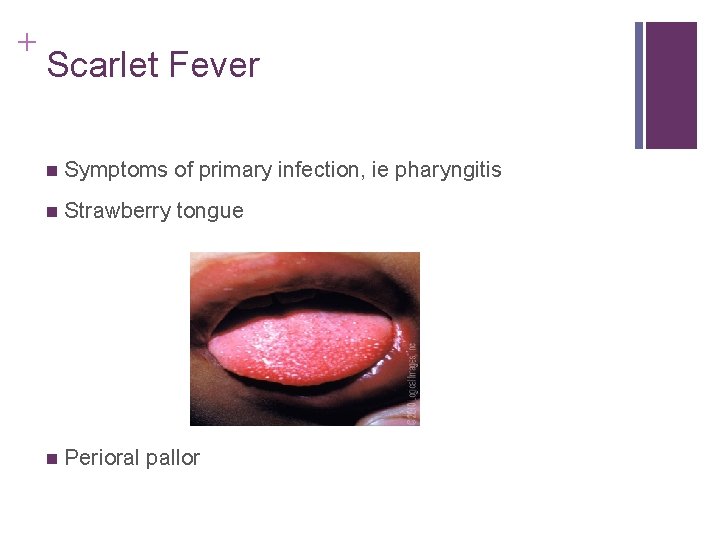
+ Scarlet Fever n Symptoms of primary infection, ie pharyngitis n Strawberry tongue n Perioral pallor
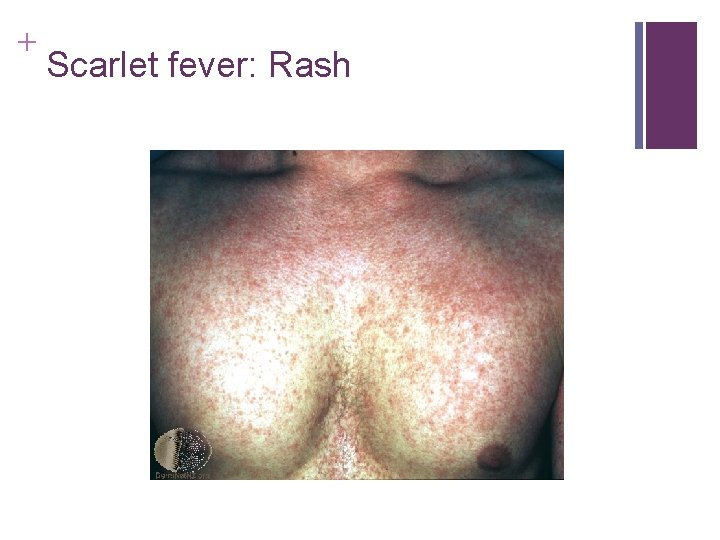
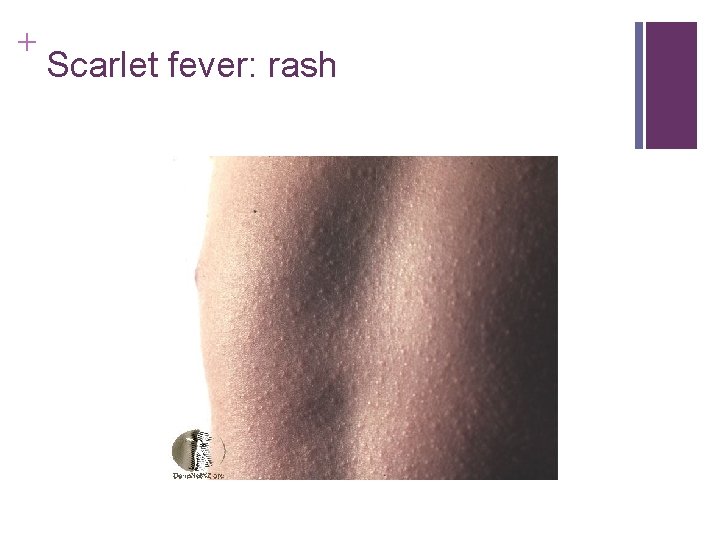
+ Scarlet fever: Rash
+ Scarlet fever: rash
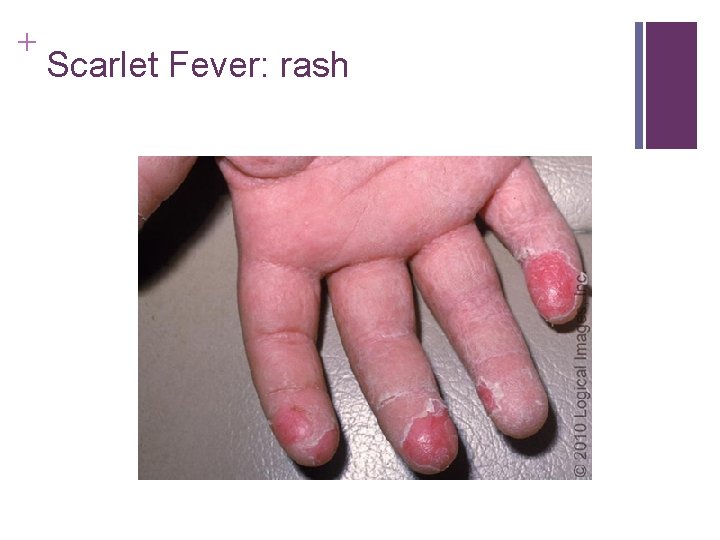
+ Scarlet Fever: rash
+ Streptococcal Toxic Shock Syndrome Definition: GAS infection associated with the acute onset of shock and organ failure Virulence factors: n M protein (Type 1, 3, 12, 28 most commonly isolated) n n Anti-phagocytic, cell membrane protein Exotoxins (SPEA, SPEB) n Streptococcal pyrogenic exotoxin A, B n Trigger inflammatory cytokine release
+ Streptococcal Toxic Shock Syndrome: Clinical Features n Fever n Hypotension n Altered mental status (50%) n Multiorgan dysfunction n n Renal (All) ARDS 55% n Influenza-like syndrome (20%) n Soft tissue infection n n Progresses to fasciitis/myositis 70 -80% Scarlatinaform rash (10%)
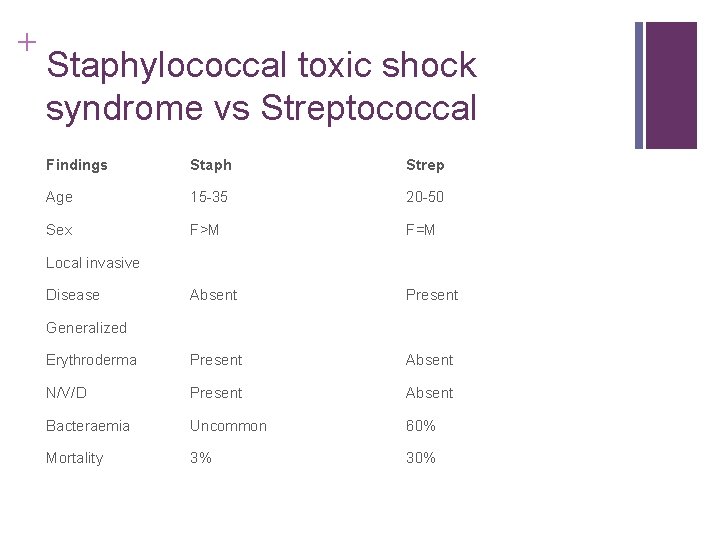
+ Staphylococcal toxic shock syndrome vs Streptococcal Findings Staph Strep Age 15 -35 20 -50 Sex F>M F=M Absent Present Erythroderma Present Absent N/V/D Present Absent Bacteraemia Uncommon 60% Mortality 3% 30% Local invasive Disease Generalized
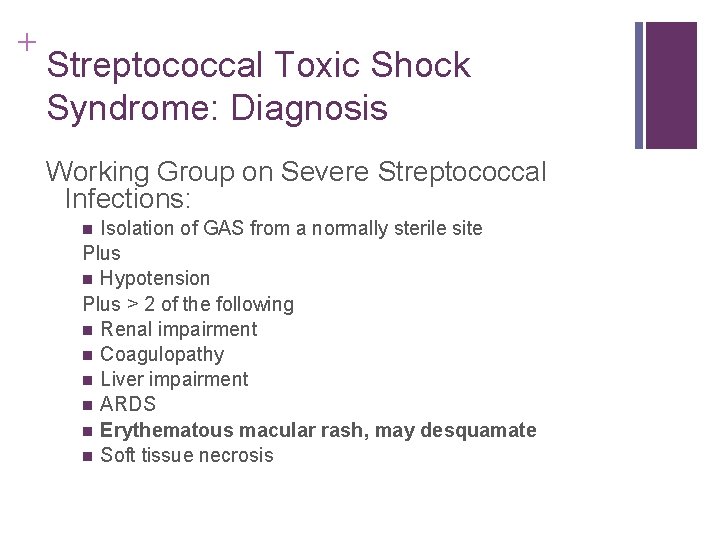
+ Streptococcal Toxic Shock Syndrome: Diagnosis Working Group on Severe Streptococcal Infections: Isolation of GAS from a normally sterile site Plus n Hypotension Plus > 2 of the following n Renal impairment n Coagulopathy n Liver impairment n ARDS n Erythematous macular rash, may desquamate n Soft tissue necrosis n
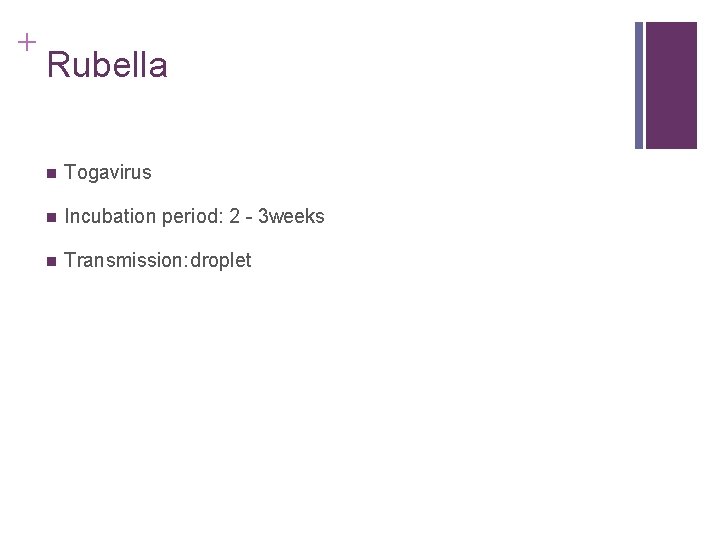
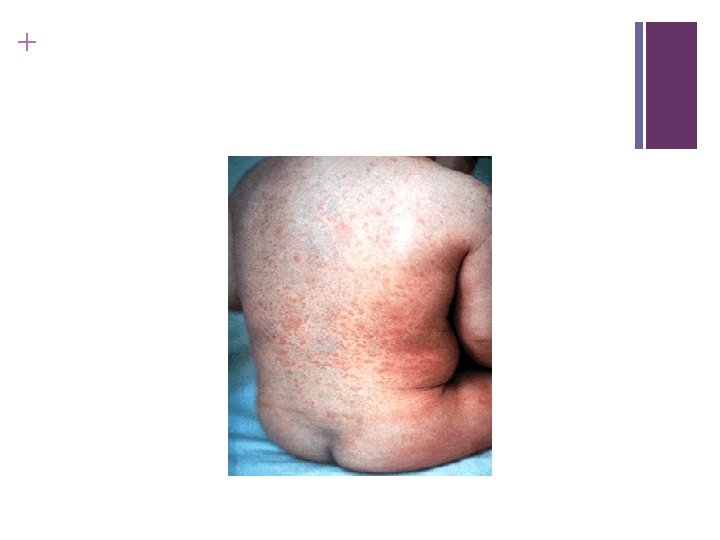
+ Rubella n Togavirus n Incubation period: 2 - 3 weeks n Transmission: droplet
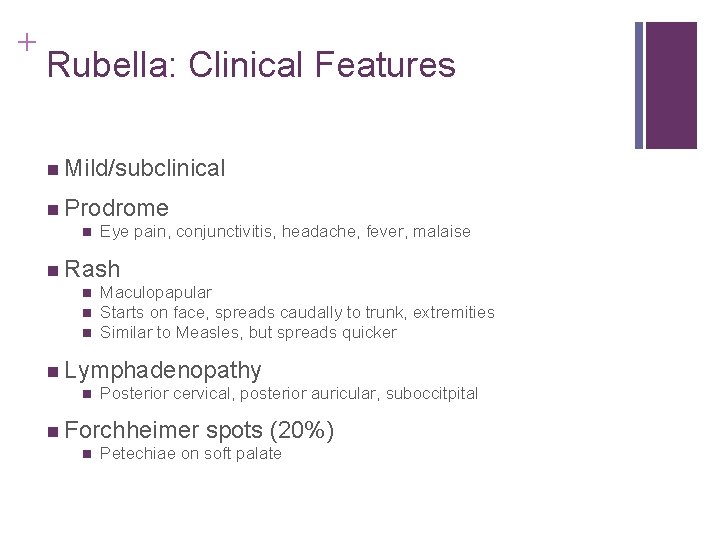
+ Rubella: Clinical Features n Mild/subclinical n Prodrome n Eye pain, conjunctivitis, headache, fever, malaise n Rash n n n Maculopapular Starts on face, spreads caudally to trunk, extremities Similar to Measles, but spreads quicker n Lymphadenopathy n Posterior cervical, posterior auricular, suboccitpital n Forchheimer n spots (20%) Petechiae on soft palate
+ Rubella: complications Joints n n n Arthralgia/arthritis Rare in children Lasts about 9 days Neurological n n n Encephalitis rare 2 -4 days after rash Parasthesia Other n n n Thrombocytopaenia Purpura Myocarditis Testicular pain Haemolytic anaemia
+ Rubella: Diagnosis n n Serology n Rubella Ig. M (false positive EBV, CMV) n Follow-up serology 4 weeks (paired sera) Treatment n Supportive
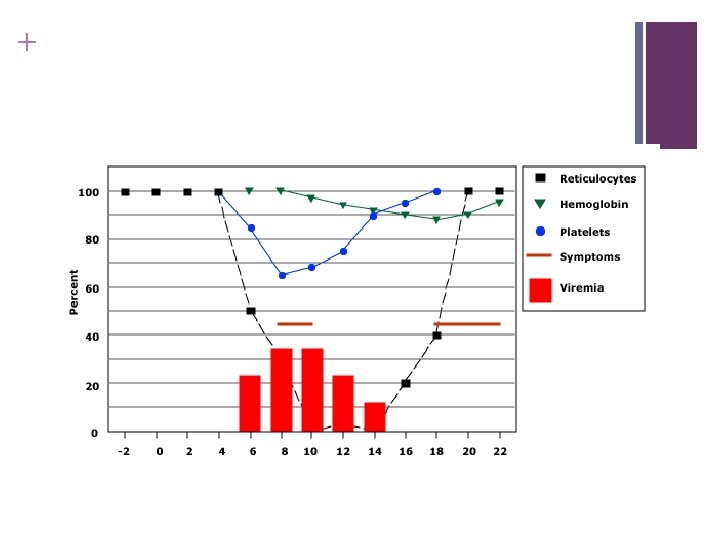
+ Erythema Infectiosum n Parvovirus B 19 n Common: 5 -10% aged 2 -5 seropositive n Incubation n 4 – 14 days n Replicates in erythroid progenitor cells in bone marrow/blood anaemia
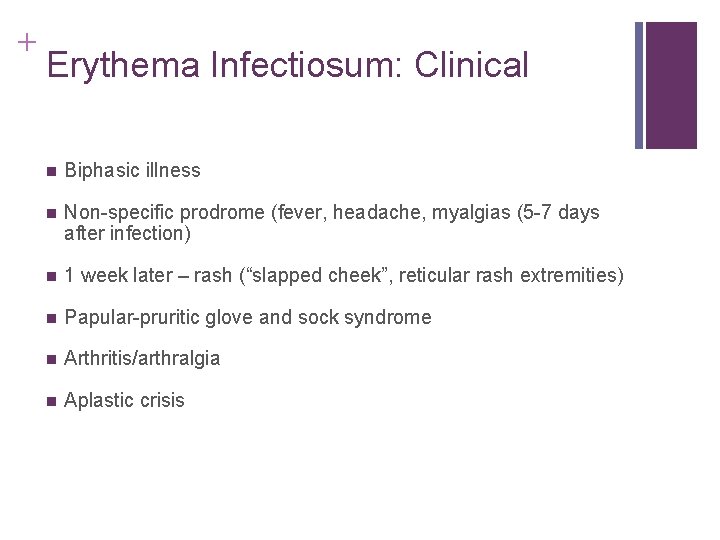
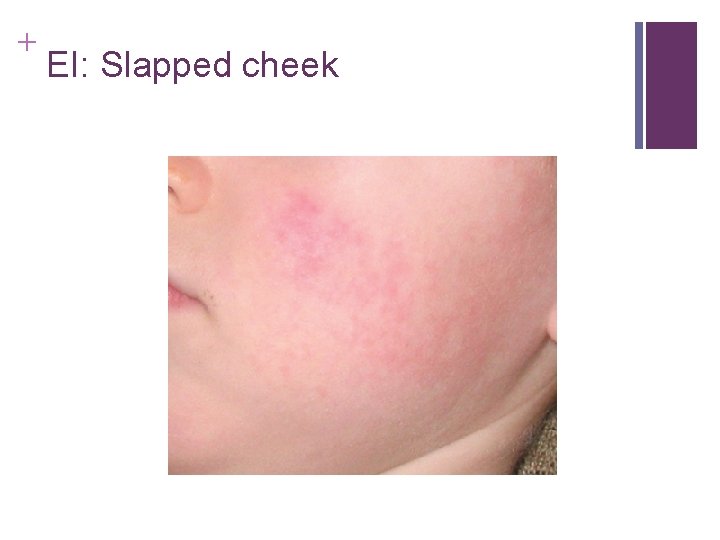
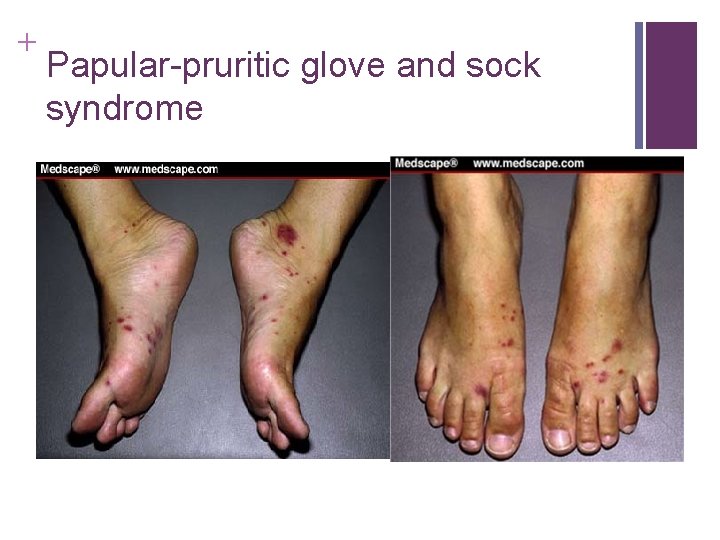
+ Erythema Infectiosum: Clinical n Biphasic illness n Non-specific prodrome (fever, headache, myalgias (5 -7 days after infection) n 1 week later – rash (“slapped cheek”, reticular rash extremities) n Papular-pruritic glove and sock syndrome n Arthritis/arthralgia n Aplastic crisis
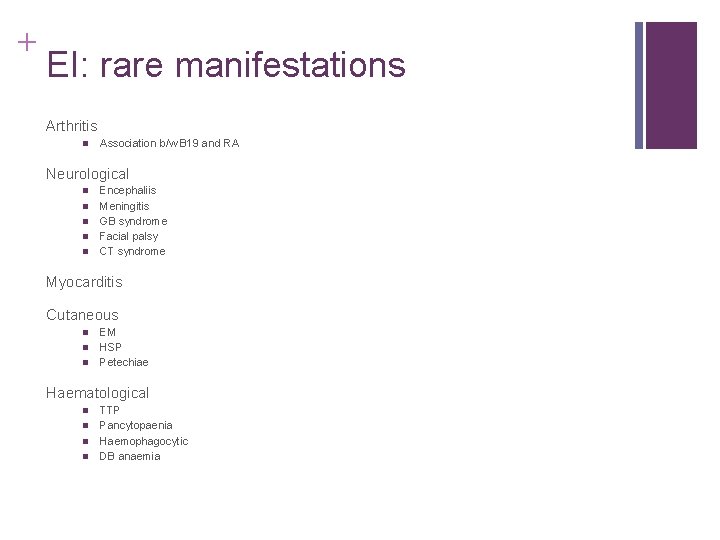
+ EI: rare manifestations Arthritis n Association b/w B 19 and RA Neurological n n n Encephaliis Meningitis GB syndrome Facial palsy CT syndrome Myocarditis Cutaneous n n n EM HSP Petechiae Haematological n n TTP Pancytopaenia Haemophagocytic DB anaemia
+ EI: Slapped cheek
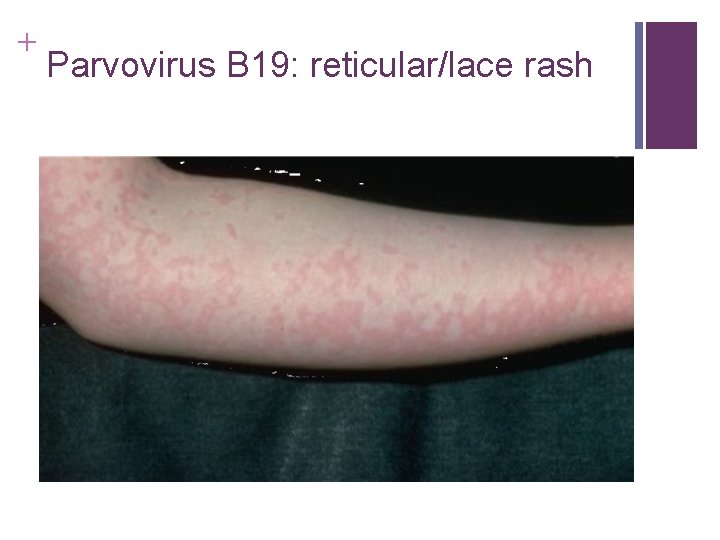
+ Parvovirus B 19: reticular/lace rash
+ Papular-pruritic glove and sock syndrome
+ EI: Treatment n Paracetamol, Ibuprofen n IVIG only in patients with aplasia n Supportive
+ HHV 6: Roseola Infantum n DNA virus n Sixth disease n Incubation: 9 days n Transmission: oral secretions n 80% children seropositive by age 1 n Peak infection 9 – 21 months
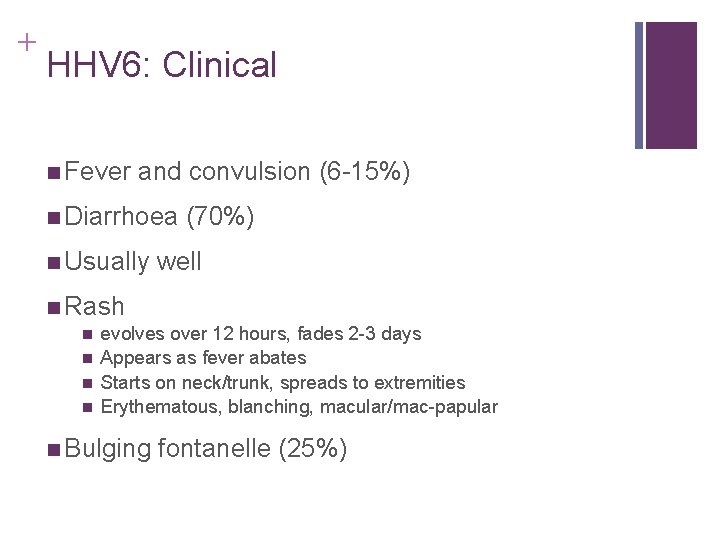
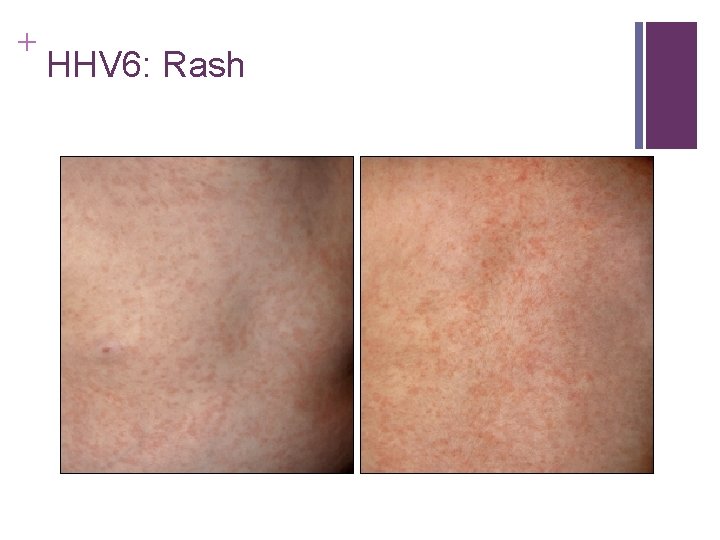
+ HHV 6: Clinical n Fever and convulsion (6 -15%) n Diarrhoea n Usually (70%) well n Rash n n evolves over 12 hours, fades 2 -3 days Appears as fever abates Starts on neck/trunk, spreads to extremities Erythematous, blanching, macular/mac-papular n Bulging fontanelle (25%)
+ HHV 6: Rash
+ HHV 6: treatment n Supportive n Anti-virals in immunocompromised
+ Varicella Zoster n DNA virus n Incubation: 10 -21 days n Tramission: Droplet n Highly infectious (1 -2 days before rash, until crusts)
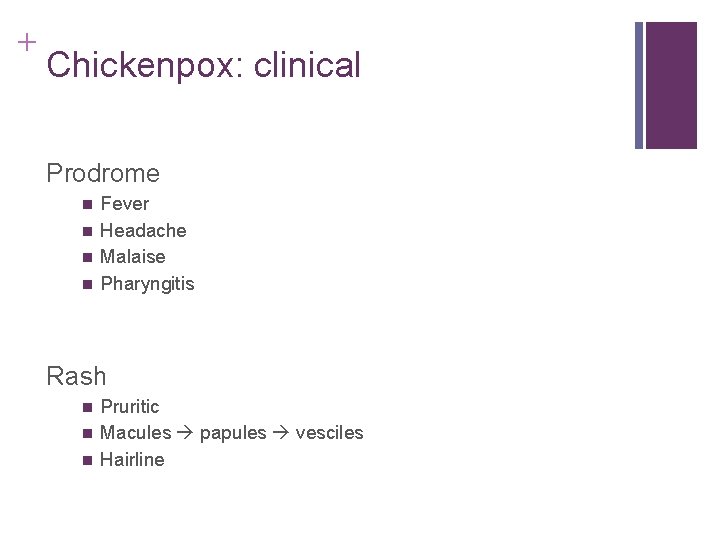
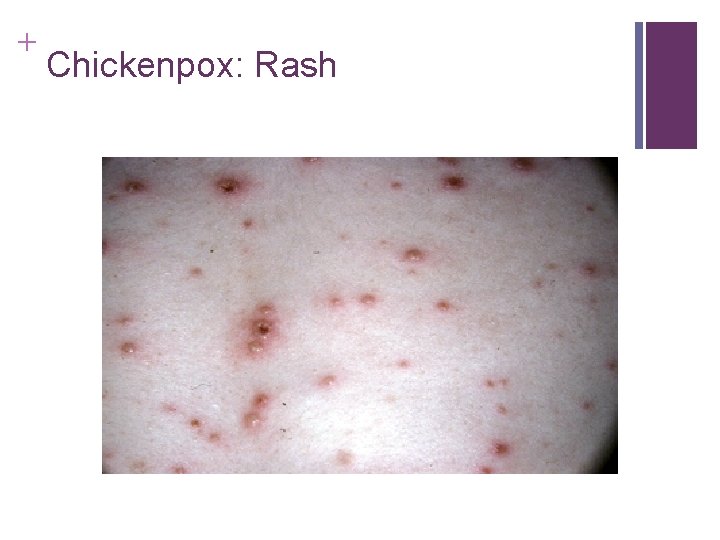
+ Chickenpox: clinical Prodrome n n Fever Headache Malaise Pharyngitis Rash n n n Pruritic Macules papules vesciles Hairline
+ Chickenpox: Rash
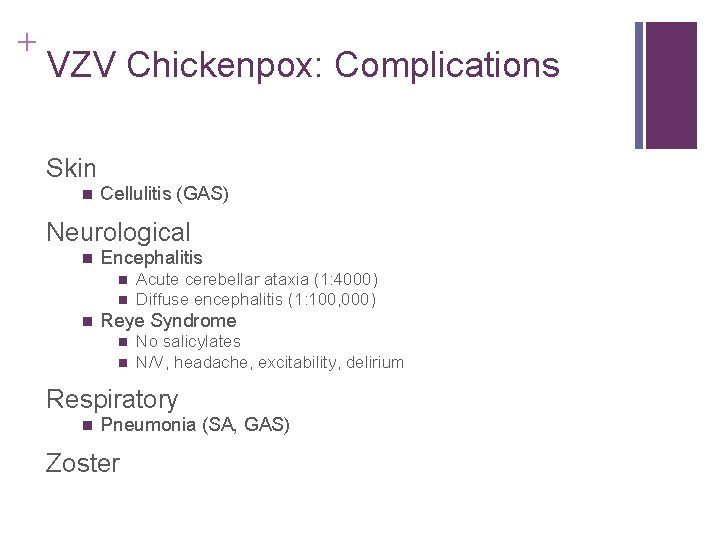
+ VZV Chickenpox: Complications Skin n Cellulitis (GAS) Neurological n Encephalitis n n n Acute cerebellar ataxia (1: 4000) Diffuse encephalitis (1: 100, 000) Reye Syndrome n n No salicylates N/V, headache, excitability, delirium Respiratory n Pneumonia (SA, GAS) Zoster
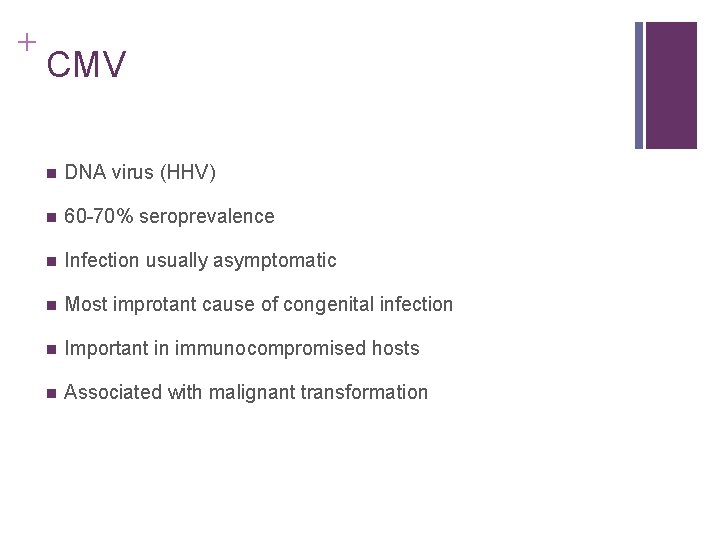
+ CMV n DNA virus (HHV) n 60 -70% seroprevalence n Infection usually asymptomatic n Most improtant cause of congenital infection n Important in immunocompromised hosts n Associated with malignant transformation
+ CMV: Clinical Immunocompetent n 90% asymptomatic n Fever and lethargy up to 4 weeks n Usually self-limiting Immunocompromised n CMV pneumonitis (90% mortality) n GIT disease n CMV retinitis
+ CMV: Diagnosis, Treatment Diagnosis n PCR and CMV antigenaemia Treatment n Nucleosides (Target DNA polymerase) n Ganciclovir and cidofovir n Foscarnet
+ ZIG immunoglobulin Indications n Neonates whose mother develops VZV from 5 days prior to 2 days after delivery n Neonates if mother no history or negative serology n Premature infants < 28/40 n Where vaccine may be contrindicated
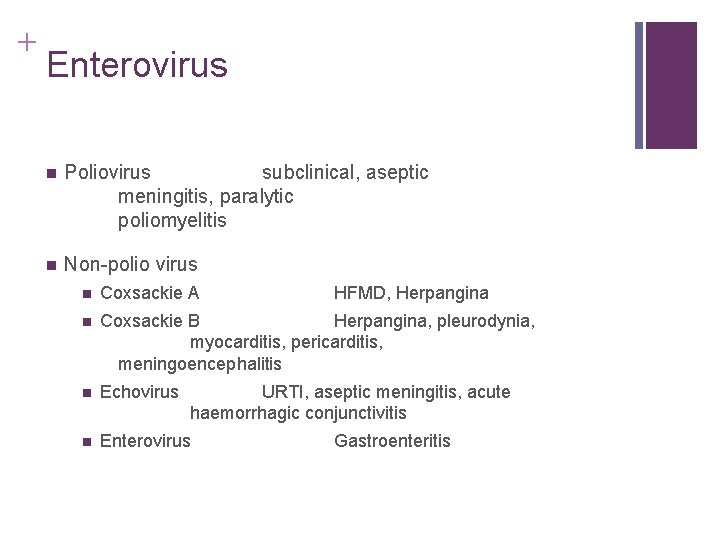
+ Enteroviruses n Picornaviridae family n RNA virus n Transmission n Faecal-oral n Respiratory secretions (Coxsackie. A 21) n Droplets (Enterovirus 70)
+ Enterovirus n Poliovirus subclinical, aseptic meningitis, paralytic poliomyelitis n Non-polio virus n Coxsackie A HFMD, Herpangina n Coxsackie B Herpangina, pleurodynia, myocarditis, pericarditis, meningoencephalitis n Echovirus n Enterovirus URTI, aseptic meningitis, acute haemorrhagic conjunctivitis Gastroenteritis
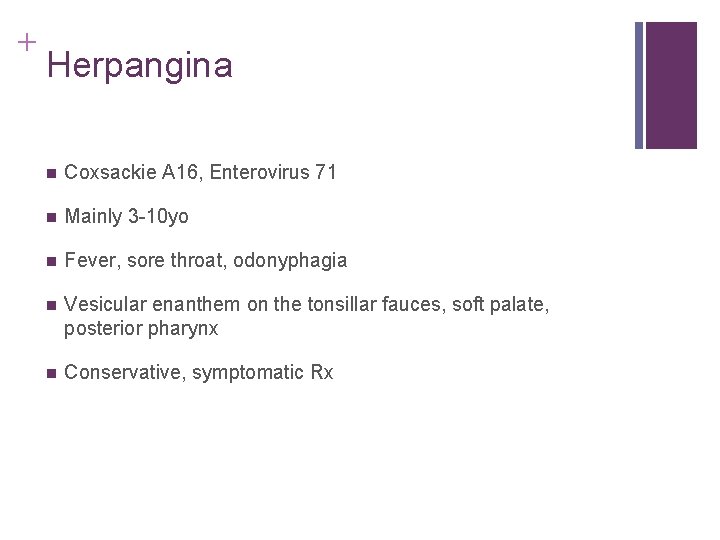
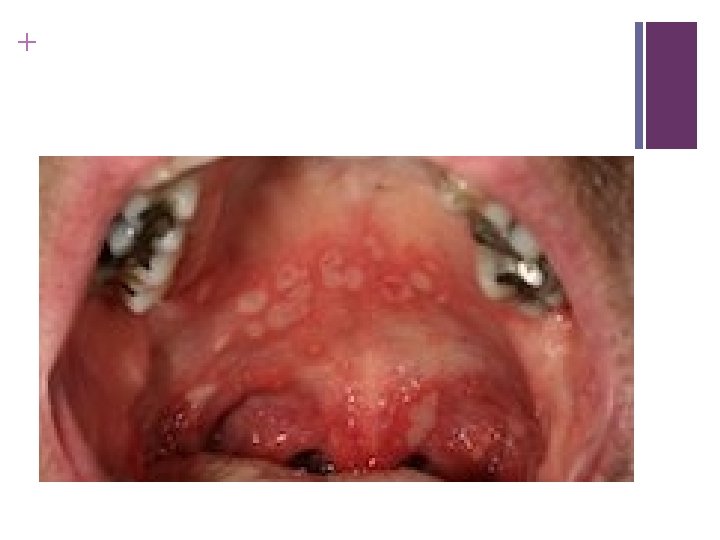
+ Herpangina n Coxsackie A 16, Enterovirus 71 n Mainly 3 -10 yo n Fever, sore throat, odonyphagia n Vesicular enanthem on the tonsillar fauces, soft palate, posterior pharynx n Conservative, symptomatic Rx
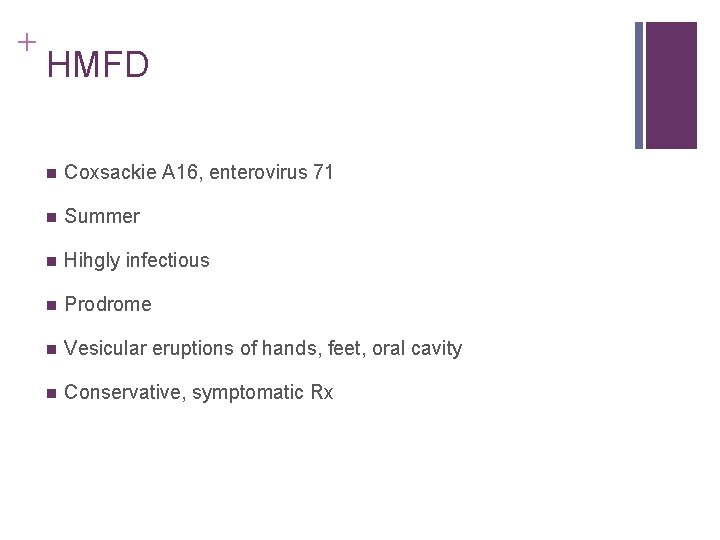
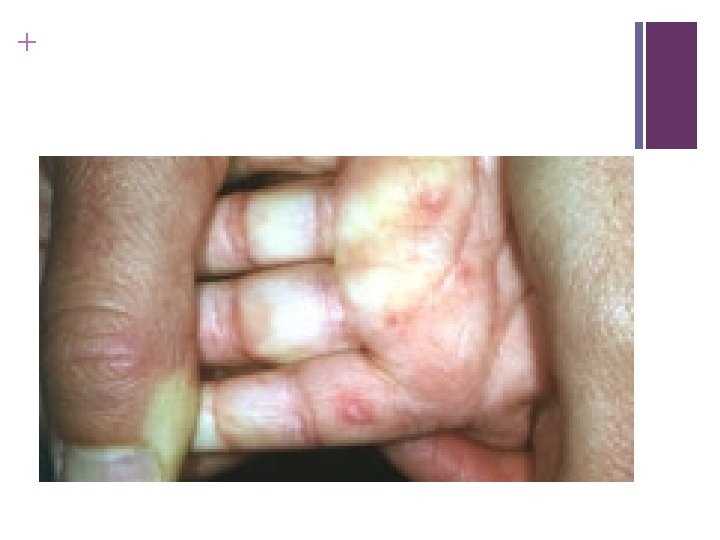
+ HMFD n Coxsackie A 16, enterovirus 71 n Summer n Hihgly infectious n Prodrome n Vesicular eruptions of hands, feet, oral cavity n Conservative, symptomatic Rx
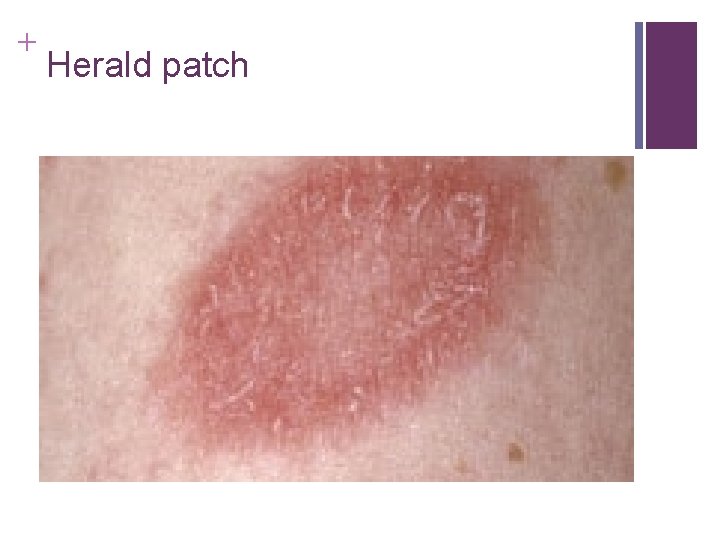
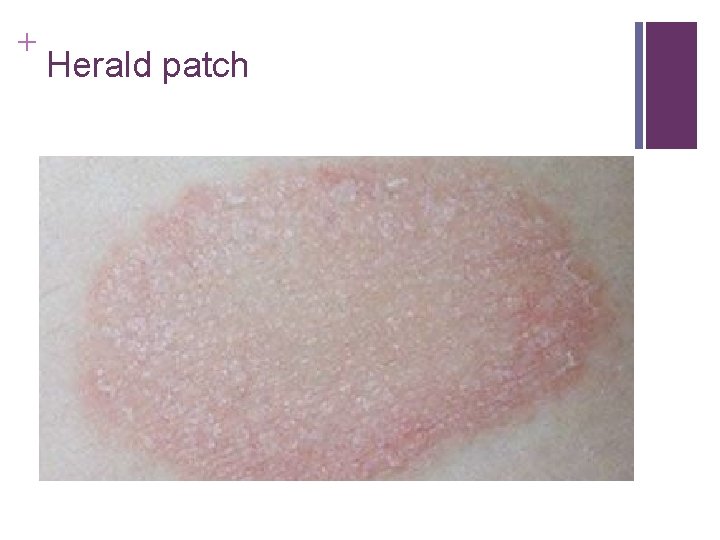
+ Pityriasis rosea n ? viral aetiology n Mulitple viruses implicated n Often viral prodrome n “Herald” patch n Single scaling patch n Appears 1 -21 ays prior to general rash
+ Herald patch
+ Herald patch
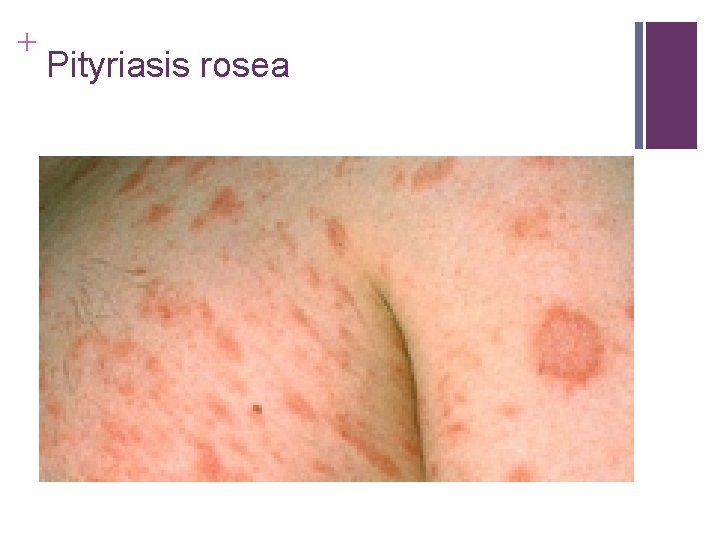
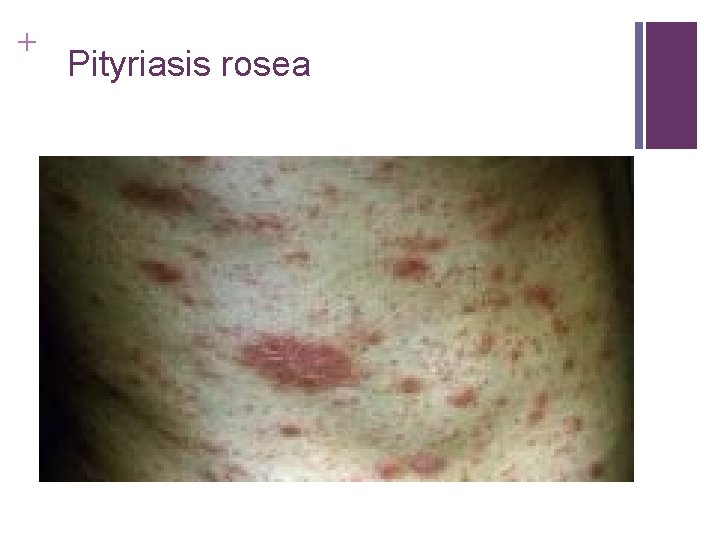
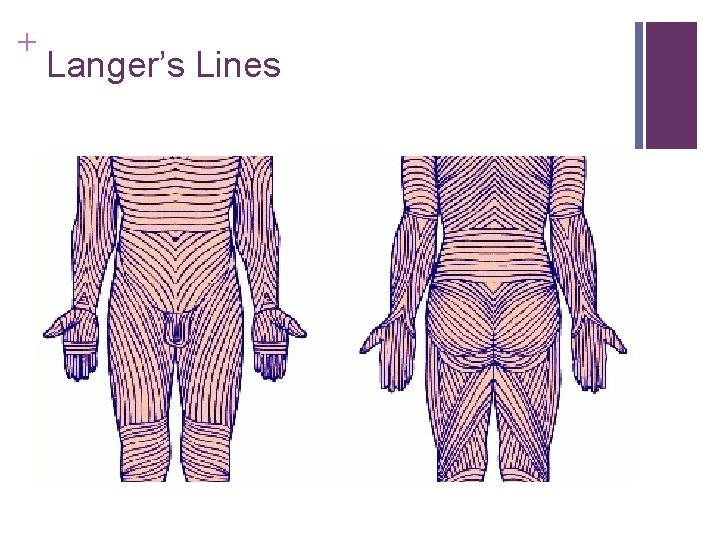
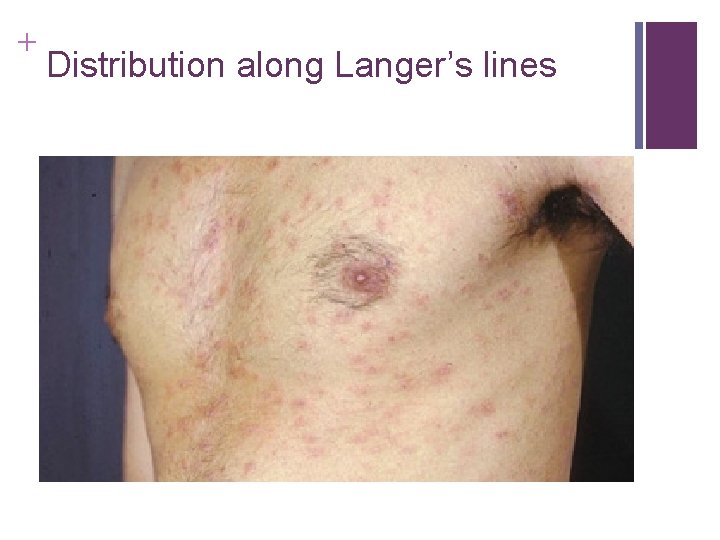
+ Pityriasis rosea n Scaly patches/plaques n Chest and back n Uncommon on face/scalp n Smaller than herald patch n Follow Langer’s lines n Collagen bundle direction n Christmas tree distribution n Pruritic (75%)
+ Pityriasis rosea
+ Pityriasis rosea
+ Langer’s Lines
+ Distribution along Langer’s lines
+ Pityriasis rosea n Symptomatic treatment n Lasts 6 -12 weeks n Some cases photosensitive n ? non-infectious
+ Pityriasis lichenoides n ? Aetiology n Post-infectious n T-cell lymphoproliferative disorder n Immune-complex mediated hypersensitivity vasculitis n Pityriasis lichenoides chronica (PLC) n Pityriasis lichenoides et varioliformis acuta (PLEVA)
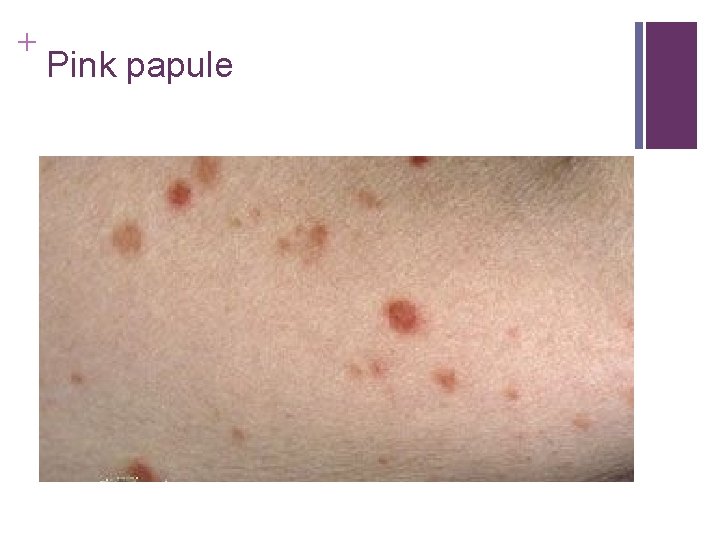
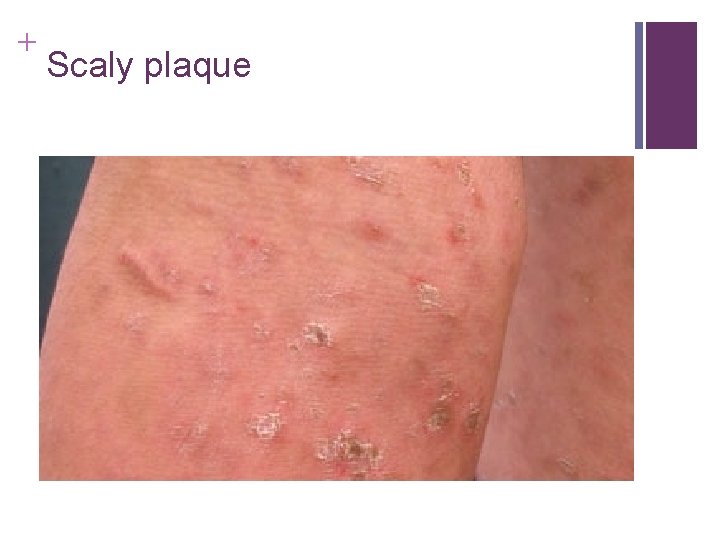
+ Pityriasis lichenoides (PLC) n Various stages n Small pink papule reddish-brown n A fine mica-like adherent scale attached to a central spot n Spot flattens out spontaneously leaving behind a brown mark, which fades over months n Commonly trunk, buttocks, arms, legs n Not itchy/irritable
+ Pink papule
+ Scaly plaque
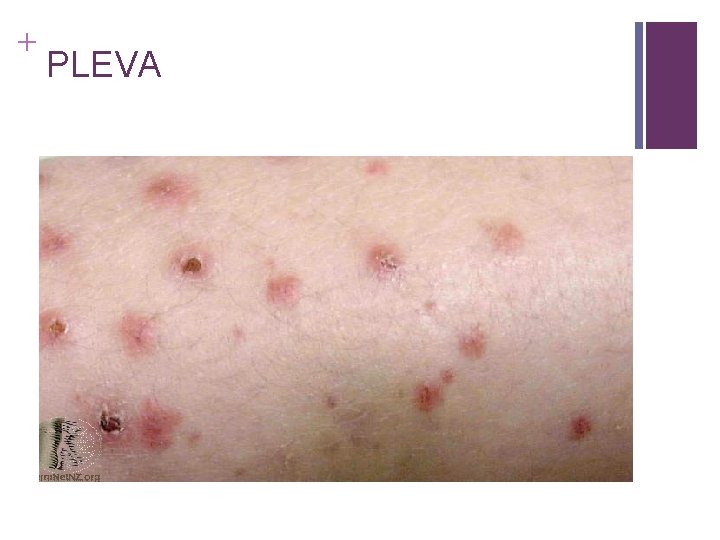
+ PLEVA n Red patches that evolve quickly into papules 5 -15 mm diameter n Often covered in mica-like scale n Papules can contain pus/blood n Trunk , extremities commonly, but can be widespread n Pruritic and burning sensation
+ PLEVA
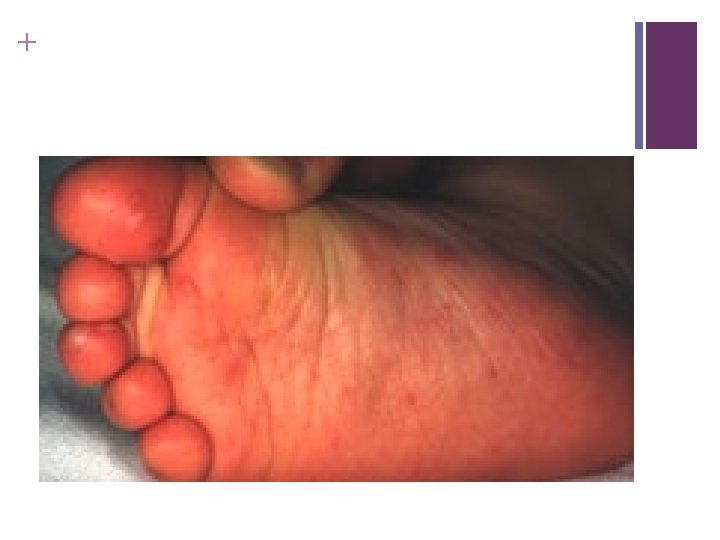
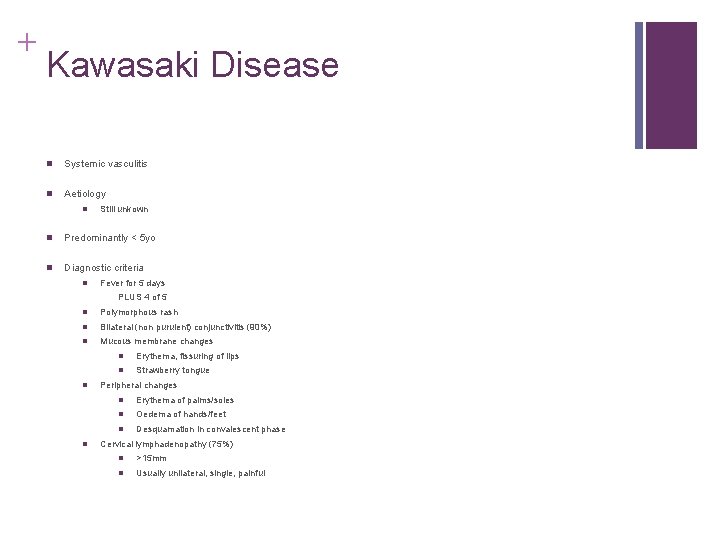
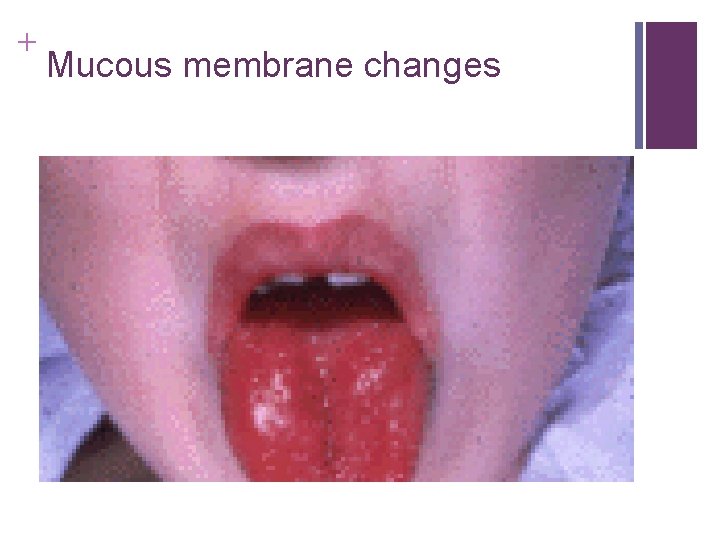
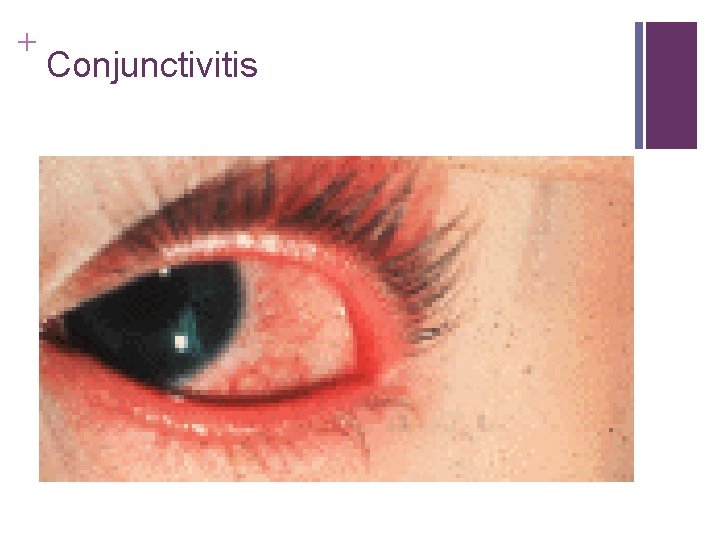
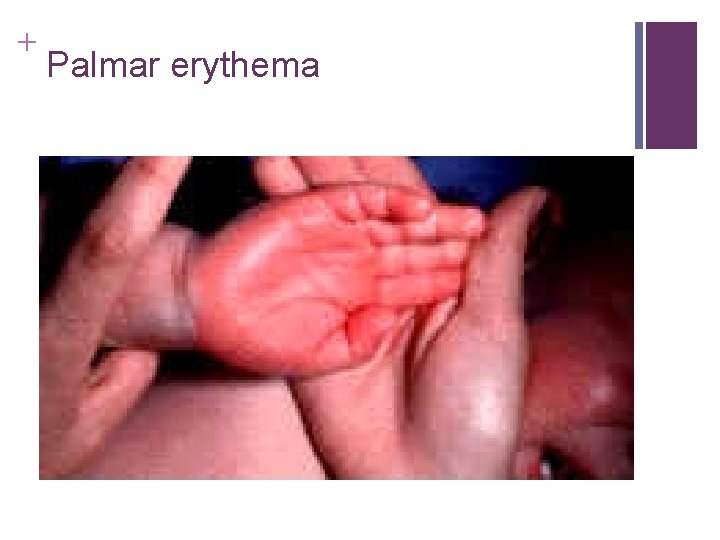
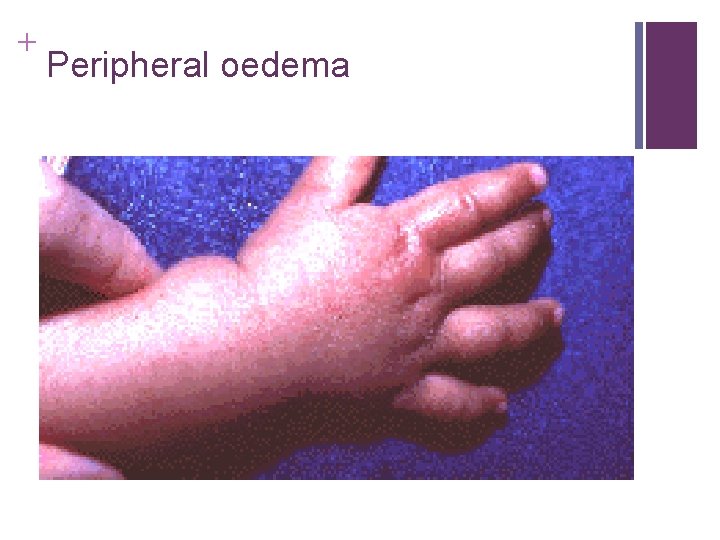
+ Kawasaki Disease n Systemic vasculitis n Aetiology n Still unkown n Predominantly < 5 yo n Diagnostic criteria n Fever for 5 days n Polymorphous rash n Bilateral (non purulent) conjunctivitis (90%) n Mucous membrane changes PLUS 4 of 5 n n n Erythema, fissuring of lips n Strawberry tongue Peripheral changes n Erythema of palms/soles n Oedema of hands/feet n Desquamation in convalescent phase Cervical lymphadenopathy (75%) n >15 mm n Usually unilateral, single, painful
+ Important complication n Coronary artery abnormalities n Aneurysms n An unfavourable outcome n Related to duration of fever
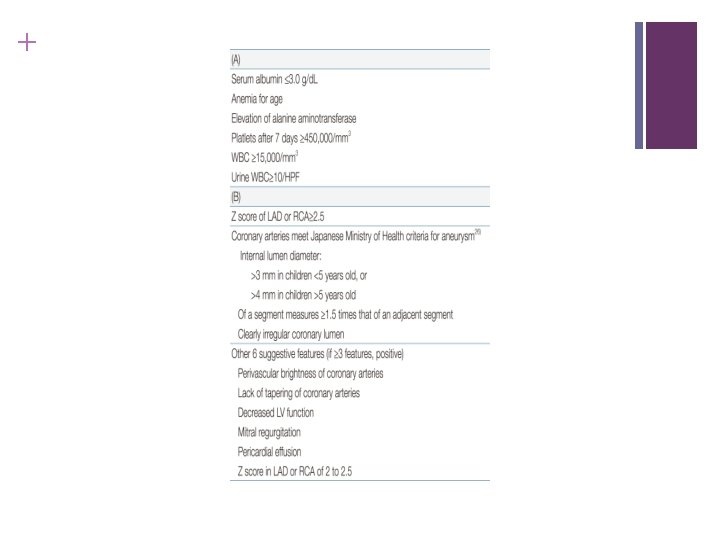
+ Atypical Kawasaki disease n Usually at extremes of age n Additional diagnostic criteria to aid in diagnosis n ? associated with higher rate of coronary artery complications
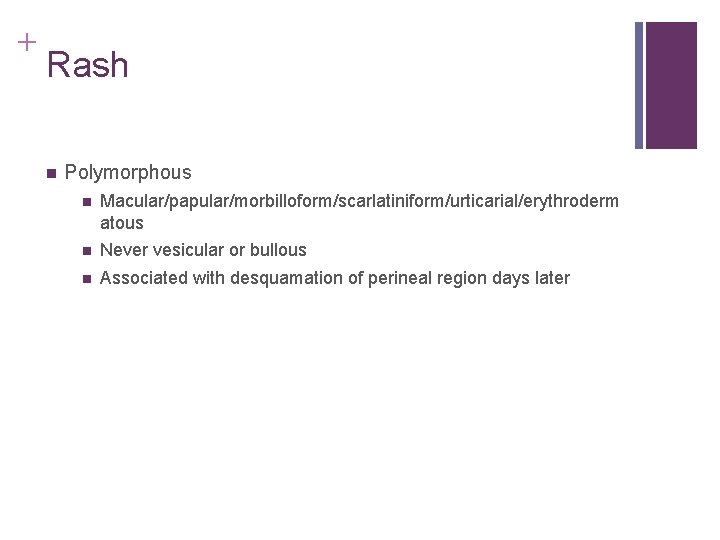
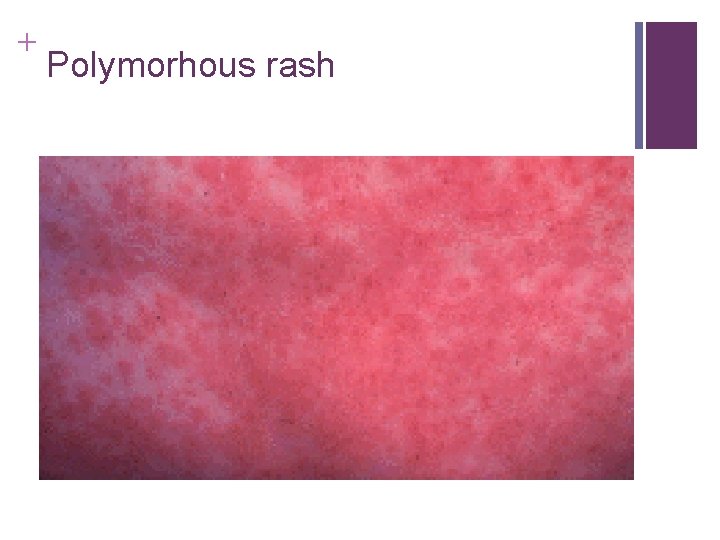
+ Rash n Polymorphous n Macular/papular/morbilloform/scarlatiniform/urticarial/erythroderm atous n Never vesicular or bullous n Associated with desquamation of perineal region days later
+ Polymorhous rash
+ Mucous membrane changes
+ Conjunctivitis
+ Palmar erythema
+ Peripheral oedema
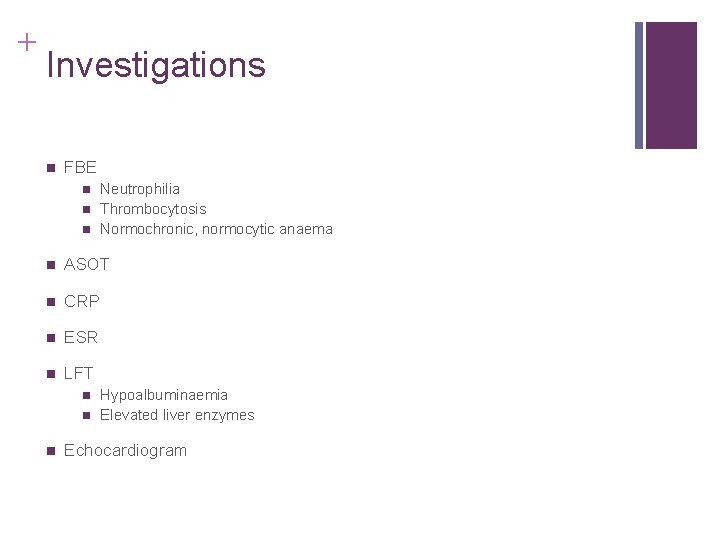
+ Investigations n FBE n n n Neutrophilia Thrombocytosis Normochronic, normocytic anaema n ASOT n CRP n ESR n LFT n n n Hypoalbuminaemia Elevated liver enzymes Echocardiogram
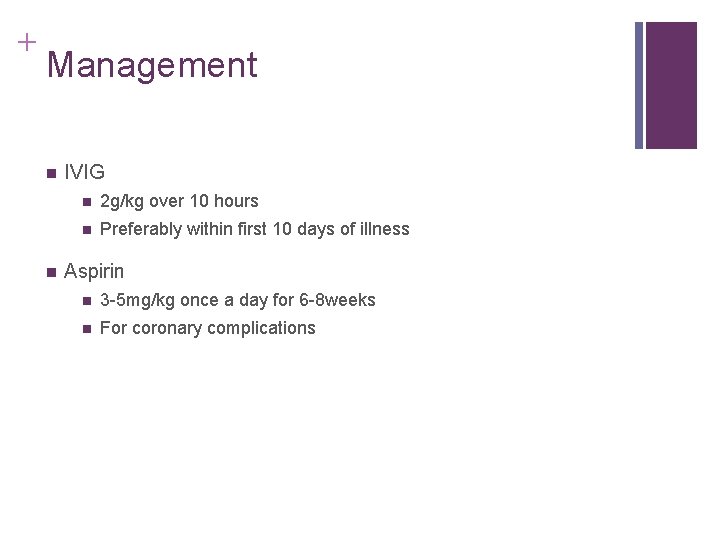
+ Management n n IVIG n 2 g/kg over 10 hours n Preferably within first 10 days of illness Aspirin n 3 -5 mg/kg once a day for 6 -8 weeks n For coronary complications