
Pediatric Board Review Allergy Immunology David J Resnick
Pediatric Board Review Allergy & Immunology David J. Resnick, M. D. Associate Clinical Prof. of Pediatrics Columbia University The New York Presbyterian Hospital 1
Goal of Talk Identify common pediatric allergic diseases Discuss the presentation and diagnoses of primary immunodeficiencies Ninety percent of the audience will be awake at the end of the talk 2
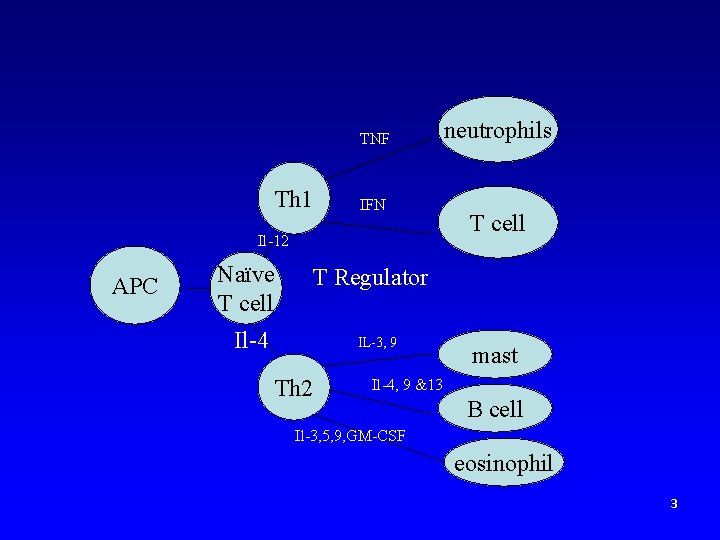
TNF Th 1 IFN Il-12 APC Naïve T cell neutrophils T cell T Regulator Il-4 IL-3, 9 Th 2 mast Il-4, 9 &13 B cell Il-3, 5, 9, GM-CSF eosinophil 3
When to consider an immunodeficiency Unusual infections (recurrent and severe) – abscess, pneumonia, sinusitis, thrush Unusual bugs Antibiotics don’t help, need IV antibiotics Failure to thrive Family history of immunodeficiency What is a normal number of infections? Usually 6 -8 colds per year Children attending daycare or have siblings in school tend to have more than others Not unusual to have 6 otitis or 2 gastroenteritis in first few years 4
A 5 yr old is admitted to the hospital with his 4 th pneumonia. He has a history of recurrent OM and sinusitis diagnosed by CT scan. His heart sounds are heard better on the left side of the chest. The best to confirm his diagnosis is: A) serum immunoglobulins B) T cell subsets C) a sweat test D) CH 50 E) ciliary biopsy 5
Primary Ciliary Dykinesia (immotile cylia syndrome) (Kartagener syndrome) • Present with recurrent om, sinusitis and pneumonia • Situs inversus • Nasal polyps • Bronchiectasis (Tram track lines on CTscan) • Dx made with ciliary biopsy 6
The Immune System • T cells • B cells (that make immunoglobulins) • Phagocytic system (neutrophils and macrophages) • Complement 7
A 2 year old presents with recurrent bacterial and viral infections. The most appropriate initial tests to be performed are: • • • A) immunoglobulin subsets B) candida and tetanus skin tests C) B & T cell subsets D) complement 50 assay E) CBC and immunoglobulins 8
Work up of Immunodeficiencies • 70% of Immunodeficiency syndromes have immunoglobulins that are abnormal • CBC with differential allows us to look at neutrophil & lymphcyte count, and platelets 9
Primary Immune System Defects Present With • T cells – viral & fungal infections • B cells – recurrent bacterial infections • Phagocytic system- cellulitis, skin abscesses, pneumonia, periodontal disease • Complement- c 5 -9 Neisserial infections C 1, 2 & 4 -recurrent bacterial infections & SLE 10
B cell Work Up • • CBC with diff Quantitative Immunoglobulins Pre & Post vaccination titers Isohemmaglutinin testing (antibodies to AB blood antigens) 11
Work up of Immunodeficiencies • T cell- Cell mediated immunity – delayed type hypersensitivity intradermal skin test candida, tetanus, mumps, trichophyton. Other measures include lymphocyte count, T cell subpopulations by flow cytometry and lymphocyte stimulation tests • Dihydrorhomadine flourescence (DHR 123) measure neutrophil respiratory burst and is replacing the NBT test that diagnoses Chronic Granulomatous disease 12
Work up of Immunodeficiencies • Complement deficiencies only make up 2% of primary immunodeficiencies • Total Complement assay ( complement 50 or CH 50) measures the intactness of the classic complement pathway. Deficiencies from C 1 through C 9 can be picked up with this test 13
A 16 yr old is admitted with fever, headache, lethargy nuchal rigidity and a petechial rash. He was diagnosed with Neisseria Meningitides twice in the past. The best to perform to make the DX is: • • • 1) CH 50 2) serum immunoglobulins 3) Immunoglobulin subsets 4) HIV test 5) T cell stimulation test 14
A 14 month old presents with severe eczema, recurrent otitis, Strep Pneumo pneumonias. Blood tests reveal thrombocytopenia and small platelets The most likely diagnosis is: • A) X linked severe combined immunodeficiency • B) Di. George syndrome • C) Wiskott-Aldrich syndrome • D) Chronic granulomatous disease • E) Brutons X linked agammaglobulinemia 15
Wiskott-Aldrich syndrome • Prolonged bleeding after circumcision, bloody diarrhea • Recurrent infections and significant eczema that begin prior to 1 year of age • Small platelets and Thrombocytopenia • Treatment- IV gammaglobulin, prophylactic antibiotics, Identical bone marrow transplant 16
Brutons X linked agammaglobulinemia • • • Defect in the B cell tyrosine kinase protein Decrease in B cells production Severe hypogammaglobulinemia Small or absent tonsils Sinopulmonary infections after 6 months of age • Tx – IVIG 17
CVID -Common variable immunodeficiency Similar presentation to Brutons (sinopulmonary infections) but occurs in the older child or adult Not as severe hypogammaglobulinemia as Brutons Diarrhea due to Giardia Normal B cells Tx -IVIG 18
Transient Hypogammaglobulinemia of Infancy • All children need several years for immunologlobulins levels and antibody responses to become normal • Small number of children with recurrent infections have been found to have low immunoglobulin levels that eventually normalize • Have ability to form specific antibodies in response to immunizations • Have normal immunoglobulin levels by 2 -4 years • Need to compare levels based on age – some lab reference ranges are adult levels 19
Chronic Granulomatous Disease (CGD) • Disorder of phagocytic system • Inability to kill catalase positive organisms (Staph aureus, Serratia, Burkholderia cepacia, Salmonella, Aspergillus, & Candida) • Recurrent lymphadenitis, skin infections, hepatic abscesses & osteomyelitis • Tx- Cure – bone marrow transplant – Supportive care- interferon gamma and prophylactic antibiotics Diagnosis DHR 123 or NBT test 20
Leukocyte adhesion defect (LAD) • Delayed separation of umbilical cord • Elevated WBC count • Recurrent necrotic infections of skin, mucous membranes, GI tract • 2 types • LAD-1 – defect or deficiency in CD 18 • LAD-2 – defect in fucose metabolism (rare) 21
Di. George Syndrome • Genetic disorder linked to chromosome 22 q 11. 2 & dysmorphogenesis of the 3 rd and 4 th pharyngael pouches • Can have a partial or complete Di. George • Can present in infancy with hypocalcemic tetany • Aortic arch and cardiac defects • Hypoplastic mandible, defective ears, and a short philtrum, absent thymus • Recurrent viral, bacterial and fungal infections • Tx- Bone marrow or thymic transplant 22
Ataxia Telangiectasia • • • Telangiectsis of conjuntivae and skin Cerebellar degeneration and ataxia Dysarthria, nystagmus, choreoathetosis Recurrent sinus, ear, and pulmonary infections Decrease in Ig. A & Ig. E Low lymphocyte count with poor mitogen stimulation response • Abnormal delayed type hypersensitivity 23
SCID (severe combined immunodeficiency) T and B cells defects • • • Onset in early life Medical emergency Recurrent sepsis, pneumonia, otitis, rash, diarrhea Opportunistic infections – PCP, Candida FTT when infections begin Severe lymphopenia – no lymphoid tissue, no thymus Death by age 2 years Treatment: stem cell transplant Many different mutations 24
25
Early Inflammation Late Inflammation Mast cell Late-phase reaction Hyperresponsiven ess Priming 26
Mast Cell Histamine Leukotrienes PAF Prostaglandins ECF NCF 27
Eosinophil PAF LTC 4 Major Basic Protein Cationic Protein 28
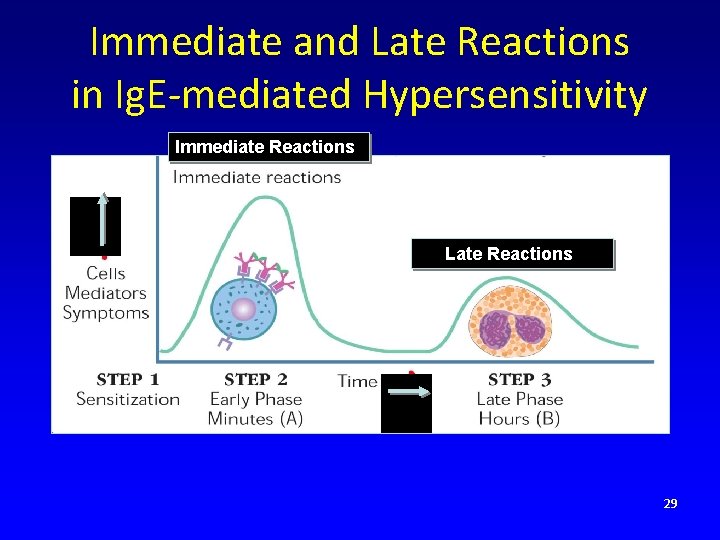
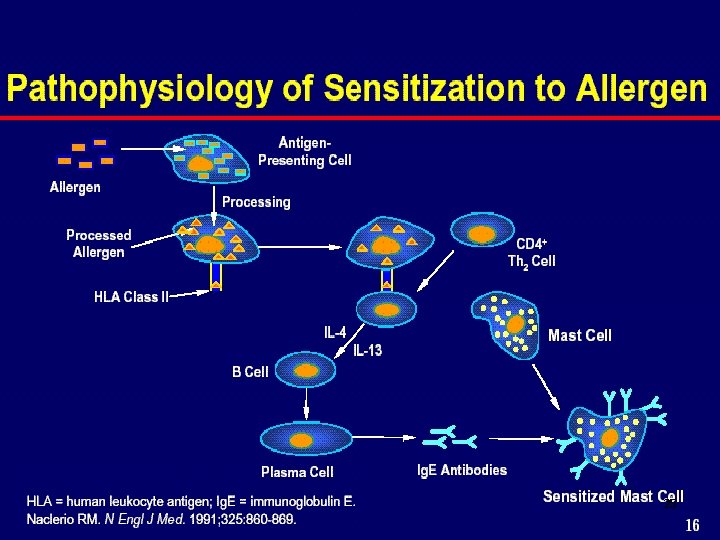
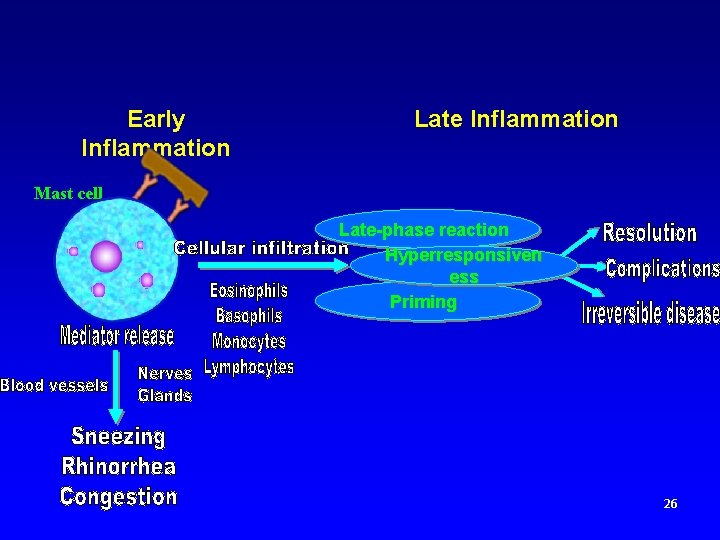
Immediate and Late Reactions in Ig. E-mediated Hypersensitivity Immediate Reactions Late Reactions 29
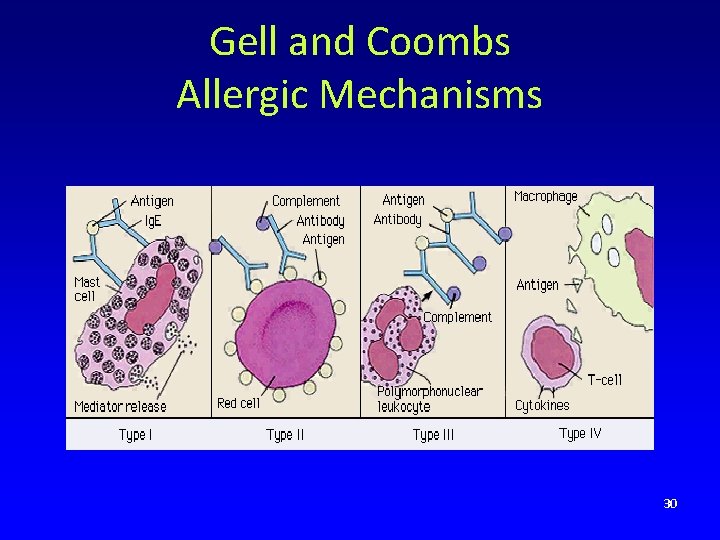
Gell and Coombs Allergic Mechanisms 30
Classification of Allergic Diseases • Type I- allergic rhininitis/conjunctivitis, allergic asthma, anaphylaxis, drug reactions, latex allergies, venom allergies, hives, food allergies • Type II – autoimmune hemolytic anemia • Type III –serum sickness (PCN, Ceclor) • Type IV – contact dermatitis (chemicals in latex gloves, latex, poison ivy, nickel) • Other – direct mast cell release 31
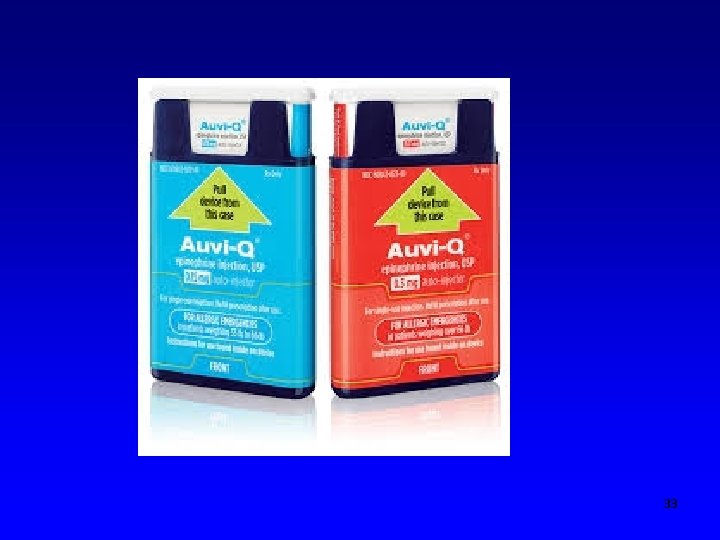
An 18 yr old presents with hives, pruritis, SOB, after eating at a seafood restaurant. There is a history of a shrimp allergy but he ordered tuna. His BP is 120/70, Oxygen sat was 92% on RA. The most appropriate action is to: A) Administer SC Epinephrine in the deltoid B) Administer IM Benadryl C) Administer PO Benadryl D) Administer IM Epinephrine in the deltoid E) Administer IM Epinephrine thigh 32
33
Signs & Symptoms of Anaphylaxis • Respiratory- hoarseness, dysphagia, cough, wheezing, SOB, tightness in throat, rhinorrhea, sneezing • Cardiovascular- faintness, syncope, arrhythmia, hypotension • Skin- flushing, pruritus, urticaria angioedema, • Gastrointestinal- nausea, abdominal pain, vomiting, diarrhea • Mouth- edema & pruritus of lips tongue and palate • Other sites- uterine contractions, conjunctival edema, feeling of impending doom 34
Triggers of Anaphylaxis • Foods- • • • children- peanuts, fish, shellfish infants-milk eggs, wheat, soy (contamination commonly happens at restaurants) Medications - penicillin & derivatives, cephalosporins, tetracycline, sulfonamides, insulin, ibuprofen Allergen vaccines Latex Insect Venom IV contrast material (Anaphylactoid Reaction) 35
Acute Treatment of Anaphylaxis IM Epinephrine is the first line therapy for Anaphylaxis. This is almost always the answer to anaphylaxis on Board questions. • Early recognition and treatment – delays in therapy are associated with fatalities • Assessing the nature and severity of the reaction • Brief history – identify allergen if possible • initiate steps to reduce further absorption • General Therapy – supplemental oxygen, IVF, vital signs, cardiac monitoring • Goals of therapy – ABC’s 36
Tx Anaphylaxis 2 • • Oxygen Benadryl IM 1 mg/kg Steroids IV fluids Nebulized albuterol H 2 blockers Epinephrine/Dopamine/Norepinephrine 37
Differential Diagnosis of Anaphylaxis • Vasovagal- hypotension, pallor, bradycardia diaphoresis, no hives or flushing • Scombroidosis – hives, headache, nausea, vomiting, Klebsiella & Proteus produce saurine (Spoiled Mackerel, Tuna) • Carcinoid –flushing, diarrhea, GI pain, • MSG – flushing, burning, chest pain, headache • Angioneuroticedema Hereditary/Acquired • Panic attacks • Systemic mastocytosis- mastocytomas 38
A 10 year old presents with an insect sting that occurred yesterday and now has redness and swelling localized to the arm where he was stung. The redness extended to the entire forearm. There is no fever, chills, SOB or any generalized response. This reaction is best characterized by: A) B) C) D) E) Cellulitis Large local reaction Normal reaction Anaphylaxis Toxic reaction 39
A 5 year old presents with hives, SOB, dizziness, and drop in BP, after being stung by an insect. Which of the following statements is true : A. Epinephrine SC is the treatment of choice B. The chance of having another anaphylactic reaction to a similar sting is 10% C. This patient needs immunotherapy D. IV Epi should be given E. Get an allergy consult to perform testing to determine what stung him 40
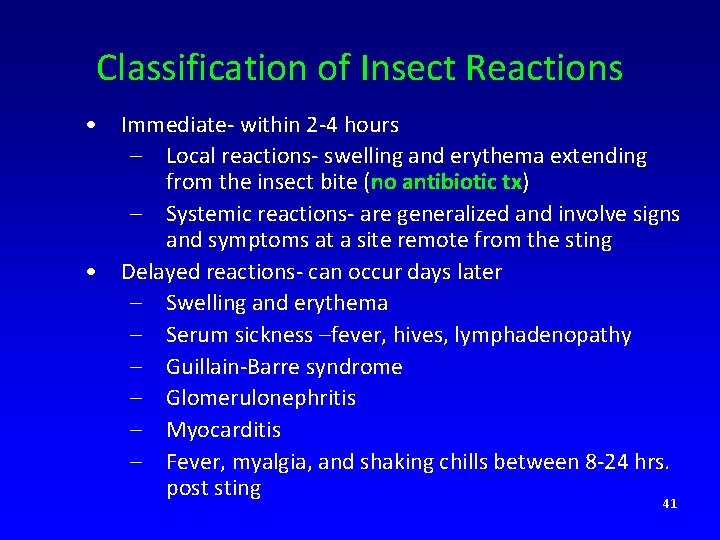
Classification of Insect Reactions • Immediate- within 2 -4 hours – Local reactions- swelling and erythema extending from the insect bite (no antibiotic tx) – Systemic reactions- are generalized and involve signs and symptoms at a site remote from the sting • Delayed reactions- can occur days later – Swelling and erythema – Serum sickness –fever, hives, lymphadenopathy – Guillain-Barre syndrome – Glomerulonephritis – Myocarditis – Fever, myalgia, and shaking chills between 8 -24 hrs. post sting 41
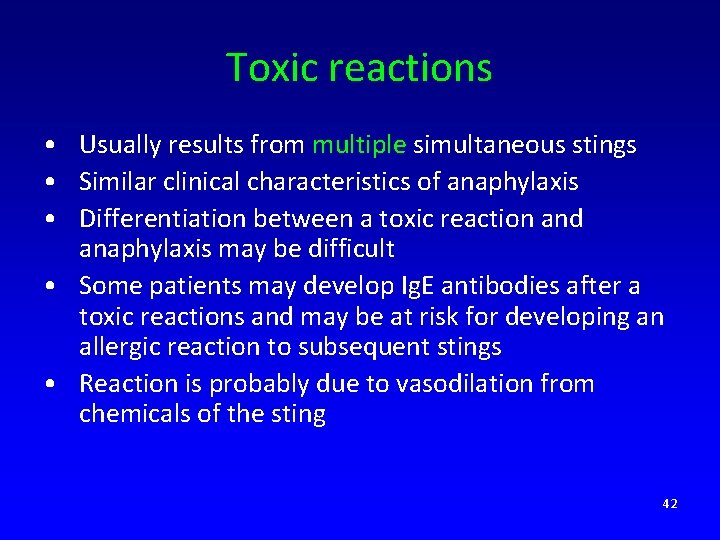
Toxic reactions • Usually results from multiple simultaneous stings • Similar clinical characteristics of anaphylaxis • Differentiation between a toxic reaction and anaphylaxis may be difficult • Some patients may develop Ig. E antibodies after a toxic reactions and may be at risk for developing an allergic reaction to subsequent stings • Reaction is probably due to vasodilation from chemicals of the sting 42
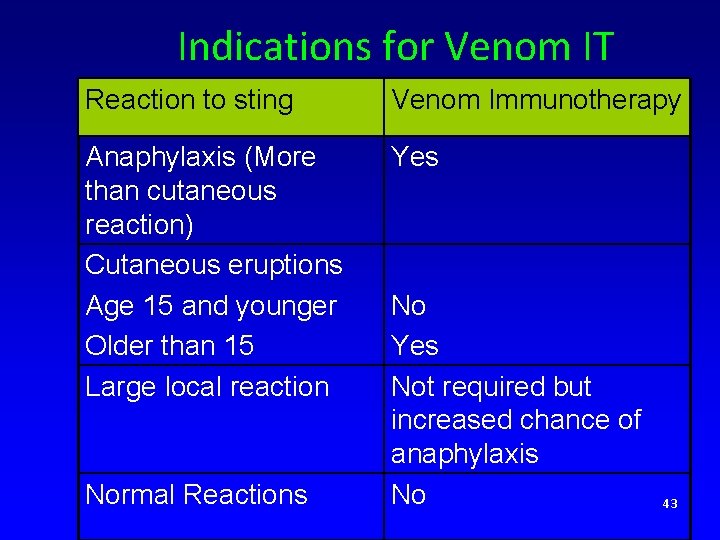
Indications for Venom IT Reaction to sting Venom Immunotherapy Anaphylaxis (More than cutaneous reaction) Cutaneous eruptions Age 15 and younger Older than 15 Large local reaction Yes Normal Reactions No Yes Not required but increased chance of anaphylaxis No 43
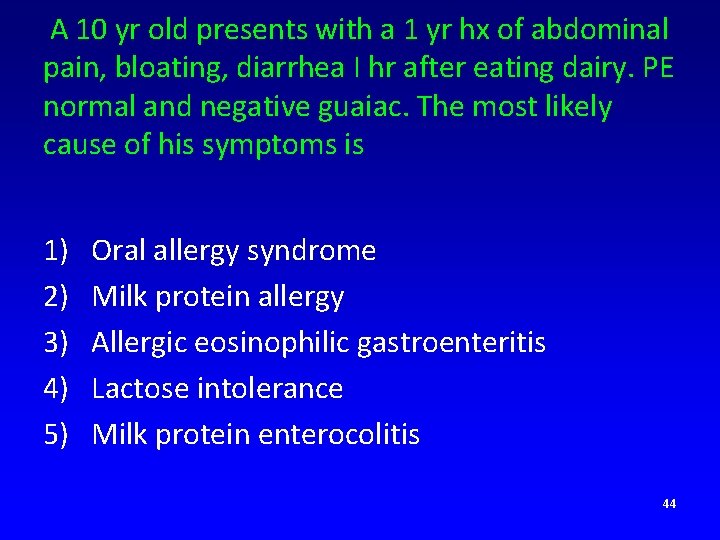
A 10 yr old presents with a 1 yr hx of abdominal pain, bloating, diarrhea I hr after eating dairy. PE normal and negative guaiac. The most likely cause of his symptoms is 1) 2) 3) 4) 5) Oral allergy syndrome Milk protein allergy Allergic eosinophilic gastroenteritis Lactose intolerance Milk protein enterocolitis 44
Facts to know • Ig. E milk allergies usually begin in the 1 st year of lifehives , AD, & anaphylaxis within minutes to an hr of ingestion • Milk protein enteropathies usually present within the 1 st year of life with hematochezia, diarrhea, & vomiting • Oral allergy is due to fruits & is associated with pollen allergies • EE we’ll talk about later • Lactase deficiencies usually present after 6 yrs of age - bloating 45
An 8 yr old presents with fever, arthralgia, arthritis and urticaria 3 days after completing a course of amoxicillin for strep throat. The most likely diagnosis is: A. erythema multiforme B. Ig. E mediated pcn allergy C. post streptococcal arthritis D. serum sickness E. delayed PCN allergy 46
Facts to know • EM classically have target lesions • Ig. E mediated medication reactions usually start within a few days after initiating therapy • Serum sickness is type III reaction that begins 1 -2 wks (up to 20 days) from initiating therapy. Fever, rash, malaise, lymphadenopathy, arthralgia & arthritis 47
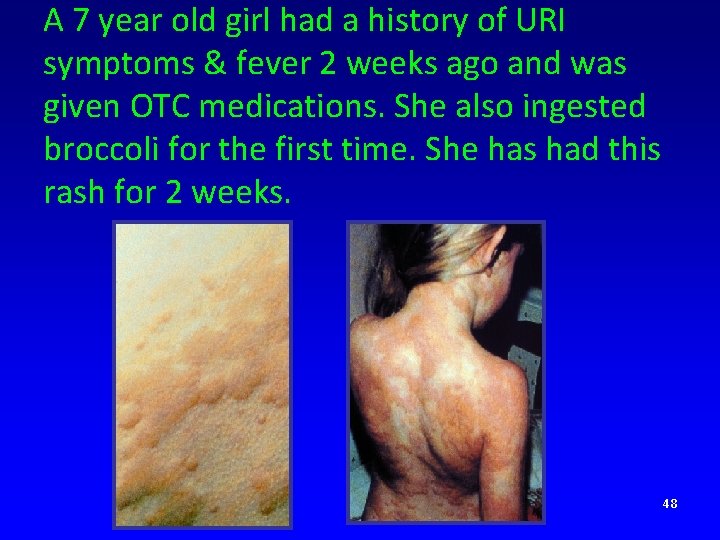
A 7 year old girl had a history of URI symptoms & fever 2 weeks ago and was given OTC medications. She also ingested broccoli for the first time. She has had this rash for 2 weeks. 48
The most likely cause of this rash is A. a viral infection B. a dye in her OTC medication C. ibuprofen D. Lyme disease E. allergy to broccoli 49
Etiology of Hives • Foods- children- peanuts, fish, shellfish infants-milk, eggs, wheat, soy (contamination commonly happens at restaurants) • Medications - penicillin & derivatives, cephalosporins, tetracycline, sulfonamides, insulin, ibuprofen • Viral infections can last weeks as opposed to foods • Physical urticarias- dermographism, pressure, cold, heat, solar, exercise, vibratory • Idiopathic • Medical conditions are unlikely to trigger hives in the pediatric population 50
A ten year old presents with recurrent angioedema of the extremities and at times his throat. His past medical history is significant for surgery to R/O appendicitis but no clear diagnosis was made. The family Hx is significant for a father with a peanut and PCN allergy. The most appropriate test to perform is: A. B. C. D. E. Peanut Rast C 4 level Skin testing for PCN SPEP C 1 level 51
Hereditary Angioneurotic Edema (HAE) • Patients do not have Hives with attacks • Usually present from 3 -20 years of age • Often is discovered after the patient presents with symptoms of appendicitis • C 1 esterase inhibitor is deficient causing increase in kinins and edema • C 4 is almost always low, C 2 is low during attacks • C 1 esterase inhibitor levels are low but there is a version with normal levels but abnormal functioning • Treatment with C 1 esterase inhibitor and otherapies are now available 52
A 13 yr old presents with hives for 6 months. He had Immunocap testing performed which was positive for dust mites, milk and shrimp. The hives last 3 -5 hours, then disappear. The most likely cause of the hives is… A) autoimmune thyroid disease B) allergies to dust C) allergies to food D) mastocytosis E) autoantibodies to the Ig. E receptor 53
Facts to know • Chronic urticaria is defined by hives lasting more than 6 weeks. It is rarely caused by foods or inhalants. Positive Immunocap testing usually means very little with hives unless there is a clear history suggesting a cause. • Routine Immunocap testing for chronic hives is not indicated. • CU in 40% of patients is caused by autoantibodies to the Ig. E Fc epsilon 1 receptor • Thyroid antibodies are associated with CU but is not the cause 54
A 4 yr old presents with sneezing and rhinorrhea lasting 4 days. The discharge is from one nostril, foul smelling and is described as blood tinged. The most likely diagnosis is A) Allergic rhinitis B) Sinusitis C) Nasal foreign body D) Nasal polyps E) Viral rhinitis 55
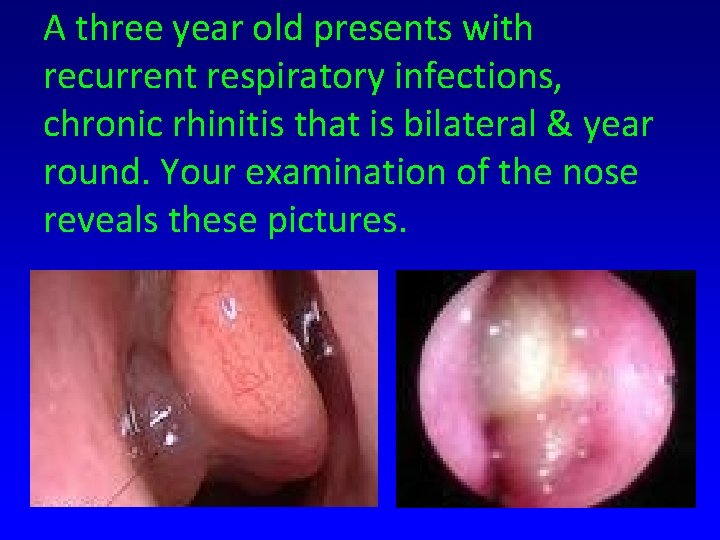
A three year old presents with recurrent respiratory infections, chronic rhinitis that is bilateral & year round. Your examination of the nose reveals these pictures. 56
Continued • The most likely diagnosis is • • • A) granuloma B) cystic fibrosis C) deviated septum D) foreign body E) Brutons agammaglobulinemia 57
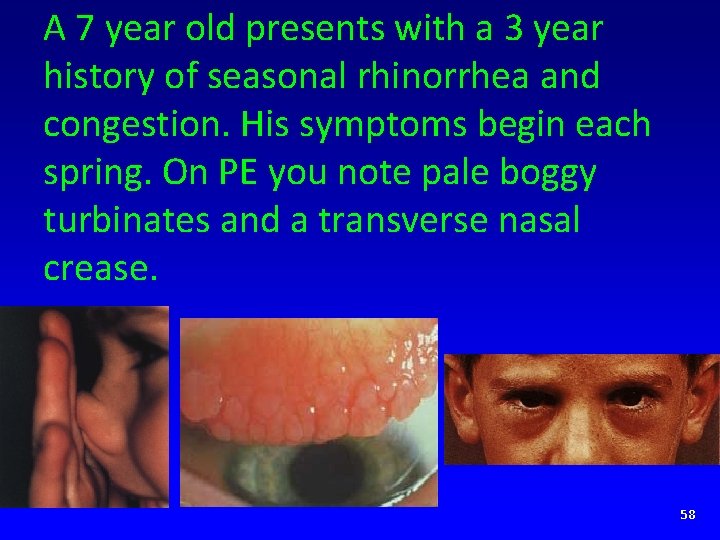
A 7 year old presents with a 3 year history of seasonal rhinorrhea and congestion. His symptoms begin each spring. On PE you note pale boggy turbinates and a transverse nasal crease. 58
The most effective long term treatment is a nasal spray containing a • • • A) corticosteroid B) anticholinergic C) decongestant D) mast cell stabilizer E) saline solution 59
• Topical nasal steroids are the most potent treatment for allergic rhinitis • Anticholinergic nasal sprays may help for vasomotor rhinitis/non allergic rhinitis • Mast cell stabilizers must be used several times a day for many days before it starts working • Nasal decongestant can cause a rebound effect when used more than 5 days 60
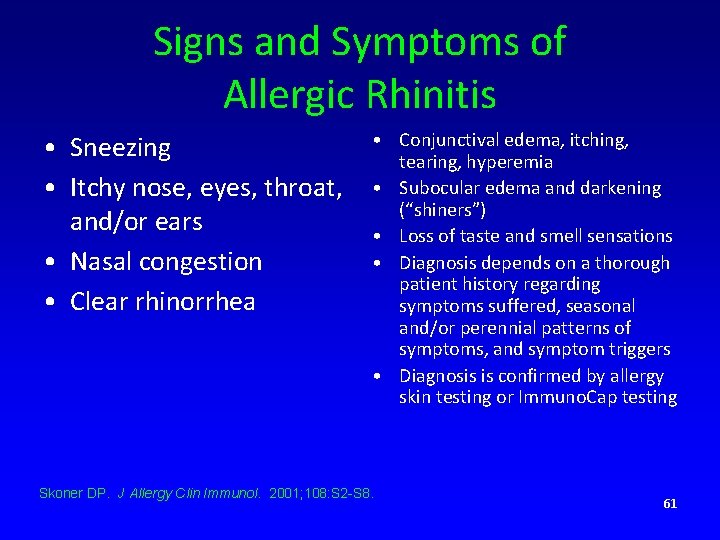
Signs and Symptoms of Allergic Rhinitis • Sneezing • Itchy nose, eyes, throat, and/or ears • Nasal congestion • Clear rhinorrhea • Conjunctival edema, itching, tearing, hyperemia • Subocular edema and darkening (“shiners”) • Loss of taste and smell sensations • Diagnosis depends on a thorough patient history regarding symptoms suffered, seasonal and/or perennial patterns of symptoms, and symptom triggers • Diagnosis is confirmed by allergy skin testing or Immuno. Cap testing Skoner DP. J Allergy Clin Immunol. 2001; 108: S 2 -S 8. 61
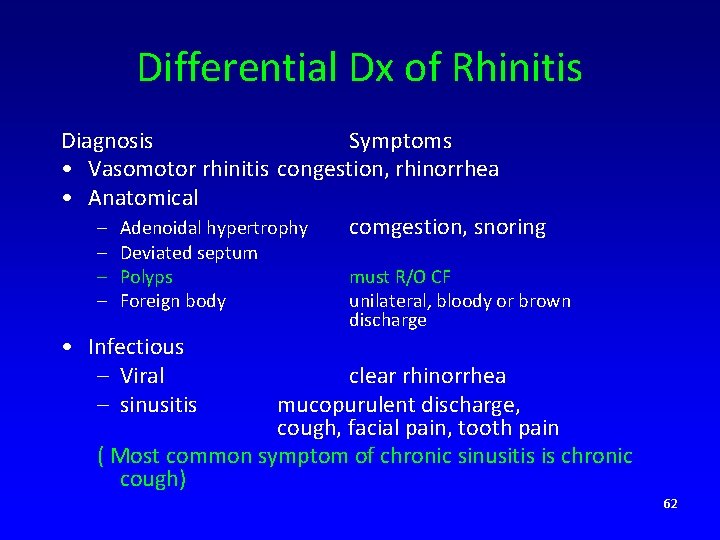
Differential Dx of Rhinitis Diagnosis Symptoms • Vasomotor rhinitis congestion, rhinorrhea • Anatomical – Adenoidal hypertrophy comgestion, snoring – Deviated septum – Polyps – Foreign body • Infectious – Viral – sinusitis must R/O CF unilateral, bloody or brown discharge clear rhinorrhea mucopurulent discharge, cough, facial pain, tooth pain ( Most common symptom of chronic sinusitis is chronic cough) 62
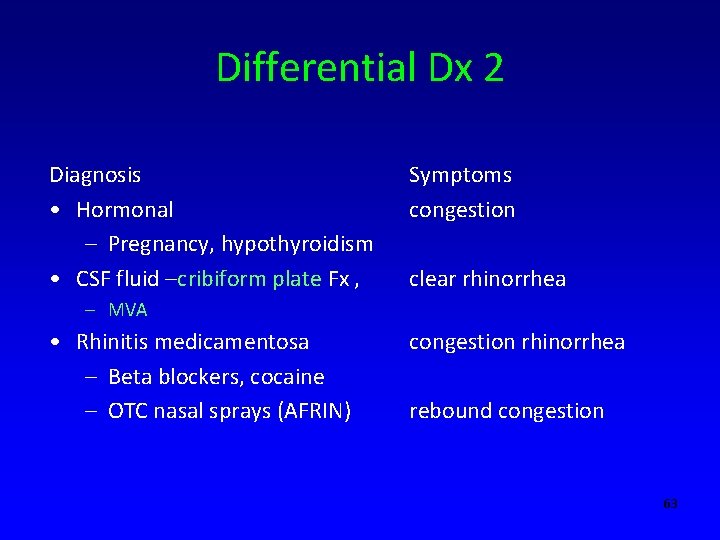
Differential Dx 2 Diagnosis • Hormonal – Pregnancy, hypothyroidism • CSF fluid –cribiform plate Fx , Symptoms congestion clear rhinorrhea – MVA • Rhinitis medicamentosa – Beta blockers, cocaine – OTC nasal sprays (AFRIN) congestion rhinorrhea rebound congestion 63
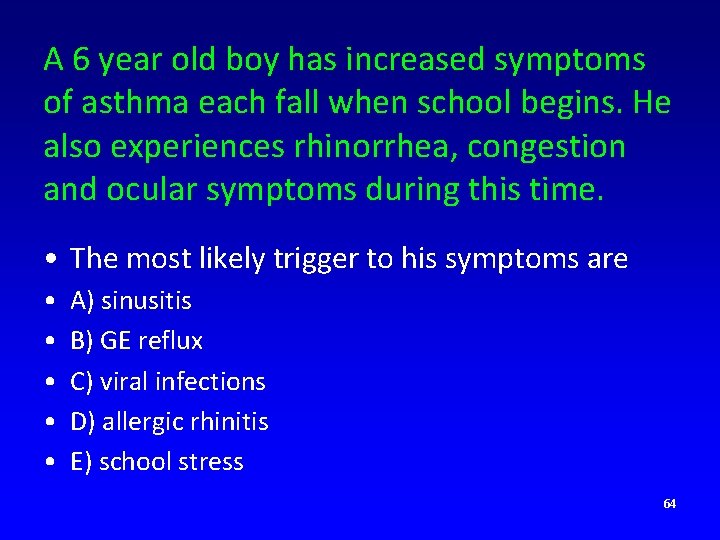
A 6 year old boy has increased symptoms of asthma each fall when school begins. He also experiences rhinorrhea, congestion and ocular symptoms during this time. • The most likely trigger to his symptoms are • • • A) sinusitis B) GE reflux C) viral infections D) allergic rhinitis E) school stress 64
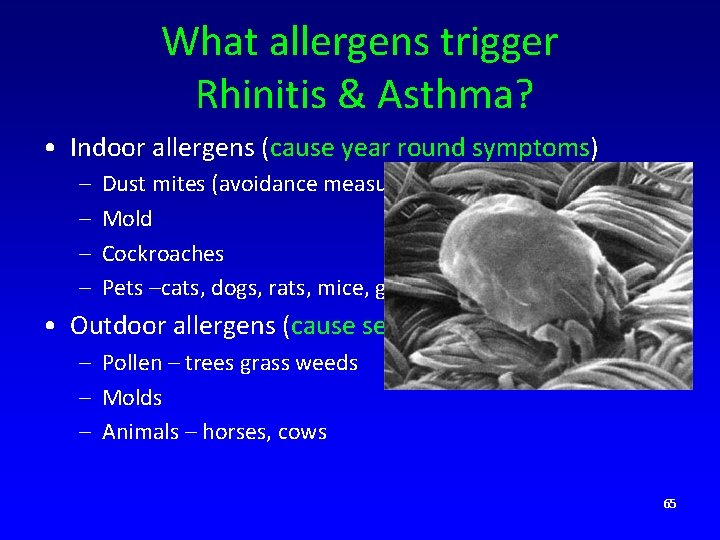
What allergens trigger Rhinitis & Asthma? • Indoor allergens (cause year round symptoms) – – Dust mites (avoidance measures) Mold Cockroaches Pets –cats, dogs, rats, mice, guinea pigs, & birds • Outdoor allergens (cause seasonal symptoms) – Pollen – trees grass weeds – Molds – Animals – horses, cows 65
Asthma Triggers • Eighty percent of children with asthma develop allergic rhinitis, a known trigger to asthma • GER exacerbates asthma and can be silent. Most infants will have frequent spitting up or vomiting. Older children can complain of heartburn • School stress can result in a psychogenic cough (disappears when sleeping) • Sinusitis also exacerbates asthma and would be suspected with a purulent discharge • URI’s are the most common trigger in infants • Exercise in the school age child triggers symptoms in most asthmatics 66
The risk factor most associated with fatal asthma is • • • A) Poor perception of asthma B) high socioeconomic status C) female D) sinusitis E) Inhaled steroid use 67
• Risk factors for near fatal and fatal asthma include frequent visits to the ER, hospitalizations, psychosocial disturbances, male sex, poor perception of hypoxia, low socioeconomic status, over use of beta agonists 68
The mother of a 10 yr old complains of her sons asthma worsening during the spring months during his outdoor basketball season. He has no symptoms during winter months and he does play football then. The best advice for the mother is to: • • • A) have skin testing performed B) order a methacholine challenge C) perform an exercise challenge D) stop basketball and continue football E) start the child on salmeterol 69
An allergic inner city 10 year old child has perennial rhinitis and asthma. The most common allergen responsible for this inner city asthmatic is • • • A) Cockroach B) Cat dander C) Dust mites D) Mouse urine E) House dust 70
• 2 month old boy presents with blood in the stools. Started 3 weeks ago. FT, NSVD, no complications. Breastfeeding since birth with supplementation. Initially on cow’s milk formula, but switched to soy-based formula when blood was noticed in the stool. Symptoms continued so switched to extensively hydrolyzed formula. • What is the diagnosis? • What is the management? 71
Dietary protein induced proctocolitis syndrome • Affects children in first few months of life • Symptoms: blood streaks mixed with mucus in stools, no systemic symptoms – - Minimal blood loss, anemia is rare • Milk is the most common cause, soy can be another trigger (50% of milk allergic pts are also soy allergic) • Non Ig. E mediated reaction • Tx –Avoidance- Most outgrow the allergy between 1 -2 yrs Sicherer, Pediatrics 2003 Food protein induced enterocolitis typically presents with vomiting 1 -3 hours after feeding. Milk is the most likely cause 72
The following is true concerning food allergies: A) The AAP recommends certain children receive peanut exposure at 4 -11 months of age B) The AAP recommends delaying peanut exposure until 2 years of age C) The AAP recommends delaying peanut exposure until 3 years of age D) The AAP recommends mothers avoid allergic foods while pregnant E) The AAP recommends all infants receive peanut exposure at 6 months of age 73
A child has a history of severe anaphylaxis to eggs. The mother does not want her child to receive the MMR vaccine. The most appropriate course of action is to: • A) Refer the family to an allergist for administration of the vaccine • B) defer administration of the vaccine • C) have the child tested directly to the vaccine • D) administer the vaccine and observe in your office for 1 hour • E) administer the vaccine and let her go home 74
A 5 yr old has a hx of a peanut allergy. Skin prick testing confirmed the allergy. The mother asked about the child’s risk of other food allergies. The food most likely to cause an allergic reaction is • • • A) wheat B) beans C) shrimp D) fish E) tree nuts 75
Facts to know • Children with peanut and nut allergies are unlikely to outgrow their allergy • There are no approved therapies to tx peanut and nut allergies • There are centers that are experimenting with oral immunotherpy and otherapies • Baked milk and eggs given to milk and egg allergic pts respectively, can help outgrow these allergies • There is cross reactivity with tree nuts and 76 peanuts
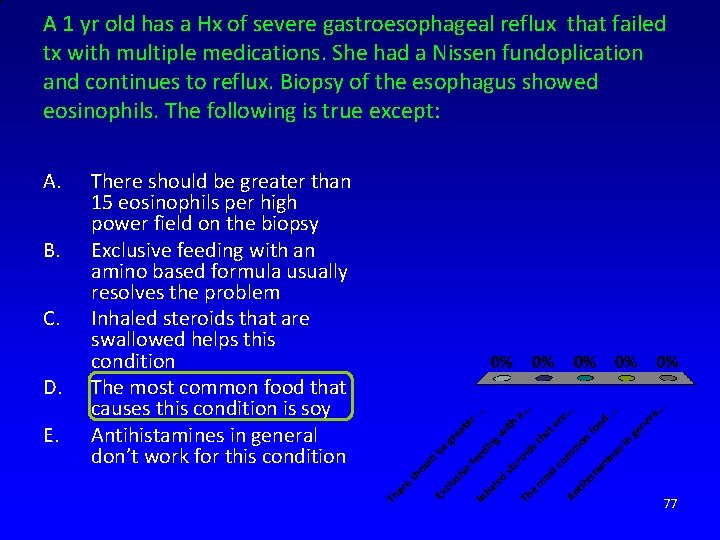
A 1 yr old has a Hx of severe gastroesophageal reflux that failed tx with multiple medications. She had a Nissen fundoplication and continues to reflux. Biopsy of the esophagus showed eosinophils. The following is true except: A. B. C. D. E. There should be greater than 15 eosinophils per high power field on the biopsy Exclusive feeding with an amino based formula usually resolves the problem Inhaled steroids that are swallowed helps this condition The most common food that causes this condition is soy Antihistamines in general don’t work for this condition 77
- Slides: 77