
PEDAGOGICAL PRACTICES THAT ENHANCE LEARNING Deep questioning 9
- Slides: 9
PEDAGOGICAL PRACTICES THAT ENHANCE LEARNING Deep questioning
§ 9: 00 -9: 15 Introductions § 9: 15 -10: 30 Theoretical: Deep questioning/CIP – Janette § 10: 30 -11: 00 Morning tea § 11: 00 -12: 45 Experiential: Ethical capability trails at SLV (happiness & fairness) § 12: 45 -1: 30 Lunch § 1: 30 -2: 00 Practical: assessing deep learning - Janette § 2: 00 -2: 45 Practical: develop research questions for inquiry –Tessa § 2: 45 -3: 15 Plenary § • Pulling it all together and where to next? (Daphne Cohen) § • Closing remarks (Sue Graham) § • Evaluation Survey? (Sue Graham)
§ On average, a teacher asks 400 questions/day (one third of their time) § Most questions are answered in less than one second (Hastings 2003) § 60% recall facts and 20% are procedural (Hattie 2012) § Most student answers are right or wrong
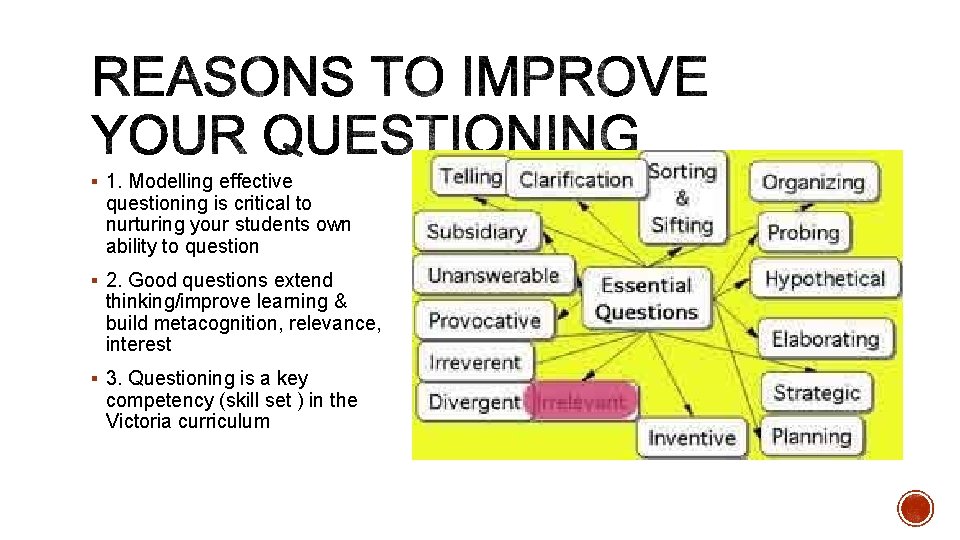
§ 1. Modelling effective questioning is critical to nurturing your students own ability to question § 2. Good questions extend thinking/improve learning & build metacognition, relevance, interest § 3. Questioning is a key competency (skill set ) in the Victoria curriculum
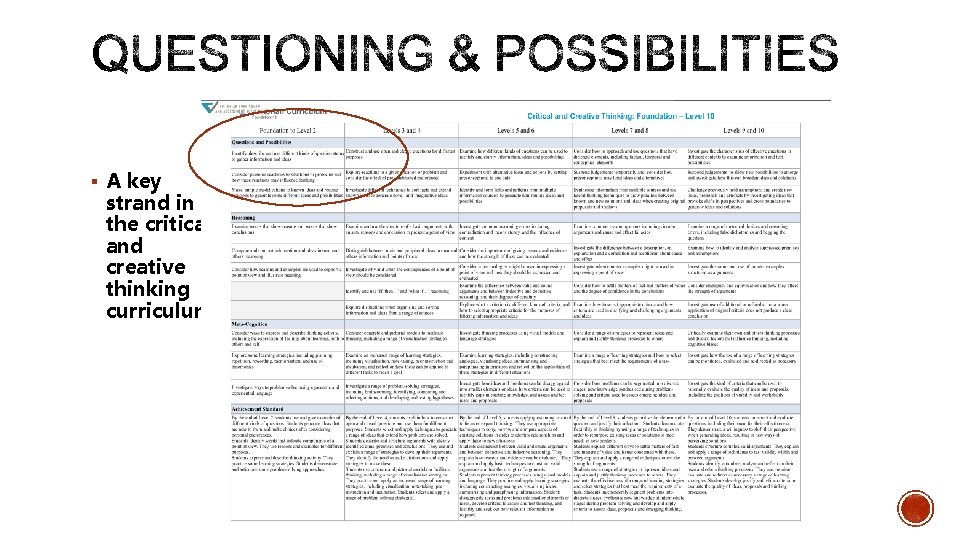
§ A key strand in the critical and creative thinking curriculum
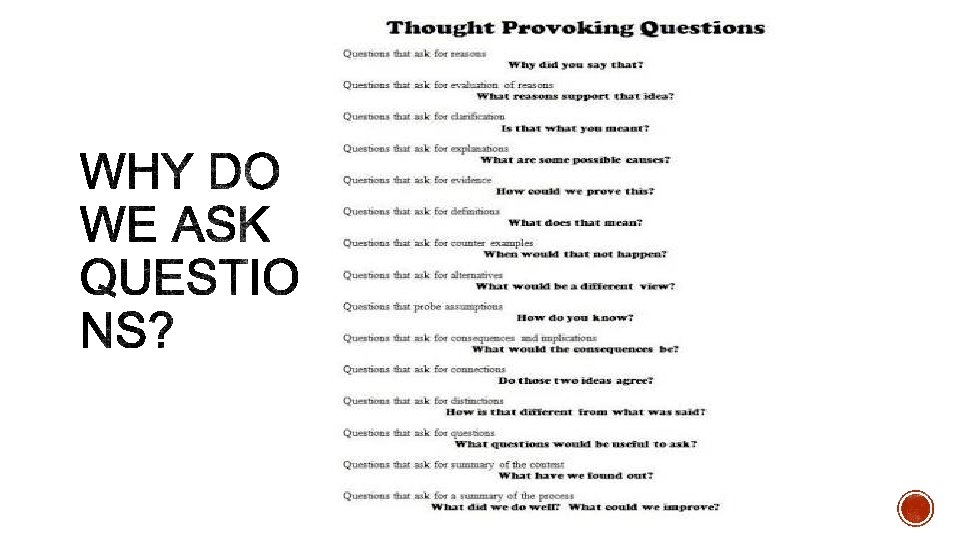
§ Explore different question types and their intent § Suspend judgment to consider new possibilities § Test the effectiveness of questions in different contexts § Look at different question elements eg. factual, temporal, conceptual § Explore reactions to questions and how that might change future questioning § Similarly students cannot understand concepts or make decisions/take actions (ethical capability) without asking questions § Nor communicate effectively (Personal & social capability) etc.
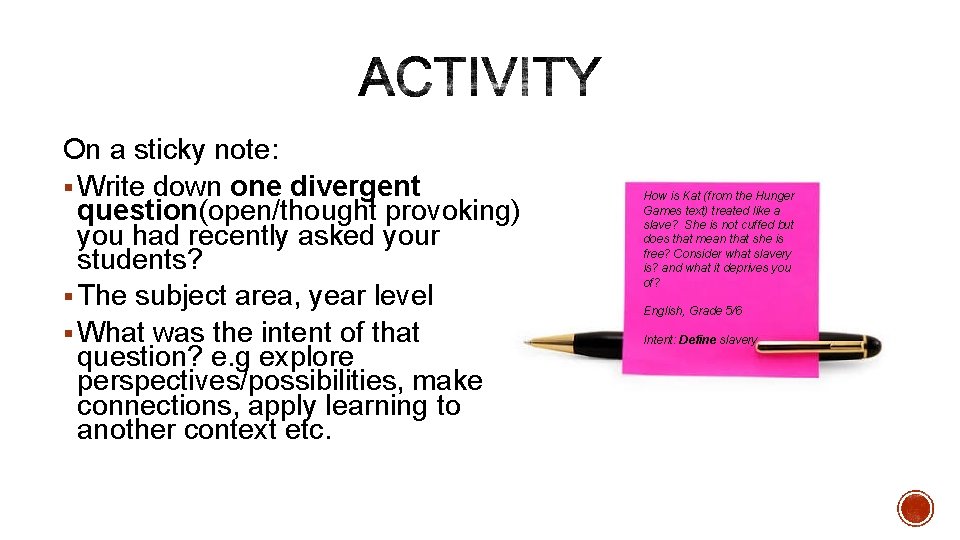
On a sticky note: § Write down one divergent question(open/thought provoking) you had recently asked your students? § The subject area, year level § What was the intent of that question? e. g explore perspectives/possibilities, make connections, apply learning to another context etc. How is Kat (from the Hunger Games text) treated like a slave? She is not cuffed but does that mean that she is free? Consider what slavery is? and what it deprives you of? English, Grade 5/6 Intent: Define slavery