
PED CHEST PAIN AND MYOCARDITIS Reporter Dr MengShu
- Slides: 25
PED CHEST PAIN AND MYOCARDITIS Reporter : Dr. Meng-Shu Wu Lin Kao CGMH ED
Introduction Ø A common symptom in children and adolescents. Ø No gender predilection. Ø Having important functional consequences. Ø Benign in most cases. Ø Because of its association with fatal heart disease in adults, this symptom often is viewed as a harbinger of serious cardiac disease.
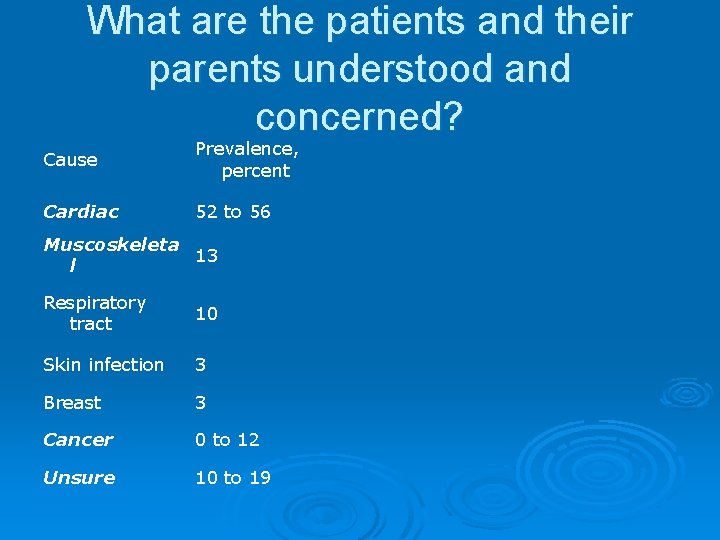
What are the patients and their parents understood and concerned? Cause Prevalence, percent Cardiac 52 to 56 Muscoskeleta 13 l Respiratory tract 10 Skin infection 3 Breast 3 Cancer 0 to 12 Unsure 10 to 19
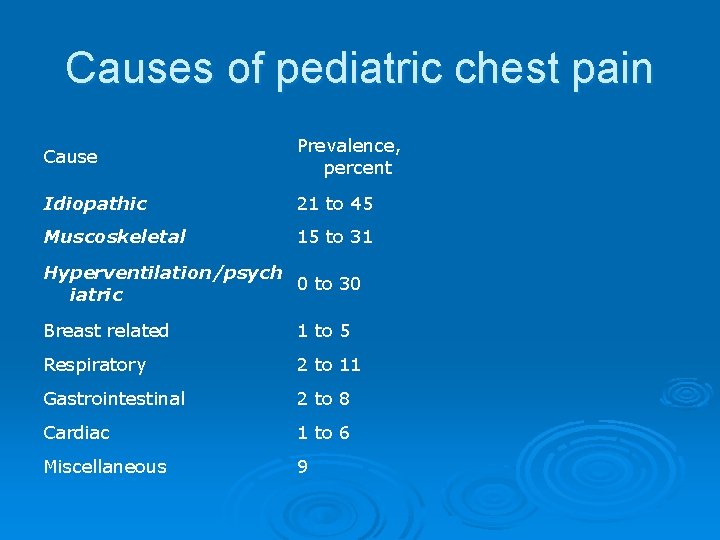
Causes of pediatric chest pain Cause Prevalence, percent Idiopathic 21 to 45 Muscoskeletal 15 to 31 Hyperventilation/psych 0 to 30 iatric Breast related 1 to 5 Respiratory 2 to 11 Gastrointestinal 2 to 8 Cardiac 1 to 6 Miscellaneous 9
Musculoskeletal conditions Ø Traumatic: a. c. Rib fracture Hemopneumothorax Bruise Ø Non-traumatic: a. Costochondritis - left 4 th Slipping rib syndrome - 8 th, 9 th, and 10 th Precordial catch - Texidor's twinge b. c.
Psychogenic causes Ø More common in children ≧ 12 y/o Ø Anxiety or a conversion disorder triggered by stressful events. Ø Other recurrent somatic complaints. Ø Hyperventilation
Breast causes Ø Males with gynecomastia. Ø Mastitis Ø Fibrocystic disease Ø Thelarche Ø Tenderness associated with pregnancy. Ø Worries about cancer are often present in these patients.
Toxic exposure Ø Cocaine Ø Marijuana Ø Methamphetamines Ø Sympathomimetic decongestants Ø Cigarette smoking
Respiratory disorders Ø Pneumonia Ø Bronchitis Ø Reactive airway disease Pleuritis Ø Pleural effusion Ø Pneumothorax Ø Pneumomediastinum Ø
Gastrointestinal disorders Ø Gastroesophageal reflux Ø Gastritis Ø Diffuse esophageal spasm and achalasia Ø Esophageal strictures, foreign body, and caustic ingestions
Pulmonary vascular disease Ø Pulmonary embolism - major risk factors were oral contraceptive use and pregnancy termination and trauma. Ø Pulmonary hypertension - fatigue, lethargy, and dyspnea or syncope with exertion. Ø Acute chest syndrome - a serious and potentially fatal cause of chest pain in patients with sickle cell disease.
Cardiac conditions Ø Cardiac disease is more likely if chest pain occurs during exertion and is recurrent. Ø Most conditions will be associated with an abnormal cardiac examination or coexisting symptoms. Ø In patients with known heart disease, chest pain may indicate progression of the underlying condition.
Cardiac conditions Ø Severe left ventricular outflow tract obstruction caused by aortic stenosis Ø Aortic root dissection associated with Marfan syndrome, Turner syndrome, type IV Ehlers Ø Ø Ø Pericarditis Myocarditis Coronary artery abnormalities, including congenital disorders or acquired conditions Ø Ø Ruptured sinus of Valsalva aneurysm Tachyarrhythmias or palpitations. Coronary vasospasm (variant angina) and myocardial infarction Mitral valve prolapse (subvalvar, or supravalvar), obstructive cardiomyopathy, or coarctation of the aorta. -Danlos syndrome…. . (eg, coronary artery aneurysm or stenosis caused by Kawasaki disease).
Neurologic disorders Ø Herpetic neuralgia Ø Spinal cord compression
History Ø Description of chest pain 1) 2) 3) 4) 5) 6) 7) 8) Time course Duration Quality Location Radiation Severity Precipitating factors Associated symptoms Ø Ø Ø Underlying medical conditions Family history Drug and medication history
Physical Examination Chest wall - palpation, "hooking" maneuver…. 2. Respiratory signs 3. Cardiac signs - auscultation of abnormal heart 1. sounds or a cardiac murmur or abnormal pulse or blood pressure.
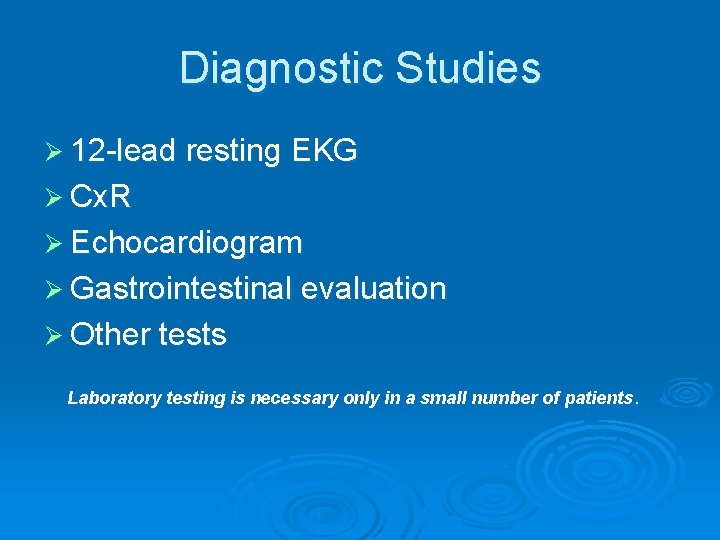
Diagnostic Studies Ø 12 -lead resting EKG Ø Cx. R Ø Echocardiogram Ø Gastrointestinal evaluation Ø Other tests Laboratory testing is necessary only in a small number of patients.
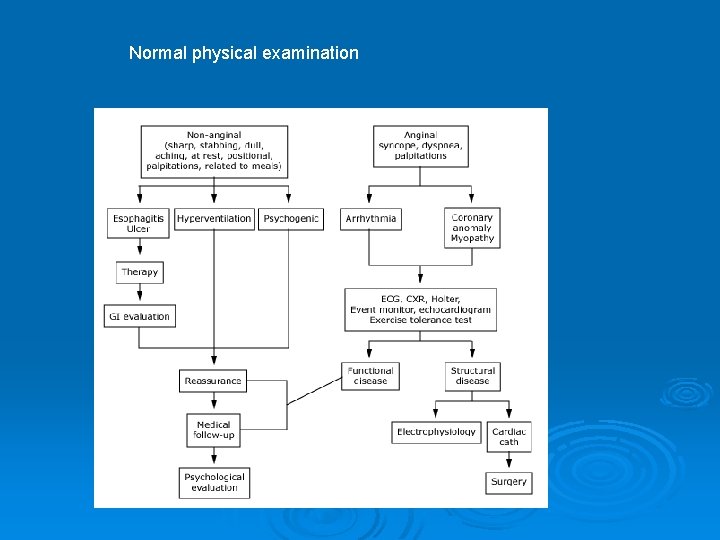
Normal physical examination
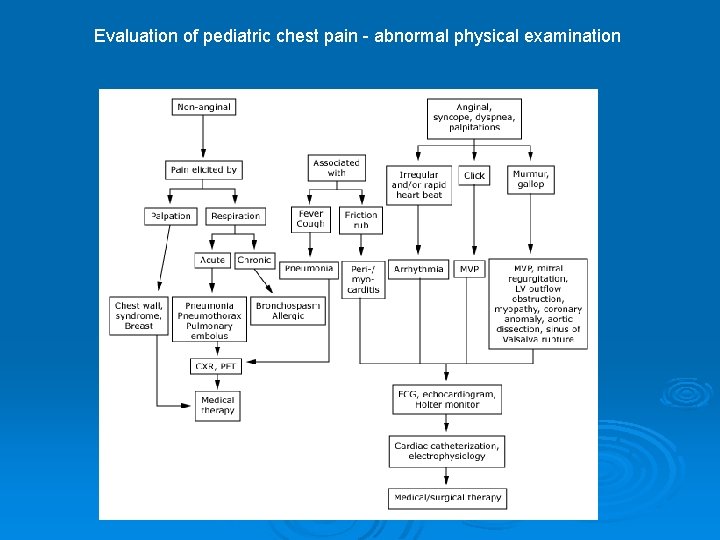
Evaluation of pediatric chest pain - abnormal physical examination
Myocarditis Ø Myocarditis is a condition resulting from inflammation of the heart muscle.
Major Causes of Myocarditis Ø Infectious – particularly virus Ø Toxin Ø Autoimmune etiologies
Clinical Menifestations Variable Ø Viral prodrome of fever, myalgia, and malaise several days prior to the onset of heart failure. Ø Symptoms of systemic autoimmune disease. Ø Signs and symptoms of heart failure. Ø Tachycardia and metabolic acidosis may be important indicators of the extent of myocardial involvement. Ø Arrhythmias Ø
Physical Examination Ø Signs of respiratory distress Ø S 3 and occasionally S 4 gallops Ø Heart murmurs Ø Signs of low cardiac output Ø A pericardial friction rub
Diagnostic Studies Ø Ø Cx. R 12 -leads resting EKG Echocardiogram Cardiac ezymes - They are seen in some, but not all, patients with Ø Ø Ø MRI Cardiac catheterization Endomyocardial biopsy — the gold standard for the myocarditis. diagnosis of myocarditis.
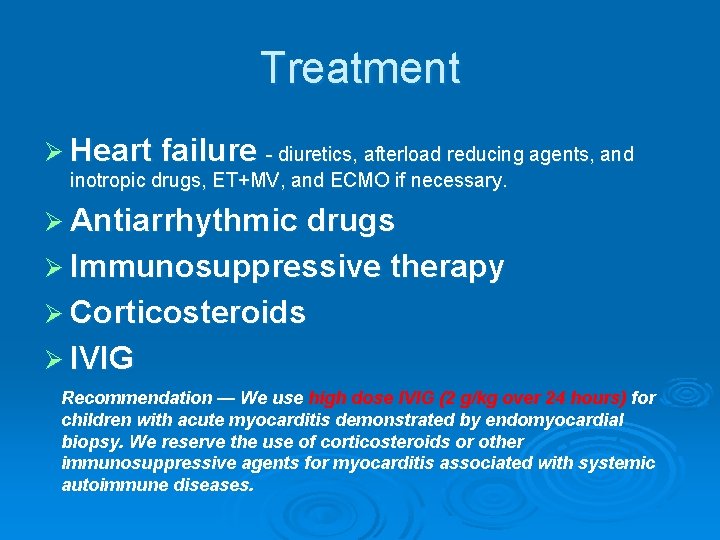
Treatment Ø Heart failure - diuretics, afterload reducing agents, and inotropic drugs, ET+MV, and ECMO if necessary. Ø Antiarrhythmic drugs Ø Immunosuppressive therapy Ø Corticosteroids Ø IVIG Recommendation — We use high dose IVIG (2 g/kg over 24 hours) for children with acute myocarditis demonstrated by endomyocardial biopsy. We reserve the use of corticosteroids or other immunosuppressive agents for myocarditis associated with systemic autoimmune diseases.